TL;DR · Core Takeaways
- Dispelling twin distortions: Video games show Zhao Yun as a lone champion who cut down fifty enemy captains. Modern internet writers call him a mere security guard. Primary chronicles show that he served as central guard leader and crisis fixer for Shu-Han.
- The real fight at Changban: During the retreat at Dangyang in 208 CE, Zhao Yun never made seven lone charges against vast armies. Instead, amid panic, he led light horsemen back into danger to rescue Liu Shan and Lady Gan.
- The true Empty Fort Strategy: At the Han River in 219 CE, Zhao Yun opened his camp gates wide to trick Cao Wei troops. Liu Bei praised his total courage. Later storytellers gave this deed to Zhuge Liang and turned Zhao Yun into a romantic folk hero.
Chronological Coordinates
- Chinese Horizon: From the rout at Changban in Dangyang in 208 CE of the Eastern Han to the death of Zhao Yun at Hanzhong in 229 CE of Shu-Han, covering the transition from Han to Wei and the rise of the Three Kingdoms.
- Western and Mediterranean Horizon: The Severan dynasty of Rome, from Septimius Severus to Severus Alexander, when the Praetorian prefect moved from a palace guard leader to a top state officer.
From the cover of popular video games to world fantasy media, Zhao Yun (c. 168–229 CE) enjoys great fame among ancient Chinese generals. In popular lore, the Battle of Changban is a solo miracle: one rider breaks enemy lines, cuts down flags, steals a magic sword, and slays fifty captains while saving a baby.
Yet modern online posts push an opposite, mistaken view. Looking only at official rank lists in the Records of the Three Kingdoms, some writers say Zhao Yun ranked far behind Guan Yu, Zhang Fei, Ma Chao, and Huang Zhong. They claim he never ran a province and acted only as a simple escort. Both views ignore the real institutional history and battlefield conditions of the day.
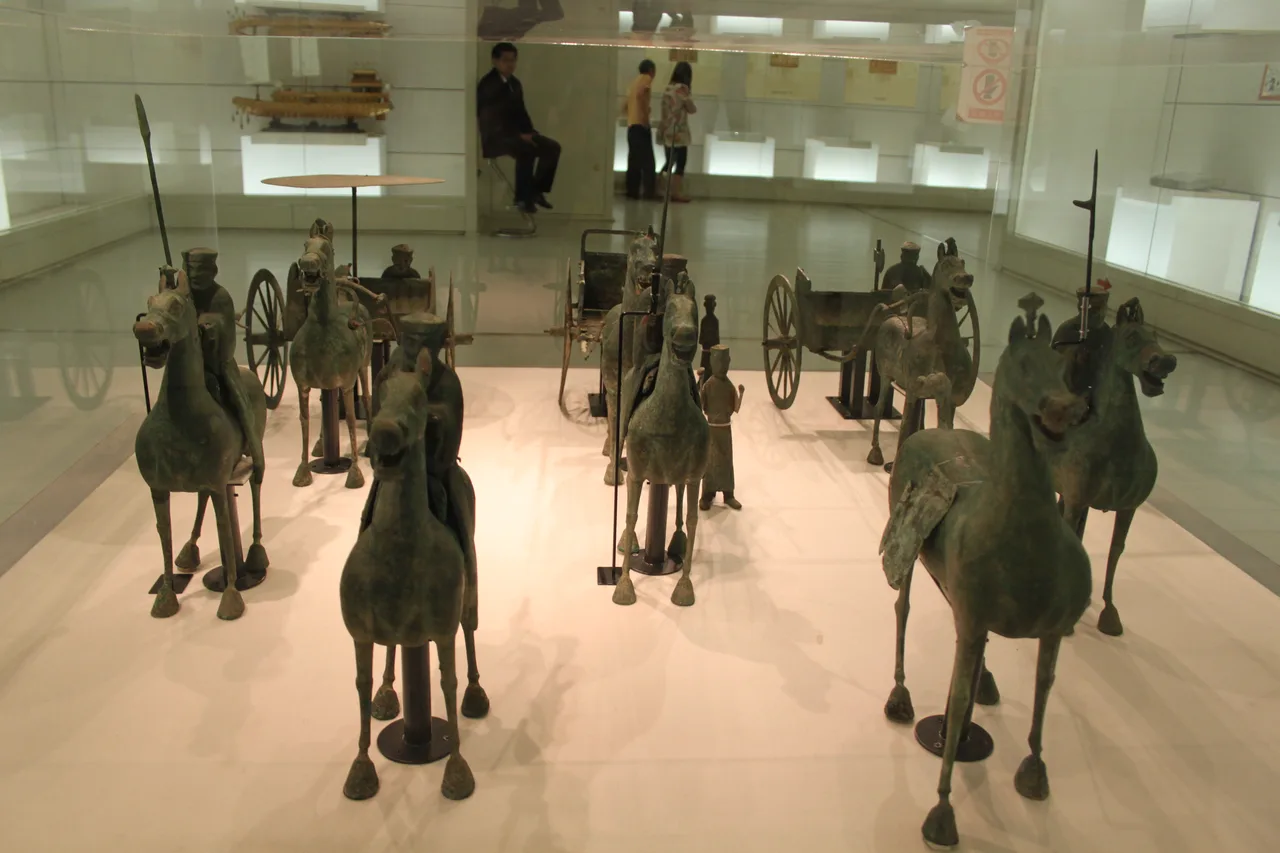
01. Popular Myth vs. Primary Chronicles
Finding the real Zhao Yun means looking past Yuanming popular tales. We must read the Records of the Three Kingdoms and the notes collected by Pei Songzhi. The table below shows how the story changed over time:
| Popular Fiction & Modern Misconceptions | Earliest Historical & Archaeological Record | Era & Motive of Distortion |
|---|---|---|
| Rescuing the Heir at Changban: Charging seven times through enemy ranks, killing over fifty generals, taking a sword, and escaping unharmed. | The Records of the Three Kingdoms notes simply that he held the young child Liu Shan, guarded Lady Gan, and brought both to safety. There is no list of dead officers and no seven charges. | Yuanming Transition: Urban storytellers added stage drama to make a rescue mission look like a mass duel. |
| Ranked Fifth Among the Five Tigers: Made one of the Five Tigers when Liu Bei became King of Hanzhong in 219 CE, wielding a silver spear. | Official records show Liu Bei only named Guan Yu as General of the Vanguard, Zhang Fei as General of the Right, Ma Chao as Left General, and Huang Zhong as General of the Rear. Zhao Yun kept his guard title. No official "Five Tigers" post ever existed. | Southern Song to Yuan: After the southward flight, storytellers treated Shu-Han as the true dynasty and grouped these five leaders together for stage drama. |
| Zhuge Liang's Empty Fort Strategy: Sitting on city walls playing a zither with burning incense to scare off Sima Yi's army. | Pei Songzhi quotes old records of the Han River in 219 CE: Zhao Yun opened his camp gates wide and stopped his drums. The enemy feared a trap and pulled back, letting Zhao Yun shoot them down from behind. The Zhuge Liang story is fiction. | Ming Literary Invention: Luo Guanzhong, author of Romance of the Three Kingdoms, moved Zhao Yun's trick to Zhuge Liang to make the chancellor seem all-wise. |
| Merely a Domestic House Guard: Never held regional command, which some claim shows a lack of skill and low trust from Liu Bei. | Zhao Yun served as Assistant General, camp major, Army Supervisor, and General Who Guards the East. He ran elite guard units, camp security, and officer picks. | Modern Online Revisionism: Modern writers misread early medieval institutional history, missing how much power headquarters guard leaders held in military administration. |
02. The Historical Figure: Central Guard Commander and Operational Crisis Leader
Once we remove later fiction, Zhao Yun's true role stands out clearly in his promotions and daily duties.
The Army Supervisor and Guard Power in the Late Han Collapse
During the wars of the late Han era, armies relied on private troops. Guarding headquarters, watching officer loyalty, and keeping family members safe mattered more than running distant lands. When Zhao Yun joined Liu Bei, he first led personal cavalry. After the escape at Changban, his work earned him the rank of Standard-Bearing General. Later, he served as a central camp leader, and under Liu Shan, he rose to Army Supervisor.
This post worked much like an early Roman Praetorian prefect. When Augustus set up the guard, he wanted trusted troops to watch the camp, protect the ruler, and stop mutiny. Over time, the office gained major legal and staff powers.
As camp leader, Zhao Yun ran headquarters in Gong'an while Liu Bei fought in Yi Province. Lady Sun, sister of warlord Sun Quan, brought a proud retinue that broke laws. Knowing Zhao Yun was firm, Liu Bei told him to control the Inner Court household and guard the camp. When Sun Quan sent boats to take young Liu Shan downriver, Zhao Yun and Zhang Fei stopped the boats on the river. They saved the boy and protected the royal house. His later work as Army Supervisor let him screen officers and act as an Army Commander, holding direct military command.
Changban and the Han River: Tactical Extraction and Shock Warfare
At Changban in 208 CE, Cao Cao sent five thousand picked Tiger and Leopard Cavalry over three hundred leagues in one day. Caught off guard, Liu Bei's force broke. Liu Bei fled south with Zhang Fei and Zhuge Liang, leaving his family behind. In such a route, few cavalrymen dared turn back into danger.
The Records of the Three Kingdoms notes that someone told Liu Bei that Zhao Yun had gone north to give up. Liu Bei threw a short halberd at the speaker, saying Zhao Yun would never leave him. Soon after, Zhao Yun came back through the pursuit lines with young Liu Shan and Lady Gan. He did not slay fifty champions. Yet riding into an active search zone, finding lost family members, and cutting a way out required great skill, courage, and clear direction.
Zhao Yun showed the same skill during the Han River fight in 219 CE. When Huang Zhong did not return from a raid on enemy military provisions, Zhao Yun led dozens of horsemen out to check the road. They met Cao Cao's main vanguard. Zhao Yun fought a running retreat to his camp, then rode out again to save his wounded officer Zhang Zhu.
With enemy troops nearing his gate, Zhao Yun chose not to close the palisade. He threw the gates wide, lowered his flags, and silenced all drums. Suspecting hidden troops, Cao Cao ordered a retreat. When the enemy lines grew confused, Zhao Yun ordered his men to loose arrows and sound horns. In their panic, the retreating soldiers trampled each other, and many fell into the Han River. The next morning, Liu Bei said Zhao Yun was full of courage from head to toe.
03. From Elite Officer to Literary Icon: The Layered Evolution of Collective Memory
Zhao Yun never held the top four ranks—front, rear, left, or right—during Liu Bei's life. His rise reflected careful political balance among different factions in Shu-Han.
Political Balance and Strategic Sobriety
When Liu Bei became King of Hanzhong in 219 CE, top ranks went to major regional leaders. Guan Yu and Zhang Fei were his oldest friends and held large armies. Ma Chao stood for northern border clans and had to be honored. Huang Zhong had just killed Xiahou Yuan in battle. Zhao Yun had served since the time of Gongsun Zan, but he led no private clan army. He stayed in the capital guard, which kept his formal rank lower than field generals.
At court, Zhao Yun showed wise judgment on state policy. After taking Yi Province, Liu Bei wanted to give houses and farms around Chengdu to his officers. Zhao Yun spoke up, quoting the Western Han leader Huo Qubing: with the land still at war, farms and food should go back to common peasants, not to officers as spoils. In 221 CE, when Liu Bei planned to attack Sun Quan to avenge Guan Yu, Zhao Yun advised against it. He warned that the true foe was Cao Pi, not the south, and urged that a fight with Wu would harm the planned northern campaign.
The Shift in Medieval and Early Modern Storytelling
After the southward flight of the Song court, southern society saw Shu-Han as the true imperial line. City storytellers and actors reshaped old records to turn loyal figures into folk heroes.
Storytellers remade Zhao Yun in three ways:
- The Rescue as a Miracle: A tactical cavalry rescue became a lone raid against hundreds of officers to entertain urban crowds.
- Moral Purity: Because Zhao Yun claimed no private lands or selfish perks, later plays showed him as a pure model of loyalty.
- Reassigned Deceptions: His Han River camp trick was given to Zhuge Liang, leaving Zhao Yun known mainly for his white horse, spear, and daring charges at Changban.
Zhao Yun was neither a superhero nor an ordinary bodyguard. He was an elite guard leader who kept the army stable, ran military administration, and solved crises with calm skill. When we look past fiction, his life shows an able officer whose work shaped early medieval history.
Primary Sources & Historical Bibliography
- Primary Chronicles:
- Chen Shou, with notes by Pei Songzhi. Records of the Three Kingdoms, Vol. 36, "Book of Shu: Biographies of Guan, Zhang, Ma, Huang, and Zhao." Beijing: Zhonghua Book Company, 1959.
- Chen Shou, with notes by Pei Songzhi. Records of the Three Kingdoms, Vol. 32, "Book of Shu: Biography of the Former Lord." Beijing: Zhonghua Book Company, 1959.
- Sima Guang, with notes by Hu Sanxing. Comprehensive Mirror to Aid in Government, Vol. 65, "Han Chronicle 57: Thirteenth Year of the Jian'an Reign of Emperor Xian." Beijing: Zhonghua Book Company, 1956.
- Modern Studies:
- Yen Keng-wang. A History of Regional Administrative Systems in China: The Wei, Jin, and Northern and Southern Dynasties. Shanghai: Shanghai Chinese Classics Publishing House, 2007.
- Tian Yuqing. Probing Qin, Han, Wei, and Jin History (Revised Edition). Beijing: Zhonghua Book Company, 2004.
- Qiu Luming. Political Power and Family Networks in the Wei-Jin Transition. Shanghai: Shanghai Chinese Classics Publishing House, 2012.