TL;DR · Core Takeaways
- Folk plays and Ming novels gave many clever war tricks to Zhuge Liang. Yet the Records of the Three Kingdoms tells a very different tale. Luo Guanzhong gave magical deeds to a leader who never used straw boats. He never called the wind or used the Empty Fort Strategy.
- Real history shows that other generals led these famous feats across many centuries. Sun Quan balanced his tilted ship under heavy fire at Ruxu in 213 CE. Tang general Zhang Xun hung straw decoys during the Siege of Suiyang in 757 CE. Zhou Yu used local river winds at the Battle of Red Cliffs. Later, both Zhao Yun and Wen Ping scared off larger armies with open gates.
- Dropping these stage myths shows Zhuge Liang's true greatness. He was a skilled planner and law reformer. He enforced clear rules and built repeating crossbows. He also made transport carts like the wooden ox and flowing horse. These real skills won the deep respect of his main rival, Sima Yi.
Historical Context
- Chinese Horizon: This era spans from the thirteenth year of the Jian'an reign in the Eastern Han (208 CE, the Battle of Red Cliffs) to the sixth year of the Jianxing reign in Shu Han (228 CE, the first northern campaign of Zhuge Liang). In these years, rival warlords gave way to the three kingdoms of Wei, Shu, and Wu.
- Western / Mediterranean Horizon: The Severan family ruled the Roman Empire from 193 to 235 CE. Emperor Caracalla granted broad citizenship right before the Crisis of the Third Century began.
Modern strategy games such as Total War: Three Kingdoms often treat Zhuge Liang like a sorcerer who shifts winds and breaks traps. Old paintings also show him wearing Daoist robes with a crane-feather fan. This famous look first began in street plays during the Southern Song dynasty.
Yet Chen Shou's Records of the Three Kingdoms tells a very different historical story in which none of these magical tricks occurred. Playwrights did not invent these deeds out of thin air. Instead, storytellers took real wartime acts from other leaders across four centuries and gave them to Zhuge Liang to please crowds.
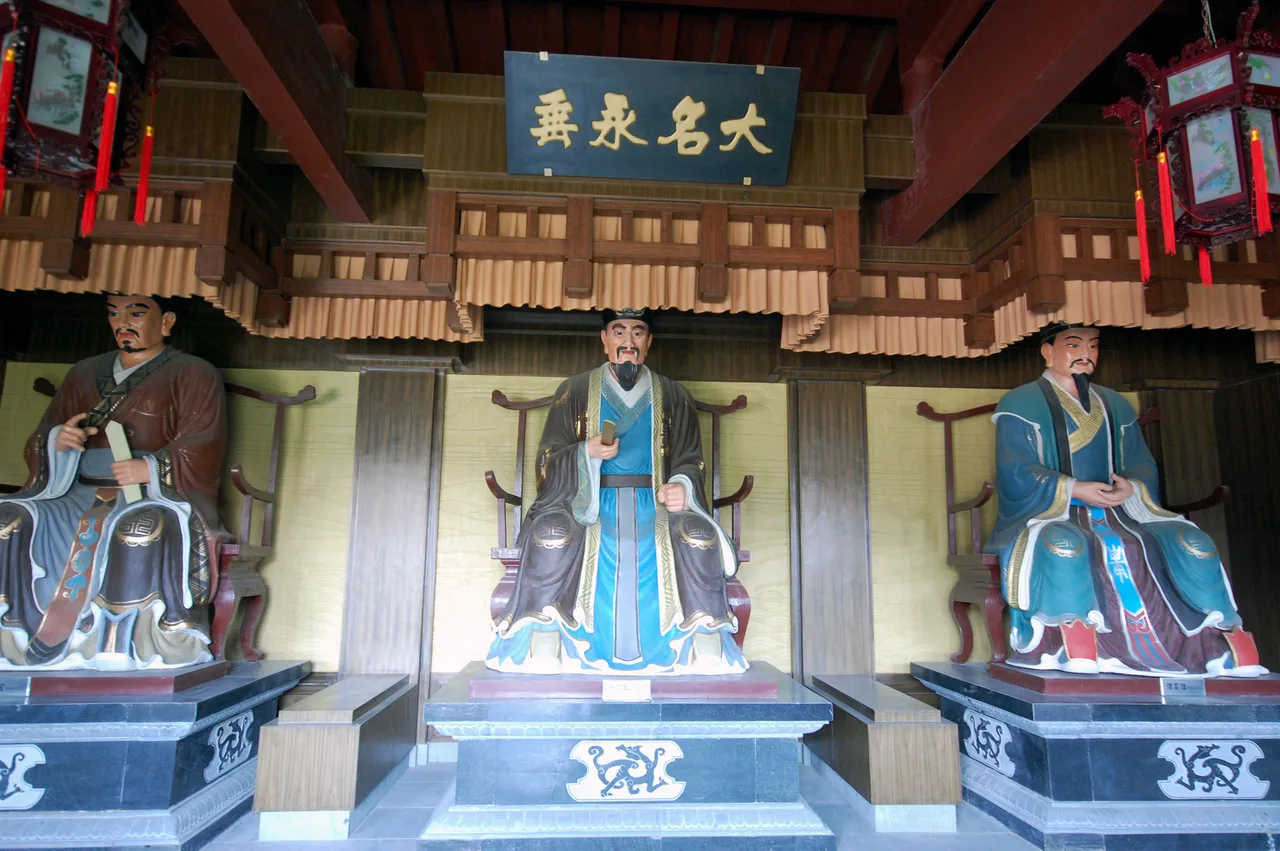
01. Comparing Romance Fiction with Primary Chronicles
Chinese Historiography often gives the deeds of many people to one great hero. Sima Qian started this trend in the Records of the Grand Historian. Later writers of Ancient History kept the habit alive. The table below compares Ming fiction with the earliest historical sources. It shows how real war feats shifted to Zhuge Liang over time.
| Popular Romance Fiction / Misconception | Earliest Chronicle or Archaeological Record | Historical Context and Evolution of the Myth |
|---|---|---|
| Borrowing Arrows with Straw Boats<br>Zhuge Liang reads the morning fog before the Battle of Red Cliffs. He accepts a military command and leads twenty straw boats. He draws one hundred thousand arrows from Cao Cao’s fleet. | *Pei Songzhi's notes on the Records of the Three Kingdoms quoting Weilüe: In 213 CE, Sun Quan took a ship to scout Cao Cao's camp at Ruxu. Cao Cao's men shot many arrows at it. The ship tipped from the weight on one flank. Sun Quan turned the ship around. Hits on the other side made the boat level, and he sailed away.<br>Biographies of Loyal and Righteous Officials in the New History of the Tang***: In 757 CE, the An Lushan Rebellion raged. During the Siege of Suiyang, Zhang Xun hung straw men in black robes from city walls at night. Enemy troops shot arrows into them. The defenders pulled up the straw decoys and kept the arrows. | Song and Yuan Storytelling to Ming Books (11th–14th Centuries)<br>Song city stages loved Shu Han. Writers joined Sun Quan's boat trim with Zhang Xun's straw decoys. They gave the whole plan to Zhuge Liang so he would outshine Zhou Yu. |
| Summoning the East Wind<br>Zhuge Liang builds an altar on Mount Nanping. He prays for three days to call a southeast gale. The wind blows Zhou Yu’s fire ships straight into Cao Cao's fleet. | **Records of the Three Kingdoms (Life of Zhou Yu) and Biographies from South of the Yangzi**: It was winter in 208 CE. Huang Gai planned a fake surrender with fire ships. Zhou Yu led the main attack. Eastern Wu sailors knew the local river winds well. The Yangzi River bends sharply at Red Cliffs. Passing winter cold fronts often bring brief south winds there. | Yuan Drama and Quanzhen School Popularization (13th–14th Centuries)<br>The Quanzhen School grew strong in the north. Popular plays dressed Kongming as a Daoist priest. They hid Zhou Yu's real naval skill. They turned river weather into magic spells to boost Shu Han. |
| The Empty Fort Strategy<br>Zhuge Liang is stuck at Xicheng with few men after losing Jieting. He opens all four gates and burns incense. He plays a zither on the wall. His calm act scares Sima Yi's large army into running away. | *Pei Songzhi's notes on the Records of the Three Kingdoms citing Yun Biezhuan: In 219 CE at the Han River, Zhao Yun dropped his flags. He stopped his drums and opened his gates. Cao Cao feared a trap and pulled back. Zhao Yun then shot arrows at the fleeing foe.<br>Biographies of the Wei Elite in the Records of the Three Kingdoms (Life of Wen Ping)*: In 226 CE, Sun Quan attacked Shiyang. Rain had broken the city walls. Wen Ping told his men to hide. He lay down in his room to sleep. Sun Quan feared an ambush and left. | Jin and Song Tales to Yuan Plays (4th–14th Centuries)<br>Guo Chong wrote this tale first. Pei Songzhi proved it false. Sima Yi was posted at Nanyang, far away from Xicheng. Still, Yuan plays kept the story alive because crowds loved the tense mind game. |
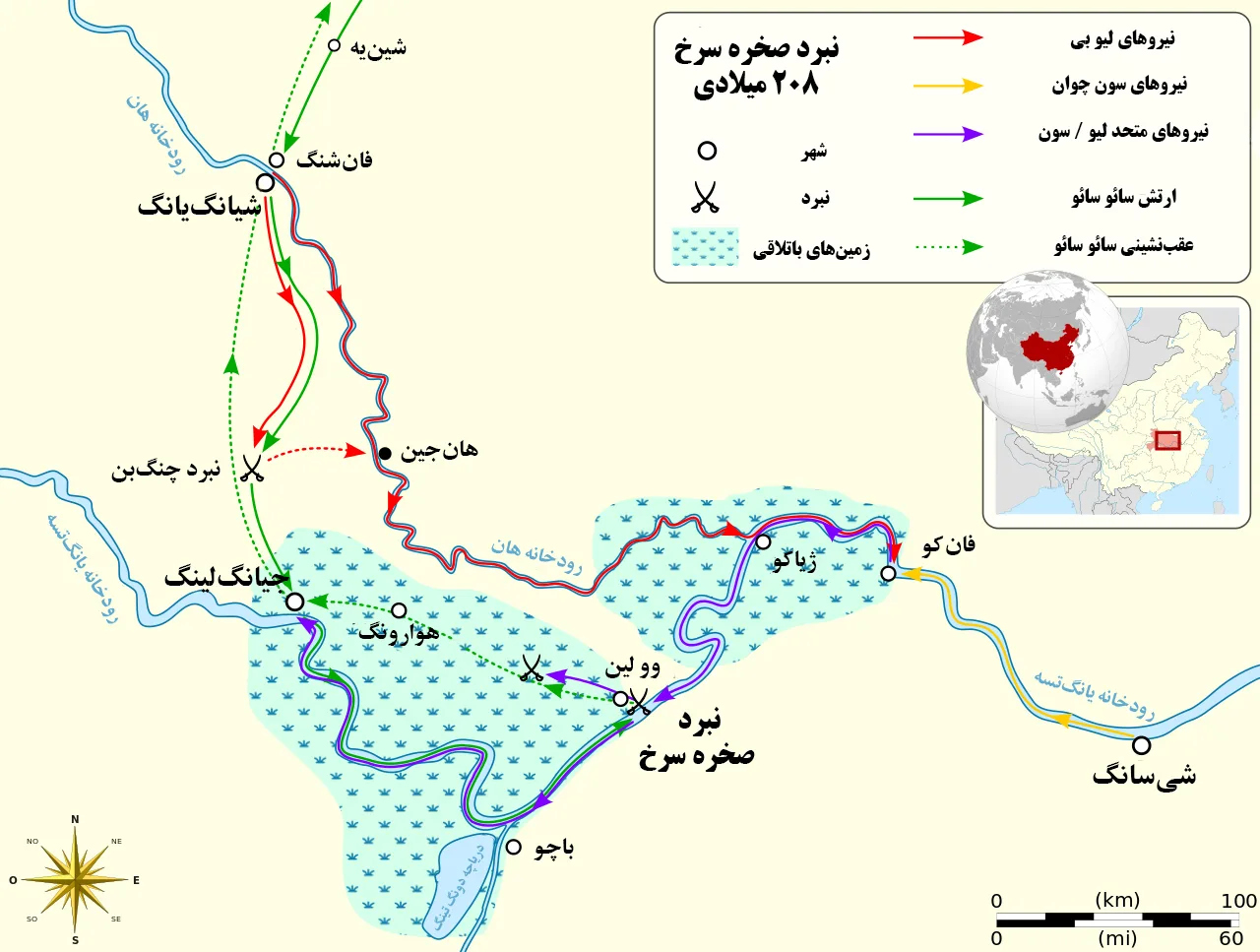
02. Historical Source Criticism: Reclaiming the Lost Legacies of River Navies and Border Generals
Borrowing Arrows: Ship Hull Ballast at Ruxu and Night Maneuvers at Suiyang
In Chapter 46 of Romance of the Three Kingdoms, Zhuge Liang uses river fog to trick Cao Cao into firing one hundred thousand arrows at straw boats. Yet early records tell another story. In 208 CE, Liu Bei sent him only as an Agent to build a pact with Sun Quan, so he held no command over Eastern Wu ships.
The true boat episode took place five years later at Ruxukou in 213 CE. There, Sun Quan steered a large scout ship near enemy camps under heavy crossbow fire. The early history Weilüe records the event in clear detail:
> Sun Quan sailed a large warship forward to watch the opposing camp, so Cao Cao told his archers to shoot dense crossbow volleys. So many shafts hit one flank that the heavy hull began tipping dangerously. Sun Quan ordered his crew to turn the ship around to face the enemy archers, and soon the counterweight of arrows leveled the boat so he sailed safely home.
Sun Quan turned his warship purely to stay afloat rather than to gather enemy arrows. Handling a damaged boat under thick fire showed calm seamanship and sharp wits, not magic.
Over five hundred years later, another arrow event occurred in 757 CE during the An Lushan Rebellion. General Zhang Xun ran low on shafts inside the Siege of Suiyang. At night, he hung black-robed straw figures down the city walls, fooling rebel bowmen into firing tens of thousands of arrows before Tang troops pulled the decoys back up.
Throughout the Northern Song, Southern Song, and Yuanming years, city storytellers blended these two separate accounts. They combined Sun Quan's balanced warship with Zhang Xun's straw dummies and set the tale at Red Cliffs to make Zhuge Liang shine brighter than real naval commanders.
Summoning the East Wind: Mid-Yangzi Troughs and Local Microclimates
Ancient Greek writers often claimed the gods sent good winds to help leaders like Themistocles at Salamis in 480 BCE. In a similar cultural shift, later Chinese folk plays turned normal winter river gusts into Daoist magic.
Local geography explains what happened where the Yangzi bends sharply between Red Cliffs and Wulin. Most winter winds blow south from the plains. Yet passing cold fronts near the Yellow Sea create low-pressure troughs that pull warm air inward and spark brief south winds around late December.
River commanders like Gan Ning, Huang Gai, and Zhou Yu knew the mid-Yangzi valley from long patrols. Huang Gai waited for a south breeze before launching his fire ships. That timing pushed the flames straight into Cao Cao's fleet instead of blowing them back onto his own lines.
The Empty Fort: Zhao Yun's Open Camp at the Han River and Wen Ping's Slumber at Shiyang
Popular tales claim that Zhuge Liang used the Empty Fort Strategy at Xicheng. In the story, he tricks Sima Yi during the northern campaign of 228 CE. Modern historians reject this tale. The scholar Pei Songzhi proved it false in his fifth-century notes on the Records of the Three Kingdoms:
> When Zhuge Liang stayed at Yangping, Sima Yi served as Vice Director of the Department of State Affairs. He was based at Nanyang with military administration over Jing and Yu lands. His job was to guard the south against Eastern Wu. In the sixth year of Jianxing, Liang marched to Mount Qi. General-in-Chief Cao Zhen led the western armies against him. General of the Right Zhang He fought at Jieting. Sima Yi did not move west until Cao Zhen fell ill years later. Separated by hundreds of miles, how could Sima Yi lead troops to Liang's gate?
Pei Songzhi proved that Sima Yi was posted far away at Nanyang. Still, early historical sources do record two real open-gate bluffs by other field leaders:
- Zhao Yun's Open Camp (219 CE): Near the Han River, Cao Cao led a huge army toward Zhao Yun's small camp. The veteran general dropped his flags and silenced his war drums. Then he threw open his camp gates. Cao Cao feared a hidden ambush and pulled his troops back. Zhao Yun's bowmen then shot at his fleeing rear ranks.
- Wen Ping's High Sleep at Shiyang (226 CE): After the death of Emperor Wen of Cao Wei, Sun Quan attacked Shiyang with fifty thousand men. Heavy rain had just broken the town walls. Yet Army Commander Wen Ping told his troops to stay out of sight. He lay asleep in his own room. Sun Quan suspected a trap and marched away.
03. How the Myth Evolved: Stagecraft and Dynastic Orthodoxy from Song to Qing
Across three major eras, Zhuge Liang shifted in public memory from a careful state minister into an all-knowing stage wizard.
Jin and Tang Eras: The Model Chancellor
In the Western Jin dynasty, Chen Shou wrote a fair biography in the Records of the Three Kingdoms. He compared Zhuge Liang to great leaders like Guan Zhong and Xiao He, showing that fair courts and clear rules mattered more than battle tricks.
Tang poets also praised his deep loyalty instead of magic spells. Du Fu wrote moving lines on his loyal work, and Li Shangyin mourned his death at Wuzhang Plains. These writers honored a faithful minister who lived out Ledao and built his early fame on honest rule.
Song and Yuan Eras: Dynastic Insecurity and Folk Deification
During the Northern Song and Southern Song eras, northern armies pushed the court south to Lin'an. Southern scholars led by Zhu Xi then wrote that Shu Han was the sole true line of rule.
At the same time, booming city theaters mixed real records with lively folk tales because crowds wanted an unbeaten hero. Writers turned Zhou Yu into a jealous foil while giving the real battle wins of Sun Quan, Zhao Yun, and Wen Ping straight to Zhuge Liang.
Ming and Qing Eras: Popular Fiction and Imperial Canonization
In the late fourteenth century, during the Yuanming years, Luo Guanzhong wove these stage tales into Romance of the Three Kingdoms. Modern critic Lu Xun later wrote that trying to make Zhuge Liang seem overly clever ended up turning him into a wizard.
Under the Ming and Qing dynasties, rulers built state shrines honoring Zhuge Liang as the top model of loyal service. Meanwhile, local theaters acted out his magic tales in every market town. Court honors and stage plays soon buried the real administrator beneath thick layers of myth.
04. The Man Behind the Myth: Administrative Rigor and Frontier Logistics
Giving these battle feats back to Sun Quan, Zhou Yu, Zhao Yun, and Wen Ping does not harm Zhuge Liang's real place in history. Clearing away stage tales reveals a sharp state planner who kept a small kingdom alive against huge odds.
Tax books show Shu Han was by far the weakest rival state, holding only 280,000 households and 100,000 troops while Cao Wei ruled 660,000 households and over 4.4 million people. Facing a four-to-one gap in farms and weapons, Zhuge Liang trusted steady laws over magic:
- Fair Legal Rules: With Fa Zheng, he wrote the Shu Ke law code to build steady courts. After losing Jieting, he put Ma Su to death to protect Military Discipline, yet dismissed supply chief Li Yan without hurting his family. He lived simply and told Emperor Liu Shan his family owned only eight hundred mulberry trees and fifteen qing of farmland.
- Supply Gear: Steep Qinling trails blocked grain carts, so he built wooden oxen and flowing horses to carry food through narrow mountain passes. He also improved repeating crossbows so foot troops could halt northern horsemen.
- Strong Camps: After he died of illness at Wuzhang Plains in 234 CE, Shu Han troops pulled back in strict order, leaving neat trenches and firm earth walls. His rival Sima Yi toured the empty camp and praised him as a rare talent.
Folk theater often swaps real statecraft for fast thrills, trading supply lines and fair laws for magic altars and winds. Restoring the true record gives fair credit to Sun Quan, Zhou Yu, and Wen Ping while showing the real Zhuge Liang: a tireless leader who held a small state together through clear laws and hard work.
Primary Sources & Historical Bibliography
- *Chen Shou, Records of the Three Kingdoms, Book of Wu (Wei Zhao et al.), Vol. 47, "Biography of the Master of Wu"* (with notes by Pei Songzhi): Records the 213 CE fight at Ruxukou. It shows how Sun Quan turned his ship to catch arrows evenly on both sides.
- *Chen Shou, Records of the Three Kingdoms, Book of Wu, Vol. 54, "Biographies of Zhou Yu, Lu Su, and Lü Meng"*: Shows allied troop moves at the Battle of Red Cliffs. It records Huang Gai's fire plan and Zhou Yu's leadership.
- *Chen Shou, Records of the Three Kingdoms, Book of Shu, Vol. 35, "Biography of Zhuge Liang"*: Shares Pei Songzhi's notes against Guo Chong. It details where Sima Yi was posted during the Jieting fight.
- *Chen Shou, Records of the Three Kingdoms, Book of Shu, Vol. 36, "Biography of Zhao Yun": Quotes the Yun Biezhuan* on the 219 CE Battle of the Han River. It shows Zhao Yun's open-gate ploy.
- *Chen Shou, Records of the Three Kingdoms, Book of Wei, Vol. 18, "Biography of Wen Ping"*: Records the 226 CE defense of Shiyang. There, Wen Ping acted asleep to turn away Sun Quan.
- *Ouyang Xiu and Song Qi, New History of the Tang, Vol. 192, Treatise 117, "Biographies of Loyal and Righteous Officials: Zhang Xun"*: Records the Siege of Suiyang in 757 CE. Defenders lowered straw dummies from the walls to gather enemy arrows.