TL;DR · Core Takeaways
- Primary chronicles record no axe to the skull: Chen Shou's Records of the Three Kingdoms contains no mention of Hua Tuo proposing brain surgery on Cao Cao. He diagnosed the warlord's chronic cranial pain as a lingering condition manageable only through acupuncture.
- Deception and defiance sparked the execution: As an educated member of the gentry, Hua Tuo resented serving as a personal bedside retainer. He fabricated a family emergency, overstayed his leave in Xuzhou, and violated wartime mobilization orders.
- Storytellers merged two distinct accounts: Song-Yuan storytellers and the Ming novel Romance of the Three Kingdoms grafted Hua Tuo's authentic abdominal procedures onto Cao Cao's headaches, turning a structural clash of social classes into a melodrama of a paranoid tyrant killing a visionary pioneer.
Historical Context
- Chinese Coordinates: The 13th year of the Jian'an reign (208 CE), late Eastern Han dynasty, on the eve of the Battle of Red Cliffs during strict wartime mobilization under the Grand Councilor's headquarters.
- Western / Mediterranean Coordinates: The Severan dynasty of the Roman Empire (193–211 CE) during the reign of Emperor Septimius Severus, as the aged physician Galen composed his final treatises in Rome.
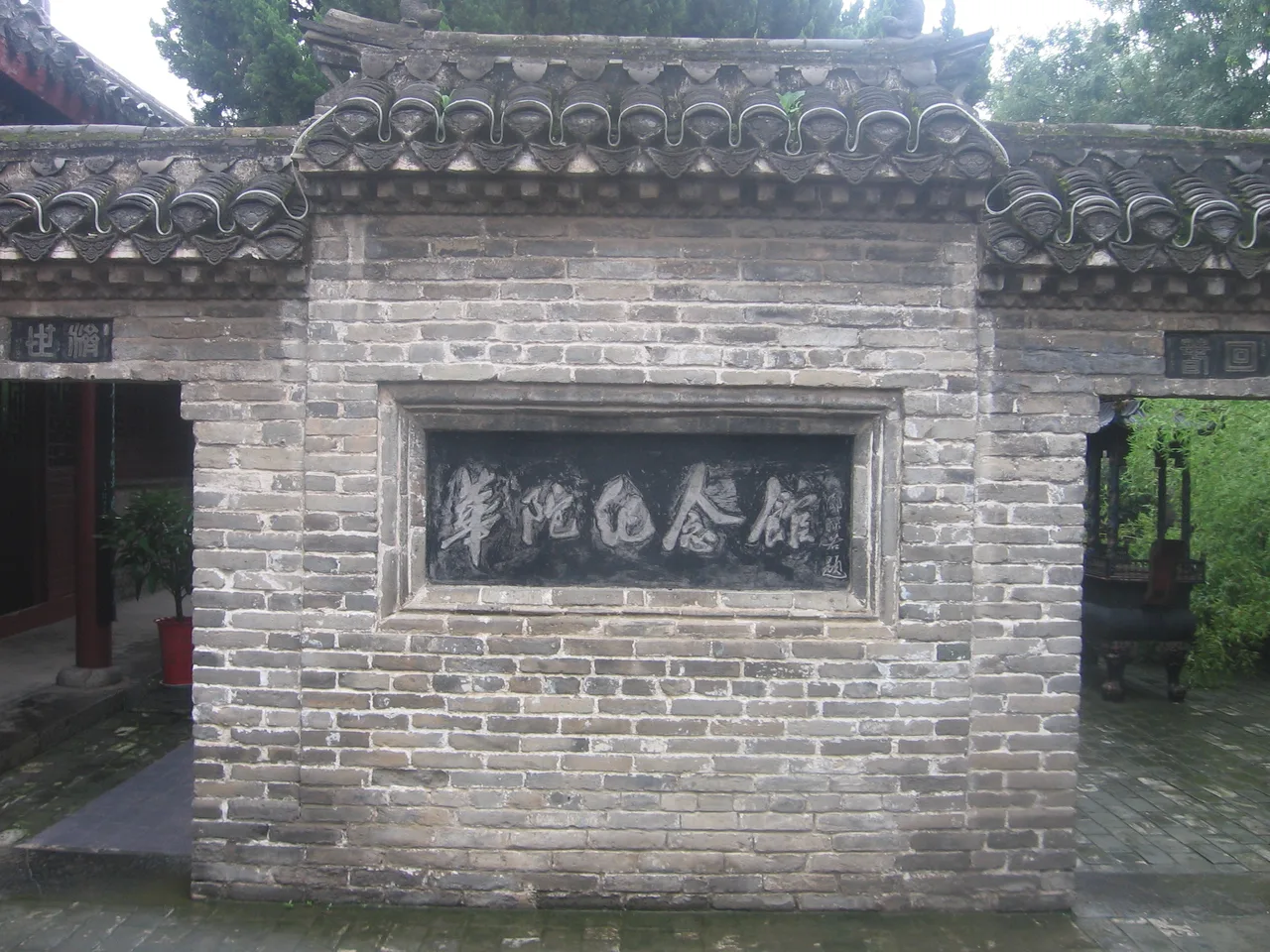
Popular tales often show Hua Tuo (courtesy name Yuanhua) as a martyr killed by a tyrant. Many games and movies praise his herbal anesthetic mafeisan. They tell of his bold plan to split the skull of Cao Cao with an axe. Popular memory claims this act crushed ancient brain surgery forever.
Ancient records tell a very different story. The fight between the Master Physician and the warlord was not about brain surgery. It was not about superstitious dread. Instead, it was a harsh political dispute. It grew from gentry pride, strict Han laws, and iron wartime military administration.
01. Layered Memory and Storytelling: How the Trepanation Myth Was Invented
Before we study the Records of the Three Kingdoms, we must see how folklore changed the facts.
Myth vs. Primary Chronicle vs. How the Myth Evolved
| Popular Legend / Misconception | Primary Chronicle & Archaeology | How the Myth Evolved |
|---|---|---|
| Hua Tuo examined Cao Cao's chronic migraine, prescribed mafeisan, and proposed cleaving the skull with a sharp axe to remove malignant fluid. Cao Cao suspected an assassination plot orchestrated by his political rivals and had him tortured to death in prison. | **Records of the Three Kingdoms (Book of Wei, Biographies of Technicians)**: Hua Tuo stated that Cao Cao's illness was deep-seated and could not be eradicated quickly, though regular treatment could prolong his life. Hua Tuo took leave, feigned his wife's illness to evade recalls, and was executed for deceit and insubordination after an official inspection exposed the lie. | *Song-Yuan oral prompt-books to Luo Guanzhong's Ming novel Romance of the Three Kingdoms***: Street storytellers fused Hua Tuo's authentic laparotomy record with Cao Cao's headaches to heighten theatrical stakes, cementing Cao Cao's villainous stock role as a suspicious despot. |
| Hua Tuo was an ascetic folk physician wandering hills and forests, devoting his entire life to treating commoners across social lines without political ambition. | **Records of the Three Kingdoms (Hua Tuo's biography, Pei Songzhi annotations citing Tuo Biezhuan) and Book of the Later Han**: Recommended early on as a Filial and Incorrupt candidate by Chancellor Chen Gui of Xuzhou, Hua Tuo was thoroughly trained in the Confucian classics and later bitterly regretted being treated merely as a practicing artisan. | Ming-Qing guild worship and popular fiction: Folk trade guilds elevated Hua Tuo into a divine patron, erasing the sharp Han divide between classical scholars and technical practitioners (fangji) to craft an idealized healer who disdained power. |
| In prison, Hua Tuo handed his masterpiece Qingnang Shu to a guard whose wife burned it, erasing China's surgical and craniotomy secrets forever. | Records of the Three Kingdoms: Hua Tuo offered a scroll of medical scrolls to a Prison Clerk, who refused out of fear of legal prosecution. Hua Tuo did not force the matter and burned the scroll himself. The text contained recipes, detoxification formulas, and therapeutic gymnastics, rather than cranial surgery. | Early 20th-century intellectual movements: Modernizing intellectuals facing Western anatomical medicine projected anxieties over lost traditions onto the burned scroll legend, framing it as an aborted scientific revolution. |
The Historical Core: The Reality of Mafeisan and Abdominal Surgery
Hua Tuo was indeed a bold medical pioneer. Yet primary texts set clear limits to his craft. Chen Shou writes in the Records of the Three Kingdoms:
> "If disease gathered within the body where needle and broth could not reach, he had the patient drink mafeisan with wine. Once insensate as if intoxicated, the physician cut open the abdomen or back and excised the accumulation. If the affliction lay within the intestines or stomach, he severed and cleansed the decayed parts, stitched the wound, and applied divine ointment. The wound healed in four to five days, and the patient fully recovered within a month."
This text reports cutting out internal masses and washing damaged gut tissue. Long before sterile rooms or modern drugs existed, herbal sedation and wound cleaning marked a major step forward.
The human skull is another matter entirely. It is packed with blood vessels and fragile tissue. In the third century, chopping into a living head would cause quick bleeding, bad infection, and death. Hua Tuo knew body anatomy too well to suggest such a reckless plan. When treating Cao Cao's headaches, he chose simple methods. He placed a needle near the chest, easing muscle cramps and soothing the pain at once.
How Storytellers and Playwrights Reshaped the Record
Why did later books give Hua Tuo an axe?
The tale shifted during the Song and Yuan eras. During the Southern Song, urban stages grew fast. In Romance of the Three Kingdoms, stories needed dramatic flair to paint Cao Cao as an evil tyrant. A quiet dispute over an overstayed leave was not exciting enough for public stages.
Writers combined two different records. They took the true story of gut surgery from the start of Hua Tuo's life. Then they pasted it onto Cao Cao's headache at the end. Because the pain was in the head, the surgery had to move there too.
The scene set Hua Tuo's pure heart against Cao Cao's dark doubts. Over the centuries, theater groups repeated this duel. Soon, crowds took this literary fiction for real history.
02. The Real Motive: Gentry Anxieties and Wartime Command
Why did Cao Cao put his doctor to death? Chen Shou shows us a feud born of social rank, broken laws, and army rules.
The Scholar-Physician Dilemma: Caught Between Status and Skill
The recommendation system of the late Eastern Han put scholar-officials at the top. Elites hired specialists skilled in Divination and healing, but looked down on their craft as common labor. As earlier writers of the Records of the Grand Historian knew, technical skill rarely matched gentry glory. The Records of the Three Kingdoms notes this strain:
> "Hua Tuo was originally a scholar who lived as a physician; he often regretted being identified merely by his medical craft."
Hua Tuo studied hard in Xuzhou as a youth. A local leader named him as Filial and Incorrupt, and Defender-in-chief Huang Wan called him to office. Yet Hua Tuo turned both posts down. When Cao Cao summoned him to Xuchang as a personal Master Physician, this tension flared up.
Serving as a private retainer felt degrading. It stripped away his status as an independent scholar. He took pride in Ledao and Yangwu, longing for the standing of an Academician or Grand Master. To gain leverage, he used an allusive expression when describing the warlord's illness. He claimed the headache needed years of slow care, hoping to win rank and respect before seeking a way home.
Forged Leaves and Insubordination: The Legal Trap
The camp at Xuchang lived on high alert. Cao Cao faced rival warlords and plots inside the Imperial Court. He forced every aide to follow strict orders under wartime military administration.
Hua Tuo soon stepped into a fatal trap. He said he had to gather rare herbs and took leave to visit Pei. Once home, he lied and said his wife was ill. He ignored multiple recall orders. Cao Cao sent letters and asked local magistrates to escort him back, but the doctor refused to move.
Cao Cao sent an inspector with clear orders: "If his wife is truly sick, gift him forty bushels of beans and extend his leave; if he lies, arrest him immediately."
The agent found that the wife was completely well.
The feud turned into a criminal trial for fraud and desertion. Under wartime law, lying to the high command meant death. Adviser Xun Yu begged for mercy, noting the doctor's rare gift for saving lives. Cao Cao dismissed the plea: "Do not worry. Does the world lack such men?" Commentators like Yu Lie saw this clash as gentry pride crashing against raw state power.
Cao Cao ordered the execution for fraud and insubordination, not because of a medical dispute.
03. Cross-Civilization Mirror: Healers Under Imperial Authority
Looking at Hua Tuo beside his Roman peers shows how institutions shape medical legacies. While Hua Tuo sat in a prison cell, Galen of Pergamon worked with imperial support in Rome.
Both men lived around the same time and treated mighty rulers. Galen served Marcus Aurelius and Commodus. Roman courts had their own poison plots and bloody feuds, yet Galen held an honored seat.
Rome treated medicine as a branch of natural philosophy. Born to a wealthy architect, Galen studied widely across the Mediterranean. He ran public dissections in open theaters to win noble patrons. Marcus Aurelius called him "first among physicians and unique among philosophers."
The biggest contrast was how their words survived. In prison, Hua Tuo offered his scrolls to a frightened guard. The guard refused them, and Hua Tuo burned his recipes and surgical notes on the spot.
Galen placed his clinical experience in large libraries, private workshops, and trade ports. Even after a huge fire ruined his clinic in 192 CE, copies survived across Constantinople and Alexandria. His words moved into Arabic and returned to Europe centuries later.
Hua Tuo had to rely on small family circles. Without public archives, his unique skill died with him. When state power struck, his medical legacy disappeared.
Cao Cao soon felt the sting of this loss. In late 208 CE, his young son Cao Chong fell sick. The court doctors could do nothing, and the boy died. Cao Cao wept and confessed: "I regret killing Hua Tuo, for it has cost my boy his life!"
That regret had nothing to do with brain surgery. It showed the bitter cost of harsh rule: the loss of irreplaceable human wisdom when power crushes the independent scholar.
Primary Sources & Historical Bibliography
- Chen Shou, with commentary by Pei Songzhi, Records of the Three Kingdoms, Vol. 29, "Book of Wei: Biographies of Technicians". Beijing: Zhonghua Book Company. Contains the primary accounts of Cao Cao's headaches, abdominal surgery with mafeisan, and the prison manuscript burning based on authentic historical sources.
- Fan Ye, with commentary by Li Xian et al., Book of the Later Han, Vol. 82B, "Biographies of Diviners and Technicians". Beijing: Zhonghua Book Company. Details Hua Tuo's gentry background, professional anxieties, and regional itinerary.
- Liao Yuqun, Reconstructing Qin and Han Medicine: Texts and Ideological Critiques. Shanghai: Shanghai Jiao Tong University Press, 2012. Analyzes the social standing of Han medical specialists and manuscript attrition.
- Vivian Nutton, Ancient Medicine. London: Routledge, 2012. Examines Galen's imperial patronage, public anatomical dissections, and textual transmission in the late Roman Empire.