Confucian Mentorship
Sponsored by the administrator to study the Classics under Lu Zhi at Mount Goushi, befriending Liu Bei.
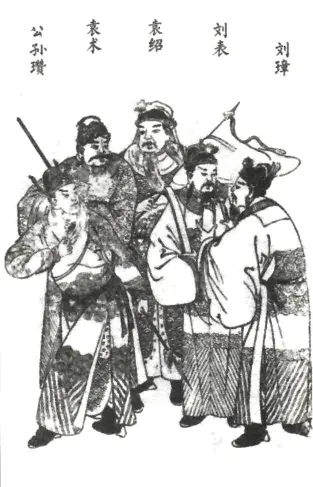
公孙瓒
Gongsun Zan (d. 199), courtesy name Bogui, was a native of Lingzhi, Liaoxi (present-day Qian'an, Hebei), and an eminent military general and regional warlord of the late Eastern Han Dynasty. Although born into a prominent local clan, Gongsun was born to a concubine of humble status, which initially restricted him to low-ranking clerical posts in the commandery. Possessing an imposing stature and a resonant voice, he attracted…
Gongsun Zan (d. 199), courtesy name Bogui, was a native of Lingzhi, Liaoxi (present-day Qian'an, Hebei), and an eminent military general and regional warlord of the late Eastern Han Dynasty. Although born into a prominent local clan, Gongsun was born to a concubine of humble status, which initially restricted him to low-ranking clerical posts in the commandery. Possessing an imposing stature and a resonant voice, he attracted the favor of the commandery administrator, who sponsored his studies under the renowned Confucian master Lu Zhi at Mount Goushi, where he forged a lifelong camaraderie with Liu Bei. Returning to the frontier as Chief Clerk of the Liaoxi Dependent State, he demonstrated extraordinary martial bravery, forming the elite "White Horse Volunteers" cavalry and repeatedly defeating Wuhuan and Xianbei incursions. During the Zhongping era, Gongsun participated in crushing the rebellion of Zhang Chun and was elevated to General of the Household and enfeoffed as Marquis of Ji. In the Chuping era, Gongsun led twenty thousand infantry and cavalry to crush a three-hundred-thousand-strong Qingzhou Yellow Turban army at Dongguang, spreading his fame throughout the Hebei plains. Expanding his dominion southward, he engaged Yuan Shao in the famous Battle of Jieqiao and Battle of Juma River; although checked at Jieqiao by Qu Yi's crossbowmen, he maintained military dominance over Youzhou and large swathes of Jizhou. In 193, amidst deep ideological disputes, Gongsun launched a surprise assault on Youzhou Governor Liu Yu, capturing and executing him to seize total control over Youzhou. However, his harsh rule and alienation of local gentry severely eroded popular support. By 199, Yuan Shao mobilized overwhelming armies to besiege Gongsun in his fortified stronghold at Yijing. Adopting a passive defensive posture, Gongsun refused to relieve outlying garrisons, losing strategic momentum while Black Mountain bandit reinforcements under Zhang Yan arrived too late. Yuan Shao's sappers tunneled beneath the towers, undermining their foundations with fire. Facing inevitable defeat, Gongsun killed his family and committed suicide by fire amidst the collapsing citadel. Renowned in his early years for defending northern frontiers and widely condemned in his later years for cruelty and insularity, Gongsun Zan remains one of the most tragic and pivotal warlords in the collapse of the Han dynasty.
Sponsored by the administrator to study the Classics under Lu Zhi at Mount Goushi, befriending Liu Bei.
Appointed Chief Clerk of the Liaoxi Dependent State, leading cavalry charges that repelled Xianbei raids.
Joined Meng Yi to crush rebel Zhang Chun and Wuhuan chieftain Qiuliju at Shimen, earning promotion to General of the Household.
Annihilated the Qingzhou Yellow Turbans at Dongguang, beheading over thirty thousand and being enfeoffed as Marquis of Ji.
Clashed with Yuan Shao at Jieqiao, suffering a setback against Qu Yi's crossbows before routing pursuing forces at Juma River.
Crushed Youzhou Governor Liu Yu's ten-thousand-strong host, executed him in Ji city, and seized total control of Youzhou.
Repelled by northern tribal coalitions and Liu Yu loyalists; retreated behind the Yishui to construct the fortified towers of Yijing.
Completely encircled by Yuan Shao's grand army at Yijing; stubbornly refused to aid besieged outlying garrisons.
In March, Yuan Shao's sappers undermined the central keep; trapped without escape, Gongsun slew his kin and committed suicide in flames.
Gongsun Zan was born into a prestigious family in Lingzhi County, Liaoxi Commandery, which had produced generations of two-thousand-bushel senior officials. However, because his biological mother was of lowly concubine origin, he was initially barred from hereditary elite preferment, serving merely as an administrative clerk in the commandery government. Gongsun was exceptionally tall, endowed with dignified martial poise and a booming voice that echoed across hundred paces during administrative assemblies. The Administrator of Liaoxi, impressed by his abilities and demeanor, gave his own daughter to Gongsun in marriage and financed his formal education.
During the Xiping era of Emperor Ling, the administrator sent Gongsun to Mount Goushi in Henan to study the Book of Documents and the Spring and Autumn Annals under the celebrated classicist Lu Zhi. During this period, Gongsun studied alongside Liu Bei and Liu Deran of Zhuo Commandery. Being slightly older and endowed with a generous martial character, Gongsun was treated by Liu Bei as an elder brother, establishing a lifelong bond between them. Following the completion of his studies, Gongsun returned to Liaoxi to resume clerical duties.
Subsequently, Administrator Liu Ji of Liaoxi recommended Gongsun as an accounting envoy to the capital Luoyang. While in the imperial capital, Gongsun also studied under the Minister of Ceremonies Liu Kuan, associating with prominent scholars such as Wang Yi, Fu Xie, and Wei Jie, which greatly broadened his horizons. Later, when Administrator Liu was convicted of an official offense and conveyed to Luoyang in a prison cart, imperial statutes forbade subordinate clerks from accompanying convicted superiors. Disguising himself as a carriage driver, Gongsun personally drove the carriage thousands of miles to attend his benefactor, preparing wine and sacrificial offerings to accompany him into exile in Rinan until a pardon arrived, earning widespread praise across the realm for his loyalty.
Recommended as a Filial and Incorrupt candidate, Gongsun was appointed a Court Gentleman in Luoyang before being dispatched to the frontier as Chief Clerk of the Liaoxi Dependent State. The Liaoxi region was plagued by perpetual incursions from nomadic Xianbei cavalry. On one frontier patrol with only several dozen horsemen, Gongsun suddenly encountered an ambush by several hundred elite Xianbei cavalry. Facing overwhelming odds as his men panicked, Gongsun brandished a two-headed spear and urged his men forward, shouting that survival lay only in a fierce frontal assault. Gongsun spearheaded the charge, personally slaying dozens of enemy warriors while sustaining multiple wounds.
Galvanized by his heroism, his horsemen pierced the encirclement, killing scores of enemies and breaking free. Following this battle, nomadic tribes along the frontier stood in awe of his ferocity. Promoted to Magistrate of Zhuo County, Gongsun cooperated with Colonel Zou Jing to repel border incursions. Recognizing the primacy of cavalry warfare along the northern steppes, Gongsun selected several dozen elite marksmen and skilled riders, mounting them entirely on pure white warhorses to create an elite bodyguard known as the "White Horse Volunteers."
Adopting white steeds as his military emblem, Gongsun styled himself the "White Horse General." In frontier skirmishes against nomadic tribes, Gongsun consistently placed the White Horse Volunteers at the vanguard. The thunderous approach of white cavalry instilled such terror in Wuhuan and Xianbei fighters that they sketched likenesses of Gongsun on archery targets to steel their nerves. The fame of the "White Horse Chief Clerk" resounded across the northern frontier.
In 185, when the Liangzhou rebellion erupted under Han Sui and Bian Zhang, General of Chariots and Cavalry Zhang Wen was ordered to launch a punitive western expedition, summoning three thousand elite Wuhuan shock cavalry under Gongsun's command. However, due to chronic delays in imperial provisions, Wuhuan contingents mutinied and fled back to the north. Former Zhongshan Administrator Zhang Chun and former Taishan Administrator Zhang Ju seized this discontent to incite Wuhuan chieftain Qiuliju into open rebellion. Zhang Chun styled himself General-in-Chief, while Zhang Ju proclaimed himself Emperor, storming Jizhong and killing the Protector of the Wuhuan Gongqiu Cheng and Liaoxi Administrator Liu Zheng.
In September 188, the Han court appointed Meng Yi as General of the Household to direct Gongsun's forces against the rebel coalition. That winter, Gongsun confronted Zhang Chun's main army at Shimen in Liaoxi. Employing his White Horse Volunteers in sweeping flanking maneuvers, Gongsun routed the rebel host, decapitating thousands. Zhang Chun fled into the Xianbei steppes, leaving his family behind. Gongsun pursued aggressively into the desolate frontier, liberating tens of thousands of captive Han men and women.
However, overextending his supply lines, Gongsun found his force surrounded by Qiuliju's Wuhuan cavalry at Guanzi City for more than two hundred days. Provisions completely failed, forcing the garrison to consume their warhorses and chew bowstrings and leather armor, suffering over fifty percent casualties. Gongsun maintained steadfast command until Qiuliju's forces, exhausted by the siege and facing starvation themselves, withdrew into the steppe. Gongsun broke out with the survivors, receiving promotion to Colonel Who Subdues the Barbarians and the noble title Marquis of Duting, garrisoning Youbeiping.
To restore tranquility to Youzhou, the imperial court appointed Liu Yu, a member of the imperial clan renowned for benevolence, as Governor of Youzhou. Liu Yu implemented conciliatory policies toward the Wuhuan, offering amnesties and bounties. Zhang Chun was assassinated by his retainer Wang Zheng, and Qiuliju surrendered to Liu Yu. Gongsun strongly opposed reconciliation, advocating complete military annihilation of the border tribes, igniting deep hostility between the two leaders. In 190, when the Guandong coalition rose against Dong Zhuo, Emperor Xian dispatched Liu Yu's son Liu He to seek rescue, but Yuan Shu detained Liu He in Nanyang. Fearing Yuan Shu's resentment, Gongsun dispatched his cousin Gongsun Yue with a thousand horsemen to cultivate ties with Yuan Shu.
Yuan Shu ordered Gongsun Yue to assist Sun Jian in attacking Zhou Ang, an ally of Yuan Shao, during which Gongsun Yue was killed by a stray arrow at Yangcheng. Enraged, Gongsun blamed Yuan Shao for his cousin's death, deploying his army at the Pan River to prepare for war. He submitted a memorial enumerating ten major crimes committed by Yuan Shao, including manipulating astrology, murdering loyal officials, extortion, and treasonous ambition. Alarmed, Yuan Shao offered his own seal of Administrator of Bohai to Gongsun's cousin Gongsun Fan in an attempt to pacify him. However, upon reaching Bohai, Gongsun Fan defected and mobilized the commandery forces to support Gongsun Zan.
In autumn 1991, three hundred thousand Qingzhou Yellow Turbans marched north to unite with the Black Mountain bandits. Gongsun Zan and Gongsun Fan ambushed the rebels south of Dongguang with twenty thousand elite cavalry and infantry. The White Horse Volunteers unleashed devastating charges, slaying over thirty thousand rebels. When the remnants attempted to cross the Yellow River into Pingyuan, Gongsun attacked them mid-crossing, capturing seventy thousand prisoners and tens of thousands of baggage carts. The imperial court appointed him General Who Arouses Military Might and Marquis of Ji. Leveraging this prestige, Gongsun unilaterally appointed Yan Gang as Governor of Jizhou, Tian Kai as Governor of Qingzhou, and Shan Jing as Governor of Yanzhou. The Hebei commanderies defected to his banner, and Zhao Yun joined his command with local volunteers.
In January 192, Gongsun led thirty thousand veteran troops south from the Pan River to crush Yuan Shao at Ye city, colliding twenty li south of Jieqiao in a decisive contest for northern supremacy. Confident in his elite cavalry, Gongsun deployed twenty thousand infantry in a massive square, flanked by ten thousand horsemen on either wing with the White Horse Volunteers concentrated in the center.
Anticipating the cavalry assault, Yuan Shao dispatched his general Qu Yi with eight hundred vanguard shock troops, concealing a thousand heavy crossbowmen behind large shields on either flank. Overconfident, Gongsun unleashed his cavalry in a full-scale frontal charge. When the cavalry reached within dozens of paces, Qu Yi's infantry erupted with battle cries, while the concealed crossbows unleashed dense volleys of bolts. Gongsun's cavalry fell into utter disarray; General Yan Gang was slain on the field, and the forward divisions broke. Qu Yi pressed toward Jieqiao, killing over a thousand men and routing Gongsun's army back to Ji city.
Following Jieqiao, Yuan Shao dispatched Cui Juye with tens of thousands of troops to besiege Gongsun's fortress at Gu'an. Failing to take the keep, Cui retreated south. Gongsun seized the initiative, pursuing with thirty thousand elite troops and intercepting Cui Juye at the Juma River, inflicting seven to eight thousand casualties on Yuan's retreating army. Gongsun consolidated his hold on Pingyuan, stationing Tian Kai and Liu Bei at Gaotang, and allied with Tao Qian of Xuzhou. However, combined counteroffensives by Yuan Shao and Cao Cao at Longcou checked Gongsun's advance, resulting in an armed stalemate until imperial mediator Zhao Qi brokered a temporary truce.
In 193, animosity between Gongsun Zan and Youzhou Governor Liu Yu escalated into open warfare. Liu Yu enjoyed immense popularity among both Han Chinese and steppe nomads, whereas Gongsun imposed harsh requisitions and plundered merchants to fund his armies. Fearing an imminent mutiny, Liu Yu led a force of one hundred thousand troops in a surprise assault on Gongsun's compound in Ji city. Taken unprepared, Gongsun barricaded himself behind compound walls with several hundred retainers.
However, Liu Yu's humanitarian restraint proved fatal; he strictly ordered his soldiers not to burn civilian residences or harm non-combatants, hampering his overwhelming force. Exploiting the hesitation, Gongsun launched an incendiary counterattack with several hundred shock troops under cover of the wind. Liu Yu's undisciplined host disintegrated. Gongsun pursued Liu Yu to Juyong, captured him, and coerced imperial envoy Duan Xun into condemning Liu Yu on fabricated charges of usurping imperial authority, publicly executing him in the marketplace of Ji city.
The execution of the universally revered Liu Yu aroused widespread fury throughout northern China. Former subordinates of Liu Yu, including Sun Jin, Zhang Yi, and Zhang Zan, committed suicide over his corpse, while scholar Tian Chou openly mourned him. Liu Yu's officers Xianyu Fu and Qizhou rallied thousands of Youzhou troops, appointed Yan Rou as Wuhuan Sima, and allied with tens of thousands of Xianbei horsemen to attack Gongsun. Gongsun's general Zou Dan was routed and killed along the Lu River with four thousand casualties. Alienating the intellectual elite, Gongsun relied on divination peddlers like Liu Weitai, silk merchants like Li Yizi, and trader Le Hedang, swearing brotherhood with them and allowing them to misgovern Youzhou, driving the population into deep resentment.
In 195, besieged by domestic and external threats, Gongsun retreated behind the southern bank of the Yishui, conscripting vast labor forces to erect the monumental defensive stronghold of Yijing. Gongsun excavated ten concentric defensive moats and raised dozens of immense earthen mounds five to six rods in height, topping each with fortified ramparts and stockpiling three million bushels of grain. Gongsun established his personal command post within the tallest central tower, forbidding external visitors and barring males over seven years of age, surrounded solely by concubines and female attendants while military dispatches were hoisted using seven-foot bamboo poles.
Within this sealed fortress, Gongsun's military leadership degraded into total paranoia. When outlying garrisons came under attack from Yuan Shao's forces and requested relief, Gongsun adamantly refused to send aid, declaring that relieving one post would encourage others to rely on external help rather than fighting to the death. Consequently, outlying commanders surrendered or fled upon the enemy's arrival, unraveling the peripheral defense system of Yijing.
In the winter of 198, Yuan Shao mobilized his entire northern army to lay total siege to Yijing. In early spring 199, Gongsun dispatched his son Gongsun Xu to the Taihang Mountains to solicit aid from Black Mountain chieftain Zhang Yan, agreeing to coordinate an internal breakout signaled by fires. However, Yuan Shao's scouts intercepted the dispatch and set ambush fires on the appointed night. Deceived, Gongsun launched a sortie and suffered a disastrous defeat, fleeing back into the inner citadel. His chief clerk Guan Jing, lamenting that he had not strongly counseled a breakout earlier, rode alone into enemy ranks to die in battle.
Yuan Shao deployed military sappers to excavate deep tunnels beneath the foundation piles of Yijing's central tower, propping the shafts with timber beams before setting them ablaze. As the structural supports collapsed, the towering keeps crumbled one after another. Yuan Shao's soldiers swarmed the interior ruins. Trapped without escape, Gongsun slew his wives and children with his own hands before hanging himself and setting his body on fire. Yuan Shao severed Gongsun's head and dispatched it to Cao Cao at Xuchang, bringing a catastrophic end to the career of the White Horse General.
Gongsun Zan was an innovative tactician of light cavalry warfare in ancient China. Confronted by the mobile archery tactics of Xianbei and Wuhuan horsemen along the northern frontier, Gongsun departed from the Han army's traditional reliance on infantry formations. Selecting several thousand elite horse archers and mounting them exclusively on pure white horses, he forged the renowned "White Horse Volunteers." Combining strategic rapid deployment with shock cavalry breakthrough capabilities, the unit achieved notable victories in Liaoxi and Shimen, serving as an effective frontier vanguard that checked nomad depredations along the northern borders.
During the collapse of the Eastern Han order, nomadic tribes exploited central imperial weakness to raid northern commanderies. When Zhang Chun and Zhang Ju conspired with Wuhuan chieftain Qiuliju to plunder the north, Gongsun took command amidst frontier turmoil, decisively defeating the rebel coalition at the Battle of Shimen and liberating tens of thousands of captured civilians. Stationed for years at Liaoxi and Youbeiping, Gongsun adopted an unyielding offensive military doctrine against steppe raiders, shielding Youzhou from widespread devastation and preserving the integrity of the Great Wall frontier defenses.
The Battle of Dongguang in 191 marked the pinnacle of Gongsun Zan's military career. Confronted by a formidable host of three hundred thousand Qingzhou Yellow Turbans advancing north toward the Taihang Mountains, Gongsun intercepted them south of Dongguang with only twenty thousand troops. Employing coordinated cavalry and infantry maneuvers, he routed the rebel army, executing over thirty thousand and subsequently intercepting the retreat across the Yellow River to capture seventy thousand prisoners and immense stockpiles of supplies. This victory extinguished Yellow Turban dominance across Hebei, securing regional stability and establishing Gongsun as the foremost military titan in northern China.
Gongsun Zan's prolonged struggle against Yuan Shao over control of Jizhou shaped the early warlord landscape of the late Eastern Han. Although his cavalry sustained a setback against Qu Yi's entrenched crossbowmen at the Battle of Jieqiao, Gongsun demonstrated rapid operational recovery by pursuing and decimating Cui Juye's forces at the Juma River, inflicting heavy casualties on Yuan Shao's army. By coordinating strategic alliances with Tao Qian in Xuzhou and Yuan Shu in the south, Gongsun forged an extensive pincer coalition against Yuan Shao, delineating the geopolitical contours of late Han regional rivalries.
Gongsun Zan's administration in Youzhou left profound lessons regarding governance and political legitimacy. Following his triumph over the regional administration, Gongsun alienated the established scholar-gentry and aristocratic families, choosing instead to rely on divination practitioners and venal merchants, which fatally undermined his political foundation. In particular, his unjust execution of the widely respected imperial elder Liu Yu galvanized a broad coalition of local gentry and steppe tribes against him. His authoritarian cruelty transformed him from a celebrated frontier defender into an isolated tyrant, precipitating his political and military downfall.
The stronghold of Yijing constructed by Gongsun Zan represented an impressive engineering endeavor in ancient Chinese military fortification. Featuring ten concentric defensive moats, hundreds of elevated earthen mounds, and towering keeps stocked with millions of bushels of grain, the complex demonstrated advanced engineering techniques. However, Gongsun's paranoid strategy of isolation, passivity, and refusal to assist outlying garrisons turned the defensive asset into a self-imposed prison. The ultimate fall of Yijing stands as a prominent historical case study on the limitations of purely passive defense and the fatal consequences of declining morale and leadership isolation.
FIGURES ASSOCIATED WITH THIS DYNASTY