TL;DR · Core Takeaways
- Zero statutory land tax helped rich clans, not poor families: Emperor Wen of Han dropped the farm statutory land tax for eleven years. Wealthy elites saved vast sums. Poor homes still paid heavy cash head taxes.
- Surpluses grew from dual ledgers, rank sales, and strict thrift: The court took revenue from state mines and salt pans. It traded noble titles for private grain deliveries. It also avoided costly wars.
- Low statutory land tax speeded up land concentration: Flat coin taxes hurt small farms. Rich landlords bought up fields. This shift later forced Emperor Wu of Han to launch the state monopoly on salt and iron.
> Historical Context: Early Western Han Dynasty (180 BCE - 141 BCE) | Parallel in Europe: Roman Republic conquest of Macedon and Mediterranean expansion.
The Rule of Wen and Jing Rule of Wen and Jing is celebrated in Chinese history for its unusually light agricultural taxes. In 168 BCE, Emperor Wen of Han Emperor Wen of Han reduced the statutory land tax by half, and one year later he abolished it completely for eleven consecutive years. When Emperor Jing of Han restored the levy in 156 BCE, he kept the one-thirtieth land tax at barely 3.3 percent.
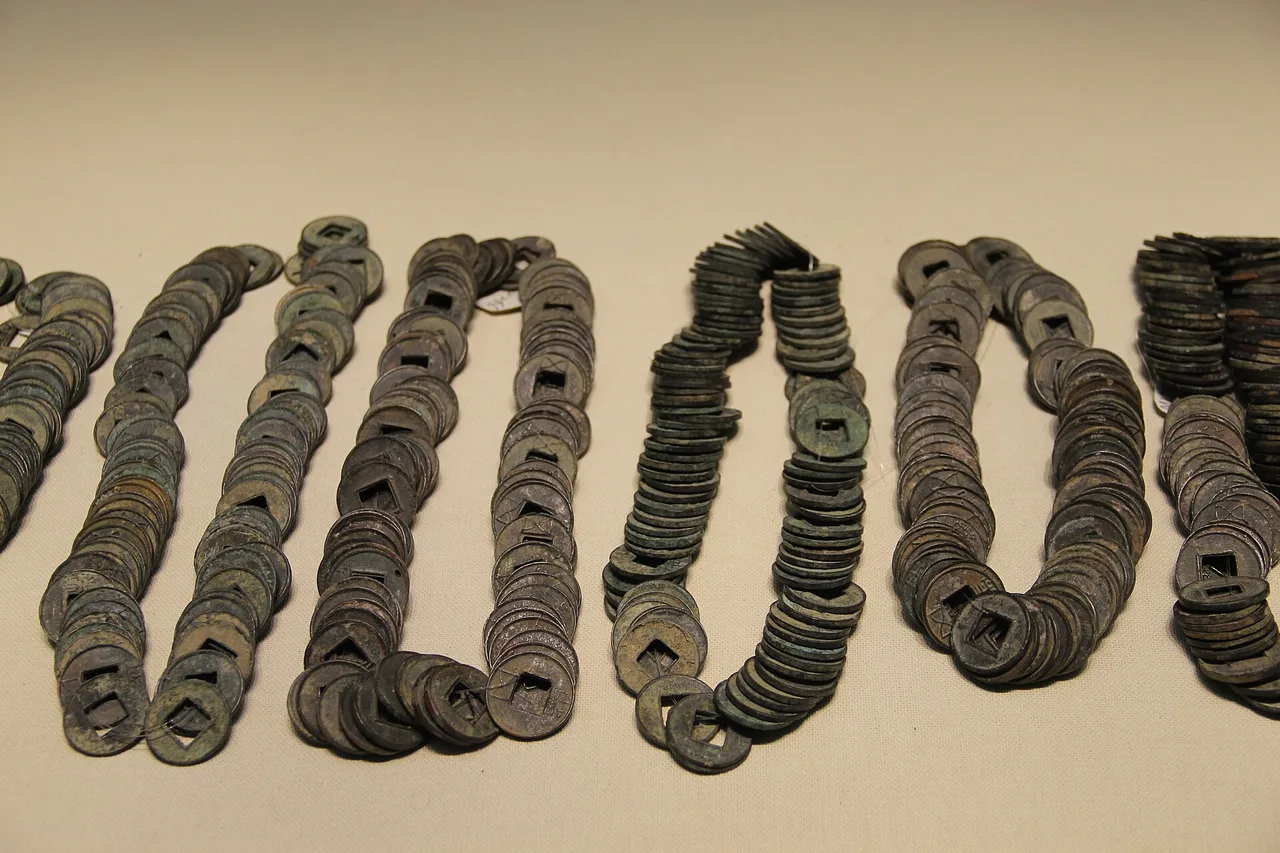
Early chronicles describe a remarkably prosperous capital in Chang'an where grain overflowed imperial barns until older crops rotted beneath fresh harvests. Vast strings of bronze coins filled state vaults until their hemp cords snapped under the sheer weight and clerks could no longer tally the treasury.
Yet this golden picture conceals an important question of fiscal administration. When the Western Han Western Han Dynasty court suspended the statutory land tax for more than a decade, how did it still pay civil officials, maintain frontier armies, fund the Imperial Court, and build huge cash reserves?
The explanation lies in a second ledger, because Han rulers dropped only the statutory land tax on harvests while keeping powerful cash mechanisms flowing steadily into central vaults.
01. Dual Treasuries and the Cash Poll Tax Engine
Early Western Han leaders divided state money into two separate funds. Taxes on lakes, hills, salt, iron, and city stalls went to the Chamberlain for the Palace Revenues. That office funded the Inner Court and palace staff. Taxes on farms and cash head taxes went to the Chamberlain for the National Treasury. That office paid for military administration, roads, and civil rule.
Why Cutting the Statutory Land Tax Missed Most Poor Farmers
The statutory land tax took a share of crops grown on owned fields. Who gained the most when Emperor Wen of Han cut it to zero? People with Marquis ranks, the Imperial Clan, and rich landlords saved heaps of grain. Ordinary peasants on tiny plots got little help. Landless tenants gained almost nothing. Three rigid cash levies hit every registered home:
| Tax Category | Who Paid & Rate | Early Han Burden & Impact | Main Winner or Burden Bearer |
|---|---|---|---|
| Statutory Land Tax | Share of harvest (0% in 167-156 BCE, then 3.3%) | Bigger landowners saved far more; landless tenants gained almost nothing | Big landlords profited most |
| *Adult Poll Tax (Suanfu)* | Ages 15-56, 120 coins per year (double for merchants & slaves) | Fixed cash charge owed every year regardless of harvest size | Heavy burden on small farms |
| *Minor Poll Tax (Koufu)* | Ages 7-14, 20 coins per year (later 23 coins) | Large families owed higher cash sums even during poor harvests | Working families with children |
| *Labor Commutation (Gengfu)* | Adult men owed 1 month local corvée labor or 2,000 coins | Cash buyout cost several shi of grain per household | Smallholders lacking rank exemptions |
Cheap Grain Amplified Flat Coin Taxes
Early market prices show how severely these fixed cash bills hit modest farming households. During peaceful harvests, one shi of grain sold for only thirty to eighty coins, meaning a family of five owing 400 bronze coins in annual poll taxes had to part with five to ten shi of precious grain.
Because tax offices demanded bronze coins rather than raw grain, farmers had to haul harvests straight into county markets for cash. Whenever abundant harvests drove local grain prices downward, peasant families were forced to sell twice as much grain simply to meet the exact same 400-coin demand.
In that identical year—167 BCE—the Roman Republic defeated Macedon and halted direct property taxes on Italian citizens, shifting revenue collection onto conquered provinces and fixed levies. In both empires, eliminating land levies enriched property owners while rigid poll taxes continued squeezing ordinary workers.
02. Why Capital Granaries Overflowed Without Land Taxes
Why did state barns overflow with grain if the statutory land tax was zero? Two smart policy choices created the surplus.
Buying Ranks With Border Grain
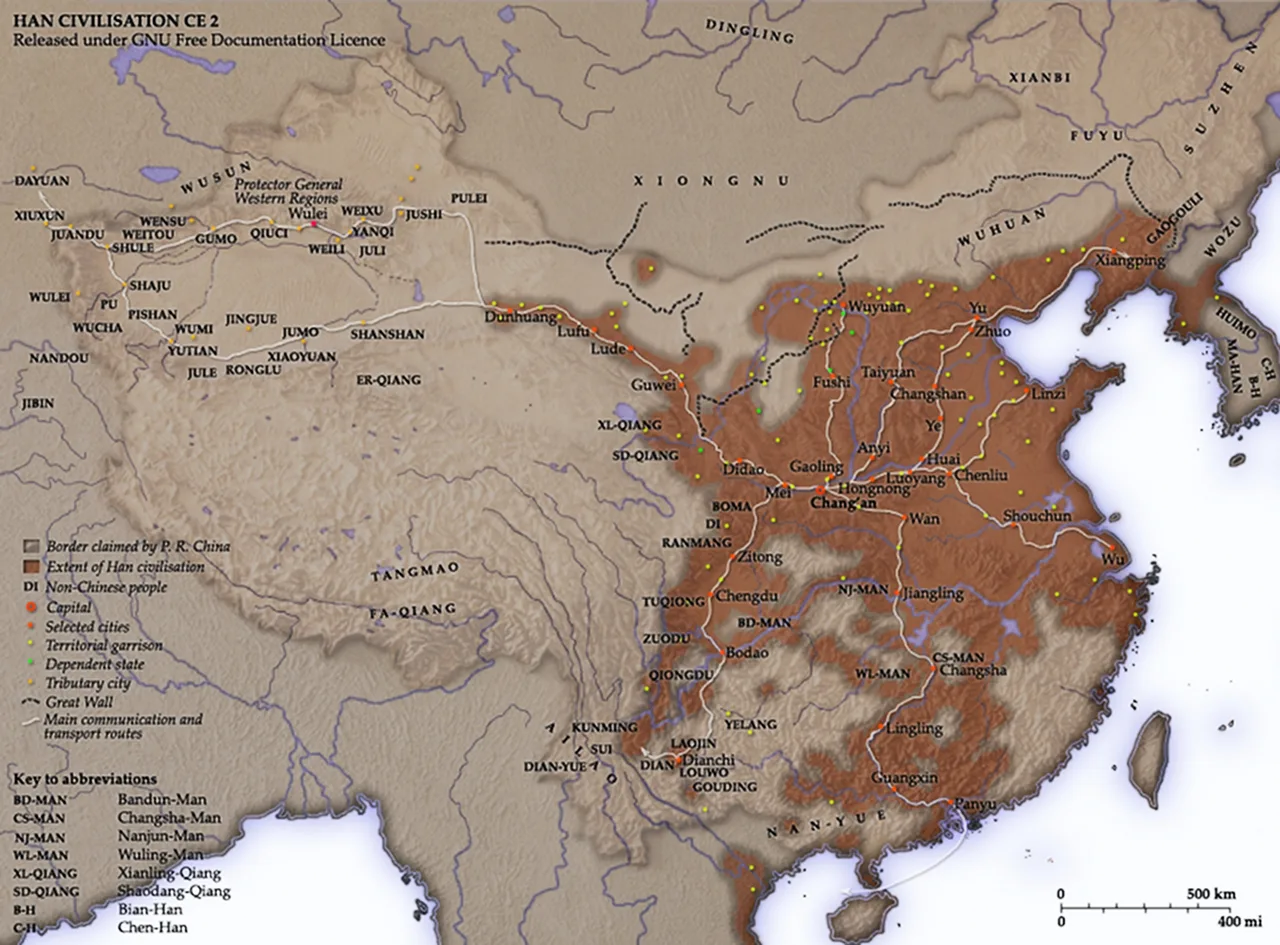
The central treasury spent most of its annual income transporting military provisions to distant frontier garrisons reaching out past Dunhuang. Hauling a single shi of grain from the central plains or Shandong to the northern border proved enormously costly because oxen and cart drivers consumed several shi along the trail.
In 178 BCE, senior adviser Chao Cuo Chao Cuo presented Emperor Wen of Han with an inventive fiscal solution that sold noble ranks in exchange for frontier grain deliveries. Early Han society divided subjects across twenty grades of merit rank, where higher status protected holders from harsh punishments and exempted families from mandatory corvée labor drafts.
Although Han statutes traditionally discouraged commercial prestige, Chao Cuo permitted wealthy merchants and landlords to purchase merit grades by delivering grain directly to border depots. Shipping 600 shi earned the rank of Shangzao, delivering 4,000 shi secured Grand Master (Wudafu) standing, and supplying 12,000 shi conferred top noble rank, prompting rich traders to fund frontier supply lines while saving the central treasury immense transport costs.
Freezing Palaces and Frontier Wars
Strict expenditure restraint formed the second major pillar behind early Han surpluses. Throughout his twenty-three-year reign, Emperor Wen of Han refused to construct lavish new palaces or expand imperial hunting parks, while relying on a pragmatic marriage alliance policy with the Xiongnu confederacy backed by modest silk and grain gifts rather than costly desert campaigns.
By capping military expenditure and halting monumental building projects, the Western Han crown kept annual outlays remarkably low. Meanwhile, steady revenue streams from cash poll taxes, salt tolls, and rank purchases accumulated peacefully inside capital vaults year after year.
03. Hidden Inequality and the Sharp Policy Reversal
Low statutory land taxes helped the people heal after long wars. Yet combining zero land tax with rigid cash poll taxes caused deep trouble. A harsh fiscal chain took shape: Zero statutory land tax enriched large estates -> Flat coin poll taxes pushed poor farmers into high-interest debt -> Land concentration stripped smallholders of farms -> Registered tax rolls eroded -> Later wars drained reserves fast -> Court turned to asset seizures and the state monopoly on salt and iron.
Two Worlds Under One Surplus
Grand Historian Sima Qian lived right before Emperor Wu of Han took power. He wrote about this deep split in his Records of the Grand Historian.
Inside the capital, coins piled high and state grain spoiled in the heat. Out in the provinces, traders and rich clans gained vast fortunes under loose laws. Rapid land concentration pushed poor families to ruin. Desperate parents sold children during bad years to pay back debts.
This growing wealth gap stirred deep anger among the old elite. It helped trigger the Rebellion of the Seven States Rebellion of the Seven States in 154 BCE.
Later, Emperor Wu of Han sent big armies into the northern sands toward Dunhuang. Sixty years of careful savings vanished in just fifteen years. The court changed course at once. Rulers levied high asset taxes on merchant wealth. They rewarded spies under the Reporting Concealed Wealth decrees. The crown also set up the state monopoly on salt and iron State Monopoly on Salt and Iron to seize merchant wealth.
One must look past the simple story of a 3.3 percent tax. When states cut the statutory land tax, they pull funds in through other doors. They use cash poll taxes, corvée labor fees, rank sales, or state monopolies. Tax breaks on land always help the rich, while speeding up land concentration.
- Key Cross-Cultural Anchors:
Rule of Wen and Jing·one-thirtieth land tax·poll tax(tributum capitis) ·Chamberlain for the National Treasury(Da Sinong) ·state monopoly on salt and iron·land concentration·corvée labor·statutory land tax·Dunhuang - Linked CHIST Entries: Rule of Wen and Jing · Emperor Wen of Han · Chao Cuo · Western Han Dynasty · Rebellion of the Seven States · State Monopoly on Salt and Iron
Primary Sources & Historical Bibliography
- Sima Qian, Records of the Grand Historian (Shiji), Vol. 30, Treatise on the Balanced Standard — documenting overflowing early Han treasuries alongside rising merchant concentration.
- Ban Gu, Book of Han (Hanshu), Vol. 24A, Treatise on Food and Money — recording Chao Cuo's grain-for-rank proposal and early Han tax laws.
- Ban Gu, Book of Han (Hanshu), Vols. 4–5, Annals of Emperors Wen and Jing — preserving the tax decrees of 168 BCE, 167 BCE, and 156 BCE.
- Michael Loewe, Everyday Life in Early Imperial China (London: Batsford, 1968) — foundational survey of Han currency, taxes, and rural life.
- Walter Scheidel (ed.), State Power in Ancient China and Rome (Oxford University Press, 2015) — comparative analysis of fiscal extraction and elite privilege in Han China and Rome.