Inception of Monopolies
Emperor Wu decrees the nationalization of salt and iron industries, creating specialized imperial offices.
Western Han (西汉) · HISTORICAL EVENT
盐铁官营
The State Monopolies on Salt and Iron (盐铁官营) was a momentous centralized economic policy enacted during the reign of Emperor Wu of the Western Han Dynasty. Facing severe fiscal exhaustion resulting from extensive campaigns against the Xiongnu and large-scale regional relief efforts, Emperor Wu adopted the recommendations of merchant technocrats Kong Jin and Dongguo Xianyang. Grand fiscal planner Sang Hongyang organized the nationwide nationalization of…
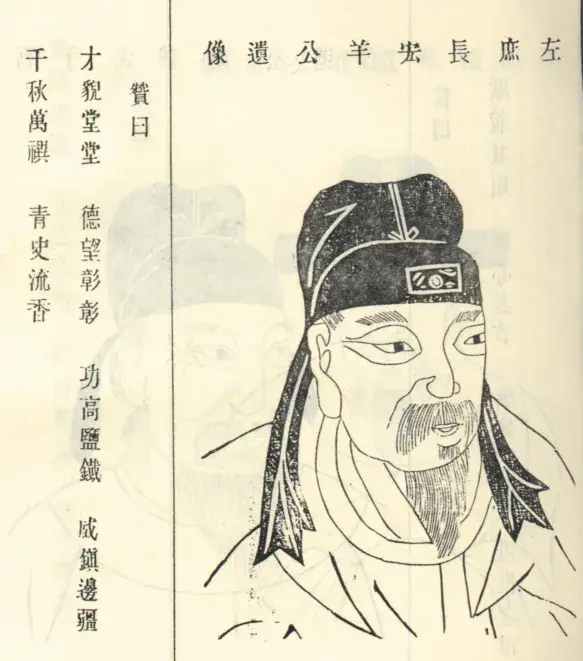
The State Monopolies on Salt and Iron (盐铁官营) was a momentous centralized economic policy enacted during the reign of Emperor Wu of the Western Han Dynasty. Facing severe fiscal exhaustion resulting from extensive campaigns against the Xiongnu and large-scale regional relief efforts, Emperor Wu adopted the recommendations of merchant technocrats Kong Jin and Dongguo Xianyang. Grand fiscal planner Sang Hongyang organized the nationwide nationalization of salt and iron industries in 119 BCE. The central court established official agencies in producing regions to supervise extraction, processing, and distribution, while banning private smelting and boiling. This system secured vital state revenues, suppressed feudal commercial magnates, and established an enduring institutional precedent for state mercantilism throughout imperial Chinese history.
Emperor Wu decrees the nationalization of salt and iron industries, creating specialized imperial offices.
Sang Hongyang expands state commerce by integrating equitable transport systems across imperial commanderies.
Sang Hongyang is appointed Chief of Grain Management, standardizing salt and iron agencies in over forty regions.
The imperial court institutes state monopolies over alcohol production and retail to finance further frontier expansion.
Emperor Wu repudiates aggressive expansionism, shifting national priorities toward restorative agrarian policies.
Imperial court convenes sixty literati to debate the abolition of state monopolies against Sang Hongyang.
Imperial decree dissolves liquor monopolies and internal pass iron agencies while preserving peripheral salt and iron offices.
During the early Western Han Dynasty, rulers practiced the Taoist governance of minimal state intervention and light taxation. Private exploitation of natural resources was permitted, allowing iron masters and coastal salt magnates in regions like Wu, Chu, and Qi to accumulate vast private fortunes rivaling feudal princes. However, commercial oligarchs frequently hoarded vital goods, manipulated grain markets, and extracted heavy interest through usury, exacerbating peasant distress.
When Emperor Wu ascended the throne, he initiated wide-ranging campaigns led by generals Wei Qing and Huo Qubing to shatter the nomadic Xiongnu confederacy, secure the Hexi Corridor, and open routes to the Western Regions. Decades of sustained military mobilization and logistical operations depleted the rich reserves accumulated during the Rule of Wen and Jing. Successive natural disasters along the Yellow River required vast public expenditures to resettle millions of starving refugees. When the throne appealed to wealthy merchants for voluntary contributions to support frontier garrisons, the magnates refused, triggering an existential fiscal crisis for the central state.
To resolve this crisis, Emperor Wu abandoned laissez-faire policies in favor of rigorous state control over strategic resources. He drew upon historical precedents, notably Prime Minister Guan Zhong's "State Management of Mountains and Seas" in ancient Qi, which concealed taxation within monopolized commodity prices, and Shang Yang's legalist agrarian controls in Qin.
Emperor Wu appointed former merchant leaders Kong Jin and Dongguo Xianyang as imperial assistants in the Ministry of Agriculture, placing them under the brilliant guidance of merchant-born strategist Sang Hongyang. Together, they formulated a comprehensive blueprint for state monopoly that revolutionized imperial Chinese public finance.
In 119 BCE (the fourth year of the Yuanshou era), Emperor Wu promulgated an imperial decree officially establishing state monopolies over salt and iron. All revenues derived from mountains, rivers, and coastal shallows were placed under the jurisdiction of the Ministry of Agriculture.
To administer this monopoly, thirty-five salt offices were established across twenty-eight coastal and brine-rich commanderies. The state adopted an administrative model where registered salt producers operated with state-supplied iron pans under official supervision; all harvested salt was purchased at government-mandated rates and transported for sale through imperial market stalls.
Concurrently, forty-eight iron agencies were created across forty commanderies. The state asserted total control over mining, smelting, casting, and retailing of iron implements. Vast complexes staffed by conscript laborers, convicts, and state slaves produced uniform tools for distribution. To enforce compliance, severe penal sanctions were enacted: unauthorized smelting or salt boiling was penalized by having the offender's left big toe shackled in heavy iron while their equipment and household goods were confiscated.
The salt and iron monopolies were systematically integrated with the equitable transport (Junshu) and market stabilization (Pingzhun) systems devised by Sang Hongyang between 115 BCE and 110 BCE.
Under equitable transport, commanderies paid tribute in abundant local commodities rather than expensive long-distance goods. State transport officers conveyed these commodities to high-demand regions for profitable sale. Concurrently, market stabilization agencies in Chang'an stockpiled grain and manufactures during market gluts and released reserves during shortages. This integrated apparatus effectively eliminated speculative private wholesalers and transferred commercial profits directly into imperial treasuries, funding frontier armies without increasing land taxes on the peasantry.
Over time, the monopolistic system developed significant administrative abuses.
First, state-manufactured tools deteriorated sharply in quality. Bureaucratic foundries prioritized gross output quotas over practical utility, producing heavy, blunt implements ill-suited for tilling and weeding. Agricultural labor efficiency suffered as a consequence.
Second, fixed official prices were high and inflexible. Corrupt local officials frequently forced quotas of unwanted tools onto peasant households to meet revenue targets. Official salt was often mixed with sand and bitter impurities yet remained expensive.
Moreover, because government sales offices were situated only in major administrative seats, rural tillers had to travel immense distances to acquire tools, frequently finding agencies out of stock. Impoverished farmers, unable to afford costly state iron, reverted to primitive wooden digging sticks, provoking profound popular discontent.
Following Emperor Wu's death in 87 BCE, child Emperor Zhao ascended the throne under the coregency of General-in-Chief Huo Guang and Imperial Censor Sang Hongyang. Huo Guang sought to appease agrarian discontent through restorative policies, whereas Sang Hongyang defended centralized state monopolies.
In February 81 BCE, Huo Guang convened the famous Debate on Salt and Iron at Weiyang Palace. Over sixty recommended Confucian scholars passionately argued against state monopolies, characterizing them as oppressive interventions that corrupted public morality and devastated the peasantry. Sang Hongyang vigorously defended the system as an indispensable bulwark against nomadic incursions and commercial oligarchs.
In July 81 BCE, Emperor Zhao enacted a pragmatic compromise: the court abolished the imperial liquor monopoly nationwide and dissolved iron agencies within the strategic capital passes, granting western civilians freedom to forge private tools. However, state salt offices and external iron agencies, together with equitable transport systems, were preserved, ensuring the survival of the imperial fiscal backbone.
The salt and iron monopolies yielded immense revenues that stabilized imperial finances during Emperor Wu's protracted wars. The partial deregulations of 81 BCE eased burdens on capital agrarian districts without causing state insolvency, fostering the stability of the Zhao-Xuan Resurgence.
The policy marked a decisive turning point in world economic history. It permanently subordinated commercial capital to the centralized bureaucratic state, preventing the emergence of an independent merchant aristocracy capable of challenging imperial rule. Furthermore, it established the state monopoly paradigm that was repeatedly adapted by subsequent dynasties, from Liu Yan's Tang salt reforms to the salt and tea monopolies of the Song, Ming, and Qing dynasties.
In the Records of the Grand Historian (Shiji), Sima Qian observed: "Assistant officers Kong Jin and Xianyang advised that the treasures of mountains and seas belonged naturally to the realm... Those who dared secretly to smelt iron or boil salt were sentenced to have their left toes shackled and their goods confiscated. Yet commanderies found state iron brittle and costly, and officials frequently coerced peasants into buying it."
In the Book of Han (Hanshu), Ban Gu stated: "Emperor Wu utilized the accumulated wealth of Wen and Jing to chastise northern and southern barbarians... Sang Hongyang directed the Ministry of Agriculture, gathering the realm's salt and iron and organizing equitable transport. Without increasing levies on the populace, public supplies were made abundant."