Birth | Born at Xincheng in Shenwuchuan (present-day Ying County, Shanxi).
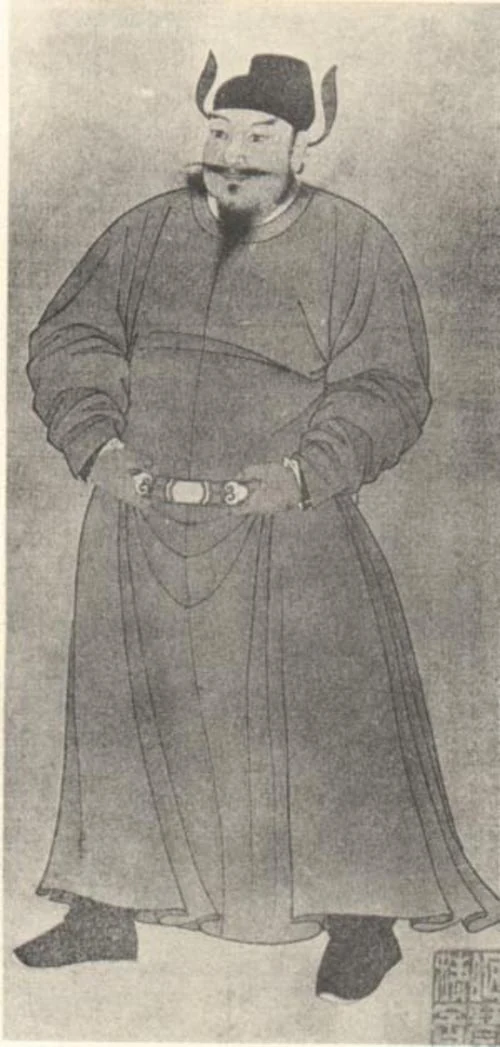
856 CE–908 CE
Prince of Jinmilitary commander
Li Keyong
李克用
Li Keyong was the Shatuo Prince of Jin and a lifelong opponent of Zhu Wen. Known as Duyanlong, he was posthumously honored as Emperor Taizu after his son Li Cunxu established Later Tang.
856 CE–908 CELater Tang
PROFILE
Li Keyong was the Shatuo Prince of Jin and a lifelong opponent of Zhu Wen. Known as Duyanlong, he was posthumously honored as Emperor Taizu after his son Li Cunxu established Later Tang.
- Other names
- Prince of Jin; Emperor Taizu of Later Tang; Duyanlong; Li Yaer
- Courtesy name
- Yisheng
- Period
- Five Dynasties · Later Tang
- Date of Birth
- October 24 856
- Date of Death
- February 23 908
- Dynasty / polity
- Five Dynasties · Later Tang
- Identity
- Prince of Jin; military commander
- Ethnicity / group
- Shatuo Turks
- Native place
- Xincheng in Shenwuchuan (present-day Dai County, Shanxi)
- Place of birth
- Not recorded in historical sources
- Major achievements
- Shatuo Prince of Jin; lifelong opponent of Zhu Wen; known as Duyanlong; posthumously honored as Taizu after his son Li Cunxu founded Later Tang
LIFE TIMELINE
Age thirteen | Shot two flying wild ducks with one arrow, astonishing onlookers.
Age fifteen by traditional reckoning | Followed his father Li Guochang against Pang Xun; charged at the front and was called the “Flying Tiger” in the army.
Age seventeen | His father refused appointment as Inspector of Yun Prefecture, worsening relations between the Shatuo and the court.
Age twenty-three | Killed Duan Wenchu, Defense Commissioner of Datong, seized Yun Prefecture, and styled himself acting commander.
Age twenty-five | Defeated by Tang armies and fled with Li Guochang among the Tatars.
Age twenty-six | After Huang Chao took Chang'an, recalled from the Tatars and appointed Inspector of Dai Prefecture.
Age twenty-seven | Led 17,000 infantry and cavalry south to aid the Tang court.
Age twenty-eight | Recovered Chang'an, received leading credit, and became Military Commissioner of Hedong.
Age twenty-nine | Pursued Huang Chao; nearly killed in Zhu Wen's attack at Shangyuan Station while passing Bian Prefecture.
Age thirty | Believed a forged edict from Wang Chongrong, attacked Chang'an, and forced Emperor Xizong of Tang to flee to Xingyuan.
Age thirty-five | The court attacked Hedong; Li counterattacked and defeated the imperial army.
Age thirty-six | Emperor Zhaozong restored his titles and made him Prince of Longxi Commandery.
Age forty | Came to the emperor's aid, defeated Li Maozhen, Wang Xingyu, and Han Jian, and rescued Emperor Zhaozong.
Age forty-one | Created Prince of Jin and additionally made acting Grand Preceptor and Secretariat Director.
Age forty-six | Zhu Wen's army besieged Taiyuan; Li resisted and forced it to retreat.
Age forty-seven | Repelled another siege of Taiyuan by Zhu Wen.
Age fifty | Met the Khitan ruler Yelü Abaoji east of Yun Prefecture and formed an alliance.
Age fifty-one | Recovered Lu Prefecture and broke Zhu Wen's general offensive.
Age fifty-two | Zhu Wen usurped the Tang and became emperor; Li continued using the Tang Tianyou era name and called for restoration of the Tang.
Age fifty-three by traditional reckoning | Died of illness at Jinyang in the first month.
BIOGRAPHY
Biography
Family Background and Early Life
Li Keyong was the third son of Li Guochang, later honored as the progenitor of Later Tang. His family's original clan name was Zhuye, also written Zhuye in variant form, and the family belonged to the Shatuo, a branch associated with the Western Turks and long resident in the northwest. His father Zhuye Chixin received the surname and personal name Li Guochang from Emperor Yizong of Tang for his service in suppressing the Pang Xun Rebellion, after which the family used the surname Li. Li Keyong's mother was Lady Qin.
The Old History of the Five Dynasties records auspicious phenomena at his birth, including rainbow light filling the room, white vapor in the courtyard, and an overflowing well. Such omens are common in imperial biographies and need not be factual, but they illustrate later historical mythologization. Li Keyong was brave from childhood and skilled in riding and archery. In 869, at age thirteen, he reportedly shot two flying ducks with a single arrow. The army called him Li Yaer.
At fifteen by traditional reckoning he followed Li Guochang against Pang Xun, repeatedly charging at the front and earning the army nickname “Flying Tiger.” After Pang Xun was defeated, Li Guochang became Military Commissioner of Zhenwu and Li Keyong received a post as an officer at Yunzhong.
Uprising in the Daibei Region
The Shatuo rendered major service in suppressing Pang Xun, and Li Guochang increasingly acted arrogantly on the strength of his achievements. Emperor Yizong became concerned. In 872 the court transferred Li Guochang to Yun Prefecture as inspector and Defense Commissioner of Datong in an attempt to reduce his power. Li Guochang refused, claiming illness. The court ordered Lu Jianfang to take over Zhenwu and join troops from You and Bing against the Shatuo. Lu's army collapsed at Lan Prefecture, allowing the Shatuo to occupy territory north of Dai Prefecture and become a northern frontier threat.
In 878 famine struck the Daibei region and grain transport failed. Duan Wenchu, Defense Commissioner of Datong, cut soldiers' clothing and grain allowances and enforced discipline harshly, provoking resentment. Li Keyong was acclaimed by his troops, killed Duan, seized Yun Prefecture, and styled himself acting commander. Unable to suppress him, the court appointed him Military Commissioner of Datong and acting Minister of the Ministry of Works, but as his strength increased he refused transfer orders. In 880 Tang forces under Li Zhuo, with Li Keju of You Prefecture and Helian Duo of Yun Prefecture, attacked the Shatuo. Li Keyong's uncle Li Youjin surrendered Wei and Shuo prefectures, leaving him exposed. Defeated at Yao'er Ridge and Wei Prefecture, Li Keyong fled with his father among the Tatars.
Helping the Tang against Huang Chao
In 881 Huang Chao captured Chang'an and Emperor Xizong fled to Sichuan. Chen Jingsi led surrendered Shatuo troops and allied groups to aid the court, but the army mutinied and dispersed near Jiang Prefecture. Concluding that only Li Keyong could control the Shatuo, Chen requested an edict recalling him from the Tatars. Li became Inspector of Dai Prefecture and Military Commissioner of the field forces north of Yanmen. He brought more than 10,000 mixed troops through Shiling Pass. When Hedong commissioner Zheng Congdang provided only limited pay and grain at Taiyuan, Li became furious, allowed plundering, and withdrew.
In November 882, Chen Jingsi and Li Keyong again led 17,000 infantry and cavalry south. In early 883 Li moved into Hezhong. Huang Chao's troops reportedly feared that the “Yaer army” had arrived. Li defeated Huang Ye at Shidi Valley, then Zhao Zhang and Shang Rang at Liangtianslope. As relief armies converged on Chang'an, Li pursued from the Wei Bridge, entered first through Guangtai Gate, fought near Wangchun Palace, and drove Huang Chao south through Lantian Pass. For recovering Chang'an he received the leading credit and was appointed acting Minister of Works, Grand Councilor, and Military Commissioner of Hedong. His father died later that year, and Li sent his brother Li Kexiu to seize Ze and Lu prefectures.
In 884 Huang Chao moved south toward Cai Prefecture, submitted Qin Zongquan, and besieged Chen Prefecture. Li Keyong brought 50,000 troops to relieve the city. He defeated Shang Rang at Taikang and Huang Ye at Xihua, pursued Huang Chao to the Yellow River, defeated him again near Fengqiu, and rode 300 li in a day and night to Yuanqu before turning back. Huang Chao ultimately died at Langhu Valley.
The Shangyuan Station Incident and Feud with Zhu Wen
After the campaign against Huang Chao in 884, Li Keyong passed Bian Prefecture and rested at Fengshan Temple. Zhu Wen, Military Commissioner of Xuanwu, held a banquet for him at Shangyuan Station. Li became drunk and arrogant, angering Zhu. That night Zhu's troops surrounded the station and set it on fire. An attendant extinguished candles, hid Li under a bed, and revived him by throwing water on his face. Heavy rain helped extinguish the fire. Li escaped with Xue Tieshan, He Huigu, and others by lowering themselves by rope from a city gate, while several hundred attendants were killed. The event became known as the Shangyuan Station Incident.
Back in Taiyuan, Li petitioned the court to punish Zhu Wen and stationed 10,000 troops under his brother Li Kexiu in Hezhong. Emperor Xizong mediated and no campaign followed. Li was created Prince of Longxi Commandery for his service against Huang Chao, but the feud with Zhu continued for more than twenty years and became one of the defining rivalries of the late Tang.
Contending across North China
In 885 Wang Chongrong, Military Commissioner of Hezhong, quarreled with the eunuch Tian Lingzi. Wang deceived Li Keyong with a forged edict claiming Zhu Wen and Tian planned to kill him. Li repeatedly requested permission to attack Zhu; when Emperor Xizong refused, Li angrily joined Wang, defeated Zhu Mei at Shayuan, attacked Chang'an, and allowed pillage and burning. Emperor Xizong fled to Xingyuan. Later Zhu Mei forced Prince Xiang Li Yun to claim the throne. The emperor asked Li Keyong to attack Zhu Mei; Li nominally agreed but did not move.
In 890 Li captured Xing, Ming, and Ci prefectures and attacked Helian Duo. Li Kuangwei and Helian Duo, together with Zhu Wen, petitioned the court to suppress him. Most ministers opposed the idea, but Grand Councilor Zhang Jun pressed for war while Yang Fugong defended Li. Zhu secretly bribed Zhang. Emperor Zhaozong reluctantly appointed Zhang supreme commander and Han Jian deputy. The imperial army was crushed, Sun Kui was captured and killed, and court forces suffered severe losses. Emperor Zhaozong restored Li's titles and in 891 created him Prince of Longxi Commandery.
In 895 Li Maozhen of Fengxiang, Wang Xingyu of Bin Prefecture, and Han Jian of Hua Prefecture entered the capital and coerced Emperor Zhaozong. Li Keyong came to the emperor's aid, defeated them, and rescued the emperor. Wang Xingyu was later killed by his own men. In 896 Li was created Prince of Jin and appointed acting Grand Preceptor and Secretariat Director. Emperor Zhaozong, wary of his strength, did not allow him to continue destroying Li Maozhen and Han Jian.
Li then fought Zhu Wen for years. His blunt temperament and limited caution toward deceitful men contributed to repeated defections, especially that of Liu Rengong in You Prefecture. Zhu Wen steadily annexed neighboring circuits, and Li's position weakened; he could not even rescue his son-in-law Wang Ke of Hezhong, who had to surrender to Zhu. In 901 and 902 Zhu twice besieged Taiyuan with large armies, but Li Keyong resisted until the attackers withdrew.
Final Years and Posthumous Honors
In 905 Li Keyong met Yelü Abaoji east of Yun Prefecture and formed an alliance. In 906 he recovered Lu Prefecture and broke Zhu Wen's general offensive. In 907 Zhu usurped the Tang and founded Later Liang. Li Keyong rejected the new dynasty, continued using the Tang Tianyou era name, and called for restoration of the Tang.
In the first month of 908, worn down by prolonged campaigning, Li died at Jinyang at age fifty-three by traditional reckoning. His son Li Cunxu succeeded him. After Li Cunxu destroyed Later Liang and founded Later Tang, he posthumously honored Li Keyong as Emperor Wu and granted the temple name Taizu.
The Shatuo Troubles, Expansion in Daibei, and Exile among the Tatars
Li Keyong was the third son of Li Guochang, Xianzu of the Later Tang, and his family, originally surnamed Zhu Xie (or Zhu Ye), were Shatuo, a branch of the Western Turks long settled in the north-west; his father Zhu Xie Chixin, having helped put down Pang Xun's revolt, was granted the surname and personal name Li Guochang by Emperor Yizong of Tang, and from that time the family bore the name Li. In 869, at thirteen, Li Keyong saw two wild ducks in flight and brought both down with a single arrow, so that all present marvelled at his archery, and the army called him Li the Duckling. The Old History of the Five Dynasties records that when his father campaigned against Pang Xun, "the Martial Emperor, then fifteen, went with him, broke into the enemy's ranks and stood out among the generals, so that the army marked him as the Flying Tiger Son"; and when the rebels were put down his father was made commissioner of Zhenwu and he a colonel at Yunzhong. The Shatuo being always strong and his father growing more overbearing with his merit, Emperor Yizong was troubled and in 872 transferred him to be governor of Yunzhou and defence commissioner of the Datong army, whereupon Guochang pleaded illness and refused. That refusal given, Li Keyong killed the defence commissioner of the Datong army, Duan Wenchu, held Yunzhou and styled himself acting commissioner; and the court made the grand master of the imperial stables, Lu Jianfang, commissioner of Zhenwu to attack him with the troops of You and Bing, but Lu Jianfang's army broke up at Lanzhou, so that the Shatuo plundered Daibei and became a frontier trouble. On Emperor Xizong's accession, because the former governor of Taiyuan, Li Ye, had shown kindness to the Shatuo and was dead, his son Li Jun was made commissioner of Lingwu and commissioner for the pacification of the six provinces and three tribes of the Shatuo to conciliate them, and Li Keyong was made defence commissioner of the Datong army. Li Keyong afterwards set out from Yunzhou to meet his father, but on their return the men of Yunzhou shut the gates against them, so that father and son, having nowhere to go, plundered the country between Wei and Shuo and got three thousand men, Guochang holding Weizhou while Li Keyong fell back on Xincheng; and Xizong made Helian Duo commissioner of the Datong army and Li Jun commissioner for the suppression of Daibei against the Shatuo. In 878 the Shatuo first broke the Zhelu army and then the Kelan army, and the Tang troops being beaten several times the Shatuo grew stronger, "holding Wei and Shuo in the north and raiding Xin, Dai, Lan and Shi in the south as far as Taigu." In 880 the commissioner for suppression Li Zhuo with Li Keju of Youzhou and Helian Duo of Yunzhou attacked the Shatuo, and while Li Keyong faced Li Keju at the Xiongwu army his uncle Li Youjin surrendered Wei and Shuo to Li Zhuo; and Li Keyong, hearing of it, turned back at once, but Li Keju pursued him to Yao'er ridge and broke him heavily, and Li Zhuo's troops struck from the other side and beat him again at Weizhou, so that the Shatuo were utterly broken and Li Keyong and his father fled to the Tatars.
His Part in Destroying Huang Chao and the Recovery of Chang'an
After Huang Chao took the capital, the Daibei commissioner for raising troops, Chen Jingsi, in 881 sent the Shatuo who had earlier surrendered with the Tuhun and Anqing, ten thousand in all, to the capital; but reaching Jiangzhou the Shatuo mutinied, plundered and went back. Chen Jingsi, holding that none but Li Keyong could command the Shatuo, asked Xizong for an edict recalling him from the Tatars and made him, by imperial authority, governor of Daizhou and commissioner of the camp north of Yanmen. Li Keyong led more than ten thousand Fan and Chinese out by the Shiling pass and, passing Taiyuan, asked for military funds; and the commissioner of Hedong, Zheng Congdang, gave him only a thousand strings of cash and a thousand piculs of grain, at which Li Keyong in anger let his troops plunder and went back. In the eleventh month of 882 Chen Jingsi and Li Keyong again led seventeen thousand horse and foot south to the rescue; and in the first month of 883 Li Keyong marched out from Hezhong and camped at Qiankeng, at which the rebels cried in alarm that the Duckling's army had come. In the second month he beat Huang Chao's general Huang Ye at Shidigu; in the third month he beat Zhao Zhang and Shang Rang at Liangtianpo, "with corpses lying thirty li." The armies of the several circuits then met at Chang'an and fought a great battle at the Wei bridge, and the rebels, beaten, fell back into the city; Li Keyong pressed the victory, entering first by the Guangtai gate and fighting at the Sheng yang hall of the Wangchun palace, so that Huang Chao fled south to the Lantian pass. The capital being recovered, Li Keyong's merit was the first, and the emperor made him acting minister of works, joint manager of the affairs of the Chancellery, and commissioner of Hedong, his father being made commissioner of the camp north of Yanmen. In the tenth month Li Guochang died; and in the eleventh month Li Keyong sent his brother Li Kexiu against Meng Fangli of Zhaoyi and took Ze and Lu. In 884 Huang Chao went south to Caizhou, brought Qin Zongquan over, and besieged Chenzhou; and Li Keyong, with fifty thousand men to relieve Chenzhou, went out by the Tianjing pass and, being refused passage by Zhuge Shuang at Heyang, crossed the river at Hezhong. In the fourth month he beat Shang Rang at Taikang and Huang Ye at Xihua; Huang Chao, fighting as he fled, reached Zhongmou and was at the river, not yet across, when Li Keyong came up and his host broke up in panic; and at Fengqiu he beat him again, and Huang Chao escaped alone, Li Keyong pursuing "three hundred li in a day and a night" to Yuanqu without catching him and returning.
The Affair of the Shangyuan Post Station and the Feud with Zhu
Returning in 884 after Huang Chao's destruction, Li Keyong passed Bianzhou and rested his troops at the Fengshan temple, and the military commissioner of Xuanwu, Zhu Wen (Zhu Quanzhong), feasted him at the Shangyuan post station. The Old History of the Five Dynasties records the matter thus: "On the jia-xu day of the fifth month the emperor and the Jin army returned to Bian and lodged Keyong at the Shangyuan post station. Afterwards the rites of a banquet were prepared, and Keyong, being drunk, gave way to his temper, at which the emperor was displeased. That night he ordered armoured men to surround and attack him; but there came great rain and thunder, and Keyong escaped over the wall by the light of the lightning, only several hundred of his men being killed." The New History adds that after the drinking Li Keyong lay drunk, the ambush sprang and fire broke out, and his attendant Guo Jingzhu put out the candles, hid him under the bed and woke him with water to tell him of the danger; and that it happened to rain heavily and put out the fire, so that Li Keyong with his followers Xue Tieshan and He Huihu, by the light of the lightning, let himself down by rope from the Weishi gate and rejoined his army. Several hundred of his men were killed, and the affair is known as the Shangyuan post station incident. In the seventh month Li Keyong reached Taiyuan and laid the matter before the court, asking to send troops against Bian and sending his brother Li Kexiu with ten thousand men to wait at Hezhong; but Xizong made peace between them, and for his merit in destroying Huang Chao made him prince of Longxi commandery. From that time, however, the two were mortal enemies, and for more than twenty years the fighting did not cease.
His Shifts in the Guangqi and Dashun Years, and the Rescue of Emperor Zhaozong
In 885 the commissioner of Hezhong, Wang Chongrong, fell out with the eunuch Tian Lingzi, and the court transferred Wang Chongrong to Yanzhou and made Wang Cuncun of Dingzhou commissioner of Hezhong, with an edict that Li Keyong escort him to his post; but Wang Chongrong sent word to Li Keyong that the emperor had decreed that when Li Keyong arrived he should be put to death together with Wang Cuncun, and showed him a forged edict saying that this was Zhu Quanzhong's plot. Li Keyong believed it and eight times memorialized asking to attack Zhu Quanzhong, which Xizong refused, at which Li Keyong was furious; and when Wang Chongrong would not move and Xizong sent Zhu Mei of Binzhou and Li Changfu of Fengxiang against him, Li Keyong instead helped Wang Chongrong, beat Zhu Mei at Shayuan and marched on the capital, burning and plundering at large, so that the emperor took refuge at Xingyuan and Li Keyong withdrew to Hezhong. Zhu Mei then in turn pursued the emperor without catching him, seized the prince of Xiang, Li Yun, and forced him to take the imperial title at Fengxiang; and Xizong, thinking that Li Keyong alone could destroy Zhu Mei but unable to move him, and the army inspector Yang Fugong being friendly with Li Keyong, sent the remonstrating grand master Liu Chongwang with an edict summoning Li Keyong and conveying Yang Fugong's wish that he attack Zhu Mei, to which Li Keyong "agreed on the surface and did not move." In 890 he broke Meng Qian and took Xing, Ming and Ci, and sent An Jinjun against Helian Duo at Yunzhou; and when Li Kuangwei of Youzhou came to Helian Duo's help and beat An Jinjun at Weizhou, Li Kuangwei, Helian Duo and Zhu Quanzhong all memorialized to attack Li Keyong while he was down. Zhaozong, holding that his merit in destroying Huang Chao forbade it, referred the matter to the officials of the fourth grade and above, who mostly said it should not be done; but the chancellor Zhang Jun alone held that the Shatuo had once driven Xizong to Xingyuan and deserved death, and could be attacked; and the army inspector Yang Fugong, a friend of Li Keyong, remonstrated strongly against it, and Zhaozong agreed and sent an edict to Zhu Quanzhong and the rest. Zhu Quanzhong secretly bribed Zhang Jun to hold to his view the more firmly, and Zhaozong, unable to help himself, made Zhang Jun commander-in-chief of the field army of the four sides of Taiyuan with Han Jian as his deputy. At that time Feng Ba of Luzhou rebelled and went over to Liang, which sent Ge Congzhou into Luzhou; and when the Tang made the governor of the capital, Sun Kui, commissioner of Zhaoyi, Li Keyong sent Li Cunxiao to seize Sun Kui at Changzi and Kang Junli to take Luzhou; and in the eleventh month Zhang Jun fought Li Keyong at Yindi, where his army was beaten three times in three battles and he and Han Jian fled home, while Li Keyong's troops plundered Jin and Jiang as far as Hezhong, "leaving the land bare for a thousand li." He memorialized in his own defence in arrogant and insulting terms, and the emperor acknowledged the fault as his own and answered with a gracious edict. In the second month of the following year the court again made him commissioner of Hedong and prince of Longxi commandery with the rank of acting grand tutor and director of the Secretariat; in the fourth month he besieged Helian Duo at Yunzhou for more than a hundred days, so that he fled to the Tuhun. In 892, when Wang Rong attacked Xingzhou, Li Cunxin and Li Sixun beat him at Yaoshan; in the second month Li Keyong joined Wang Cuncun against Wang Rong and was beaten at Xinshi; in the eighth month Li Kuangwei attacked Yunzhou to draw off his troops, and Li Keyong slipped into Yunzhou and turned on Li Kuangwei, who fled; and in the tenth month Li Cunxiao rebelled at Xingzhou. The next year Li Cunxiao asked help of Wang Rong, and Li Keyong marched by Jingxing against Wang Rong, summoning him by letter while attacking Pingshan hard, so that Wang Rong in fear made peace, presenting five hundred thousand bolts of silk and sending troops to help against Xingzhou; in the third month of 894 Li Keyong took Li Cunxiao at Xingzhou and put him to death, and in the winter attacked Youzhou, where Li Kuangchou abandoned the city and fled, Li Keyong pursuing him to Jingcheng and killing him. In 895, when Wang Chongying of Hezhong died and his sons Wang Ke and Wang Gong contended for the succession, Li Keyong asked that Wang Ke be installed while Li Maozhen of Fengxiang, Wang Xingyu of Binzhou and Han Jian of Huazhou asked for Wang Gong; and Zhaozong, at first unable to decide, in the end allowed Li Keyong's choice, at which Li Maozhen and the others in anger brought the troops of three circuits against the capital, and hearing that Li Keyong had also raised troops, withdrew. In the sixth month Li Keyong attacked Jiangzhou and killed its governor Wang Yao; in the seventh month he reached Hezhong, and Wang Xingyue of Tongzhou fled to the capital, proclaiming that a hundred thousand Shatuo had come, and plotted to take the emperor to Binzhou, while Li Maozhen's adopted son Yan Gui plotted to carry him off to Fengxiang, so that the capital fell into disorder and Zhaozong took refuge at Shimen. Li Keyong's army stayed more than a month without advancing, and Zhaozong sent the prince of Yan, Li Jiepi, and the prince of Dan, Li Yun, to serve under Li Keyong and to report the emergency; in the eighth month Li Keyong advanced to the Wei bridge and was made commander-in-chief of the field army of the four sides of Binzhou and Ningzhou, and the emperor returned to the capital; and in the eleventh month he broke Binzhou, Wang Xingyu fleeing to Qingzhou and being killed. He then withdrew to Yunyang and asked to attack Li Maozhen, but Zhaozong comforted him and made peace between them to relieve the danger, giving him the title of loyal, upright and trouble-quelling meritorious servant and enfeoffing him prince of Jin. At that time the Jin army lay north of the Wei and met sixty days of rain, and when some advised Li Keyong to go to court, he hesitated, and the chief of the guard Gai Yu said that the emperor, returned from Shimen, had not yet laid his head at ease, and that if the Jin troops crossed the Wei men's minds could not be quiet, and that to rescue the emperor was enough and there was no need to go to court; and Li Keyong laughed and said that if Gai Yu did not trust him, how much less the empire, and withdrew his army.
His Long Standoff with Zhu's Liang, the Dispute over the Era Name, and His Last Years
In the first month of 896, when Zhaozong would again have made Zhang Jun chancellor, Li Keyong said that this was Zhu Quanzhong's plot, and memorialized that if the emperor made Zhang Jun chancellor in the morning he would be at the palace gate by evening, so that the capital was in terror and the appointment was stopped at once. In the same year Zhu Quanzhong attacked Yanzhou and Yunzhou, and Li Keyong sent Li Cunxin through Weizhou to relieve Zhu Xuan; but Li Cunxin camped at Shenxian and his troops plundered the Weibo country, so that Luo Hongxin laid an ambush, beat him and drove him to Mingzhou; and Li Keyong himself attacked Weibo and fought at the Huan river, losing his son Luoluo there, though in the sixth month he took more than ten towns including Cheng'an, Huanshui and Linzhang, and in the tenth month beat the men of Wei at Bailongtan and attacked the Guanyin gate, until Zhu Quanzhong's relief arrived and the siege was raised. In 898 Zhu Quanzhong sent Ge Congzhou to take Xing, Ming and Ci, and Li Keyong sent Zhou Dewei out by the Qingshan pass, who met Ge Congzhou at Zhanggong bridge and was heavily beaten; and in the winter the commander of Luzhou, Xue Zhiqin, died and Li Hanzhi held Luzhou and went over to Zhu Quanzhong. In the years that followed his position grew steadily worse: Li Sizhao beat the Bian army at Shahe and retook Mingzhou, but was besieged by Zhu Quanzhong in person, and in withdrawing to the Qingshan pass met a Bian ambush and was heavily beaten; and though he took Huaizhou that autumn, the Bian troops attacked Zhen and Ding, both of which broke with Jin and went over to Zhu Quanzhong. In 901 Zhu Quanzhong was made prince of Liang; Liang took Jin, Jiang and Hezhong and carried Wang Ke away, and Jin, having lost three allies, sent letters and gifts to sue for peace, but the prince of Liang, thinking Jin weak and ripe for the taking, said that "though Jin sues for alliance, its letters are insolent," and attacked in force: in the fourth month Shi Shucong entered Tianjing, Zhang Wenjing entered Xinkou, Ge Congzhou entered Tumen, Wang Chuzhi entered Feihu and Hou Yan entered Yindi; Shi Shucong took Ze and Lu while his detached general Bai Fengguo broke the Chengtian army, and the commanders of Liaozhou and Fenzhou, Zhang E and Li Tang, went over to Liang, so that the men of Jin were in great fear. But it happened to rain heavily and long, and the Liang troops fell sick in numbers and all withdrew; in the fifth month Jin retook Fenzhou and killed Li Tang, and in the sixth month Zhou Dewei and Li Sizhao took Ci and Xi. In 902 the Liang army attacked Jin and Jiang and was heavily beaten at Puxian, then took Fen, Ci and Xi and besieged Taiyuan; and Li Keyong in great fear thought of fleeing to Yunzhou and then of fleeing to the Xiongnu without deciding, when the Liang army was visited by a great epidemic and withdrew, and Zhou Dewei retook Fen, Ci and Xi. In 907 Zhu Wen usurped the Tang throne, founded the Later Liang, moved the Tang capital to Luoyang and changed the era to Tianyou; and Li Keyong, holding that it was Liang that had carried off the emperor and moved the capital and that Tianyou was no Tang era name and could not be used, continued to use Tianfu. In 906, when Liang attacked Cangzhou in Yan and the prince of Yan, Liu Rengong, asked for help, Li Keyong, hating Liu Rengong for his shifts, would have refused; but his son Li Cunxu advised that this was the moment of their revival, since of the empire seven or eight parts had gone over to Liang and even such strong powers as Zhao, Wei and Zhongshan obeyed it, so that north of the Yellow river none but himself and Liu Rengong were feared by Liang, and that if Yan and Jin joined forces it would not be well for Liang; that one who contends for the empire does not regard small grudges, and that since Liu Rengong had often distressed them they might now relieve his difficulty and so win him by kindness, which was to gain two things at once and an opportunity not to be lost. Li Keyong agreed and sent troops for Yan, broke Luzhou and raised the siege, making Li Sizhao acting commissioner of Luzhou. In the first month of 908 Li Keyong died of illness at Jinyang at fifty-three, leaving orders for a plain burial and for mourning to be laid aside twenty-seven days after the death, and his son Li Cunxu succeeded him. In the fourth month of 923 Li Cunxu took the imperial title and founded the Later Tang, and in the intercalary fourth month he honoured Li Keyong posthumously as emperor with the name Wu and the temple name Taizu and set up a temple at Taiyuan; the New Tang History records that in this honouring his great-grandfather Li Zhiyi and his wife Lady Cui were given the name Zhaolie with the temple name Yizu, his grandfather Li Guochang and his wife Lady Qin the name Wenjing with the temple name Xianzu, and his father the name Wu with the temple name Taizu.
Major Activities
Military Campaigns
Li Keyong's major military actions included following his father against Pang Xun; seizing Yun Prefecture after killing Duan Wenchu; helping the Tang suppress Huang Chao and recover Chang'an; long warfare against Zhu Wen and his allies; rescuing Emperor Zhaozong from three coercive military governors; repelling two large sieges of Taiyuan; and recovering Lu Prefecture late in life. He was especially known for rapid cavalry pursuit, exemplified by riding 300 li in a day and night while chasing Huang Chao.
Political Activity
Although a powerful regional military governor, Li Keyong consistently presented himself as a loyal Tang subject. He aided the court during the Huang Chao Rebellion, recovered Chang'an, and repeatedly intervened in imperial crises. In 895 he rescued Emperor Zhaozong from Li Maozhen, Wang Xingyu, and Han Jian. After Zhu Wen usurped the Tang, Li refused to recognize Later Liang and retained the Tianyou era name, using restoration of the Tang as a political program. This gave him a distinctive position among late Tang military governors and supplied political legitimacy later used by Li Cunxu in founding Later Tang.
Long Conflict with Zhu Wen
The feud beginning with the Shangyuan Station Incident dominated Li Keyong's later life. For more than twenty years the two sides fought repeatedly across Henan, Hebei, and Shanxi. After Zhu Wen gained control of the emperor, Li Keyong became the main northern power able to resist him. He repelled Zhu's sieges of Taiyuan in 901 and 902, recovered Lu Prefecture in 906, and continued to oppose Zhu after the latter became emperor.
Relations with Contemporaries
Li Keyong's relationships included mortal enmity with Zhu Wen; temporary cooperation with Wang Chongrong, who also deceived him; friendship with Yang Fugong; long conflict with Helian Duo and Li Kuangwei; and alliance with the Khitan ruler Yelü Abaoji. He had many subordinates and adopted sons, later remembered collectively as the “Thirteen Grand Guardians,” including Li Siyuan, Li Sizhao, Li Cunxin, Li Cunxiao, and Li Cunshen.
His Cavalry Tactics, the Organization of the Hedong Group, and the Political Use of His Standing as a Tang Subject
Li Keyong's military manner is best shown in the mobility and long raids of his cavalry: in pursuing Huang Chao he "covered three hundred li in a day and a night," the classic instance of his method; and his siege of Helian Duo at Yunzhou lasted more than a hundred days, while against Weibo he first lost at the Huan river and a son with him, then took more than ten towns including Cheng'an, Huanshui and Linzhang and won at Bailongtan, shifting repeatedly between storming and pressing. In strategy his failures often came of the shifting of allies: his uncle Li Youjin surrendered Wei and Shuo to Tang and brought about his rout in 880; Luo Hongxin's ambush drove Li Cunxin back to Mingzhou; Li Hanzhi held Luzhou and went over to Zhu Quanzhong; Zhen and Ding broke with Jin and joined Liang; and in the end even his son-in-law Wang Ke was carried off by Liang — so that he wrote in a memorial that Jin had lost three allies and could only sue for peace with gifts, while the prince of Liang used the insolence of his letters as a pretext for attacking in force. Against this, his survival in the gap depended on the organization within: he had many officers and adopted sons, the famous Thirteen Grand Guardians among them, including Li Siyuan (afterwards Emperor Mingzong of the Later Tang), Li Sizhao, Li Cunxin, Li Cunxiao and Li Cunshen; and Li Cunxiao was sent to seize the Tang-appointed commissioner of Zhaoyi, Sun Kui, at Changzi and to take Luzhou, before rebelling at Xingzhou and being taken and killed; while Li Cunxu's advice of 906 on joining Yan and Jin was likewise the turn by which this group revived in an inferior position.
In politics his peculiarity was that he always presented himself as a loyal subject of Tang. In the Huang Chao rebellion he led the Shatuo to the rescue and recovered Chang'an with the first merit; he afterwards several times sent troops to the rescue of the throne, and in 895, as commander-in-chief of the field army of the four sides of Binzhou and Ningzhou, he defeated the three circuits and rescued Emperor Zhaozong, who had been carried off to Shimen, receiving for it the title of prince of Jin and that of loyal, upright and trouble-quelling meritorious servant. After Zhu Wen usurped the Tang he refused to recognize the Later Liang: when Liang moved the capital to Luoyang and changed the era to Tianyou, he held that it was Liang that had carried off the emperor and moved the capital, and that Tianyou was no Tang era name and could not be used, and so continued with Tianfu. This position gave him a special place among the late Tang military governors and provided the legal and nominal ground on which his son Li Cunxu founded the Later Tang and took Tang as the dynastic name. At the same time his relation with the court was not one of simple obedience: after defeating Zhang Jun in 890 he memorialized in his own defence "in arrogant and insulting terms," and the emperor acknowledged the fault as his own; and in 896 he threatened that if Zhang Jun were made chancellor in the morning he would be at the palace gate by evening, so that the appointment was stopped. His standing as a Tang subject was thus both a political asset and a means of pressure on the court; and in the military pattern of the late Tang he neither prevented Zhu Wen's rise nor failed to make the Shatuo group the only force in the north able to hold out against Later Liang for long — a double outcome whose consequences run through the history of the Five Dynasties.
Personal Relations
- Father: Li Guochang, originally Zhuye Chixin, granted the surname Li
- Mother: Lady Qin
- Brothers: Li Kexiu, Li Kegong, Li Kening, and others
- Sons: Li Cunxu, later Emperor Zhuangzong of Later Tang; Li Cunba; Li Cunmei; Li Cunli; Li Cunwo; Li Cunyi; Li Cunque; Li Cunji; Li Tingluan; Li Luoluo; Li Cunju, and others
- Daughters: Grand Princess Qionghua, wife of Meng Zhixiang; Grand Princess Yaoying, wife of Zhang Yanzhao; and others
- Wives: Lady Liu, Lady of Qin; Lady Cao, later Empress Zhenjian; Lady Chen, formerly connected with Emperor Zhaozong of Tang; Lady Zhang, formerly connected with Li Kuangchou
- Li Siyuan, Li Sizhao, Li Cunxin, Li Cunxiao, Li Cunzhang, Li Cunzhi, Li Cunhao, Li Cunshi, Li Cunshen, Li Cunjing, Li Cunjin, Li Cunxian, Li Cunzhen, Li Siben, Li Sien, Li Cunru
- Emperor Xizong of Tang: appointed Li Keyong Military Commissioner of Hedong and created him Prince of Longxi Commandery
- Emperor Zhaozong of Tang: created him Prince of Jin and appointed him acting Grand Preceptor and Secretariat Director
- Zhu Wen (Zhu Quanzhong): mortal enemy and later founder of Later Liang
- Wang Chongrong: temporary ally who later deceived him
- Helian Duo: long-term enemy
- Li Kuangwei: enemy
- Yelü Abaoji: political ally
- Liu Rengong: former subordinate who later rebelled
Historical Assessment
Five Dynasties and Contemporary Assessments
- The Old History of the Five Dynasties describes him as brave from youth and known in the army as Li Yaer, emphasizing military ability.
- The New History of the Five Dynasties states that he was brave and skilled in riding and archery but criticizes episodes of plunder and attacks on the capital.
- Contemporary views differed: Zhu Wen treated him as his greatest rival, while Emperor Zhaozong relied on his military assistance.
Song and Yuan Periods
- Sima Guang's Comprehensive Mirror in Aid of Governance records the struggle between Li Keyong and Zhu Wen extensively and takes a relatively neutral stance while criticizing Li's sack of the capital.
- Song historians commonly contrasted Li's claimed loyalty to the Tang with Zhu Wen's usurpation.
- The Yuan dramatist Bai Pu wrote Li Keyong Shoots Two Eagles, dramatizing his archery and martial skill.
Ming and Qing Periods
- Luo Guanzhong's Romance of the Declining Tang and Five Dynasties portrayed Li Keyong as a loyal and courageous hero, popularizing his one-eyed warrior image.
- Ming and Qing writers often evaluated him through the lens of loyalty to the Tang and gave his struggle with Zhu Wen a claim to political legitimacy.
- Operas such as Pearl Curtain Stockade made him a major stage character and emphasized his bold martial persona.
Modern Period
- Modern historians often view Li Keyong as a representative warlord of the late Tang fragmentation.
- Some scholars argue that despite his rhetoric of Tang loyalty, his conduct remained fundamentally that of a regional military contender and was not essentially different from Zhu Wen's competition for supremacy.
- Modern research generally treats the story of his “three arrows at death” as later legend rather than historical fact.
FIGURES ASSOCIATED WITH THIS DYNASTY
Bibliography
- Old History of the Five Dynasties, “Annals of the Martial Emperor”
- New History of the Five Dynasties, “Annals of Tang, Book Four”
- Supplement to the History of the Five Dynasties
- Lost Texts of the History of the Five Dynasties
- Wang Yucheng, Lost Texts of the History of the Five Dynasties
- Tao Maobing, Outline History of the Five Dynasties