Birth in the Northern Steppe
Born into the prominent noble lineage of the Dila division during severe tribal vendettas; raised secretly by his grandmother following the murder of his grandfather.
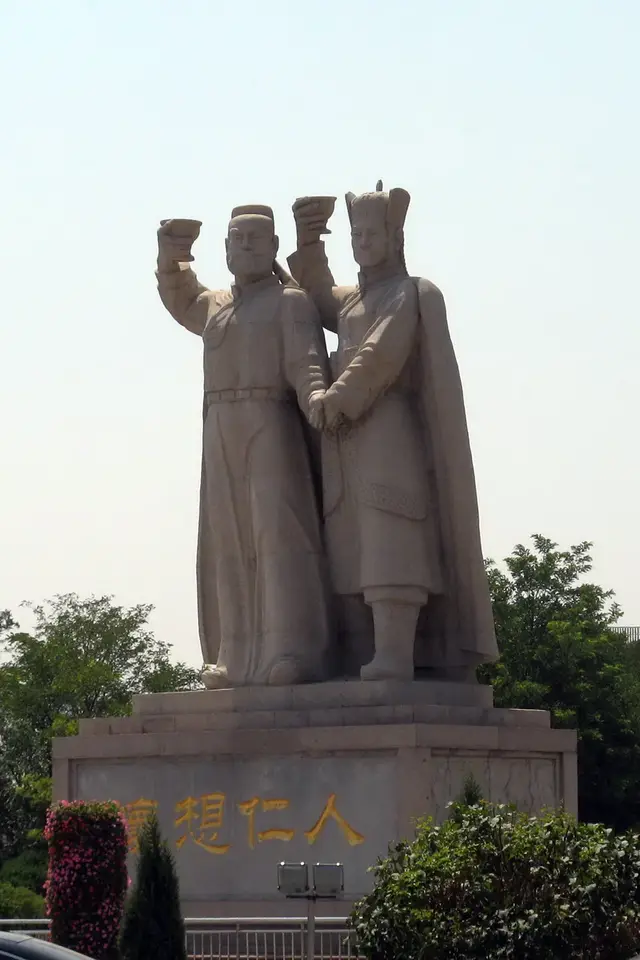
867 CE–926 CE
辽太祖
Emperor Taizu of Liao (872–926), born Yelü Abaoji (耶律阿保机) and later adopting the Sinicized personal name Yelü Yi, was the visionary founding emperor of the Khitan Empire (Liao dynasty) in Northern China. Born into an influential noble lineage of the Dila division during the chaotic collapse of the Tang dynasty, he unified the faction-ridden Khitan tribes and consolidated undisputed paramount authority through his disciplined…
Emperor Taizu of Liao (872–926), born Yelü Abaoji (耶律阿保机) and later adopting the Sinicized personal name Yelü Yi, was the visionary founding emperor of the Khitan Empire (Liao dynasty) in Northern China. Born into an influential noble lineage of the Dila division during the chaotic collapse of the Tang dynasty, he unified the faction-ridden Khitan tribes and consolidated undisputed paramount authority through his disciplined personal retinue. In 907, he was elevated to the supreme position of Khagan by the council of tribal elders, subsequently abolishing the archaic triennial tribal election system and establishing an absolute hereditary monarchy when he proclaimed himself Heavenly Emperor in 916. Throughout his monumental reign, Abaoji engineered a groundbreaking dual administrative framework known as the Southern and Northern Bureaucracy, preserving nomadic equestrian traditions in the northern steppe while applying Tang-inspired bureaucratic governance over sedentary agrarian populations in the south. He commissioned the creation of both the Khitan Large and Small scripts, directed the construction of the imperial capital of Shangjing, aggressively patronized agriculture, iron metallurgy, and commercial markets, and pushed Khitan frontiers across the Altai Mountains. In 926, he led a swift winter invasion that thoroughly conquered the sea-girt kingdom of Balhae, establishing the tributary kingdom of Dongdan before succumbing to illness on the homeward journey. His transformative institutional innovations provided the enduring structural blueprint for subsequent conquest dynasties across Inner Asia.
Born into the prominent noble lineage of the Dila division during severe tribal vendettas; raised secretly by his grandmother following the murder of his grandfather.
Suppressed internal civil strife following the assassination of his uncle Yelü Shilu; elected Yilijin of the Dila division and launched punitive campaigns along the frontier.
Appointed Yuyue and granted supreme direction over state and military affairs by Hendegan Khagan after scoring decisive victories against neighboring tribes.
Unanimously acclaimed supreme Khagan of the eight Khitan divisions upon the death of Hendegan, dismantling traditional aristocratic rotational barriers.
Successfully neutralized repeated armed rebellions orchestrated by his younger brothers who sought to restore tribal rotation; reconciled family unity through strategic clemency.
Officially assumed the imperial mantle as Heavenly Emperor, promulgated the reign era of Shence, and established the Great Khitan Empire as an absolute hereditary realm.
Commissioned the invention of the Khitan Large Script based on Chinese calligraphic components, establishing an independent literary system for steppe administration.
Formally consolidated the Southern and Northern administrative system and oversaw the completion of the walled imperial metropolis of Shangjing.
Led an elite equestrian army across the Mongolian Plateau to the Altai Mountains and ancient Uyghur heartlands, reopening the overland Silk Road trade arteries.
Stormed the Balhae citadel of Huhan, extinguished the two-century-old kingdom, and erected Dongdan; perished of illness at Fuyu Prefecture in September during the return march.
Yelü Abaoji was born in 872 into the noble Yila clan of the Dila division during a period of fierce aristocratic fratricide and shifting nomadic allegiances. The Khitan pastoral society was undergoing an agonizing transition from an egalitarian confederation of pastoral tribes into an institutionalized aristocratic oligarchy. His grandfather, Yelü Yundeshi, was ambushed and slain in a ferocious struggle for tribal dominance, forcing his father, Yelü Saladi, and his brothers into flight and shelter among neighboring clans.
Fearing that the newborn infant would be discovered and eliminated by vengeful political rivals, his maternal grandmother, Lady Xiao, took personal charge of the child. She kept him hidden within isolated yurt encampments in the northern scrub, deliberately smearing his face with hearth charcoal to conceal his noble features whenever visitors approached. Growing up amid constant peril and forced obscurity, Abaoji cultivated extraordinary mental vigilance, an indomitable will, and a deep understanding of nomadic pastoral hardships.
As tribal turbulence subsided, Abaoji matured into a formidable warrior distinguished by his towering stature, piercing gaze, and remarkable physical prowess. Historical records state that he was capable of drawing a heavy composite warbow requiring three hundred pounds of draw weight. He displayed a sophisticated grasp of steppe politics and clan jurisprudence from early adolescence, prompting his influential uncle, Yelü Shilu, who served as supreme Yuyue of the tribal confederacy, to consult him regularly on complex military and diplomatic decisions.
During his tenure as commander of the personal guard, Abaoji recognized the inherent tactical vulnerability of undisciplined nomadic levies who dispersed at will across seasonal pasturelands. He handpicked hundreds of elite equestrian archers from allied families and formed an iron-disciplined retinue bound by personal oaths of fidelity to him alone. This private guard served as the tactical spearhead that enabled him to suppress internal rebellions, enforce imperial decrees, and orchestrate lightning cavalry sweeps across the northern frontier.
In 901, factional strife erupted within the Dila division when an insurgent cabal assassinated Uncle Yelü Shilu. Confronted by impending tribal anarchy, the thirty-year-old Abaoji mobilized his private guard, stormed the insurgent redoubts, and executed the conspirators with surgical precision. Impressed by his resolute decisiveness and commanding presence, the tribal assembly unanimously elected him as the new Yilijin of the Dila division, placing military command of the most populous Khitan branch in his hands.
Upon assuming office, Abaoji immediately initiated extensive campaigns to expand pasture boundaries and replenish livestock herds depleted by drought. Leading his cavalry across treacherous wetland frontiers, he forced the submission of the rebellious Xiaohuang Shiwei tribes and decisively broke the resistance of neighboring border clans, capturing thousands of horses and captives. He treated surrendered warriors with exceptional generosity, enrolling their finest mounted archers into his auxiliary divisions rather than reducing them to domestic servitude.
In the autumn of 901, Abaoji launched an audacious expedition deep into the Hedong and Daibei marches along the northern fringe of the disintegrating Tang realm. Khitan mobile columns bypassed fortified passes and raided over a dozen frontier settlements, returning laden with silk, grain, and iron weaponry. His burgeoning renown prompted Khitan tribesmen to revere him as Azhu Shali, celebrating his tactical genius. Under his dynamic stewardship, the Dila division surpassed all rival clans in both economic prosperity and military capability.
In 903, Abaoji conducted a sweeping campaign against the Jurchen tribes along the eastern river valleys, securing thousands of prime warhorses and valuable forest pelts before turning southward to devastate border bastions in northern Hebei. Acknowledging that Abaoji's military prowess overshadowed the entire confederation, Hendegan Khagan issued an imperial proclamation conferring upon him the supreme title of Yuyue and granting him absolute executive control over all military and diplomatic affairs throughout the Khitan league.
Having secured supreme military authority, Abaoji demonstrated visionary geopolitical foresight that far exceeded traditional nomadic raiding. Recognizing that continuous pastoral raiding was inherently unstable, he established fortified settlements along the southern borderlands to welcome thousands of Han Chinese refugees fleeing the catastrophic civil wars between northern warlords. He appointed civil magistrates to register these agricultural immigrants, apportioned arable plots, provided draft oxen, and established regional grain reserves to insulate his domain from steppe blizzards.
During the opening years of the tenth century, the warlord Li Keyong, Prince of Jin, was locked in an existential contest against Zhu Wen in Central China. Desperately seeking an equestrian ally to protect his northern flank, Li Keyong dispatched emissaries to forge a formal alliance with Abaoji. In 905, Abaoji rode south with seventy thousand elite horsemen to meet Li Keyong at Yunzhou. The two leaders performed ritual sacrifices, broke arrows, and pledged an eternal brotherhood oath, an encounter that dramatically elevated Abaoji's standing among regional power brokers across East Asia.
In 907, Hendegan Khagan died without leaving an authoritative heir. According to ancestral custom, the khaganship of the eight Khitan divisions was subject to triennial election by tribal chieftains, who rotated the supreme office among noble houses. However, Abaoji's control of the professional imperial guard, his immense battlefield prestige, and his vast agrarian economic resources made his position unassailable. Yielding to overwhelming political and military reality, the council of eight tribal chieftains formally installed thirty-six-year-old Abaoji as supreme Khagan.
Upon ascending the throne, Abaoji was determined to eradicate the chronic succession disputes that had plagued the steppe for centuries. Inspired by the centralized imperial traditions of the Han and Tang dynasties, he resolved to abolish the rotation of the khaganship and establish an enduring dynastic line. This fundamental challenge to nomadic custom provoked profound alarm among the conservative tribal nobility and his own ambitious brothers, plunging the realm into an acute crisis.
Between 911 and 913, Abaoji's younger brothers, including Lega, Diela, Yindishi, and Anduan, conspired with disaffected tribal elders to launch three successive armed insurrections known as the Rebellion of the Younger Brothers. The insurgents seized the sacred ceremonial drums, intercepted imperial herds, and attempted to crown a rival khagan at Mount Chishan. Supported by the tactical vigilance of his resolute consort, Empress Shulü Ping, Abaoji outmaneuvered the rebel forces through disciplined interior-line movements and repeatedly crushed their field armies.
Following the collapse of the insurrections, Abaoji demonstrated extraordinary political maturity. While executing a handful of treacherous ringleaders who had incited civil slaughter, he magnanimously pardoned his younger brothers and reintegrated thousands of coerced pastoral households back into the clan structure. By combining unyielding military resolution with calculated clemency, Abaoji dismantled the armed power of the aristocratic reactionaries while preserving tribal cohesion.
Nevertheless, conservative chieftains continued to contest his lifetime tenure. In 915, upon the conclusion of his third theoretical three-year term, seven division leaders formally demanded that he surrender the imperial standards and step down in accordance with ancestral precedent. Recognizing that open civil war would exhaust the confederacy, Abaoji executed a brilliant strategic retreat. He willingly surrendered the khaganship and withdrew his loyal followers and Han artisans to the salt basins along the lower Luan River.
The Luan River salt basins constituted the indispensable lifeline for pastoral populations across the Mongolian Plateau, who relied completely on its brine deposits for their livestock. In his salt enclave, Abaoji established salt pans, developed blast furnaces, cultivated vast tracts of irrigated grain, and amassed immense wealth. Meanwhile, deprived of his defensive umbrella, the remaining seven divisions suffered devastating seasonal losses from external raids and endured severe economic distress due to the salt embargo.
In the spring of 916, Abaoji dispatched messengers inviting the seven chieftains to a lavish reconciliation banquet at the salt basins, offering an abundance of roast oxen and fermented spirits to negotiate communal trade. Unaware of the trap, the chieftains arrived with minimal retinues. When the guests were incapacitated by wine, Abaoji's concealed infantry ambushed the pavilion and executed the seven leaders simultaneously. His cavalry then swept across their leaderless encampments, incorporating their herds and warriors under direct imperial control and ending tribal rotational governance forever.
In February 916, surrounded by triumphant kinsmen and allied nobles, Abaoji performed majestic enthronement rituals on the sunlit plains of the upper Liao River. He proclaimed the founding of the Great Khitan Empire, assumed the celestial title of Heavenly Emperor, conferred upon Empress Shulü Ping the dignity of Earthly Empress, and promulgated the auspicious reign era of Shence. This monumental event marked the formal transformation of the Khitan confederation into a centralized Eurasian empire.
Determined to institutionalize imperial legitimacy, Abaoji enacted the Chinese principle of primogeniture by officially investing his eldest son, Yelü Bei, as crown prince. He integrated Confucian statecraft with pastoral shamanic rituals, constructing ancestral shrines and erecting a dedicated temple to Confucius in the imperial domain. He emphasized legal codification, decreeing that ancestral blood feuds be replaced by codified judicial statutes administered by imperial magistrates.
To govern an empire that encompassed both mobile equestrian tribes and settled agrarian populations, Abaoji instituted the celebrated dual administrative system known as the Southern and Northern Bureaucracy. The Northern Bureaucracy, staffed predominantly by Khitan nobles, governed nomadic affairs, tribal levies, and military commands in accordance with pastoral customs. The Southern Bureaucracy, centered on Han Chinese and Balhae literati, governed agricultural prefectures, tax collection, and civil justice utilizing Tang-style institutional frameworks.
In 918, Abaoji directed the construction of a permanent imperial metropolis at Shangjing. Designed to reflect the dual character of the empire, the capital was partitioned into two distinct walled cities: the Northern Imperial City, housing majestic imperial palaces, military bastions, and ancestral shrines for the Khitan aristocracy; and the Southern Han City, inhabited by hundreds of thousands of Han merchants, artisans, and farming families, complete with bustling marketplaces, Confucian academies, Buddhist monasteries, and Daoist cloisters.
With his domestic institutions firmly anchored, Abaoji directed his military energies toward continental expansion. Across northern China, the transition between the Later Liang and Later Tang dynasties engendered incessant warfare. Abaoji adeptly exploited these inter-dynastic rivalries, receiving lavish tribute and diplomatic envoys from contending warlords while periodically deploying cavalry forces across the Yan and Ji frontier zones to capture experienced metalworkers, weavers, and agricultural laborers.
In 922, Abaoji adopted the new reign title of Tianzan. Having secured his southern perimeter through strategic fortresses along the Great Wall corridor, he prepared for a historic western offensive. In the summer of 924, Abaoji personally mobilized an elite equestrian force of one hundred thousand mounted archers and marched westward along the Kerulen River basin, subjugating the Zubu, Wugu, and Dielie tribes in rapid succession.
His cavalry crossed the Tuul River and reached the imposing ruins of the ancient Uyghur Khaganate on the Orkhon River. Scaling the ancient stone ramparts, Abaoji reflected upon the cyclical rise and fall of earlier steppe empires and ordered an imperial inscription engraved on stone tablets to commemorate Khitan prowess. Resuming his westward march, Khitan advance scouts crossed the Altai Mountains, compelling the Tangut, Kyrgyz, and Tibetan confederacies to dispatch tributary delegations and proffer sworn submission.
Abaoji dispatched trade envoys to the Uyghur kingdoms of Ganzhou and Xizhou, re-establishing secure transcontinental commercial routes along the northern branch of the Silk Road. Caravan trade flourished anew, infusing the Khitan capital with Central Asian glassware, Persian textiles, and Western warhorses in exchange for Khitan silk and armaments. This extraordinary campaign projected Khitan imperial prestige across Central Asia and eliminated all potential threats to the empire's western flank.
Having achieved absolute mastery over the Mongolian steppe, Abaoji concentrated his military forces against Balhae, an affluent sedentary kingdom that had dominated the forested river valleys of eastern Manchuria and the Korean peninsula for over two centuries. Renowned as the Flourishing State of the Eastern Sea, Balhae possessed sophisticated brick cities and extensive ironworks, but its court was crippled by bitter aristocratic factionalism, rendering it vulnerable to external assault.
In December 925, Abaoji led a massive expeditionary force eastward through blinding winter blizzards. Accompanied by Crown Prince Yelü Bei and Generalissimo Yelü Deguang, the Khitan army advanced along frozen riverways, outflanking Balhae's fortified perimeter defenses. Khitan vanguard cavalry stormed the strategic bastion of Fuyu in a fierce night assault, capturing key defensive positions before Balhae could mobilize its field armies.
In January 926, Abaoji laid siege to the Balhae capital of Huhan. Recognizing the futility of prolonged resistance, the final Balhae monarch, Da Yinzhuan, emerged clad in white mourning robes, leading a sacrificial lamb to tender unconditional surrender. Within three weeks, the ancient kingdom of five capitals, fifteen prefectures, and sixty-two counties was dissolved. Abaoji established the tributary kingdom of Dongdan over the conquered territories, investing Crown Prince Yelü Bei as Human Sovereign King to govern the region with local institutions.
Following the triumph over Balhae, Abaoji contracted a grave febrile illness during the arduous summer return march through Manchurian river valleys. On September 6, 926, the fifty-five-year-old monarch passed away within his travelling pavilion at Fuyu Prefecture. His remains were transported back to the capital and entombed in the ancestral Zuling Mausoleum. His second son, Yelü Deguang, succeeded him as Emperor Taizong, posthumously honoring his father as Emperor Dasheng Daming Shenlie Tianhuangdi and conferring the temple name of Taizu.
The creation of an indigenous writing system was among Abaoji's most transformative cultural achievements. Prior to his reign, the Khitan language was strictly oral, forcing tribal scribes to rely on Chinese characters for official communications or primitive notched tally sticks for communal record-keeping. This lack of an indigenous orthography hampered administrative efficiency and deepened cultural dependence on agrarian China.
In 920, Abaoji formally decreed the creation of a national script, commanding his scholar-officials Yelü Tulübu and Yelü Lubugu to devise an appropriate writing system. Adapting the brushstroke aesthetics and radical structures of Chinese regular script to represent Khitan morphemes, they created thousands of logographic characters known to history as the Khitan Large Script. Promulgated in the autumn of that year, the Large Script became the standard orthography for official proclamations, diplomatic correspondence, and dynastic annals.
Shortly thereafter, Abaoji's brilliant younger brother, Yelü Diela, inspired by the alphabetic efficiency of the Old Uyghur script, formulated the Khitan Small Script. Utilizing a compact set of phonograms clustered into phonetic blocks, the Small Script offered exceptional flexibility for recording spoken Khitan syntax and vernacular poetry. The simultaneous adoption of these scripts fostered an enduring sense of national identity and directly inspired the subsequent invention of the Tangut and Jurchen writing systems.
Abaoji's conceptualization of the Southern and Northern administrative framework represents a masterwork of institutional adaptation in Chinese imperial history. Confronted with the immense challenge of governing an empire divided between pastoral nomads and sedentary agrarians, he discarded both forced nomadic assimilation and uncritical Sinicization in favor of the pragmatic principle of governance according to indigenous custom.
Under this dual structure, the Northern Bureaucracy exercised supreme jurisdiction over the nomadic Khitan, Shiwei, and allied equestrian tribes. Administered from mobile imperial pavilions by Khitan aristocrats, it handled tribal levies, pasture allocations, hunting rituals, and military deployments in strict accordance with ancestral steppe traditions. Crucially, the Northern Bureaucracy retained exclusive command over the imperial bodyguard and the elite cavalry divisions, ensuring that core military power remained firmly in Khitan hands.
Conversely, the Southern Bureaucracy exercised authority over Chinese and Balhae agricultural populations from fixed urban seats. Operating through traditional Tang-style secretariats, ministries, and prefectural offices, it oversaw land taxation, canal maintenance, civil dispute adjudication, and Confucian civil service examinations. This institutional bifurcation eliminated cultural friction, harnessed the agricultural wealth of sedentary communities, and provided an administrative model adopted by the Jin, Yuan, and Qing dynasties.
The establishment of the imperial metropolis of Shangjing transformed the Khitan from wandering seasonal herders into permanent masters of an imperial state. Selecting a defensible plateau near the upper reaches of the Shira Muren River in 918, Abaoji directed the construction of a grand double-walled city that harmoniously bridged pastoral mobility and urban permanence.
The Northern Imperial City stood protected by high ramparts, encompassing solemn throne halls, imperial ancestral temples, and parade grounds where the emperor conducted seasonal military reviews and state ceremonies. Directly adjoining it was the Southern Han City, a thriving commercial grid lined with artisan quarters, iron foundries, ceramic kilns, and market squares. Here, Chinese, Sogdian, and Korean merchants conducted vigorous international commerce under the protection of imperial statutes.
Simultaneously, Abaoji enacted policies to insulate the steppe economy from catastrophic winter droughts. He exempted new agricultural settlers from taxes, provided iron plows and draft cattle, and established state-operated farms along fertile river valleys. He founded extensive iron smelting complexes in Liaodong, where thousands of metallurgical artisans forged superior steel armor, stirrups, and heavy sabers, equipping the Khitan military with the finest armaments in tenth-century East Asia.
Abaoji displayed consummate geopolitical acumen in orchestrating Khitan continental expansion. Rather than squandering military resources in premature attempts to conquer the densely fortified cities of the Central Plains during the chaotic Five Dynasties conflicts, he maintained a calculated policy of strategic equilibrium toward the southern warlords, extracting continuous economic concessions while consolidating his northern base.
By personally commanding the western expeditions across the Mongolian steppe to the Altai Mountains, he neutralized potential nomadic rivals and incorporated critical trade corridors linking China, Central Asia, and the Islamic world. His diplomatic envoys established direct relations with Persian and Arab mercantile communities, ensuring that high-value silk, horses, and precious metals flowed steadily through Khitan customs posts.
His crowning military triumph, the conquest of Balhae in 926, eliminated the premier regional rival in northeastern Asia and extended the boundaries of the Great Khitan from the Mongolian scrub to the Sea of Japan. By establishing the vassal kingdom of Dongdan, he integrated rich agricultural basins, naval ports, and timberlands into the imperial domain. This vast geopolitical architecture positioned the Liao dynasty as the preeminent Eurasian superpower of its age.
In the Old History of the Five Dynasties, official historians observed: "Abaoji was a commander of towering physique and extraordinary cunning who commanded absolute loyalty among his soldiers. Exploiting the fratricidal conflicts between the Later Liang and the Prince of Jin, he welcomed fugitives from the Central Plains, erected walled cities, and instructed his people in agriculture and weaving, transforming his confederation into an invincible northern empire."
In the Comprehensive Mirror for Aid in Government, the Northern Song historian Sima Guang recorded: "Abaoji, ruler of the Khitan, was endowed with formidable courage and profound intellect. He unified the scattered nomadic tribes, who held his military prowess in sacred awe. By recruiting scholarly talents from the Chinese heartland, founding urban centers, and introducing civil governance, he elevated a pastoral confederacy into a sophisticated civilized power."
In the History of Liao, the Yuan dynasty historian Tuotuo concluded in the Imperial Annals of Taizu: "In ancient times, the Khitan pursued seasonal game without permanent habitations. It was Emperor Taizu who pacified the eight divisions, absorbed neighboring border peoples, and expanded the realm across ten thousand leagues. He instituted the reign title of Shence, founded imperial institutions, invented a national script, and projected military might across the northern steppe. By destroying the Balhae capital and establishing the realm of Dongdan, Emperor Taizu combined the virtues of dynastic foundation and institutional endurance on a magnificent scale."
Modern comparative historians emphasize that Yelü Abaoji was among the most transformative state-builders in Eurasian history. Rather than forcing nomadic populations into sedentary models or allowing conquerors to be absorbed by traditional agrarian bureaucracies, he engineered a sustainable institutional synthesis that accommodated diverse cultural modes within a unified imperial framework. His dual governance model served as the foundational paradigm for all subsequent conquest dynasties that governed northern China over the following millennium.
FIGURES ASSOCIATED WITH THIS DYNASTY