Imperial Birth
Born in the Eastern Palace of Daming Palace in Chang'an as the seventh son of Emperor Yizong.
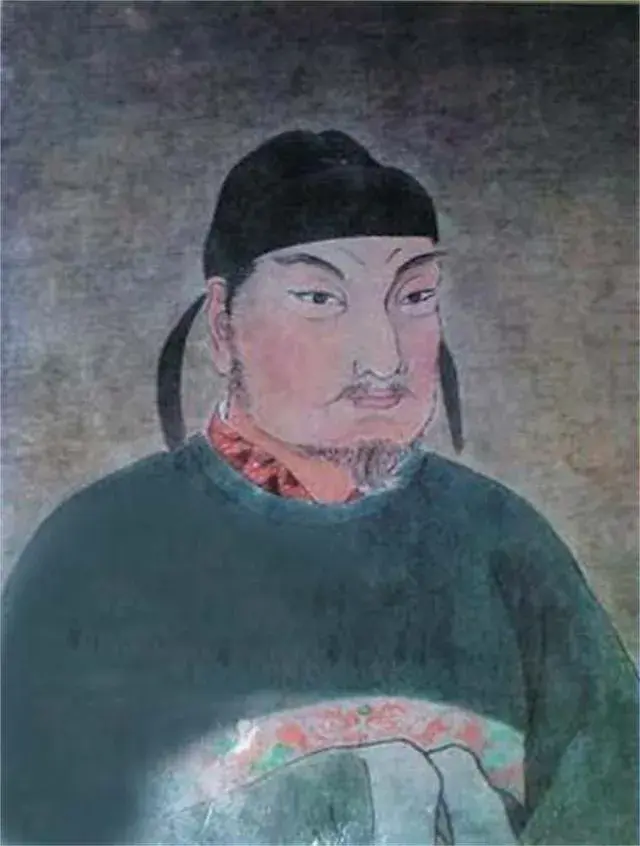
867 CE–904 CE
李晔
Li Ye (李晔, March 31, 867 – September 22, 904), originally named Li Jie and later renamed Li Min and Li Ye, was the seventh son of Emperor Yizong and the younger brother of Emperor Xizong. He reigned as the nineteenth emperor of the Tang Dynasty from April 20, 888 to September 22, 904. Initially enfeoffed as Prince of Shou, he accompanied Emperor Xizong into exile in Sichuan following Huang Chao's capture of Chang'an.…
Li Ye (李晔, March 31, 867 – September 22, 904), originally named Li Jie and later renamed Li Min and Li Ye, was the seventh son of Emperor Yizong and the younger brother of Emperor Xizong. He reigned as the nineteenth emperor of the Tang Dynasty from April 20, 888 to September 22, 904. Initially enfeoffed as Prince of Shou, he accompanied Emperor Xizong into exile in Sichuan following Huang Chao's capture of Chang'an. Following Xizong's death in 888, the twenty-two-year-old Li Ye was enthroned by powerful eunuch commander Yang Fugong. Possessing remarkable intelligence and resolute ambition, Emperor Zhaozong determined to restore imperial authority. He allied with civil ministers such as Zhang Jun and Du Rangneng, eliminated the overbearing eunuch Yang Fugong, and placed royal princes in command of newly formed palace armies. However, his military offensives against entrenched warlords backfired disastrously: the Dashun campaign against Li Keyong of Taiyuan was routed, while subsequent clashes with Li Maozhen of Fengxiang and Han Jian of Huazhou forced the emperor to flee Chang'an into the Qinling mountains three times. In 897, Han Jian slaughtered eleven imperial princes, destroying the court's military base. In 900, eunuch Liu Jishu deposed and confined Zhaozong in the Eastern Palace. In 901, Chancellor Cui Yin orchestrated a loyalist counter-coup to restore the emperor. To permanently eradicate eunuch power, Cui Yin summoned the warlord Zhu Wen of Bianzhou into the capital, prompting eunuchs to abduct Zhaozong to Fengxiang. Following a grueling siege in 903, Zhu Wen seized the emperor and massacred hundreds of palace eunuchs. In early 904, Zhu Wen forced Zhaozong to move the capital to Luoyang while demolishing ancient Chang'an. On September 22, 904, Zhu Wen's assassins murdered the thirty-eight-year-old emperor in Jiaodian Hall. He received the posthumous title Emperor Shengmu Jingwen Xiao and the temple name Zhaozong, being buried at Heling.
Born in the Eastern Palace of Daming Palace in Chang'an as the seventh son of Emperor Yizong.
Created Prince of Shou with the name Li Jie; studied classical statecraft and martial arts diligently.
Fled with Emperor Xizong across the Qinling mountains to Chengdu when Huang Chao sacked Chang'an.
Enthroned by eunuch Yang Fugong following Xizong's death; adopted the name Li Ye and reign title Wende.
Launched the Dashun campaign against Li Keyong; imperial armies were routed, severely damaging court prestige.
Stripped Yang Fugong of his command and dispatched palace guards to storm his mansion, executing him later.
Clashed with Li Maozhen of Fengxiang; forced to execute loyal Chancellor Du Rangneng to negotiate peace.
Fled Chang'an into the snowbound Shimen mountains when Li Maozhen and Wang Xingyu advanced on the capital.
Fled to Huazhou under Han Jian's protection as Li Maozhen burned Chang'an; kept under strict surveillance.
Han Jian disarmed the princes' palace regiments and executed eleven imperial princes on the Huazhou stone dyke.
Returned from Huazhou to the burnt ruins of Chang'an, adopting the era name Guanghua.
Deposed by eunuch commander Liu Jishu, who welded the gates of the Eastern Palace shut and installed Li Yu.
Restored following an armed coup led by Sun Dezhao and Chancellor Cui Yin; adopted the era name Tianfu.
Rescued by Zhu Wen after a sixteen-month siege; Zhu Wen slaughtered hundreds of palace eunuchs in Chang'an.
Forced by Zhu Wen to move the capital to Luoyang while ancient Chang'an was dismantled and razed.
Murdered by Zhu Wen's officers Jiang Xuanhui and Zhu Yougong at Jiaodian Hall at the age of thirty-eight.
Emperor Zhaozong was born on March 31, 867 in the Daming Palace at Chang'an as the seventh son of Emperor Yizong and Consort Wang. Endowed with a tall and imposing physique, dignified composure, and sharp intellect, he was celebrated among the imperial sons for his passion for learning. Dynastic records note that from his childhood he immersed himself in historical chronicles, calligraphy, and classical essays, displaying a profound grasp of moral statecraft and dynastic history. In April 872, at the age of six, he was enfeoffed as Prince of Shou and named Li Jie.
In 874, his elder brother Li Xuan was enthroned as Emperor Xizong at the age of twelve under the manipulation of palace eunuchs. Xizong was frivolous, spending his days polo-playing and cockfighting while leaving state affairs entirely to eunuch Tian Lingzi. In 877, eleven-year-old Li Jie received prestigious titular offices, including Grand Protector of Youzhou and Military Governor of Lulong. Although he remained in the capital, reading military dispatches provided him with early insight into the centrifugal dangers posed by regional military governors (Jiedushi).
In the winter of 880, Huang Chao's insurgent forces breached the strategic Tongguan Pass, imperiling the capital. Emperor Xizong and Tian Lingzi abandoned Chang'an in haste without notifying the civil ministers. Fourteen-year-old Li Jie escorted his mother, Consort Wang, through the snowy passes of the Qinling mountains. Facing bitter cold, food shortages, and hostile terrain, the young prince exhibited extraordinary resilience, maintaining discipline among royal dependents throughout the arduous flight.
Arriving in Chengdu in early 881, Li Jie spent four years in exile, witnessing regional warlords such as Wang Chongrong and Li Keyong battle for control over Guanzhong. He also observed firsthand how Tian Lingzi leveraged the Shence Armies to terrorize civil chancellors and dominate the throne. This formative experience convinced him that the imperial house's humiliation stemmed directly from its loss of independent command over the central military forces.
During his years in Shu, Li Jie studied classical military strategy and early Tang dynastic annals, forming close ties with ambitious young scholars and royal kin. In 885, Emperor Xizong returned to Chang'an, only to flee again months later to Fengxiang and Xingyuan when Tian Lingzi clashed with Li Keyong. These recurring exiles tempered Li Jie's determination to rebuild imperial power once he gained sovereign authority.
Throughout the arduous flight to Sichuan, Li Jie gained intimate awareness of popular suffering. Observing countless peasant families uprooted by warfare and orphaned children weeping along mountain trails, he frequently surrendered his own royal meat rations to feed starving civilian refugees and wounded soldiers. His compassion won him deep admiration among civil officials, cultivating a sense of historical mission to rescue the realm.
In February 888, the battered court returned to Chang'an, but Emperor Xizong fell critically ill within a month. While civil officials favored his mature younger brother, Prince Li Bao of Ji, the powerful Shence Army commander Yang Fugong maneuvered behind the scenes. Judging Prince Li Jie to be more pliable, Yang Fugong forged an imperial decree on March 2, investing the twenty-two-year-old Prince of Shou as crown prince and regent.
Emperor Xizong died four days later, and Li Jie ascended the throne on March 8, adopting the name Li Min (subsequently formalized as Li Ye) and inaugurating the Longji era. Refusing to serve as a puppet, Emperor Zhaozong threw himself into administrative work, rising before dawn to review provincial memorials and consulting chancellors Kong Wei and Du Rangneng. His refined intellect, moral rectitude, and vigorous dedication raised hopes of an imperial renaissance across the war-torn empire.
Zhaozong recognized that central authority could never be restored without neutralizing the eunuch commanders who controlled the Shence palace armies. Having engineered Zhaozong's enthronement, Yang Fugong exercised overbearing authority, staffing regional governorships with his adopted sons and maintaining hundreds of private retainers at his Chang'an residence. Zhaozong treated Yang Fugong with outward deference while quietly coordinating with Chancellor Zhang Jun to replace palace guards with loyal retainers.
Between 889 and 891, Zhaozong repeatedly rejected Yang Fugong's demands to appoint personal partisans to senior regional posts, bringing tensions into the open. In August 891, when Yang Fugong's adopted son behaved insolently at court, Zhaozong stripped Yang Fugong of his Shence command, forcing him into retirement. Yang Fugong retreated to his private estate and plotted an armed coup with his adopted sons in Shannan West.
In November 891, Zhaozong ordered imperial guards under General Li Shunjie to surround Yang Fugong's residence. Fierce fighting erupted outside Tonghua Gate before imperial troops torched the mansion, scattering the rebel retainers. Yang Fugong fled to Xingyuan, where his forces were decisively crushed by imperial armies the following winter. Captured and escorted to Chang'an, Yang Fugong was executed in the marketplace. Zhaozong had achieved what successive Tang emperors had failed to accomplish for over a century: reclaiming sovereign control over the Shence Armies.
In the aftermath of Yang Fugong's downfall, Zhaozong exhibited calculated clemency. Recognizing that the rank-and-file guards had merely obeyed their eunuch officers, he issued an amnesty limiting executions to Yang Fugong's direct kin and core conspirators. By guaranteeing regular pay and pardons to ordinary guardsmen, he stabilized the garrison units, transferring the central military command smoothly to the emperor's direct authority.
Having reclaimed central military authority, Emperor Zhaozong confronted the menace of regional warlords across northern China. Prince Li Keyong of Taiyuan commanded over one hundred thousand elite Shatuo cavalry, dominating Shanxi and repeatedly threatening neighboring circuits. Yearning to emulate Emperor Xianzong's pacification of Huaxi during the Yuanhe Restoration, Zhaozong resolved to launch a major military offensive to reassert the supreme authority of the Son of Heaven.
In early 890, when Li Keyong attacked Zhaoyi Circuit at Luzhou, Chancellor Zhang Jun persuaded the young emperor that Li Keyong's campaigns offered a golden opportunity to crush the Shatuo threat. Although senior statesmen such as Du Rangneng and Liu Chongwang warned that the newly recruited palace armies lacked training and that the treasury was depleted, Zhaozong approved the offensive, eager to achieve a quick, decisive victory.
In May 890, Zhaozong issued an edict stripping Li Keyong of all noble ranks, appointing Zhang Jun as supreme commander over one hundred thousand troops from the Shence and Tianwei armies, supported by auxiliary contingents from Bianzhou, Zhenzhou, and Youzhou. The multi-pronged offensive marched toward southern Shanxi with great fanfare.
However, the campaign ended in unmitigated disaster. At Changzi, the imperial forces encountered Shatuo cavalry under Li Cunxiao and Li Cunxin. Imperial vanguard commander Sun Kui was ambushed and captured, while Zhang Jun's central columns collapsed into chaos. As allied warlord contingents stood by without rendering assistance, imperial regiments were encircled and routed across the plains of Shanxi, with Zhang Jun fleeing for his life back to Luoyang.
The catastrophe shattered the prestige of the central government. Decades of military rebuilding were wiped out in a single campaign, and imperial reserves were exhausted. Triumphant and defiant, Li Keyong submitted blistering memorials mocking the throne. In January 891, Zhaozong was forced to restore Li Keyong's titles and dismiss Chancellor Zhang Jun. The defeat stripped the court of its last reliable field army, leaving the emperor vulnerable to intimidation by neighboring warlords.
The military failure triggered immediate diplomatic repercussions across northern China. Regional warlords in Hebei, such as Luo Hongxin of Weibo and Wang Rong of Chengde, abandoned their allegiance to Chang'an, concluding regional pacts with Li Keyong. Cut off from eastern revenues, the central government was stripped of diplomatic leverage, transforming the emperor into a ceremonial figurehead in the eyes of provincial governors.
The defeat at Taiyuan exposed the capital's defenselessness to neighboring warlords Li Maozhen of Fengxiang and Wang Xingyu of Binning. In early 893, when Li Maozhen annexed Shannan West without imperial authorization, Zhaozong issued an edict of reprimand. Li Maozhen responded with open insolence, taunting the throne to measure its military strength before challenging Fengxiang. Infuriated, Zhaozong resolved to launch another punitive expedition.
In July 893, Zhaozong ordered Prince Li Zi of Tong and General Li Hui to lead thirty thousand newly conscripted recruits against Fengxiang, while Chancellor Du Rangneng oversaw logistical preparations. However, the raw recruits were no match for Li Maozhen's battle-hardened frontier veterans. In September, the imperial army collapsed at the Shanshui River, and Li Maozhen's cavalry advanced rapidly to the gates of Chang'an, terrorizing the capital.
Li Maozhen issued an ultimatum demanding the execution of the chancellors who had authorized the expedition. Despairing and helpless, Zhaozong wept before Chancellor Du Rangneng, lamenting that to preserve the dynastic altars he had no choice but to sacrifice his loyal minister. In October, the emperor tearfully commanded Du Rangneng and his brother to commit suicide, after which Li Maozhen withdrew his troops, inflicting profound humiliation upon the throne.
In May 895, Li Maozhen, Wang Xingyu, and Han Jian invaded Chang'an once more, plotting to depose Zhaozong. In this desperate crisis, Li Keyong marched south from Taiyuan with Shatuo cavalry to rescue the emperor. Panicking at Li Keyong's advance, Li Maozhen torched the capital. Zhaozong and his court fled into the southern Qinling mountains, taking refuge at Shimen Mountain amidst freezing snowstorms, where the imperial family was reduced to begging local woodsmen for coarse bran to survive.
Li Keyong routed and killed Wang Xingyu, forcing Li Maozhen to sue for peace. In December 895, Li Keyong escorted the imperial court back toward the capital. Zhaozong received Li Keyong with deep gratitude, bestowing jade belts and honors. However, fearing that Shatuo troops stationed permanently in the capital would merely substitute one military dictator for another, Zhaozong declined Li Keyong's offer to garrison Chang'an. When the Shatuo army withdrew north, the power vacuum re-emerged, leaving the court once more at the mercy of regional warlords.
During his exile at Shimen, Zhaozong displayed remarkable dignity amidst hardship. When courtiers broke into despairing laments, the emperor offered comfort, urging them to maintain imperial composure. Establishing a makeshift desk within a mountain hut, he reviewed state dispatches daily, inspiring profound respect from his retinue and allied commanders.
In July 896, Li Maozhen marched on Chang'an once again. Lacking adequate forces to defend the capital, Zhaozong accepted the invitation of Military Governor Han Jian of Huazhou to relocate east. As the imperial carriage passed through Tonghua Gate, Zhaozong gazed back at the burning palaces and ancestral shrines of Chang'an, weeping uncontrollably as centuries of architectural grandeur went up in smoke.
Upon arriving in Huazhou, Zhaozong discovered that Han Jian's outward humility masked ruthless ambition. Converting the provincial yamen into an imperial residence, Han Jian deployed armed sentries around the palace to monitor the emperor's every movement, subjecting all visiting officials to intrusive searches. The Son of Heaven had become a captive in all but name.
To break free from this captivity, Zhaozong attempted to create an independent imperial guard by breaking ancestral precedents. He commissioned eleven young imperial princes—including Prince Li Sizhou of Tan, Prince Li Jipi of Yan, and Prince Li Zi of Tong—to recruit and train several thousand palace guards from local refugees. This attempt to construct a loyal dynastic army alarmed Han Jian and Li Maozhen.
In January 897, alleging grain shortages, Han Jian led heavy infantry into the palace, demanding the surrender of imperial tallies. At swordpoint, Han Jian forced the emperor to abolish the princely commands, disarming and disbanding the newly formed regiments. Powerless to resist, Zhaozong wept as his last military initiative was dismantled before his eyes.
In August 897, Han Jian fabricated treason charges against the royal family. His soldiers dragged eleven imperial princes from their quarters to the stone dyke west of Huazhou, executing them in cold blood beneath torrential rains. Hearing of the massacre, Zhaozong collapsed in grief within his chambers, fasting for days in mourning for the slaughter of his closest kin.
The massacre on the stone dyke shattered the emperor's spirit. The loss of his brothers and cousins not only deprived him of familial affection but also eradicated the dynastic core capable of preserving imperial rule, leaving the dynasty completely defenseless.
In August 898, after three years of virtual imprisonment in Huazhou, Zhaozong returned to Chang'an following a truce between Han Jian and Li Maozhen. He found the ancient metropolis in ruins: Daming and Taiji palaces were reduced to ashes, streets were choked with weeds, and the treasury was empty. The emperor resided in the dilapidated Shaoyang Court, unable even to issue winter uniforms to his palace attendants.
Court intrigue struck again in November 900. Terrified that Zhaozong would retaliate against eunuch abuses, Shence Army commanders Liu Jishu and Wang Zhongxian staged a palace coup following an incident in which the emperor had executed several palace attendants. Leading armed eunuchs into the inner quarters, they forced Zhaozong to surrender the imperial seal, confining him and Empress He in the Eastern Palace while welding the iron gates shut, leaving only a small slot through which coarse rations were passed.
Liu Jishu installed Crown Prince Li Yu as a puppet emperor. In this dark hour, Chancellor Cui Yin conspired with loyalist Shence commanders Sun Dezhao and Dong Yanbi. On January 24, 901, Sun Dezhao ambushed and executed Liu Jishu and Wang Zhongxian at Anfu Gate, liberating the emperor. Zhaozong mounted the Changle Gate to address the celebrating crowds, officially resuming the throne and adopting the era name Tianfu.
Determined to eliminate eunuch influence once and for all, Chancellor Cui Yin secretly summoned warlord Zhu Wen of Bianzhou to march on Chang'an. Terrified by Zhu Wen's approach, eunuch leaders Han Quanwei and Zhang Yanhong abducted Zhaozong and his family in October 901, fleeing west to Li Maozhen in Fengxiang. Zhu Wen marched westward with one hundred thousand veteran troops, laying siege to Fengxiang in early 902.
The sixteen-month siege of Fengxiang was one of the most agonizing ordeals in Tang history. Famine ravaged the encircled city, with food prices soaring and desperate citizens resorting to cannibalism. In the freezing winter of 903, the imperial family huddled in subterranean chambers without heating or food, weeping in despair. Driven to desperation, Li Maozhen sued for peace, beheading Han Quanwei and twenty leading eunuchs and delivering their severed heads to Zhu Wen's camp. Zhu Wen escorted the emperor back to Chang'an, executing hundreds of remaining eunuchs and terminating over a century of eunuch dominance.
The siege of Fengxiang reduced the imperial court to utter destitution. During the bitterest months, Zhaozong and Empress He gave up their own daily rations to keep their young children alive. When Zhu Wen's forces finally broke through, the emperor emerged emaciated and clad in rags, having endured hardships unmatched by any Tang monarch.
Although the purge of eunuchs removed an ancient scourge, Emperor Zhaozong fell into the ruthless grip of Zhu Wen. Returning to Chang'an in February 903, the emperor found his palace surrounded by Zhu Wen's veteran guards. When Chancellor Cui Yin attempted to raise an independent force to balance Zhu Wen, the warlord executed him on the spot, turning the court into a complete puppet administration.
In January 904, eager to base the court within his home territory of Henan, Zhu Wen forced Zhaozong to relocate the capital to Luoyang. To extinguish all hope of returning west, Zhu Wen ordered his army to systematically demolish the palaces, ministries, and residences of Chang'an, floating millions of ancient cedar timbers and stone building materials down the Yellow River to Luoyang. The greatest imperial city in Asia was reduced to desolate ruins.
In February 904, the imperial family was forced onto carriages for the journey east. Passing through Shaanpu and Tongguan, hundreds of thousands of weeping citizens lined the highways to bid farewell to their sovereign. Weeping bitterly from his carriage, Zhaozong called out to the crowds: "Do not shout long live! I am departing, never to return!" Later, he remarked to his close attendants: "I am now a captive of Zhu Wen, just like Emperor Xian of Han in the hands of Cao Cao. The end of our dynastic line is at hand!"
Arriving in Luoyang in April, Zhaozong was confined in Shaoyang Hall under the new era name Tianyou. Zhu Wen dismissed all trusted palace servants, replacing them with hulking soldiers disguised as attendants to monitor the emperor's words and actions. Aware of his impending doom, Zhaozong spent his days drinking with Empress He in profound despair.
On the night of September 22, 904, fearing that the emperor might serve as a rallying symbol for northern rivals during his campaigns against Li Keyong, Zhu Wen ordered his generals Jiang Xuanhui and Zhu Yougong to assassinate the monarch. Breaching the gates of Jiaodian Hall with drawn swords, the assassins cornered the emperor. As Empress He fled in terror, the thirty-eight-year-old Zhaozong fought back with bare hands before being hacked to death beside his couch. The assassins installed his thirteen-year-old son Li Zhu as Emperor Ai, and three years later Zhu Wen usurped the throne to establish Later Liang, terminating the two-hundred-and-eighty-nine-year rule of the Tang Dynasty.
Emperor Zhaozong stands as a heroic yet tragic reformer amidst the collapse of the late Tang world. Unlike his hedonistic predecessor Emperor Xizong, Li Ye recognized the fatal rot consuming the dynasty and dedicated his life to checking the centrifugal forces of warlordism. Inheriting an empire fractured by the Huang Chao rebellion and regional autonomy, he undertook bold institutional and military initiatives to restore the centralized authority of the Tang house.
In civil governance, Zhaozong sought to revive the administrative discipline of the Zhenguan and Kaiyuan golden ages. He practiced personal frugality, cancelled wasteful palace banquets, and granted tax relief to war-ravaged populations across Guanzhong. Elevating capable Confucian statesmen such as Zhang Jun, Du Rangneng, and Lu Yi, he held daily audiences to debate administrative reform, briefly inspiring hopes of an imperial restoration among scholar-gentry elites.
In military reform, Zhaozong pursued the daring policy of constructing independent central field armies. Recognizing that regional warlords ignored imperial edicts because the court lacked military teeth, he purged the corrupt eunuch leadership of the Shence Armies, created new palace units such as the Dianhou Guard, and placed imperial princes in active command of frontier garrisons. This endeavor to build an army bound by dynastic loyalty represented a courageous institutional gamble to reclaim the sovereign sword.
However, Zhaozong's tragic flaw lay in the vast discrepancy between his noble ambitions and the harsh material realities of late ninth-century China. The fiscal foundations of the Tang state had dissolved alongside the collapse of the equal-field (Juntian) and fubing military systems. Regional warlords commanded autonomous taxation and hereditary soldier networks, whereas the court held only a few impoverished commanderies in Guanzhong, leaving it incapable of sustaining prolonged campaigns against veteran warlord hosts.
The catastrophic reverses of the Dashun expedition against Taiyuan and the Jingfu campaign against Fengxiang wiped out the court's newly recruited regiments, exposing the throne's vulnerability and encouraging neighboring warlords to invade the capital. Although Zhaozong possessed sovereign intellect and courage, his strategic impetuosity accelerated the demise of the dynasty he fought so fiercely to preserve.
Eunuch dictatorship was one of the most toxic institutional pathologies of late imperial China. Ever since the mid-eighth century, eunuch commanders had controlled the Shence Armies and the Bureau of Military Affairs, deposing, enthroning, and murdering emperors at will. Emperor Zhaozong made the total eradication of eunuch military power his foremost political objective, orchestrating the downfall and execution of Yang Fugong in 891 with remarkable tactical skill.
Yet the eunuch network was deeply entrenched across the palace administration. The palace coup of 900, in which Liu Jishu welded the doors of the Eastern Palace shut, revealed the desperation of the eunuch establishment. The trauma of this imprisonment pushed Zhaozong and Chancellor Cui Yin to embrace a catastrophic political expedient: summoning the warlord Zhu Wen of Bianzhou to purge the palace eunuchs.
By inviting Zhu Wen into the capital, the court opened the gates to an insatiable conqueror. The subsequent flight to Fengxiang and the sixteen-month siege brought horrific suffering to the populace. Although Zhu Wen's massacre of hundreds of eunuchs in 903 terminated over a century of eunuch domination, it simultaneously destroyed the court's last protective barrier, leaving the imperial family entirely at the mercy of a brutal military dictator.
In the evolution of Tang administrative institutions, Zhaozong's creation of princely military commands broke two centuries of dynastic tradition. Ever since Emperor Xuanzong established the Sixteen Mansions to house royal kin, Tang princes had been strictly barred from holding military commands or participating in outer-court administration to prevent palace coups.
Confronting the treachery of eunuch generals, Zhaozong broke these ancient prohibitions during his exile in Huazhou, commissioning eleven royal princes to recruit and command loyalist regiments. This policy aimed to create a military corps bound by blood to defend the throne against warlord predation, momentarily raising the martial morale of the imperial house.
However, the experiment was doomed by geopolitical encirclement. Regional warlords Li Maozhen and Han Jian refused to tolerate the emergence of an independent royal army within their territory. Han Jian's coup in 897 disarmed the princely regiments and culminated in the execution of eleven imperial princes on the stone dyke of Huazhou, extinguishing the dynasty's finest royal talent and leaving the emperor defenseless.
The demolition of Chang'an in 904 by Zhu Wen stands as one of the most catastrophic civilizational disasters in Chinese history. Built over three centuries by the Sui and Tang dynasties, Chang'an was the radiant cultural, commercial, and political capital of East Asia, boasting monumental architectural complexes such as the Daming, Taiji, and Xingqing palaces.
Under Zhu Wen's orders, Bianzhou troops systematically pulled down the imperial palaces, administrative ministries, and Buddhist shrines, floating millions of precious structural timbers down the Yellow River to Luoyang and setting fire to the remainder. Centurial archives of Tang literature, historical chronicles, and court art perished in the flames, inflicting an irreparable cultural loss upon Chinese civilization.
The razing of Chang'an permanently shifted China's geopolitical center of gravity. For over two millennia, the Guanzhong basin had served as the geopolitical axis of Chinese dynastic power. Following Zhaozong's forced move to Luoyang, Chang'an never again served as the capital of a unified Chinese empire, as subsequent dynasties shifted their political and economic centers toward the Central Plains and Jiangnan.
Historians have frequently paired Emperor Zhaozong of Tang with Emperor Xian of Han, referring to them as "Han Xian and Tang Zhao." Both rulers inherited dying empires fractured by warlordism; both possessed refined intellects yet were constrained by overbearing strongmen; both suffered humiliating exiles amidst military conflict; and both were used as pawns in the dynastic transitions of usurping warlords.
Yet while Emperor Xian endured captivity under Dong Zhuo and Cao Cao with passive resignation, Emperor Zhaozong fought back with unyielding tenacity. Throughout his sixteen-year reign, Zhaozong crushed powerful eunuchs, raised independent armies, and took the field against regional warlords, never yielding to despair.
Tragically, while Emperor Xian was spared after his abdication and lived peacefully as Duke of Shanyang, Emperor Zhaozong's fierce spirit proved intolerable to Zhu Wen. Refusing to play the role of an obedient puppet, Zhaozong was murdered by assassins in the dead of night, dying as a heroic martyr who chose violent resistance over submissive survival.
FIGURES ASSOCIATED WITH THIS DYNASTY