The Eastern Wei (534–550) was a coexisting regime of the Northern Dynasties during the Northern and Southern Dynasties period. It was established under the control of the powerful minister Gao Huan, described in the source as a sinicized Han Chinese, after he defeated the Erzhu forces and took control of the eastern territories of Northern Wei. In 534, the third year of Yongxi, Emperor Xiaowu of Northern Wei refused to remain a puppet under Gao Huan and fled west to Guanzhong to join Yuwen Tai.…
534 CE–550 CECapital · See entry
ERA OVERVIEW
The Eastern Wei (534–550) was a coexisting regime of the Northern Dynasties during the Northern and Southern Dynasties period. It was established under the control of the powerful minister Gao Huan, described in the source as a sinicized Han Chinese, after he defeated the Erzhu forces and took control of the eastern territories of Northern Wei. In 534, the third year of Yongxi, Emperor Xiaowu of Northern Wei refused to remain a puppet under Gao Huan and fled west to Guanzhong to join Yuwen Tai. Gao Huan then installed Yuan Shanjian, the eleven-year-old great-grandson of Emperor Xiaowen of Northern Wei, as emperor at Ye. Yuan Shanjian became Emperor Xiaojing and inaugurated the Tianping era, establishing the regime later known as Eastern Wei. In the following year, 535, Yuwen Tai installed Yuan Baoju at Chang'an as Emperor Wen of Western Wei, and Northern Wei formally divided into the Eastern and Western Wei regimes.
Time span534 CE–550 CE
CapitalSee entry
ERA TIMELINE
Emperor Xiaowu fled west to Guanzhong;Open
Emperor Xiaowu fled west to Guanzhong; Gao Huan installed Yuan Shanjian at Ye, establishing Eastern Wei.
Eastern Wei was defeated at the BattleOpen
Eastern Wei was defeated at the Battle of Xiaoguan, and Dou Tai committed suicide.
Eastern Wei and Western Wei fought theOpen
Eastern Wei and Western Wei fought the Battle of Heqiao, with mixed fortunes in the wider campaign.
Eastern Wei and Western Wei fought at Open
Eastern Wei and Western Wei fought at Mount Mang, and the two sides remained locked in confrontation.
At the Battle of Yubi, Gao Huan failedOpen
At the Battle of Yubi, Gao Huan failed to take the fortress and his chronic illness worsened.
(three years after the Battle of MOpen
547 (three years after the Battle of Mount Mang): Gao Huan died, and Gao Cheng took control of government.
Gao Cheng was assassinated, and Gao YaOpen
Gao Cheng was assassinated, and Gao Yang took control of government.
Gao Huan's second son Gao Yang forced Open
Gao Huan's second son Gao Yang forced Emperor Xiaojing to abdicate and established Northern Qi, ending Eastern Wei after a single emperor and about sixteen years.
FULL ENTRY
Overview
The Eastern Wei (534–550) was a coexisting regime of the Northern Dynasties during the Northern and Southern Dynasties period. It was established under the control of the powerful minister Gao Huan, described in the source as a sinicized Han Chinese, after he defeated the Erzhu forces and took control of the eastern territories of Northern Wei. In 534, the third year of Yongxi, Emperor Xiaowu of Northern Wei refused to remain a puppet under Gao Huan and fled west to Guanzhong to join Yuwen Tai. Gao Huan then installed Yuan Shanjian, the eleven-year-old great-grandson of Emperor Xiaowen of Northern Wei, as emperor at Ye. Yuan Shanjian became Emperor Xiaojing and inaugurated the Tianping era, establishing the regime later known as Eastern Wei. In the following year, 535, Yuwen Tai installed Yuan Baoju at Chang'an as Emperor Wen of Western Wei, and Northern Wei formally divided into the Eastern and Western Wei regimes.
The regime's own state name remained “Wei,” continuing the Northern Wei name; “Eastern Wei” was a later designation used to distinguish it from Western Wei and is first recorded in the *Book of Northern Qi*. Its capital was Ye, in present-day Linzhang County, Handan, Hebei, while Jinyang, where Gao Huan's grand chancellor's headquarters was located, functioned as a secondary capital. Gao Huan spent much of his time at Jinyang and controlled the court from there. Eastern Wei held the broad eastern part of former Northern Wei, including areas north of Runan in present-day Henan, north of Xuzhou in present-day Jiangsu, and east of Luoyang. Its population and agricultural base were stronger than those of Western Wei. Yet imperial authority was continually overshadowed by the Gao clan's headquarters, and Emperor Xiaojing remained a figurehead. In 550, the eighth year of Wuding, Gao Huan's second son Gao Yang forced Emperor Xiaojing to abdicate and established Northern Qi, ending Eastern Wei after a single emperor and about sixteen years.
Historical Development
Establishment. Northern Wei had been badly weakened by large-scale uprisings and intense struggles within the ruling elite. Er Zhurong used the Heyin Massacre to seize control of the central government. In 530, the third year of Yongan, Emperor Xiaozhuang Yuan Ziyou killed Er Zhurong during an audience, but Er Zhurong's nephew Erzhu Zhao then attacked Luoyang, killed Emperor Xiaozhuang, and installed Yuan Gong as Emperor Jiemin. In 532, the first year of Taichang, Gao Huan, formerly one of Er Zhurong's commanders and backed by major Hebei families, destroyed the Erzhu forces east of Tong Pass, killed Emperor Jiemin, and installed Yuan Xiu as Emperor Xiaowu. Northern Wei power thus fell under Gao Huan's control. In 534, the third year of Yongxi, Emperor Xiaowu fled west to Chang'an and joined Yuwen Tai. In the tenth month, Gao Huan and court officials selected Yuan Shanjian as emperor at Ye and inaugurated the Tianping era, formally establishing Eastern Wei.
Height. At its foundation Eastern Wei was comparatively powerful, with extensive territory, a large population, and a developed economy, though land concentration was also severe. Gao Huan built a powerful military force primarily from former Six Garrisons refugees and is described in the source as combining Northern Wei military elements with the support of major Hebei families. He sought the support of Xianbei nobles through policies of Xianbei cultural alignment while also allowing Han Chinese magnates to accumulate wealth, contributing to growing administrative corruption. In the long wars against Western Wei, Eastern Wei won and lost major battles at Shayuan, Heqiao, Mount Mang, and elsewhere, while retaining an overall material advantage.
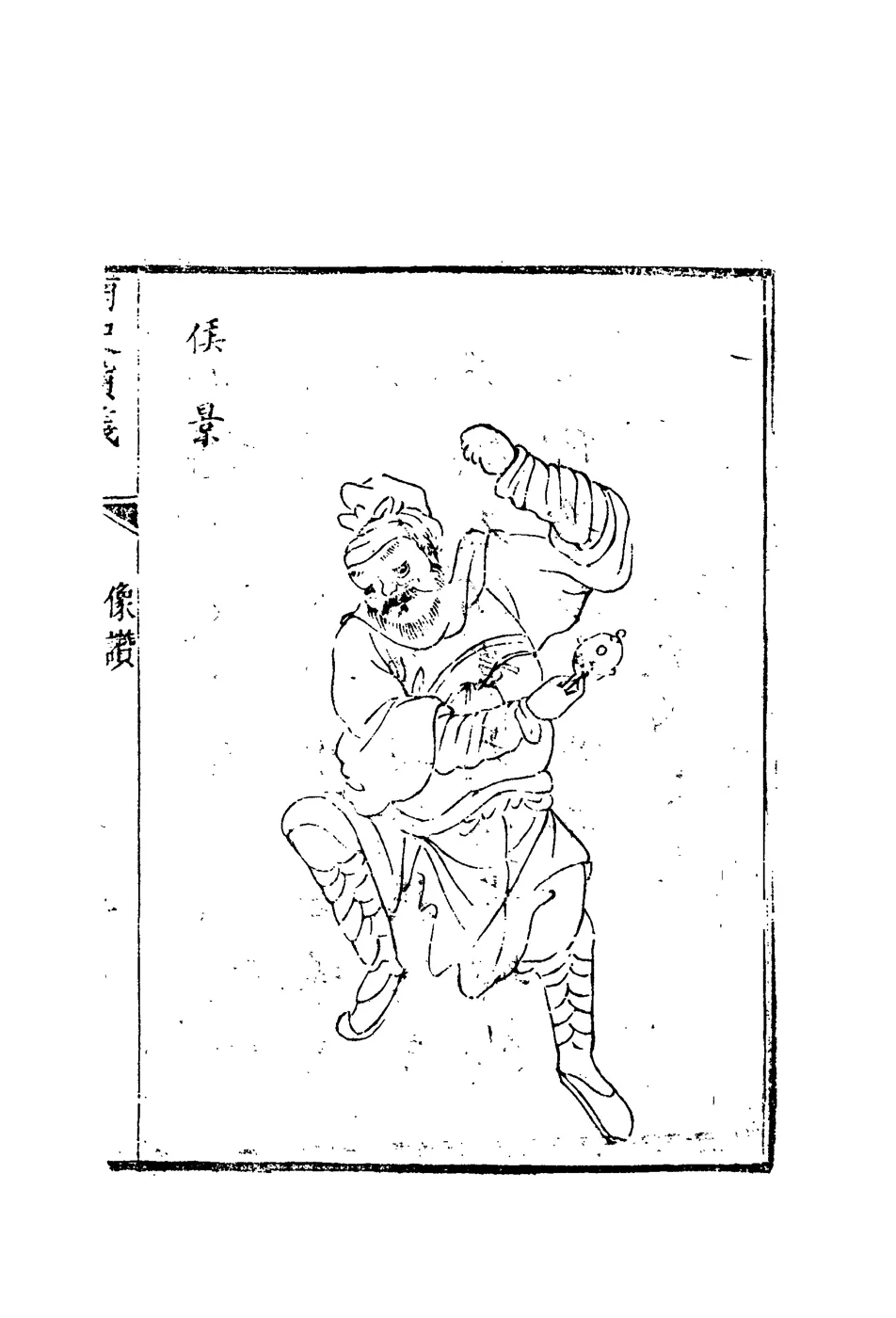
Turning Point. In 546, the fourth year of Wuding, Gao Huan led an army of more than 100,000 against the Western Wei fortress of Yubi. The defender Wei Xiaokuan held the city. Eastern Wei forces tried methods including attacking hills, digging tunnels, and using siege vehicles, but Wei Xiaokuan countered them. After fifty days of siege and a reported 70,000 deaths among the attackers, Eastern Wei failed to take the fortress. Gao Huan's chronic illness worsened and he withdrew. Three years after the Battle of Mount Mang, in 547, the fifth year of Wuding, Gao Huan died at Jinyang. His eldest son Gao Cheng succeeded to overall command of the central and outer armies and controlled the government. Soon afterward, the Eastern Wei frontier commander Hou Jing rebelled and defected to Western Wei, but Gao Cheng ultimately restored Eastern Wei control. Gao Cheng's power exceeded that of the emperor; he once ordered Cui Jishu to beat Emperor Xiaojing, later confined the emperor, and executed officials who plotted to recover imperial authority.
Decline. In 549, the seventh year of Wuding, Gao Cheng was assassinated by the kitchen servant Lan Jing shortly before a planned transfer of the throne. He was twenty-nine years old. Political power then passed to his younger brother Gao Yang, who continued to control both military and civil affairs and was promoted to Prince of Qi. The authority of the Gao clan's political headquarters became even stronger, leaving the Eastern Wei imperial house almost entirely powerless and the regime effectively hollow.
Fall. In 550, the eighth year of Wuding, Gao Yang forced Emperor Xiaojing to abdicate in his favor and proclaimed himself emperor of Qi, historically known as Northern Qi, inaugurating the Tianbao era. In the same year, Gao Yang reduced Emperor Xiaojing to Prince of Zhongshan and soon had him and his sons killed. Many other members of the Eastern Wei imperial clan were also killed, ending the Eastern Wei name and imperial line. (Details concerning particular battles and the dynastic transition should be checked against the *Book of Northern Qi*, *Book of Wei*, and related official histories.)
Politics and Institutions
Eastern Wei inherited the Three Departments system and the sinicized official institutions created by Northern Wei reforms under Emperor Xiaowen. The central government maintained the Department of State Affairs, Secretariat, and Chancellery. In practice, however, the main center of power was not the emperor but Gao Huan's grand chancellor's headquarters, a pattern later described as “headquarters politics.” Military and political authority concentrated in the staff of this headquarters, while the emperor remained largely ceremonial. Jinyang, as the headquarters base, became a second political center alongside Ye. Local government used the prefecture-commandery-county structure, while tax transport and household administration were often controlled by Gao clan associates. Official selection continued the Nine-rank system and emphasized family status, while Gao Huan recruited many Shandong aristocrats into his staff in order to build ties with Han Chinese elites. The legal system continued Northern Wei codes and statutes, while supervisory institutions retained the Censorate. Overall, Eastern Wei government combined a formally continuing Wei imperial structure with the real dominance of the Gao clan.
Military and Foreign Relations
Eastern Wei armies relied on Xianbei retainers and Han hereditary military households, while Gao Huan built much of his power from former Six Garrisons refugees. The regime's main military struggle was its contest with Western Wei for control of the Yellow River region. Major engagements included the Battle of Xiaoguan (537), Battle of Shayuan (537), Battle of Heqiao (538), and Battle of Mount Mang (543), with victories and defeats on both sides. In 546, the Battle of Yubi became a major turning point: more than 100,000 Eastern Wei troops failed to take the fortress defended by Wei Xiaokuan, and the source reports 70,000 dead before the army withdrew. Diplomatically, Eastern Wei dealt with northern powers such as the Rouran and sought contacts with the Liang dynasty as a counterweight to Western Wei. The Eastern and Western Wei remained in a broad balance until both were succeeded by Northern Qi and Northern Zhou.
Economy and Commerce
Eastern Wei controlled the North China Plain and the middle and lower Yellow River regions, among the most agriculturally productive and populous areas of the Northern Dynasties. Eastern Wei continued the equal-field system of land distribution and taxation and the rent-and-tax system established under Northern Wei; these institutions provided a relatively stable tax and military manpower base. Ye and nearby market areas retained substantial handicraft production and trade. However, prolonged warfare with Western Wei placed heavy burdens on taxation and labor, and a large share of economic resources was directed toward military needs. Social and ethnic tensions were also intensified by the accumulation of wealth among powerful families under Gao Huan's rule.
Culture and Society
Eastern Wei culture continued the effects of Northern Wei sinicization, and Ye became a center for northern scholars, ritual, and education. Buddhism remained influential, temples and stupas were numerous, and Buddhist sculpture was a major artistic form; the source notes that Buddhist sculpture of this period became more robust in style than earlier Northern Wei examples. Shentong Temple near Mount Tai is described as possibly dating to Eastern Wei and as one of the oldest surviving stone-built Buddhist structures in China. Socially, Xianbei nobles, Han aristocratic families, and registered common households lived together. Ethnic interaction and aristocratic politics were closely intertwined. Gao Huan simultaneously promoted Xianbei-oriented policies and cultivated Han Chinese magnates, producing a visibly dual political and social structure.
> This section explains the rulers' positions in the evolution of the regime; full biographies are provided in the corresponding person entries.
Historical Assessments and Legacy
In its own time, Eastern Wei controlled broad territory, a large population, and strong military resources, giving it a long-term material advantage in its confrontation with Western Wei. Contemporary observers therefore saw it as a major Central Plains power. Yet the Gao clan's political headquarters effectively emptied imperial authority of substance, leaving Emperor Xiaojing as a figurehead, and the regime was also criticized as an example of government dominated by powerful ministers. Later historians generally placed Eastern Wei within the transition from Northern Wei to Northern Qi and the broader late Northern Dynasties pattern of competing eastern and western regimes. Its headquarters-based political structure, inherited sinicized institutions, and recruitment of Shandong aristocratic families had lasting influence on Northern Qi. Although Eastern Wei lasted only one emperor and slightly more than a decade, it provided the direct political foundation for the Gao clan's replacement of Wei by Qi. These assessments reflect conventional historical interpretation and should be compared with primary sources for specific details.