In 501 (second year of Yongyuan), Xiao Yan entered the Southern Qi capital Jiankang. In 502 (first year of Liang Tianjian), he forced Emperor He of Qi, Xiao Baorong, to abdicate and formally proclaimed himself emperor; he is known to history as Emperor Wu of Liang.
502 CE–557 CE
Liang dynasty
Concurrent polity梁
The Liang dynasty of the Southern Dynasties was established by Xiao Yan (Emperor Wu of Liang) after the Southern Qi and had its capital at Jiankang (present-day Nanjing, Jiangsu). Xiao Yan came from the Lanling Xiao clan and shared ancestry with the Southern Qi imperial house. In the first year of the Tianjian era (502), he replaced Qi and established himself as emperor, naming the state Liang. In its early period the Liang was powerful and controlled a relatively broad territory. Emperor Wu…
502 CE–557 CECapital · See entry
ERA OVERVIEW
The Liang dynasty of the Southern Dynasties was established by Xiao Yan (Emperor Wu of Liang) after the Southern Qi and had its capital at Jiankang (present-day Nanjing, Jiangsu). Xiao Yan came from the Lanling Xiao clan and shared ancestry with the Southern Qi imperial house. In the first year of the Tianjian era (502), he replaced Qi and established himself as emperor, naming the state Liang. In its early period the Liang was powerful and controlled a relatively broad territory. Emperor Wu reigned for nearly half a century, promoted Confucian learning and Buddhism, and patronized literature, making Liang one of the most culturally flourishing periods of the Southern Dynasties. In his later years, however, his devotion to Buddhism and neglect of government, together with the latitude given to imperial relatives and powerful elites, contributed to the Hou Jing Rebellion. Jiankang fell and Emperor Wu died in grief. After the rebellion, imperial princes competed for the throne and the dynasty declined. Emperor Jing, Xiao Fangzhi, abdicated to Chen Baxian, ending the Liang court at Jiankang; at the same time Xiao Cha, relying on Western Wei support, established a separate Liang regime at Jiangling, commonly called Western Liang. The Liang lasted for more than fifty years, inheriting institutions from Qi and influencing the later Chen and Sui, with a lasting cultural legacy.
Time span502 CE–557 CE
CapitalSee entry
ERA TIMELINE
.
The Hou Jing Rebellion broke out. Emperor Wu of Liang was imprisoned and died in grief; his son Emperor Jianwen of Liang, Xiao Gang, succeeded him but was killed by Hou Jing less than two years later. Emperor Yuan of Liang, Xiao Yi, later destroyed Hou Jing and recovered Jiankang, but the Liang then fell into civil war among competing princes. Western Wei captured Jiangling, Emperor Yuan was killed, Wang Sengbian.
After Hou Jing deposed and killed Emperor Jianwen, Xiao Gang, he installed Xiao Dong as emperor and changed the era name to Tianzheng.
In 554, assisted Western Wei in capturing Jiangling, the capital of Emperor Yuan of Liang, and was enfeoffed as emperor of Liang.
(second year of Taiping; first yea
557 (second year of Taiping; first year of Chen Yongding): Emperor Jing, Xiao Fangzhi, abdicated to Chen Baxian. The Liang court at Jiankang ended, while Western Liang continued into the Sui period.
FULL ENTRY
Overview
The Liang dynasty of the Southern Dynasties was established by Xiao Yan (Emperor Wu of Liang) after the Southern Qi and had its capital at Jiankang (present-day Nanjing, Jiangsu). Xiao Yan came from the Lanling Xiao clan and shared ancestry with the Southern Qi imperial house. In the first year of the Tianjian era (502), he replaced Qi and established himself as emperor, naming the state Liang. In its early period the Liang was powerful and controlled a relatively broad territory. Emperor Wu reigned for nearly half a century, promoted Confucian learning and Buddhism, and patronized literature, making Liang one of the most culturally flourishing periods of the Southern Dynasties. In his later years, however, his devotion to Buddhism and neglect of government, together with the latitude given to imperial relatives and powerful elites, contributed to the Hou Jing Rebellion. Jiankang fell and Emperor Wu died in grief. After the rebellion, imperial princes competed for the throne and the dynasty declined. Emperor Jing, Xiao Fangzhi, abdicated to Chen Baxian, ending the Liang court at Jiankang; at the same time Xiao Cha, relying on Western Wei support, established a separate Liang regime at Jiangling, commonly called Western Liang. The Liang lasted for more than fifty years, inheriting institutions from Qi and influencing the later Chen and Sui, with a lasting cultural legacy.
Historical Development
Establishment: After Xiao Yan rose during the Zhongxing period and suppressed the internal conflict of Southern Qi, he received the throne by abdication and proclaimed himself emperor. In the first year of Tianjian (502), he made Jiankang the capital and named the state Liang.
Height of power: In the early reign of Emperor Wu of Liang, the emperor was diligent in government, employed scholars, and valued Confucian learning. The Liang and Northern Wei generally confronted each other along the Huai River. Relative internal stability supported major cultural, Buddhist, and literary development, producing what is described here as the cultural high point of the Southern Dynasties.
Turning point: In his later years Emperor Wu became deeply devoted to Buddhism and increasingly detached from government. Imperial princes maintained their own military forces, and prolonged warfare with Northern Wei and, after its division, Eastern Wei and Western Wei consumed state resources. During the Taiqing era (about 547–549), Liang accepted the Eastern Wei rebel general Hou Jing, who soon revolted and advanced on Jiankang.
Decline: During the Hou Jing Rebellion, Jiankang fell around 549 and Emperor Wu died in grief. The capital was devastated, while Liang princes fought one another for the throne. Xiao Yi in Jingzhou and Xiao Cha in Yongzhou controlled separate power bases, with Western Wei and Northern Qi also involved in the conflict.
Fall: During the Chengsheng era, Western Wei captured Jiangling. The Liang court there was forced to submit to Western Wei, and Xiao Cha was installed in the Western Liang regime at Jiangling (one account treats this as a Western Wei-sponsored continuation of Liang legitimacy). Xiao Fangzhi, Emperor Jing, later took the throne at Jiankang and in 557 abdicated to Chen Baxian, after which the Jiankang Liang was replaced by Chen. Western Liang continued until the seventh year of the Sui Kaihuang era (587), when it was incorporated into Sui. (The precise duration and termination of Western Liang are treated only briefly here; see the relevant entries.)
Economy and Commerce
Benefiting from the resources of Jiangnan, Liang saw continued development in agriculture, water control, and the broader economy. Jiankang and its surrounding region were prosperous, urban trade was active, and temple economies and elite estates were prominent. The Hou Jing Rebellion caused major economic destruction in Jiangnan, devastated Jiankang, and sharply reduced the population. Recovery after the war was slow. Specific taxation and currency systems are treated in the relevant entries.
Culture and Society
Liang culture is presented here as the high point of the Southern Dynasties. Emperor Wu promoted Confucian learning and Buddhism, established schools, and invited scholars, producing what historical accounts describe as a flourishing of cultured men. Crown Prince Zhaoming, Xiao Tong, compiled the Wen Xuan, a work with major influence on later literature. Buddhism also flourished; temples filled Jiankang, and Emperor Wu repeatedly offered himself to Tongtai Temple (the exact temple identification is left to the relevant entries where necessary). Society remained dominated by Han Chinese elite families, and distinctions between elite and commoner status continued. Poetry and prose, historiography such as the Book of Song, calligraphy, and other arts all developed, and later generations regarded Liang as a peak of Southern Dynasties literary culture.
Rulers and Governing Core
Xiao Yan, Xiao Gang, Xiao Dong, Xiao Ji, Xiao Yi, Xiao Fangzhi.
> This section describes the position of rulers in the development of the polity; complete biographies are carried by the corresponding person entities.
Historical Assessment and Legacy
Contemporary assessments: Contemporary and immediately succeeding Chen and Sui accounts praised Emperor Wu's early promotion of Confucian learning and culture and the relative peace of the realm, while criticizing his late devotion to Buddhism and withdrawal from government. Historians are described here as criticizing him for being "immersed in the Buddhist gate" and allowing government to fall into the hands of the powerful. The Hou Jing Rebellion devastated Jiangnan on an unprecedented scale, and critics attributed the disaster to excessive devotion to the abstract and political disorder.
Later historiographical assessments: Later historians generally recognize Liang's major achievements in literature, Confucian learning, and Buddhist culture, treating it as a high point of Southern Dynasties civilization and praising works such as the Wen Xuan and Liang poetry and scholarship. They also criticize Emperor Wu's late Buddhist devotion, distrust within the imperial clan, and the fragmentation and suffering caused by the Hou Jing Rebellion, often viewing Liang as a crucial turning point from prosperity to decline in the Southern Dynasties. Western Liang, supported by Western Wei, is also treated as a continuation of the Liang line at Jiangling.
Rulers
Xiao Yan, Xiao Gang, Xiao Dong, Xiao Ji, Xiao Yi, Xiao Fangzhi.
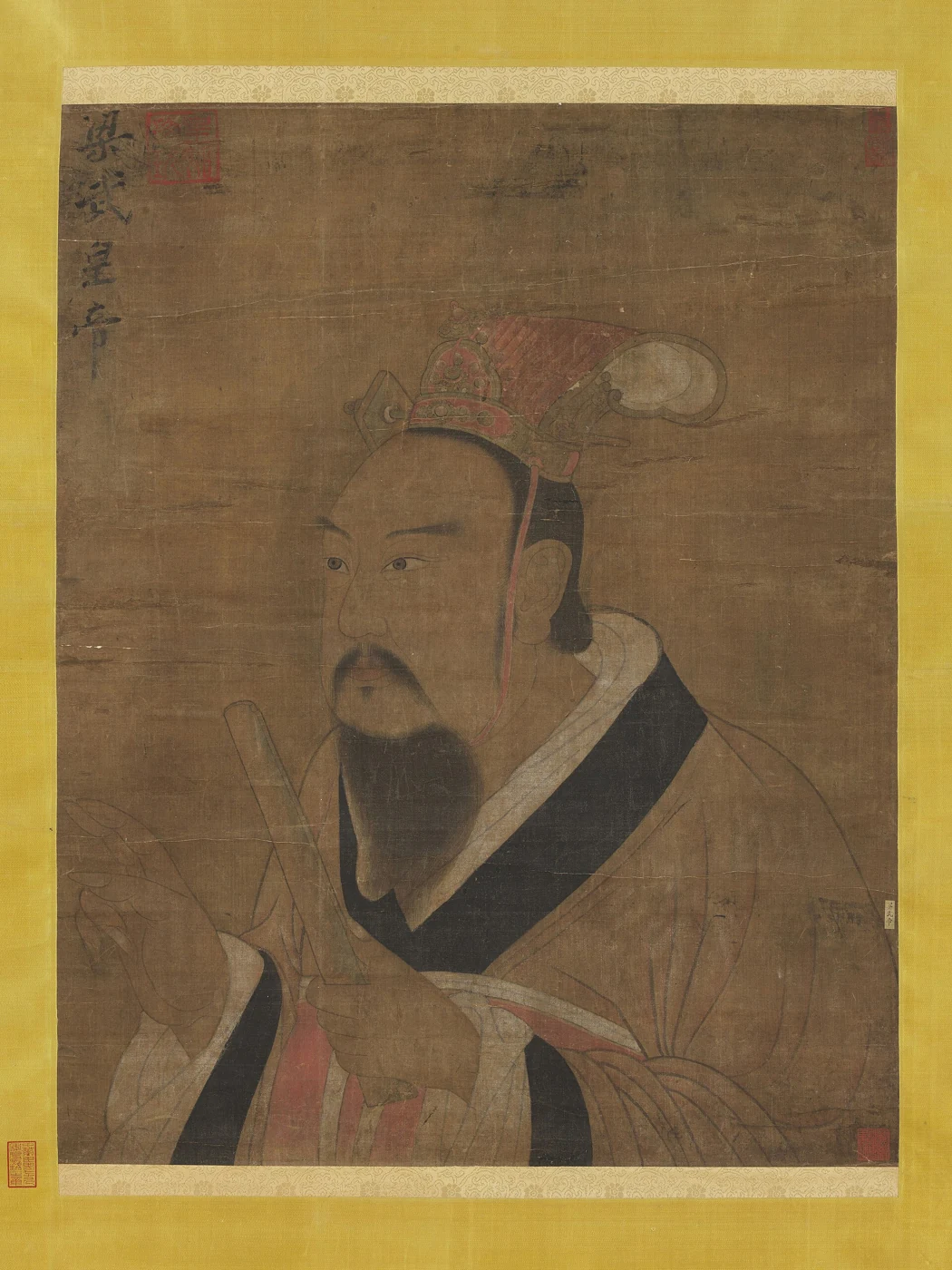 Liang dynasty
Emperor
Xiao Yan
Xiao Yan (464–June 12, 549), courtesy name Shuda and childhood name Lian'er, was from Zhongdu Ward in Southern Lanling Commandery (present-day Changzhou, Jiangsu; another view places it in Danyang, Jiangsu). He was the founding emperor of Southern Liang, reigning from 502 to 549, with the temple name Gaozu. A member of the Lanling Xiao clan, he was said to descend from the Western Han chancellor Xiao He and belonged
Liang dynasty
Emperor and poet
Emperor Jianwen of Liang
Xiao Gang (503–551), Emperor Jianwen of Liang, was Emperor Wu's third son and the full brother of Crown Prince Zhaoming, Xiao Tong. He became crown prince in 531 and emperor in 549 after Hou Jing captured the palace city. Hou Jing controlled his reign, deposed him, and had him killed in 551. He was also a leading advocate of palace-style poetry whose literary circle influenced later poetry.
Liang dynasty
Prince of Xiangdong and emperor of Liang
Xiao Yi
Xiao Yi (508–555) was the seventh son of Emperor Wu of Liang, Xiao Yan, and Lady Ruan Lingying. Enfeoffed as Prince of Xiangdong, he later held military and civil authority in Jingzhou. When the Hou Jing Rebellion shattered the Liang central government, Xiao Yi used Jiangling as his base and sent armies under Wang Sengbian and others downriver. After Hou Jing's defeat, he took the throne at Jiangling in 552 (the firs
Liang dynasty
Emperor
Xiao Fangzhi
Xiao Fangzhi (543–May 5, 558), courtesy name Huixiang, was the final emperor of Southern Liang during the Northern and Southern Dynasties, known as Emperor Jing of Liang. He was the ninth son of Emperor Yuan of Liang, Xiao Yi, and his mother was Consort Xia. After Jiangling fell and Emperor Yuan was killed in 554, the third year of the Chengsheng era, Wang Sengbian and Chen Baxian supported Xiao Fangzhi as Prince of
KEY PEOPLE
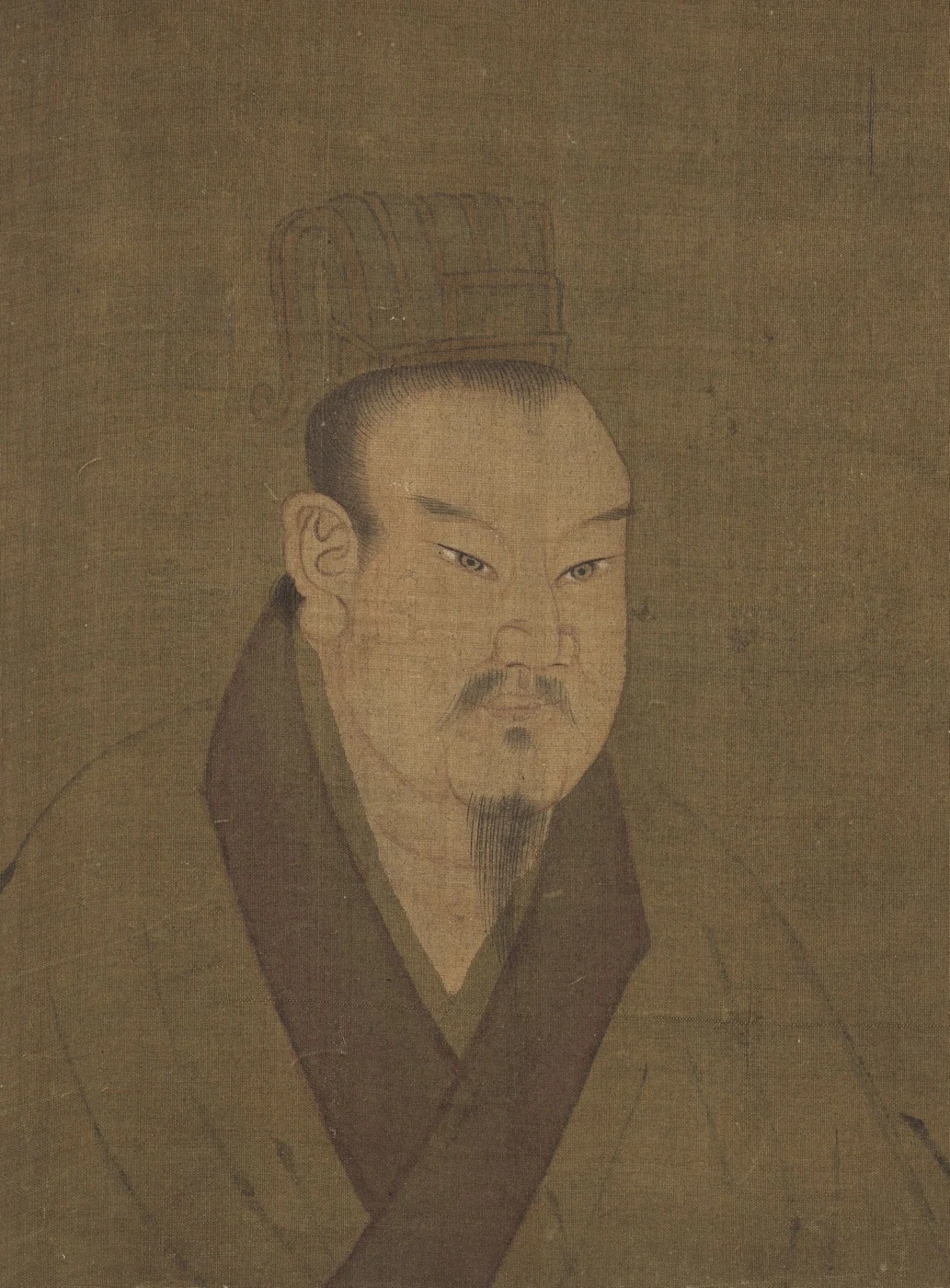 Chen dynasty
Emperor
Chen Baxian
Chen Baxian (503(2nd year of Tianjian under Liang) – 9 August 559(3rd year of Yongding under Chen)), courtesy name Xingguo and childhood name Fasheng, was a native of Xia Ruo Li in Changcheng County, Wuxing Commandery (present-day Changxing, Zhejiang) and the founding emperor of the Southern Chen. Early in his career he gained the favor of Xiao Ying, Marquess of Xinyu, and followed him to serve in Guangzhou, rising t
Liang dynasty
Historical figure
Xiao Yuanming
Xiao Yuanming (?–June 2, 556), courtesy name Jingtong, was from Lanling County, Nanlanling Commandery (present-day Changzhou, Jiangsu). He was the fifth emperor of the Southern Dynasties Liang, the grandson of Emperor Wen of Liang, Xiao Shunzhi, the son of Xiao Yi, Prince Xuanwu of Changsha, and the nephew of Emperor Wu of Liang, Xiao Yan.
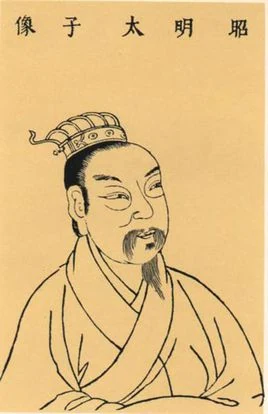 Liang dynasty
Crown prince
Xiao Tong
Xiao Tong (501–May 7, 531), courtesy name Deshi and childhood name Weimo, was a native of Lanling County in South Lanling Commandery, present-day Danyang, Jiangsu. He was a member of the Southern Liang imperial house and a literary figure, the eldest son of Emperor Wu of Liang, Xiao Yan, and Noble Consort Ding Lingguang. In 502, the first year of the Tianjian era, he was established as crown prince. He was known for
Liang dynasty
Writer
Tao Hongjing
Tao Hongjing (April 30, 456–March 12, 536), courtesy name Tongming, self-styled Huayang Recluse and posthumously styled Master Zhenbai, was a native of Moling in Danyang, in present-day Jiangning District, Nanjing, Jiangsu. He was a Daoist scholar, medical scholar, alchemist, writer, and calligrapher of the Southern Qi and Liang periods. Born into a prominent Jiangdong elite family, he became interested in the pursui
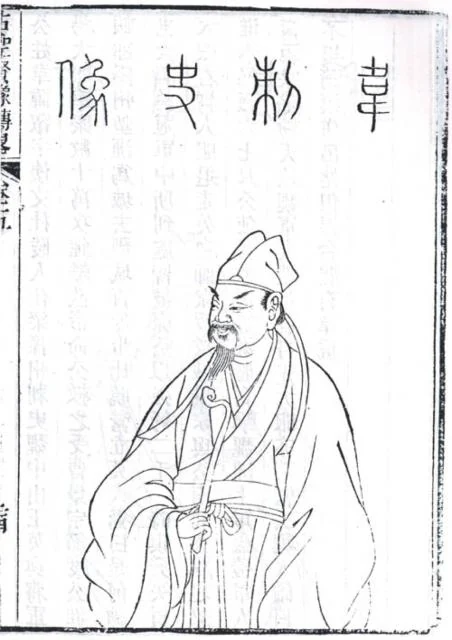 Liang dynasty
Senior minister
Wei Rui
Wei Rui (442–September 20, 520), courtesy name Huaiwen, was from Duling in Jingzhao (present-day Xi'an, Shaanxi) and later lived in Xiangyang. A celebrated general of Southern Liang during the Northern and Southern Dynasties, he came from the prominent Jingzhao Wei clan and was described as a descendant of the Western Han chancellor Wei Xian. Wei served under Liu Song, Southern Qi, and Southern Liang. Known for the i
Liang dynasty
Military commander
Wang Sengbian
Wang Sengbian (?–555 CE), courtesy name Juncai, was a preeminent general and paramount minister of the Southern Liang dynasty. Born into a Wuhuan noble martial clan as the son of General Wang Shennian, he accompanied his father in defecting from Northern Wei to Liang during the Tianjian era. He served Prince of Xiangdong Xiao Yi (later Emperor Yuandi) for decades as army supervisor and Governor of Jingling. Following
Related entries
Bibliography
- 《梁书》
- 《陈书》
- 《南史》
- 《资治通鉴》
- 《魏书》