Birth in Jiankang
Born in the imperial palace at Jiankang as the seventh son of Emperor Wu of Liang and Consort Ruan Lingying.
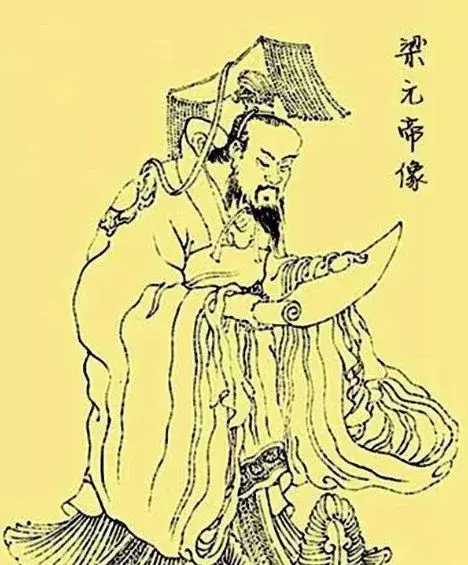
508 CE–555 CE
萧绎
Xiao Yi (萧绎, 508–555), courtesy name Shicheng, childhood name Qifu, self-styled Master of the Golden Tower (Jinlouzi), was a native of Zhongdu in Lanling Commandery (modern northwestern Changzhou, Jiangsu Province) and the fourth emperor of Southern Liang (reigned 552–555), posthumously titled Emperor Yuan with the temple name Shizu. He was the seventh son of Emperor Wu (Xiao Yan) and Consort Ruan Lingying. Enfeoffed early as…
Xiao Yi (萧绎, 508–555), courtesy name Shicheng, childhood name Qifu, self-styled Master of the Golden Tower (Jinlouzi), was a native of Zhongdu in Lanling Commandery (modern northwestern Changzhou, Jiangsu Province) and the fourth emperor of Southern Liang (reigned 552–555), posthumously titled Emperor Yuan with the temple name Shizu. He was the seventh son of Emperor Wu (Xiao Yan) and Consort Ruan Lingying. Enfeoffed early as Prince of Xiangdong, he lost sight in one eye during childhood due to botched medicinal treatments. Overcoming his disability through relentless study, he mastered canonical texts, history, philosophy, astronomy, medicine, and painting, establishing a formidable scholarly reputation while governing the strategic military hub of Jingzhou for decades. When the catastrophic Hou Jing Rebellion erupted in 548, Xiao Yi held his elite riverine fleet at Jiangling, watching passively as Jiankang fell and Emperor Wu starved to death. Rather than rushing to relieve the capital, he focused on eliminating dynastic rivals, purging his brothers Prince Xiao Lun and Prince Xiao Ji. After his generals Wang Sengbian and Chen Baxian crushed Hou Jing in 552, Xiao Yi refused to return to ruined Jiankang, ascending the imperial throne at Jiangling. In 554, his diplomatic arrogance provoked Western Wei to dispatch fifty thousand cavalry to surround Jiangling. Facing inevitable defeat, Xiao Yi ordered the horrific burning of the imperial collection of 140,000 ancient volumes before surrendering. He was subsequently suffocated with bags of earth by his bitter nephew Xiao Cha, dying at age forty-seven and leaving the southern dynasties critically diminished.
Born in the imperial palace at Jiankang as the seventh son of Emperor Wu of Liang and Consort Ruan Lingying.
Enfeoffed as Prince of Xiangdong at age seven; suffered permanent blindness in one eye due to medical injury.
Appointed military commissioner of six southern circuits and regional governor of Jingzhou, establishing base at Jiangling.
Appointed commander of western relief forces during the Hou Jing Rebellion, but remained inactive at Jiangling.
Jiankang fell and Emperor Wu starved; Xiao Yi exploited the crisis to annex adjacent princely domains.
Dispatched chief general Wang Sengbian to crush Hou Jing's advancing naval forces at Baling, turning the war's tide.
Reclaimed Jiankang and eliminated rival brother Xiao Ji; refused to return to Jiankang and took the throne at Jiangling.
Ceded Yizhou to Western Wei to crush his sibling, then arrogantly demanded territorial returns from Chang'an.
Besieged by Western Wei forces in October; ordered the tragic incineration of 140,000 royal library books on November 29.
Surrendered in plain robes; suffocated with bags of earth outside Jiangling on January 27 at the age of forty-seven.
Xiao Yi was born on September 16, 508, in the palace at Jiankang as the seventh son of Emperor Wu of Liang and his concubine Ruan Lingying. In 514, at the age of seven, he was enfeoffed as Prince of Xiangdong. During an eye illness in his early childhood, Emperor Wu personally concocted medicinal washes to treat him; an unfortunate chemical accident permanently destroyed the vision in his right eye, leaving him with a lifelong disfigurement. This irreversible physical handicap cast a dark shadow over his psychological development, breeding extreme sensitivity, defensive vanity, and deep suspicion toward family members and court attendants.
To compensate for his physical vulnerability, Xiao Yi applied himself passionately to intellectual pursuits, studying day and night without interruption and demonstrating extraordinary literary talent. He acquired encyclopedic mastery across Confucian classics, dynastic histories, Daoist metaphysics, Buddhist doctrine, medicine, and calligraphy. Deeply impressed by his scholarly depth, Emperor Wu appointed him to prominent regional posts including governor of Kuaiji, prefect of Danyang, and governor of Jiangzhou. Wherever he was stationed, Xiao Yi gathered scholars, lectured on canonical philosophy, and compiled substantial reference works, enjoying great prestige among imperial princes as an intellectual luminary.
Beginning in 529, Xiao Yi was repeatedly assigned as governor of Jingzhou, maintaining his administrative headquarters at Jiangling. Located along the central Yangtze trade corridor, Jiangling controlled strategic access toward Sichuan and downstream Jiankang, serving as Liang's paramount western bastion. Throughout his long tenure, Xiao Yi accumulated tens of thousands of rare manuscripts and classical texts from across China, erecting vast private library facilities. Simultaneously, he allied with powerful local clans, trained specialized naval forces, and hoarded immense financial reserves, transforming Jiangling into an autonomous power center capable of dictating national politics.
In August 548, surrendered rebel general Hou Jing revolted at Shouyang and led insurgent forces across the Yangtze River, laying siege to the imperial citadel of Taicheng at Jiankang. Emperor Wu issued urgent edicts commanding imperial princes and regional governors to march to the rescue, appointing Xiao Yi as supreme commander of the western expeditionary forces, which possessed the empire's most powerful naval flotilla. However, driven by narrow personal ambition and deep fear of depleting his private military reserves, Xiao Yi held his forces at Jiangling, deliberately watching the siege from afar while calculating that the collapse of Jiankang would enable him to claim the imperial throne.
In May 549, after enduring a agonizing eight-month siege, Taicheng fell to the insurgents. The eighty-six-year-old Emperor Wu starved to death in the Jingju Hall, and Crown Prince Xiao Gang was installed as a powerless puppet sovereign. When news of this catastrophe reached Jiangling, Xiao Yi made no move to attack the rebels downstream. Instead, he directed his veteran troops toward neighboring princely territories, assassinating his nephews Xiao Tui and Xiao Zao to annex strategic prefectures across Hunan and Hubei. His naked ambition to exploit dynastic catastrophe for personal aggrandizement permanently alienated moderate court loyalists.
Between 550 and 551, Hou Jing launched massive naval offensives upstream toward the middle Yangtze, directly threatening Xiao Yi's domain. Faced with imminent survival threats, Xiao Yi dispatched his premier commander, Wang Sengbian, to confront the insurgent army. Establishing an impenetrable riverine defense and ambush grid at the fortress of Baling, Wang Sengbian utilized coordinated fire assaults to shatter Hou Jing's forward fleet, killing rebel generals and routing their main army. The monumental victory at Baling turned the strategic tide of the war, establishing Xiao Yi as the foremost savior of the dynasty and securing his military preeminence.
While orchestrating Wang Sengbian's downstream campaign against Hou Jing, Xiao Yi pursued relentless vendettas against his own brothers and kinsmen. When his elder brother, Prince Xiao Lun of Shaoling, was defeated by Hou Jing and sought refuge at Anlu, Xiao Yi ordered Wang Sengbian to pursue and attack him, forcing Xiao Lun into the hands of Western Wei troops who executed him. When his younger brother, Prince Xiao Ji of Wuling, proclaimed himself emperor in Sichuan and sailed eastward, Xiao Yi refused negotiations and secretly invited Western Wei to invade Sichuan, ambushing and drowning Xiao Ji and his sons at Xiakou.
In April 552, imperial commanders Wang Sengbian and Chen Baxian recaptured the devastated ruins of Jiankang, and Hou Jing was killed while attempting to flee, bringing four years of devastating warfare to a close. However, the ancient capital lay in complete ruins. Deeply attached to Jiangling's comfort and fearful of exposing himself to downstream commanders, Xiao Yi stubbornly rejected petitions to reestablish the imperial seat at Jiankang. Instead, he declared Jiangling the permanent capital of Liang and formally ascended the throne on December 13, 552, known to history as Emperor Yuan.
Following his accession, Emperor Yuan secluded himself within the Jiangling palace, indulging in metaphysical lectures and literary pursuits while remaining indifferent to surrounding threats. To secure his monopolized succession, he arranged the secret drowning of his nephew Xiao Dong and his younger brothers, while systematically purging the surviving offspring of Emperor Jianwen. Within two years of reigning, nearly all surviving male descendants of Emperor Wu had been slaughtered by Xiao Yi's orders. This fratricidal cruelty shattered the moral legitimacy of the Liang dynasty and left the central regime fatally isolated.
Furthermore, Emperor Yuan appointed harsh enforcers to monitor his court officials, executing or exiling any minister who urged relocation to Jiankang. Flattery and fear permeated the Jiangling court, while border outposts and naval defenses along the northern frontier were neglected. Emperor Yuan held daily poetry salons and philosophical seminars with imperial scholars, praising himself as an enlightened philosopher-king while remaining entirely blind to the acute military vulnerabilities threatening his precarious court.
In 554, Emperor Yuan committed a catastrophic geopolitical miscalculation. His nephew Xiao Cha, grandson of Crown Prince Zhaoming, had fled to Western Wei out of terror of Xiao Yi's purges, receiving investiture as Prince of Liang under Western Wei protection at Xiangyang. Growing overly confident, Emperor Yuan treated Western Wei envoys with open disdain, dispatching haughty letters demanding the immediate retrocession of Sichuan and Hanzhong territories previously ceded for military aid. This diplomatic provocation enraged paramount Western Wei regent Yuwen Tai, who recognized Jiangling's isolation on an open, undefended river plain and resolved to invade.
In October 554, Yuwen Tai dispatched Senior Pillar Generals Yu Jin, Yuwen Hu, and Yang Zhong with fifty thousand elite cavalry, accompanied by Xiao Cha's auxiliary troops, launching a lightning offensive toward Jiangling. Even as Western Wei cavalry crossed the Han River and swept through Fancheng, Emperor Yuan remained in his palace hall lecturing on the Daodejing, dismissing military intelligence as alarmist fabrication. Only when enemy cavalry surrounded the outer earthen ramparts of Jiangling did Xiao Yi panic and attempt to mobilize a defense, but his untrained garrison quickly fell into utter chaos.
In November, Western Wei forces breached the inner walls of Jiangling. Although Emperor Yuan attempted to compel Buddhist monks and frail scholars to mount the parapets, lead general Hu Sengyou was struck dead by a stray arrow, causing the remaining defenders to abandon their posts and flee. Recognizing that all was lost, Emperor Yuan made no attempt at honorable resistance. Instead, on November 29, 554, he committed one of the most monstrous cultural atrocities in human history, ordering his attendants to stack firewood inside the Eastern Pavilion and incinerate the imperial library collection of 140,000 priceless classical scrolls.
As soaring flames devoured the irreplaceable repository of Chinese literature, Emperor Yuan drew his sword and struck the palace pillars, wailing that civil and military culture had met its ultimate end. With cries echoing across the burning city, Western Wei cavalry battered down the palace gates. Realizing escape was impossible, Xiao Yi emerged in mourning robes and prostrated himself before the conquerors. His shameful capitulation terminated the Liang dynasty's sovereign independence, reducing the imperial house to humiliating captivity under northern conquerors.
Following his surrender, Western Wei commanders interrogated Xiao Yi regarding why he had destroyed the ancient library. Emperor Yuan offered a notoriously pathetic justification, claiming that despite reading tens of thousands of books, he was still reduced to a captured sovereign, and thus the books deserved to burn. This complete refusal to acknowledge his strategic ineptitude and fratricidal cruelty, deflecting blame onto canonical texts, cemented his enduring reputation among later scholars as an arrogant and disgraceful intellectual failure.
Following his capture, General Yu Jin placed Xiao Yi under the custody of his vengeful nephew Xiao Cha. Harboring bitter hatred for the murder of his father and brothers, Xiao Cha subjected Emperor Yuan to relentless interrogation and humiliating abuse. Stripped of all dignity, Xiao Yi pleaded shamelessly for his life, provoking deep contempt from the northern commanders. Meanwhile, Western Wei troops sacked Jiangling, capturing over one hundred thousand civilian residents and scholar-officials to march as slaves through winter blizzards to Chang'an, reducing the glittering metropolis to a desolate wasteland.
On January 27, 555, with the implicit consent of the Western Wei command, Xiao Cha ordered soldiers to take Xiao Yi outside Jiangling and suffocate him beneath heavy bags of dirt. He died at age forty-seven and was buried without imperial honors at Pipa Island. Reigned for barely over two years, Xiao Yi single-handedly dismantled the Liang dynasty's southern realm, decimated its finest military formations, and enslaved its civilian populace. While Chen Baxian stabilized the downstream capital to establish the Chen dynasty, the southern dynasties were permanently crippled, leaving northern powers in complete command of imperial reunification.
In the intellectual history of the Southern Dynasties, Xiao Yi stands out as an exceptionally prolific author and polymath scholar. Throughout his lifetime, he personally composed and edited over four hundred scrolls spanning philosophy, literature, geography, military strategy, and institutional history. His monumental philosophical work, Jinlouzi (Master of the Golden Tower), integrated Confucian, Daoist, and Buddhist concepts while recording extensive contemporary anecdotes, intellectual lineages, and aristocratic customs, preserving invaluable historical material on the Wei-Jin and Southern Dynasties periods.
Beyond academic compilations, Xiao Yi made groundbreaking contributions to literary theory by defending the independent artistic aesthetic of literature. In the Liyan chapter of Jinlouzi, he famously asserted that authentic literary poetry and prose must embody emotional resonance, musical rhythm, and exquisite rhetoric, deliberately distinguishing creative literature from didactic Confucian moral treatises. His personal poetry, including frontier songs and landscape compositions, blended southern elegance with vigorous structural balance, serving as a critical stylistic bridge between Southern Qi-Liang court poetry and Tang regulated verse.
In the visual arts and ethnographic geography, Xiao Yi demonstrated extraordinary mastery. He excelled in painting portraits, animals, and Buddhist figures, creating the legendary Tributary Document (Zhigong Tu). Through detailed portraiture, he recorded the physical features, native attire, and diplomatic customs of over thirty foreign nations and ethnic embassies that visited the Liang court, appending historical descriptions of their geography and tributary records. This masterpiece founded the visual tradition of tributary painting in imperial China, serving as a priceless historical treasure for the study of medieval East Asian international relations.
In academic institution-building, Xiao Yi established extensive lecture series and encyclopedic projects at Jiangling. He gathered eminent southern scholars to deliver public seminars on the Classic of Changes, Laozi, and Zhuangzi, attracting audiences exceeding a thousand listeners. Under his patronage, court scholars compiled the massive institutional encyclopedia Hualin Bianlue, significantly enriching medieval textual scholarship. However, Xiao Yi's excessive devotion to literary aesthetics and philosophical abstraction detached him from practical statecraft, leaving him an archetype of the intellectual sovereign whose erudition failed to prevent national ruin.
The catastrophic incineration of the 140,000 royal library books by Xiao Yi on November 29, 554, represents the most devastating cultural tragedy in Chinese history since the Qin book burnings. Following centuries of wartime dispersion since the Eastern Han Orchid Pavilion and Wei-Jin archives, successive generations of scholars and imperial bibliophiles had painstakingly assembled the most comprehensive library under heaven within the Liang palace, preserving countless rare pre-Qin, Han, and Six Dynasties manuscripts that represented the core intellectual heritage of classical Chinese civilization.
Confronted with imminent military collapse, Xiao Yi succumbed to nihilistic vindictiveness, ordering palace attendant Gao Shanbao to set fire to the Eastern Pavilion. For days, the inferno consumed 140,000 priceless scrolls, completely obliterating irreplaceable literary and philosophical masterworks and creating permanent archival voids in Chinese classical scholarship. Ming and Qing historians unanimously condemned this monstrous act, regarding it as an unforgivable crime against human civilization that permanently extinguished vast portions of ancient Chinese intellectual heritage.
In his On the Comprehensive Mirror for Aid in Governance (Du Tongjian Lun), late-Ming philosopher Wang Fuzhi severely denounced Xiao Yi, arguing that the burning of the library exposed the monarch's pathological selfishness in treating civilizational treasures as personal funerary sacrifices. Xiao Yi's pathetic claim that reading was futile served only to scapegoat sacred books for his own strategic stupidity and moral depravity. The flames not only destroyed ancient literature but incinerated the moral legitimacy of the Liang regime, permanently branding Emperor Yuan as an infamous cultural criminal.
Tragically, Xiao Yi had spent his entire life taking immense pride in this magnificent library, boasting to visiting scholars of its unmatched scale. Yet in his final hour of crisis, he displayed not the noble duty of preserving culture, but the erratic impulse of total annihilation. This catastrophic loss extinguished centuries of accumulated southern scholarship and dealt ancient Chinese textual heritage its most severe wound since the disaster of Yongjia, standing as an enduring historical warning against the destructive caprice of despotic rulers.
Throughout his political career, Xiao Yi exhibited pathological jealousy, extreme suspicion, and remorseless cruelty toward his own family. During the existential peril of the Hou Jing Rebellion, he completely failed to unite his royal kinsmen to defend the empire, instead exploiting the chaos to hunt down and assassinate his own brothers and nephews. From Prince Xiao Lun and Prince Xiao Ji to young Prince Xiao Dong, every royal relative who possessed military commands or public respect was systematically liquidated through treachery and violence, establishing an unprecedented record of fratricide.
Most disgracefully, in his bid to eliminate his younger brother Xiao Ji, Xiao Yi voluntarily sent secret messages ceding vast border territories to Western Wei in exchange for military intervention. This reckless policy permanently surrendered the wealthy Sichuan basin and Hanzhong commanderies to the Guanlong regime, depriving southern China of its critical upstream defensive rampart and permanently placing southern dynasties at a fatal geographic disadvantage against northern invaders.
Having ceded crucial territories, Xiao Yi failed to construct robust defenses or maintain diplomatic prudence, instead antagonizing Western Wei with arrogant posturing until fifty thousand northern cavalry crushed his isolated capital. Xiao Yi's calculated betrayals, dynastic murders, and vain imperial ambitions culminated in the annihilation of classical literature, the enslavement of over one hundred thousand innocent civilians, and his own gruesome death by suffocation. His disastrous career remains the ultimate historical illustration of how internal dynastic factionalism and moral corruption destroy a nation.
FIGURES ASSOCIATED WITH THIS DYNASTY