TL;DR · Core Takeaways
- Pioneering Commercial Theater Districts: Bianjing in the Northern Song and Lin'an in the Southern Song built massive entertainment spaces called washe. Inside, enclosed wooden playhouses held thousands of visitors for storytelling, drama, acrobatics, and female wrestling centuries ahead of Elizabethan London.
- Continuity Across Tabletop Games: From Han-era liubo to dice-driven shuanglu carried on the Silk Road in the Tang era, and onward to modern chess in the Northern Song and cards in the Ming, tabletop games merged chance with tactics, directly shaping modern mahjong.
- Speculative Black Markets in Live Insects: Cricket fighting grew into an organized sport after Jia Sidao wrote the Book of Crickets in the Southern Song. Royal demand from Emperor Xuanzong of Ming (Zhu Zhanji) later drove champion insects to cost dozens of silver ounces, sparking an early market bubble.
Historical Context
- Chinese Timeline: From the entertainment quarters outside Baokang Gate in the Northern Song capital during the third year of the Yuanfeng reign (1080 CE) to the bustling markets of the late Ming under the Wanli era. Open markets and abolished night curfews fueled a growing merchant class, launching a vibrant entertainment trade.
- Western / Mediterranean Timeline: Aligns with the High Middle Ages in Europe, marked by manor estates and early merchant guilds. The late Ming parallels late Renaissance London, the public playhouses of Elizabethan Southwark, and early card games.
On an early autumn day in 1080 CE, outside the Baokang Gate of the Northern Song capital, the air smelled of roasted mutton and sesame pastries. A grain porter, having earned seventy copper coins from hauling bags on Maxiang Street, counted three coins from his pouch. He joined the crowd moving into the Sang Family Washe. A cedar plank near the door read: "Today, Master Zhang Qisheng recounts Chapter Twenty of the Records of the Three Kingdoms." Squeezing through the hall onto packed wooden benches, the porter sat beside an apothecary shop owner in silk robes. Both men turned their eyes toward a central stage lit by oil lamps.
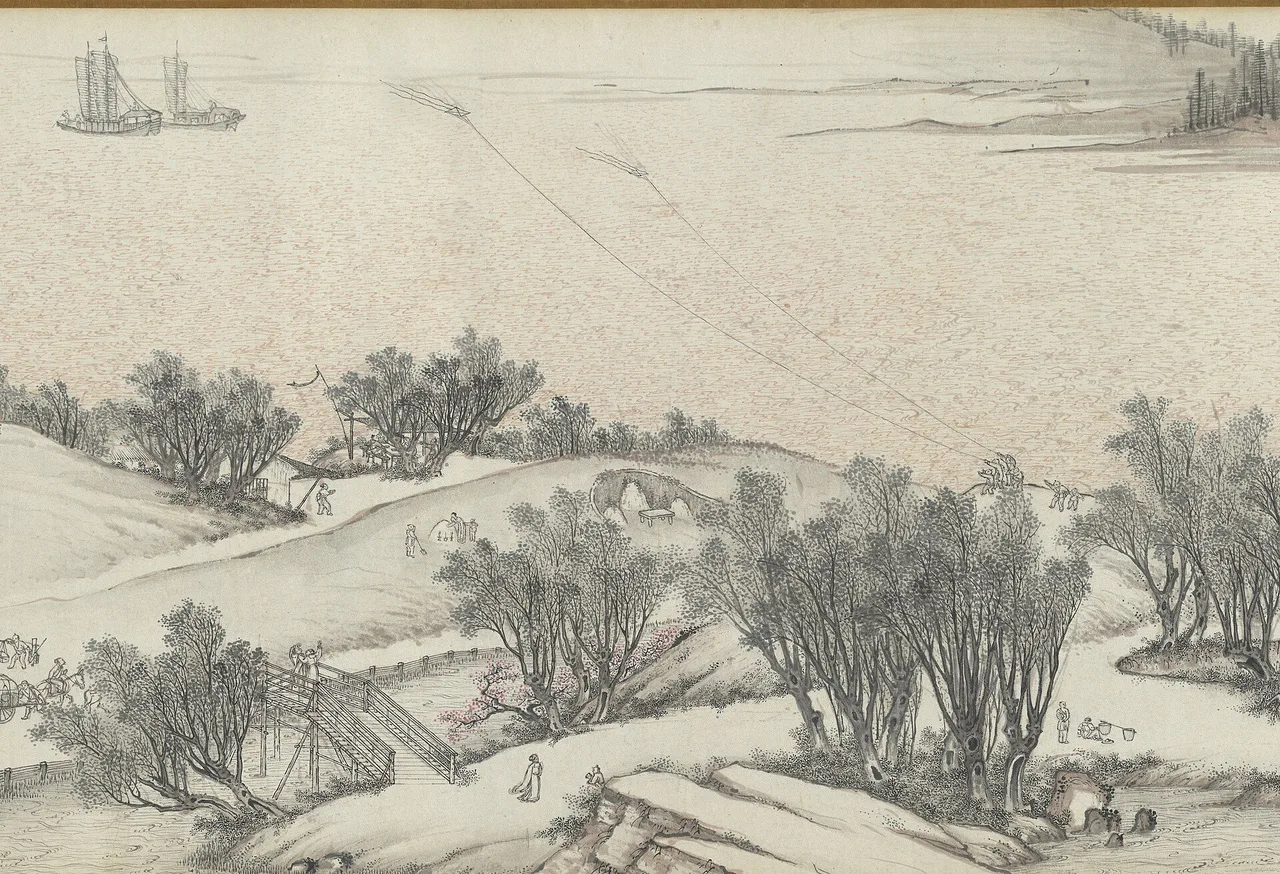
This was no Imperial Court rite. It was a daily show for ordinary working people. In Song cities where ward walls and night curfews no longer restricted daily life, play was no longer kept for the rich. In its place arose an open leisure trade for everyone.
01. The Performance Industry: Consumer Life in Song Commercial Quarters
Song market towns featured large entertainment complexes called washe or wazi. Meng Yuanlao wrote in The Eastern Capital: A Dream of Splendors that Kaifeng had over fifty amusement hubs. Key sites included the Xin Zheng Gate, Baokang Gate, Zhoubei, and Sang Family venues. Inside stood wooden theater halls, each called a goulan.
Tiered Admissions and Gratuities
Large goulan used tiered wooden seats called "waist sheds." The largest rooms held several thousand guests. Daily shows ran on a ticket system. General door fees ranged from three or five copper coins to thirty coins, based on the fame of the troupe and hall size. This fee was only a fraction of a day's food cost for a common worker.
Ticket sales formed just base pay. Performers made extra money through stage tips, called chantou. When famous storytellers or players took the stage, guests threw copper coins, silver scraps, fruit, and silk cloths onto the floor. Print shops joined in as well, selling pocket lyric sheets and paper fans with woodblock portraits of stage stars.
[Typical Performance Ecosystem of Song Bianjing Entertainment Quarters]
+---------------------------------------------------------------+
|         Washe (Large-Scale Commercial Entertainment Complex)  |
+-------------------------------+---------------+---------------+
|      Storytelling Goulan      | Zaju Playhouse| Rings & Arenas|
+-------------------------------+---------------+---------------+
| * Three Kingdoms sagas        | * 4-act zaju  | * Water & shadow|
| * Judicial crime mysteries    | * Ballad suites puppets       |
| * Serialized daily chapters   | * Star troupes| * Female bouts|
+-------------------------------+---------------+---------------+
From Historical Sagas to Female Wrestling
Stage acts covered many styles. Storytellers shared war tales, court crimes, and temple legends. Even a Battalion Commander or a Grand Master might stop to listen. Workers and shop clerks with little schooling learned history and hero tales from serialized daily theater shows.
Wrestling drew huge crowds. Matches featured both men and women in short jackets who wrestled before packed rows of fans. During the Jiayou years, Emperor Renzong of Song took his imperial consorts atop Xuande Gate to view public lantern shows. When the Inner Court invited female wrestlers to perform before the emperor, scholar Sima Guang sent in his Memorials on the Shangyuan Order for Women's Wrestling. He argued that street bouts before royalty harmed court grace. Yet even a high Military Adjutant could not curb the public's love for these shows.
02. Contests Across Social Divides: From Silk Road Backgammon to Madiao
Beyond public theaters, board games and cards shaped indoor leisure for centuries.
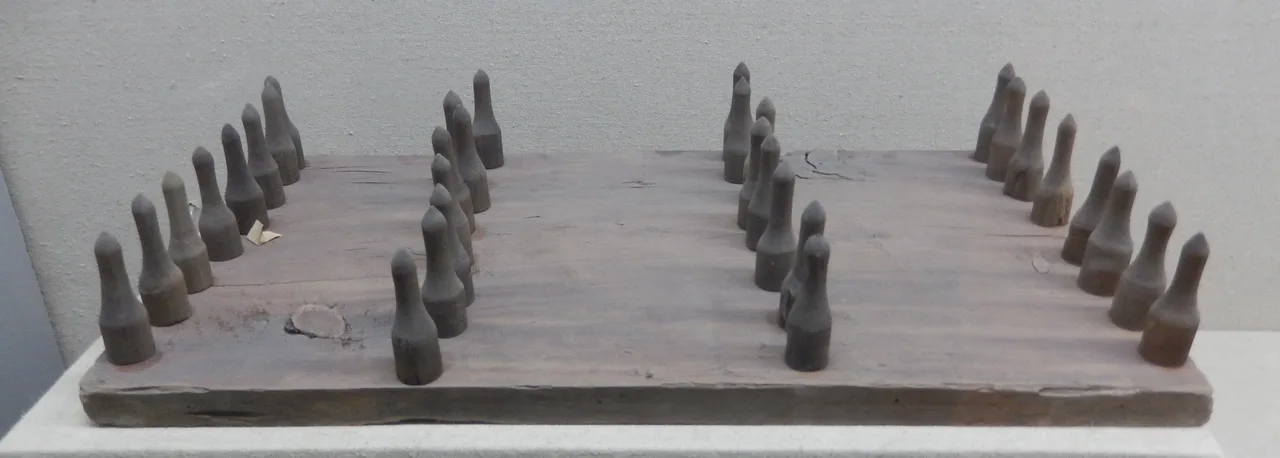
Tombs from the Qin and Han periods held liubo lacquer sets, which paired six bamboo sticks with twelve counters. Winning took both dice rolls and sharp moves. Between the Northern Dynasties and Southern Dynasties, when Emperor Wen of Sui carried out the imperial construction of Daxing City, board pastimes spread broadly before reaching new heights in the Tang era. There, shuanglu crossed the Silk Road into the central plains, winning over royal courts. The Old Book of Tang records that Emperor Zhongzong of Tang and Empress Wei, along with Emperor Xuanzong of Tang and Consort Yang, bet fine silk and gold over shuanglu boards. Linked to Western Asian Nard and backgammon, the game used two dice to move thirty pieces along wooden tracks.
During the Northern Song, standard rules for Chinese chess took shape. The History of Song and Song notebook literature record how the game added weapons from the gunpowder age. Makers added the cannon piece to leap over blockers, while fixing the river boundary and the nine-point palace box. Carved from small wood disks, the pieces spread fast through tea stalls and farm yards.
The Late Ming Card Craze
New print methods in the Ming era fueled paper card games called madiao, or leaf games.
A full madiao deck held forty cards across four suits: Cash, Strings, Myriads, and Tens. Cards showed outlaws from the popular book Water Margin. Four players drew and cast off cards, using memory, card counting, and bluffs.
[Evolutionary Link: Madiao Card Suits to Modern Mahjong Tiles]
Myriad Strings (Wan)   ---- evolved into ---> Mahjong "Characters" (Wan 1-9)
Strings Suit (Suo)     ---- evolved into ---> Mahjong "Bamboos" (Tiao 1-9)
Cash Coins (Wen)       ---- evolved into ---> Mahjong "Dots" (Tong 1-9)
Tens Suit (Shi)        ---- evolved into ---> Mahjong "Winds & Dragons"
Late Ming scholars played with great zeal. In his Record of Daily Knowledge, Gu Yanwu echoed thinker Wang Fuzhi, noting that scholars played far into the night while ignoring official work. Under the Qing, players joined card decks together and mounted paper faces on bone or bamboo backs, creating modern mahjong.
03. Cricket Fighting: Speculation in Living Assets
Cricket fighting stood out among traditional pastimes. The combative insect turned a simple yard game into a high-stakes trade.
The game began in Tang royal halls before spreading to Song towns. During the Southern Song, Grand Councilor Jia Sidao loved the sport so much that he knelt over clay bowls while urgent war papers sat unread, earning the nickname "Cricket Chancellor." His book, the Book of Crickets, was the first guide of its kind. It laid down rules for insect builds, feed diets, ring rules, and salves for injured legs.
The Xuande Tributes and Local Markets
During the Xuande years, Emperor Xuanzong of Ming (Zhu Zhanji) boosted the sport's scale. Both Ming records and Pu Songling's tale "The Cricket" in Strange Tales from a Chinese Studio report how the court set cricket tribute quotas on southern counties like Suzhou and Songjiang.
A local official would chase imperial favor by trading entire county tax bills for champion insects. A top fighter sold for dozens or even hundreds of silver ounces, matching the cost of a fine war horse.
04. Leisure Expenses and Artifact Evolution Across Dynasties
The table below shows leisure costs and tools from the Western Han to the mid-Qing:
| Historical Era | Dominant Leisure Pursuits | Typical Tools and Artifacts | Urban Consumer Threshold | Official Regulatory Stance |
|---|---|---|---|---|
| Western Han (202 BCE – 8 CE) | Liubo board game, cockfighting, acrobatic shows | Inlaid bronze throwing sticks, stone boards, pottery dice | Heavy wagers running thousands of copper cash; public spectacles cost tens of coins | Banned high-stakes public gambling; palace matches remained exempt |
| High Tang (618–907) | Shuanglu backgammon, Weiqi (Go), cockfighting | Mother-of-pearl rosewood boards, agate game pieces | Imperial wagers reached 100 bolts of silk; tavern games cost dozens of coins | The Tang Code with Commentary mandated 100 strikes for asset wagers, exempting Go and Shuanglu |
| Northern Song (960–1127) | Goulan theatricals, Chinese chess, public wrestling | Printed paper admission chits, boxwood or ivory chess pieces | Theater entry: 5–30 copper cash (equal to 0.5–3 bowls of cold noodle broth) | Night curfews lifted; venues taxed with enforced fire codes |
| Late Ming (1368–1644) | Madiao cards, Kunqu garden theater, cricket fighting | Woodblock paper decks, carved clay cricket vessels | A card deck cost 10–20 cash; prize fighting crickets sold for 10–50 silver taels | The Xuande court ran tribute channels; gentry card clubs went largely unpoliced |
| Mid-Qing (1644–1911) | Early Mahjong tiles, walnut rolling, caged songbirds | Bone-and-bamboo backed tiles, purple-clay feeder pots | Teahouse tile sessions cost around 100 cash; champion thrushes fetched over 100 gold units | Anti-gambling decrees were reissued, though household tabletop play was ignored |
A Day's Entertainment Budget for a Song Shopkeeper
Imagine a merchant selling spices and candied fruit in Bianjing around 1080 CE, making around 200 copper coins in daily profit. A rest day cost the following:
- Midday Meal: Two meat buns on Panlou Street (16 cash) plus a sweet curd drink (10 cash): 26 cash.
- Theater Entry: A ticket to Sang Family Washe (15 cash) and a soft cushion seat (5 cash): 20 cash.
- Show Snacks: Roasted nuts, melon seeds, and warm tea from aisle sellers: 12 cash.
- Performer Tip: Tossing coins when storyteller Zhang told of Guan Yu during the Single-Sword Meeting: 10 cash.
- Tea and Chess: A table at the West Quarter tea room (8 cash) and a lost wager with a friend (15 cash): 23 cash.
- Total Leisure Cost: 91 copper cash, about 45 percent of a full day's net earnings.
Leisure in the Song was no longer just for the rich. It became part of daily life for ordinary city folk. By paying for plays, games, and cricket matches, everyday people without electric power shaped a rich social world for dark nights and cold winter days.
Primary Sources & Historical Bibliography
- Urban Culture and Song Theater:
- Meng Yuanlao (Song), The Eastern Capital: A Dream of Splendors (Dongjing Meng Hua Lu), 10 vols. See especially Vol. 2 and Vol. 3 for records of washe sites and goulan stages in the Eastern Capital.
- Sima Guang (Song), posthumously titled Wenzheng, Sima Wenzheng literary collection, Vol. 42, Memorials: "On the Shangyuan Order for Women's Wrestling", showing court debates over urban ring fights.
- Board and Card Game Evolution:
- Chen Yuanliang (Song), A Broad Record of Sundry Matters (Shilin Guangji), detailing board layouts, pieces, river lines, and early rules of Song chess.
- Pan Zhiheng (Ming), Continuation of the Manual of Leaves; see also Gu Yanwu (Qing), Record of Daily Knowledge, Vol. 29, tracking how forty-card madiao decks led to early mahjong.
- Insects, Collecting, and Speculative Markets:
- Jia Sidao (Song), Book of Crickets, 2 vols., preserving China's earliest guide on cricket traits, diet, fighting rules, and medical care.
- Shen Defu (Ming), Unofficial Gatherings from the Wanli Era, Vol. 24, "Crickets", recording how court tribute disrupted local towns as prices for premier crickets rose past those of cavalry horses.