TL;DR · Core Takeaways
- Tang Gridiron Penal Discipline: In the Tang Dynasty, Chang'an held 108 walled residential wards and two closed markets. Under the Tang Code with Commentary, stepping outside after dusk drums brought twenty lashes.
- Strict Exceptions and Permissions: Outside the three-day Shangyuan Lantern Festival break, citizens needed written passes for births or deaths. Ward sentries arrested any unauthorized travelers to prevent urban disorder and potential rebellion.
- Canals, Demolitions, and Fiscal Shifts: In Northern Song Kaifeng, booming grain transport by waterways tore down mud ward walls. The court traded physical locks for alcohol taxes, replaced cavalry patrols with fire-patrol posts, and embraced 24-hour street commerce.
Chinese Historical Coordinates: Reign of Emperor Gaozong of Tang, second year of the Yifeng era (677 CE), during the total lockdown of Chang'an's 108 wards; Reign of Emperor Shenzong, third year of the Yuanfeng era (1080 CE), at the commercial height of the Zhou Bridge night market in the Eastern Capital of Bianjing.
Western & Mediterranean Coordinates: The Byzantine Empire under early guild regulations in Constantinople; Post-Norman Conquest Western Europe under church curfew bells enforcing fire prevention and anti-riot night locks across timber towns.
01. Eight Hundred Drumbeats and Deserted Avenues: Chang'an's Grid Lockdown
Late autumn dusk fell over Chang'an in 677 CE. The sunset drum at Chengtian Gate broke the evening quiet. Street drums echoed the signal through watchtowers across the capital. Soldiers shut the thick ward gates with heavy timber bars. Anyone caught on the wide expanse of Zhuque Avenue faced mounted guards of imperial forces with bows and lances.
The Tang Code with Commentary set down strict punishments for stepping outside at night:
> "All who violate the night curfew shall receive twenty lashes of the light bamboo. Those with legitimate cause are exempt. Legitimate cause refers to auspicious or funeral rites, acute illness, and official duties, all of which require private certification or official warrants to travel. If traveling without documentation, or continuing travel after official business has concluded, the traveler shall be punished under the curfew law. Those walking after the second point of the fifth watch (Wugeng), before the morning drums have beaten, shall be punished likewise."
Pedestrians bore the entire burden of proof. Ordinary citizens needed proof of an urgent crisis, such as a sudden birth or acute illness. They also had to carry a pass from their ward headman. Crossbow guards held the legal right to shoot anyone who ran away, treating suspicious night-runners as suspects planning theft or rebellion. Under early commercial laws, each Market Director locked down the East and West markets at dusk to prevent illicit night trade.
flowchart TD
    A["Sunset drum sounds at Chengtian Gate"] --> B["Over 600 street drums relay 800 beats across the capital"]
    B --> C["East and West Markets close; 108 ward gates barred shut"]
    C --> D{"Does the resident face an urgent emergency?"}
    D -- No --> E["Stepping onto avenue triggers capture: 20 lashes"]
    D -- Yes (Acute illness / Funeral) --> F["Report to neighborhood Wuhou outpost for verification"]
    F --> G["Temporary transit pass stamped; escorted to physician"]
    C --> H["Morning drums strike 3,000 beats; ward gates open for dawn court"]
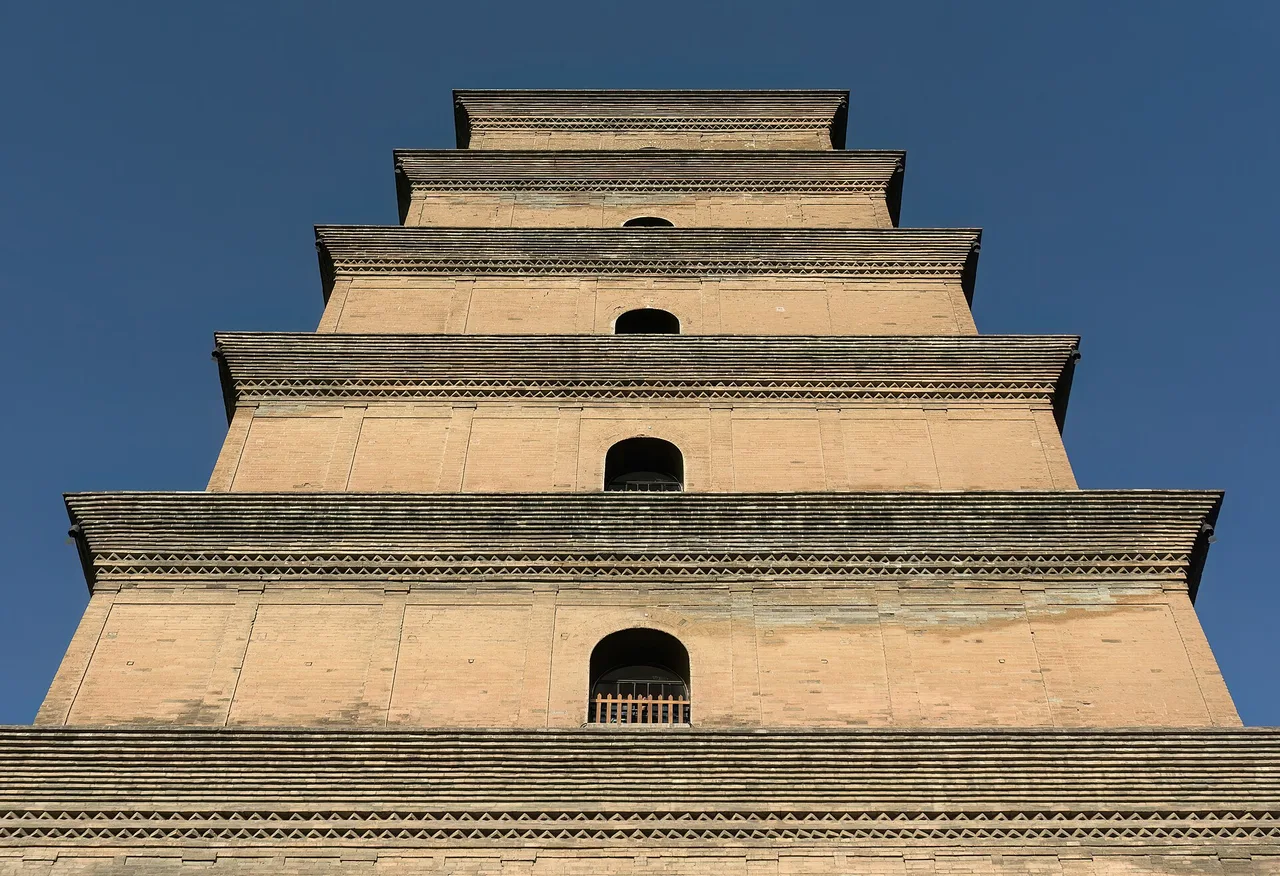
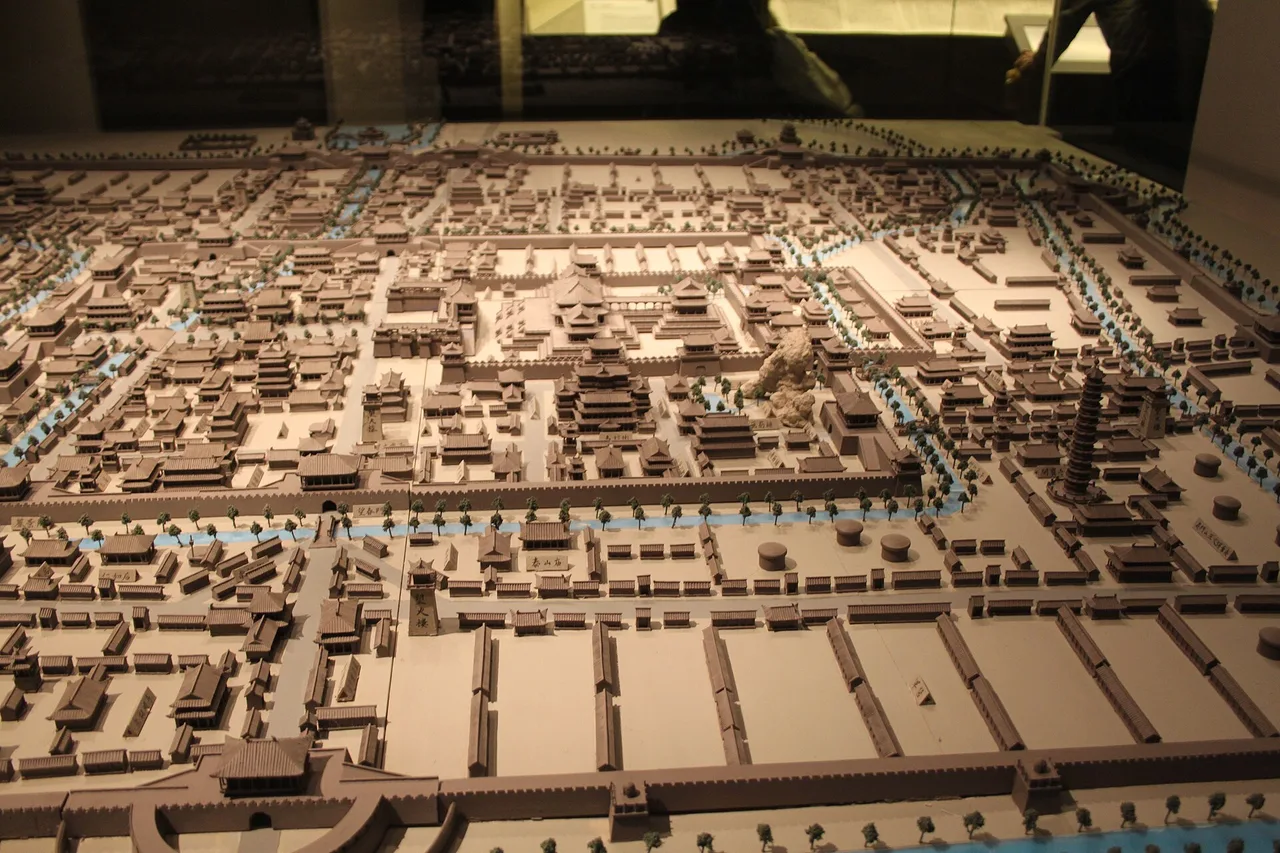
Chang'an stood as a geometric Fortress of imperial control. Records from the era describe an urban grid split into 108 walled blocks. Rammed-earth walls rose two to three meters high. Each ward formed a closed block with its own interior alleys and sentries. People could walk inside their own ward alleys at night. Touching the broad public avenues remained strictly illegal.
Western Europe used a similar tool after the Norman Conquest. William the Conqueror ordered the evening couvre-feu bell at eight o'clock. Townspeople covered their fires and stayed inside to prevent riots and accidental blazes. Tang Chang'an took this concept to an imperial extreme. Zhuque Avenue stayed empty as an open zone for cavalry. Only during the three nights of the Shangyuan Festival did an imperial decree unlock the gates for lantern displays.
02. Canal Commerce and Crumbling Ward Walls: Bianjing's 24-Hour City
After the fall of the Tang, urban layout changed during the Later Zhou Dynasty and the rise of the Song dynasty. Emperor Taizu and Emperor Taizong of Song set their seat at Kaifeng, also called Bianjing. Planners tried to keep closed wards and curfews at first. Yet four major canals met at Kaifeng. Barges brought grain transport by waterways and goods from the south all day and night. Displaced refugees and traveling boatmen packed into the capital looking for work.
During the Jingde era, riverfront shopkeepers knocked holes into the mud walls to set up stalls and awnings. The court issued bans against street encroachment, but business growth proved unstoppable. The old Two-Tax System had already focused imperial finances on cash and trade rather than pure land grain taxes.
graph LR
    A["Canal grain transport convergence and population boom"] --> B["Merchants dismantle earth walls for street-front shops"]
    B --> C["Ward and market merge into unified street grid"]
    C --> D["State alcohol monopoly and commercial transit taxes boom"]
    D --> E["Song court lifts curfew; night markets run past third watch"]
    E --> F["Civil military patrol stations handle firefighting and public safety"]
By the mid-eleventh century, the Song court gave up on physical barricades. Officials levied a street tax on storefronts and dropped the ancient curfew rules. As recorded in the Collected Statutes of the Song and Meng Yuanlao's The Eastern Capital: A Dream of Splendor, open commerce replaced walls. The government funded its treasury through taxes on alcohol yeast, salt vouchers, and city transit fees. Late-night taverns brought steady revenue into state coffers.
Urban policing changed from military lockdown to civil protection:
Civilizing the Night Watch: Fire-Patrol Stations Replace Imperial Guards
Imperial guards and elite imperial forces once patrolled Tang Chang'an with bows and spears. In Northern Song Kaifeng, neighborhood safety shifted to provincial troops stationed at local patrol posts:
> "Every three hundred paces through each street and alley stands a patrol post with five soldiers... On high points rise wooden watchtowers, with scouts looking out day and night. Below sit official barracks housing over a hundred soldiers, fully equipped with large and small water tubs, leather water buckets, hemp mops, axes, saws, ladders, fire hooks, pulling ropes, and clearing sickles."
These soldiers did not chase down quiet walkers. Instead, they watched for timber fires from towers, broke up tavern brawls, and guided drunk citizens safely home.
Seamless Transitions Between Night and Dawn
Night markets erased old boundaries. The busy food stalls around Zhou Bridge ran in every season:
> "Heading out through the Zhuque Gate down toward Longjin Bridge... the night market runs until the end of the third watch, only for the morning market to reopen at the fifth watch (Wugeng). In bustling quarters, activity never ceases all night long. Even amid winter snowstorms and pouring rain, the night market stays open."
Cooks sold hot mutton soup, grilled fish, dumplings, tea, and warm wine until past midnight. Soon after night stalls closed, gatekeepers welcomed morning farmers who brought fresh river fish and vegetables to town.
03. Material Life: Wages, Prices, and Daily Costs Across Two Dynasties
Historical sources, such as Turpan legal slips, Tianbao records, and the Long Draft of the Continuation of the Comprehensive Mirror to Aid in Government, allow us to compare daily expenses across both eras.
Evolution of Spatial Rules, Wages, and Everyday Prices
| Dimension / Metric | Tang Chang'an (Kaiyuan–Tianbao eras, c. 713–755 CE) | Northern Song Kaifeng (Renzong–Shenzong eras, c. 1050–1085 CE) |
|---|---|---|
| Legal penalties for night movement | Stepping outside ward gates onto avenues: twenty lashes with light bamboo; guards shoot upon resistance | Travel permitted; patrols question suspicious individuals after midnight; brawlers detained at civil posts |
| Unskilled daily wage | Approx. 30–50 copper coins (wen) | Approx. 100–150 copper coins (dock porter rates or military stipends) |
| *Staple grain (per peck / dou)* | Approx. 10–20 coins (dropping to 5–8 coins in bumper years) | Approx. 60–100 coins (reflecting canal shipping costs to Kaifeng) |
| Standard late-night meal | Illegal on public streets; steamed bread inside wards cost 1–2 coins | Zhou Bridge stalls: sheep entrails, grilled fish, or fried ginkgo nuts for 15–30 coins |
| Tavern evening for one | Private ward taverns (e.g., Sogdian wine shops): around 300 coins per dou | Premier licensed restaurants (Zhengdian like Fanlou): 300–800 coins including wine and preserves |
| Night lighting (oil / candles) | Official sesame oil at 15 coins per catty; beeswax candles reserved for the elite | Animal fat and vegetable oil at 30 coins per catty; commoners used pine splints and small tallow lamps |
| Inn lodging per night | Ward-enclosed traveler inns at 15–30 coins (guests locked inside until dawn) | Street-front boarding houses and transit warehouses at 50–100 coins (open access with luggage storage) |
A Day in Northern Song Kaifeng: 24-Hour Expense Ledger (c. 1080 CE)
Consider a literate clerk working as a legal scribe in Kaifeng during the reign of Emperor Renzong of Song and later under Emperor Shenzong, earning about 200 copper coins per day (a sum worth more than silver and reliable as Zhenjin):
- Morning (07:00–09:00): Breakfast on the Street
- Two steamed buns (6 coins) and a bowl of hot spiced soymilk (3 coins) from a street stall: 9 coins.
- Midday (09:00–15:00): Work and Lunch
- Working beside Grand Xiangguo Temple copying legal petitions. Lunch consists of meat noodles (15 coins) and herbal tea (2 coins): 17 coins.
- Late Afternoon (15:00–19:00): Entertainment at the Pleasure Quarters
- Visiting Sangjia District for puppet shows. Admission fee: 10 coins. Roasted chestnuts and dried plums: 8 coins. Total: 18 coins.
- Evening (19:00–23:00): Supper at the Zhou Bridge Night Market
- Meeting two friends for supper beside the canal. Split portion of roast mutton (20 coins), curd pastries (15 coins), and two flasks of wine (40 coins). Personal share: 38 coins.
- Night (23:00–03:00): Walking Home after Midnight
- Stepping down the street lit by red lanterns outside taverns. Watchmen with batons pass by without trouble. Buying a paper lantern: 12 coins.
- Total Daily Expenditure: 94 copper coins (about half his daily wage, leaving money for rent and winter fuel). In Tang times, no amount of money could buy the right to stroll down public avenues after dark.
04. The Spatial Shift: From Military Fortress to Commercial Society
The shift from Tang Chang'an to Song Kaifeng did not stem from imperial Humane Governance alone. It grew out of practical economic demands.
Chang'an served as a command post for military control. Shaped by the Guanlong Military-Aristocratic Group, it confined trade to two walled areas. Drums opened the market at noon, and gongs shut it before dark. The state viewed traders with suspicion. Ward walls separated citizens, checked crime, and prevented public assemblies.
Kaifeng was a commercial river hub built on water trade. When the court needed cash to supply border troops, closed wards only blocked state profit. Across the Yuanfeng institutional reform under Emperor Shenzong and into the reign of Emperor Huizong, the walls between wards fell away. People tore down barriers, added streetfront shop extensions, and traded past midnight as part of daily life.
Grabbing a hot supper in an open city at midnight was not an ancient custom. It was won by centuries of trade along busy canal banks, where merchants slowly dismantled the old Fortress grid.
Primary Sources & Historical Bibliography
- **Tang Code with Commentary (Tanglu shuyi), Vol. 8, "Statutes on Palace and Military Security"**: Annotated edition by Zhonghua Book Company, compiled by Zhangsun Wuji et al. Covers legal sanctions for curfew violations, border post infractions, and drum signals.
- **The Eastern Capital: A Dream of Splendor (Dongjing menghua lu), Vols. 2–3**: Zhongzhou Ancient Books Publishing House, by Meng Yuanlao. Detailed records of Kaifeng street topography, the Zhou Bridge night market, tavern networks, and the fire-patrol post system.
- **Collected Statutes of the Song (Song huiyao jigao), "Treatise on Food and Money: Market Trading and Commercial Taxes"**: Imperial archival records detailing anti-encroachment edicts, the establishment of neighborhood patrol stations, and municipal tax collections in Kaifeng.
- **Six Institutes of the Tang Dynasty (Tang liudian), Vol. 5, "Ministry of Justice and the Jinwu Guard"**: Details regarding the deployment of the Jinwu Guard night patrols, local military watch posts, and timekeeping drum sequences.
- *Kato Shigeru, Studies in Chinese Economic History (Zhongguo jingjishi kaozheng), Vol. 1*: Commercial Press. Classic analyses on the breakdown of the ward-market system and the emergence of open commercial streets between the Tang and Song dynasties.