Birth | Born in Jinyang (present-day Taiyuan, Shanxi), with another account placing his birth in Ying County.
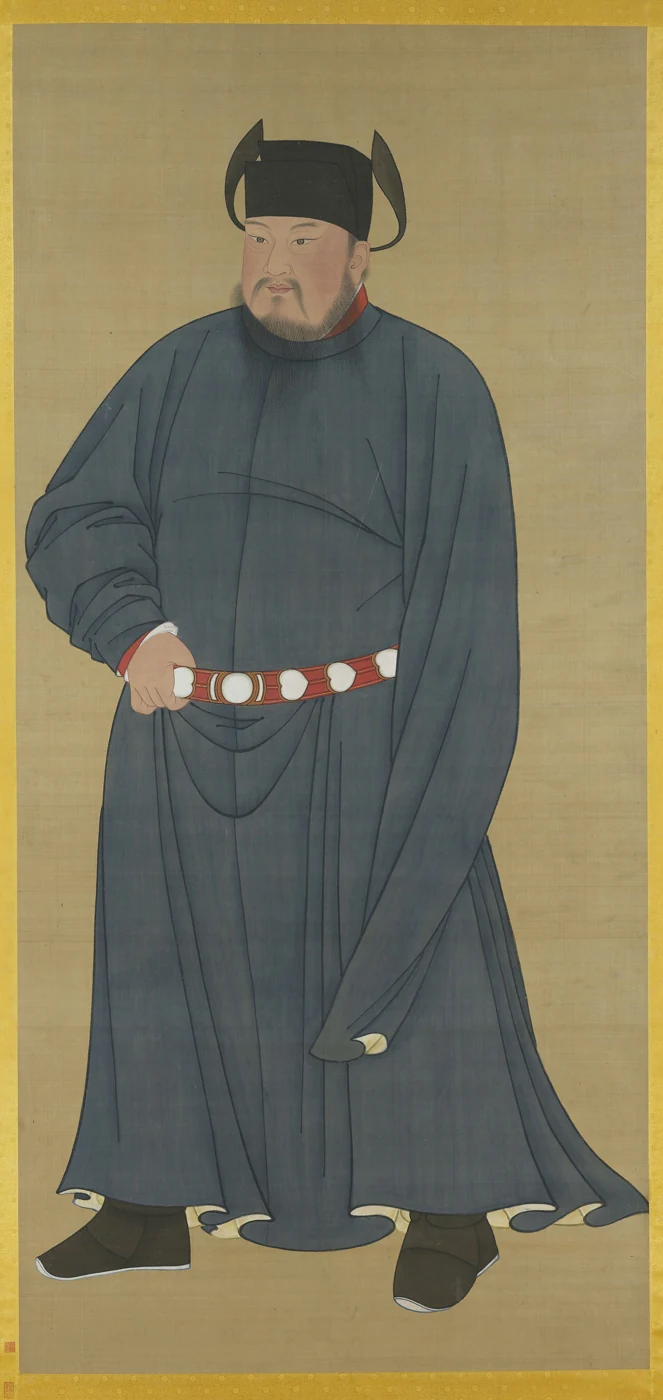
885 CE–926 CE
Emperor
Li Cunxu
李存勖
Li Cunxu (December 2, 885–May 15, 926), childhood name Yazi, was a Shatuo leader whose clan originally bore the surname Zhuye and later used Li after his father Li Keyong had been granted that surname by the Tang court. He was the founding emperor of Later Tang in the Five Dynasties period, with the temple name Zhuangzong and the posthumous name Guangsheng Shenmin Xiao Huangdi. Famous for his military ability, he campaigned…
885 CE–926 CELater Tang
PROFILE
Li Cunxu (December 2, 885–May 15, 926), childhood name Yazi, was a Shatuo leader whose clan originally bore the surname Zhuye and later used Li after his father Li Keyong had been granted that surname by the Tang court. He was the founding emperor of Later Tang in the Five Dynasties period, with the temple name Zhuangzong and the posthumous name Guangsheng Shenmin Xiao Huangdi. Famous for his military ability, he campaigned with his father in youth and inherited the title Prince of Jin. After more than a decade of war between Jin and Later Liang, he proclaimed himself emperor at Weizhou in 923, established Later Tang, destroyed Later Liang the same year, and made Luoyang his capital. After becoming emperor, however, he increasingly indulged in theatrical entertainment and the inner palace, favored actors and eunuchs, and allowed government to deteriorate. In 926, during the Xingjiao Gate Mutiny, he was struck by a stray arrow and died at the age of forty-three.
- Also known as
- Zhuangzong; Li Yazi
- Period
- Later Tang
- Dynasty/Regime
- Five Dynasties · Later Tang
- Identity
- Emperor
- Ethnicity
- Shatuo
- Ancestral origin
- Ying County, Shanxi
- Date of birth
- December 2, 885
- Place of birth
- Jinyang (present-day Taiyuan, Shanxi)
- Date of death
- May 15, 926
- Reign
- 923-926
- Predecessor
- Not applicable (founding emperor)
- Successor
- Emperor Mingzong of Later Tang (Li Siyuan)
- Era name
- Tongguang
- Temple name
- Zhuangzong
- Posthumous name
- Guangsheng Shenmin Xiao Huangdi
- Major achievements
- Emperor Zhuangzong of Later Tang; defeated Later Liang and established Later Tang through military skill, but after becoming emperor became absorbed in entertainers and the inner court and died amid political disorder.
LIFE TIMELINE
Age eleven | Accompanied his father Li Keyong against Wang Xingyu, entered court to present victory, received praise from Emperor Zhaozong, and was granted an honorary office.
Age eighteen | Consoled his father when Taiyuan was under pressure and argued for patience and recovery.
Age twenty-two | Persuaded his father to aid Liu Rengong, attacked Luzhou, and helped force Later Liang to withdraw.
Age twenty-three | Zhu Wen usurped the Tang throne; Li Keyong refused to recognize him and continued using the Tang Tianyou era name.
Age twenty-four | Succeeded as Prince of Jin, crushed the rebellion of his uncle Li Kening, and defeated Later Liang at Sanchuigang, lifting the siege of Luzhou.
Age twenty-six | Responded to requests from Chengde and Yiwu and sent troops against Later Liang.
Age twenty-seven | Won a major victory over Later Liang at Baixiang, shaking Hebei.
Age twenty-seven | Joined five circuits in honoring Liu Shouguang as Shangfu, encouraged his imperial ambitions, and then launched a campaign against Yan.
Age twenty-nine | Captured Youzhou, seized Liu Rengong and Liu Shouguang, and destroyed Yan.
Age thirty-one | Captured Weizhou and secured much of Hebei.
Age thirty-nine | Proclaimed himself emperor at Weizhou under the dynastic name Tang and era name Tongguang; in the tenth month struck Bianzhou, destroyed Later Liang, and later made Luoyang the capital.
Age forty-one | Sent an army that destroyed Former Shu and brought the Sichuan region into Later Tang territory.
Age forty-two | A mutiny broke out at Yedu, Li Siyuan turned against the court and marched south, and Li Cunxu was killed by a stray arrow during the Xingjiao Gate Mutiny.
BIOGRAPHY
Biography
Family Background and Early Life
Li Cunxu came from the Shatuo people of the western Turkic world. His clan originally bore the surname Zhuye and had long produced Shatuo leaders. His grandfather Zhuye Chixin was granted the surname Li by a Tang emperor after helping suppress the Pang Xun rebellion and was entered into the imperial clan register. Li Cunxu's father, Li Keyong, became military governor of Hedong, was created Prince of Jin, and established a regional power centered on Taiyuan. Meanwhile Zhu Wen, based at Xuanwu and Bianzhou, controlled much of the Central Plains. Li Keyong and Zhu Wen fought for supremacy for more than two decades.
Li Cunxu was the son of Li Keyong and Consort Cao. From childhood he was skilled in riding and archery, bold, open-minded, and greatly favored by his father. He enjoyed reading the Spring and Autumn Annals, had some understanding of its political meanings, and was also highly skilled in music. In 895, when Wang Xingyu, Li Maozhen, and Han Jian entered Chang'an and threatened Emperor Zhaozong, Li Keyong campaigned in support of the emperor. The eleven-year-old Li Cunxu accompanied the army and later entered court to present the victory. Emperor Zhaozong praised and rewarded him.
In 902, after Taiyuan had twice been besieged by Liang forces, Li Keyong became deeply anxious. Li Cunxu urged him not to despair, arguing that Zhu Wen's power and misconduct would eventually produce reversal and that the Li family should conserve its strength until conditions changed. Li Keyong was reassured.
In 906, Zhu Wen sent troops against Cangzhou and Liu Rengong of Youzhou appealed to Li Keyong for aid. Li Keyong was reluctant because of Liu's previous betrayals, but Li Cunxu argued that if Liu fell, Jin would be isolated north of the Yellow River. Li Keyong therefore sent troops against Luzhou, forcing Zhu Wen to withdraw pressure from Cangzhou.
Succession as Prince of Jin and Early Victories
Li Keyong died in the first month of 908. Li Cunxu succeeded as military governor of Hedong and Prince of Jin at the age of twenty-four. Some of Li Keyong's adopted sons, including Li Cunhao and Li Cunshi, resented the younger Li Cunxu and encouraged his uncle Li Kening to rebel and defect to Later Liang. Li Cunxu secured the support of supervisor Zhang Chengye and generals such as Li Cunzhang, then moved first, arrested and killed Li Kening and other conspirators, and stabilized the regime.
In the fourth month he personally marched to relieve Luzhou. Later Liang forces assumed the young ruler would not dare take the field and failed to maintain proper reconnaissance. On the second day of the fifth month, Li Cunxu hid troops near Sanchuigang and attacked through heavy fog, destroying the Liang positions and lifting the siege. The victory greatly increased Jin prestige. Returning to Taiyuan, he rewarded the troops, tightened military discipline, assisted widows and orphans, employed capable men, punished corruption, moderated penalties, and suppressed banditry.
Struggle for Hebei
In late 910, Later Liang sent forces toward Shenzhou and Jizhou in an attempt to absorb Chengde and Yiwu. Wang Rong of Chengde and Wang Chuzhi of Yiwu asked Li Cunxu for aid and accepted him as alliance leader. Li Cunxu marched east and confronted the Liang army near Baixiang.
In the first month of 911 he sent Zhou Dewei with elite cavalry to provoke the Liang army and draw it onto open ground south of Gaoyi. After exhausting the enemy, Li Cunxu launched a cavalry attack and won a decisive victory. The source records the capture of hundreds of officers and the killing of twenty thousand troops, with elite Liang formations shattered. Chengde and Yiwu thereafter aligned firmly with Jin.
Li Cunxu then turned against Liu Shouguang of Youzhou. He first used a strategy intended to encourage Liu's arrogance: five circuits jointly honored him with the title Shangfu. Liu interpreted the gesture as fear and proclaimed himself emperor of Great Yan in 911 despite opposition from his advisers. Li Cunxu then sent Zhou Dewei through Feihu Pass with allied forces to attack him.
By 913 Jin forces had taken the surrounding prefectures, and Li Cunxu personally led the final campaign against Youzhou. The city fell and Liu Rengong and Liu Shouguang were captured. Zhou Dewei was left in command of the region. Li Cunxu then continued competing with Later Liang for Hebei. In 915, after the death of Weibo military governor Yang Shihou and a mutiny caused by Liang plans to divide the circuit, Li Cunxu seized Weizhou and gradually brought the Hebei circuits under his control. Jin and Liang thereafter fought for more than a decade along the Yellow River.
Proclaiming the Later Tang and Destroying Later Liang
In the fourth month of 923, Li Cunxu proclaimed himself emperor at Weizhou, adopted Tang as the dynastic name and Tongguang as the era name, and thereby founded the state known as Later Tang. At the time he controlled thirteen military governorships and fifty prefectures. In the tenth month, accepting Guo Chongtao's plan, he launched a surprise advance on Bianzhou and destroyed Later Liang in only eight days. Later Liang's final emperor Zhu Youzhen committed suicide. Li Cunxu established his capital at Luoyang and presented himself as the legitimate successor of the Tang dynasty. He established temples for Tang emperors, exterminated the families of some leading Later Liang officials on the grounds that they had served usurpers, and demoted eleven former officials who had helped Zhu Wen overthrow Tang.
Later Misgovernment and Death
After becoming emperor, Li Cunxu increasingly believed that years of hardship entitled him to pleasure. He built palaces, distrusted senior ministers, and favored eunuchs and actors. Kong Qian, appointed to oversee revenues, imposed harsh collections and heavy fiscal burdens. Famines occurred in multiple regions. Li Cunxu had loved acting since youth, sometimes appearing on stage himself under the theatrical name “Li Tianxia.” Performers enjoyed unusual access to imperial favor, and actor Jing Jin intervened in political affairs. Actors and eunuchs were also sent to seize women for the palace, including wives and daughters of Weibo soldiers, creating widespread resentment. In 924 Li Cunxu restored the supervisory power of eunuchs over military commands, reviving a system that had largely disappeared and further alienating generals.
In 925, Li Cunxu sent his son Li Jiji and the minister Guo Chongtao to destroy Former Shu. Afterward, mutual suspicion grew between them, while Guo also angered eunuchs. Li Cunxu became suspicious of Guo and sent Meng Zhixiang into Shu with instructions to act according to circumstances. In the following year, influenced by eunuch accusations, he ordered the deaths of Zhu Youqian and Li Cunyi, intensifying fear throughout the court.
In 926, Weibo soldiers led by Huangfu Hui elevated Zhao Zaili in rebellion at Yedu. Li Cunxu first sent Li Shaorong, who failed to take the city, and then ordered Li Siyuan to campaign there with his son-in-law Shi Jingtang. When Li Siyuan reached Weizhou, mutinous soldiers welcomed him into the city. Unable to convince the court of his innocence, and persuaded by Shi Jingtang that he would not be forgiven even if he remained loyal, Li Siyuan joined the rebels and marched south. In the fourth month he occupied Bianzhou and advanced toward Luoyang while Shi Jingtang approached Sishui Pass. Li Cunxu decided to lead a counterattack personally.
At the same time, the actor and military commander Guo Congqian, unaware that Li Cunyi had already been killed, attempted to rebel in Li Cunyi's name and set fire to Xingjiao Gate. Commander Zhu Shouyin refused to rescue the emperor. Only a small number of officers, including Fu Yanqing and Wang Quanbin, remained loyal. Guo Congqian's troops broke into the imperial city and Li Cunxu was struck by a stray arrow. Wang Quanbin carried him to Jiangxiao Hall. After severe blood loss, he asked for drink, received a cup of fermented milk, and died soon afterward. An actor later placed discarded musical instruments over his body and burned it. The event became known as the Xingjiao Gate Mutiny. Li Siyuan entered Luoyang, buried Li Cunxu's remains at Yongling, and bestowed the temple name Zhuangzong before later becoming Emperor Mingzong of Later Tang.
The Relief of Luzhou and the New Government at Jinyang
When Li Keyong died in the first month of the fifth year of Tianyou, Li Cunxu succeeded at Jinyang at twenty-four. His uncle Li Kening, commander of the garrison troops, "held the military power", and because Li Keyong had rewarded exploits and kept many bastard sons, "some six or seven of them in dress and rank like the legitimate, older than the heir and each with strong troops", these men "refused to bow, were sullen and resentful and pleaded illness". Li Cunxian urged Li Kening that "when the elder brother dies the younger brother succeeds, an old usage of ancient and modern times; for an uncle to bow to a nephew is unreasonable", and they planned to kill Zhang Chengye and Li Cunzhang in Li Kening's house and "give the nine prefectures of Bing and Fen to Liang, sending the Empress Dowager as hostage". Li Cunxu told Zhang Chengye that "my uncle behaves so, with no affection for a nephew; kin should not devour one another; I shall give way and the trouble will cease", but Zhang answered that "I received my charge from the late king and his words are still in my ears; if such as Li Cunxian would surrender Taiyuan to the rebels, by what road would you seek life? Unless they are destroyed at once, our end is near", whereupon Wu Gong, Li Cunzhang, Li Cunjing and Zhu Shouyin were told the plot, all were angry, and in the second month Li Cunzhang laid an ambush and killed Li Kening.
Luzhou was then still besieged, the Liang general Kang Huaiying having surrounded it with a hundred thousand men so that "news was cut off within the city", and Li Sian having replaced him and built an outer rampart called the "double rampart" against the relieving army. Li Cunxu recalled Zhou Dewei's army to Jinyang, and the men of Bian, thinking that "Luzhou must fall and no further relief could be sent", relaxed their patrols. He told his officers that "if we choose and drill our troops and march double distance, taking them unawares, with our angry host against their proud and idle one, to snap them like dead wood is no hard matter; the relief of the siege and the settling of our hegemony lie in this one battle". On the day Jiazi in the fourth month the army left Taiyuan, on Jisi it camped north of Luzhou at Huangnian, and at dawn on the first of the fifth month, in thick fog, he lay in ambush below Sanchui hill; the next morning "the fog grew even thicker, and the army advanced straight to the double rampart", where the Liang troops fled south in terror, "casting away their arms and armor until the road was choked". Returning to Jinyang he sacrificed in the ancestral temple, feasted and rewarded his men, and then ordered throughout the state "the suppression of robbers, the relief of orphans and widows, the summoning of recluses, the ending of greed and violence, the strengthening of dikes and the mildness of judgments", so that "within a month the customs were wholly changed"; and whenever he went out "he would rein in his horse and question the hungry and cold he met on the road", so that men's hearts were greatly pleased. When the Liang founder heard that the double rampart had fallen he was greatly alarmed and sighed that "to have a son one should have one like Li Yazi; Kening is not dead! And such as my own son is a mere pig-dog."
The Battle of Baixiang and the Destruction of Jie Yan
In the seventh year of Tianyou the Liang sent three thousand men into Shen and Ji prefectures under the pretext of helping Zhao, in fact to seize the two circuits of Chengde and Yiwu; the Chengde governor Wang Rong sent to Jinyang for help and the Yiwu governor Wang Chuzhi also sent envoys, wishing to make the prince of Jin their leader against Liang. His officers said that "this is surely a trick; we should wait and see", but Li Cunxu answered that "if I doubt and do not save them, I fall right into Zhu's plan; we should send troops quickly, and with Jin and Zhao at one strength Liang must be broken". He took his own troops east from Zanhuang, and in the twelfth month camped north of the Ye river five li from Baixiang. In the first month of the eighth year Zhou Dewei and Shi Jiantang with three thousand horse challenged at Baixiang, laid ambushes among the villages and sent three hundred horse right up to the enemy camp, drawing the Liang army out to deploy "in a line six or seven li across"; the fight lasted from the hours of Si to Wu, and when the Liang troops thought to withdraw, "the dust rose to heaven", Zhou Dewei waved his banner and shouted that "the men of Bian are running", Li Siyuan with his own guards and Shi Jiantang, An Jinquan and the northern Tuhun troops charged from both sides, and the Liang army was utterly defeated, "the clatter of cast armor and weapons shaking heaven and earth, the armies of Longxiang, Shenwei and Shenjie all but annihilated", with corpses lying from the field to Baixiang for tens of li and the Liang generals Wang Jingren, Han Jing and Li Sian escaping by night with a few dozen horse; "in this battle twenty thousand heads were taken and two hundred and eighty-five Liang officers from Chen Siquan down were captured".
After Baixiang Li Cunxu turned first to Hebei. With the governors of Zhenzhou, Yiding, Zhaoyi, Zhenwu and Tiande he sent envoys with a patent honouring Liu Shouguang as "respected uncle", "to ripen his wickedness"; Liu Shouguang, not seeing the point, asked the Liang envoy why "in this ceremony there is no sacrifice to heaven and change of reign-title", and being told that "the respected uncle, though honoured, is still a subject", threw the patent to the ground in anger and said that "you may prepare the ceremonies of an emperor, for I shall be Son of Heaven of the north of the river", and on the thirteenth of the eighth month usurped the title of emperor of Great Yan with the reign-title Yingtian; in the twelfth month Li Cunxu sent Zhou Dewei out through Feihu to join the armies of Zhen and Ding against him. In the first month of the ninth year Zhou Dewei took Zhuozhou, and in the second the Liang founder raised the host of Henan to aid Liu Shouguang, sending Yang Shihou and Li Zhouyi against Zaoqiang and He Delun against Jixian; in the third month the Liang founder took Zaoqiang himself and put it to the sword, while Li Cunzun and Shi Jiantang with three thousand horse at Zhaozhou sent eight hundred to Jizhou and at dusk reached He Delun's camp gate, "killing the guards, raising fire and shouting, and returning with prisoners and heads"; the Liang army fled by night and the Liang founder, greatly alarmed, hurried back from Zaoqiang to Beizhou, his chronic illness worsening, so that in the fourth month he returned south and in the sixth was killed by his son Zhu Yougui, who usurped the throne at Luoyang. In the first month of the tenth year Zhou Dewei took Shunzhou, in the second Zhu Yougui was killed by his general Yuan Xiangxian and the prince of Jun, Zhu Youzhen, took the throne at Bianzhou, and the prefectures of Wuzhou, Pingzhou and Yingzhou surrendered in turn; in the eleventh month Li Cunxu set out in person against Youzhou, reached Fanyang on the day Jiwei, attacked at dawn the next day and "in a little while brought in Liu Rengong", and in the twelfth month the people of Yanle county in Tanzhou delivered up Liu Shouguang with his wife and son, whereupon he returned with the father and son as captives.
All Hebei and the Stand Along the River
In the third month of the twelfth year of Tianyou, He Delun, the Liang governor of Weibo, sent envoys with gifts suing for alliance. Yang Shihou having died at Weizhou and the Liang ruler having divided the three prefectures of Xiang, Wei and Chan into a separate circuit, the Wei army mutinied on the night of the twenty-ninth, imprisoned He Delun in his office and forced him to join Li Cunxu and ask for aid. The mutineers under Zhang Yan were insolent, and Li Cunxu, mounting the tower, told them that "you have killed innocent men in the city and taken their wives and daughters, and complainants have come in crowds these days; you should be beheaded to satisfy the men of Ye", and had Zhang Yan and seven of his fellows killed, so that "the soldiers' legs trembled", and he comforted them himself. On the first of the sixth month he entered Weizhou and accepted He Delun's seals, agreeing to hold Weizhou himself; in the seventh month Wang Yanzhang, governor of Chanzhou under Liang, abandoned his city and fled. In the second month of the thirteenth year, knowing that the Liang general Liu Xun meant to fight quickly, he spread word that he was returning to Jinyang to draw him out; Liu Xun indeed moved against Ye, Li Cunzun following him and Li Siyuan coming out of Weicheng, and when Li Cunxu arrived from Beizhou, Liu Xun cried out "the prince of Jin!" and fell back to the west of the old Yuancheng, where his army was cut down on all sides, "the sound of cast armor heard for tens of li", and the rout was pursued to the river, where "in tens and hundreds they threw themselves in and drowned, and of the Liang foot-soldiers seventy thousand were all but destroyed", Liu Xun escaping by Liyang to Huazhou. In the third month Weizhou was attacked, in the fourth Mingzhou, in the eighth Xiangzhou fled and Xingzhou surrendered, and in the ninth Cangzhou fled, "and from this time all the north of the river was his". In the second month of the fourteenth year Lu Wenjin, general of Xinzhou, killed the governor Li Cunju and rebelled into the Khitan, drawing them against Xinzhou and then Youzhou, where "north of Yuyang, among the valleys, felt carts and felt tents and sheep and horses filled the land"; Li Cunxu called his officers, Li Cunzun asking to go at once to save Yan and Ji, Li Siyuan asking for "five thousand swift horse to break the Khitan", and Yan Bao advising to "choose sharp troops, hold the mountain passes, and set ambushes with strong bows"; he said gladly that "with these three officers I have no more worry", and in the seventh month sent Li Cunzun to join Li Siyuan at Yizhou with seventy thousand horse and foot, who in the eighth month marched east by the Dafang ridge and sixty li from Youzhou met ten thousand Khitan horse, beat them utterly so that "they abandoned felt tents, bows and arrows and sheep and horses past counting", and entered Youzhou.
In the eighth month of the fifteenth year he held a great review on the outskirts of Wei, with the troops of ten circuits and the peoples of the Xi, Khitan, Shiwei and Tuhun, more than a hundred thousand, "the ranks stern and the banners shining, the greatest host of recent times". In the battle of Huliupo in the twelfth month he rode out with his guards and met the Liang army "in line for tens of li", and in the first onset Zhou Dewei was killed; taking the earth hill in the middle of the marsh he led his men up it first, and Yan Bao said that "to strike down from the height now is like splitting bamboo", while Wang Jianji, general of the silver spears, in armor and with his lance across his saddle, said that "the rebel generals have already fled, your horse are untouched, and the rebels, at dusk, mostly think of home; strike and they must break", whereon Li Zhaozhao led horse around the north of the hill, Wang Jianji shouted to his men that "the baggage we lost today lies at the foot of the hill", and the whole army charging, the Liang host was routed, "of the remnant that fled to Bian not a thousand remained". In the first month of the sixteenth year Li Cunzun walled Desheng and palisaded along the river; in the fourth the Liang general He Gui besieged the southern city of Desheng and blocked the crossing with warships, and Li Cunxu, hurrying there, drew up on the north bank while Wang Jianji "bound ten boats with great cables, chose three hundred brave men with axes and armor, and rowed out into mid-stream", cutting the bamboo ropes and breaking the screens of the warships and sending fire rafts "with flame reaching the sky", so that the army crossed and the Liang withdrew. In the seventh month of the seventeenth year Liu Xun and Yin Hao besieged Tongzhou, and Zhu Youqian of Hezhong asked for aid; Li Cunxu sent Li Cunzun, Li Zhaozhao and Wang Jianji, who in the ninth month reached Hezhong and routed the Liang army, "pursuing to the Wei river, where the arms and baggage they abandoned were past counting, Liu Xun and Yin Hao escaping alone".
The Zhang Wenli Affair, the Khitan Again, and Zhenzhou
In the second month of the eighteenth year Zhang Wenli of Zhenzhou killed his governor Wang Rong, and Li Cunxu, told by his attendants that "affairs are many and we would not raise trouble", unwillingly confirmed him as commander of Zhenzhou. In the third month Zhu Youqian, Li Zhaozhao, Li Cunzun, Wang Chuzhi, Li Siyuan and others sent envoys urging him to assume the Tang imperial title, which he refused in writing. In the eighth month he sent Yan Bao and Fu Xi against Zhang Wenli, who died of a carbuncle that month, his son Zhang Chujin taking his place; in the tenth Wang Chuzhi was imprisoned by his son Wang Du, who called himself commander, and in the twelfth Wang Yu drew the Khitan Abaoji against Youzhou, who took Zhuozhou and raided Dingzhou. In the first month of the nineteenth year Wang Du asked for help, and Li Cunxu rode from Zhenzhou with five thousand horse; at Xincheng the Khitan vanguard of three thousand came to Xinle, and ten thousand Khitan horse, "seeing the prince's army, fell back in terror", and he pursued them for tens of li in two divisions and "took a son of Abaoji"; the next day at Wangdu the Khitan gave battle and were utterly broken, thousands being taken or killed, "men and horses falling dead along the road without end", and he pursued them to Youzhou. In the third month the royal army was beaten before Zhenzhou and Yan Bao fell back on Zhaozhou; the city being long besieged and short of food, the besiegers walled it about and cut the Hutuo river to stop its outlets; in the fourth month Li Zhaozhao died of a stray arrow in the field and Yan Bao also died; in the eighth month Duan Ning took Weizhou and Dai Siyuan Gongcheng and Xinxiang, "and from this time west of Chanyuan and south of Xiangzhou all was held by Liang"; in the ninth month Li Cunjin fell in battle and Li Cunzun was made commissioner of the north; and one night the troops mounted the wall and by dawn all had entered and Zhenzhou was pacified, Zhang Chuqiu, Zhang Chujin and their fellows being taken and their feet broken before the headquarters, "the men of Zhen asking to mince them and eat them", while Zhang Wenli's corpse was disinterred and hacked in the market.
Emperor, the Destruction of Liang, and of Shu
In the second month of the first year of Tongguang, the circuits having urged him to the throne, he had the offices prepare the regalia for the rite in the fourth month. Long before, when Huang Chao sacked Chang'an, the monk Chuanzhen of Weizhou had obtained the imperial seal and hidden it forty years, and now, taking it for common jade and about to sell it, he was told that it was "the seal of state" and brought it to the headquarters, "all the officers raising their cups in congratulation". Zhang Chengye, ever a subject of Tang, came from Jinyang to remonstrate: "My prince's house has been loyal to the Tang for generations and has saved it in its perils; for thirty years I have gathered taxes and raised troops for you, sworn to destroy the rebels and restore the ancestral house of the dynasty. Now Hebei is barely settled and the Zhu still live, and if you suddenly take the throne it is wholly against the purpose of our long campaigns, and who in the world will not fall away? Why not first destroy the Zhu, avenge the deep wrongs of the emperors, and then seek out a Tang descendant and set him up? Take Wu in the south, Shu in the west, and sweep the world into one family; and then, though Gao and Taizong should come again, who would dare sit above you? The longer you yield, the firmer your hold." Li Cunxu answered that "it is not my wish, but what can I do with the will of my officers", and Zhang, knowing he could not be stopped, wept aloud that "the lords have fought in blood for the Tang house, and now you take it yourself, deceiving your old servant", and returning to Jinyang fell ill and never rose. On the day Jisi of the fourth month Li Cunxu ascended the altar, sacrificed and announced to Heaven, took the throne, received the congratulations of his ministers, and from the Yingtian gate proclaimed the twentieth year of Tianyou as the first of Tongguang, with a general amnesty, raising Weizhou to be the eastern capital Xingtang fu and Taiyuan the western capital and Zhenzhou the northern capital, with thirteen circuits and fifty prefectures under his rule; in the intercalary month he posthumously honoured three generations and decreed a temple at Jinyang with seven shrines from Gaozu and Taizong down. For chancellors he chose the gentry of the former dynasty from among the four circuits' judges, and when Lu Zhi of Hedong declined, recommending Dou Luge and Lu Cheng, he summoned them at once as presidents of the left and right of the provincial government; later, finding them "shallow and without ability", he used them only because they were "of the lineage of the gentry and veterans of the princely office", on which Hu Sanxing observed that "the old houses of the Tang ministers being all but extinguished in the troubles... for a founding prince to choose his chancellors so, the affairs of the world may be known".
In the intercalary fourth month of the first year of Tongguang Li Jitao, commander of Luzhou, rebelled and made terms with Liang. When someone came from Yunzhou to say that the Liang governor Dai Siyuan led his troops on the river and the city was undefended, Li Cunxu consulted Li Siyuan that "Zhaoyi has defied us and the Liang general Dong Zhang presses Zezhou; the Liang mind is on Ze and Lu and does not expect trouble elsewhere; Wenyang is unguarded and must not be lost", and Li Siyuan agreed, leading five thousand horse and foot silently by night from the river to Yun, entering the city unaware and taking it. The Liang ruler, alarmed, sent Wang Yanzhang to command against him. In the fifth month Wang Yanzhang sailed down the river by night, broke the pontoon bridge at Desheng and stormed its southern city, and Li Cunxu ordered Jiao Yanbin to hold Yangliu and Zhu Shouyin to take the timber of the northern city down the river for rafts, the two fleets fighting daily along the banks so that by Yangliu "nearly half" of Wang's fleet was lost; Wang Yanzhang and Duan Ning then attacked the southern city of Yangliu day and night with a hundred devices and could not take it, camping south of the town in a line of a dozen palisades. In the sixth month Li Cunxu came in person and asked counsel of Guo Chongtao, who advised walling a camp on the river downstream to save Yunzhou and sending brave men daily to challenge so as to gain ten days; he went with Mao Zhang at midnight across the river at Bozhou and drove the works day and night, so that in six days the rampart was nearly done. Wang Yanzhang and Du Yanqiu came at dawn with tens of thousands, and sent great ships upstream to cut the crossing, attacking from morning to noon with the city in extremity; Li Cunxu drew up on the western bank and the city called out, and as he was about to ferry over the Liang raised the siege and fell back on Zoujiakou, whence in the seventh month they fled by night, "abandoning pots, armor, fodder and grain by the thousand", and the Liang made Duan Ning commander in place of Wang Yanzhang.
In the eighth month Kang Yanxiao, the Liang vanguard commander, came over with a hundred horse, told of the Liang plan of a general advance in several columns, and advised that "if Your Majesty will but wait until they divide, and lead five thousand iron horse from Yunzhou straight to Bian, in less than ten days the world is settled"; Li Cunxu was delighted and thought him brave. On the day Renshen of the tenth month he crossed the river from Yangliu, reached Yunzhou, and on the day Jiaxu attacked Zhongdu, which "having no defenses, fell at once as our host closed", taking Wang Yanzhang and the overseer Zhang Hanjie with two hundred officers, and beheading twenty thousand; when he asked his officers where to go, most advising to reduce Yanzhou first, only Li Siyuan said that "we should hurry to Bianzhou... let me lead a thousand horse ahead and Your Majesty follow with the army, and there is little doubt of success", and that night Li Siyuan went forward, so that at dawn the vanguard reached Bian and took the Fengqiu gate, and the Liang governor Wang Zan surrendered the city and welcomed him in at the Daliang gate, "the last Liang emperor Zhu Huang having been killed by his general Huangfu Lin, whose head was taken and sent in a box". After the fall of Liang the governors came one by one to court, and he decreed that "the military governors, observers, defenders and prefects of the usurping court, and all their officers, shall not be changed, and those who formerly fled to the usurping court shall not be questioned"; he gave Duan Ning the name Li Shaoqin, Du Yanqiu Li Shaoqian, Yuan Xiangxian Li Shaoan, Wen Tao Li Shaochong, and Zhang Zongshi came to court and resumed the name Quanyi. Wen Tao, having bribed the Lady Liu and the powerful musicians and eunuchs, was sent back to his post, and Guo Chongtao remonstrated that "Wen Tao dug up nearly every Tang imperial tomb, and his crime is on a level with Zhu Wen's; how can he again hold a military governorship?", to which he answered that "on entering Bian his crime was pardoned", and sent him. In the same year he degraded eleven Liang chancellors and, on Duan Ning's memorial, put Zhao Yan, Zhang Xiyi, Zhang Hanjie, Jing Xiang, Li Zhen and others to death with their families beneath the Bian bridge, destroyed the Liang ancestral tablets and reduced the two Liang emperors to commoners; and though he wished to open Zhu Wen's tomb and burn the coffin, Zhang Quanyi pleaded for the imperial grace, and he desisted, only having the tomb chambers razed.
In the ninth month of the third year of Tongguang he made his son Li Jiji commander-in-chief of the western campaign and Guo Chongtao commissioner, "all military matters being entrusted to him", with sixty thousand men against Shu. Before this he had sent Li Yan as envoy to Shu, and Li Yan reported that "Wang Yan is a foolish and dissolute boy who does not attend to government, drives off the old and is intimate with petty men... when our great army comes it will crumble like a clod, and may be awaited on tiptoe", which Li Cunxu thought right. In the tenth month Li Shaochen and Li Yan with three thousand swift cavalry and ten thousand foot advanced, took the Weiwu city of Shu, whose commander Tang Sisi surrendered, "gaining two hundred thousand piculs of grain in the city", and Wang Chengjie surrendered the seals of four prefectures with eight thousand men and four hundred thousand piculs. Wang Yan, hearing of the Tang advance, refused to believe it and boasted that "I mean to display my arms", writing poems on the road "with no concern at all", and only at Lizhou believed it, sending three commanders with thirty thousand to fight, who were beaten at Sanquan, "five thousand beheaded and the rest routed", with a hundred and fifty thousand piculs more gained, "so that the army's food was plentiful". Afterwards the commanders of Shu in five, three and five prefectures surrendered in turn, "and the remaining towns and cities all came over at the sight of our banners". In the eleventh month the Shu ruler and his household were moved to the western palace and their seals taken; Li Jiji reached Hanzhou and then Chengdu, and Li Yan brought Wang Yan and his officials out to surrender at the Shengqian bridge, "Wang Yan in white, holding a jade disk and leading a sheep with a rope of grass about his neck, and his officers in mourning clothes, barefoot, bearing a coffin", while Li Jiji received the disk, Guo Chongtao untied the cords and burned the coffin and pardoned them by imperial authority. When Gao Jixing heard of the fall of Shu "he dropped his chopsticks in the middle of his meal" and said that "this is my own fault", and the prince of Chu sent up a memorial saying that "I have built myself a retreat among the Heng hills and beg to return my seals and live out my years".
The Misgovernment of Luoyang and the Rising at the Xingjiao Gate
After the fall of Shu, Guo Chongtao, hating the eunuchs, told Li Jiji in secret that "when you one day hold the world, not even a stallion should be ridden; how much less should eunuchs be employed — they should all be removed and scholars used", which the eunuch Lu Zhirou overheard, so that "the eunuchs all ground their teeth". Because he refused to go out to meet the eunuch Xiang Yanxun and was haughty in manner, Xiang too was angry; Li Cunxu, already displeased to hear that the men of Shu had asked for Guo Chongtao as their commander, grew angry at Xiang's report, and told Meng Zhixiang on his departure that "I hear Guo Chongtao has other designs; when you arrive, put him to death for me", Meng advising that "Chongtao is an old servant of the state and should not be suspected", which he allowed. Afterwards the empress herself wrote to Li Jiji, bidding him kill Guo Chongtao, and Ma Yangui returning to Luoyang, "an edict was issued proclaiming Guo Chongtao's crimes and his sons Tingshuo, Tingrang and Tingyi were killed with him". Jing Jin then said that "there are men of Hezhong who report treason, saying that Li Jilin plotted with Guo Chongtao, and after Chongtao's death with Cunyi", and the eunuchs urging speed, Li Jilin (Zhu Youqian) was moved to Yicheng and that night Zhu Shouyin surrounded his house with troops and killed him outside the Hui'an gate, restoring his name of Zhu Youqian; his two sons were killed at Suizhou and Xuzhou and his family at Hezhong, and seven of his old officers who were prefects were executed with their clans. Li Shaochen, enraged, said over wine to his officers that "the state took Daliang in the south and pacified Ba and Shu in the west, all by Guo's plans and my fighting... and now Zhu and Guo are both destroyed though guiltless, and when we return it will be our turn", and so turned west with his army from Jianzhou, calling himself commissioner of Xichuan, "in three days fifty thousand men gathering to him", until he was beaten at the Jinyan bridge and taken.
In the second month of the fourth year of Tongguang the troops of the Wei Bo commander Yang Rencheng, returning from garrison at Waqiao and ordered to stay at Beizhou, mutinied when Huangfu Hui and others, having lost at dice by night, seized and killed Yang Rencheng; the deputy Zhao Zaili, fleeing over the wall, was caught by the mutineers and made their commander. In the third month Li Siyuan was sent with his guards against Ye, but the siege was fruitless, Zhao Tai holding Xingzhou and Wang Jingkan holding Cangzhou as their own, "and many of the towns of Hebei killed their officials"; the camp was made outside the Guanyin gate, and that night the troops below the city mutinied and forced Li Siyuan to be emperor, and at dawn they took him into Ye, where Huangfu Hui and Zhao Jin pressed him further; the next day he came to Xiangzhou. Yuan Xingqin's troops fell back on Weizhou and sent false reports, and Li Siyuan four times in a single day sent memorials in his own defence, while his son Li Congshen, sent with an edict to explain, was arrested by Yuan Xingqin at Weizhou and the edict never delivered. It was then "a year of great famine with much vagrancy, the taxes uncollected, the roads muddy, transport hard, the eastern capital's granaries empty and nothing to give the soldiers", who "hired out their wives and sold their children", the old and weak gathering wild vegetables in bands and "often dying of hunger, with mutterings and complaints, while the emperor never ceased hunting", hunting at Baisha with "the empress, the princes and the whole palace following". The revenue commissioner, short of stores, "cut the soldiers' grain harshly", and the mutterings grew louder; the chancellors led the officials to ask that the inner treasury be opened, "for now the revenue is exhausted while the inner treasury has surplus, and the soldiers' families cannot keep together; if they are not relieved we fear desertion", and he was about to consent, but the empress said that "we two rule ten thousand states; though by arms, it is also by Heaven's command; the command being with Heaven, what can men do to me?", and when the chancellors argued again in the convenience hall she listened behind the screen and then "brought out her toilet things and three silver basins and three young princes, saying that 'people say the palace has great stores, but the tribute of the four quarters is given out as it comes, and this is all that is left; sell these to feed the army'", so that the chancellors withdrew in fear.
On the day Yichou of the third month the carriage left the capital and Yuan Xingqin was sent east with the horse; on Renshen it reached Xingze, and Yao Yanwen, marching to Zhongmu, went over to Bianzhou with his troops, as did Pan Gui at Wangcun, "and Li Siyuan had already entered Bian". Hearing that his armies were dissolving he lost heart, and at Wansheng town ordered the return; that night he came to Sishui, "having left the pass with twenty-five thousand and lost more than ten thousand horse by the time he returned". Passing the Yingzi valley, where the road was narrow and steep, he spoke kindly to every guardsman bearing arms, saying that "word has just come that the prince of Wei has sent in another five hundred thousand in gold and silver from Xichuan, which shall all be given you on reaching the capital", but the soldiers answered that "Your Majesty's gifts come too late, and no man feels your grace", and he could only weep. On the first of the fourth month the carriage was to leave the capital, the horse drawn up outside the Kuanren gate and the foot outside the Wufeng gate; while he was eating in the inner hall, Guo Congqian, commander of the attendant horse, "drew his halberd and bared his blade at the head of his troops, shouting at the Xingjiao gate and shooting arrows at it with the yellow-armored guards". Hearing the rising he came out of the palace with the princes and his guards and drove the mutineers beyond the gate, but they burned it and entered over the wall, shouting from the palace wall, and he fought with his guards and "killed several hundred of the mutineers" until he was struck by a stray arrow and "at noon died in the side hall of the Jiangxiao palace at forty-three". His attendants had all scattered, "and only the keeper of the five aviaries, Shanyou, gathered the instruments from under the gallery about his body and set fire to them".
Major Activities
Military Achievements
Li Cunxu was one of the leading military commanders of the Five Dynasties. After succeeding as Prince of Jin, he defeated Later Liang at Sanchuigang and relieved Luzhou, won an important victory at Baixiang, destroyed the Yan regime and captured Liu Rengong and Liu Shouguang, seized Weizhou and secured Hebei, and finally struck Bianzhou and destroyed Later Liang. He also sent forces that conquered Former Shu and brought the Sichuan basin into Later Tang territory. Zhu Wen was recorded as admiring his military ability and comparing him favorably with his own sons.
Political Activity
As Prince of Jin, Li Cunxu strengthened internal administration, enforced military discipline, assisted vulnerable households, employed able officials, punished corruption, moderated penalties, and suppressed banditry. As emperor he claimed to be the legitimate successor of Tang and punished prominent officials associated with Zhu Wen's usurpation. In later years, however, his favoritism toward eunuchs and actors, the harsh fiscal policies of Kong Qian, and repeated executions of senior figures undermined political stability and alienated both officials and soldiers.
Movements and Campaigns
Li Cunxu campaigned across present-day Shanxi, Hebei, Henan, Shaanxi, and Sichuan. He was born in Jinyang (present-day Taiyuan, Shanxi). After taking power he used Jinyang as a base, crossed the Taihang Mountains into Hebei, fought Later Liang along the Yellow River, established his capital at Luoyang, and sent an expedition to conquer Former Shu. His wars largely defined the territorial extent of Later Tang.
Contemporary Associates
Li Cunxu's principal enemy was Zhu Wen, founder of Later Liang, who both feared and admired him. Li Siyuan was an adopted kinsman and major commander who eventually displaced him. Li Cunxu relied on officials and generals such as Guo Chongtao and Zhang Chengye but later became suspicious of senior servants and ordered killings. His favor toward actors such as Jing Jin and Guo Congqian became a defining feature of his later reign, and he ultimately died in a mutiny led by an actor.
His Way in War, the Favour Shown to Musicians and Eunuchs, and Other Matters
Li Cunxu liked to lead in person, and by the Comprehensive Mirror he "loved to take light horse himself up to the enemy camp to challenge, and was in extremity three or four times, escaping only through Li Shaorong's hard fighting to guard him", so that the prince of Zhao and Wang Chuzhi both wrote that "the lives of the people hang on you and the restoration of the dynasty hangs on you; why take such light account of yourself?", to which he answered laughing that "he who would settle the world, how can he do it but by a hundred battles? How should I merely sit deep in the women's quarters to fatten myself?" Li Cunzun once seized his bridle and wept, saying that "you should hold yourself dear for the sake of the world; to be first over the wall and to fall in the line is the soldiers' work, and ours who serve you, not yours", and he turned back; but "another day, watching for Li Cunzun's absence, he rode out at a gallop" and said to those about him that "the old fellow spoils a man's sport". The words show both his daring and his levity.
His favour to musicians illustrates his failures most clearly. At Huliupo the musician Zhou Za had been taken by Liang and he often thought of him; on entering Bian, Zhou Za greeted him before his horse and he was delighted, and Zhou weeping said that "the reason I kept my life was the help of Chen Jun, the musicmaster of Liang, and Chu Deyuan, master of the inner gardens, and I beg two prefectures of Your Majesty to repay them". He agreed, but Guo Chongtao remonstrated that "those who took the world with Your Majesty are all heroes and loyal men, and now that the great work is barely done and not one has been rewarded, to make musicians prefects first will lose the hearts of the world", and it was dropped; a year later Zhou Za raised it again and again, and Li Cunxu told Guo Chongtao that "I have promised Zhou Za, and I am ashamed to face those three. Your words are upright, but you must bend your will for me", and in the fifth month of the second year of Tongguang Chen Jun was made prefect of Jingzhou and Chu Deyuan of Xianzhou, "and the guards who had fought a hundred battles with him and had not been made prefects all sighed in anger". He himself was skilled in music and often powdered his face and went on the stage to act, most mocked by his contemporaries, one later judgement saying that "after destroying Liang he went first to Bian, where the Tang ruler powdered his own face and played with the actors to please a favourite concubine", and that "the musicians and eunuchs gained entry from this". Of the musician Jing Xinmo it was told that, chased and bitten by a dog, he hid behind a pillar and shouted that "Your Majesty, do not let your son bite people at random", and that Li Cunxu, being of Shatuo stock and holding dogs in taboo, was angry and would have shot him, whereon Jing Xinmo cried that "Your Majesty cannot kill me, for I am one with Your Majesty, and to kill me is inauspicious", and being asked why, answered that "Your Majesty's reign-title is Tongguang and the world calls you the Tongguang emperor; kill Jing Xinmo and the bronze will have no light", so that he laughed and let him go.
In his later years he also grew distant and suspicious of his old generals: when Li Siyuan, whose family was at Taiyuan, asked that his son Li Congke be made commander of the metropolitan horse and foot to be near them, he was angry and said that "Siyuan holds military power and sits in a great town, but the army is mine; how dare he petition for his son?", and degraded Li Congke to command a few hundred men at Shimen, Li Siyuan being so alarmed that he sent up memorials of explanation and "only after long was it settled". His brother Li Cunju, defender of the Weisai army at Xinzhou, "was arrogant and idle and would not govern, and his maidservants took part in affairs", and marching five hundred horse without pity for them, "all dreading the distant service", was killed by his own men, which was the cause of Lu Wenjin's rebellion into the Khitan. Of his inability to judge men there is also the matter of Guo Chongtao's pretensions of birth: asked by Dou Luge and Wei Shuo whether "the prince of Fenyang was a man of Taiyuan who moved to Huayin, and your house is of Yanmen; can it be a branch?", Guo Chongtao answered that "in the troubles the genealogies were lost, but I have heard my elders say that we are four generations from Fenyang", whereupon Dou Luge said that "then he was your cousin by a common ancestor", and Guo Chongtao from that time "took his stand as a man of good family, often judging the ranks of pedigree, drawing up the frivolous and despising the old servants of merit", telling applicants for office that "I know your ability well, but your family is of humble station and I dare not employ you lest men of name mock", so that "the favourites within hated him and the old servants without resented him". In the second year of Tongguang there was also the rising of Yang Li: the general of Anyi told his men that "before this the troops of Lu were never sent to the frontier, and now the court drives us into the far desert, plainly because it does not wish us in Luzhou; rather than leave our bones on the sand, we may hold the city for ourselves", and they burned and plundered the markets; Li Siyuan and Li Shaorong were sent against them, and the commander of the headquarters guards, Zhang Tingyun, with a hundred braves "crossed the ditch and climbed the wall, and the defenders could not hold him; he cut the gate bars and let the armies in", so that by dawn the city had fallen, Yang Li and his party being hacked to pieces at the Zhenguo bridge and "the high and deep walls of Luzhou being leveled by the emperor's order". The elevation of the Lady Liu also shows the disorder of his household: by the New History of the Five Dynasties, his principal wife was the Lady Han of Weiguo and the next the Lady Yi of Yanguo, the third being the Lady Liu, first made lady of Weiguo; when he took the throne he wished to make her empress, but "the difficulty of the matter kept him from acting" because the Lady Han held the principal place and the Lady Yi stood above her, until the chancellors Dou Luge and the commissioner Guo Chongtao, divining his wish, memorialised that "the Lady Liu should be made empress", at which he was greatly pleased, and on the day Jima of the fourth month of the second year of Tongguang he received her in the Wenming hall and sent envoys to install her, the new empress "riding in the double pheasant carriage with processions and music and appearing in the ancestral temple", while the Lady Han and her household were resentful, and so the Lady Han was made consort Shu and the Lady Yi consort De.
Personal Relations
- Father: Li Keyong, Prince of Jin, posthumously honored as Taizu of Later Tang.
- Mother: Lady Cao, later Empress Zhenjian.
- Brothers: Li Cunba, Li Cunmei, Li Cunli, Li Cunwo, Li Cunyi, Li Cunxue, Li Cunji, and Li Cunju.
- Consorts: Empress Liu Yuniang, Consort Han, Consort Yi, and others.
- Children: Prince Wei Li Jiji, Li Jitong, Li Jisong, Li Jizhan, Li Jiyao, Princess Yining, and others.
- Zhang Chengye: military supervisor and key supporter.
- Li Cunzhang: general who helped suppress Li Kening's rebellion.
- Zhou Dewei: senior general with repeated battlefield achievements.
- Guo Chongtao: strategist central to the destruction of Later Liang and Former Shu.
- Emperor Zhaozong of Tang: praised Li Cunxu in youth.
- Zhu Wen: founder of Later Liang and principal enemy.
- Zhu Youzhen: last emperor of Later Liang, defeated by Li Cunxu.
- Li Siyuan: adoptive kinsman and commander who eventually replaced him.
- Li Kening: uncle who rebelled and was killed.
- Liu Shouguang: ruler of Yan, captured after defeat.
- Guo Congqian: actor and commander who launched the Xingjiao Gate Mutiny.
Historical Assessment
Five Dynasties and Contemporary Assessments
- Zhu Wen was recorded as praising Li Yazi's military ability and contrasting him favorably with his own sons.
- Although Li Siyuan replaced Zhuangzong, he acknowledged his military achievements and arranged mourning and burial rites.
- Later Tang officials gave him the posthumous name Guangsheng Shenmin Xiao Huangdi and the temple name Zhuangzong, reflecting a mixed legacy of military success and political failure.
Song and Yuan Assessments
- Ouyang Xiu, in the “Preface to the Biographies of Actors” in the New History of the Five Dynasties, famously contrasted Li Cunxu at the height of his power, when no hero in the realm could resist him, with his end, when a few dozen actors trapped him and he died amid the collapse of his regime. Ouyang used the case to argue that anxious labor can revive a state while indulgent ease can destroy a person.
- The Old History of the Five Dynasties praised him as a ruler of restoration and a legitimate Tang successor but criticized him for forgetting earlier hardship, indulging in pleasure, allowing actors to interfere in government, hoarding wealth, and killing ministers without cause.
- Sima Guang's Zizhi Tongjian records his rise and fall in detail, acknowledging his military skill while criticizing his political errors.
Ming and Qing Assessments
- Li Zhi, in Shigang Pingyao, argued that Zhuangzong conquered through martial talent but quickly ruined himself through sensual indulgence and reliance on slanderers and flatterers.
- Wang Fuzhi, in Du Tongjian Lun, considered him militarily gifted but lacking the qualities required of a ruler.
- Zhao Yi, in Nian'ershi Zhaji, emphasized the speed of both his rise and collapse and attributed his failure to ignorance of how to govern an empire.
Modern Assessments
- Fan Wenlan, in A Concise General History of China, described Li Cunxu as a capable general rather than a political statesman, arguing that complacency after the destruction of Later Liang led to alienation and disorder.
- Lü Simian, in his history of the Five Dynasties, emphasized his failure to conserve popular resources or maintain effective government despite his military ability.
- Modern scholars commonly regard Li Cunxu as one of the most gifted military commanders of the Five Dynasties while treating his political short-sightedness and extravagant later reign as major causes of Later Tang's rapid destabilization.
FIGURES ASSOCIATED WITH THIS DYNASTY
Bibliography
- Old History of the Five Dynasties, Tang section, “Annals of Zhuangzong”
- New History of the Five Dynasties, “Preface to the Biographies of Actors”
- Zizhi Tongjian, Later Liang annals
- Fan Wenlan, A Concise General History of China
- Lü Simian, History of the Five Dynasties