Birth | Birth; the place is not recorded; a general of Wei and Jin
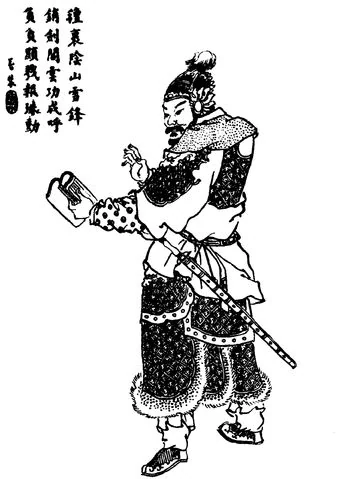
197 CE–264 CE
General
Deng Ai
邓艾
Deng Ai (197–264), courtesy name Shizai, originally named Deng Fan with the courtesy name Shize, was a native of Jiyang County, Yiyang Commandery, in present-day Xinye County, Henan. He was a leading general and military strategist in the later Cao Wei period. Recommended for office because of his learning, he remained in low-ranking service for many years because of a speech impediment before attracting the attention of Sima…
197 CE–264 CECao Wei
PROFILE
Deng Ai (197–264), courtesy name Shizai, originally named Deng Fan with the courtesy name Shize, was a native of Jiyang County, Yiyang Commandery, in present-day Xinye County, Henan. He was a leading general and military strategist in the later Cao Wei period. Recommended for office because of his learning, he remained in low-ranking service for many years because of a speech impediment before attracting the attention of Sima Yi. He later directed military-colony development in the Huai River region and wrote the Jihelun, helping Cao Wei accumulate large military reserves. He subsequently spent many years defending the Longyou frontier against Jiang Wei of Shu Han and repeatedly defeated northern expeditions. In 263, the fourth year of Jingyuan, Deng led a force across the little-used Yinping route, struck Chengdu by surprise, and forced Liu Shan, the Later Lord of Shu Han, to surrender. For his decisive role in the conquest of Shu he rose to Defender-in-chief. After the victory, Zhong Hui accused him of rebellion. Deng was arrested and sent toward the capital, but Wei Guan ordered Tian Xu to kill him west of Mianzhu; his son Deng Zhong was killed with him. In 273, the ninth year of Taishi, Emperor Wu of Jin, Sima Yan, rehabilitated him.
- Also known as
- Deng Shizai
- Courtesy name
- Shizai
- Period
- Wei
- Date of Birth
- 197
- Date of Death
- 264
- Dynasty / polity
- Cao Wei
- Identity
- General
- Ethnicity / group
- Not recorded in historical sources
- Native place
- Jiyang County, Yiyang Commandery (present-day Xinye County, Henan)
- Place of birth
- Not recorded in historical sources
- Major achievements
- Prominent Cao Wei general; strengthened frontier defense through military agriculture; crossed the Yinping route and conquered Shu; later falsely accused and killed
LIFE TIMELINE
Age 11 | After Cao Cao conquered Jing Province, Deng Ai, his mother, and other members of his lineage were forcibly moved to Runan as military-colony households
Age 12 | Moved with his mother to Yingchuan; after reading an inscription for Chen Shi, renamed himself Deng Fan with the courtesy name Shize
Age 23 | Served as a student under the Agricultural Commandant; because of his speech impediment he was not promoted and instead became a minor official guarding rice fields and hay
Around age 30 | Served as Agricultural Merit Officer and was sent to Luoyang to report; attracted Sima Yi's attention and was recruited to the staff of the Defender-in-chief
Age 43 | Ordered to inspect military agriculture from Chen and Xiang eastward to Shouchun; wrote the Jihelun
Age 44 | Cao Wei adopted his recommendations, expanded transport canals, and established large-scale military colonies in the Huai River region
Age 46 | Appointed to the staff of the General Who Conquers the West and later Administrator of Nan'an
Age 52 | Took part in the Qucheng campaign, anticipated Jiang Wei's plan to seize Taocheng, was enfeoffed as Marquis Within the Passes, and appointed General Who Attacks Bandits
Age 56 | Predicted Zhuge Ke's downfall, which soon occurred; appointed Inspector of Yan Province and General Who Inspires Might
Age 58 | Appointed General Who Pacifies the West and joined Chen Tai in relieving Didao
Age 59 | Defeated Jiang Wei decisively at Duangu; promoted to General Who Guards the West and Commander of Military Affairs in Longyou, and enfeoffed as Marquis of Deng
Age 60 | Joined Sima Wang in holding Changcheng and forced Jiang Wei to withdraw without a major battle; promoted to General Who Conquers the West
Age 65 | Again defeated Jiang Wei at Houhe
Age 66 | Crossed the Yinping route, conquered Shu, and was appointed Defender-in-chief
Age 67 | Falsely accused by Zhong Hui and killed west of Mianzhu by Tian Xu on Wei Guan's orders
Nine years after death | Emperor Wu of Jin, Sima Yan, issued an edict rehabilitating him and appointed his grandson Deng Lang a Gentleman of the Interior
BIOGRAPHY
Biography
Family Background and Early Life
The Deng lineage had once been prominent in the Nanyang-Xinye region, but by Deng Ai's time the family had declined and the details of its earlier status are unclear. His father died when Deng was young, leaving him and his mother in difficult circumstances. In 208, the thirteenth year of Jian'an, Cao Cao conquered Jing Province and forcibly moved large numbers of local people north. Deng, his mother, and other members of his lineage were relocated to Runan, in present-day Shangcai, Henan, as military-colony households. As a boy he initially tended cattle for the colony population, but he was ambitious from an early age and determined to improve his position through his own effort.
At age twelve Deng moved with his mother to Yingchuan. Reading the inscription on the tombstone of the late Magistrate of Taiqiu, Chen Shi, he was inspired by a phrase praising literary conduct as a model and moral behavior as a standard. He therefore renamed himself Deng Fan and adopted the courtesy name Shize. When a member of his lineage was later found to have the same name, he changed his personal name to Deng Ai.
Few military-colony households had much formal education, and Deng's learning led to his recommendation as a student under the Agricultural Commandant, opening a path into minor office. Because he stuttered, however, the commandant judged him unsuitable for higher responsibilities and assigned him to guard rice fields and hay. An elderly man from his commandery often helped Deng because of his poverty, although Deng initially did not express gratitude.
Deng was fascinated by military affairs. Whenever he encountered mountains and rivers, he examined the terrain and pointed out suitable places for camps. Contemporaries often laughed at him, but he paid little attention. For a poor man from a military-colony household, advancement was extremely difficult, and Deng spent nearly two decades in obscurity.
Sima Yi and the Huai River Military Colonies
Deng later became an Agricultural Merit Officer and helped administer military agriculture. On one occasion he went to Luoyang to submit a report and met Defender-in-chief Sima Yi. Sima recognized his ability, recruited him to his staff, and later promoted him to Gentleman of the Masters of Writing. This became the decisive turning point in Deng's career.
In 240, the first year of Zhengshi, Wei planned to expand military agriculture in the southeast to accumulate grain for operations against Wu and sent Deng to conduct an inspection. He traveled from Chen County and Xiang County eastward to Shouchun and made two principal recommendations: first, excavate canals and improve irrigation so that farmland could be watered and transport routes opened; second, establish large military colonies north and south of the Huai. In his Jihelun, he argued that the fertile lands between Chen and Cai could support large garrisons. He proposed twenty thousand colony troops north of the Huai and thirty thousand south of it, with one fifth rotating off duty, leaving forty thousand men simultaneously farming and guarding. In favorable years, he estimated, the harvest could be more than three times that of western regions. After expenses, five million hu of grain could be stored annually, producing thirty million hu in six or seven years—enough, by his calculation, to sustain one hundred thousand troops and civilians for five years.
Sima Yi approved the plan. Beginning in 241, Wei opened canals and expanded military colonies on both sides of the Huai. Over a region of more than four hundred li south of Zhongli, west of Hengshi, and toward the headwaters of the Bi River, one military-colony camp was reportedly established every five li, each with sixty men who both farmed and guarded. The Huaiyang and Baichi canals were also enlarged, drawing water eastward from the Yellow River into the Huai and Ying river systems. Within several years military colonies stretched from the capital toward Shouchun. When war broke out in the southeast, large armies could travel by boat directly into the Jiang-Huai region. These developments were credited to Deng Ai's planning.
Defense of Longyou against Shu
In 243 Deng joined the staff of the General Who Conquers the West and later became Administrator of Nan'an. In the autumn of 249, Jiang Wei, General of the Guards of Shu Han, led troops against Yong Province, built two fortified positions near Qushan, and placed Ju An and Li Xin in command while coordinating attacks with Qiang and other frontier groups. General Who Conquers the West Guo Huai and Inspector of Yong Province Chen Tai led Wei forces in response. Following Chen's plan to besiege the forts and cut off relief, Deng and others surrounded Qucheng and severed communications and water supplies. Jiang Wei marched to relieve the garrisons but was blocked by Chen Tai and withdrew. Isolated, Ju An and Li Xin surrendered.
Guo Huai then campaigned west against the Qiang. Deng proposed splitting the army to guard against a Shu counterattack and remained north of Baishui, the present-day Bailong River in Gansu. Three days later Jiang Wei sent Liao Hua to camp on the south bank without attacking. Deng inferred that the move was a diversion and that Jiang intended to strike Taocheng to the east. That night he marched to seize Taocheng, southwest of present-day Lintan, Gansu. Jiang soon arrived with a large force, found Wei already in possession, and withdrew. Deng was rewarded with the title Marquis Within the Passes and appointed General Who Attacks Bandits.
In 253, after Zhuge Ke of Wu failed to take the new city at Hefei and withdrew, Deng predicted to Sima Shi that Zhuge's downfall was imminent. Zhuge Ke was indeed executed after returning to Wu.
In 255, taking advantage of Sima Shi's mortal illness, Jiang Wei led tens of thousands of troops into Wei territory and besieged Didao, present-day Lintao in Gansu. Sima Zhao appointed Deng General Who Pacifies the West, granted him acting imperial authority, and made him Colonel for the Protection of the Eastern Qiang. Together with Chen Tai he relieved Didao. Their forces divided into three columns, bypassed the main Shu army, crossed the high terrain, and reached mountains southeast of Didao, where fires and drums signaled the defenders inside the city. Jiang Wei attacked uphill but was repulsed and withdrew toward Zhongti.
In 256 Jiang Wei arranged to meet the Shu general Hu Ji at Shanggui and led troops from Qishan. Deng was prepared, so Jiang shifted toward Nan'an. Deng seized Mount Wucheng and held the commanding ground. Jiang crossed the Wei River at night and moved east, and the two armies fought at Duangu, southwest of present-day Tianshui, Gansu. Hu Ji failed to arrive on time, and the Shu army suffered a major defeat with heavy casualties. Deng was promoted to General Who Guards the West, made Commander of Military Affairs in Longyou, and enfeoffed as Marquis of Deng; five hundred households were detached from his fief for his son Deng Zhong, who became a village marquis.
In 257 Zhuge Dan rebelled in Huainan with support from Eastern Wu. Jiang Wei used the opportunity to attack the Qin River region. Wei had substantial grain stores at Changcheng, south of present-day Zhouzhi, Shaanxi, but relatively few defenders. Deng joined Sima Wang in holding the position. Shu troops repeatedly challenged them, but the Wei army refused battle. When Zhuge Dan was defeated the following year, Jiang had to withdraw. Deng was promoted to General Who Conquers the West, and his cumulative fief eventually reached 6,600 households.
In 262 Jiang Wei again invaded Wei. Deng deployed at Houhe, northeast of present-day Zhuoni, and waited with rested troops. The Shu army suffered another major defeat with heavy losses.
Crossing Yinping and the Conquest of Shu
In the autumn of 263, General-in-Chief Sima Zhao planned a large-scale conquest of Shu. Deng Ai was ordered to lead more than thirty thousand men to pin Jiang Wei at Tazhong. Inspector of Yong Province Zhuge Xu led another thirty thousand to cut Jiang's route of retreat, while Zhong Hui commanded more than one hundred thousand troops against Hanzhong. Minister of Justice Wei Guan supervised the campaign. Zhong Hui broke through Hanzhong, while Jiang Wei withdrew to Jiange and held Zhong in a stalemate.
In the tenth lunar month Deng selected elite troops and secretly advanced through the uninhabited Yinping route. The mountains were high, the valleys deep, and food supplies nearly exhausted. At a critical point Deng wrapped himself in felt and rolled down a steep slope, while his soldiers climbed along cliffs and trees in single file. The force unexpectedly emerged at Jiangyou, whose Shu commander Ma Miao surrendered. Deng rapidly captured Fu County, in present-day Mianyang, and then Mianzhu, where Zhuge Zhan, General of the Guards of Shu Han and son of Zhuge Liang, was killed. Soon afterward Liu Shan surrendered and Shu Han fell. Deng built a mound of enemy corpses at Mianzhu to commemorate the victory.
Accusation and Death
After the conquest, Deng Ai, without first seeking approval, acted under presumed imperial authority to appoint Liu Shan General of Agile Cavalry and restored surrendered Shu officials to their former ranks. Though intended to stabilize the population, Deng then spoke arrogantly to Shu officials, telling them that they survived only because they had encountered him and that had they faced a commander such as Wu Han they would have been annihilated. He also boasted that Jiang Wei was indeed a hero of his age but had proved insignificant against an opponent such as himself.
Zhong Hui had long been on poor terms with Deng and believed Deng's success at Chengdu had been possible only because Zhong himself had tied down the main Shu army. He therefore accused Deng of plotting rebellion. Deng had handled the surrendered Shu ruler and officials without prior authorization from Sima Zhao and continued to make boastful statements, deepening Sima Zhao's suspicions. Sima Zhao ordered Zhong Hui to arrest Deng and his son and send them back to Chang'an.
Zhong Hui subsequently rebelled and was killed. Deng's subordinates attempted to intercept the prisoner convoy and restore him. Wei Guan, who had participated in Deng's arrest and feared retaliation, sent Tian Xu to reach the convoy first. West of Mianzhu, Tian killed Deng Ai and Deng Zhong. Deng's sons remaining in Luoyang were also killed. Only his young grandson Deng Lang and the women of the family were spared and exiled to the Western Regions.
Before the Shu campaign, Sima Zhao had sent Tang Bin to Longyou to investigate local opinion. Tang reported that Deng treated people harshly, disliked dissent, often insulted subordinates, and imposed extensive corvée obligations, making him unpopular in the region. Tang suggested that Sima Zhao therefore need not fear a serious frontier uprising in Deng's support.
In 273, the ninth year of Taishi, Emperor Wu of Jin, Sima Yan, remembered Deng's achievements and issued an edict noting that Deng had rendered distinguished service, submitted to arrest without fleeing, and yet his descendants had been reduced to common servile status. The emperor pardoned Deng's grandson Deng Lang and appointed him a Gentleman of the Interior.
Deng Ai, styled Shizai, was a native of Jiyang in Yiyang. Of a local great clan whose pedigree can no longer be traced, he lost his father in childhood and grew up in an age of frequent war, of land concentrated in few hands and of violent encroachment by the powerful. When Cao Cao took Jingzhou his family was moved to Runan, where he herded calves for farmers. At twelve, going with his mother to Yingchuan, he read the stele of Chen Shi, the former chief of Taiqiu, with its words that writing should be a model for the age and conduct a standard for scholars, and thereupon named himself Deng Fan with the style Shize, changing it later because another of his clan bore the same. He might have become a scholar of the agricultural commandant's office and risen to junior posts, but because he stammered the commandant judged him unfit for important office and set him to guard haystacks; a neighbour, pitying his poverty, often helped him, and at first he did not even thank him. The Shiyu relates that as a boy he was a labourer on the Xiangcheng agricultural colony, and that at twelve or thirteen he and Shi Bao were hired as drivers by the messenger Guo Xuanxin, who after talking with them for ten li declared that both would rise to be ministers. As an agricultural officer he was sent to report to Sima Yi and so came to his notice and was promoted. The court then wished to open fields and store grain for the destruction of the enemy, and sent Deng Ai to survey the country from Chen and Xiang east to Shouchun. He held that the land was good but short of water, and that canals should be dug to irrigate it, to gather military grain in quantity and to open a water route for transport, and he wrote the Jihe lun to expound his view. He argued further that when the Yellow Turbans were crushed, fields were opened and grain stored at Xu to control the four quarters, but that with three sides now settled the business lay in Huainan, where every great campaign used up half its troops in transport at enormous cost; that between Chen and Cai the soil was low and the fields good, so that the rice fields about Xuchang might be reduced and water led east, twenty thousand men being stationed north of the Huai and thirty thousand south, with one in five resting at a time so that forty thousand were always at hand, farming and guarding by turns; that in a good year the yield was thrice that of the west, so that after all expenses five million bushels a year would be available for the army, and thirty million could be stored on the Huai in six or seven years, enough for a hundred thousand men for five years, with which to attack Wu and never fail. Sima Yi was pleased and the measures were all carried out. From 241 the great transport canal was opened: north of the Huai, from Zhongli south and Hengshi west to the source of the Bi, one camp of sixty men was set every five li over four hundred li, farming and guarding; the Huaiyang and Baichi canals were widened and more than three hundred li of channels dug, irrigating twenty thousand qing, and within a few years camps stood in sight of one another from the capital to Shouchun. Thereafter, whenever there was trouble in the south-east, the army could sail down to the Huai and the Yangzi with stores in hand and no damage from floods, all of it Deng Ai's doing. When the Right Virtuous King of Bingzhou, Liu Bao, united his people into one body, Deng Ai memorialised that the Rong and Di had the hearts of beasts and would not cleave to righteousness, that when strong they plundered and when weak they submitted, whence King Xuan of Zhou had his Xianyun raid and Gaozu of Han his siege at Pingcheng; that the barbarian should be deeply guarded against; that as Liu Bao's people contained rebel Hu, they might be divided into two states to split his power; and that Duobei, whose merit had been conspicuous in the former dynasty, should have his son given a title and settled at Yanmen, so removing him from his country and weakening the enemy while recording old service - the long plan for the frontier. He further proposed that the Qiang and Hu living among the people be gradually moved out, so that the population might be taught shame and honesty beyond their reach. The regent Sima Shi, newly in office, adopted much of it. Made prefect of Runan, Deng Ai sought out the father of the officer who had once helped him, and finding him long dead, sent officers to sacrifice to him, gave generously to his mother and advanced his son to be an accounting officer. Wherever he was, it was said, wasteland was opened and soldiers and people alike prospered. When Zhuge Ke besieged Hefei's new city in vain and withdrew, Deng Ai told Sima Shi that with Sun Quan dead and the ministers unattached, the great clans of Wu all had private troops and could set up on their own; that Zhuge Ke, newly holding the government with no master within, thought not of comforting high and low to lay a foundation but strove abroad and abused his people, so that with the whole strength of the state he sat before a strong city, lost tens of thousands and brought calamity home - the day of his guilt; that Wu Zixu, Wu Qi, Shang Yang and Yue Yi had each been trusted by their rulers and ruined when the ruler died, and that Zhuge Ke, whose talent fell short of those four and who gave no thought to great calamity, was doomed. Zhuge Ke, returning, was indeed put to death. Made inspector of Yanzhou and general of the awe-inspiring, Deng Ai memorialised that the state's urgent business was only husbandry and war, that wealth made the army strong and strength won battles, and that husbandry was the root of victory, so that rewards should be established for storing grain, whereby the traffic of flattery and the source of ostentation would be cut off. When Guanqiu Jian rebelled and sent letters to stir the people, Deng Ai killed the messengers, marched by forced stages to the Lejia fortress and threw a pontoon bridge, which Sima Shi took over on arrival; pursuing Wen Qin to Qiutou, he drove him to Wu. When the Wu general Sun Jun with a hundred thousand men prepared to cross the river, Zhuge Dan sent him to hold Feiyang, but judging it too remote from the enemy and not a vital point he moved to Futing and sent Zhuge Xu to fight at Lijiang, driving the Wu army off. He was made colonel of the long water and, for these services, Marquis of Fangcheng township and acting general of the west. In the early Jiaping years he replaced Guo Huai as inspector of Yongzhou. When Jiang Wei built two cities by Mount Qu and left Ju An and Li Xin to hold them, Guo Huai and Chen Tai took counsel, and Chen Tai's plan being to besiege them, since the cities lay far from Shu and must be supplied by transport while the Qiang and Yi would not adhere to Jiang Wei, Deng Ai was sent with Xu Zhi to cut the supply road and the water. When Jiang Wei came up by Mount Niutou, Chen Tai would not fight but had Guo Huai move to cut his retreat, so that Jiang Wei fled and Ju An surrendered. In 249, when Jiang Wei withdrew and Guo Huai went west against the Qiang, Deng Ai, saying the enemy had not gone far, was left north of the White Water; three days later, when Jiang Wei sent Liao Hua to face him south of the river, Deng Ai reasoned that Jiang Wei had returned suddenly and, his own force being small, must mean to pin him with Liao Hua and strike east at the city of Tao, sixty li away; he marched by night and reached the city first, so that when Jiang Wei came to cross he could not prevail. He was made Marquis of Guannei and general against the bandits, and later prefect of Chengyang. When Wang Jing was beaten west of the Tao and Jiang Wei besieged Didao, Deng Ai and the others held that the picked troops were broken, that the enemy's victorious army could not be withstood, that a rabble following a beaten force had lost its spirit and that Longyou was unsettled; that as a man bitten by a viper cuts off his own hand, and as the art of war says an army need not always attack nor ground always be held, it was better to lose a little and preserve the whole, to divide the passes, watch for a flaw and wait for the enemy to tire. Chen Tai would not agree, saying that to make great shields and siege carts took three months and to raise an earthen hill three months more, and that this was not a thing an isolated force could do at a stroke, whereas Jiang Wei's army, deep in hostile country with no supply, might be crushed at once; and the three Wei armies joined to raise the siege, Jiang Wei's uphill attacks failing, and on the twenty-fifth day of the ninth month he withdrew to Zhongdi. Deng Ai was then made general of the west with the staff and protector of the eastern Qiang. Most held Jiang Wei exhausted and unable to come again; Deng Ai disagreed. The defeat west of the Tao, he said, was no small matter - armies broken, generals killed, granaries empty, people wandering, the state nearly lost; and he counted five advantages for the enemy: their victorious momentum against the reality of weakness; their practised ranks and sharp weapons against new officers and worn equipment; their boats against foot-soldiers; their concentration on one point against four separate garrisons; and the grain of the Qiang and the thousand qing of ripe wheat as bait if they moved on Mount Qi. The enemy, he concluded, was cunning and would certainly come. Soon Jiang Wei moved on Mount Qi, and hearing Deng Ai prepared, turned by Dongting to Nanan; Deng Ai held Mount Wucheng, and Jiang Wei, unable to force the passes, crossed the Wei by night and went along the hills to Shanggui, where Deng Ai fought him at Duangu and broke him utterly. In 256 Deng Ai was made general of the west, commander of the Longyou forces and Marquis of Deng, with five hundred households to his son Deng Zhong as a marquis of a pavilion. In the tenth month of 262, when Jiang Wei marched again into Taoyang, Deng Ai judged that his army, far from home with long lines and difficult supply, could not last, and seizing the ground before Houhe broke him, so that he fell back on Tazhong. When Sima Zhao proposed the conquest of Shu, reckoning that after six years of rest the armies were ready, that a campaign against Wu would need ships and ten million man-days and would breed disease in the damp south, so that Shu should be taken first and Wu afterwards with the current of the Ba and Shu rivers, and that of Shu's ninety thousand soldiers not less than forty thousand must hold Chengdu and the commanderies, so that with Jiang Wei pinned in Tazhong a thrust through the Luo valley into the empty Hanzhong would end the state, Deng Ai alone demurred, finding no occasion for war and memorialising repeatedly against it, until Sima Zhao sent his secretary Shi Zuan to reason with him as his aide and he complied. In the eighth month of 263 the Wei armies moved in three columns: Deng Ai with more than thirty thousand from Didao to pin Jiang Wei at Tazhong, Zhuge Xu with more than thirty thousand against the Yinping bridgehead to cut his retreat, and Zhong Hui with a hundred thousand against Hanzhong. Deng Ai sent Wang Qi of Tianshui against Jiang Wei's camp, Qian Hong of Longxi to his front and Yang Xin of Jincheng to Gansong; and Jiang Wei, learning that Zhong Hui had entered Hanzhong, withdrew, Yang Xin pursuing him to the Qiangchuan pass and defeating him. Zhong Hui could not break him. Deng Ai then memorialised that the enemy being broken, he should follow up by way of Yinping and the by-road past Handeyang to Fu, a hundred li west of Jiange and three hundred from Chengdu, striking at the heart; that if the defenders of Jiange came back to Fu, Zhong Hui could advance at ease, and if they did not, Fu would be weakly held; for the military writings say to attack where there is no preparation and appear where he is not expected, and the empty place being surprised, the enemy must fall. In the tenth month Deng Ai crossed seven hundred li of uninhabited country by the Yinping road, cutting mountains and building galleries. The peaks were high and the valleys deep, the way extremely perilous, and with supplies failing he was often near destruction; he wrapped himself in felt and rolled down, and his officers and men clambered by trees and cliffs in single file. Reaching Jiangyou first, he received the surrender of Ma Miao; Zhuge Zhan fell back from Fu to Mianzhu and drew up to receive him. Deng Ai sent his son Deng Zhong on the right and Shi Zuan on the left; both failing and falling back, and saying the enemy could not be attacked, Deng Ai in anger cried that the issue of survival hung on this single stroke, bade them return to the fight and threatened to execute them; they returned and broke the Shu army, killing Zhuge Zhan and the president Zhang Zun, and went on to Luo. The Huayang guozhi adds that Zhuge Zhan, sent against Deng Ai, halted at Fu, where the president Huang Chong urged him tearfully to seize the defiles and not let the enemy into the plain; that refusing, Zhuge Zhan killed Deng Ai's envoy and was defeated and killed, with Huang Chong and others dying, and his son Zhuge Shang charging to his death on horseback. Liu Shan sent the imperial seal and a letter of surrender, and Deng Ai received at Chengdu the sovereign, the heir and sixty officials with bound hands and a coffin; he released them, burned the coffin and pardoned them, restrained his troops from plunder and restored the surrendered to their occupations, so that the people of Shu praised him. He then acted as Deng Yu had done, making Liu Shan acting general of the swift horse, the heir a carriage attendant and the princes commandants, and giving the officials of Shu office according to rank, with Shi Zuan as inspector of Yizhou and Qian Hong and others over the commanderies. He raised a mound at Mianzhu as a memorial of his victory, burying his dead with the soldiers of Shu, and he grew greatly boastful, telling the gentry of Shu that they owed their lives to him and that if they had met the likes of Wu Han they would have been destroyed, and that Jiang Wei was a hero of his day who had come to an end because he met him; and men of sense laughed at him in private. Hearing of Huang Hao's villainy he had him arrested and would have killed him, but Huang Hao bribed his attendants and escaped. After the conquest he advised Sima Zhao that in war reputation must precede the blow, and that the fall of Shu was the moment to take Wu, though after such a campaign the troops must first rest; that twenty thousand men should be kept in Longyou and twenty thousand in Ba-Shu to boil salt, work iron and build ships for the descent of the river; and that a proclamation of what awaited Wu would bring it over without a blow. He urged that Liu Shan be treated generously to bring over Sun Xiu, and not sent to the capital, where Wu would think him exiled and be embittered; that he should be kept at hand into the autumn of the next year, made Prince of Fufeng with substance and attendants, the Dong Zhuo fort for his palace, his sons enfeoffed in a county of the commandery, and Guangling and Chengyang set up as principalities for the ruler of Wu. Sima Zhao sent Wei Guan to tell him that matters should be reported and not done on his own authority, and Deng Ai replied that, holding a commission to conquer, with the chief rebel subdued, the appointing of officers to steady newly attached territory was a matter of expedience; that waiting for the court's order would waste months on the road; that the Spring and Autumn allows a great officer beyond the border to act on his own when the altars of state may be secured; that Wu was not yet submitted and bordered on Shu, so that no ordinary rule should make him lose the moment; and that the art of war bids a man advance without seeking fame and retreat without avoiding blame, and that he would not harm the state to spare himself. Zhong Hui and Hu Lie and Shi Zuan all reported his words as rebellious and the beginning of trouble, and an edict sent for him in a cage-cart. Zhong Hui, who meant treason, first sent Wei Guan to arrest him, hoping that Deng Ai would kill Wei Guan and so give ground for his own accusation; Wei Guan, seeing the danger yet unable to refuse, went by night to Chengdu and proclaimed that only Deng Ai was wanted and that none else should be questioned, that those who came in would keep their rank and rewards and those who did not would be destroyed with their families; by cockcrow all had come except those in Deng Ai's own tent. At dawn Wei Guan entered the hall in the envoy's carriage; Deng Ai, still in bed, was taken with his son, and sighed that he was a loyal subject come to this, the fate of Bai Qi repeating itself. His officers would have rescued him and marched on Wei Guan's camp, but Wei Guan came out lightly to meet them, pretending to have drafted a memorial to clear him, and they were deceived and desisted. Zhong Hui reached Chengdu and sent Deng Ai off before rebelling; when Zhong Hui died, the officers of Deng Ai's own camp broke open the cage-cart and brought him back. Wei Guan, having joined in the accusation and now wishing the sole credit for destroying Zhong Hui, sent Tian Xu to Mianzhu, where he attacked Deng Ai at night at Sanzaoting and killed him and his son Deng Zhong. Deng Ai had once, at Jiangyou, nearly executed Tian Xu for hanging back and then pardoned him; and Wei Guan, sending him, told him that he might now avenge the shame of Jiangyou. His other sons at Luoyang were executed, his wife and grandchildren banished to the western regions; Shi Zuan died with him, so harsh and ungenerous that on the day of his death no skin was left whole on his body. In 265, on the accession of the Jin, an edict was issued recalling that Wang Ling had plotted and been punished, but that Deng Ai, though he had boasted of his merit and lost his integrity, had disbanded his men and submitted his hands to punishment when the order came, unlike those who sought to live on in wickedness; and he was pardoned, with permission for those without heirs to appoint them so that the sacrifices should not fail. In 267 the gentleman of the court Duan Zhuo memorialised on his behalf, recalling that Deng Ai had borne the name of a rebel with the heart of a loyal subject and was destroyed though he had pacified Ba-Shu; that when Jiang Wei meant to cut off Longyou he had strengthened the defences and stored grain, and in a year of drought practised pit cultivation himself in a black coat with the plough in his hand to lead his officers, so that high and low were moved and none spared himself; that at Luomen and Duangu he had broken the enemy with fewer men; and that at seventy he could have wanted nothing, so that Zhong Hui's envy of his fame had framed the charge, and loyal and faithful he had been killed and doubted, his head hung in the market and his sons cut down; and he asked that his body be recovered and buried, his fields and house restored and his grandson enfeoffed, so that with a posthumous name in the coffin he might rest without regret. Later, when the Emperor Wu discussed the government of Zhuge Liang with Fan Jian, Fan Jian bowed and said that all men held Deng Ai to have been wronged and the emperor to know it without righting it, which was the very case of Feng Tang's complaint that Lian Po and Li Mu might be had but were not used; and the emperor laughed, saying that he had meant to make it clear and that Fan Jian had wakened the thought, and issued an edict on the matter. In 273 he made Deng Lang, Deng Ai's grandson by the eldest son, a court gentleman, and so the case was cleared. In the Xianning years, when Fan Zhen, an archer general made a gate officer of the western Rong, took leave, the emperor asked how he had come to office, and he told how he had been an officer in Deng Ai's tent in the conquest of Shu; asked about Deng Ai, he spoke of his loyalty and wept.
Major Activities
Military Agriculture in the Huai Region
In 240 Deng inspected military-colony development from Chen and Xiang east to Shouchun and wrote the Jihelun, proposing canal construction, irrigation, and large-scale military farming. After Sima Yi adopted the recommendations, Wei expanded canals and colonies on both sides of the Huai beginning in 241. Camps were established at regular intervals, with troops combining farming and garrison duty. Within several years the southeastern defense system had been substantially strengthened, and troops could move by water directly into the Jiang-Huai region during campaigns.
Defense of Longyou
Deng fought Jiang Wei for many years on the Longyou frontier, participating in major campaigns at Qucheng, Didao, Duangu, and Houhe. In 249 he anticipated Jiang's plan to seize Taocheng and occupied it first. In 256 he inflicted a major defeat on Shu at Duangu. In 262 he again defeated Jiang at Houhe.
Crossing Yinping
In 263 Deng led elite troops secretly through the sparsely used Yinping route. With supplies nearly exhausted and the mountain terrain extremely difficult, he wrapped himself in felt and rolled down steep slopes while the troops descended cliffs and trees in single file. The force emerged unexpectedly at Jiangyou, where Ma Miao surrendered. Deng then rapidly captured Fu and Mianzhu, defeated Zhuge Zhan, and forced Liu Shan to surrender, ending Shu Han.
Political Views
While Administrator of Nan'an, Deng submitted a memorial analyzing the danger posed by the growing Xiongnu power under Liu Bao in Bing Province. He recommended dividing Liu Bao's following into two political units to weaken it and proposed separating Qiang and other frontier groups from Han settlers in order to reduce crime and rebellion. General-in-Chief Sima Shi adopted several of these proposals.
Judgment of People and Events
In 253, after Zhuge Ke failed to take the new city at Hefei and withdrew, Deng told Sima Shi that Zhuge's downfall could be expected. Zhuge was soon killed after returning to Wu.
Rising from poverty by his learning, Deng Ai is chiefly remembered for his work in garrison farming and water conservancy and for his military judgement. Sent to oversee the colonies at Linying, Chenzhou, Xiangcheng and Shouchun, he surveyed the fields and urged the digging of canals, irrigation, the gathering of military grain and the opening of a water route, writing the Jihe lun to set out his argument; the Wei court adopted it and in 241 opened the great transport canal, so that armies and supplies could come down by water to the Huai and the Yangzi while the fields north of the Huai were irrigated, and the water works and military colonies of the Huai basin developed rapidly, greatly strengthening the south-eastern defences. He rose to be prefect of Chengyang and of Runan, and wherever he served, wasteland was opened and soldiers and people prospered. In war he took part in the suppression of the two Huainan rebellions and repeatedly checked Jiang Wei's northern campaigns at Duangu, Changcheng and Houhe. In 263 he marched with Zhong Hui against Shu, crossing seven hundred li of uninhabited country by the Yinping road, cutting passes and building galleries, wrapping himself in felt to roll down a precipice while his officers clambered by tree and cliff in single file; first reaching Jiangyou and receiving Ma Miao's surrender, he broke Zhuge Zhan at Mianzhu and entered Chengdu first, ending the house of Shu. The court's edict of praise declared that he had displayed his might deep in the enemy's country, taken standards and beheaded rebels, brought a usurping sovereign to bow his neck and in one morning subdued a state unpunished for generations, in a campaign that did not outrun its time and a battle that did not last the day, so that he was made grand commandant with twenty thousand households and his two sons marquises of pavilions with a thousand households each. His conduct of himself was also noted. He shared hardship with his men and led them in person, plough in hand in the fields and wrapped in felt on the Yinping road, so that all were moved and none spared himself. He was fond of planning; it is said that at the sight of high hills and broad marshes he would point out where men might camp, where grain be stored, where troops advance and where an ambush lie. Before the conquest of Shu he dreamed that he sat on a mountain with water flowing, and asked the protector Yuan Shao, who by the hexagram of water over a mountain, the jian, whose text says that it profits to go south-west and not north-east, and by Confucius's comment that to go south-west is to succeed and north-east to be stranded, judged that he would surely conquer Shu and probably not return; and Deng Ai was downcast. Later ages remembered his loyalty. He was enrolled among the generals honoured in the military temple, and in 1123 the Song, following Tang practice, established a temple to seventy-two famous generals which included Deng Ai. His tomb stands near Houa village in Luobin town of Pucheng county, a truncated pyramid facing south, once a mound six metres high with sides of fifteen and thirteen metres and a shrine before it, now gone; two steles remain, one of 367 in the Wei script, moved to the Beilin museum at Xi'an in 1970, and one of 1199 still standing, both recording repairs to the shrine of the grand commandant of Wei. The mound is now about three and a half metres high and ten metres around, with fragments of tile in the rammed earth, and was listed in 1983 as a county-level protected site. Behind the Beimiao field ten kilometres north of the old Jiange county town stands the temple of the Prince of Zhangshun, a title conferred on Deng Ai in the first year of Tianhan of the Former Shu of Wang Jian; behind it a hill shaped like a chicken's heart, thick with forest and standing alone, is called Guyu mountain, on the slope of which a stele is cut with the words "tomb of Deng Ai, general of the western expedition of Wei," the annals of Jianzhou recording that the temple of the Prince of Zhangshun and the tomb and shrine of Deng Ai are both on Guyu mountain twenty li from the county town.
Personal Relations
- Father: Died when Deng Ai was young; name unknown
- Deng Zhong: Son of Deng Ai; killed together with his father
- Deng Lang: Grandson of Deng Ai; pardoned by Emperor Wu of Jin in 273 and appointed Gentleman of the Interior
- Sima Yi: Deng's patron, who recognized his ability and recruited him to the staff of the Defender-in-chief
- Sima Shi: Successor to Sima Yi in control of the government; adopted several of Deng's proposals
- Sima Zhao: Planner of the conquest of Shu; later came to suspect Deng after Zhong Hui's accusations
- Cao Mao: Wei emperor who issued an edict praising Deng's planning, loyalty, and courage
- Cao Huan: Wei emperor who lavishly praised Deng's achievements after the conquest of Shu
- Sima Yan: Emperor Wu of Jin, who rehabilitated Deng in 273
- Zhong Hui: Commander in the conquest of Shu; on poor terms with Deng and accused him of rebellion
- Wei Guan: Campaign supervisor who participated in Deng's arrest and later ordered Tian Xu to kill him
- Guo Huai: General Who Conquers the West and Deng's superior on the Longyou frontier
- Chen Tai: Inspector of Yong Province who cooperated with Deng in relieving Didao
- Sima Wang: Joined Deng in holding Changcheng and forcing Jiang Wei to withdraw
- Tian Xu: Killed Deng and his son on Wei Guan's orders
- Jiang Wei: General-in-Chief of Shu Han and Deng's principal opponent in Longyou, with whom he fought repeatedly
- Zhuge Zhan: Son of Zhuge Liang, killed at the Battle of Mianzhu
Historical Assessment
Wei and Contemporary Assessments
Cao Mao praised Deng Ai for effective planning, loyalty, courage, and repeated victories over Jiang Wei, saying that Wei's prestige had been carried into Ba and Shu and its military reputation spread along the Yangtze and Min rivers (Records of the Three Kingdoms, "Biographies of Wang Ling, Guanqiu Jian, Zhuge Dan, Deng Ai, and Zhong Hui").
Cao Huan praised Deng's conquest of Shu in exceptionally high terms, arguing that his swift campaign surpassed even famous victories by Bai Qi, Han Xin, Wu Han, and Zhou Yafu (Records of the Three Kingdoms, same biography).
Sima Yan acknowledged that Deng's pride had led him to lose proper restraint and that he had been liable to severe punishment, but also emphasized that when the order of arrest arrived, Deng dismissed his troops and submitted rather than fleeing. He later expressed pity that a man of such merit had seen his descendants reduced to common servile status.
Jin and Tang Periods
Chen Shou wrote in the Records of the Three Kingdoms that Deng Ai was forceful and energetic and established significant achievements, but was poor at guarding against danger. Chen noted the irony that Deng could foresee Zhuge Ke's fate but could not perceive the danger close to himself.
The Tang ritual commissioner Yan Zhenqing once proposed posthumous temple honors for sixty-four famous generals of antiquity. "Wei Defender-in-chief Deng Ai" was among them, alongside contemporaries such as Zhang Liao, Guan Yu, Zhang Fei, Zhou Yu, Lü Meng, Lu Xun, Lu Kang, and Yang Hu.
Li Han's Tang primer Mengqiu included the phrase "Deng Ai's great ambition," presenting him as an example of aspiration.
Song and Earlier Shu Periods
In the fifth year of Xuanhe under the Song, the imperial court established temples for famous generals following Tang precedent; Deng Ai was included among the seventy-two honored commanders.
In the first lunar month of 917, the first year of Tianhan under Former Shu, Deng Ai was posthumously created Prince Zhangshun.
Modern Assessments
Modern historians generally recognize Deng Ai's military talent and his contribution to military agriculture, regarding him as one of the outstanding generals of late Cao Wei. His crossing of the Yinping route is often treated as a classic surprise maneuver in Chinese military history. At the same time, historians note his character flaws—especially pride in his achievements and political naivety—as important causes of his tragic end.
FIGURES ASSOCIATED WITH THIS DYNASTY
Bibliography
- Chen Shou, Records of the Three Kingdoms, Book of Wei, "Biographies of Wang Ling, Guanqiu Jian, Zhuge Dan, Deng Ai, and Zhong Hui"
- Records of the Three Kingdoms, Book of Wei, "Biographies of Huan Jie, Chen Qun, Xu Xuan, Wei Zhen, and Lu Yu"
- Book of Jin, "Annals of Emperor Wen"
- Comprehensive Mirror in Aid of Governance, "Annals of Wei"