October 27, 921 CE(1st year of the Longde era, Later Liang, 9th month, 24th day) | Birth | Born in Chai Family Village, Yaoshan, Xing Prefecture
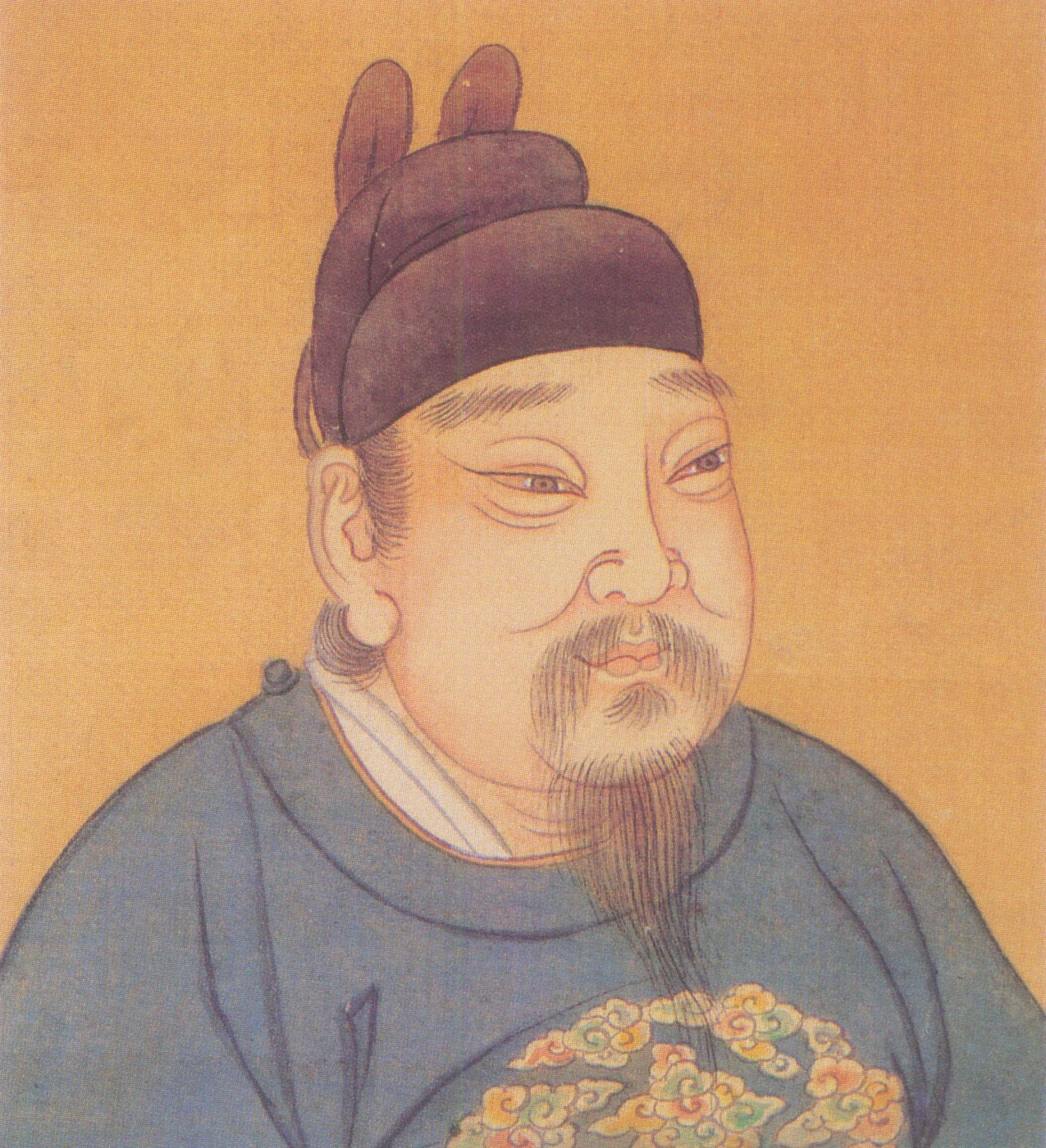
921 CE–959 CE
Emperor
Chai Rong
柴荣
Chai Rong (October 27, 921(1st year of Longde of Later Liang) – July 27, 959(6th year of Xiande)), originally surnamed Chai, was the second emperor of Later Zhou during the Five Dynasties period. He ascended the throne on February 26, 954(21st day of the first month, 1st year of the Xiande era) and died on July 27, 959(19th day of the sixth month, 6th year of Xiande). After his paternal aunt, a woman of the Chai family,…
921 CE–959 CELater Zhou
PROFILE
Chai Rong (October 27, 921(1st year of Longde of Later Liang) – July 27, 959(6th year of Xiande)), originally surnamed Chai, was the second emperor of Later Zhou during the Five Dynasties period. He ascended the throne on February 26, 954(21st day of the first month, 1st year of the Xiande era) and died on July 27, 959(19th day of the sixth month, 6th year of Xiande). After his paternal aunt, a woman of the Chai family, married Guo Wei, Chai Rong was adopted by Guo. Some records say that he was once known as Guo Rong, but sources differ over the details of any change of surname. After accession, Chai defeated the combined forces of Northern Han and Liao at the Battle of Gaoping, then reorganized the imperial guards and campaigned successively against Later Shu, Southern Tang, and the Liao dynasty. Later Zhou's western campaign recovered Qin, Cheng, Jie, and Feng prefectures; the southern campaigns forced Southern Tang to cede fourteen prefectures north of the Yangtze in Huainan and abandon the imperial title; and the northern campaign gained three passes, three prefectures, and seventeen counties in forty-two days. His reign also saw measures concerning land taxation, urban construction, water control, official selection, criminal law, and state cultural institutions. He fell ill during the northern campaign of 959(6th year of Xiande), withdrew, and died in Kaifeng later that year.
- Alternative name
- Emperor Shizong of Later Zhou
- Period
- Later Zhou
- Date of Birth
- October 27, 921 CE(1st year of the Longde era, Later Liang, 9th month, 24th day)
- Date of Death
- July 27, 959 CE(6th year of the Xiande era, 6th month, 19th day)
- Dynasty / regime
- Later Zhou
- Identity
- Emperor
- Ethnicity / ethnic affiliation
- Not reliably established in the available sources
- Native place
- Yaoshan County, Xing Prefecture (present-day Longyao, Hebei)
- Place of birth
- Unknown
- Reign
- February 26, 954 – July 27, 959
- Successor
- Emperor Gong of Later Zhou, Chai Zongxun (son)
- Era name
- Not reliably established in the historical sources
- Temple name
- Emperor Shizong of Later Zhou
- Posthumous name
- Not reliably recorded in the historical sources
- Major achievements
- Emperor Shizong of Later Zhou; adopted son of Guo Wei who succeeded to the throne, pursued energetic government and campaigns in the south and north, and laid foundations for the Northern Song unification.
- Place of death
- Wansui Hall, Kaifeng;February 26, 954(21st day of the first month, 1st year of the Xiande era) – July 27, 959(19th day of the sixth month, 6th year of the Xiande era)
- Posthumous title
- Emperor Ruiwu Xiaowen;Qing mausoleum
- Predecessor
- Guo Wei (Emperor Taizu of Later Zhou);Chai Zongxun (Emperor Gong of Later Zhou)
- Principal office
- Emperor of Later Zhou
LIFE TIMELINE
Early career | When Guo Wei became Deputy Commissioner of Military Affairs, Chai Rong was appointed General-in-Chief of the Left Guard of the Palace Gates
Office at Ye | Served as Headquarters Guard Commander of Tianxiong; when Emperor Yin of Later Han killed Guo Wei's relatives and Guo raised troops, Chai remained at Ye to hold the city
Regional office | After Later Zhou was founded, appointed Inspector of Chanzhou and Military Commissioner of Zhenning Army and enfeoffed as Marquis of Taiyuan Commandery
Regional office | Granted the honorary title Acting Grand Tutor and the office Tong Zhongshu Menxia Pingzhangshi; requested command against Murong Yanchao's rebellion but was not permitted to lead the expedition
Entry into court | Advanced to Prince of Jin and appointed Governor of Kaifeng concurrently serving as Commissioner of Merit and Virtue
Accession | Ascended the throne under Guo Wei's succession edict after Guo's death
Consolidation of rule | Personally campaigned at Gaoping and defeated the Northern Han–Liao coalition; subsequently besieged Taiyuan without success and withdrew; reorganized the imperial guards
Western campaign and institutional measures | Later Zhou recovered Qin, Cheng, Jie, and Feng prefectures; dredged the Hulu River, built fortifications, and began planning Kaifeng's outer city
Southern campaign | Personally campaigned against Southern Tang, taking Zhengyang and the prefectures of Chu, Yang, Tai, Guang, and Shu, while building warships and training for river warfare
Continued southern campaign | Defeated Southern Tang reinforcements at Zijin Mountain; Shouzhou surrendered; campaigned south again and gained Haozhou, Sizhou, and other areas
End of the Huainan campaign | Captured Chuzhou and other places; Southern Tang ceded fourteen prefectures north of the Yangtze in Huainan and abandoned the imperial title, its ruler thereafter styling himself Lord of Jiangnan
Northern campaign | Led a northern campaign against the Liao dynasty and recovered three passes, three prefectures, and seventeen counties in forty-two days; fell ill while preparing to advance on Youzhou and withdrew
Death | Died in Wansui Hall at Kaifeng; Chai Zongxun succeeded him, and Chai Rong was later buried in the Qing mausoleum
Northern Campaign Against Liao and Death In the fourth month of 959(6th year of Xiande | ### Northern Campaign Against Liao and Death In the fourth month of 959(6th year of Xiande), Chai Rong personally led an army north against the Liao dynasty.
Death | On July 27, 959(19th day of the sixth month, 6th year of Xiande), Chai died of illness in Wansui Hall at Kaifeng.
BIOGRAPHY
Biography
Family Background, Commerce, and Early Career Chai Rong was born on October 27, 921(24th day of the ninth month, 1st year of the Longde era of Later Liang), in Chai Family Village, Yaoshan, Xing Prefecture. His father, Chai Shouli, came from a wealthy local family. After the family's fortunes declined, Chai Rong went to live with his paternal aunt of the Chai family, who had married Guo Wei. She and Guo had no biological children, and Guo adopted Chai because of his careful, dependable conduct and his ability to help manage household affairs. Sources differ over whether Chai took the surname Guo in his adoptive father's household. This article therefore retains the stable standard name Chai Rong and treats Guo Rong only as an alternative historical designation. Guo Wei's household was not affluent. Chai Rong at one time traveled with a merchant of the Jiedie family of Ye to Jiangling to trade tea. During this period he studied riding and archery and acquired some knowledge of historical writings and Huang-Lao learning; as an adult he left commerce for military service. In 947(12th year of Tianfu of Later Han), Guo Wei was appointed Deputy Commissioner of Military Affairs for his service to Later Han, and Chai Rong received the post of General-in-Chief of the Left Guard of the Palace Gates. In 950(3rd year of Qianyou of Later Han), Guo became Director of Ye, Military Affairs Commissioner, and Military Commissioner of Tianxiong Army. He appointed Chai as Headquarters Guard Commander of Tianxiong, concurrently Inspector of Gui Prefecture and Acting Right Vice Director of the Department of State Affairs. Emperor Yin of Later Han grew suspicious of Guo, killed Guo's relatives who remained in Kaifeng, and plotted against Guo himself. When Guo raised troops, Chai stayed behind at Ye and directed military administration there. After the establishment of Later Zhou, some of Chai's relatives received posthumous grants and posthumous investiture; these family losses formed part of the background to Guo's succession arrangements. After Later Zhou was founded in 951(1st year of Guangshun), Guo Wei appointed Chai Rong Inspector of Chanzhou and Military Commissioner of Zhenning Army, granted him the rank of Grand Protector, and enfeoffed him as Marquis of Taiyuan Commandery. The sources say that his administration at Chanzhou was strict and orderly and that local bandits did not dare enter the region. In 952(2nd year of Guangshun), when Murong Yanchao, Military Commissioner of Taining Army, rebelled, Chai repeatedly requested permission to lead a punitive expedition. Guo said that if he himself could not go, Chai might be sent, but Wang Jun opposed the proposal and Chai did not receive command. In the twelfth month, he received the honorary title Acting Grand Tutor and the office Tong Zhongshu Menxia Pingzhangshi. In the first month of 953(3rd year of Guangshun), Chai entered court and then returned to his post. After Wang Jun was convicted, Chai was advanced in the third month to Prince of Jin and entered court as Governor of Kaifeng concurrently serving as Commissioner of Merit and Virtue. When Guo Wei became gravely ill, Chai also received the titles Commander Unequalled in Honor, Acting Grand Commandant, and Palace Attendant and was placed in charge of internal and external military affairs. After Guo's death, Chai ascended the throne before Guo's coffin on February 26, 954(1st year of Xiande), under the succession edict. ### Accession, the Battle of Gaoping, and Army Reorganization Soon after Chai Rong's accession, Liu Chong, ruler of Northern Han, took advantage of Later Zhou's mourning period. He personally led thirty thousand troops and invited Liao forces south to attack Luzhou. Most court ministers argued that the new emperor should not move lightly and favored sending generals to meet the attack. Chai judged that Liu was exploiting the new regime's recent establishment and decided to campaign in person. Marching rapidly, he reached Bagong Plain south of Gaoping in Zezhou. After fighting began, the Later Zhou right wing under Fan Aineng and He Hui broke first, and some infantry surrendered, placing the army in danger. Chai personally went to the front to direct the battle. Zhao Kuangyin and Zhang Yongde led cavalry counterattacks from the two wings, and Later Zhou troops killed the Northern Han vanguard commander Zhang Yuanhui. The Liao commander Yang Gun did not come to Northern Han's aid and withdrew. Toward evening Liu Ci, Military Commissioner of Heyang, arrived with his troops and joined Chai's attack, while Liu Chong abandoned his baggage and fled north. After the battle, Chai ordered an investigation of commanders who had fled from the field. Fan Aineng, He Hui, and more than seventy officers of army-commander rank and above in their units were executed. At the same time, Chai rewarded Zhao Kuangyin, Zhang Yongde, Li Chongjin, and other commanders who had distinguished themselves. The action was connected to the reorganization of the imperial guards. Chai believed that the palace forces contained too many old and weak soldiers and lacked effective distinction between strong and weak. He ordered commanders to inspect the forces, dismiss weaker men, and recruit strong soldiers. Zhao Kuangyin was ordered to select men with outstanding martial skills for the Palace Command units. After Gaoping, Chai also led a siege of Taiyuan, the Northern Han capital, but supplies were difficult to maintain, prolonged rain left the soldiers sick and exhausted, and an attempt to block Liao forces at Xinkou failed. He therefore withdrew in the sixth month. The siege did not destroy Northern Han and showed that Later Zhou's military advantage was not yet sufficient to eliminate the northern threat. At Xinkou, Later Zhou forces fought Liao troops, Shi Yanchao was killed, and other units suffered losses, damaging morale. Continuous rain and difficulty in grain transport further exhausted the besieging army. Chai therefore lifted the siege rather than treating the victory at Gaoping as a complete conquest of Northern Han. ### Western Campaign Against Later Shu and the Huainan War In 955(2nd year of Xiande), Later Zhou sent Xiang Xun and Wang Jing west against Later Shu with the objective of recovering Qin, Feng, Cheng, and Jie prefectures. In the seventh month, Zhou forces were blocked at Feng Prefecture and military supplies could not keep pace, leading the chief ministers to request an end to the campaign. Chai sent Zhao Kuangyin to inspect the front at Qin Prefecture. Zhao reported that Qin and Feng could be taken, and Chai decided to continue. Later Zhou forces then recovered Qin, Cheng, and Jie prefectures and subsequently captured Feng, restoring control over all four. Meng Chang, ruler of Later Shu, sent a letter seeking peace, but because he continued to style himself emperor, Chai did not accept the formulation. In the eleventh month of 955(2nd year of Xiande), Later Zhou began war against Southern Tang. Li Gu and others initially commanded the army, while Wuyue sent forces at Later Zhou's request to hold Southern Tang in check. The following year Chai rejected Li Gu's cautious conduct of the campaign, placed Li Chongjin in charge of the Huainan field command, and personally campaigned with Zhao Kuangyin and others. He won at Zhengyang and took Chu, Yang, Tai, Guang, and Shu prefectures. When the rainy season began, he returned to the capital, leaving Li Chongjin to besiege Shouzhou. At Daliang he built warships along the Bian River and ordered surrendered Southern Tang soldiers to train Later Zhou troops in handling boats. Later Zhou operations thereafter relied not only on land advances but also increasingly on a naval force adapted to the Huai River and the waterways of the Jiang–Huai region. In 957(4th year of Xiande), Southern Tang reinforcements arrived and Later Zhou suffered a temporary setback. Chai again campaigned south, defeated the reinforcements at Zijin Mountain, and captured ships, money, textiles, and equipment. Shouzhou then surrendered after running out of food. In the eleventh month Chai launched a third personal campaign, attacked Haozhou, defeated Southern Tang troops at Wokou, and advanced east along the Huai. The defender of Sizhou surrendered the city, and Later Zhou forces advanced on Lianshui and other places. In the first month of 958(5th year of Xiande), Later Zhou captured Chuzhou; in the second month it again took Yangzhou; and in the third month it defeated Southern Tang forces at Taizhou, Guangling, and Yingluan River Mouth. Li Jing sent envoys to seek peace, ceded fourteen prefectures north of the Yangtze in Huainan, accepted the Yangtze as the boundary, and abandoned the imperial title to style himself Lord of Jiangnan. Later Zhou thereby controlled the Huainan region north of the Yangtze, and Chai returned from Yangzhou to the capital in the fourth month. After the war, he released some captured Southern Tang officials and soldiers, and Later Zhou and Southern Tang exchanged livestock, money, and textiles. ### Northern Campaign Against Liao and Death In the fourth month of 959(6th year of Xiande), Chai Rong personally led an army north against the Liao dynasty. Later Zhou forces advanced from the direction of Cangzhou. Wang Hong, Inspector of Ningzhou; Zhong Tinghui, commander of Yijin Pass; Yao Neibin, commander of Waqiao Pass; Liu Chuxin, Inspector of Mozhou; and Gao Yanhui, Inspector of Yingzhou, successively surrendered their cities or prefectures. Sun Xingyou's troops captured Yizhou, while Zhang Cangying defeated Liao cavalry north of Waqiao Pass and captured Gu'an County. Later Zhou then established Bazhou and Xiongzhou at Yijin and Waqiao passes. During forty-two days of campaigning it recovered three passes, three prefectures, and seventeen counties. Chai planned to take advantage of the momentum and advance on Youzhou, but his commanders argued against moving too rashly. He suddenly fell ill at Xiongzhou and had to withdraw. After returning to Kaifeng, Chai removed Zhang Yongde from the office of Inspector-General of the Palace Command and appointed Zhao Kuangyin in his place. He also enfeoffed his eldest son Chai Zongxun as Prince of Liang. On July 27, 959(19th day of the sixth month, 6th year of Xiande), Chai died of illness in Wansui Hall at Kaifeng. His son Chai Zongxun succeeded him. Chai received the temple name Shizong and the posthumous title Emperor Ruiwu Xiaowen and was buried in the Qing mausoleum.
His Family, His Trading Years and Early Career
The Old History of the Five Dynasties records that Chai Rong was born "in the eighteenth year of Tianyou of Tang, the year being xinsi, on the twenty-fourth day of the ninth month, at a country house in Xingzhou," that is in October 921. His grandfather Chai Weng and his father were well-known rich men of the place, but the family declined, and before he was grown Chai Rong went to seek refuge with his aunt Lady Chai, who had married a man of the same district named Guo Wei. He was modest and generous by nature and managed all kinds of business for his uncle by marriage, who grew very fond of him, and since Guo Wei's wife Lady Chai had no son, the couple adopted him, by one account changing his surname to Guo and restoring Chai only when he took the throne. The household being then far from rich, Chai Rong went out to trade in tea with the great merchant of Yedu, Xiedie, journeying to and from Jiangling; the Supplement to the History of the Five Dynasties says that "while still among the common people he traded in tea at Jiangling with the great Yedu merchant Xiedie." When he came of age he gave up trade and followed Guo Wei into the army. When the Emperor Yin of the Later Han grew suspicious of Guo Wei and killed all his and Chai Rong's kin who were living in the capital, and meant also to kill Guo Wei himself, Guo Wei marched on Kaifeng "to clear the ruler's side," and Chai Rong was left to hold Yedu and manage its affairs; the next year, when Later Zhou was founded, Chai Rong at once received the posts of prefect of Chanzhou and military governor of Zhenning as a son of the imperial house. At Chanzhou "his government was pure and stern, and robbers did not enter his territory," and the officials and people relied on him; afterwards, when the powerful minister Wang Jun blocked his repeated requests to lead troops against rebels, the matter was dropped, and after Wang Jun was disgraced Chai Rong was further honoured in the third month of 953. In the first month of 954, with Guo Wei gravely ill, Chai Rong was given charge of the military forces at home and abroad; on the seventeenth Guo Wei died, and Chai Rong took the throne on the bing-shen day of the first month of Xiande, that is 26 February 954.
The Battle of Gaoping and the Ten-Year Vow
At his accession Chai Rong was in the prime of life and full of ambition, resolved to accomplish something great in accordance with his adoptive father's wish. He once asked Wang Pu, who was deeply versed in the arts of divination: "How many years shall I have?" and Wang Pu answered that "by my poor learning, what I can reckon is thirty years, and beyond that I do not know." Chai Rong, much pleased, said: "If it be as you say, I shall spend ten years opening up the empire, ten years nourishing the people, and ten years bringing Great Peace — and that will be enough." To that end he laboured at government and reformed with energy, and the first test that met him was the battle of Gaoping. Liu Chong, ruler of the Northern Han, was delighted to hear of Guo Wei's death, planned a great invasion and sent for troops from the Khitan, who sent Yang Gun, military governor of Wuding, with more than ten thousand horse to Jinyang, while the Northern Han ruler led thirty thousand himself, and with the Khitan advanced south from Tuanbo toward Luzhou. Chai Rong, hearing of it, overrode all advice and resolved to go in person, though his ministers argued that "Your Majesty has but newly come to the throne, the burial is at hand, men's hearts are easily shaken, and it is not fitting to move lightly; you should send a general." Chai Rong said: "Chong rejoices at our great mourning and despises me for being young and newly established, and he has the ambition to swallow the empire; he will certainly come himself, and I cannot but go." When Feng Dao pressed him hard, he said: "When Taizong of Tang pacified the empire he never failed to go in person — how dare I seek ease?" and Feng Dao asked whether he could be a Taizong of Tang; he answered that "with the strength of my troops, breaking Liu Chong is like a mountain crushing an egg," and when Feng Dao asked whether he could be a mountain, he was displeased, and only Wang Pu urged the journey, and he followed that advice.
The fighting took place at Bagongyuan south of Gaoping. The right wing of the Zhou army under Fan Aineng and He Hui broke and fled without fighting, and in the crisis Chai Rong "did not flinch from arrows and stones, but urged the battle at the risk of his life" and broke the Northern Han; their brave general Zhang Yuanhui, riding forward, had his horse fall and was killed by Zhou soldiers, and the northern army lost heart, while "the south wind blew stronger and the Zhou troops strove the harder," and the Khitan general Yang Gun, watching, "feared the Zhou's strength, did not dare to rescue them, and disliking the Northern Han ruler's words, withdrew his whole army." At dusk the Heyang governor came up with the rear and Chai Rong, joining him, broke the Northern Han again and pursued to Gaoping, "the valley full of corpses, and the imperial gear, baggage, arms and livestock abandoned past counting," Liu Chong raising a red banner to rally his men and failing, fleeing north with heavy losses. Gaoping secured Chai Rong's position. Afterwards, to set the army in order, he beheaded more than seventy officers who had fled, Fan Aineng and He Hui among them, and richly rewarded those who had fought well; in the fifth month he pressed on and invested Taiyuan, the Northern Han capital, but with supplies failing and days of rain wearing the troops down he could not take it, and the force blocking the Khitan at Xinkou fared ill, the general Shi Yanchao charging the enemy vanguard with two thousand horse and dying in the fight, so that the generals fell to quarrelling and the army withdrew.
Major Activities
Military Reform, Campaigns, and Frontier Defence The Battle of Gaoping exposed weaknesses in the Later Zhou imperial guards, including a high proportion of old and weak soldiers and units that broke under pressure. Chai ordered the forces reviewed, dismissed weaker men, selected elite soldiers, and instructed Zhao Kuangyin and others to recruit and test strong men from across the realm, placing those with outstanding martial skills in the Palace Command units. The expansion and training of the Later Zhou imperial guards supported subsequent multi-front warfare. In 955(2nd year of Xiande), the western campaign recovered Qin, Cheng, Jie, and Feng prefectures. Operations against Southern Tang developed from initial overland advances to shipbuilding and training a naval force, and after three southern campaigns Later Zhou gained fourteen prefectures north of the Yangtze in Huainan. In 959(6th year of Xiande), a forty-two-day northern campaign recovered three passes, three prefectures, and seventeen counties. Beyond the campaigns, Chai also dredged the Hulu River between Shen and Ji prefectures in 955(2nd year of Xiande), built fortifications on both sides of the river at Liyan Mouth and stationed troops there, and later organized brave frontier residents into border forces. ### Administrative Discipline, Selection of Officials, and Criminal Law Chai punished corrupt and negligent officials severely, but historical records also criticized the harshness of his enforcement. In 954(1st year of Xiande), Xue Xun, General of the Right Encampment Guard, was stripped of office and exiled because, while overseeing military provisions, he allowed clerks and soldiers to impose extra levies. Zhu Fenglin, patrol inspector of Song Prefecture, was executed for failing to capture men who had robbed merchant vessels. Other officials also received severe punishments for unlawfully killing civilians or collecting unauthorized surcharges. In 955(2nd year of Xiande), Chai ordered court officials to recommend talent, requiring recommenders to sign their names; if the person recommended proved corrupt or incompetent, the recommender could also be held responsible. The system increased the responsibility attached to recommendation while shifting some risk of appointment onto the sponsor. Chai valued remonstrance and policy discussion. He ordered court officials to submit memorials and instructed Xu Taifu and more than twenty others each to write the On the Difficulty of Being a Ruler and the Difficulty of Being a Minister and the Memorial on Pacifying the Frontier. He employed chief ministers including Fan Zhi, Li Gu, and Wang Pu and promoted Wei Renpu, who had entered official life outside the regular examination route. In the imperial examination system, Chai personally reviewed the poetry, rhapsodies, essays, and policy answers of sixteen new presented scholars in 955(2nd year of Xiande) and accepted only four. In 957(4th year of Xiande), he established three categories of special examination: Worthy and Upright with the Ability to Remonstrate Directly and Extremely; Deeply Learned in the Classics and Capable of Serving as a Model; and Thoroughly Versed in Administration and Able to Advance Moral Transformation. In 958(5th year of Xiande), he ordered Hanlin Academician Li Fang to re-examine candidates and required the list of successful candidates, rankings, and examination papers to be submitted before results were announced. In criminal law, Later Zhou promulgated the Criminal Statutes of the Great Zhou in the seventh month of 958(5th year of Xiande), reorganizing and revising existing criminal statutes. Historical accounts do not simply praise Chai's use of law: his campaigns against corruption included exile and execution, while Xue Juzheng and others said that his “use of punishment was excessively severe” and recorded that he sometimes regretted punishments afterward. This account therefore presents both the punishment of corrupt officials and the severity of enforcement rather than equating strict punishment directly with good administration. ### Land, Fiscal Administration, Urban Construction, and Water Control Chai sought to restore production by dealing with land abandoned by displaced households and with taxation. In 955(2nd year of Xiande), the court allowed other people to rent and pay taxes on estates left by departed households and set deadlines for former occupants to return. In 958(5th year of Xiande), after reading Yuan Zhen's Memorial on Equalizing the Fields, Chai ordered a Map for Equalizing the Fields prepared and distributed to Military Commissioners and prefectural inspectors. He sent Ai Ying and others to reassess taxes in sixty prefectures of Henan and abolished existing tax exemptions enjoyed by the Kong family of Qufu and others. After the Huainan war, the court also released local militia there to return to farming. Roads inside Kaifeng were narrow and congested. In the fourth month of 955(2nd year of Xiande), Chai issued an edict planning an outer city; in the first month of the following year, more than one hundred thousand laborers from Kaifeng Prefecture and over ten nearby prefectures were mobilized to build an outer wall about four times the scale of the old city. The plan first fixed the locations of roads and public facilities, after which residents were allowed to build houses on the remaining land. In the sixth month of 956(3rd year of Xiande), regulations also set road widths, greenery, and building setbacks and reorganized the city's waterways. More than one hundred thousand laborers from Kaifeng Prefecture and the nearby prefectures of Cao, Hua, Zheng, and others took part. Allowing residents to build on land left after public allocations shows that the plan combined urban expansion with residential use. In water control, after the Yellow River breached its banks in Yunzhou in 954(1st year of Xiande), the court mobilized sixty thousand laborers to build embankments for thirty days. In 959(6th year of Xiande), tens of thousands of laborers from Xu, Su, Song, Shan, and other prefectures were mobilized to dredge the Bian River. The Wuzhang River was also dredged so that it flowed east into the Ji River and connected the waterways of Qingzhou and Yunzhou, while the Cai River was cleared to connect shipping to Chenzhou and Yingzhou. Court records say these works enabled rivers to communicate with the Huai and allowed boats from the Jiang–Huai region to travel through. After another Yellow River breach at Yuanwu, a further twenty thousand laborers were mobilized to build embankments. Dredging supported grain transport by waterways and military needs while also improving water-route connections. Fiscal policy also concerned bronze utensils, coinage, and salt. In 955(2nd year of Xiande), Chai ordered privately held bronze objects to be delivered to the government within a fixed period in exchange for payment and arranged for coin casting. The regulations required delivery within fifty days and imposed punishments based on the weight of concealed bronze after the deadline. In 956(3rd year of Xiande), the court allowed salt to circulate commercially in some counties north of the Zhang River and permitted residents in places with saline soil or brine to boil salt themselves. These policies related to the supply of coinage and salt and to military and administrative expenditure; no inference is made here about effects beyond what the sources record. ### Religion, Education, and State Cultural Institutions In 955(2nd year of Xiande), Chai restricted unauthorized ordination of monks and nuns and the construction of monasteries lacking an imperial registration, and ordered some bronze Buddhist images destroyed for coinage. Statistics quoted Baike state that 30,336 temples were abolished that year and more than 60,000 monks and nuns returned to lay life. The policy concerned religious administration, labor, and bronze resources and should not be reduced to a single motive. Chai ordered civil officials including Dou Yan to revise court music and compile the Da Zhou Tongli and Da Zhou Zhengyue. In 959(6th year of Xiande), Wang Pu standardized the twelve pitch-pipes of court music and the pitch standard. State cultural projects also included history and book collections. Chai ordered the compilation of the veritable records of Emperor Taizu of Later Zhou and the last emperor of Later Tang, repeatedly visited the historiography office to inspect its books, rewarded people who presented books, and organized officials to collate, correct, and copy texts. For calendrical science, he ordered Wang Pu to revise the calendar and produce the Qintian Calendar for calculating the motions of the sun, moon, and five planets. In military knowledge, Zhang Zhao completed the ten-volume, forty-two-section Zhizhi Bingfa by imperial order in 956(3rd year of Xiande). ### Relations with Neighboring Polities Chai Rong dealt with neighboring polities through investiture, regulated trade, tribute, and postwar peace negotiations. During the war with Southern Tang, he required Wuyue to send forces to hold Southern Tang in check. After the Huainan war, Wuyue sent tribute to Later Zhou, which returned gifts of livestock, money, and textiles. After Southern Tang's defeat, Li Jing abandoned the imperial title, styled himself Lord of Jiangnan, and accepted the Later Zhou calendar. Later Zhou released some captured Southern Tang officials and soldiers, and the two sides also exchanged goods. Liu Congxiao, Military Commissioner of Qingyuan Army, sent envoys expressing willingness to submit. Later Zhou received this favorably, but Chai, considering relations with Southern Tang, did not allow Liu to establish an official residence in the capital. With Goryeo, Wang So sent tribute in 955(2nd year of Xiande), and Later Zhou returned an envoy who invested him as Grand Preceptor. In 958(5th year of Xiande), Chai sent envoys with several thousand bolts of silk to Goryeo to exchange for copper, and Goryeo presented fifty thousand jin of copper the following year. Uyghurs of Ganzhou sent tribute in 955(2nd year of Xiande); the king of Champa sent an envoy in 958(5th year of Xiande); and Jurchen groups sent tribute in 959(6th year of Xiande). These records mainly describe tribute, investiture, and material exchange and do not justify expanding them into claims of long-term alliances beyond the evidence.
Military Reform, the Southern Campaigns and the Northern Expedition
His reforms began with the army. In the tenth month of 954, taking to heart the lesson of Gaoping that "the generals would not obey and the soldiers could not fight," he had Zhao Kuangyin recruit strong men throughout the empire and "choose the best as the various guards of the palace," remaking the imperial guard into an army that awed the neighbouring states. On the frontier, in the third month of 955 he had soldiers and labourers dredge the waterway between Shenzhou and Jizhou and built forts along the Hulu river at Liyankou with strong garrisons; in the fourth month he ordered more than twenty of his close ministers each to write a treatise on "the difficulty of being ruler and the ease of being minister" together with a "plan for pacifying the frontier," and studied them himself, adopting Wang Pu's maxim that "the way of attack begins with what is easy" and laying down the strategy of "the south first, the north after." In the west he sent Zhao Kuangyin as his envoy to inspect the front at Qinzhou, whose report that Qin and Feng could be taken confirmed him in the campaign, so that in the intercalary ninth month the Zhou broke the Later Shu and Qin, Cheng and Jie came over one after another.
The three campaigns against the Southern Tang were the largest military undertakings of his reign. In the eleventh month of 955, preparing to go in person, he first made Li Gu commander of the Huainan advance and ordered Han Lingkun, commander of the guard cavalry, and eleven other generals to take the field with him, sending an edict to Qian Hongchu, king of Wuyue, to attack Tang; the next year, disapproving Li Gu's caution, he replaced him with Li Chongjin, took the field himself with Zhao Kuangyin and others, won the battle of Zhengyang and took the Tang prefectures of Chu, Yang, Tai, Guang and Shu. With the rains coming on he left Li Chongjin to besiege Shouzhou and returned to the capital; in the fifth month he collected artisans and had "several hundred warships built on the Bian river west of the capital, and the Tang soldiers who had surrendered teach northerners to fight on water, so that within a few months they were sweeping about at will and the Tang troops were all but wiped out." In the second month of 957, with Tang relief forces arriving and the Zhou faring ill, he went south again, broke the Tang relief army heavily and destroyed forty thousand of their men, taking several hundred ships with quantities of money, silk and arms; in the third month Shouzhou, its food and stores exhausted, surrendered. In the eleventh month he led his armies south a third time, attacked Haozhou, beat the Tang at Wokou and swept the stockades along the Huai; in the twelfth month Sizhou surrendered, and he went down river and by land with three hundred Tang warships taken and several hundred of his own, "advancing by water and land at once and winning wherever they went," receiving the submission of Haozhou, Lianshui and Bozhou. In the first month of 958 he took Chuzhou in person, in the second broke Yangzhou again, and in the third beat the Tang at the mouth of the Yingluan river, whereupon Li Jing, ruler of the Southern Tang, sued for peace, was forced to cede four prefectures, "to draw the boundary at the river," and to send a tribute of a hundred thousand a year, and the Huainan war ended: Chai Rong had pacified the whole of the Huainan country north of the river, gaining fourteen prefectures and sixty counties, and Li Jing gave up the imperial title and called himself only "ruler of Jiangnan." The three campaigns not only brought the Southern Tang to heel but overawed the other southern states and cleared his rear for the northern expedition.
In the fourth month of 959 Chai Rong led the northern expedition in person, taking several tens of thousands of foot and horse into Liao territory: at Ningzhou the Liao prefect surrendered the city; advancing by water and land he received the surrender of the Liao commander Zhong Tinghui, and then of the prefect of Mozhou, Liu Chuxin; he took Yizhou and captured its prefect Li Zaiqin, and in the same month made Xiongzhou of the Waqiao pass and Bazhou of the Yijin pass, and beat several hundred Liao horse north of Waqiao, taking Gu'an county. The expedition lasted only forty-two days, "taking three passes and three prefectures and seventeen counties in all without bloodshed." On the bingwu day of the fifth month he gathered his generals, meaning to press on and take Youzhou; they thought it unwise and he would not listen, but that night he fell suddenly ill and had to return from Xiongzhou, and on his return to Kaifeng he relieved Zhang Yongde of his command. On the nineteenth day of the sixth month of 959 he died of illness in the Wansui hall at Kaifeng, aged thirty-nine, having reigned six years; in the eighth month he was given the posthumous name Shizong, and in the eleventh month was buried at Lingshang village in Xinzheng. In his few years he sought to purify the administration, punishing corrupt civil and military officers heavily: Xue Xun for "supervising the Yong granary and letting his soldiers extort," Zhu Fenglin for "failing to seize robbers of merchant shipping," beheaded at Ningling; Hao Guangting, an inspector at Yexian, executed for "settling a case privately by killing commoners"; Meng Hanqing, general of the left Yulin guard, ordered to take his own life for "taking excess in the accounts of receipts"; and Fu Lingguang, commissioner of the left treasury, put to death for "a small fault" when soldiers' padded coats were late, "which all men thought unjust." The historians therefore say that "his nature erred in too great a keenness and his punishments in too great a severity, and after the event he often repented of it himself"; yet in his later years he "gradually used milder measures, knowing that his campaigns had been too frequent and pitying the toil of the people, and had it in mind to bring relief."
Personal Relations
- Chai Shouli: biological father; a wealthy local resident of Xing Prefecture.
- Empress Shengmu, of the Chai family: paternal aunt; after she married Guo Wei, Chai Rong joined their household and was adopted by Guo.
- Guo Wei (Emperor Taizu of Later Zhou): adoptive father; founder of Later Zhou, whose throne Chai inherited.
- Empress Zhenhui, of the Liu family: first principal wife and empress.
- Empress Xuanyi, of the Fu family: later empress; daughter of the Later Zhou general Fu Yanqing.
- Empress Xuanci, of the Fu family: later empress; younger sister of Empress Xuanyi.
- Chai Zongxun (Emperor Gong of Later Zhou): eldest son; succeeded Chai after his death.
- Chai Zongyi: son; killed at an early age by Emperor Yin of Later Han, later given his name and a posthumous investiture by Guo Wei.
- Chai Zongcheng: son; killed at an early age by Emperor Yin of Later Han, later given his name and a posthumous investiture by Guo Wei.
- Chai Zongxian: son; killed at an early age by Emperor Yin of Later Han, later given his name and a posthumous investiture by Guo Wei.
- Chai Xirang: son; enfeoffed as Prince of Cao.
- Chai Xijin: son; enfeoffed as Prince of Ji.
- Chai Xihui: son; enfeoffed as Prince of Qi.
- Wang Pu: subordinate and adviser; proposed a strategy for unification and participated in planning frontier policy and calendrical science.
- Zhao Kuangyin: Later Zhou general; ordered to reorganize the imperial guards and appointed Inspector-General of the Palace Command shortly before Chai's death.
- Li Chongjin: Later Zhou general; participated in the Huainan war and was ordered to continue the siege of Shouzhou.
- Zhang Yongde: Later Zhou general; formerly Inspector-General of the Palace Command and later replaced by Zhao Kuangyin.
- Feng Dao: Later Zhou chief minister; opposed Chai's personal campaign before the Battle of Gaoping.
- Liu Chong (founder of Northern Han): ruler of an enemy polity; defeated by Chai at the Battle of Gaoping.
- Meng Chang (ruler of Later Shu): ruler of an enemy polity; Later Zhou recovered four prefectures from Later Shu.
- Li Jing (ruler of Southern Tang): ruler of an enemy polity; ceded fourteen prefectures north of the Yangtze in Huainan after Chai's southern campaigns.
- Qian Hongchu (king of Wuyue): ruler of a neighboring polity; sent forces at Later Zhou's request to hold Southern Tang in check.
- Wang So (king of Goryeo): ruler of a neighboring polity; exchanged tribute, investiture, copper, and silk with Later Zhou.
Historical Assessment
Accounts in Five Dynasties Histories The Old History of the Five Dynasties says that Chai Rong's disposition “suffered from excessive scrutiny, and his use of punishment from excessive severity,” and records that he sometimes regretted punishments after imposing them. At the same time, it praises his victory at Gaoping, recovery of Qin and Feng, and operations north of the Yangtze and in southern Yan, calling him “an outstanding ruler of his age.” This assessment praises his military achievements and diligence in government while also criticizing harsh punishment; the praise should not be quoted in isolation. ### Views of Later Historians The Comprehensive Mirror in Aid of Governance records Chai's view, expressed during his reorganization of the imperial guards, that an army should value quality rather than numbers and that the people should not be burdened with supporting useless soldiers. Sima Guang also assessed Chai's suppression of Buddhism by asking whether the policy benefited the people. Ouyang Xiu, in discussing Chai, treated his campaigns, institutional measures, suppression of Buddhism, and land-equalization policies together. These assessments are judgments by later historians; praise for his achievements coexists with criticism of severe punishment and religious policy. ### Limits of Assessment The available source materials are largely Later Zhou and Song historical writings and later compilations. This article attributes labels such as “outstanding ruler” to the historians who used them rather than rewriting them as an impersonal modern consensus. The actual social effects of Chai's reforms are likewise described only through specific measures and results explicitly recorded in the sources, without inference beyond those materials.
FIGURES ASSOCIATED WITH THIS DYNASTY
Bibliography
- Xue Juzheng et al., Old History of the Five Dynasties, juan 114, “Book of Zhou: Basic Annals of Emperor Shizong I,” which dates the birth to the 24th day of the ninth lunar month in Tang Tianyou 18 (https://pinguji.cn/bookContent/90dd5fdeee6946f784f856f3a53d9c2c_5b502f51915f49a9a7a3990db62d84ac.html).
- Sima Guang, Comprehensive Mirror in Aid of Governance, “Later Zhou Annals,” as quoted in the full .