Birth | Born in Junyi County, Kaifeng Prefecture.
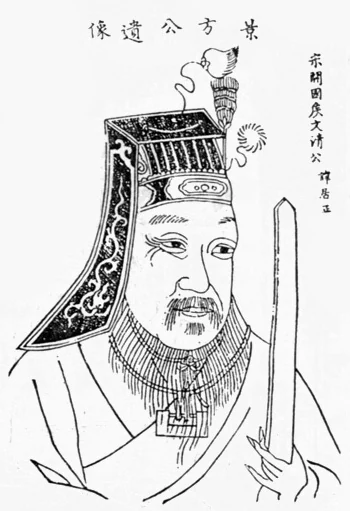
912 CE–981 CE
Chancellor
Xue Juzheng
薛居正
A prominent official of the Five Dynasties and early Song, Xue Juzheng served the Later Zhou and Song, supervised the compilation of the Old History of the Five Dynasties, and rose to the chancellorship.
912 CE–981 CEFive Dynasties and Ten Kingdoms
PROFILE
A prominent official of the Five Dynasties and early Song, Xue Juzheng served the Later Zhou and Song, supervised the compilation of the Old History of the Five Dynasties, and rose to the chancellorship.
- Alternate names
- Xue Ziping; courtesy name Ziping
- Courtesy name
- Ziping
- Period
- Five Dynasties and Ten Kingdoms
- Date of Birth
- 912
- Date of Death
- 981
- Dynasty/Regime
- Five Dynasties and Ten Kingdoms
- Identity
- Chancellor
- Ethnicity/People
- Not recorded in historical sources
- Native place
- Junyi County, Kaifeng Prefecture (present-day Kaifeng, Henan)
- Place of birth
- Junyi County, Kaifeng Prefecture
- Place of death
- Not recorded in historical sources
- Highest office
- See Biography and Major Activities
- Major achievements
- A prominent official of the Five Dynasties and early Song; served the Later Zhou and Song; supervised the compilation of the Old History of the Five Dynasties; rose to the chancellorship
LIFE TIMELINE
Age twenty-three | Failed the jinshi examination and wrote the “Essay on Dispelling Sorrow” to console himself.
Age twenty-five | Passed the jinshi examination after being strongly recommended by Liu Tao, a diarist of the court.
About age twenty-five to thirty-three | Recruited as an assistant in Hua Prefecture; later promoted to Salt and Iron judge and Right Reminder.
Age thirty-three | Transferred to fiscal judge, then Right Reminder; Sang Weihan recommended him as a judge of Kaifeng Prefecture.
Age thirty-seven | Clarified a wrongful case under Shi Hongzhao and refused to yield to powerful authority.
Age forty | Promoted to Vice Director of the Bureau of Review and drafter of imperial edicts; accompanied Emperor Taizu of Later Zhou on campaign to Yan Prefecture and was additionally appointed Director in the Bureau of State Domains.
Age forty-five | Promoted to Left Grand Master of Remonstrance, then Academician of the Hongwen Academy, with responsibility for academy affairs.
Age forty-eight | Sent to Cang Prefecture to assess household taxes; promoted to Vice Minister of Justice and placed in charge of personnel selection.
Age forty-nine | At the beginning of the Song, transferred to Vice Minister of Revenue; while Emperor Taizu campaigned against Li Jun and Li Chongjin, remained in the capital to oversee the State Finance Commission; later served as prefect of Xu Prefecture.
Age fifty-one | Appointed Direct Academician of the Bureau of Military Affairs and acting director of the metropolitan examination; later governed Lang Prefecture and saved more than a thousand monks from execution.
Age fifty-three | While serving as Vice Minister of War, appointed Assistant Grand Councilor.
Age fifty-six | Additionally appointed Vice Minister of Personnel.
Age sixty-one | Concurrently oversaw the State Finance Commission's land-and-water transport operations for Huainan, Hunan, Lingnan, and other circuits; also acted in the Secretariat and supervised the compilation of the national history and the History of the Five Dynasties.
Age sixty-two | Appointed Vice Director of the Chancellery and Grand Councilor, formally becoming chancellor; the Old History of the Five Dynasties was completed.
Age sixty-five | After Emperor Taizong of Song ascended the throne, Xue was additionally appointed Left Vice Director of the Department of State Affairs and Grand Academician of the Zhaowen Hall.
Age sixty-eight | Accompanied Emperor Taizong on the campaign against Northern Han; after returning to court, advanced to Minister of Works.
Age seventy | Died in office after cinnabar poisoning; posthumously awarded the offices of Defender-in-chief and Secretariat Director and given the posthumous title Wenhui.
Eighteen years after death | Enshrined for sacrificial association in Emperor Taizong of Song's temple.
245 years after death | Emperor Lizong of Song had portraits of twenty-four meritorious officials displayed in the Zhaoxun Pavilion; Xue Juzheng was among them.
BIOGRAPHY
Biography
Family Background and Early Years
Xue Juzheng was born into an official family. His grandfather Xue Yanlu had served as prefect of Ru Prefecture under the Tang, and his father Xue Renqian rose to the office of Guest of the Heir Apparent under the Later Zhou. Xue Juzheng was diligent in study from a young age and had high ambitions. In 934, the first year of the Qingtai era, he sat the jinshi examination for the first time but failed. He therefore wrote the “Essay on Dispelling Sorrow” to console himself. Readers regarded the piece as lofty and forceful and believed that he possessed the bearing of a future senior statesman.
In 936, the third year of the Qingtai era, Xue finally passed the jinshi examination after the strong recommendation of Liu Tao, a court diarist. Liu Tao told the examination officials, “Xue Juzheng's literary talent and capacity will surely carry him to the highest offices.” The prediction was later fulfilled.
Career during the Five Dynasties
During the Tianfu era of the Later Jin, Liu Suining, military governor of Hua Prefecture, recruited Xue Juzheng as an assistant. Liu Suining's cousin Liu Suiqing, who managed state finances, memorialized the throne to appoint Xue as an inspector in the Salt and Iron administration. At the beginning of the Kaiyun era in 944, Xue was transferred to a fiscal judgeship. Chancellor Li Song, who supervised the Salt and Iron administration, again recommended him as a judge; Xue was additionally appointed Assistant Judicial Officer and later promoted to Right Reminder. When Sang Weihan served as prefect of Kaifeng, he recommended Xue as a prefectural judge.
At the beginning of the Qianyou era of the Later Han in 948, Shi Hongzhao commanded the imperial guard. His authority intimidated even the emperor, and his cruel and arrogant temperament made others afraid to oppose him. Officials under him accused a commoner of violating the salt monopoly, an offense judged punishable by death. As the case was about to be decided, Xue Juzheng suspected that the charge was false. He summoned the accused for questioning and discovered that the official had fabricated the accusation because of an old grievance. Xue arrested and interrogated the official, who confessed, and punished him according to law. Although Shi Hongzhao was angered, he could not force Xue to yield.
In 951, the first year of the Guangshun era of the Later Zhou, Xue was promoted to Vice Director of the Bureau of Review and placed over the judges of the State Finance Commission; soon afterward he became a drafter of imperial edicts. When Guo Wei, Emperor Taizu of Later Zhou, campaigned against Yan Prefecture, Xue was ordered to accompany him and, for his service, was additionally appointed Director in the Bureau of State Domains. In 956, the third year of the Xiande era, he became Left Grand Master of Remonstrance and was then promoted to Academician of the Hongwen Academy, with responsibility for academy affairs. In 959, the sixth year of Xiande, he was sent to Cang Prefecture to assess household taxes. His competence became well known at court and beyond, and he was promoted to Vice Minister of Justice and placed in charge of personnel selection.
Chancellor under the Northern Song
After the founding of the Northern Song, Xue Juzheng was transferred to the post of Vice Minister of Revenue. When Emperor Taizu of Song personally campaigned against Li Jun at Lu Prefecture and Li Chongjin at Yang Prefecture, Xue remained in the Eastern Capital to oversee the affairs of the State Finance Commission. Soon afterward, he was sent out as prefect of Xu Prefecture.
In 962, the third year of the Jianlong era, he was appointed Direct Academician of the Bureau of Military Affairs and acting director of the metropolitan examination. Hunan had only recently been pacified, and the court appointed him to govern Lang Prefecture. Several thousand deserters had gathered in the mountains and marshes as bandits. The army supervisor suspected that more than a thousand monks in the city were their accomplices and intended to arrest and kill them all. Xue delayed the proposed executions and then led troops to eliminate the bandits, capturing their leader Wang Duan. Interrogation established that the monks had not participated, and more than a thousand lives were thereby spared.
In 964, the second year of the Qiande era, Emperor Taizu created the office of Assistant Grand Councilor in order to divide the authority of Chancellor Zhao Pu. Xue Juzheng, then Vice Minister of War, was appointed to the post. In 967, the fifth year of Qiande, he was additionally appointed Vice Minister of Personnel.
In 972, the fifth year of the Kaibao era, Xue concurrently oversaw the State Finance Commission's land-and-water transport operations in Huainan, Hunan, Lingnan, and other circuits. He also acted in the Chancellery and supervised the compilation of the national history and the History of the Five Dynasties, that is, the work later known as the Old History of the Five Dynasties. In 973, the sixth year of Kaibao, he was appointed Vice Director of the Chancellery and Grand Councilor, formally becoming chancellor. The Old History of the Five Dynasties was completed that same year, and in the following year Emperor Taizu bestowed vessels and valuables on him as a reward.
In the second month of 975, the eighth year of Kaibao, Emperor Taizu told Xue Juzheng and the other senior ministers: “The year has brought abundant harvests and all things are flourishing. If not for Heaven's protection, how could this have come about? We should together think of benefiting the people. If there are failures in government, they should be remedied so that my intention may be fulfilled.” Xue and the others thereafter applied themselves even more diligently to public affairs in order to accord with the emperor's wishes.
In the winter of 976, the ninth year of Kaibao, Zhao Guangyi, Prince of Jin, ascended the throne as Emperor Taizong of Song. Xue Juzheng was additionally appointed Left Vice Director of the Department of State Affairs and Grand Academician of the Zhaowen Hall. In 979, the fourth year of Taiping Xingguo, he accompanied Emperor Taizong on the campaign against Northern Han and, after returning to court, was promoted to Minister of Works.
Later Years and Death
In the sixth month of 981, the sixth year of the Taiping Xingguo era, Xue Juzheng was poisoned after ingesting cinnabar. While reporting on affairs of state, he felt the poison take effect and hurriedly withdrew from the hall. Outside the palace gate he drank more than a sheng of water. Clerks helped him to the Secretariat, by which time he could no longer speak and could only point toward a water vessel in the corridor. Those around him brought water, but he was already unable to drink, and his breath came out like mist. He was carried home in a cart and died soon afterward at the age of seventy.
On hearing the news, Emperor Taizong suspended court audiences for three days in mourning. Because Xue held first-rank status, the normal observance would have been two days, but the emperor added an extra day. Xue was posthumously granted the offices of Defender-in-chief and Secretariat Director and received the posthumous title Wenhui. In 999, the second year of Xianping, he was enshrined for sacrificial association in Emperor Taizong's temple. In 1226, the second year of Baoqing, Emperor Lizong of Song had portraits of twenty-four meritorious officials placed in the Zhaoxun Pavilion, and Xue Juzheng was included among them.
Major Activities
Supervising the Old History of the Five Dynasties
Xue Juzheng's most important contribution was his supervision of the compilation of the Old History of the Five Dynasties. In 972, the fifth year of Kaibao, he was ordered to supervise the national history and the History of the Five Dynasties. The work was completed in 973 in 150 juan. It was later renamed the Old History of the Five Dynasties to distinguish it from Ouyang Xiu's New History of the Five Dynasties. It is a fundamental historical source for the Five Dynasties and Ten Kingdoms period and preserves a large body of early documentary material.
Political Activity
Xue Juzheng served under five courts and held both local and central posts. During the Guangshun era of the Later Zhou, he accompanied Emperor Taizu of Later Zhou on campaign against Yan Prefecture and was additionally appointed Director in the Bureau of State Domains for his service. In 959, the sixth year of Xiande, he was sent to Cang Prefecture to assess household taxes and became known for his competence. In 962, the third year of Jianlong under the Northern Song, he handled the deserter-bandit crisis in Lang Prefecture and saved more than a thousand monks. During the Qiande era, famine struck Henan Prefecture and 40,000 households fled. Emperor Taizu ordered Xue to travel by relay horse to summon the people back; within ten days they had all resumed their livelihoods.
Travels and Places of Activity
Xue Juzheng's movements were concentrated mainly in the Central Plains. He was born in Junyi County of Kaifeng Prefecture, and much of his official career centered on the Eastern Capital, Bianliang. Under the Later Jin he served in Hua Prefecture, in present-day Huaxian, Shaanxi. Under the Later Zhou he accompanied the campaign to Yan Prefecture, in present-day Yanzhou, Shandong, and later traveled as an envoy to Cang Prefecture, in present-day Cangzhou, Hebei. At the beginning of the Northern Song he governed Xu Prefecture, in present-day Xuchang, Henan, and later Lang Prefecture, in present-day Changde, Hunan. In 979, the fourth year of Taiping Xingguo, he accompanied Emperor Taizong of Song on campaign against Northern Han as far as Jinyang, in present-day Taiyuan, Shanxi.
Relations with Contemporaries
Xue Juzheng interacted with many important figures of the early Northern Song. Liu Tao's recommendation helped him pass the jinshi examination, and he served under Sang Weihan and Li Song. While working under Shi Hongzhao, he insisted on correcting a wrongful case despite the latter's power. In the early Northern Song, he served as chancellor alongside Zhao Pu, Shen Lun (Shen Yilun), and Lu Duoxun at different times. When Emperor Taizu established the office of Assistant Grand Councilor to divide the chancellor's authority, Xue Juzheng and Lü Yuqing both held the new post. During the Kaibao era, Xue and Shen Lun served as chancellors while Lu Duoxun was Assistant Grand Councilor. After Xue's death, Shen Lun was dismissed and Lu Duoxun was exiled to Yazhou; contemporaries saw Xue's preservation and peaceful end as the result of his adherence to the proper conduct of a minister.
His offices and writings in the early Song can be set out by year: in 972 (fifth year of Kaibao), at sixty-one, he was given concurrent charge of the water and land transport commissions of the Huainan, Hunan and Lingnan circuits, the office of vice director of the Chancellery and the supervision of the national history and of the History of the Five Dynasties; in 973 (sixth year of Kaibao), at sixty-two, he became vice director of the Chancellery and joint manager of state affairs, that is chief councillor, and the Old History of the Five Dynasties was completed that year; in 976 (first year of Taiping Xingguo), after Emperor Taizong's accession, he was given the additional titles of left vice director and scholar of the Zhaowen Hall; in 979 (fourth year of Taiping Xingguo) he accompanied the emperor against the Northern Han and on his return was advanced to minister of works; in 981 (sixth year of Taiping Xingguo), at seventy, he died in office of cinnabar poisoning, being granted posthumously the titles of grand commandant and secretariat director and the posthumous name Wenhui. The Old History of the Five Dynasties he directed is one of the twenty-four dynastic histories and a fundamental source for the Five Dynasties and Ten Kingdoms; in 999 (second year of Xianping) he was given a place in the temple of Emperor Taizong, and in 1226 (second year of Baoging) Emperor Lizong of Song placed his portrait among the twenty-four meritorious officials in the Zhaoxun Pavilion.
As to its method, the Old History of the Five Dynasties was compiled from the veritable records of the successive courts and Fan Zhi's general record, following the form of the standard histories in annals, treatises and biographies, and preserving a great mass of edicts, memorials and personal records of the period, much of which the later New History of the Five Dynasties by Ouyang Xiu omits, so that it remains an irreplaceable source for the history of the Five Dynasties.
His life spanned the Later Jin, Later Han, Later Zhou and Northern Song; in the early Song he rose to chief councillor and supervised the national history, and from his place in Emperor Taizong's temple to his portrait among the twenty-four meritorious officials of the Zhaoxun Pavilion he was regarded as one of the representative civil officials of the dynasty's early years. In the sources his personal record is chiefly bound up with his offices and his historiographical work, and the Old History of the Five Dynasties he directed became a fundamental source for later study of the Five Dynasties.
What stands out in his early Song career is his administrative work and his historiography, the compilation of the Old History of the Five Dynasties being a project he completed with colleagues.
His supervision of the national history also made him one of the principal participants in the building of official historiography in the early Song.
The Old History of the Five Dynasties was completed in the sixth year of Kaibao, the same year he became chief councillor, showing that his historiography and his conduct of government almost coincided. Among the standard histories of earlier dynasties compiled in the early Song it is the only annals-and-biographies history bearing the name of the Five Dynasties, its arrangement of annals and biographies being consulted for the later New History of the Five Dynasties, and the edicts and memorials it preserves are especially valued by later scholars.
Personal Relations
- Grandfather: Xue Yanlu, prefect of Ru Prefecture under the Tang.
- Father: Xue Renqian, Guest of the Heir Apparent under the Later Zhou.
- Adopted son: Xue Weiji, who rose to General of the Left Leading Guard.
- Adopted grandson: Xue Anshang, son of Xue Weiji.
- Liu Tao: Court diarist who strongly recommended Xue Juzheng for the jinshi examination.
- Sang Weihan: Prefect of Kaifeng who recommended Xue Juzheng as a judge.
- Li Song: Chancellor who recommended Xue Juzheng as a judge.
- Zhao Pu: Chancellor; Xue Juzheng served as Assistant Grand Councilor under his senior authority.
- Shen Lun (Shen Yilun): Fellow chancellor.
- Lu Duoxun: First Assistant Grand Councilor and later Grand Councilor; subsequently exiled to Yazhou.
- Lü Yuqing: Fellow Assistant Grand Councilor.
- Guo Wei, Emperor Taizu of Later Zhou: Founding ruler of the Later Zhou, who ordered Xue to accompany his campaign against Yan Prefecture.
- Chai Rong, Emperor Shizong of Later Zhou: Second ruler of the Later Zhou, who promoted Xue Juzheng.
- Zhao Kuangyin, Emperor Taizu of Song: Founding ruler of the Northern Song, whose favor toward Xue remained constant.
- Zhao Guangyi, Emperor Taizong of Song: Second ruler of the Northern Song; promoted Xue to Minister of Works and suspended court audiences for three days after Xue's death.
- Shi Hongzhao: Powerful official of the Later Han whose wishes Xue Juzheng opposed while clearing a wrongful case.
Historical Assessment
Song and Contemporary Assessments
- Emperor Taizu of Song once told Xue Juzheng: “From antiquity, few rulers have been able to correct themselves, while many ministers have lacked long-term foresight ... Those who preserve themselves and enjoy lasting good fortune do so because of loyalty and rectitude.” Later writers regarded the statement as fulfilled: Xue Juzheng died peacefully, whereas Shen Lun was dismissed and Lu Duoxun was exiled.
- Fan Chunren wrote: “He manifested sagely virtue and ordered the affairs of the state. Grave and dignified, he returned home; his cottage stood in an empty valley. Pines and cypresses flourished, and deer found shelter there. Filial and loyal, he was a man like jade.”
- Zeng Gong wrote: “Juzheng was upright and weighty in conduct and did not practice harsh scrutiny. He loved reading, and his writing was quick and abundant.”
- Lü Zhong commented that among the early Song chancellors, Zhao Pu uniquely took the affairs of the realm as his own responsibility and therefore exercised government with great personal authority, whereas Xue Juzheng and Shen Yilun were “merely grave, restrained, and self-guarding chancellors.”
- The Complete History of the Song stated: “Juzheng possessed an impressive bearing and upright conduct. As chancellor he governed with leniency and simplicity and did not engage in harsh scrutiny; gentlemen esteemed him for this.”
Song–Yuan Period
- Toqto'a, in the Yuan-compiled History of Song, emphasized Xue's conduct in the Lang Prefecture incident: when more than a thousand monks were suspected of joining deserter-bandits and the army supervisor wanted them all killed, Xue delayed action until the bandits were captured and the monks were shown not to have been involved, thereby saving their lives.
- In 1226, the second year of Baoqing under Emperor Lizong of Song, portraits of twenty-four meritorious officials were displayed in the Zhaoxun Pavilion. Xue Juzheng's inclusion represented a final official Song recognition of his service.
Ming and Qing Periods
- Ming and Qing historians generally followed the History of Song in describing Xue as “lenient and simple, without harsh scrutiny,” and regarded him as a capable chancellor of consolidation. Wang Fuzhi, in his Discussions on the Song, treated Xue as a model of cautious and substantial self-restraint, contrasting him with Zhao Pu's assertiveness and Lu Duoxun's dangerous political maneuvering.
Modern Period
- Modern historical scholarship focuses particularly on Xue Juzheng's role in supervising the Old History of the Five Dynasties. The work is valued for preserving a large quantity of original material from the Five Dynasties and Ten Kingdoms period and remains a fundamental source for its study. His political career is generally viewed as important to the stable transition of the early Song: although he is not credited with especially conspicuous policy achievements, his steadiness and moderation helped maintain political continuity.
FIGURES ASSOCIATED WITH THIS DYNASTY
Bibliography
- History of Song, juan 264, Biography 23
- History of Song, juan 124, Treatise 77
- Preface to the collated edition of the Old History of the Five Dynasties, Zhonghua Book Company