Birth in the North
Born into a bureaucratic lineage in Ji County, Youzhou; later fled conflicts with his family to settle in Changshan and Luoyang.
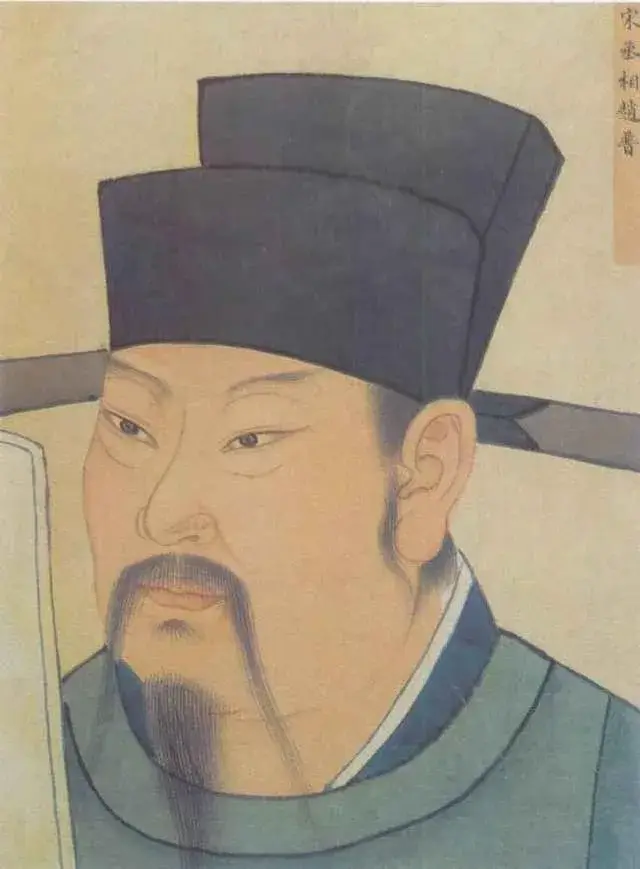
922 CE–992 CE
赵普
Zhao Pu (赵普, 922 – August 14, 992), courtesy name Zeping, was a native of Ji County in Youzhou who later settled in Changshan and Luoyang. He was the preeminent founding Grand Councilor, grand strategist, and statesman of the Northern Song Dynasty, ranked first among the twenty-four meritorious ministers in the Hall of Illustrious Merit. Beginning his bureaucratic career as a junior clerk and judicial officer under the Later…
Zhao Pu (赵普, 922 – August 14, 992), courtesy name Zeping, was a native of Ji County in Youzhou who later settled in Changshan and Luoyang. He was the preeminent founding Grand Councilor, grand strategist, and statesman of the Northern Song Dynasty, ranked first among the twenty-four meritorious ministers in the Hall of Illustrious Merit. Beginning his bureaucratic career as a junior clerk and judicial officer under the Later Zhou Dynasty, he entered the entourage of Zhao Kuangyin in 956, becoming his indispensable chief counselor. In 960, Zhao Pu played a principal role in orchestrating the Chenqiao Mutiny, enabling Zhao Kuangyin to ascend the imperial throne and establish the Song Dynasty. Following the empire's foundation, Zhao Pu confronted the centuries-old systemic destabilization caused by autonomous regional military garrisons. He submitted to Emperor Taizu the famous strategic maxim: "Gradually strip their authority, control their revenues and grain, and absorb their elite soldiers." This led to the peaceful relinquishment of military commands, the deployment of civil officials as prefects, and the creation of judicial and fiscal circuits under central transport commissioners, permanently extinguishing warlord factionalism. He assisted Emperor Taizu in executing the grand reunification blueprint of "conquering the south first and pacifying the north later." Serving three times as Grand Councilor across the reigns of Taizu and Taizong, Zhao Pu was renowned for his decisive statesmanship, leaving famous cultural legacies such as "governing the world with half of the Analects." Before passing away in 992, he was created Duke of Wei and posthumously honored as Prince of Han.
Born into a bureaucratic lineage in Ji County, Youzhou; later fled conflicts with his family to settle in Changshan and Luoyang.
Recommended as Military Judge of Chuzhou, where he met Zhao Kuangyin and was appointed staff officer in his command headquarters.
Coordinated the bloodless mutiny at Chenqiao Courier Station, leading troops in proclaiming Zhao Kuangyin founding emperor of the Song Dynasty.
Promoted to Grand Master for Thorough Counsel; proposed the twelve-character policy to eradicate regional warlord autonomies.
Appointed Commissioner of Military Affairs; helped execute the peaceful relinquishment of command by senior imperial guardsmen.
Formally elevated to Grand Councilor as Joint Manager of Affairs with the Secretariat-Chancellery, directing state affairs as sole chancellor.
Due to political tensions with Prince Zhao Guangyi and impeachment over private timber commerce, dismissed to serve as regional commander of Heyang.
Presented the secret testament of the Golden Coffer validating Emperor Taizong's succession, reassuming the office of Grand Councilor.
Dispatched as military commissioner to Wusheng after dismantling political intrigues involving Prince Zhao Tingmei and Lu Duoxun.
Submitted a famous memorial dissuading Emperor Taizong from continuing the Yongxi Northern Expedition, urging domestic recuperation.
Reappointed Grand Councilor as Grand Tutor and Grand Guardian, guiding the civilian administrative structure in his elder years.
Allowed to step down due to advanced age; appointed Mayor of Henan and Regent of the Western Capital.
Promoted to Grand Preceptor and created Duke of Wei in spring; died in Luoyang in August at age seventy-one; posthumously created Prince of Han.
Zhao Pu traced his ancestral home to Jixian County in Youzhou (modern Daxing District, Beijing). His great-grandfather served as Magistrate of Sanhe County at the end of the Tang dynasty, his grandfather Zhao Quanbao served as Marshal of Chanzhou in the late Tang, and his father Zhao Jiong served as Marshal of Xiangzhou (modern Anyang, Henan) during the Five Dynasties period. During the Later Tang dynasty, as the Lulong Military Commissioner Zhao Dejun waged incessant campaigns, Zhao Jiong could no longer endure the ravages of war in the north and moved his entire clan south to Changshan (Zhenzhou, modern Zhengding, Hebei). In the seventh year of the Tianfu era of the Later Jin (942), although Zhao Jiong moved the household again to the western capital Luoyang and settled there permanently, because their original homeland in Youzhou had been ceded to the Khitan Liao realm, the family thereafter styled themselves natives of Changshan.
As the eldest son of Zhao Jiong, Zhao Pu was honest, steadfast, and taciturn by nature. The prominent Wei clan of Zhenyang greatly admired his character and gave him their daughter in marriage. Although Zhao Pu studied books in his youth, his early literary learning was modest; seeing little prospect in the imperial examinations, he followed the example of his grandfather and father by entering the staff of prefectural and regional military governors. During the Later Han period, he began his official career as Patrol Officer of Longzhou. In the seventh month of the first year of the Xiande era of the Later Zhou (954), Liu Ci, Military Commissioner of Yongxing Army, recruited Zhao Pu as an Administrative Aide, where he became a colleague and close friend of Chu Zhaofu and Wang Renshan. When Liu Ci died in 955, although he recommended Zhao Pu to the court in his testamentary memorial, the court did not immediately appoint him, and Zhao Pu lived in Chuzhou making a living by teaching village children.
In the third year of the Xiande era (956), when Emperor Shizong of Later Zhou (Chai Rong) campaigned south against the Southern Tang in Huainan, the imperial guard general Zhao Kuangyin captured Chuzhou, and Grand Councilor Fan Zhi memorialized to appoint Zhao Pu as Military Judge of Chuzhou. Serving on the prefectural staff in Chuzhou, Zhao Pu handled official business with acute decisiveness and adjudicated criminal cases without injustice; hearing of his reputation, Zhao Kuangyin summoned him for conversation and held him in high regard. At that time, Zhao Kuangyin's father, Right Wing Commander-in-Chief Zhao Hongyin, fell ill while recuperating in Chuzhou; Zhao Pu attended to his medicine day and night without fatigue, and Zhao Hongyin treated him with the affection due to a kinsman of the same clan. When government forces captured more than a hundred bandits in Huainan who were all slated for execution under the law, Zhao Pu suspected that many among them were innocent civilians coerced into following, and he urged Zhao Kuangyin to re-interrogate them, saving a great many lives.
After Huainan was pacified, Zhao Pu was initially appointed Military Judge of Weizhou (modern Pingliang, Gansu). In the same year, when Zhao Kuangyin was transferred as Military Commissioner of Kuangguo Army (modern Dali, Shaanxi), he specially requested that Zhao Pu be summoned as his Prefectural Judge, marking Zhao Pu's formal entry into Zhao Kuangyin's personal staff. As Zhao Kuangyin was successively transferred to lead the Yicheng Army (modern Huaxian, Henan) in 957 and the Zhongwu Army (modern Xuchang, Henan) in 958, Zhao Pu remained constantly in his entourage alongside Chu Zhaofu and Wang Renshan as his most trusted confidants. After Chai Rong died in the sixth month of 959 and the young Emperor Gong (Chai Zongxun) ascended the throne, Zhao Kuangyin was appointed Military Commissioner of Guide Army (modern Shangqiu, Henan) in the seventh month, and Zhao Pu was promoted to Chief Secretary of the Guide Army.
On New Year's Day of the seventh year of the Xiande era (960), urgent frontier dispatches reported that the Khitan had allied with Northern Han to launch a major invasion southward, and Grand Councilor Fan Zhi and his colleagues hastily dispatched Palace Commander-in-Chief Zhao Kuangyin to lead the imperial guards north. On the third day of the first month, when the army halted at Chenqiao Post Station forty li northeast of Kaifeng, Zhao Pu and Zhao Kuangyin's younger brother Zhao Guangyi engineered a coup plot: claiming that the troops could not advance further, they got Zhao Kuangyin drunk during the night and at dawn the next day draped an apricot-yellow imperial robe over him, launching the Mutiny at Chenqiao to acclaim him emperor.
Once the mood of the troops was stabilized, Zhao Pu meticulously organized the coordination in the capital: he dispatched Guard Commander Guo Yanyun overnight back to Kaifeng, sent Reception Commissioner Pan Mei to inform the Later Zhou grand councilors of their intent, sent Chu Zhaofu to comfort and secure Zhao Kuangyin's family, and notified Zhao Kuangyin's trusted Palace Command associates Shi Shouxin and Wang Shenqi inside the city to prepare a reception from within. Through Zhao Pu's careful planning, the army marched back into Kaifeng without bloodshed, compelled Emperor Gong of Later Zhou to abdicate, and enabled Zhao Kuangyin to establish the Song dynasty as Emperor Taizu. Upon ascending the throne, Taizu retained the former Later Zhou councilors to stabilize the court, while among his promoted princely staff, Zhao Pu ranked second in merit and was appointed Right Cavalier Attendant-in-Ordinary and Auxiliary Academician of the Bureau of Military Affairs, participating in the direction of military affairs.
In the fourth month of the first year of the Jianlong era (960), Li Yun, the former Later Zhou Military Commissioner of Zhaoyi Army, refused to submit to Emperor Taizu and allied with Emperor Liu Jun of Northern Han to raise a rebellion in Luzhou. Seeing the danger of the situation, Zhao Pu strongly urged Taizu to lead a campaign in person. Taizu accepted his counsel; although he initially ordered Zhao Pu and Prefect of Kaifeng Lü Yuqing to remain behind to guard the capital, Zhao Pu requested permission to accompany the expeditionary force. On the march, Zhao Pu proposed the strategy of "advancing at double speed to catch the rebels unprepared." Taizu embraced his advice, pressed the army forward rapidly, and crushed Li Yun's rebellion at a single stroke.
Shortly thereafter, in the ninth month of 960, Li Chongjin, the former Later Zhou Military Commissioner of Huainan, rose in revolt at Yangzhou (modern Yangzhou, Jiangsu). When Taizu summoned his ministers to discuss how to take Huainan, Zhao Pu analyzed that Li Chongjin's soldiers were alienated, his counselors' plans were ignored, external relief was cut off, and internal provisions were scarce, advising the emperor to strike swiftly. Taizu again adopted Zhao Pu's recommendation, led an imperial expedition south, and quickly pacified the uprising. In the eighth month of 960, on the jiashen day, Zhao Pu was promoted to Vice Minister of War and Vice Commissioner of Military Affairs and was granted a residence in Kaifeng, becoming the first member of Taizu's princely staff to enter the "Two Administrations" of the central government.
From the founding of the Song dynasty, Emperor Taizu's foremost concern was how to avoid becoming the sixth short-lived regime following the Five Dynasties. Late in the first year of the Jianlong era (960), Taizu summoned Zhao Pu and asked why, since the end of the Tang dynasty, eight imperial surnames and twelve rulers had succeeded one another in mere decades of ceaseless warfare, and how the court could end military upheavals to establish a lasting foundation. Having long reflected on governance, Zhao Pu replied that the root malady lay solely in "regional military governors holding excessive power while the monarch was weak and ministers were strong," and that the remedy required no abstruse artifice: "merely pare away their authority, control their revenues and grain, and gather their elite troops," and the realm would naturally become tranquil. Before Zhao Pu had even finished speaking, Taizu declared that he understood completely, setting in motion a comprehensive blueprint to rebuild centralized imperial autocracy.
Toward prestigious senior guard commanders such as Shi Shouxin, Taizu initially felt no suspicion because they were old friends, but Zhao Pu repeatedly remonstrated that even if these commanders themselves would not betray the throne, should their greedy subordinates coerce them into rebellion as had happened at Chenqiao, they might not be able to resist. Convinced, Taizu began removing guard commanders Murong Yanzhao and Han Lingkun from military command in 961 and subsequently staged the famous "releasing military power over a cup of wine." From the first year of the Qiande era (963) onward, following Zhao Pu's counsels, Taizu removed regional military commissioners, gradually curtailed the powers of dozens of non-imperial princes, appointed civil officials as prefects in place of military men, and in 969 reclaimed the military commands of regional governors Wu Xingde and Wang Yanchao.
In the tenth month of the third year of the Jianlong era (962), Zhao Pu was promoted to Commissioner of Military Affairs, Acting Grand Guardian, and Censor-in-Chief. In the first month of the second year of the Qiande era (964), having completed his institutional reorganization, Taizu dismissed all three former Later Zhou grand councilors—Fan Zhi, Wang Pu, and Wei Renpu—and on the gengyin day appointed Zhao Pu as Vice Director of the Chancellery, Joint Manager of Affairs with the Secretariat-Chancellery, and Grand Academician of the Jixian Hall, formally making him Grand Councilor. Because all three incumbent councilors had been dismissed simultaneously, no sitting Grand Councilor remained to countersign the edict of appointment; at the suggestion of Hanlin Academician Dou Yi, the procedural impasse was resolved by having the emperor's brother Zhao Guangyi, who held the honorary title of Joint Manager of Affairs, sign the commission.
As Grand Councilor and Supervisor of the National History, Zhao Pu served as Taizu's right hand for ten years, deciding all major and minor affairs of state before the emperor gave final approval, though Taizu also appointed Xue Juzheng and Lü Yuqing as Participant Determining Governmental Affairs (Vice Councilors) to assist and check him. On a snowy night, Taizu visited Zhao Pu's residence incognito along with Zhao Guangyi; while roasting meat over a brazier, Zhao Pu advised that Northern Han at Taiyuan shielded the northwest frontier and that conquering it prematurely would force Song to bear the full pressure of the Khitan alone, whereas the court should first pacify the southern states and leave tiny Taiyuan to fall last—thus establishing the grand reunification strategy of "South First, North Later; Easy First, Difficult Later." In the spring of 967, Zhao Pu was advanced to Right Vice Director of the Department of State Affairs and Grand Academician of the Zhaowen Hall; when his mother died shortly thereafter, Taizu ordered him to cut short his mourning and remain in office, whereupon Zhao Pu directed the registration of able-bodied men for the imperial guards and the nationwide appointment of prefectural Controllers-General (Tongpan) to supervise local finances.
In the winter of the second year of the Kaibao era (969), when Zhao Pu fell ill, Emperor Taizu drove in person to the Secretariat to visit him, and in the spring of 970 visited his residence again with generous gifts and an increase in salary. Yet having held sole chancellorship for years, Zhao Pu grew domineering and incurred resentment. Although the court prohibited private trade in large timber from Shaanxi and Gansu, Zhao Pu sent a petty clerk to purchase timber rafts and float them to Kaifeng to build his mansion; the clerk stole government timber and sold it in the capital under Zhao Pu's name. When Acting State Finance Commissioner Zhao Pilian reported this to Taizu, the emperor was furious and wanted to banish Zhao Pu, sparing him only after former Grand Councilor Wang Pu interceded. Upon learning that Zhao Pu's son Zhao Chengzong had married the daughter of Military Affairs Commissioner Li Chongju, Taizu ordered chancellors and military commissioners to wait in separate anterooms outside Changchun Hall.
Zhao Pu also traded vacant land for an imperial vegetable garden to expand his residence and operated commercial inns for profit, while Hanlin Academician Lu Duoxun repeatedly criticized his failings before the throne. In the sixth year of the Kaibao era (973), Lei Youlin, eldest son of Vice Censor-in-Chief Lei Dexiang, beat the petitioner's drum at court to denounce Secretariat clerks Hu Zan and Li Kedu for bribery and forgery of official appointments, exposing that Zhao Pu had shielded them along with corrupt officials Wang Dong and Zhao Fu. Outraged, Taizu ordered the Censorate to punish the offenders, ordered the vice councilors to rotate seal-keeping and memorial presentation with Zhao Pu, and in the eighth month of 973 dismissed Zhao Pu from the chancellorship, sending him out as Military Commissioner of Heyang Sancheng with the titles of Acting Grand Tutor and Joint Manager of Affairs.
In the tenth month of the ninth year of the Kaibao era (976), Emperor Taizu died and his brother Zhao Guangyi succeeded him as Emperor Taizong. In the third month of the second year of the Taiping Xingguo era (977), Zhao Pu returned from Heyang to court and was appointed Junior Guardian of the Heir Apparent, remaining in Kaifeng on routine court attendance while enduring constant slander from Grand Councilor Lu Duoxun. In the sixth year of the Taiping Xingguo era (981), when Taizong's confidants Chai Yuxi and Zhao Rong accused the emperor's younger brother, Prince of Qin Zhao Tingmei, of plotting treason, Zhao Pu submitted a fervent secret memorial stating that he had personally participated in and witnessed the deathbed "Golden Casket Pledge" of Empress Dowager Zhaoxian and Emperor Taizu regarding the imperial succession.
Deeply moved, Taizong summoned and comforted Zhao Pu, and in the ninth month of 981 appointed him Minister of Instruction, Director of the Chancellery, Grand Academician of the Zhaowen Hall, and Duke of Liang, marking Zhao Pu's second term as Senior Grand Councilor. In 982, when the case against Prince of Qin Zhao Tingmei erupted, accusing him of colluding with Grand Councilor Lu Duoxun, Taizong initially ordered Zhao Tingmei confined to his private residence in Luoyang; fearing a future comeback, Zhao Pu instigated Prefect of Kaifeng Li Fu to memorialize that Zhao Tingmei remained resentful and unrepentant, resulting in Zhao Tingmei's demotion to Duke of Fuling and banishment to Fangzhou and Lu Duoxun's exile to the far south.
In the tenth month of the eighth year of the Taiping Xingguo era (983), Zhao Pu was sent out as Military Commissioner of Wusheng Army (modern Dengzhou, Henan) and Acting Grand Defender. Emperor Taizong composed a farewell poem for him, which Zhao Pu received in tears, vowing to have the imperial verses carved in stone and buried with his bones. In the spring of the third year of the Yongxi era (986), Emperor Taizong launched the Yongxi Northern Expedition against the Khitan Liao to avenge the earlier defeat at Gaoliang River, but the campaign dragged on into summer with heavy losses.
From Dengzhou, Zhao Pu submitted a famous memorial remonstrating against the war: citing the memorials of Zhufu Yan, Xu Le, and Yan An under Emperor Wu of Han and Yao Chong's Ten Points to Emperor Xuanzong of Tang, he warned that prolonged warfare breeds mutiny, that autumn would bring strong Khitan bows and fat horses against exhausted Song troops, and that the emperor should not heed sycophants who courted military adventure, urging an immediate edict to withdraw the army and nurture the populace through benevolent rule. Taizong replied with a warm personal rescript praising Zhao Pu's loyal candor while blaming front-line generals Cao Bin and others for disobeying imperial strategy, and Zhao Pu submitted a second memorial urging quiet governance and self-restraint, winning universal praise for his devotion.
In the fourth year of the Yongxi era (987), Zhao Pu was transferred as Military Commissioner of Shannan East Circuit (modern Xiangyang, Hubei) and created Duke of Xu. After requesting permission to attend the emperor's sacred plowing ceremony, he was warmly received by Taizong, and in the second month of the first year of the Duangong era (988), wishing to pair newly promoted Grand Councilor Lü Mengzheng with a venerable elder statesman, Taizong appointed Zhao Pu as Grand Guardian, Director of the Chancellery, and Grand Academician of the Zhaowen Hall for his third term as Grand Councilor. During this term, Zhao Pu impeached and banished the factional associates of Vice Military Commissioner Zhao Changyan and Hu Dan, and exposed the lawless excesses of the favored Zhengzhou Defense Commander Chen Liyong, sending him into exile in Shangzhou. When the Tangut leader Li Jiqian raided the northwestern frontier, Zhao Pu proposed restoring Li Jiqian's cousin Li Jipeng (Zhao Baozhong) to govern Xiazhou to counter him, but Li Jipeng instead colluded with Li Jiqian, drawing criticism upon Zhao Pu.
During the scorching summer of 988, Emperor Taizong specially permitted the elderly Zhao Pu to return home at noon, and in 989 exempted him from daily court attendance rites, requiring him only to handle affairs at the Secretariat and answer summonses on major state matters. Falling gravely ill in the winter of 989, Zhao Pu repeatedly petitioned to resign, and in the first month of the first year of the Chunhua era (990) Taizong reluctantly appointed him Regent of the Western Capital and Prefect of Henan with the title of Director of the Secretariat, visiting his mansion in person to bid him farewell.
In the third year of the Chunhua era (992), after Zhao Pu thrice petitioned to retire on account of age and chronic illness, Taizong conferred upon him the supreme title of Grand Preceptor, advanced him to Duke of Wei with full Grand Councilor's salary at home, and on the fourteenth day of the seventh month (August 14, 992), Zhao Pu died at his residence in Luoyang at the age of seventy-one. Grief-stricken, Taizong wept before his courtiers, donned mourning garments to lament him in person, suspended court for five days, posthumously appointed him Director of the Department of State Affairs and Prince of Zhending Commandery with the posthumous title "Zhongxian" (Loyal and Worthy), and buried him on Mount Mang in Luoyang in the second month of 993. In 998 Emperor Zhenzong posthumously advanced him to Prince of Han, in 999 enshrined him in the ancestral temple of Emperor Taizu alongside analogies to Lü Shang and Xiao He, and in 1226 Emperor Lizong placed his portrait among the twenty-four meritorious ministers in the Zhaoxun Chongde Pavilion.
Following the death of Emperor Shizong of Later Zhou in 959, when a child monarch sat on the throne and Palace Commander-in-Chief Zhao Kuangyin held supreme command of the imperial guards, Zhao Pu acted as the chief political strategist within Zhao Kuangyin's princely staff. During the march to Chenqiao Post Station in the first month of 960, Zhao Pu and Zhao Guangyi orchestrated the military coup that draped the yellow imperial robe over Zhao Kuangyin. Immediately after the acclamation, Zhao Pu enforced strict military discipline and dispatched emissaries to Kaifeng to pressure the Later Zhou court while coordinating with interior guard commanders Shi Shouxin and Wang Shenqi, ensuring a bloodless transition of power that established the Northern Song dynasty. Later in 960, when regional military governors Li Yun and Li Chongjin rose in armed rebellion at Luzhou and Yangzhou, Zhao Pu accompanied Emperor Taizu and formulated the decisive operational strategies of rapid forced marches and swift strikes before the rebels could consolidate, securing the survival of the fledgling dynasty.
To eradicate the chronic Five Dynasties malady of powerful military governors and mutinous soldiers overthrowing monarchs, Zhao Pu formulated the twelve-character statecraft maxim: "pare away their authority, control their revenues and grain, and gather their elite troops." Under his guidance, Emperor Taizu relieved senior guard generals of command through "releasing military power over a cup of wine," separated military administration in the Bureau of Military Affairs from troop training and command in the Three Guards, and rotated garrisons so that generals never monopolized soldiers. In central administration, Zhao Pu helped institute the "Two Administrations and Three Fiscal Commissions" system—using Vice Councilors, the Bureau of Military Affairs, and the State Finance Commission to divide and check the authority of the Grand Councilor. In local governance, the Song court replaced military governors with civil prefects, established prefectural Controllers-General (Tongpan) to countersign documents and monitor prefects, and appointed Fiscal Intendants (Zhuanyunshi) to transfer regional tax surpluses to the capital, permanently ending the institutional basis of regional warlordism.
During the famous snowy-night consultation with Emperor Taizu and Zhao Guangyi, Zhao Pu articulated the grand strategic sequence of "South First, North Later; Easy First, Difficult Later" for reunifying the realm. Recognizing that Northern Han at Taiyuan served as a buffer against the powerful Khitan Liao empire on the northern and western frontiers, Zhao Pu argued that attacking Taiyuan prematurely would expose Song to direct two-front pressure from the Khitan, whereas conquering the wealthy but militarily weak southern kingdoms first would consolidate the empire's economic and demographic base before isolating and absorbing Northern Han. Guided by this blueprint, the Song court methodically pacified Jingnan, Hunan, Later Shu, Southern Han, and Southern Tang, laying the territorial foundation of unified Northern Song rule.
Serving across the reigns of both Emperor Taizu and Emperor Taizong and holding the office of Grand Councilor three times, Zhao Pu played a decisive role in imperial succession politics and frontier strategy under Taizong. In 981, by formally attesting to Empress Dowager Zhaoxian's deathbed "Golden Casket Pledge," he bolstered the legitimacy of Emperor Taizong's succession, though his subsequent prosecution of the treason case against Prince of Qin Zhao Tingmei and Grand Councilor Lu Duoxun led to their banishment and ruin. Conversely, during the ill-fated Yongxi Northern Expedition against the Khitan Liao in 986, Zhao Pu courageously submitted memorials from Dengzhou warning against military adventurism, analyzing the seasonal and logistical hazards of prolonged campaigning on the northern frontier, and persuading Emperor Taizong to withdraw his exhausted forces and prioritize domestic governance and frontier defense.
FIGURES ASSOCIATED WITH THIS DYNASTY