Birth | Born in Dugu Village, Anxi County, Dingzhou.
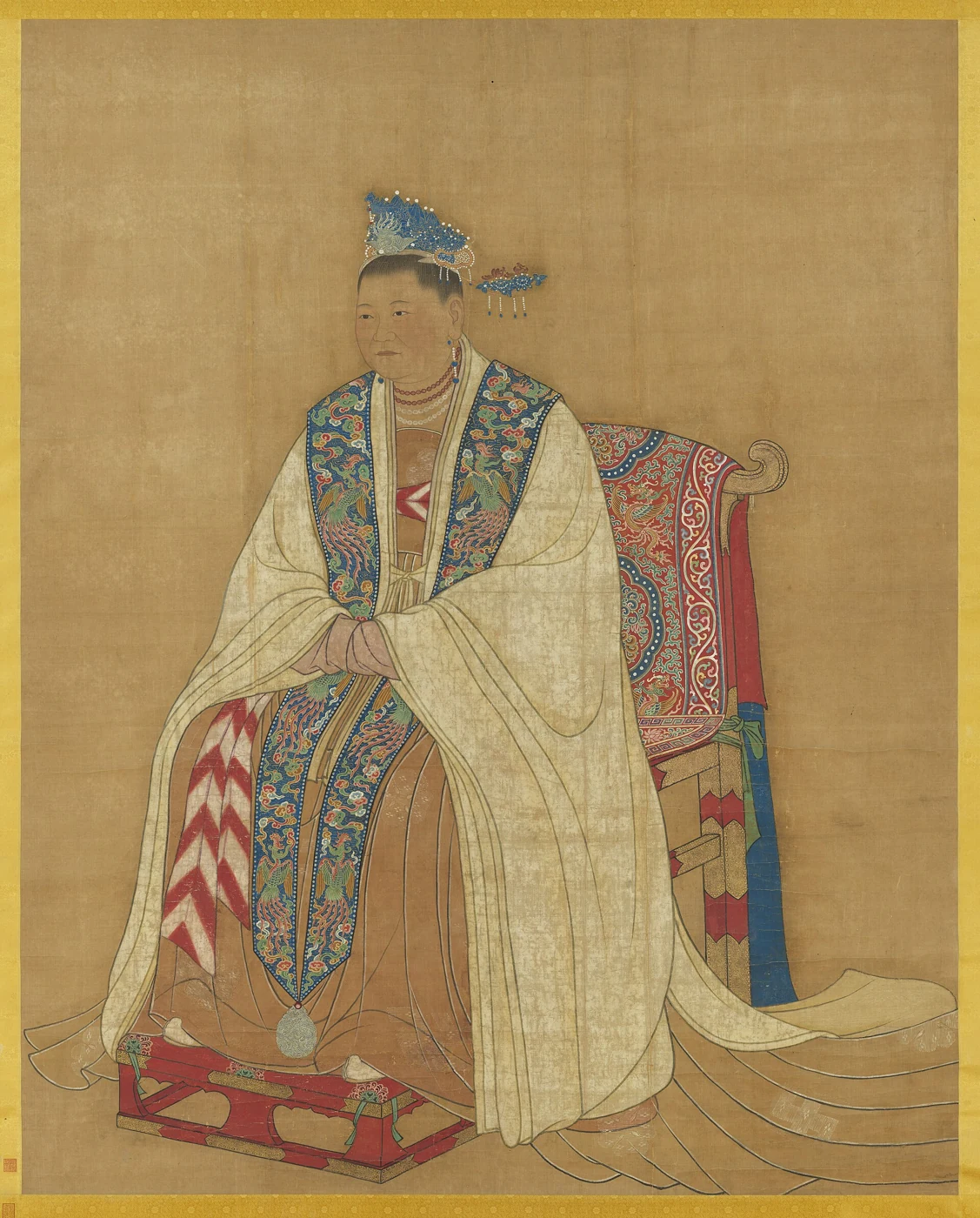
902 CE–961 CE
Empress Dowager
Empress Dowager Du
杜氏(宋太祖生母)
Empress Dowager Du (902–961), personal name unrecorded, came from Anxi County in Dingzhou and belonged to a family long resident in Changshan. She was the founding empress dowager of the Northern Song, wife of Zhao Hongyin, posthumously Emperor Xuanzu of Song, and mother of Zhao Kuangyin, Emperor Taizu of Song, and Zhao Guangyi, Emperor Taizong of Song. Her father was Du Shuang, posthumously Grand Preceptor, and her mother…
902 CE–961 CENorthern Song
PROFILE
Empress Dowager Du (902–961), personal name unrecorded, came from Anxi County in Dingzhou and belonged to a family long resident in Changshan. She was the founding empress dowager of the Northern Song, wife of Zhao Hongyin, posthumously Emperor Xuanzu of Song, and mother of Zhao Kuangyin, Emperor Taizu of Song, and Zhao Guangyi, Emperor Taizong of Song. Her father was Du Shuang, posthumously Grand Preceptor, and her mother was Lady Fan. She married Zhao Hongyin at about fifteen, managed the household with firmness and ritual discipline, and bore four sons and two daughters. During the Xiande era of Later Zhou, because her son Zhao Kuangyin served as Military Commissioner of Dingguo Army, she was titled Grand Lady of Nanyang Commandery. In 960, after the Chenqiao Mutiny brought Zhao Kuangyin to the throne and founded the Song, she was honored as empress dowager. She died at Zide Hall in the sixth lunar month of 961 at the age of sixty. Her first posthumous title was Mingxian; in 964 it was changed to Zhaoxian, and she was buried with her husband at Anling. According to the traditional account, shortly before her death she summoned Zhao Pu to record her final instructions, creating the “Golden Coffer Pledge,” under which Emperor Taizu was to transmit the throne to his younger brother Zhao Guangyi.
- Also known as
- Empress Dowager Du; Empress Dowager Zhaoxian
- Period
- Song · Northern Song
- Date of Birth
- 902
- Date of Death
- 961
- Dynasty/Regime
- Northern Song
- Identity
- Empress Dowager
- Ethnicity
- Not recorded in historical sources
- Ancestral home
- Anxi County, Dingzhou (present-day Dugu Village, Dugu Town, Xinle, Hebei)
- Place of birth
- Not recorded in historical sources
- Posthumous title
- Not recorded in historical sources
- Major achievements
- Mother of Emperor Taizu and Emperor Taizong of Song; according to the Golden Coffer Pledge tradition, urged succession from elder brother to younger brother to preserve the state.
LIFE TIMELINE
Age fifteen | Married Zhao Hongyin.
Age twenty-six | Gave birth to Zhao Kuangyin, later Emperor Taizu of Song.
Age thirty-eight | Gave birth to Zhao Guangyi, later Emperor Taizong of Song.
Age fifty-five | Because Zhao Kuangyin served as Military Commissioner of Dingguo Army, she received the title Grand Lady of Nanyang Commandery.
Age fifty-nine | After the Chenqiao Mutiny, Zhao Kuangyin became emperor and founded the Song; she was honored as empress dowager.
Age sixty | Became gravely ill, summoned Zhao Pu in connection with the Golden Coffer Pledge, and died at Zide Hall on the second day of the sixth lunar month.
Posthumous honor | Posthumous title changed to Empress Zhaoxian; enshrined and buried at Anling.
BIOGRAPHY
Biography
Family Background and Early Years
The Du family had long lived in Zhending in Changshan and was locally known for accumulated good deeds. According to Su Tianjue's inscription on the ancestral virtue of the Zhending Du clan, the ancestral cemetery lay at Linjiyuan southeast of Zhending, and Empress Zhaoxian's former residence was also in Linji Village. Her great-grandfather Du Yun was posthumously appointed Grand Guardian and Grand Preceptor and titled Prince of Pingyuan; her grandfather Du Wan was posthumously Grand Preceptor and Defender-in-chief and titled Prince of Xihe; her father Du Shuang was posthumously Grand Preceptor. Her mother Lady Fan bore five sons and three daughters, with Empress Dowager Du the eldest daughter. Her brothers Du Shenqi, Du Shenyu, Du Shenqiong, Du Shenzhao, and Du Shenjin later all received offices and titles in the early Song as imperial relatives.
Around the age of fifteen, Lady Du married Zhao Hongyin, a military man serving through the Later Tang and Later Jin periods. After marriage she managed the household with firmness, decisiveness, and ritual discipline. The History of Song says that after coming of age she married Emperor Xuanzu and “managed the household with stern resolve and ritual propriety.” She bore four sons and two daughters: Zhao Kuangji, Prince of Cao; Zhao Kuangyin, Emperor Taizu; Zhao Guangyi, Emperor Taizong; Zhao Guangzan, Prince of Kui; and the Senior Princesses of Chen and Yan.
From Military Wife to Grand Lady of a Military Commissioner's Household
Zhao Hongyin held military posts under Later Tang, Later Han, and Later Zhou, and Lady Du followed him through a life associated with the army. In 956, when their son Zhao Kuangyin was Military Commissioner of Dingguo Army, she received court rank as Grand Lady of Nanyang Commandery because of his status. The History of Song records that during the Xiande era of Zhou, when Taizu was Military Commissioner of Dingguo Army, she was granted this title. By then the Zhao family had become one of the prominent military households of Later Zhou.
The Chenqiao Mutiny and Empress Dowager
In 960, Zhao Kuangyin, then Inspector-General of the Palace Command, launched the Chenqiao Mutiny, was robed in yellow and acclaimed emperor, overthrew Later Zhou, and founded the Northern Song. When someone rushed to tell Lady Du that “the Inspector-General has become emperor,” she reportedly replied, “My son always had great ambitions; now they have indeed come true.” The History of Song records this remark as evidence that she had long understood her son's ambitions.
On the fifth day of the second lunar month of 960, Emperor Taizu honored his mother as empress dowager and bowed before her at court. Officials offered congratulations, but she remained worried. When asked why she was not pleased that her son had become emperor, she answered that “being a ruler is difficult”: an emperor stands above countless people and can enjoy honor only if he governs well; if he loses control of the state, he cannot even return to the life of a commoner. Taizu bowed again and promised to follow her instruction. The conversation, preserved in the History of Song, is presented as direct evidence of her political judgment.
Later Years and the Golden Coffer Pledge
In 961 Empress Dowager Du fell ill, and Emperor Taizu personally attended to her medicines and remained at her side. On the first day of the fifth lunar month he issued an amnesty for prisoners below the level of certain capital offenses because of her illness, but her condition did not improve.
According to the traditional narrative, when she was near death she summoned Zhao Pu to hear and record her final instructions. She asked Emperor Taizu if he knew why he had obtained the realm. After he answered that it was due to the accumulated blessings of his ancestors and mother, she said that the real reason was that Emperor Shizong of Later Zhou had left a child ruler. Had Zhou possessed an adult ruler, she argued, the realm would not have fallen to Zhao. She therefore told Taizu that after his death he should transmit the throne to his younger brother, because establishing an adult ruler would benefit the state. Taizu agreed, and she instructed Zhao Pu to remember and record the words. Zhao Pu wrote a pledge beside her bed and signed it “Your servant Pu wrote this.” The document was said to have been placed in a golden coffer and entrusted to palace women. This became known as the Golden Coffer Pledge.
Empress Dowager Du died at Zide Hall on the second day of the sixth lunar month at the age of sixty. She initially received the posthumous title Mingxian and was buried at Anling, with her spirit tablet enshrined in the imperial ancestral temple. In the third lunar month of 962 (the second year of Qiande), Emperor Taizu sent Zhao Guangyi, acting as Defender-in-chief, to present the formal investiture documents and seals and changed her posthumous title to Empress Zhaoxian.
Major Activities
Golden Coffer Pledge
The reported Golden Coffer Pledge instructed Emperor Taizu to pass the throne to his younger brother Zhao Guangyi and later became an important basis for the legitimacy of Emperor Taizong's succession. Yet the pledge was not mentioned publicly during Taizu's reign and appeared only after Zhao Pu returned to politics in the Taiping Xingguo era. Later scholars therefore often suspected that Zhao Pu and Emperor Taizong fabricated it. In the 1940s Deng Guangming and Zhang Yinlin developed arguments for forgery that became influential in scholarship. More recent scholars including Shi Xiu'e, Wang Yuji, and Ho Koon-wan have challenged the forgery thesis and argued that some form of the pledge may have existed.
Strict Household Governance
Empress Dowager Du was famous for strict household management. The History of Song says she governed her family with sternness and ritual propriety. She raised both Zhao Kuangyin and Zhao Guangyi and also disciplined members of her natal family. Although her five brothers received offices as imperial relatives in the early Song, she reportedly kept the family from relying arrogantly on its privileged position while she was alive.
The Difficulty of Ruling
When officials congratulated her after Taizu's accession, she instead warned that “being a ruler is difficult,” because an emperor who lost control of the state could not simply return to private life. The source treats the statement as evidence of her clear understanding of political risk and as an influence on Taizu's attitude toward rule.
Honors to the Du Family
The Du clan rose through her position. Her great-grandfather Du Yun was posthumously made Grand Guardian and Grand Preceptor and Prince of Pingyuan; her grandfather Du Wan was posthumously Grand Preceptor and Defender-in-chief and Prince of Xihe; her father Du Shuang was posthumously Grand Preceptor. Her five brothers all received offices and titles in the early Song. The family cemetery lay southeast of Zhending at Linjiyuan. Her former residence was later converted into Linji Chan Monastery and then Fengci Temple, with tax exemptions granted for the protection of the ancestral graves.
Personal Relations
- Husband: Zhao Hongyin (Emperor Xuanzu of Song).
- Father: Du Shuang (posthumously Grand Preceptor).
- Mother: Lady Fan.
- Great-grandfather: Du Yun (posthumously Prince of Pingyuan).
- Grandfather: Du Wan (posthumously Prince of Xihe).
- Elder brothers: Du Shenqi, Du Shenyu, Du Shenqiong.
- Younger brothers: Du Shenzhao, Du Shenjin.
- Eldest son: Zhao Kuangji, Prince of Cao, died young.
- Second son: Zhao Kuangyin, Emperor Taizu of Song.
- Third son: Zhao Guangyi, Emperor Taizong of Song.
- Fifth son: Zhao Guangzan, Prince of Kui.
- Eldest daughter: Senior Princess of Jing (later Gongxian Senior Imperial Princess).
- Second daughter: Senior Princess of Qin (later Gongyi Senior Imperial Princess).
- Zhao Pu: Grand councilor who, according to the traditional account, recorded the Golden Coffer Pledge.
- Chai Rong, Emperor Shizong of Later Zhou: Central figure in the reasoning attributed to the Golden Coffer Pledge.
Historical Assessment
Song and Contemporary Accounts
- The History of Song praised her for managing her household with firmness and ritual propriety.
- Emperor Taizu was extremely filial toward her; when she was gravely ill in 961, he personally remained beside her and attended to her medicines.
- After taking the throne, Emperor Taizong continued to honor his mother as Empress Zhaoxian.
Song and Yuan Periods
- Su Tianjue's inscription on the Zhending Du clan records the family's history and describes it as known for accumulated good deeds.
- Song official historians treated her final succession instruction positively and cited the idea that installing an adult ruler would benefit the state.
- Song anecdotal writing also developed the “candle-shadow and axe-sound” story, indirectly questioning the legitimacy of Emperor Taizong's accession and thereby raising doubts about the Golden Coffer Pledge.
Ming and Qing Periods
- Ming and Qing historians generally followed Song official histories in portraying Empress Dowager Du as a virtuous woman with political foresight.
- Wang Fuzhi discussed the Song succession in Song Lun and expressed doubt about the Golden Coffer Pledge.
- Qing evidential scholars noted contradictions in accounts of the pledge and increasingly questioned its authenticity.
Modern Period
- In the 1940s Deng Guangming, Zhang Yinlin, and others systematically argued that the pledge was fabricated by Emperor Taizong and Zhao Pu, a view that became influential in modern scholarship.
- Many modern scholars regard the alleged instruction for fraternal succession as highly doubtful and consider the Golden Coffer Pledge likely to have been a political document constructed in Taizong's reign to legitimize succession.
- In recent years Shi Xiu'e, Wang Yuji, Ho Koon-wan, and others have challenged the forgery thesis, arguing that the pledge may have existed but that its content may have differed from the received version.
FIGURES ASSOCIATED WITH THIS DYNASTY
Bibliography
- History of Song, vol. 242, Biography 1.
- History of Song, vol. 1, Annals 1.
- Deng Guangming, relevant discussion in research on the official institutions of the History of Song.