Chinese Coordinates
—
Western / Mediterranean Coordinates
312 BCE (The Roman Republic begins construction of the Appian Way and the Aqua Appia) — 1st to 2nd Century CE (The Roman Empire expands the Cursus publicus imperial post network, builds Hadrian's Wall, and completes provincial aqueduct grids)
TL;DR · Core Takeaways
- Liquidity collapses broke dynastic infrastructure: Palaces yielded zero economic return. Frontier walls and the Qin Direct Road moved troops quickly. Yet they collected no customs duties. They drained the treasury through constant defense costs. By contrast, the Dujiangyan Irrigation System and the Grand Canal boosted crop yields. They cut shipping costs by over 90 percent. They became productive assets that enriched state treasuries.
- Capital timing mistakes doomed the Sui: Emperor Yang of Sui built a 2,700-kilometer canal grid in five years. The court drafted two to three million workers each year. Next, the emperor launched three huge wars against Goguryeo. The Sui bore all the debts of construction. Later rulers in the Tang and Song inherited the waterways for free.
- Late Qing waterworks turned into a fiscal sinkhole: Grand Canal dredging became a tool for bureaucratic graft. Under the Jiaqing and Daoguang courts, less than 30 percent of repair funds bought real stone or masonry. A vital waterway turned into an endless financial drain.
> Historical Context
> - Chinese Historical Coordinates: 214 BCE (The Qin general Meng Tian expels the Xiongnu in the north, constructing The Great Wall and the Qin Direct Road) — 605–610 CE (Emperor Yang of Sui mobilizes millions of conscripts to build the eastern capital Luoyang and dig the Grand Canal of the Sui and Tang Dynasties) — 18th to 19th Century CE (Mid-to-late Qing dynasty river conservancy and the grain tribute transport network slide into a fiscal sinkhole)
In the late third century BCE, Qin Shi Huang drafted huge work crews. They built Epang Palace, the Mount Li tomb, The Great Wall, and the Qin Direct Road. The road reached north to Jiuyuan near modern Baotou. Harsh labor laws and ruined farms broke the countryside. The Qin collapsed under the revolt of Chen Sheng and old rival states. Eight centuries later, Emperor Yang of Sui dug canals across five river basins. These included the Hai, Yellow, Huai, Yangtze, and Qiantang River systems. His harsh projects triggered uprisings that ended his life and realm. Yet that waterway served unified China for 1,300 years. It moved tax grain under the Tang, Northern Song, Yuan, Ming, and Qing rulers.
Royal edicts often framed forced labor in lofty terms. Deep within Ministry of Revenue records and stone steles, projects faced cold math. Their survival depended on real fiscal balance.
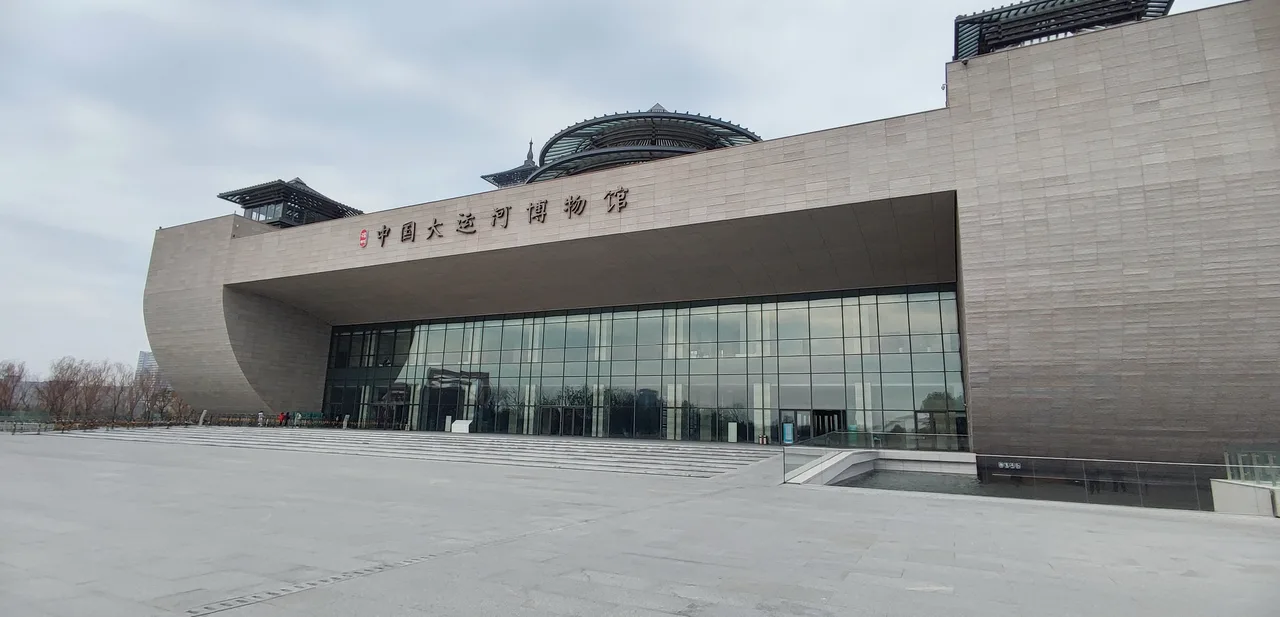
01. Asset Classification: Siphoning Defensive Liabilities vs. Self-Funding Productive Engines
To judge an ancient megaproject, ask one basic question: Did it grow the tax base? Or did it drain funds through endless handouts?
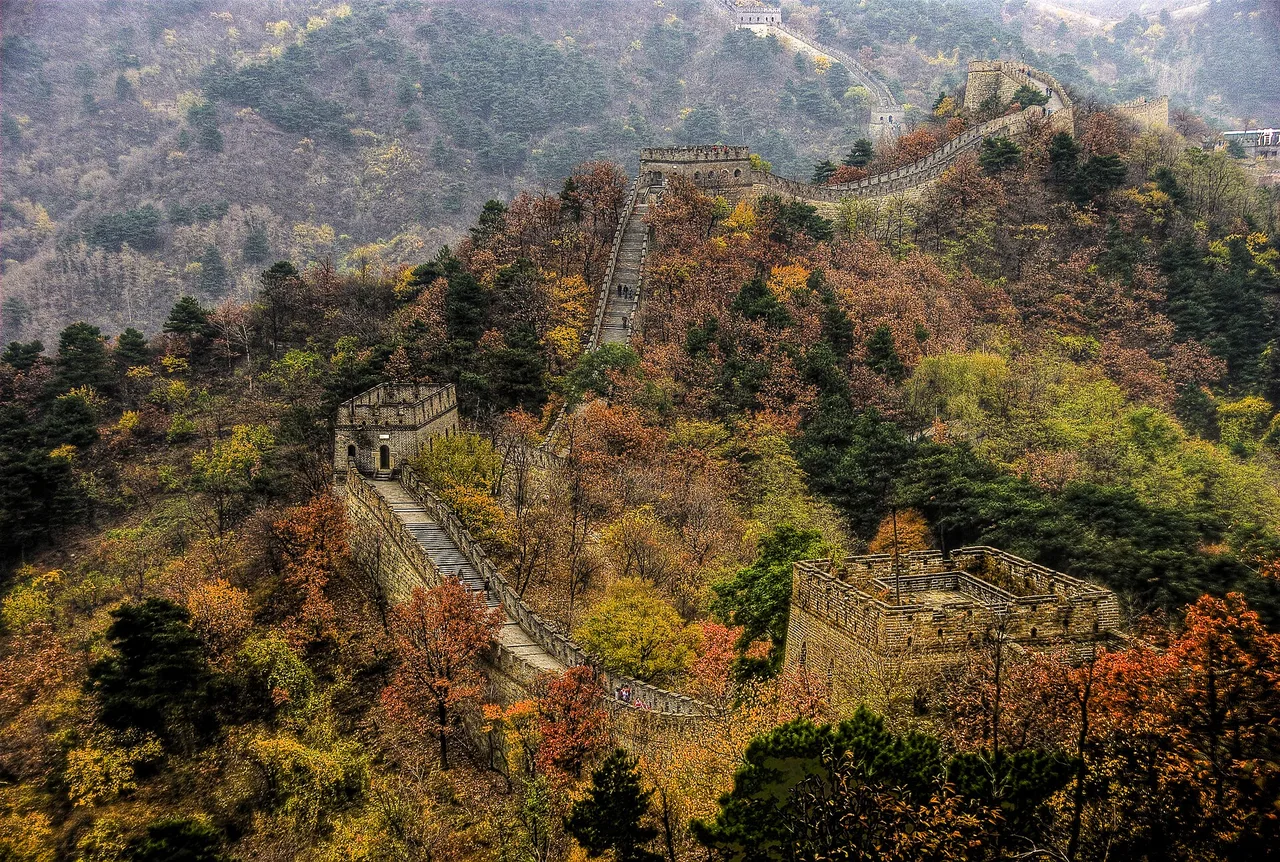
Qin defense projects pushed state resources to the limit. The Great Wall and the Qin Direct Road formed a linked northern shield. The 700-kilometer Qin Direct Road ran from near Xianyang to Jiuyuan. Workers roasted the soil and mixed it with salt and alkali. Then they tamped it hard to stop weed growth. Chariots and cavalry could reach the northern front in three days.
The road moved troops with unmatched speed. Financially, it made nothing. It opened no new farmland. It produced no customs tolls across barren sands. Once built, it became a permanent cost center. It demanded ongoing grain, draft animals, and garrison pay.
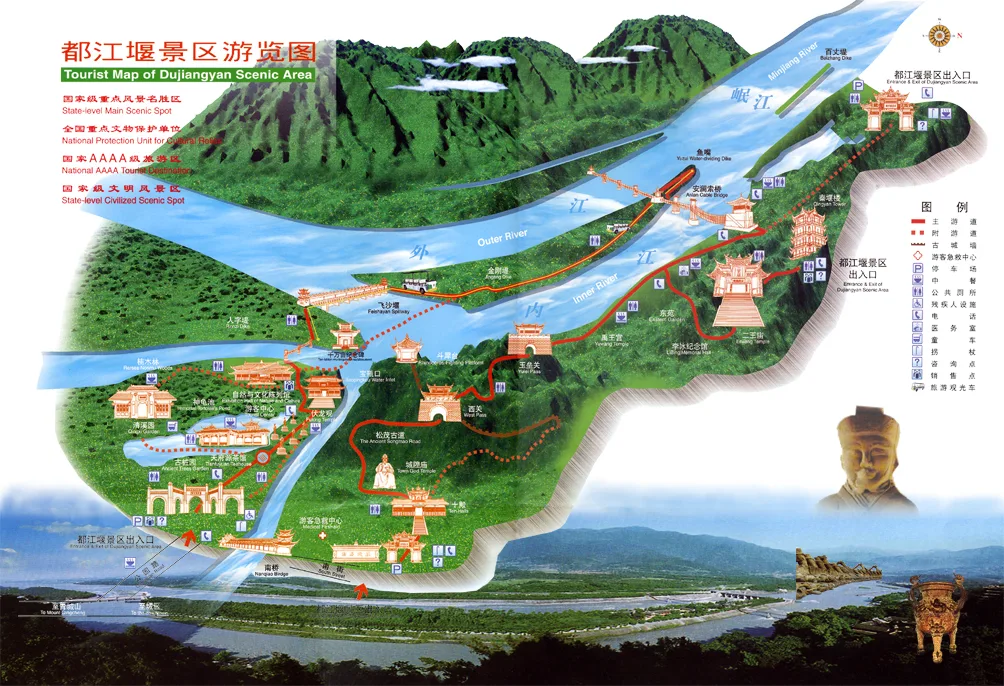
In contrast, Li Bing built the Dujiangyan Irrigation System as a wealth generator. The Zheng Guo Canal served the same role. The Dujiangyan Irrigation System tamed the Min River without a blocking dam. It turned the Chengdu Plain into rich farmland. The project needed no fresh gold from the capital. Farm output doubled per acre within five years. It gave the Qin state a steady store of local military provisions to win its wars.
This pattern mirrors ancient Roman public works. Rome used the Cursus publicus post system and Hadrian's Wall just like Qin walls and roads. They moved messengers and troops swiftly. Yet feeding legions along the Rhine and Danube ate up sixty percent of imperial income.
Roman aqueducts worked differently. They used gravity to bring clean water into towns, workshops, and estates. They cut down urban disease and kept markets alive. Their outflow turned grain mills. Like the Dujiangyan Irrigation System, aqueducts created wealth with small upkeep costs.
The table below breaks down the fiscal ledgers of these ancient projects:
| Project Category and Exemplar | Initial Mobilization and Labor Footprint | Core Post-Completion Cash Flow Property | Fiscal Amortization Cycle (ROI) | Long-Term Imperial Balance Sheet and Regime Survival |
|---|---|---|---|---|
| Purely Consumptive Ceremonial Works<br>(Qin Epang Palace, Mount Li Mausoleum) | Over 700,000 convicts and conscripts; long-distance overland transit of Damu timber, stone, and precious metals | Zero cash flow, zero output; locks up skilled artisan labor while generating no incremental tax base | Permanent total loss (Negative infinite ROI) | Exhausted basic rural agricultural labor; ignited widespread agrarian insurrection and shattered the Qin dynasty |
| Purely Defensive Interdiction Works<br>(Qin Direct Road, Northern The Great Wall) | Meng Tian command of 300,000 troops plus hundreds of thousands of civilian draftees; 700 km of rammed ridges and cut ravines | Zero incremental commercial or land taxes; immediately turned into an ongoing drain requiring regular troop rations and subsidies | Pure cost center, dependent on perpetual infusions from interior agrarian surpluses | Suppressed mobile nomadic raids, but high frontier maintenance eroded household wealth across the Central Plains |
| Hydraulic Irrigation and Crop Stabilization<br>(Warring States Dujiangyan Irrigation System, Zheng Guo Canal) | Mobilization of local Sichuan and Guanzhong laborers over several years; cut ridges and trunk diversion canals | High agricultural cash flow; turned Chengdu Plain into fertile tracts, yielding millions of bushels in grain taxes | Short payback window (Recovered capital outlay within 3 to 8 years through grain receipts) | Provided self-sustaining logistical storehouses for Qin unification wars; sustained regional economies for two millennia |
| Cross-Basin Imperial Waterways<br>(Grand Canal of the Sui and Tang Dynasties, Yuan/Ming Beijing-Hangzhou Grand Canal) | Sui mobilized 2 to 3 million men and women annually; Yuan cut the Jizhou and Huitong Canal routes | Slashed empire-wide transport costs; lowered freight charges 85% to 90% below overland rates; fostered dozens of customs hubs | High long-term yield (Immediate builder bankruptcy; Tang, Song, and Qing enjoyed centuries of revenue dividends) | Crushed Sui peasant reserves through compressed schedules; carried millions of grain bushels annually to sustain subsequent northern capitals |
An asset's financial model set the boundary of state survival. Even high-yield projects broke an empire if rushed beyond peasant limits.
02. Discount Rates and Mismatches: Sui Canal Construction and Intergenerational Free-Riding
The value of the Grand Canal is clear. It cut water transport costs by nearly ninety percent. It linked southern grain fields with northern military posts. Why did this success destroy the Sui?
The answer lies in hasty building schedules and bad timing.
Sound works needed phased steps and off-season labor. Emperor Wu of Han fixed the Huzi dike during the Yuanfeng era with seasonal crews. In contrast, Emperor Yang of Sui launched frantic digs in 605 CE:
- In 605 CE, the court drafted over one million men and women to dig the Tongji Canal. It linked the Gu, Luo, Yellow, and Huai rivers. That year, over 100,000 workers dredged the old Han Ditch.
- In 608 CE, the emperor called up another million workers for the Yongji Canal. It linked the Qin River north toward Zhuojun near modern Beijing.
- In 610 CE, decrees ordered the Jiangnan Canal from Jingkou to Yuhang. It ran over 800 li and spanned over 100 paces wide.
In six years, crews dug over 2,700 kilometers of canals.
[Simultaneous Multiline Canal Excavation]
  ├── Annual conscription exceeding 2–3 million laborers
  └── Labor shifts colliding directly with spring planting and autumn harvests
         │
         ▼
[Catastrophic Rupture of Rural Production]
  ├── Self-mutilation to evade corvée rosters ("auspicious feet and lucky hands")
  └── Abandoned fields across the Central Plains; regional food price surges
         │
         ▼
[Canal Capacity Diverted to Warfare Before Economic Payoff]
  └── The Yongji Canal reaches Zhuojun; imperial court launches three campaigns against Goguryeo
         │
         ▼
[Positive Externalities Strangled ── Imperial Liquidity Insolvency]
Millions of farm workers left their fields. Dead bodies piled along canal banks under summer heat and autumn rain. Desperate peasants broke their own limbs to avoid service. They called these wounds "auspicious feet and lucky hands."
A harsh policy error made things worse. Water entered the Yongji Canal in 611 CE. Peasant homes saw no trade benefits. Emperor Yang turned the canal into a war road right away. He gathered grain and draftees at Zhuojun. Then he attacked Goguryeo three times with millions of troops and porters.
The canal carried war gear instead of trade grain. This caused a total financial mismatch: The Sui took on all building costs and broke. The Tang and Song got a finished asset for free.
Tang poetry echoed this truth. Pi Rixiu praised the canal while noting the emperor's excess. In bad times, seers studied sky omens via ancient astronomy. Commoners blamed the canal for the fall of the Sui. Yet later dynasties lived off its trade for centuries.
03. Balancing the Ledgers: Household Corvée Toll vs. Imperial Grain Tribute
To see how megaprojects shook budgets, look past big totals. Check both peasant ledgers and central granary counts.
Micro-Ledger: Household Depletion and Local Enforcement
Official land tax was two dan of grain and two silk bolts per adult male. That alone did not break families. Hidden costs and missed harvests did the real damage.
Take a peasant home during the Sui-Tang transition with one working adult male. A draft call to the Yongji Canal brought heavy bills:
- Direct out-of-pocket costs: A worker served six months on the canal. He had to bring his own shoes, clothes, and food. Depots gave out bad rations. This cost about three bolts of silk.
- Harvest loss: The man missed summer weeding and autumn reaping. His wife and small children could not work the farm alone. Twenty mu of land lost sixty percent of its yield. That was over 15 dan of grain gone.
- Extortion and evasion costs: Dodging the draft required bribes. Families paid off village elders, the Township leader, and canal bosses with thousands of coins.
- Permanent household insolvency: Filthy work camps spread typhus and dysentery. Sickness killed over twenty percent of crews. When the provider died, the family lost its land. Widows and orphans fell into tenant debt on big estates.
Local officials faced brutal pressure. They faced death if canals opened late. They used whips to drive laborers into ruin.
Macro-Ledger: Imperial Logistics and Regime Security
Imperial ministers faced a tough problem. Political centers lay far from southern farm belts.
Canal logistics transformed the empire:
- Overland freight friction: Moving grain across the Xiao and Han passes took huge effort. Draft animals and porters ate four to six dan of grain for every dan brought to Guanzhong. Loss rates ran between 70 and 80 percent. Moving one dan meant burning many more along the way.
- Barge shipping margins: On the Grand Canal, one barge carried hundreds of dan. Downstream currents and towpaths cut losses to between 15 and 25 percent. The Hanjia Granary stored huge grain piles across dynasties.
- Dynastic security dividends: Kaifeng under the Northern Song used the Bian Canal to haul six million dan of tribute grain yearly. This grain fed the court, troops, and city folk. Later, Beijing under the Yuanming era and afterward relied on canal barges for food. Moving southern wealth north kept the empire whole. The Dianlun noted that logistical balance brought stability. Regional lords like a Prince of Song kept peace through sound transport. The Ministry of War and civil boards built plans around these waterways. Leaders looked to them and stood Yuzhi in official policy debates.
Yet over time, this supply system decayed into an open graft network.
04. Marginal Decay and Systemic Corruption: The Late Qing River Conservancy Deficit
By the late Ming and Qing eras, water management served bureaucratic pockets rather than state goals. Treasuries stopped building new canals. Yet keeping up old channels became an endless drain.
During the Daoguang years, canal and Yellow River costs grew out of hand. Yellow River silt broke dikes in Henan, Shandong, and Jiangsu. Floods threatened the Qingkou hub at Qingjiangpu where the canal crossed the river.
The Ministry of Revenue paid four to five million silver taels yearly to the Director-general of the Grand Canal. Each regional Supreme Commander on the river shared the money. Big floods pushed emergency spending past ten million taels. That ate up a third of annual cash income.
Corrupt networks stole these funds:
- Capital kickbacks: The office of the Director-general of the Grand Canal sent 10 to 15 percent of funds back to Beijing. Officials in the Ministry of Works and Ministry of Revenue took this cut as gifts and review fees.
- Circuit and department skimming: Money trickled down to local river depots. Officers pocketed large sums for feasts and private opera troupes.
- Material falsification: Buyers billed five to eight times the real cost for stone and willow branches. Crews packed dikes with dirt and straw instead of solid rock. Dikes looked sound but remained weak.
This created a moral hazard called "living off river works." Fixed dikes threatened graft. If the river stayed calm, the court cut budgets. That dried up kickbacks for officers and troops.
A big dike break brought millions of taels in emergency aid. It gave thieves a chance to pad receipts. A flood-defense system turned into a scheme to loot silver from the treasury.
Nature broke this racket in the end. In 1855, the Yellow River burst its banks at Tongwaxiang. It turned north to the Bohai Sea through Shandong. Strained by the Taiping Heavenly Kingdom war, the Qing treasury ran empty. Southern river spending stopped. The graft ring fell apart.
This shows the final phase of old infrastructure: Bureaucrats stripped away technical value, turning repair work into a drain that speeded dynastic collapse.
05. Conclusion: The Fiscal Arithmetic of Imperial Survival
Rulers saw big walls, roads, and waterways as signs of divine right. Yet imperial balance sheets show cold truths.
A megaproject made or broke an empire based on three rules:
- Asset Productivity: The project had to pay for itself. It had to lower trade friction and grow the tax base. It could not linger as a dead drain on the treasury.
- Pacing and Amortization: Building schedules had to respect peasant labor limits. Costs had to spread across generations. Rulers could not crush farm labor before yields matured.
- Administrative Drag: Upkeep needed clean execution. When graft rings captured work sites, bigger budgets only hurried dynastic collapse.
The Grand Canal outlived its builders. Wild grass hid the Qin Direct Road. Silver chests sank into river silt. Dynasties rose or fell on the cold math of infrastructure finance.
Primary Sources & Historical Bibliography
- *Sima Qian, Records of the Grand Historian, Vol. 87 ("Biographies of Li Si") / Vol. 6 ("Basic Annals of the First Emperor of Qin"): Documents the mobilization of over 700,000 convict laborers for Epang Palace and the Mount Li mausoleum, alongside Meng Tian's construction of the Qin Direct Road and the northern walls that crossed valleys and cut mountains over 1,800 li*.
- *Wei Zheng et al., Book of Sui, Vol. 24 ("Treatise on Food and Money") / Vol. 3 ("Basic Annals of Emperor Yang")*: Details the conscription of millions of laborers across Henan, Hebei, and the Huai-Yangtze basins between 605 and 610 CE to excavate the Tongji, Yongji, and Jiangnan canals, alongside the resulting rural dislocation.
- *Du You, Tongdian, Vol. 10 ("Food and Money Part 10: River and Land Transport of Jiangnan")*: Comprehensive assessments of Tang dynasty grain tribute quotas, waterborne transport losses, and depot operations along the Grand Canal from the Zhenguan through Tianbao eras.
- *Zhao Erxun et al., Draft History of Qing, Vol. 126 ("Treatise on Rivers and Canals I")*: Records the hydraulic works around the Qingkou canal-river intersection under the Director-general of the Grand Canal, itemizing annual maintenance budgets and the 1855 Tongwaxiang course shift.
- *Ch'uan Han-sheng, The Tang-Song Empire and the Grand Canal*** (The Commercial Press): A foundational study tracing the fiscal interdependence between southern agrarian wealth and northern military centers via imperial waterways.