Qin Kai Repels Donghu
General Qin Kai pushed nomadic forces back over one thousand li; Yan established Liaodong Commandery at Xiangping and erected protective walls.
Qing Dynasty (清朝) · HISTORICAL EVENT
辽东
The Liaodong (Historical Evolution and Administration) (辽东) refers to the historical governance and administrative evolution of the strategic territory situated east of the Liao River in Northeast China. During the Warring States period, King Zhao of Yan commissioned General Qin Kai to repel the nomadic Donghu confederation, subsequently establishing Liaodong Commandery with its administrative seat at Xiangping (modern Liaoyang, Liaoning). This move…
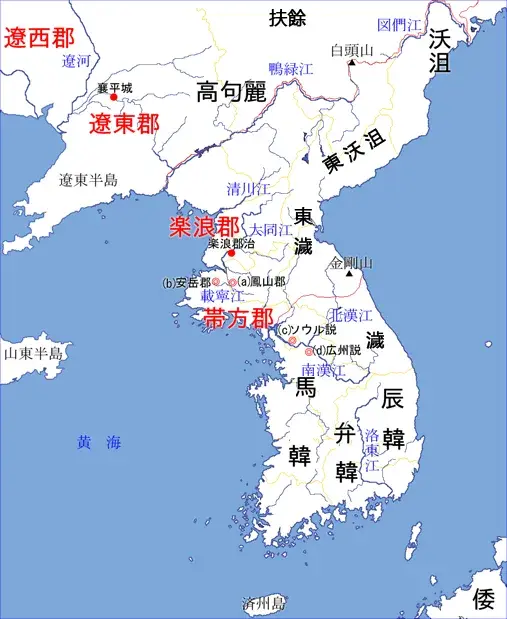
The Liaodong (Historical Evolution and Administration) (辽东) refers to the historical governance and administrative evolution of the strategic territory situated east of the Liao River in Northeast China. During the Warring States period, King Zhao of Yan commissioned General Qin Kai to repel the nomadic Donghu confederation, subsequently establishing Liaodong Commandery with its administrative seat at Xiangping (modern Liaoyang, Liaoning). This move formally incorporated the region into the Chinese geopolitical realm. Inherited and expanded by the Qin and Han dynasties, Emperor Wu of Han founded four commanderies across the Korean peninsula using Liaodong as the primary administrative springboard. During the chaotic transition from Eastern Han to the Three Kingdoms, the Gongsun warlord family established autonomous regional rule across Liaodong for over five decades before General Sima Yi conquered the territory for Cao Wei. Successive emperors of the Sui and Tang dynasties launched major military expeditions against Goguryeo, culminating in the establishment of the Protectorate General to Pacify the East. Through the Liao, Jin, Yuan, and Ming dynasties, Liaodong functioned as a vital military and logistical corridor, governed through the Regional Military Commission and shielded by the Liaodong Great Wall, until the rise of the Jurchen Qing Dynasty. Over two millennia of governance, Liaodong bridged agrarian central plains civilizations and northeastern hunter-nomadic cultures, forging an enduring multi-ethnic imperial frontier.
General Qin Kai pushed nomadic forces back over one thousand li; Yan established Liaodong Commandery at Xiangping and erected protective walls.
General Meng Tian integrated northern defense lines, terminating the Great Wall of Qin in the Liaodong frontier.
Emperor Wu of Han established four commanderies across Korea, with Liaodong Commandery serving as the administrative anchor.
Gongsun Du asserted autonomous control as Marquis of Liaodong, founding a dynasty that governed southern Manchuria for fifty years.
Cao Wei general Sima Yi besieged Xiangping, eliminated Gongsun Yuan, and returned Liaodong to centralized imperial control.
Tang forces captured Pyongyang, establishing the Protectorate General to Pacify the East to oversee regional prefectures from Liaodong.
Zhu Yuanzhang established the Liaodong Regional Military Commission at Liaoyang and constructed the Liaodong Border Wall.
Qing armies crossed Shanhaiguan; Liaodong was elevated as the ancestral heartland governed under the General of Shengjing.
Liaodong borders the Liao River to the west, the Bohai and Yellow Seas to the south, the Changbai Mountains and Yalu River to the east, and the Songliao Plain to the north. This unique topography created a vital land and sea corridor connecting the agricultural Central Plains with the nomadic and forest-dwelling peoples of Northeast Asia. Since prehistoric times, fertile river valleys supported native bronze-age cultures. Prior to the Warring States period, indigenous peoples such as the Donghu, Sushen, and Yemaek roamed the territory, conducting barter trade with northern Chinese feudal lords without formal administrative ties.
During the mid-to-late Warring States period, the northern kingdom of Yan sought territorial depth to counterbalance the military might of rival neighbors Qi and Zhao. King Zhao of Yan revitalized the state by recruiting skilled counselors and military strategists. To permanently neutralize the chronic raids of the Donghu nomads along the northern borders, Yan rulers resolved to mount a decisive offensive, opening overland and maritime avenues toward southern Manchuria and the Korean peninsula.
Around 300 BCE, King Zhao of Yan dispatched General Qin Kai to spearhead a major campaign against the Donghu. Having spent years as an honored hostage among the nomads, Qin Kai possessed intimate knowledge of their internal terrain, military tactics, and seasonal movements. His swift offensive shattered Donghu forces, driving them back more than one thousand li and securing vast stretches of fertile river basin.
Following this victory, the State of Yan established five frontier commanderies: Shanggu, Yuyang, Youbeiping, Liaoxi, and Liaodong. The administrative seat of Liaodong Commandery was situated at the fortified town of Xiangping. To protect the newly annexed settlers, Yan constructed a formidable rammed-earth wall stretching from Zaoyang eastward to Xiangping, garrisoned with fortresses and beacon stations. Thousands of Central Plains migrants introduced advanced iron-tipped plows, transforming the regional economy.
Following the unification of China, Qin Shi Huang incorporated the Yan frontier fortifications into the Great Wall of China, positioning veteran legions at Xiangping. In 108 BCE, Emperor Wu of Han launched joint land-and-sea campaigns that defeated Wiman Joseon, establishing four Korean commanderies including Lelang and Xuantu. Liaodong Commandery served as the supreme logistical and diplomatic headquarters for Northeast Asian affairs.
Amid the collapse of the Eastern Han court in 189 CE, regional administrator Gongsun Du declared himself Marquis of Liaodong and Governor of Pingzhou. Capitalizing on geographic isolation and local economic prosperity, Gongsun Du subdued the Xianbei and Goguryeo tribes, extended authority across the Bohai Gulf into Shandong, and created an autonomous regional dynasty. His son Gongsun Kang and grandson Gongsun Yuan maintained independence for half a century, providing refuge for scholar-elites fleeing civil war in central China. In 238 CE, Grand Commandant Sima Yi led forty thousand Cao Wei troops through severe seasonal floods, besieged Xiangping, and eradicated the Gongsun regime, reasserting imperial control.
During the Northern and Southern Dynasties, the kingdom of Goguryeo expanded westward into southern Manchuria, heavily fortifying mountainous citadels such as Liaodong City, Xincheng, and Baiyan. Recognizing this expansion as an existential threat to northern frontier security, Emperor Yang of Sui mobilized vast imperial resources across three massive campaigns against Goguryeo, which depleted state reserves and catalyzed the fall of the Sui Dynasty.
Emperor Taizong of Tang renewed the imperial commitment to re-establishing historical boundaries. In 645 CE, Taizong personally directed the Liaodong campaign, breaching Liaodong City and defeating a massive relief force at Zhubi Mountain. In 668 CE, Emperor Gaozong dispatched senior general Li Ji to capture Pyongyang, annihilating Goguryeo. The Tang court established the Protectorate General to Pacify the East (Andong Duhufu), later transferring its seat to Liaodong City to govern prefectures across southern Manchuria and northern Korea.
During the medieval period, the Khitan Liao Dynasty absorbed the region after conquering Bohai, establishing Dongjing Liaoyang Prefecture as one of its five imperial capitals. The Jurchen Jin Dynasty continued this administrative model with the Dongjing Circuit, and the Mongol Yuan Dynasty organized the Liaoyang Branch Secretariat to direct governance over northeastern territories.
In 1371, Ming founder Zhu Yuanzhang pacified northern remnants and created Dingliao Guard, upgrading it in 1375 to the Liaodong Regional Military Commission based at Liaoyang. The Ming administration fortified twenty-five garrisons and constructed the Liaodong Border Wall linking Shanhaiguan to the Yalu River. Agricultural colonies and border horse markets enriched the local economy. In the early seventeenth century, Jurchen chieftain Nurhaci united Manchurian clans at Hetu Ala, captured Liaoyang and Shenyang, and laid the foundations for the Qing Dynasty to sweep into China proper.
A renowned general of the State of Yan during the Warring States period. After spending his youth as a diplomatic hostage among the Donghu, he commanded Yan armies in an offensive that seized expansive territories, founded five frontier commanderies including Liaodong, and initiated Chinese governance in the northeast.
An Eastern Han warlord and regional governor who consolidated local power amid empire-wide civil conflicts. Gongsun Du fortified Xiangping, encouraged agricultural development, and governed an autonomous state that preserved traditional classical scholarship during the Three Kingdoms era.
A premier statesman and supreme military commander of Cao Wei. Commissioned by Emperor Ming of Wei, he executed a strategic campaign across harsh terrain to besiege Xiangping and extinguish the Gongsun regime, restoring unified governance over the northeastern borderlands.
The second emperor of the Tang Dynasty and a brilliant military strategist. Driven to recover ancient Han borders and protect northern commanderies, he personally led the 645 CE campaign into Liaodong, capturing critical fortresses and shattering enemy armies in the field.
The founding emperor of the Ming Dynasty (Emperor Taizu). Recognizing the geopolitical vulnerability of the northern frontier, he established the Liaodong Regional Military Commission, settled military agricultural garrisons, and built protective border walls that stabilized the region for centuries.
The enduring governance of Liaodong across two thousand years established the territorial foundation of China's northeastern domain. By continually instituting commanderies, protectorates, branch secretariats, and military commissions, successive Chinese empires extended legal administration, military defense, and cultural authority across Manchuria, securing unquestioned sovereignty over the frontier.
The historical development of Liaodong served as an engine of civilizational synthesis. Waves of Han farmers, merchants, and scholars brought advanced metallurgical arts, hydraulic irrigation, silk weaving, and Confucian literature to the Liao River basin. These elements interacted fruitfully with the equestrian, pastoral, and hunting practices of the Donghu, Xianbei, Jurchen, and Manchu peoples, forging the multifaceted cultural identity of modern Northeast China.