Birth | Born at Liushujian, Yan'an Guard, Shaanxi, in present-day Dingbian County.
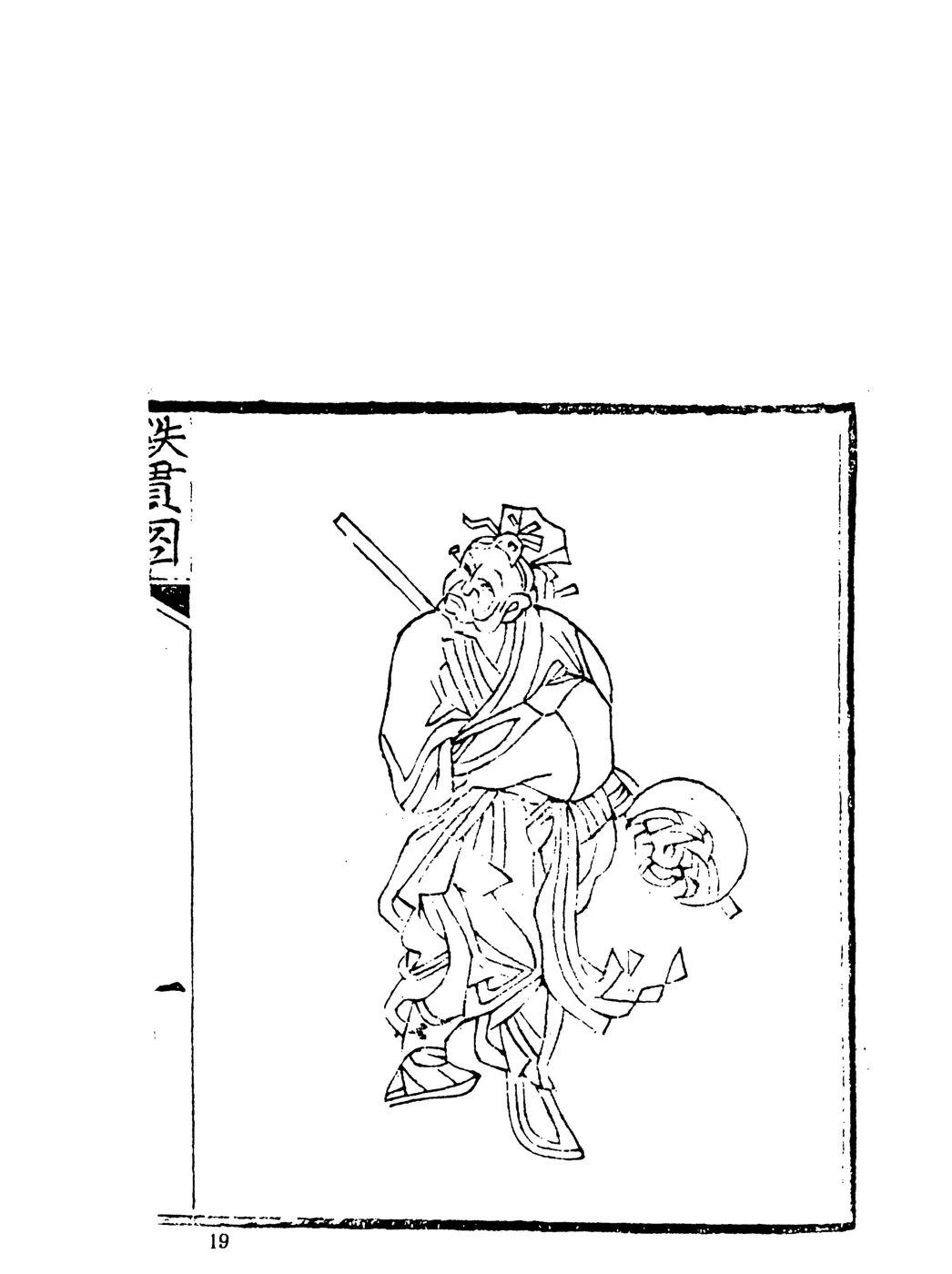
1606 CE–1647 CE
Rebellion leader
Zhang Xianzhong
张献忠
Zhang Xianzhong was a leading figure in the Late Ming peasant rebellions. He established the Xi regime in Chengdu and was often mentioned together with Li Zicheng.
1606 CE–1647 CEMing Dynasty
PROFILE
Zhang Xianzhong was a leading figure in the Late Ming peasant rebellions. He established the Xi regime in Chengdu and was often mentioned together with Li Zicheng.
- Also Known As
- Eighth Great King
- Courtesy Name
- Bingwu
- Art Name
- Jingxuan
- Period
- Ming
- Date of Birth
- September 18 1606
- Date of Death
- January 2 1647
- Dynasty/Regime
- Ming
- Identity
- Rebellion leader
- Ethnicity/Ethnic Affiliation
- Not recorded in historical sources
- Ancestral Home
- Dingbian County, Shaanxi
- Place of Birth
- Liushujian, Yan'an Guard, Shaanxi (present-day Dingbian County, Shaanxi)
- Place of Death
- Not recorded in historical sources
- Highest Office
- See Biography and Major Activities
- Major Achievements
- Leader of the Late Ming peasant rebellions; established the Xi regime at Chengdu; often mentioned alongside Li Zicheng.
LIFE TIMELINE
Youth | Worked as a constable in Yan'an Prefecture and later enlisted at Yansui; sentenced to death for an offense, but Chen Hongfan interceded, after which Zhang received one hundred strokes and was expelled from service.
Age 24 | Gathered peasants from eighteen fortified villages around Mizhi in response to Wang Jiayin's uprising and styled himself the “Eighth Great King.”
Age 25 | After Wang Jiayin was defeated and killed, briefly accepted pacification from Hong Chengchou but rebelled again the next year.
Age 28 | Entered Sichuan and attacked Kui Prefecture, was defeated by Qin Liangyu, and withdrew toward Huguang.
Age 29 | Took part in the Xingyang conference, advanced east with Gao Yingxiang and others, captured Fengyang, and burned the Ming imperial mausoleum complex.
Age 32 | Accepted pacification from Xiong Wencan at Gucheng, stationed troops there, and refused incorporation into government forces.
Age 33 | Raised the rebel banner again at Gucheng in the fifth lunar month, killed magistrate Ruan Zhitian, and joined Luo Rucai.
Age 34 | Suffered a severe defeat by Zuo Liangyu at Manao Mountain, broke through into Sichuan, and used rapid maneuver warfare to evade Yang Sichang.
Age 35 | Captured Xiangyang in the second lunar month, killed Prince Xiang Zhu Yiming, and Yang Sichang committed suicide in fear of punishment.
Age 37 | Occupied Wuchang in the fifth lunar month, took the title “King of Great Xi,” and had Prince Chu Zhu Huakui drowned in the river.
Age 38 | Captured Chengdu in the eighth lunar month and in the eleventh lunar month proclaimed himself emperor, established the Xi state, adopted the era name Dashun, and renamed Chengdu Xijing.
Age 40 | As Qing troops advanced south, abandoned Chengdu and moved north to resist them; in the eleventh lunar month was shot and killed at Phoenix Mountain near Xichong.
Death | Death; aged 41
BIOGRAPHY
Biography
Family Background and Early Life
On September 18, 1606, the thirty-fourth year of Wanli, Zhang Xianzhong was born at Liushujian in Yan'an Guard, Shaanxi, now Liuqu Village, Haotan Town, Dingbian County, Yulin. The area lay on the arid Loess Plateau and local people lived in difficult conditions. Zhang came from a poor family but had some schooling and basic literacy, unusual among many contemporary rebel leaders. As an adult he worked as a constable in Yan'an Prefecture, lost the post after an offense, and later joined the army at Yansui.
While serving there Zhang committed an offense punishable by death. According to Peng Sunyi's Pingkou Zhi, commander Chen Hongfan considered Zhang young and unusual in appearance and interceded with commander Wang Wei. Wang spared his life, ordered one hundred strokes, and expelled him. This experience exposed Zhang directly to the corruption of the Ming military and administrative system and also created a personal connection with Chen Hongfan, who later played a role in Zhang's acceptance of pacification in 1638.
By the end of the Tianqi era Shaanxi suffered repeated drought and insect disasters. Crops withered and famine deaths spread widely. Peasant uprisings first erupted in northern Shaanxi: Wang Jiayin and Wang Ziyong rose in Fugu, followed by Gao Yingxiang in Ansai and Li Zicheng in Mizhi. Zhang was then drifting through the countryside and, living close to the lowest social strata, experienced both official corruption and popular hardship.
Rising in Rebellion and Mobile Warfare
In 1630 Zhang gathered peasants from eighteen villages near his home and joined Wang Jiayin's uprising, styling himself the “Eighth Great King.” Because he was described as tall and thin, with a slightly yellow face and a long beard, vigorous and bold, his troops also called him the “Yellow Tiger.” He had some education and military training, was resourceful and daring, and quickly demonstrated command ability. His force became one of the strongest among the thirty-six camps led by Wang Ziyong.
After Wang Jiayin was defeated and killed in the sixth lunar month of 1631, Zhang briefly accepted pacification under Hong Chengchou but rebelled again the following year. Over the next several years he led troops through Shaanxi, Shanxi, Henan, Anhui, and Hubei, expanding from several thousand to tens of thousands and becoming one of the most powerful rebel commanders of the late Ming.
In 1634 Zhang entered Sichuan, captured Kui Prefecture, and advanced against Taiping. Qin Liangyu, the female Ming commander at Chongqing, arrived with her “White Staff Troops.” Zhang withdrew, was attacked from front and rear by Qin and her son Ma Xianglin, and suffered a serious defeat, one of the relatively few major reverses in his career.
In 1635 the main rebel armies were encircled by government forces in Henan. Leaders of thirteen rebel groups met at Xingyang and agreed to divide their forces. Zhang and Gao Yingxiang advanced east, took Gushi in Henan and Huoqiu in Anhui, and then struck Fengyang, the Ming secondary capital. In heavy morning fog Zhang's men surrounded the city and within half a day destroyed a defending force said to number over twenty thousand, killed defender Zhu Guozheng, and captured and killed prefect Yan Rongxuan. Zhang distributed government grain to poor peasants, ordered the trees at the imperial mausoleum complex cut down, destroyed Longxing Temple, and had the ancestral graves of Zhu Yuanzhang dug up. When the Chongzhen Emperor learned of this, he wore mourning dress, wept at the imperial ancestral temple, ordered officials to work in plain clothing and eat simple food, dismissed the Minister of War, and ordered the execution of the Fengyang governor and regional censor.
After taking Fengyang, Zhang moved south, successively capturing Luzhou, Anqing, He Prefecture, and Chu Prefecture and advancing along the Yangzi as far as Yizheng in Jiangsu. He then turned west, joined Ma Shouying's troops at Macheng in Hubei via Yingshan and Huoshan, returned through Henan and Shaanxi, and reached Guanzhong through Shangluo. By moving rapidly between regions and attacking weak points, he frustrated government plans to encircle the rebel armies in the Central Plains.
Pacification and Renewed Revolt
In 1637, the tenth year of Chongzhen, Minister of War Yang Sichang devised a large encirclement plan described as “four fronts, six corners, and ten-sided netting.” Government pressure caused major rebel setbacks. Li Zicheng suffered repeated defeats in Shaanxi and Liu Guoneng and others submitted in Henan. Zhang was defeated and wounded by Zuo Liangyu while attacking Nanyang but was rescued by his subordinate Sun Kewang and withdrew to Gucheng in Hubei.
In 1638, under heavy government pressure and seeking to preserve his forces, Zhang accepted pacification from Minister of War Xiong Wencan at Gucheng. He nevertheless refused reorganization and reassignment, declined an official title, and retained operational independence. He distributed his force of about forty thousand men among four camps around Gucheng, each led by a senior commander. During the respite they collected fodder and grain, manufactured weapons, recruited men, and trained. Zhang also frequently invited people to lecture him on The Art of War, combining its teachings with experience from previous campaigns as he prepared to rise again.
In the fifth lunar month of 1639 Zhang again rebelled at Gucheng. His troops quickly defeated the government garrison, killed county magistrate Ruan Zhitian and censor Lin Mingqiu, demolished the walls, looted government stores, and released prisoners. Before leaving, Zhang ordered lists of bribes demanded by local officials, including the sums and dates, written on the walls inside and outside the city to expose official corruption. Luo Rucai and Ma Shouying also rose and joined him, while Li Zicheng emerged again from the Shangluo Mountains and moved through Hubei into Henan. Rebellion once more spread through the Central Plains.
The Chongzhen Emperor ordered Zuo Liangyu and Luo Dai to pursue. Zhang hid his main force west of Fang County at Luohou Mountain and sent a detachment to feign attack and retreat. Government troops followed into the hills and were surrounded; more than ten thousand broke, Luo Dai was captured, and Zuo Liangyu fled after losing equipment, command tallies, and seals. The emperor dismissed and executed Xiong Wencan, demoted Zuo three ranks with orders to redeem himself through service, and appointed Grand Secretary Yang Sichang to direct the campaign against Zhang and Li Zicheng.
Entering Sichuan and Establishing the Xi Regime
In the intercalary first lunar month of 1640, Zhang was defeated by Zuo Liangyu at Gouping Pass and broke into Sichuan. At Manao Mountain in Taiping County he was again attacked by Zheng Chongjian and Zuo, suffered heavy losses, and withdrew into the mountains around Xing'an and Gui Prefecture, where he was surrounded. Zhang exploited tensions between Yang Sichang and Zuo Liangyu. He sent Zuo rich gifts with the message that it was Zhang's own continued existence that caused the court to value Zuo, and that if Zhang disappeared Zuo's own death would not be far away. Zuo's resolve weakened, allowing Zhang to regroup scattered followers, escape Xing'an, and reunite with Luo Rucai.
Zhang also exploited conflict between Sichuan governor Shao Jiechun and Yang Sichang, concentrated his troops against Xinning, defended by Shao, and routed government forces. Once in Sichuan, Zhang generally avoided fixed battles and relied on rapid movement, described as “controlling the enemy through movement.” His force could reportedly travel more than three hundred li in a day and night, repeatedly forcing government armies to react too slowly. Yang Sichang coordinated a large encirclement from Chongqing but failed to pin down Zhang's main force. Zhang's troops even circulated mocking verses about Shao Jiechun, military officer Liao, and Yang Sichang being unable to keep pace.
In the second lunar month of 1641, while Yang's main armies were concentrated in Sichuan, Zhang led elite cavalry out of the province at high speed and launched a surprise attack on Xiangyang. He killed Prince Xiang Zhu Yiming and distributed five hundred thousand taels of silver to famine victims. Yang Sichang, fearing punishment, committed suicide. The largest Ming encirclement operation against the rebels thus ended in complete failure.
Zhang then campaigned through Huguang and Jiangxi. In the third lunar month of 1643 he took the title “King of the West” at Huangzhou. In the fifth lunar month he occupied Wuchang, styled himself “King of Great Xi,” and had Prince Chu Zhu Huakui drowned in the river. In the first lunar month of 1644 Li Zicheng granted Zhang the title Prince of Qin. That spring Zhang again entered Sichuan, captured Chongqing in the sixth lunar month, and executed Prince Rui Zhu Changhao, Sichuan governor Chen Shiqi, and others. In the eighth lunar month he captured Chengdu; Prince Shu Zhu Zhishu committed suicide, while governor Long Wenguang and commander Liu Jiayin died in the fighting. In the eleventh lunar month Zhang proclaimed himself emperor at Chengdu, established the Xi state, adopted the era name Dashun, and renamed Chengdu Xijing.
Defeat and Death
After the Xi regime was established, Zhang faced a severe strategic situation. Li Zicheng's Dashun regime in the north collapsed rapidly under Qing attack, and Qing armies began to turn toward Sichuan. At the same time, the Chinese source describes Xi rule in Sichuan as extremely violent, marked by indiscriminate killing and continuing resistance from local communities.
In 1646, the third year of Shunzhi, Prince Su Hauge of the Qing led troops south into northern Sichuan. Zhang left Chengdu to oppose them. Before departure he killed his own wives, concubines, and young sons so that they would not be captured after defeat. Liu Jinzhong, left to guard Hanzhong, surrendered to Qing. On the jisi day of the eleventh lunar month, January 2, 1647, Zhang was scouting near the Taiyang River in front of Duobao Temple at Phoenix Mountain, on the border of Xichong and Yanting counties, when he was shot and killed by Qing vanguard troops under Liu Jinzhong.
After Zhang's death, his four adopted sons Li Dingguo, Sun Kewang, Liu Wenxiu, and Ai Nengqi led the remaining Xi forces to join the Southern Ming resistance against Qing. They campaigned through Guizhou and Yunnan and became an important military force in the later Southern Ming.
Early Life, Soldiering and His Nickname
Zhang Xianzhong (1606-1647), whose courtesy name was Bingwu and style Jingxuan, was born at Liushujian in the Yan'an guard of Shaanxi, on the poor loess plateau where the people lived hard; of a poor family, he had learned to read a little, which was rare among the rebel leaders of his day. As a young man he served as a constable at Yan'an, was dismissed, and joined the army at the Yansui garrison, where, having broken the law and been condemned to death, he was saved according to Peng Sunyi's chronicle: of eighteen men stripped for execution who begged for their lives when the general Chen Hongfan passed, Chen, noting the last and youngest, of strange appearance, asked that "if he cannot be pardoned outright, let this boy at least be spared", and the commander Wang Wei laughingly agreed, so that seventeen died and Zhang alone escaped with a hundred strokes and dismissal. The experience taught him the corruption of Ming military government and began his special connection with Chen, which explains his acceptance of amnesty in 1638. He is said to have been "tall and lean with a yellowish face and a beard a foot six inches long, swift, vigorous and given to chivalry", and was called in the army the Yellow Tiger.
Raising the Flag, the Thirty-Six Camps and the Eastern Drive
In the last years of Tianqi Shaanxi suffered famine, drought and locusts, "the young grain scorched and the starving lying everywhere", and northern Shaanxi rose first. In 1630 Zhang gathered the peasants of eighteen stockades in his district in response to Wang Jiayin's rising and styled himself the Eighth Great King. When Wang Ziyong later gathered thirty-six camps, "Zhang Xianzhong, with Gao Yingxiang, Luo Rucai and Ma Shouying, were all among its chiefs", and because Zhang had studied and had military training, was resourceful and brave, his force quickly became the strongest of the thirty-six. The histories describe the age as one in which "several thousand li of Shaanxi, Henan, Huguang, Sichuan and the north of the river were ravaged", the rebel chiefs having no single master, each fighting for himself, advancing when they won and scattering into the valleys when they lost, so that "the government troops, pursuing, did not know which bandit they were chasing", while the rebels "now split, now joined, charging east and west, growing daily stronger". In the winter of 1633 most crossed the Yellow River southward, Zhang's force among them; in 1634 he entered Sichuan, took Kuizhou and besieged Taiping, but Qin Liangyu, the woman commander of Chongqing, brought up her white-poled troops and he retreated in fear, being attacked front and rear by her and her son Ma Xianglin and heavily defeated — one of his few defeats. In 1635, with the government forces encircling the rebels in Henan, thirteen chiefs held a council at Xingyang to divide and break out; there "Ma Shouying wished to cross north and Zhang sneered at him, at which Ma was angry and Li Zicheng reconciled them", which shows his standing, for "Zhang and Gao Yingxiang had risen together, while Zicheng was only Yingxiang's lieutenant and did not dare stand equal with Zhang". After the council he marched east with Gao Yingxiang, taking counties in Henan and Anhui and striking at Fengyang, the central capital: in a misty dawn his men surrounded the city, destroyed its twenty thousand guards within half a day, killed the commander Zhu Guozheng and, capturing the prefect Yan Rongxuan, executed him before the people after reciting his crimes; he distributed the treasury grain to the poor and had the people cut down the hundreds of thousands of pines and cypresses of the imperial tombs, demolish the Longxing temple and dig up Zhu Yuanzhang's ancestral graves. The Chongzhen emperor, on hearing it, put on mourning, wailed in the ancestral temple, ordered his officials to wear plain cloth and eat plain food, dismissed the minister of war and beheaded the grand coordinator and the inspecting censor of Fengyang; that year "several tens of thousands of gentry and people were killed, pregnant women ripped open, infants impaled on spears, and two thousand six hundred and fifty public and private buildings burned". He then swept south to Luzhou, Anqing, Hezhou and Chuzhou and along the Yangtze to Yizheng, turned back west through Yingshan and Huoshan to join Ma Shouying at Macheng in Hubei, re-entered Henan and Shaanxi by way of Shangluo, and by marching a thousand li, appearing now east and now west and choosing the weak points of the government forces, broke their plan to destroy the rebels in the Central Plains. In the ninth month of 1636 Gao Yingxiang was captured in an ambush; thereafter Zhang's force became the chief target of the government troops west of the Tong Pass, yet he beat them repeatedly in Hubei, Henan and Anhui, and in Henan "stormed Xuzhou and killed the brother of Zuo Liangyu, taking goods worth tens of thousands", and the next spring killed the Ming general Pan Keda at Fengjiadian.
The Amnesty at Gucheng and the Rising Again
Because the rebel bands lacked unified command and acted each for itself, by the spring of 1638 all had suffered reverses; the minister of war Yang Sichang devised the strategy of "four uprights, six corners and a ten-sided net", Li Zicheng was repeatedly defeated in Shaanxi, and Liu Guoneng and others submitted in Henan, which brought Zhang great difficulty. Defeated by Zuo Liangyu in an attack on Nanyang and himself wounded, he was saved by his subordinate Sun Kewang and withdrew to Gucheng. That year, to preserve his strength, he accepted the amnesty of the minister of war Xiong Wencan at Gucheng, but refused reorganisation, transfer or rank, keeping his independence: he distributed his forty thousand men in four camps about the town, gathered fodder and grain, forged weapons, recruited men and drilled them, and often had the Art of War of Sun Wu read to him and studied past campaigns, waiting for his time. In the fifth month of 1639 he rose again at Gucheng, defeating the garrison, killing the magistrate Ruan Zhidian and the inspecting censor Lin Mingqiu, demolishing the walls and releasing the prisoners, while the eunuch supervisor Zhang Dajing and Ma Tingbao and Xu Qizuo were forced to submit; leaving, he wrote on the walls within and without the town the names, sums and dates of the officials who had demanded bribes of him, so that the people saw the corruption of Ming government. Luo Rucai and Ma Shouying rose with him and joined him at Gucheng, and Li Zicheng, hidden in the Shangluo hills, revived and entered Henan by way of Yun and Jun in Hubei. The emperor sent Zuo Liangyu and Luo Dai after him, and Zhang, laying an ambush west of Fangxian at Luohou mountain, sent a force to feign an attack and retreat, lured the government troops into the hills and destroyed them, more than ten thousand being scattered, Luo Dai captured, and Zuo Liangyu fleeing without his insignia; the emperor, enraged, dismissed Xiong Wencan and had him killed, demoted Zuo Liangyu three grades to redeem himself, and sent the grand secretary Yang Sichang to direct the campaign against Zhang and Li.
Sichuan, the War of Movement and the Taking of Xiangyang
In the intercalary first month of 1640 Zhang was defeated by Zuo Liangyu at Gouping pass and broke into Sichuan; at Manao mountain on the way he was attacked by Zheng Chongjian and Zuo Liangyu, losing thirteen hundred men and his wife and concubines, and retired to the hills of Xing'an and Guizhou. Pursued and beaten at Shuiyouba by Zhang Yingyuan and Wang Zhifeng of Huguang and intercepted at Chaxi by Zhang Ling and Fang Guoan of Sichuan, he fled to Kejiaping; Zhang Ling pressing too far was surrounded, relieved and beaten again, so that Zhang "fled into the Xing and Gui hills with a thousand riders, his position desperate". In that danger he exploited the feud between Yang Sichang and Zuo Liangyu, sending rich gifts to Zuo with the message that "it is because I exist that you are esteemed; your troops plunder much, and the grand secretary is suspicious and arbitrary; without me, your destruction will not be long delayed". Zuo slackened, Zhang gathered his scattered men, and with the help of the hill people came out at Xing'an and joined Luo Rucai; he also exploited the feud between the grand coordinator of Sichuan, Shao Jiechun, and Yang Sichang, striking hard at Shao's defence at Xinning, where the government troops collapsed at a touch and the rebels entered Sichuan. There he avoided pitched battle, using the strategy of "marching to master the enemy", covering three hundred li in a day and a night, so that the government forces were pulled about, "the grand coordinator's orders not reaching his generals nor the generals' orders their soldiers", and Yang Sichang, though directing from Chongqing, could never catch his main force. He made a song mocking them: "Before us the grand coordinator Shao, ever dancing about; behind us the adjutant Liao, following us without a fight; and a fine Lord Yang, three days' march away." In the first month of 1641, after half a year in Sichuan, his men were overtaken by Zuo Liangyu at Huangling city in Kaixian, and Zhang, throwing picked troops round to the enemy's rear, routed them, Zuo fleeing and Liu Shijie and Guo Kaili being killed with more than half the government troops lost. He then hurried out of Sichuan, marching day and night toward central Hubei, and at Dangyang found the garrison asleep; forging the grand coordinator's credentials he entered Xiangyang, where the fires began within and the palace was burned, and Zhang Kexian, rushing to save it, was captured and killed cursing. Xiangyang being the military key of the Ming with its pay and silver stored there, he bound the Prince of Xiangyang, Zhu Yiming, placed him below the hall and gave him wine, saying that "I would borrow your head to make Yang Sichang answer for the loss of a prince; do your best with this cup", and killed him, giving a hundred thousand taels of the seized silver to the starving and killing the circuit intendant and the judge; Yang Sichang, hearing of it, took his own life in fear, and Zuo Liangyu was dismissed and left in command only to redeem himself. In the eighth month Zuo heavily defeated Zhang at Xinyang, taking tens of thousands of his men; Zhang, wounded in the thigh, fled east by night, and the rain and the flooded river saved him when the pursuers could not advance, but coming out at Shangcheng toward Yingshan he was broken by the assistant commander Wang Yuncheng, "his men scattered almost to nothing, with only a few dozen riders". Luo Rucai having earlier joined Li Zicheng, Zhang went to Li too, who would have killed him had not Luo Rucai advised that "to keep him is to trouble the south of Han and divide the government's strength", secretly giving him five hundred riders to escape; Zhang went east from Henan through Anhui.
Huguang, Jiangxi and Wuchang
In the second month of 1642 Zhang stormed Shucheng and Lu'an, "plundering the people to add to his army", then Luzhou, where the prefect Zheng Lüxiang died, and Wuwei and Lujiang, training a river fleet on Lake Chao. The eunuch Lu Jiude with the commanders Huang Degong and Liu Liangzuo was defeated at Jiashan, "the south of the river was greatly shaken", the grand coordinator of Fengyang and the grand coordinator of Anqing were arrested, and Ma Shiying was appointed in the former's place; that autumn Huang and Liu badly defeated him at Qianshan, his "closest women and children all fleeing to Qishui", and the He brothers of the Ge and Zuo camps went north to Li Zicheng, while he took Taihu again; and when Zuo Liangyu withdrew all the Huguang troops eastward to avoid Li Zicheng, he took Huangmei. In the first month of 1643 he took Qizhou by night; in the third month Qishui, Huangzhou and Macheng, where he recruited tens of thousands and the Macheng man Tang Zhi killed sixty scholars and surrendered the city, Zhang renaming Macheng a department; in the fifth month he took Hanyang, crossed at Yadan islet with his whole army and took Wuchang, seizing the Prince of Chu, Zhu Huakui, "caging him and sinking him in the river" and killing all the Chu princes, "enrolling as soldiers all males between fifteen and twenty and killing the rest", so that from Yingwuzhou to Daoshifu the floating corpses covered the river and for a month the fat was inches thick and the fish could not be eaten. He took "all the gold and silver of the palace, a million each, in hundreds of carts that could not carry it away", and soon styled himself king, renaming Wuchang the Prefecture of Heaven's Gift and Jiangxia the County of the Upper River, casting a seal of the King of the West, appointing ministers, commanders and grand coordinators, holding examinations — thirty presented scholars and forty-eight stipendiaries being admitted and given office — and ordering the palace silver distributed to the starving, so that twenty-one departments and counties of Qi and Huang submitted. Li Zicheng in Xiangyang "was angry and reproached him by letter", and Zuo Liangyu's troops coming west again killed many of the new officials; too weak to contend with Li, Zhang went south into Hunan in the eighth month with two hundred thousand men, taking Yuezhou and then Changsha, where the Ming commanders Yin Xianmin and He Yide surrendered; at Changsha he proclaimed three years' remission of taxes and took Hengzhou and its counties without killing anyone. In the ninth month he took Yongzhou, and the troops of Nanxiong and Shaozhou in Guangdong fled, the assistant commissioner Wang Sunlan hanging himself; in the tenth month he took Changde and Wuling, exacting reckoning from the family of Yang Sichang for their abuses, his proclamation offering ten taels for the capture of any Yang and a thousand for a son or brother. Blocked in Jiangxi, he retook Yuezhou, ambushed Zuo Liangyu's best troops at Jiayu, took the surrendered government soldiers into new camps and grew stronger, controlling all Hunan with southern Hubei and northern Guangdong and Guangxi.
Founding the Great West, His Rule, and His Death
In the first month of 1644 he marched into Sichuan: taking Kuizhou and halting three months at Wanxian because the river was high, breaking through Fuzhou, Foutuguan and Chongqing, where the Prince of Rui, Zhu Changhao, was killed. On the fourth day of the seventh month he left Liu Tingju at Chongqing and advanced on Chengdu in three columns, "the prefectures collapsing at his coming and the beacon fires running hundreds of li, to the great terror of Chengdu"; the new grand coordinator Long Wenguang hurried from Shunqing to defend it and called in the commander Liu Zhenfan with local troops, but Zhang, having his own men pass themselves off as relief troops, mixed them into the city, and on the seventh day of the eighth month attacked from all sides, the city falling in three days. On the ninth he took Chengdu; the Prince of Shu, Zhu Zhishu, drowned himself with his consorts, and the grand coordinator Long Wenguang, the inspecting censor Liu Zhibo and others who would not submit were executed, "the day being cloudless yet thundering", and Zhang in anger firing great guns at the sky. In the ninth month Li Zicheng's general Ma Ke came to Mianzhou and Zhang sent Sun Kewang against him, was beaten, and going himself drove Ma back to Hanzhong; Yazhou too was taken, and most of Sichuan lay under his control. In the eleventh month he took the throne in Chengdu, making the palace of the Prince of Shu his own, calling Chengdu the Western Capital and founding the Great West with the era Great Prosperity; he set up chancellors and the six boards, with Wang Zhaolin as left and Yan Ximing as right chancellor and Wang Guolin, Jiang Dingzhen and Gong Wanjing as ministers, made his adopted sons Sun Kewang, Ai Nengqi, Liu Wenxiu and Li Dingguo generals with the surname Zhang, and sent them through the prefectures. The Great West issued the Tongtian calendar, set up a mint for "Great Prosperity" coins (broad-rimmed and finely made, of golden bronze, with plain reverses and others marked "work", "household" or "Sichuan household", struck for a short time and now scarce), held examinations (eighty passing the provincial and fifty the metropolitan, though one account gives a hundred and twenty), the emperor himself composing a policy essay ranking the kings of old "with the Hegemon of Western Chu first", proclaimed three years' remission of taxes for the peoples of the southwest, and issued strict orders forbidding unauthorised recruiting, judging of civil suits, or taking local women as wives on pain of death. In military organisation it had the five army commissions with a hundred and twenty camps of several hundred thousand men, the guards of Tiger Might, Leopard Strategy, Dragon Strategy and Eagle Soaring, ten great and twelve small camps outside the city and a central old camp called the imperial camp where Zhang lived; Sun Kewang was general of the east over nineteen camps, Li Dingguo of the west over sixteen, Liu Wenxiu of the south over fifteen and Ai Nengqi of the north over twenty, and the regular "imperial soldiers" were distinguished from the local "village soldiers", the former to march and the latter to guard the cities. Against it stood the remnant Ming forces in Sichuan — Zeng Ying, Wang Yingxiong and Yang Zhan — the local militia, and the Qing, who both sent a general against Sichuan and offered terms, saying that "Zhang Xianzhong's troubles were all affairs of the Ming" and promising wealth and rank if he submitted, and threatening that if he delayed, the great army would arrive and repentance be too late; he ignored it and resolved the more firmly to resist. In the fifth month of 1646 Hooge took Hanzhong; in the seventh, to march north against the Qing, Zhang resolved to abandon Chengdu, "killing all his wives and concubines and dashing his infant son to death", divided his troops in four, and sent them toward Shaanxi. In the ninth month he left Chengdu, his former general Liu Jinzhong having gone over to the Qing and guiding them into northern Sichuan; in the eleventh month his army camped at Xichong, and on the twenty-sixth Hooge sent his guard commanders with picked troops by forced marches to surprise him, meeting his men across the Sun river at dawn on the twenty-seventh. Zhang, taken unawares and thinking it another bandit, "wore a half-sleeved python robe, stuck three arrows in his belt and led his officers to the river to look", and was shot dead by Hooge's arrow at forty, his men wrapping the body in a brocade quilt and burying it in a secret place before fleeing, while the Qing "found the hair and cut off the head and hung it up in Chengdu". Zhang Dai's later history says he "died of illness in Sichuan", differing from the account of his death in battle. The site of his death, Phoenix Mountain between Xichong and Yanting, preserves the "camp ground", "general's stone", "three stones", "flag-planting hill", "horse-trough ditch", "horse-pasture ridge" and "arrow-bearing ridge" and a mound said to be his grave, being made a county-protected site in 1983. After his death his generals Sun Kewang, Li Dingguo, Liu Wenxiu, Ai Nengqi and Feng Shuangli led the remnant south, killed the defender Zeng Ying at Chongqing and moved into Guizhou, later joining the Southern Ming against the Qing and fighting in the southwest for nearly twenty years until the early Kangxi years.
Major Activities
Late Ming Peasant War
Zhang was one of the central leaders of the Late Ming peasant rebellions. After rising in 1630 he led forces through Shaanxi, Shanxi, Henan, Anhui, Hubei, Sichuan, and other regions and repeatedly broke government encirclement. In 1635 he participated in the Xingyang conference, advanced east with Gao Yingxiang, captured Fengyang, and destroyed parts of the Ming imperial mausoleum complex. From 1639 to 1641, after rising again at Gucheng, he used rapid maneuver tactics against Yang Sichang, eventually launched a surprise attack on Xiangyang, killed Prince Xiang, and drove Yang to suicide, ending the largest Ming encirclement campaign against the rebels.
Establishment of the Xi Regime
In the eleventh lunar month of 1644 Zhang proclaimed himself emperor in Chengdu, established the Xi regime, adopted the era name Dashun, and renamed Chengdu Xijing. The Xi government established institutions including the Six Ministries, held examinations to recruit officials, and issued “Dashun Tongbao” coinage. It was the second major peasant regime of the late Ming after Li Zicheng's Dashun state. It controlled most of Sichuan, but the Chinese source characterizes its rule as extremely violent and states that it survived only about two years.
The Sichuan Massacres and Historical Controversy
The massacres associated with Zhang in Sichuan became one of the most controversial and devastating population catastrophes of the Ming–Qing transition. Works including Mingshi Jishi Benmo, Shubi, and Shu Guijian record large-scale killing in Sichuan. After capturing Chengdu, Zhang was said to have summoned members of the Sichuan gentry and killed them and later to have announced an examination that drew students from across the province, thousands of whom were then killed. The source also states that historic sites in Chengdu were destroyed, including antiquities dating from the Eastern Han and books and ritual objects bestowed by Emperor Taizu of Ming.
Interpretations have differed. Southern Ming and Qing sources often claimed that Sichuan's population had been almost entirely destroyed by Zhang before his death. Scholar Hu Zhaoxi argued that these records were internally contradictory and that much of the destruction should instead be attributed to counterattacks by Southern Ming landlord forces against local populations. Ming historian Chan Hok-lam criticized scholars who, in his view, rehabilitated Zhang for political reasons, while acknowledging that their work helped correct duplicated or exaggerated figures in older historical accounts. Modern research generally treats the severe population decline in Sichuan as the cumulative result of warfare among multiple forces during the Ming–Qing transition. Zhang is not regarded as the only perpetrator, but the source still identifies him as one of the principal agents of large-scale killing.
Military Ability and Tactics
Zhang displayed considerable military talent. He had some schooling, military training, a reputation for resourcefulness, and a willingness to take risks. In long-distance mobile warfare he developed tactics summarized as rapid movement and striking weak points, reportedly covering more than three hundred li in a day and night and repeatedly exhausting government pursuers. He also emphasized intelligence, sending agile soldiers disguised as merchants and peddlers to gather information while making use of local guides. During the Gucheng pacification period he studied The Art of War with instructors and reviewed previous engagements in preparation for renewed rebellion.
Tactics and Intelligence
That Zhang Xianzhong's force could stand out among the many contenders of the late Ming, range the realm and found a state rested above all on his mastery of guerrilla war. In his army the proportion of horse to foot was "seven horse to three foot", the main force having "every man a good mount or two", "with led horses and spare, coming and going like the wind, covering several hundred li in a day and a night"; the heaviest mules and horses were taken as booty and little else valued. With such cavalry it was said that "his coming was like the sudden onset of wind and rain, his going as hard to know as a ghost or demon, so that in a few months he would sweep the north of the river, or hasten to Chu and Yu, ravaging three provinces while the government troops could not keep up with the pursuit" — the Art of War's "marching where the enemy does not expect, appearing where he does not look, avoiding the solid and striking the void". Speed gave the initiative, and he never fought a defensive battle, his principle being always to avoid holding a corner and to move fast: no fixed base or objective, never wasting effort on a city, attacking precisely where the Ming defence was thin, so that he avoided the strong and struck the weak, winning step by step. The Ming, by contrast, were heavy and in the open, needing troops at every post, always on the defensive, their front stretched and their huge supply lines tying them down, so that "they could neither besiege him nor overtake him". He was also careful of intelligence, sending clever soldiers disguised as traders and pedlars to gather news, while the people often told the rebels of the government's movements and guided them, so that he knew the enemy's situation in time, acted swiftly, struck by surprise and moved off before the government could follow.
The Massacres in Sichuan and the Debate
Zhang Xianzhong's slaughter in Sichuan was among the worst demographic catastrophes of the Ming-Qing transition. The Ming History calls him "cunning and bloodthirsty, so that a day without killing left him sullen", and records that he "treacherously held examinations, gathering the candidates at the Green Ram Palace and killing them all, so that brushes and ink formed barrows", that he "sent four generals to massacre the prefectures under the name of the grass slaughter", and that "officers and men were ranked by the number they killed, in all more than six hundred million men and women being killed" — a figure that cannot be taken literally. Other sources are manifestly fantastic, such as the "four-route slaughter" with its impossible numbers, while the Mirror of Sichuan gives regional proportions, with the south losing three or four in ten to Zhang's troops and two or three in ten to plague and tigers, and similar gradations elsewhere, so that the collapse of Sichuan's population was plainly not the work of one man. Modern scholarship holds that the depopulation resulted from the mutual slaughter of many forces — the Qing, the Southern Ming, local militias and the Thirteen Bands of the mountain bandits — together with plague and tigers, Zhang being one of the chief authors but not the only one. Scholars such as Hu Zhaoxi argue that the records are contradictory and that the true author of the slaughter was the reaction of landlord forces against the Sichuan peasantry, while Chen Xuelin criticises those who whitewash Zhang for political reasons yet credits them with exposing the contradictions in the old records. In his own time Zhang did not set out to destroy Sichuan, but did so when the Qing entered, the Southern Ming counter-attacked and the people rose: the Mirror of Shu records that "the people of Shu rose together and killed the puppet officials", because his wars demanded enormous supplies, so that he seized the peasants' grain, and because he was so cruel that the people turned against him. Of the province's recovery, the Record of the Entry of the Holy Church into Sichuan says that after his death the banner troops remained, that those unwilling to submit gathered and resisted for some ten years, that officials were only appointed in 1660 when "Sichuan began to show signs of life again", and that soon after came the disorders of Wu Sangui, so that the province was pacified only in the early Kangxi years.
The Six Maxims, the "Seven Killings" Stele and the Sunken Silver
The tale of a stele with seven "kill" characters is generally regarded as a later invention. What the Ming History, the Later Mirror, the Mirror of Shu and the Guest's Account of Yunnan record is Zhang's own "sacred edict" in six phrases: "Heaven gives birth to all things for man, and man has not one thing to repay Heaven; the spirits are bright and clear, consider and measure yourselves", which he had his right chancellor Yan Ximing expound and had carved in stone. The "seven killings" version comes from the Chengdu gazetteer of the Xianfeng era, which speaks of a stone found on a hill, destroyed in 1914 by students campaigning against old ideas, so that what was written on it cannot be verified. The two surviving "sacred edict" steles bear no "kill" character at all: one, discovered by an English missionary in Sichuan in 1934 and later displayed in Guanghan park, carries exactly those six phrases. Popular rhyme in Chengdu told of "the stone ox and stone drum, with silver in myriads, and whoever can read them may buy up Chengdu", and told that Zhang, driven from the city, hid his treasure and marked it with stone ox and drum; in the early 2000s, digging a pipe trench in the "Tiger Shoal" of the Pengshan river bed, workers turned up ten silver ingots stamped with the sixteenth year of Chongzhen, fifty taels of fine silver; in January 2016 further relics, including ingots of the Great West era and gold and silver coins and a gold album twelve centimetres by ten and seven hundred and thirty grammes with twenty-nine characters, were found in the central part of the Jiangkou site; and from 2017 archaeologists conducted several campaigns there, confirming the story of the sunken silver.
Culture, Legends and Popular Memory
Coarse as he was, Zhang had his cultural side: some scholars call him a precursor of the vernacular movement in China three centuries early. In Sichuan he honoured the god of Zitong as his "first ancestor, the high emperor", rebuilt the great temple at Qiqu mountain there and built beside it a shrine to the Marquis of Zhuangmou (Guan Yu), both extremely grand, composing a poem himself — that a thread of sheep's gut leads to paradise, where there is no care for ten thousand ages, gods and immortals being one — and ordering his chancellor Yan Ximing and the rest to match it, beheading any who were slow, the poems being carved and placed in the pavilion of the eight trigrams. The Mirror of Shu also records that "passing Zitong, he dreamed that a man came in a red card as a clansman, warning him not to kill the people of the town; rising, he asked who it was and was told it was the god of literature, whose surname was Zhang, and he said that as they were one family he could not bear to kill them, so that Zitong was spared", for which the people built him a temple. Several sayings are attached to him: that of "Zhang's long and Li's short", from a night when a constable heard a woman tell her husband not to keep talking about Zhang's household and Li's, and Zhang, told of it, laughed that it meant his house was long and Li Zicheng's short, and rewarded and freed the man; his flinging down his imperial crown, stamping it to pieces and taking a guard's cloth cap, saying that he was more comfortable in that; and the saying that "wine and meat pass through the gut while the Buddha stays in the heart", spoken by the monk Poshan, who agreed to eat meat when Zhang besieged Chongqing if he would spare the city. Legendary or not, they show how complex a figure he remained in popular memory, at once cruel and humorous, villain and hero.
Personal Relations
- Adopted sons: Li Dingguo, Sun Kewang, Liu Wenxiu, and Ai Nengqi; after Zhang's death they led the remaining Xi forces into Southern Ming service against Qing.
- Wives, concubines, and children: according to the source, Zhang killed his wives, concubines, and young sons before marching north against Qing in 1646.
- Wang Jiayin: early Late Ming rebel leader whose uprising Zhang initially joined.
- Wang Ziyong: leader of the thirty-six camps after Wang Jiayin's death; Zhang initially served within this broader alliance.
- Gao Yingxiang: the “Dashing King”; campaigned east with Zhang and participated in the attack on Fengyang.
- Li Zicheng: another leading Late Ming rebel leader, often mentioned alongside Zhang. The two alternated between cooperation and separation and after 1635 led independent forces.
- Luo Rucai: rebel leader who repeatedly cooperated with Zhang and worked closely with him after 1640.
- Ma Shouying: rebel leader who joined Zhang at Macheng in Hubei.
- Chen Hongfan: Ming commander who interceded when Zhang faced execution in his youth and later played a role in the 1638 pacification.
- Zuo Liangyu: Ming commander who fought Zhang repeatedly, defeated him in 1638, and inflicted another major defeat at Manao Mountain in 1640.
- Yang Sichang: Ming Grand Secretary and Minister of War who devised the “four fronts, six corners, ten-sided net” strategy and committed suicide after Xiangyang fell in 1641.
- Xiong Wencan: Ming Minister of War who accepted Zhang's submission in 1638.
- Qin Liangyu: female Ming commander who defeated Zhang around Kui Prefecture in 1634.
- Hong Chengchou: Ming Minister of War who fought Zhang repeatedly during the Chongzhen reign.
- Hauge: Qing Prince Su who led troops into Sichuan against Zhang.
- Liu Jinzhong: former Zhang subordinate who surrendered to Qing while guarding Hanzhong and later served in the Qing vanguard that killed Zhang.
Historical Assessment
Ming and Contemporary Views
- Ming official and loyalist sources treated Zhang as a major rebel and bandit. The History of Ming, in its “Biographies of Rebel Bandits,” placed him alongside Li Zicheng and described his uprising, campaigns, and killing.
- Ji Liuqi's Mingji Nanlüe records an extremely violent account of Zhang's actions after taking Chongqing.
- Gu Shanzhen's Kedian Shu likewise records widespread killing after Zhang's occupation of Chengdu.
Early and Mid-Qing
- Gu Yingtai's Mingshi Jishi Benmo recorded Zhang's massacres in detail and described their cruelty as unprecedented.
- Peng Zunsi's Shubi focused on the Sichuan massacres and presented Zhang as an archetype of violent rule.
- The officially compiled History of Ming included Zhang in the “Biographies of Rebel Bandits,” used the language of rebel leadership, and devoted substantial space to his violence.
Late Qing and Republican Period
- Lu Xun, in “Morning Coolness Notes,” analyzed Zhang's psychology of killing and portrayed destruction as proceeding from a sense that the world no longer contained anything belonging to him.
- During the Republican period, under the influence of revolutionary interpretations, some scholars reassessed Zhang as a “peasant revolutionary leader” and emphasized his resistance to corrupt Ming rule.
Modern Period
- Hu Zhaoxi argued that accounts of Zhang's massacres were contradictory and that Southern Ming landlord military forces rather than Zhang were responsible for much of the destruction inflicted on Sichuan's laboring population.
- Ming historian Chan Hok-lam criticized scholars who rehabilitated Zhang under political and class-struggle frameworks, while also acknowledging that their research helped correct duplicated or exaggerated figures and clarify debates over the scale and targets of killing.
- Modern historians generally regard Zhang as an important leader of the late Ming peasant wars and recognize the historical significance of his rebellion against Ming rule, while also treating large-scale killing in Sichuan as an unavoidable part of his historical record. The population collapse in Sichuan is understood as a product of conflict among many forces, with Zhang not the sole perpetrator but still one of the major agents.
FIGURES ASSOCIATED WITH THIS DYNASTY
Bibliography
- History of Ming, Biography 197, “Rebel Bandits”