About age forty | Preached in the name of divine revelation, founded the Way of Great Peace, and styled himself the Great Worthy and Good Teacher
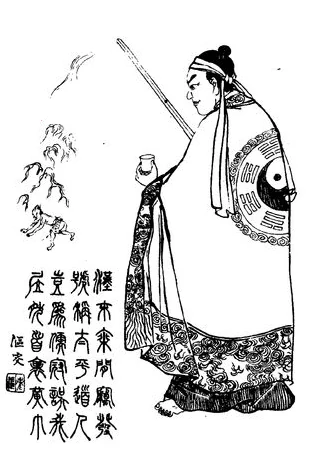
?–184 CE
Daoist religious leader
Zhang Jiao
张角
Zhang Jiao (d. 184), a native of Julu, whose administrative seat lay in present-day Pingxiang, Hebei, under Qin and present-day Ningjin, Hebei, under the Eastern Han, was the leader of the Way of Great Peace and of the Yellow Turban Rebellion in the late Eastern Han. He styled himself the Great Worthy and Good Teacher, the General of Heaven, and the Yellow Heaven. According to the source text, after receiving the *The Book of…
?–184 CEEastern Han
PROFILE
Zhang Jiao (d. 184), a native of Julu, whose administrative seat lay in present-day Pingxiang, Hebei, under Qin and present-day Ningjin, Hebei, under the Eastern Han, was the leader of the Way of Great Peace and of the Yellow Turban Rebellion in the late Eastern Han. He styled himself the Great Worthy and Good Teacher, the General of Heaven, and the Yellow Heaven. According to the source text, after receiving the The Book of Great Peace and Pure Guidance—identified there with the The Scripture of Great Peace—as transmitted by the Daoist Yu Ji and others, he took religious salvation as his mission and used some of its religious and sociopolitical ideas to organize followers, beginning his preaching around the early Jianning era of Emperor Ling (168–172). From Julu, Zhang Jiao first taught disciples ritual techniques and incantations and established the Way of Great Peace. He later treated the sick with talismanic water and developed several hundred thousand followers across eight provinces, including Qing, Xu, You, and Ji. He then organized his followers, spread slogans in various places, and prepared an uprising. In 184, the first year of Zhongping, after the regional commander Ma Yuanyi was killed when plans for the uprising were exposed, Zhang Jiao launched a rebellion under the slogan, “The Azure Heaven is dead; the Yellow Heaven shall rise. The year is jiazi; all under Heaven shall know great fortune,” styling himself the “General of Heaven.” The uprising became known as the Yellow Turban Rebellion, and he called on 360,000 followers to rise on the same day. Zhang Jiao died of illness soon afterward, and the main rebel forces were quickly suppressed by the Han court. The principal deeds attributed to him are the founding of the Way of Great Peace and the launching of the Yellow Turban Rebellion.
- Alternative names
- Great Worthy and Good Teacher; Way of Great Peace
- Style / designation
- Called on 360,000 followers to rise on the same day
- Period
- Eastern Han
- Dynasty / regime
- Eastern Han
- Identity
- Daoist religious leader
- Ethnicity / affiliation
- Not reliably confirmed by historical sources
- Native place
- Julu (administered from present-day Pingxiang, Hebei, under Qin, and from present-day Ningjin, Hebei, under Eastern Han)
- Date of birth
- Unknown
- Place of birth
- Unknown
- Date of death
- 184
- Place of death
- Unknown
- Highest office
- See Biography and Major Deeds
- Major achievements
- Leader of the Way of Great Peace; launched the Yellow Turban Rebellion; shook the foundations of the Eastern Han; indirectly opened the way to the Three Kingdoms period
LIFE TIMELINE
From his forties into his fifties | Preached in Wei Commandery, treated illness with talismanic water and incantations, sent disciples throughout the realm, and developed several hundred thousand followers across eight provinces
In his fifties | Organized followers into thirty-six “fang,” each under a regional commander, and prepared an uprising
About in his fifties | His disciple Tang Zhou informed on the movement; Ma Yuanyi was executed by dismemberment in Luoyang, and Emperor Ling ordered the execution of more than a thousand adherents within the palace
About in his fifties | Styled himself the General of Heaven; his younger brothers Zhang Bao and Zhang Liang became the General of Earth and General of the People; launched the Yellow Turban Rebellion
About in his fifties | Northern General of the Household Lu Zhi campaigned against him and repeatedly defeated his forces; Zhang Jiao withdrew to Guangzong
About in his fifties | Lu Zhi was falsely accused by eunuchs and escorted back to the capital; Eastern General of the Household Dong Zhuo replaced him and was defeated by Zhang Jiao at Xiaquyang
About in his fifties | Died of illness and was buried at Guangzong
— | Huangfu Song launched a night attack on Guangzong and killed Zhang Liang; more than 30,000 Yellow Turban soldiers were killed, and Huangfu Song had Zhang Jiao's coffin opened, his corpse mutilated, and his severed head sent to Luoyang
BIOGRAPHY
Biography
Family Background and Early Life
Zhang Jiao came from Julu, though his exact year of birth is unknown. Under the Eastern Han, Julu belonged to Ji Province in the central Hebei plain. The source text describes the region as one with a long tradition of shamanistic practices, immortality cults, and fangshi culture. In the middle and late Eastern Han, Hebei repeatedly suffered serious floods, droughts, and epidemics, and popular hardship provided a social setting in which popular religious movements could grow.
Zhang Jiao followed Huang-Lao teachings, while little is recorded about his early life. According to the Book of the Later Han, in the biography of Xiang Kai, and the Biographies of Immortals, Gong Chong of Langya, a disciple of the fangshi Yu Ji, once presented the The Book of Great Peace and Pure Guidance—identified in the source text with the The Scripture of Great Peace—at court during the reign of Emperor Shun. The court rejected it as heterodox and unreliable. The source text states that this work later became the principal scripture on which Zhang Jiao based the Way of Great Peace.
Founding and Preaching of the Way of Great Peace
During Emperor Ling's Jianning era (168–172), Zhang Jiao preached in the name of divine revelation. He revered “Zhonghuang Taiyi” as the supreme deity, took the The Scripture of Great Peace as his principal scripture, taught ritual techniques and incantations, accepted large numbers of disciples, and established the Way of Great Peace. Drawing on a passage in the The Scripture of Great Peace, he styled himself the Great Worthy and Good Teacher. His younger brothers Zhang Bao and Zhang Liang were also called “Great Healers.” Beneath them, eight divine emissaries traveled in different regions, receiving followers in the name of moral instruction.
Zhang Jiao first spread the Way of Great Peace in Wei Commandery, in areas corresponding to present-day Linzhang and Wei counties in Hebei, Guan and Shen counties in Shandong, and parts of northern Henan. He treated illness through talismanic water and incantations. According to the source text, many patients recovered after drinking water over which he had recited spells and after kneeling to confess their faults, and they came to regard him as a divine figure. He carried a nine-section staff for ritual use, proclaimed that the qi of Great Peace and an age of Great Peace were approaching, opposed exploitation and accumulation, and advocated relief for the poor and mutual assistance. He also sent disciples through the realm to publicize his deeds and the teachings of the Way of Great Peace.
The source text presents the religious climate of the period as favorable to Zhang Jiao's preaching. It states that religious and supernatural beliefs were widespread under the Han. Emperor Gaozu of Han revered the “Black Emperor” and had once established offices for shamans; in the reign of Emperor Wu of Han, Dong Zhongshu's advocacy of Confucian orthodoxy, together with his Luxuriant Dew of the Spring and Autumn Annals, contributed to the increasing sacralization of Confucian learning. After the founding of the Eastern Han, Emperor Guangwu promoted apocryphal and prophetic texts, and later rulers followed this practice. The source text describes Confucian learning in this period as increasingly intertwined with prophecy, supernatural techniques, and beliefs in immortals, while official patronage and longstanding popular spirit worship made religious thought deeply rooted among ordinary people.
At the same time, the source text describes the middle and late Eastern Han as an era of intense factional conflict, corrupt government, exactions by powerful landed families, severe social inequality, and recurrent epidemics during the reigns of Emperors An, Huan, and Ling. With the authorities unable to control widespread disease, many afflicted people turned to divine powers and ritual techniques. In this setting, Zhang Jiao acted both as a religious leader and as a healer, treating the poor and sick while presenting a vision of an age of Great Peace. The source text attributes the rapid gathering of displaced people and peasants under his religious movement to these circumstances.
Within a little more than a decade, the Way of Great Peace reportedly expanded to several hundred thousand followers across Qing, Xu, You, Ji, Jing, Yang, Yan, and Yu provinces. Some people sold all their possessions to join Zhang Jiao, and the roads were described as so crowded that many died before reaching him. Local officials did not investigate the movement closely and instead reported that Zhang Jiao was promoting moral instruction and winning popular support.
Organization and Preparation for the Uprising
As Zhang Jiao's influence reached its height, he divided his followers into thirty-six “fang” to facilitate the planned uprising. Each fang functioned as a military unit, led by a regional commander. The larger units reportedly contained more than ten thousand people, and the smaller ones six or seven thousand. The source text describes this as the final transformation of the Way of Great Peace from a loose religious association into an organized religion with a recognized leader, a shared scripture, a fixed system of belief, and a structured organization.
Zhang Jiao initially planned to launch the uprising on the fifth day of the third lunar month in 184, the first year of Zhongping. He spread the slogan “The Azure Heaven is dead; the Yellow Heaven shall rise. The year is jiazi; all under Heaven shall know great fortune.” His followers also marked the characters “jiazi” in white earth on walls in Luoyang and at provincial and commandery government offices as targets for attack after the uprising began. Zhang Jiao ordered the senior regional commander Ma Yuanyi to assemble tens of thousands of followers from Jing and Yang provinces at Ye, in present-day Linzhang, Hebei. Ma was also sent to Luoyang to contact the palace eunuchs Feng Xu and Xu Feng as internal collaborators, with both sides agreeing to begin the uprising simultaneously on the fifth day of the third lunar month.
Yellow Turban Rebellion and Death
In the first lunar month of 184, Zhang Jiao's disciple Tang Zhou, a native of Jinan, submitted a denunciation revealing the plan. Ma Yuanyi was arrested in Luoyang and executed by dismemberment. Emperor Ling ordered the execution of more than a thousand followers of Zhang Jiao inside and outside the palace and directed local authorities to arrest Zhang Jiao and other leaders of the Way of Great Peace.
In the second lunar month of 184, knowing that the conspiracy had been exposed, Zhang Jiao performed a sacrificial killing and styled himself the General of Heaven. His younger brother Zhang Bao became the General of Earth and Zhang Liang the General of the People. The three ordered 360,000 followers to rise on the same day. Because the rebels wore yellow headcloths as their identifying sign, contemporaries called them the “Yellow Turbans.” The rebel forces burned government offices and attacked fortified estates in which powerful landed families had gathered. Many local administrations were unable to resist, and officials fled. Within about ten days, uprisings broke out across the realm and the capital was alarmed. The Yellow Turban forces spread rapidly across broad areas north of the Yangtze, forming three major theaters in Yingchuan, Nanyang, and Hebei, the last centered on the forces led by Zhang Jiao and his brothers. The source text describes these fronts as putting pressure on the Eastern Han capital, Luoyang, from both north and south.
To defend against the Yellow Turbans, He Jin, Intendant of Henan, was promoted to General-in-Chief and stationed a large force near Luoyang. The Eastern Han court established command posts at eight passes to strengthen the capital's outer defenses. Emperor Ling also issued an amnesty to those implicated in the partisan prohibitions to ease tensions within the ruling elite, and sent Northern General of the Household Lu Zhi against the Yellow Turbans in Hebei.
In the third lunar month of 184, Lu Zhi repeatedly defeated Zhang Jiao, reportedly killing more than ten thousand of his men and forcing him to withdraw to Guangzong, in present-day eastern Wei County, Hebei. Lu Zhi had walls and trenches constructed around the city and ordered siege ladders prepared. Just as Guangzong was close to falling, Lu Zhi was accused by eunuchs and escorted back to the capital. Eastern General of the Household Dong Zhuo replaced him, but Dong Zhuo was soon defeated by Zhang Jiao at Xiaquyang, northwest of present-day Jinzhou, Hebei. Emperor Ling then appointed Left General of the Household Huangfu Song to continue the campaign.
In the eighth lunar month of 184, not long after Huangfu Song arrived, Zhang Jiao died of illness. Yellow Turban forces at Guangzong, however, continued to resist under Zhang Liang for another two months. After repeated unsuccessful attacks, Huangfu Song one day ordered his troops to close their camps and rest. When the Yellow Turbans relaxed their guard at night, he assembled his forces after dark and reached Zhang Liang's camp at cockcrow, launching a surprise attack. Fighting continued until dusk. Huangfu Song killed Zhang Liang and more than 30,000 Yellow Turban soldiers and captured Guangzong. He then ordered Zhang Jiao's grave opened, his coffin broken open, his corpse mutilated, and his severed head sent to Luoyang as proof of victory. In the eleventh lunar month, Zhang Bao was also killed by Huangfu Song's forces at Xiaquyang. The principal Yellow Turban armies were thereby suppressed, and the Yellow Turban Rebellion was declared defeated. The source text adds that smaller Yellow Turban remnants continued to fight in various areas for decades, into the final years of the Eastern Han.
Major Activities
Founding the Way of Great Peace
Zhang Jiao is presented in the source text as a key figure in the formal emergence of Daoism. He preached in the name of divine revelation, revered “Zhonghuang Taiyi” as the supreme deity, used the The Scripture of Great Peace as his principal scripture, taught ritual techniques and incantations, received disciples, and established the Way of Great Peace. He styled himself the Great Worthy and Good Teacher, while his brothers Zhang Bao and Zhang Liang were called “Great Healers.” The movement used confession, kneeling, talismanic water, and spoken incantations as methods of healing, advocated relief for the poor and mutual assistance, and opposed exploitative accumulation. Zhang Jiao carried a nine-section staff in ritual practice and proclaimed the coming of the qi and age of Great Peace.
The source text states that the Way of Great Peace and the contemporary Way of the Five Pecks of Rice, because they possessed recognized religious leaders, common scriptures, fixed beliefs, and structured organizations, were later regarded as marking the formal beginnings of Daoism. It further states that ritual systems formulated for the Way of Great Peace, including its music, influenced the later development of orthodox Daoist practice.
Launching the Yellow Turban Rebellion
In 184, Zhang Jiao used the slogan “The Azure Heaven is dead; the Yellow Heaven shall rise. The year is jiazi; all under Heaven shall know great fortune,” styled himself the General of Heaven, and called the thirty-six fang of the Way of Great Peace to rise on the same day. The rebels wore yellow headcloths as their identifying mark and were called “Yellow Turbans” and, in hostile contemporary terminology, “moth bandits.” Later generations called the conflict the Yellow Turban Rebellion.
Although the rebellion broke out suddenly after its plans were exposed, the source text emphasizes that Zhang Jiao had spent a long period planning and organizing it. Followers in the thirty-six fang rose in large numbers, burned government offices, and attacked fortified estates occupied by powerful local families. Local administrations fell in many areas, and even Prince Xu of Anping and Prince Zhong of Ganling were captured by Yellow Turban forces in Hebei. The rebellion formed three major theaters in Yingchuan, Nanyang, and Hebei, placing pressure on Luoyang from both north and south.
The main Yellow Turban forces were defeated within several months by imperial troops and local armed forces. The source text nevertheless states that the rebellion dealt a severe blow to Eastern Han political order and intensified tensions between eunuchs and scholar-official groups. It also describes the uprising as the first large-scale peasant rebellion in Chinese history to employ a religious organization and presents it as a precedent for later religiously framed popular uprisings, including the White Lotus movements of the Song and Yuan, the Taiping Heavenly Kingdom of the late Qing, and the Boxer movement. After the rebellion was suppressed, the Eastern Han court devolved military and political authority to local officials, a development the source text links to the rise of warlord separatism at the end of the dynasty and the weakening of the Eastern Han state.
Movements and Travels
Zhang Jiao first preached in Wei Commandery and later centered his activities in Ji Province, while sending disciples throughout the realm. Followers of the Way of Great Peace were found in Qing, Xu, You, Ji, Jing, Yang, Yan, and Yu provinces. Zhang Jiao's own principal sphere of activity lay in Hebei, and he died after withdrawing to Guangzong.
Contemporary Associates
Zhang Jiao rose together with his younger brothers Zhang Bao and Zhang Liang, who respectively styled themselves the General of Earth and General of the People, while Zhang Jiao used the title General of Heaven. He sent the senior regional commander Ma Yuanyi to contact the palace eunuchs Feng Xu and Xu Feng in Luoyang as internal collaborators. His disciple Tang Zhou revealed the plan, forcing the uprising to begin early. On the imperial side, Lu Zhi, Dong Zhuo, and Huangfu Song were successively ordered to campaign against him.
Personal Relations
Family
- Zhang Bao: Zhang Jiao's younger brother; styled himself the “General of Earth” and was killed by Huangfu Song at Xiaquyang in the eleventh lunar month of 184.
- Zhang Liang: Zhang Jiao's younger brother; styled himself the “General of the People” and was killed by Huangfu Song at Guangzong in the tenth lunar month of 184.
Teachers, Associates, and Followers
- Yu Ji: fangshi whose transmitted The Book of Great Peace and Pure Guidance is described as the scriptural basis used by Zhang Jiao in establishing the Way of Great Peace.
- Gong Chong: disciple of Yu Ji who once presented the The Book of Great Peace and Pure Guidance at court.
- Ma Yuanyi: senior regional commander of the Way of Great Peace; ordered to gather followers from Jing and Yang provinces at Ye and to contact collaborators in Luoyang; executed by dismemberment after the plot was exposed.
- Tang Zhou: disciple of Zhang Jiao from Jinan; denounced the movement and caused the planned uprising to be exposed early.
- Feng Xu and Xu Feng: palace eunuchs who were to act as internal collaborators.
Enemies
- Lu Zhi: Northern General of the Household; repeatedly defeated Zhang Jiao and forced him to withdraw to Guangzong, but was removed after being falsely accused by eunuchs.
- Dong Zhuo: Eastern General of the Household; replaced Lu Zhi and was defeated by Zhang Jiao at Xiaquyang.
- Huangfu Song: Left General of the Household; replaced Dong Zhuo, captured Guangzong after Zhang Jiao's death, killed Zhang Liang, and ordered Zhang Jiao's coffin opened and corpse mutilated.
Historical Assessment
Eastern Han / Contemporary Views
- The Eastern Han court regarded Zhang Jiao as a rebel. Emperor Ling ordered the execution of more than a thousand of his followers, and after Guangzong fell Huangfu Song had Zhang Jiao's coffin opened, his corpse mutilated, and his head sent to Luoyang for display.
- Local officials initially regarded Zhang Jiao as a successful moral teacher whose influence won popular support and did not recognize his political intent.
- Contemporaries called the rebels “Yellow Turbans” and “moth bandits,” treating them as bandits and rebels.
Wei, Jin, and Northern and Southern Dynasties
- Yuan Yi of Northern Wei commented that Zhang Jiao had used similar techniques to confuse the people and had brought about the Yellow Turban disaster, causing decades of devastation. The source cites this judgment from the Book of Wei.
- Chen Shou's Records of the Three Kingdoms treated the Yellow Turban Rebellion as the opening of the late Han disorders, and Zhang Jiao was viewed as a key figure in weakening the Han state.
- Gan Bao's In Search of the Supernatural recorded stories about Zhang Jiao and placed him within a tradition of supernatural narrative.
Song, Yuan, Ming, and Qing
- During Fang La's uprising in 1120, the second year of Xuanhe under the Northern Song, Zhang Jiao was revered as a religious master, showing the persistence of his popular influence.
- In the Yuan-period vernacular Sanguozhi Pinghua, Zhang Jiao is depicted as studying under Sun Xuejiu before being defeated and killed by Liu Bei.
- The Ming novel Romance of the Three Kingdoms portrays Zhang Jiao as a failed examination candidate who received the Taiping Yaoshu from the immortal Nanhua and acquired supernatural powers such as summoning wind and rain, presenting him as a rebel and disturber of public order.
Modern and Contemporary Assessments
- Modern historical scholarship described in the source text regards the Yellow Turban Rebellion led by Zhang Jiao as the first large-scale peasant uprising in Chinese history to make use of religious organization, establishing a precedent for later rebellions conducted in a religious idiom.
- A history of Chinese Daoism edited by Qing Xitai treats the Way of Great Peace as an important marker in the formal beginning of Daoism and recognizes its foundational place in Daoist history.
- Tian Changwu's History of Peasant Revolutions in Ancient China analyzes the social causes and historical significance of the Yellow Turban Rebellion from the perspective of peasant revolutionary history.
- A General History of China edited by Bai Shouyi states that the Yellow Turban Rebellion dealt a severe blow to Eastern Han rule and contributed to the emergence of regional warlordism late in the dynasty.
- The source text also notes a modern reassessment summarized in the line that Zhang Jiao “originally rebelled to save the people, yet has been cursed as a bandit ever since,” reflecting criticism of his later historical image.
FIGURES ASSOCIATED WITH THIS DYNASTY
Bibliography
- Fan Ye, Book of the Later Han, “Annals of Emperor Ling”
- Fan Ye, Book of the Later Han, “Biographies of Huangfu Song and Zhu Jun”
- Chen Shou, Records of the Three Kingdoms, “Wu I: Biography of Sun Jian”
- Yuan Hong, Annals of the Later Han, “Annals of Emperor Ling, Part Two”
- Sima Guang, Comprehensive Mirror in Aid of Governance, “Han Annals,” juan 50
- Qing Xitai, ed., History of Chinese Daoism, vol. 1, Sichuan People's Publishing House, 1996
- Tian Changwu, History of Peasant Revolutions in Ancient China, Shanghai People's Publishing House, 1979
- Bai Shouyi, ed., General History of China, vol. 4, part 1, Shanghai People's Publishing House, 2004