About age twenty | Joined Liu Bei with Guan Yu in Zhuo Commandery and took part in operations against the Yellow Turban Rebellion
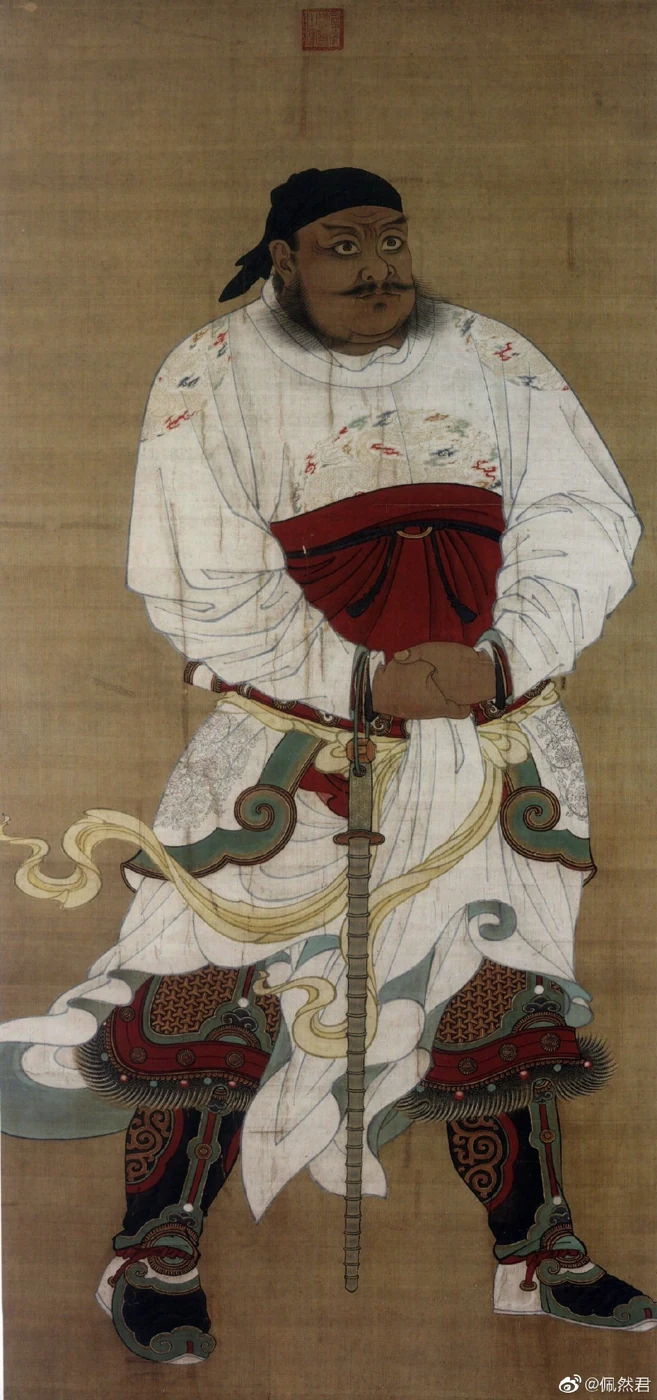
166 CE–221 CE
General
Zhang Fei
张飞
Zhang Fei (d. 221), courtesy name Yide, was a native of Zhuo Commandery in Youzhou, in present-day Zhuozhou, Hebei. He was a prominent Shu Han general of the late Eastern Han and Three Kingdoms periods. Together with Guan Yu he was described as an enemy of ten thousand men, and his martial prowess made him one of the leading military figures in the rise of Liu Bei's regime. In the source text, Zhang Fei is described as…
166 CE–221 CEShu Han
PROFILE
Zhang Fei (d. 221), courtesy name Yide, was a native of Zhuo Commandery in Youzhou, in present-day Zhuozhou, Hebei. He was a prominent Shu Han general of the late Eastern Han and Three Kingdoms periods. Together with Guan Yu he was described as an enemy of ten thousand men, and his martial prowess made him one of the leading military figures in the rise of Liu Bei's regime. In the source text, Zhang Fei is described as joining Liu Bei and Guan Yu at an early stage and following Liu Bei through the Yellow Turban Rebellion, struggles over Xuzhou, the rear guard at Changban, the conquest of Yi Province, and the Battle of Baxi. He eventually became General of Chariots and Cavalry, concurrently Colonel Director of Retainers, and Marquis of Xixiang. In 221, the first year of the Zhangwu era, shortly before he was to join Liu Bei's eastern campaign against Sun Quan, he was killed by his subordinates Zhang Da and Fan Qiang. In 260 he received the posthumous title Marquis Huan.
- Alternative name
- Zhang Yide
- Courtesy name
- Yide
- Period
- Shu Han
- Date of Birth
- Not recorded in historical sources
- Date of Death
- 221
- Dynasty / regime
- Shu Han
- Identity
- General
- Ethnicity / affiliation
- Not recorded in historical sources
- Native place
- Zhuo Commandery, Youzhou (present-day Zhuozhou, Hebei)
- Place of birth
- Not recorded in historical sources
- Major achievements
- Famous Shu Han general; listed text with the title “General of Tiger Might”; held the bridge at Changban, and was later killed by his own subordinates.
LIFE TIMELINE
About age twenty-six | When Liu Bei became Chancellor of Pingyuan, Zhang Fei and Guan Yu served as Major of Separate Commands and led separate contingents
About age twenty-nine | Followed Liu Bei to assist Xuzhou; after Liu Bei became Governor of Xuzhou, Zhang Fei served as a major
About age thirty-one | Quarreled with Cao Bao while guarding Xiapi and killed him; Lü Bu seized Xiapi and Liu Bei's family was captured
About age thirty-three | After Lü Bu's defeat, followed Liu Bei under Cao Cao and was appointed General of the Household
About age thirty-five | Followed Liu Bei in breaking with Cao Cao and killing Xuzhou Inspector Che Zhou; after Liu Bei's defeat went with him to Yuan Shao; in the same year took a niece of Xiahou Yuan as wife in Qiao Commandery
About age thirty-six | Followed Liu Bei to Jingzhou under Liu Biao and was stationed at Xinye
About age forty-three | At Changban held the river crossing and destroyed the bridge, covering the retreat with twenty horsemen; after the Battle of Red Cliffs became Administrator of Yidu and General Who Conquers the Caitiffs and was enfeoffed as Marquis of Xinting
About age forty-six | Together with Zhao Yun intercepted Lady Sun's departure and recovered Liu Shan before allowing her to return to Wu
About age forty-nine | Entered Yi Province with Zhuge Liang and Zhao Yun, took Jiangzhou, released Yan Yan, pacified Ba and Baxi commanderies, and joined Liu Bei at Chengdu; became Administrator of Baxi
About age fifty | Defeated Zhang He at the Battle of Baxi and secured the region
About age fifty-four | After Liu Bei became King of Hanzhong, appointed General of the Right and granted delegated authority
About age fifty-six | After Liu Bei became emperor, appointed General of Chariots and Cavalry, concurrently Colonel Director of Retainers, and Marquis of Xixiang; later killed by subordinates Zhang Da and Fan Qiang
BIOGRAPHY
Biography
Family Background and Early Life
Zhang Fei was born in Zhuo Commandery of Youzhou, in present-day Zhuozhou, Hebei. His family background is unknown, and the standard histories do not record his father or grandfather. As a young man he met Liu Bei and Guan Yu in Zhuo Commandery. The three were described as being as close as brothers, even sharing the same sleeping mat. When Liu Bei gathered followers locally, Zhang Fei and Guan Yu protected him and shared his hardships. In 184, when the Yellow Turban Rebellion broke out, Liu Bei organized local volunteers at Zhuo County; Zhang Fei and Guan Yu joined him and began their military careers in campaigns against the rebels.
Following Liu Bei through Repeated Upheaval
In 191 Liu Bei came under Gongsun Zan and, after receiving an appointment at Pingyuan, made Zhang Fei and Guan Yu Majors of Separate Commands, each commanding part of his force. In 194, after Beihai Chancellor Kong Rong was surrounded by remnants of the Yellow Turbans under Guan Hai, Zhang Fei accompanied Liu Bei to assist him and later joined Liu Bei in the relief of Tao Qian in Xuzhou. After Tao Qian's death, Liu Bei became Governor of Xuzhou and Zhang Fei served as a major.
In 196, while Liu Bei was away fighting Yuan Shu, Zhang Fei remained at Xiapi. A quarrel with Cao Bao led Zhang Fei to kill him and threw the city into disorder. Lü Bu seized the opportunity to take Xiapi; Zhang Fei fled and Liu Bei's family was captured. Zhang Fei thereafter followed Liu Bei first in dependence on Lü Bu and then under Cao Cao. After Lü Bu's defeat in 198, Cao Cao appointed Zhang Fei General of the Household. In 200, following the exposure of the so-called Girdle Edict plot, Zhang Fei followed Liu Bei in killing Xuzhou Inspector Che Zhou. Liu Bei was defeated and the group went to Yuan Shao. The source text states that in the same year Zhang Fei encountered and married a niece of Xiahou Yuan in Qiao Commandery. In 201 he followed Liu Bei to Jingzhou under Liu Biao and was stationed at Xinye.
Holding the Bridge at Changban
In 208 Cao Cao advanced south into Jingzhou. After Liu Biao died and Liu Cong surrendered, Liu Bei fled south, pursued by five thousand elite cavalry under Cao Chun. Cao's troops caught the fugitives at Changban in Dangyang, and Liu Bei's army broke apart. Liu Bei escaped with only several dozen horsemen including Zhuge Liang, Zhang Fei, and Zhao Yun. Zhang Fei was ordered to cover the retreat with twenty riders. He took position at the river crossing, destroyed the bridge, glared at the pursuers with spear in hand, and shouted that he was Zhang Yide and invited anyone to come fight him to the death. None of Cao's troops approached, allowing Liu Bei to escape. The episode became the most famous feat of Zhang Fei's career. After the Battle of Red Cliffs, as Liu Bei expanded into Jingzhou, Zhang Fei became Administrator of Yidu, General Who Conquers the Caitiffs, and Marquis of Xinting, and later Administrator of Nanjun.
Entering Yi Province and Releasing Yan Yan
In 211 Liu Bei entered Yi Province at Liu Zhang's invitation, while Zhang Fei remained in Jingzhou with Guan Yu, Zhao Yun, and Zhuge Liang. When Sun Quan sent vessels to take Lady Sun back to Wu and she attempted to bring Liu Shan with her, Zhang Fei and Zhao Yun mobilized troops, intercepted the party, recovered Liu Shan, and allowed Lady Sun to depart.
In 214, after Liu Bei and Liu Zhang had become enemies, Zhang Fei entered Yi Province with Zhuge Liang and Zhao Yun as reinforcements. At Jiangzhou he captured Administrator of Ba Yan Yan. When Yan Yan refused to submit, Zhang Fei angrily ordered his execution. Yan Yan showed no fear, and Zhang Fei, impressed by his courage, released him and treated him with honor. Zhang Fei then helped pacify Ba and Baxi commanderies and eventually joined Liu Bei at Chengdu. After the conquest of Yi Province, he was appointed Administrator of Baxi.
Battle of Baxi and Defeat of Zhang He
In 215, after Cao Cao occupied Hanzhong, Zhang He invaded Baxi and attempted to relocate local inhabitants. Zhang Fei led ten thousand picked troops against him. After more than fifty days of confrontation, Zhang Fei used a narrow mountain route to launch an attack. Zhang He's army was defeated and, according to the source text, he escaped with only a little more than ten men after abandoning their horses and climbing the mountains. The victory secured Baxi. In 217, during Liu Bei's campaign for Hanzhong, Zhang Fei, Ma Chao, and Wu Lan moved against Wudu but were defeated by Cao Hong. In 219, when Liu Bei became King of Hanzhong, Zhang Fei was appointed General of the Right and granted delegated authority.
Killed at Langzhong
In 221 Liu Bei proclaimed himself emperor. Zhang Fei was appointed General of Chariots and Cavalry, concurrently Colonel Director of Retainers, and Marquis of Xixiang. The source text notes that Zhang Fei treated scholars generously but showed little compassion toward ordinary soldiers. Liu Bei repeatedly warned him that his excessive punishments and habit of flogging strong soldiers while keeping them close at hand were a path to disaster, but Zhang Fei did not change his behavior.
That year Liu Bei prepared an eastern campaign against Sun Quan in response to Guan Yu's death and ordered Zhang Fei to lead ten thousand men from Langzhong to join him at Jiangzhou. Before departure, Zhang Fei was killed by his subordinate officers Zhang Da and Fan Qiang, who took his head and fled east toward Sun Quan. On hearing the report, Liu Bei is said to have sighed that Zhang Fei was dead.
His Early Years and His Rising with Liu Bei
Zhang Fei, courtesy name Yide, was a man of Zhuo commandery in Youzhou, and from youth served Liu Bei together with Guan Yu, who was some years older and whom Zhang Fei treated as an elder brother. In the first year of Zhongping, 184, the Yellow Turban rising broke out, its leader Zhang Jiao arising in Wei commandery and claiming divine sanction, sending out eight envoys to teach the world his doctrine while secretly joining the bands together and calling himself the Yellow Heaven of Great Peace, so that on the day jiazi of the third month thirty-six divisions rose at once and the realm answered, burning the commanderies and counties and killing their officers. Liu Bei raised a body of volunteers at Zhuo county to help put down the Yellow Turbans, and Zhang Fei joined with Guan Yu and followed Liu Bei from place to place. The three were as brothers, "sleeping on the same mat and as close as brothers," while in crowds and assemblies they "stood in attendance all day, following Liu Bei about and shrinking from no danger." Afterwards, Liu Bei having won merit and being made chancellor of Pingyuan, he made Guan Yu and Zhang Fei commanders of detached divisions, each commanding his own troops.
The Loss of Xiapi
In the first year of Jian'an, 196, Yuan Shu attacked Liu Bei contending for Xuzhou, and Liu Bei left his master of horse Zhang Fei to hold Xiapi while he himself held off Yuan Shu at Xuyi and Huaiyin, the two facing each other for a month with varying fortunes. The chancellor of Xiapi, Cao Bao, an old officer of Tao Qian, falling out with Zhang Fei, held his camp and would not yield, and Zhang Fei killed him, at which the city fell into disorder. Yuan Shu wrote to Lü Bu urging him to seize the moment and attack Xiapi and promising him grain if it succeeded; and Lü Bu, greatly pleased, led his troops east by land and water, while Liu Bei's commandant of the centre, Xu Dan of Danyang, opened the gate to him. By the Record of Heroes, Xu Dan sent his master of horse Zhang Kuang at night to Lü Bu to say that Zhang Yide and the chancellor of Xiapi Cao Bao had quarrelled and Yide had killed Bao, so that the city was in confusion and none trusted another, and that a thousand Danyang troops were camped within the western White Gate and, hearing that the general was coming east, were leaping for joy as if born again, so that if his troops came to the west gate the Danyang men would open it to him. Lü Bu therefore advanced by night and reached the walls at dawn, and when day broke the Danyang troops opened all the gates to his army; and Lü Bu sitting on the gate set his foot and horse to burning and heavily defeated Zhang Fei's troops, taking Liu Bei's wife and children, his military stores and the families of his officers and men. Liu Bei, hearing of it, turned back his troops, but reaching Xiapi his army was broken; and gathering the scattered men he went east to Guangling and fought Yuan Shu and was beaten again, camping at Haixi in hunger and hardship, "officers and men eating one another," until the master of works of Donghai, Mi Zhu, helped the army with his own wealth. Liu Bei asked to submit to Lü Bu, and Lü Bu, being angry that Yuan Shu had failed to send the grain, summoned Liu Bei and made him inspector of Yuzhou and camped him at Xiaopei, calling himself governor of Xuzhou.
His Service with Liu Bei and the Stand at Changban
In the spring of the third year of Jian'an, 198, Lü Bu sending men with gold to buy horses in Henei and Liu Bei's troops intercepting them, he sent the commandant of the centre Gao Shun and the governor of Beidi Zhang Liao against Liu Bei and in the ninth month broke the walls of Pei; and Cao Cao sending Xiahou Dun to the rescue, he could not save him and was beaten by Gao Shun, so that Liu Bei's wife and children were again carried off to Lü Bu. Afterwards Cao Cao came east in person, helped Liu Bei besiege Lü Bu in Xiapi and took him alive, and Liu Bei recovering his wife and children returned with Cao Cao to Xu, where Cao Cao made Zhang Fei a commandant of the centre. In the fifth year of Jian'an, 200, Dong Cheng's plot being discovered, Cao Cao put him and the rest to death with their three clans, and then went east in person against Liu Bei, broke him, took his wife and children, advanced to Xiapi and took Guan Yu prisoner, while Liu Bei fled to Qingzhou and through Yuan Tan went over to Yuan Shao, Zhang Fei going with him. In the sixth year Cao Cao came south against Liu Bei and Liu Bei fled to Liu Biao. Afterwards, when Liu Bei obtained Zhuge Liang and valued him the more, Guan Yu and Zhang Fei were displeased, and Liu Bei explained that with Kongming he was as a fish with water and begged them not to speak of it again, and they desisted. In the thirteenth year of Jian'an, 208, Cao Cao entering Jingzhou and Liu Bei fleeing south, Cao Cao pursued him with five thousand picked horse a hundred and more li in a day and a night and came up with him at Changban in Dangyang; and Liu Bei abandoning his wife and children fled with Zhuge Liang, Zhang Fei, Zhao Yun and a few dozen riders, and in the confusion, when Zhao Yun was missing, Liu Bei sent Zhang Fei to hold the rear. Zhang Fei with twenty riders held the rear, took his stand by the water and broke the bridge, and glaring and brandishing his spear cried that he was Zhang Yide and they might come and fight him to the death; and none of Cao Cao's men dared approach him, so that Liu Bei's army was saved, and afterwards Zhao Yun brought out Liu Bei's wife and children. Thereafter Liu Bei made Zhang Fei governor of Yidu and general of the conquest of the frontier, enfeoffed him as marquis of Xinting and afterwards transferred him to Nanjun.
The Interception on the River and the Release of Yan Yan in Shu
In the sixteenth year of Jian'an, 211, Sun Quan, hearing that Liu Bei had gone west, sent ships to bring back his sister, and the lady wishing to take Liu Bei's son Liu Shan back to Wu, Zhang Fei learning of it joined Zhao Yun in drawing up troops to intercept her on the river and recovered Liu Shan, sending the lady back to Wu. In the nineteenth year Liu Bei had besieged Luocheng for nearly a year and Pang Tong had died of a stray arrow, and Zhuge Liang, Zhang Fei and Zhao Yun led the troops of Jingzhou into Shu in support; and the army reaching Jiangzhou, whose commander Yan Yan held out and would not submit, Zhang Fei took the city and captured him alive. Zhang Fei shouted at him to ask why, with the great army come, he had not surrendered and had dared to resist in battle; and Yan Yan answered that they had no warrant but were seizing his province by force, and that his province had only beheading generals and no surrendering ones. Zhang Fei in anger ordered him taken away to be beheaded, and Yan Yan, his colour unchanged, said that beheading was beheading and asked why he should be angry; whereupon Zhang Fei, admiring his spirit, released him and made him a guest. Zhang Fei took every place he passed and joined Liu Bei at Chengdu, and Yizhou being pacified, Zhuge Liang, Fa Zheng, Zhang Fei and Guan Yu were each given five hundred catties of gold, a thousand of silver, fifty million cash and a thousand bolts of brocade, and Zhang Fei was made governor of Baxi. Liu Bei taking the governorship of Yizhou again, he made Zhuge Liang his right hand, Fa Zheng his chief counsellor, and Guan Yu, Zhang Fei and Ma Chao his claws and fangs.
The Battle of Baxi and the Campaign at Xiabian
In the twentieth year of Jian'an, 215, Cao Cao having broken Zhang Lu and left Xiahou Yuan and Zhang He to hold Hanchuan, Zhang He led the troops of a detached command down into Baxi, meaning to move its people into Hanzhong, and advanced to Dangqu, Mengtou and Dangshi, where he faced Zhang Fei for more than fifty days. Zhang Fei then led more than ten thousand picked troops by another road to intercept him, and the mountain track being too narrow for the enemy's front and rear to support each other, Zhang Fei broke him; and Zhang He, to save his life, abandoned his horse and climbed the hills, escaping with a dozen of his men by a side path and leading his army back to Nanzheng, so that the land of Ba was at peace. In the twenty-third year of Jian'an, 218, Liu Bei sent Zhang Fei, Ma Chao and Wu Lan to camp at Xiabian, and Cao Cao sent Cao Hong against them; and Zhang Fei camping at Gushan to cut the Cao army's rear, the council being in doubt, Cao Xiu said that a man who truly meant to cut a road would lay an ambush and move secretly, whereas this one first made a show of strength, which showed he could not do it, and that they should strike Wu Lan before he could concentrate, for once Wu Lan was broken Zhang Fei would go of himself; and Cao Hong following this advice attacked and heavily defeated Wu Lan, and Zhang Fei indeed withdrew. In the third month Zhang Fei and Ma Chao fled to Hanzhong, and Cao Hong broke Wu Lan and beheaded his general Ren Kui and others.
His Enfeoffment as Marquis of Xixiang and His Death
In the autumn and seventh month of the twenty-fourth year of Jian'an, 219, Liu Bei styled himself prince of Hanzhong and made Guan Yu general of the van, Zhang Fei general of the right, Ma Chao general of the left and Huang Zhong general of the rear. In the first year of Zhangwu, 221, Zhang Fei was promoted to general of chariots and cavalry, given charge of the colonel of the capital province and enfeoffed as marquis of Xixiang; and the patent said that the emperor, inheriting the order of heaven and the great work, had not yet brought order to the realm, and that Zhang Fei, loyal and resolute and a match for Shao Hu of old, whose name was known far and near, should display the majesty of heaven, win the submissive by virtue and punish the rebellious by law. In the sixth month of that year Liu Bei, to avenge Guan Yu, went out against Wu and had Zhang Fei march from Langzhong to Jiangzhou. From the first Zhang Fei was "mighty and fierce, second only to Guan Yu," and the Wei counsellor Cheng Yu and others all called Guan Yu and Zhang Fei the match of ten thousand men; Guan Yu treated his soldiers well but was arrogant to the gentry, while Zhang Fei respected gentlemen but had no care for lesser men. Liu Bei often warned him that his punishments and killings were excessive and that he flogged his braves daily and yet kept them about him, which was the way to invite disaster; but Zhang Fei never reformed. As he was setting out, his officers Zhang Da and Fan Qiang killed him and carried his head down the river to Sun Quan; and when the commissioner of his camp memorialised Liu Bei, Liu Bei, hearing that the camp commissioner had a memorial, said only, "Ah, Fei is dead." In the third year of Jingyao, 260, he was given the posthumous name marquis Huan.
His Popular Worship and Points of Biography
In popular worship, the temple of the marquis Huan at Yunyang in Chongqing, also called the temple of Zhang Fei, stands on the southern bank of the Yangzi and was first built at the end of Shu Han, being enlarged under Song, Yuan, Ming and Qing, its earliest surviving object being the Xuanhe stele of Chen Ni; after being damaged by the flood of 1870 it was rebuilt and in the late Qing became a resort of steles, calligraphy and painting, and after its removal a museum of two thousand square metres was added to display the relics of Ba sites, so that it now holds more than eight hundred objects from Han and Tang to Ming and Qing, with a bronze statue of Zhang Fei restored, and the people of Yunyang continue the sacrifice on the twenty-eighth day of the eighth month; and on 25 June 2001 the State Council proclaimed it a protected site of the national level. The temple of the marquis Huan at Langzhong, called in the Ming the temple of majestic might, stands north of the western street of the old city and includes Zhang Fei's tomb and shrine; the Ming provisioner Li Zhong built a wall of forty-seven fathoms about the mound, and the present shrine is a complex of courtyards rebuilt in Ming and Qing times covering more than ten mu with 2,200 square metres of building, comprising the gate, the tower for withstanding ten thousand, the archway, the great hall, the rear hall, the side rooms, the tomb pavilion and the mound; and the tomb is oval, forty-two metres north to south, twenty-five east to west and eight high, with trees and grass thick upon it. When Zhang Fei was governor of Baxi, the military and civil dispatches being frequent, he had his soldiers "plant trees to mark the road," and later ages called the ancient cypresses the cypresses of Zhang Fei. In Tang times it was proposed to institute worship for sixty-four famous generals of antiquity, among them "the Shu general of chariots and cavalry, marquis of Xixiang, Zhang Fei"; and the Song, following the Tang usage, included Zhang Fei among the seventy-two generals honoured. In popular belief Zhang Fei is honoured as the patron of butchers, and his birthday is popularly held to be the twenty-eighth of the eighth month. As to his courtesy name, the History of the Three Kingdoms has Yide and this has long been thought correct, Hu Yinglin of the Ming writing a piece to prove it, and Wang Mingsheng and Liang Zhangju of the Qing and Yu Guangzhong and Shen Bojun in our own day all holding Yide right and Yide as written with the character for wing wrong; yet doubts have been raised, Niu Yunzhen of the Qing noting that some texts have the other form, Liang Yusheng observing that the Records of Huayang and the section on discernment in the Shishuo xinyu both write the wing form, Xu Zhaowei of the Republic quoting Yang Bingba that the Record of Swords and Knives calls the marquis's blade the wing-virtue blade, and a modern essay arguing for the wing form. By the Wei lüeh, in the fifth year of Jian'an the younger cousin of Xiahou Ba, then thirteen or fourteen, going out to gather firewood in the commandery, was taken by Zhang Fei, who knew her for a girl of good family and made her his wife, and the daughter she bore became the empress of Liu Shan; and it was at her request that Xiahou Yuan, having fallen in Hanzhong, was properly buried. As to the tales that Zhang Fei was a painter and calligrapher, Zhuo Erchang of the Ming records that he liked to paint beauties and was especially skilled in calligraphy, and the Dangqian zonglu says that the cauldron inscription of Zhang Fei at Fuling is of very fine workmanship and in his hand, and the Yuan painter Wu Zhen wrote in verse that Guan Yu expounded the Zuo commentary while the general of chariots was even better at writing; but scholars hold that all such works attributed to Zhang Fei are forgeries of the Ming, the making of him a polished man of letters being the Ming's doing, and that the inscription of his immediate halt and that of his breaking of Zhang He are forgeries, Gu Tinglong's supplement to the record of stele collation listing the latter among forged carvings. There are also tales that he wrote poems and rhapsodies, having composed a record of his visit to the Zhenduo mountains, and the matter of the Xinting blade is found in the Record of Swords and Knives, ancient and modern.
His Image in Popular Tradition
Zhang Fei's image changed much in later ages. On the traditional stage he wears the butterfly face, genial and endearing, and being a comic figure in many plays that mask suits his character; but in the tale of the Romance of the Three Kingdoms he is not comic at all, only terrible and rash. The novel's portrait of him is of one piece, a mighty warrior of deep feeling and loyalty and surpassing strength, and its account of his ordering white banners and armour to be ready within three days matches the record of his flogging of his braves. History also shows a side that prized the arts: he told Liu Ba that though a soldier he greatly admired him, and he joined Guan Yu in standing with drawn swords beside Liu Bei to teach Ma Chao good manners, whence the later saying that his release of Yan Yan and his instruction of Ma Chao were both the work of a careful mind, and that to take Fei for a rough fellow is a great wrong. There is also the tale of the Xinting blade: when first made marquis of Xinting he had the smith smelt the iron of the Red Pearl mountain into a sword inscribed with the title, which he wore at his side, and afterwards, setting out against Wu to avenge his brother, he flogged his soldiers when drunk, and his officers, unable to bear it, crept into his tent at night and cut off his head with that very sword and fled down to Wu.
Major Activities
Military Contributions
Zhang Fei was famous for courage and was paired with Guan Yu as an “enemy of ten thousand men.” His major military achievements in the source text include holding the river and destroying the bridge at Changban with only twenty horsemen, taking Jiangzhou and sparing Yan Yan during the conquest of Yi Province, and decisively defeating Zhang He in Baxi. He was one of the key military pillars of Liu Bei's regime.
Political Activity
Zhang Fei successively served as Administrator of Yidu, Administrator of Nanjun, and Administrator of Baxi, and ultimately became General of Chariots and Cavalry, concurrently Colonel Director of Retainers, and Marquis of Xixiang. After Liu Bei's imperial accession he ranked among the regime's highest military figures. The source text also states that he participated in negotiations connected with Jingzhou and, after Liu Bei entered Yi Province, was responsible for holding Baxi and stabilizing the region.
Travels and Movements
Zhang Fei followed Liu Bei across a wide area including Youzhou, Xuzhou, Yuzhou, Jingzhou, and Yi Province. He campaigned in Hebei, Shandong, and Jiangsu during his early career, later moved through the Central Plains with Liu Bei, entered Sichuan during the conquest of Yi Province, held Ba and Baxi, and was eventually killed at Langzhong.
Relations with Contemporaries
Zhang Fei was as close as a brother to Liu Bei and Guan Yu and also maintained a positive relationship with Zhuge Liang. He respected scholars and had dealings with men such as Yan Yan and Liu Ba, while his harsh treatment of common soldiers caused resentment. Through marriage he was connected to the Cao Wei general Xiahou Yuan, since his wife was Xiahou Yuan's niece.
His Chief Feats of Arms
Zhang Fei was famed all his life for valour and was called, with Guan Yu, the match of ten thousand men. At Changban in the thirteenth year of Jian'an, when Liu Bei was driven back at Dangyang, he held the rear with only twenty riders, took his stand by the water and broke the bridge, and glaring and brandishing his spear cried that he was Zhang Yide and they might come and fight him to the death, so that none of Cao Cao's men dared approach and Liu Bei was saved. In the nineteenth year, in the campaign into Shu, he went up the river with Zhuge Liang and Zhao Yun, settling the commanderies by shares, and reaching Jiangzhou he broke the governor of Ba, Yan Yan, and took him alive, releasing him for his spirit and making him a guest, whence the saying that Fei released Yan Yan with the spirit of a gentleman of the realm. In the twentieth year, at the battle of Baxi, he led more than ten thousand picked troops by a side road against Zhang He and, the mountain track being too narrow for the enemy's front and rear to help each other, heavily defeated him, so that Zhang He abandoned his horse and climbed the hills, escaping with a dozen men to Nanzheng and leaving the land of Ba at peace; and later ages said of him that he was a general of wisdom and courage, called the match of ten thousand men, who broke the enemy and gave peace to that land, so that his merit was bestowed on men. He served successively as governor of Yidu, general of the conquest of the frontier and governor of Baxi, and was promoted to general of chariots and cavalry with charge of the colonel of the capital province, being enfeoffed as marquis of Xinting and then of Xixiang.
His Character and His Discipline of the Army
Guan Yu treated his soldiers well but was arrogant to the gentry, while Zhang Fei respected gentlemen and had no care for lesser men. Liu Bei often warned him that his punishments and killings were excessive and that he flogged his braves daily and yet kept them about him, which was the way to invite disaster, but Zhang Fei never reformed, and in the end it was for this that he was killed by his officers Zhang Da and Fan Qiang. He honoured scholars, once urging Liu Ba to make friends with him, which Liu Ba refused, and he joined Guan Yu in standing with drawn swords beside Liu Bei to reprove Ma Chao for his breach of ceremony. As governor of Baxi he had his soldiers "plant trees to mark the road," whence the name of the ancient cypress avenue of Langzhong.
Personal Relations
- Wife: Lady Xiahou, niece of Xiahou Yuan
- Elder son: Zhang Bao, who died young; father of Zhang Zun
- Younger son: Zhang Shao, who later became Palace Attendant and Left Director of the Secretariat
- Elder daughter: Empress Jing'ai, wife of Liu Shan
- Younger daughter: Empress Zhang, younger sister of Empress Jing'ai and later empress of Liu Shan
- Liu Bei: ruler and brother-like companion
- Guan Yu: sworn or brother-like companion, whom Zhang Fei treated as an elder brother
- Zhuge Liang: colleague whom Zhang Fei respected
- Yan Yan: captured opponent whom Zhang Fei released and treated as an honored guest
- Liu Bei: Emperor Zhaolie of Shu Han
- Liu Shan: Later Ruler of Shu Han and Zhang Fei's son-in-law
- Cao Bao: Chancellor of Xiapi, killed after a quarrel
- Lü Bu: seized Xiapi and defeated Zhang Fei
- Zhang He: opponent at the Battle of Baxi
- Zhang Da and Fan Qiang: subordinates who killed Zhang Fei
Historical Assessment
Shu Han and Contemporary Assessments
- Chen Shou wrote that Guan Yu and Zhang Fei were both regarded as enemies of ten thousand men and tiger-like ministers of their age, but also observed that Guan Yu was proud and Zhang Fei violent and lacking in benevolence, and that both ultimately suffered because of their shortcomings.
- Liu Bei repeatedly warned Zhang Fei that excessive executions and floggings of his own soldiers, while keeping those same men close at hand, would bring disaster.
- Zhou Yu described Liu Bei as a heroic figure who possessed tiger-like generals in Guan Yu and Zhang Fei.
Wei, Jin, and Northern and Southern Dynasties
- Liu Ye likewise described Guan Yu and Zhang Fei as enemies of ten thousand men.
- Later historians often followed Chen Shou in stressing both Zhang Fei's courage and his violent temperament.
Tang and Song Dynasties
- In 782, the third year of Jianzhong under Emperor Dezong of Tang, Zhang Fei was included among the sixty-four famous generals honored at the Temple of King Wucheng.
- In 1123, the fifth year of Xuanhe under Emperor Huizong of Song, he was posthumously granted the princely title Zhongxian.
- In 1340, the sixth year of the Zhiyuan era of the Yuan, his posthumous honors were further enlarged.
Ming and Qing Dynasties
- Romance of the Three Kingdoms popularized the rough, forceful image of Zhang Fei with a leopard-like head, round eyes, and a tiger beard, making him a major folk archetype of martial ferocity.
- During the Jiaqing reign of the Qing, the Zhang Fei shrine at Langzhong was incorporated into official seasonal rites in Sichuan.
- The editors Mao Lun and Mao Zonggang used the form “Yide” for Zhang Fei's courtesy name in their recension of Romance of the Three Kingdoms, influencing later popular usage.
Modern Period
- Modern scholars often evaluate Zhang Fei from the perspective of military history, recognizing his battlefield ability while also emphasizing the destructive consequences of his temperament.
- His image remains widespread in opera, film, television, and popular culture as a symbol of martial courage.
FIGURES ASSOCIATED WITH THIS DYNASTY
Bibliography
- Chen Shou, Records of the Three Kingdoms, “Biography of Zhang Fei” in the Book of Shu