Birth | Born at Zhonghousuo in the Qianzhun garrison, Liaodong; another account gives 1612
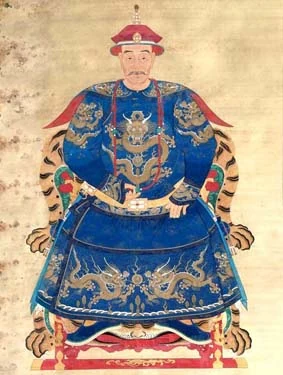
1612 CE–1678 CE
General
Wu Sangui
吴三桂
Wu Sangui was a Ming general who brought Qing forces through Shanhai Pass in 1644. He was enfeoffed as Prince Who Pacifies the West and later rose in rebellion against the Qing, launching the Revolt of the Three Feudatories in 1673.
1612 CE–1678 CEQing Dynasty
PROFILE
Wu Sangui was a Ming general who brought Qing forces through Shanhai Pass in 1644. He was enfeoffed as Prince Who Pacifies the West and later rose in rebellion against the Qing, launching the Revolt of the Three Feudatories in 1673.
- Alternate names
- Wu Changbo; Changbo
- Courtesy names
- Sucun; Changbo
- Period
- Qing Dynasty
- Date of Birth
- 1608 (1612 in another account)
- Date of Death
- 1678
- Dynasty / polity
- Qing Dynasty
- Identity
- General
- Ethnicity / group
- Not recorded in historical sources
- Native place
- Zhonghousuo of Qiandun Guard, Guangning, Liaodong (present-day Suizhong County, Liaoning)
- Place of birth
- Not recorded in historical sources
- Major achievements
- Ming general who brought Qing forces through Shanhai Pass; enfeoffed as Prince Who Pacifies the West; later launched the Revolt of the Three Feudatories in 1673
LIFE TIMELINE
Age eighteen | Joined his maternal uncle Zu Dashou and father Wu Xiang in the Zunhua-Yongping victory; appointed guard commander
Age twenty | Distinguished himself at the Battle of Youmashan and was promoted to guerrilla commander
Age twenty-seven | Formally appointed regional commander responsible for training troops at Ningyuan
Age twenty-nine | Participated in the Battle of Songjin and successfully broke out with his troops
Age thirty-two | In the third month made Earl Who Pacifies the West; in the fourth month brought Qing forces through the pass, defeated Li Zicheng at Yipianshi, and was enfeoffed as Prince Who Pacifies the West
Age thirty-two | Entered Beijing with the Qing army and pursued Li Zicheng as far as Shaanxi
Age thirty-six | Stationed jointly with Li Guohan at Hanzhong
Age thirty-nine | Entered Sichuan to attack remnants of the Great Western army
Age forty-six | As Senior General Who Pacifies the West, invaded the Southern Ming-held regions of Yunnan and Guizhou
Age forty-seven | Captured Yunnan, established a regional military administration, and took command there
Age fifty | Had the Southern Ming Yongli Emperor strangled at Kunming and was promoted to Prince of the First Rank Who Pacifies the West
Age sixty-one | Rose against the Qing in the eleventh month, beginning the Revolt of the Three Feudatories
Age sixty-six | Proclaimed himself emperor at Hengyang in the third month, naming his state Zhou; died of illness in the eighth month
BIOGRAPHY
Biography
Family Background and Early Life
Wu Sangui's ancestors were originally from Huizhou and later moved to Gaoyou. Around the generation of his grandfather, the family relocated beyond Shanhai Pass to Zhonghousuo of Qiandun Guard, in present-day Suizhong County, Liaoning. Some scholars have suggested that the family was engaged in horse trading. According to the main narrative in the source, Wu Sangui was born there in 1612, the fortieth year of the Wanli era.
Wu came from a military family of western Liaodong. His father Wu Xiang rose to Regional Commander of Jinzhou in the early Chongzhen reign. Wu Sangui's birth mother is unknown. After Wu Xiang was transferred to the capital, he married a younger sister of Zu Dashou as his second wife. Zu Dashou belonged to a prominent long-established Liaoxi family. Through this marriage, Wu Xiang became Zu's brother-in-law and Wu Sangui his nephew, giving the Wu father and son a powerful patronage connection.
Wu Sangui trained in martial arts from childhood and was skilled in mounted archery. Before age twenty he passed the military examination. Under the influence of his father and maternal uncle, he studied both civil and military subjects and then entered the army alongside them. During the Jisi crisis, when the Chongzhen Emperor summoned Yuan Chonghuan and Zu Dashou, Zu took only Wu Sangui with him to Beijing, indicating that Wu was already highly regarded when young.
In the fifth month of 1630, Wu joined Zu Dashou and Wu Xiang in recovering Luanzhou, Yongping, Zunhua, and Qian'an, and distinguished himself in what became known as the Zunhua-Yongping victory. In the seventh month he was appointed guard commander. In the second month of 1632 he gained merit at Youmashan and was promoted to guerrilla commander. Over the next several years he continued to distinguish himself on the Guan-Ning front, taking part in operations connected with Kong Youde's Wuqiao mutiny and the recovery of Dengzhou, and eventually rose to Assistant Military Commissioner.
The Battle of Songjin and the Defense of Ningyuan
In the seventh month of 1639, the Governor-General of Ji-Liao Hong Chengchou appointed Wu Sangui acting regional commander with responsibility for Liaodong forces. On the twenty-ninth day of the tenth month, imperial approval made the appointment formal. Wu was placed in charge of training the troops of Ningyuan and the Zhongzuo, Zhongyou, Qiandun, and Zhonghou garrisons, and his command was commonly described as the Ningyuan training regional command.
In early May 1640, Hong Chengchou led troops beyond Shanhai Pass and established himself at Ningyuan to relieve Jinzhou, which was besieged by Qing forces. Of the eight regional commanders under Hong, the source states that only Wu Sangui, Bai Guangen, and Ma Ke were willing to fight. Wu commanded twenty thousand men and organized one thousand elite cavalry into twenty units of fifty horsemen, each led by a cavalry officer. He wrote the names of the twenty officers on bamboo slips and placed the slips in his boot. In an emergency he could draw a slip and summon the named officer and unit to follow him into combat.
On May 18, Ming and Qing forces led by Dorgon encountered each other near Jiamashan by Xingshan. Wu fought fiercely and both sides suffered casualties. In the seventh month, he again fought Qing forces around Songshan and Xingshan.
In early 1641, the Qing gradually completed their encirclement of Jinzhou. On the second and third days of the first month, Wu loaded fifteen thousand shi of rice onto 3,400 ox, mule, and donkey carts. On the sixth he personally supervised the convoy, reached Jinzhou at noon the following day, unloaded the grain by the second watch that night, and returned safely to Ningyuan on the eighth. On April 25, Ming and Qing armies fought around the eastern and western Shimen at Songshan. Commanding the left wing, Wu repeatedly charged the Qing line and killed ten Qing cavalrymen in combat; Hong Chengchou ranked his achievement first.
In late July, Hong Chengchou led eight regional commanders toward Jinzhou and entered Songshan. Hong Taiji personally led a large army to encircle them. On August 21, following orders from Minister of War Chen Xinjia, Hong instructed the commanders to break out. Wu followed the advice of surrendered Mongol soldiers and deliberately took the main road, fought through the encirclement, and reached Xingshan. Deciding that Xingshan could not be held, he fled back toward Ningyuan and suffered heavy losses when intercepted by Dodo. Among the Ming forces that reached Ningyuan, however, Wu's troops were the only ones still organized as a coherent force. The Chongzhen Emperor gave Wu the additional title of commander-in-chief and ordered him to counterattack.
In 1642, Songshan, Jinzhou, Xingshan, and Tashan all fell. Wang Pu was executed, while Wu received only a demotion and remained at Ningyuan. Hong Taiji repeatedly wrote urging him to surrender, and Ming officers who had already surrendered to the Qing—including Deng Changchun, Chen Bangxuan, Jiang Xin, and Zhang Cunren—also sent letters. Wu did not reply. On November 5, he used three thousand elite troops and field artillery at Wangbaoshan north of Ningyuan to defeat a numerically superior Qing force.
In the first month of 1643, Zu Dashou in Shengjing received a letter that Wu had entrusted to a Mongol messenger. Wu declared that his family had long received Ming favor and that he was sworn to destroy the Jurchens in repayment. He also said that Hong Taiji would not employ a disloyal man and that the Qing must therefore hate him, explaining his refusal to surrender. Hong Taiji replied that he understood Wu's message to Zu and regretted that Wu remained undecided and might miss his opportunity.
That spring, Wu was ordered inside the pass to reinforce the capital against the fifth Qing incursion, but the Qing had already withdrawn by the time he arrived. On May 15, the Chongzhen Emperor held a banquet in Wuying Hall for Wu and other relief commanders and presented them with imperial swords. In the ninth month, Qing forces captured Zhonghousuo, Qiandun Guard, and Zhongqiansuo between Ningyuan and Shanhai Pass. On the sixth day of the tenth month, sixty thousand Qing troops attacked Ningyuan, the last of the eight outer garrisons. Wu inflicted heavy losses and forced them to withdraw.
Bringing Qing Forces Through Shanhai Pass
At the beginning of 1644, with the Ming facing collapse, the court placed great hope in Wu Sangui, who still commanded substantial forces outside the pass. As Li Zicheng's Great Shun army advanced on Beijing, the Chongzhen Emperor ordered troops from throughout the empire to come to the capital. On the fifth day of the third month, Wu was made Earl Who Pacifies the West and ordered to hurry to Beijing. On the nineteenth he reached Shanhai Pass, then moved west toward the capital region. On the twenty-second, near Yutian, he suddenly learned that Beijing had fallen and that the Chongzhen Emperor had hanged himself.
The collapse of the Ming deprived Wu of his political foundation. For more than a month he maneuvered among competing forces. Li Zicheng repeatedly sought his surrender, and Wu hesitated several times and at one point appears to have considered yielding. Later tradition says that he changed his mind after learning that his concubine Chen Yuanyuan had been seized by Li's general Liu Zongmin. Facing Li's forces internally and Dorgon's Qing army outside the pass, while members of the Wu family and Chen Yuanyuan were effectively hostages in Li's hands, Wu agreed to negotiate with Li but privately sought Dorgon's help, reportedly proposing a division of territory north and south of the Yellow River as the condition for cooperation.
On the thirteenth day of the fourth month, Li Zicheng personally led a large army east toward Shanhai Pass. Wu sent six local gentry representatives, including Li Yousong, to meet Li's army at Sanhe County and express a willingness to surrender, thereby delaying events while waiting for Qing forces. After his envoy returned from the Qing camp with Dorgon's reply, Wu immediately wrote again asking Dorgon to prepare his elite troops and enter Shanhai Pass without delay. After a forced march lasting a day and night, Dorgon arrived within fifteen li of the pass on the twenty-first.
On the twenty-second, Wu's army was initially defeated and he appealed to Dorgon for aid. Taking advantage of Wu's negotiations with Li Zicheng, Dorgon suddenly attacked Li's forces. At the Battle of Yipianshi, Wu and the Qing army defeated Li Zicheng. Qing forces then entered Beijing. Dorgon moved the young Shunzhi Emperor from Shengjing to Beijing and enfeoffed Wu Sangui as Prince Who Pacifies the West.
From the Northwest to the Southwest
At first the Qing court treated Wu with outward favor while retaining suspicion of him and did not give him unrestricted administrative authority. On May 15, 1644, the Southern Ming Prince of Fu, Zhu Yousong, proclaimed himself emperor at Nanjing and sent an envoy to confer on Wu the title Duke of Ji. The Southern Ming also sent Shen Tingyang by sea with one hundred thousand shi of rice and fifty thousand taels of silver to reward Wu's army, but Wu refused the gifts. When envoys from the Hongguang regime sought his assistance, he declined to meet them on the grounds that Qing regulations were strict and he feared arousing suspicion, while also stating that he could not bear to shoot an arrow against them.
In August 1645, after Li Zicheng's main forces had largely been destroyed, the Qing recalled Wu from the front and stationed him at Jinzhou. In 1647 he was transferred inside the pass to Hanzhong, where he served alongside the Eight Banners general Li Guohan and remained under supervision. During these years Wu took part in campaigns against remnants of Li Zicheng's army, the Great Western forces of Zhang Xianzhong, and surviving Ming resistance. In 1649 he marched north to suppress rebels in Shaanxi. In 1651, Wu and Li Guohan led troops into Sichuan, defeated forces of the Great Western commander Liu Wenxiu near Baoning Prefecture in northern Sichuan, and brought Chengdu and Chongqing under Qing control.
In 1658, as Senior General Who Pacifies the West, Wu entered Guizhou from Chongqing and joined Hong Chengchou in attacking the Southern Ming Yongli regime. In 1659 Wu captured Yunnan, established a regional military and civil administration there, and remained to command the province. The Yongli Emperor fled into Burma.
In 1661 Wu sent troops into Burma and pressured the Burmese king to hand over Yongli Emperor Zhu Youlang. After a coup in Burma, the new king Pindale's successor, Mangbai, delivered Zhu Youlang to Wu. In 1662, the first year of Kangxi, Wu had Zhu and his son strangled with a bowstring in Kunming. That same year Wu was promoted to Prince of the First Rank Who Pacifies the West and also given authority over Guizhou, becoming one of the Three Feudatories with substantial autonomous military power.
Revolt against the Qing and Final Years
In 1673, the twelfth year of Kangxi, the Kangxi Emperor discussed abolishing the feudatories. Alarmed, Wu Sangui raised the slogan of opposing the Qing and restoring the Ming. On the twenty-first day of the eleventh month he executed Yunnan governor Zhu Guozhi, called himself Prince of Zhou and Grand Marshal of All Armies Under Heaven, grew out his hair, and changed dress. He designated the following year, 1674, as the first year of Zhou. Shang Zhixin, heir of the Prince Who Pacifies the South; Jingnan Prince Geng Jingzhong; Guangxi general Sun Yanling; Shaanxi commander Wang Fuchen; Chahar prince Burni; Zheng Jing; and others successively responded. The conflict became known as the Revolt of the Three Feudatories.
Wu's army initially advanced rapidly, taking all of Yunnan and Guizhou and most of Hunan. Geng Jingzhong held Fujian in support, and armies advancing north captured large portions of Zhejiang and Jiangxi. The Qing lost control of Yunnan, Guizhou, Guangxi, Sichuan, Hunan, Fujian, Shaanxi, and Gansu as well as much of Zhejiang and Jiangxi. Yet Wu feared that his son Wu Yingxiong, held as a hostage at the Qing court, would be executed. He ordered his commanders to halt their northward advance and asked the Fifth Dalai Lama in Tibet to mediate with the Qing court. The Kangxi Emperor refused.
On April 13, 1674, Wu Yingxiong and Wu Shilin were strangled by the Qing court. Thereafter the strategic situation gradually turned against Wu. In 1677, Shang Zhixin, Geng Jingzhong, and Wang Fuchen successively surrendered to the Qing. Wu lost support from Guangdong, Fujian, and Shaanxi and also lost Jiangxi.
In the third month of 1678, hoping to restore morale, Wu Sangui proclaimed himself emperor at Hengyang in Hunan. He named his state Zhou, adopted the reign title Zhaowu, and made his wife Lady Zhang empress. He died of illness on the seventeenth day of the eighth month of that year, at the age of sixty-seven according to the source narrative. His grandson Wu Shifan succeeded him and posthumously honored him as Emperor Gao, Taizu. In the tenth month of 1681, Qing forces captured Kunming. Wu Shifan committed suicide, bringing the eight-year Revolt of the Three Feudatories to an end.
His Family and His Entry into the Army
Wu Sangui came of a family of generals on the Liaoxi frontier and was born at Zhonghousuo in the thirty-sixth or fortieth year of Wanli. His forebears dealt in horses; his father Wu Xiang was commander of Jinzhou early in the Chongzhen period of the Ming, and Wu Sangui, as a military graduate, inherited his father's privilege of office and was first made a commandant. Wu Xiang married as his second wife the sister of Zu Dashou, a great house long settled in Liaoxi, so that Wu Xiang became Zu Dashou's brother-in-law and Wu Sangui his nephew; and this marriage alliance gave father and son a powerful support and increased the strength of the Zu. Instructed and influenced by his father and his uncle, Wu Sangui studied both letters and arms, passed the military examination before he was twenty, and from then followed his father and uncle in his military career, the father taking him on campaigns and keeping him always at Zu Dashou's side, as when the two went to the capital, Zu Dashou taking Wu Sangui alone with him. In the fifth month of the third year of Chongzhen he followed his uncle and father in recovering the four cities of Luanzhou, Yongping, Zunhua and Qian'an; in the second month of the fifth year he won merit at the battle of Youmashan and was made a guerrilla, and in the fifth month was appointed by the grand coordinator of Liaodong to manage the defence of Xingshui fort; in the sixth month, to put down the troubles in Shandong, his father's post of commander was restored, and Wu Sangui, winning merit in that campaign, in the first month of the sixth year of Chongzhen was given charge of the office of deputy commander and in the fourth month was transferred to manage the right company of the left wing of the Liaodong cavalry, being given the title in the twelfth month for the recovery of Dengzhou; in the ninth month of the seventh year his merit at Zhonghousuo was recorded, and in the eighth year, on the recommendation of the grand supervisor of the Guanning garrison, he was transferred to the right company of the van of the Liaodong cavalry; in the ninth month of the eleventh year he was made deputy commander of the van's right company, the equivalent of a deputy commander; in the seventh month of the twelfth year the grand coordinator of Ji and Liao gave him the rank of acting commander in charge of Liaodong, and with the imperial decree approving he was formally given command of the troops and the training of Ningyuan's centre-left, centre-right, front and centre-rear garrisons, called for short the training commander of Ningyuan.
The Battles of Songshan and Jinzhou and the Defence of Ningyuan
In the first half of the fifth month of the thirteenth year of Chongzhen, of the eight commanders under him only Wu Sangui and one other dared to fight. Wu Sangui organized his twenty thousand men by his own method: he chose a thousand picked horsemen, divided into twenty troops of fifty, each with a troop commander, twenty in all; and he wrote the names of the twenty commanders on twenty bamboo slips which he thrust into his boot, so that in a sudden emergency he would draw one slip at random and call the commander named, who would lead his troop and follow him in the charge, never failing. On the eighteenth day of the fifth month a chance battle was fought at Jiamashan near Xingshan between the Ming army and the Qing forces, and Wu Sangui in that battle showed great skill at arms, fighting furiously hand to hand with the Qing, though the Qing being unusually fierce the day ended with losses on both sides; and in the seventh month he drove back the Qing again and again at Songshan and Xingshan. Early in the fourteenth year the Qing gradually closed their ring about Jinzhou, and Wu Sangui, at the urging of the grand coordinator of Ji and Liao, led the eight commanders to relieve Jinzhou and on the twenty-ninth day of the seventh month entered the city of Songshan; and Hong Chengchou, hearing that he had come, led a great army in person and surrounded him. On the twenty-first day of the eighth month Hong Chengchou, on the order of the minister of war Chen Xinjia, had the generals break out and fetch grain from Ningyuan; and Wu Sangui, taking the advice of a surrendered Mongol soldier, deliberately took the high road and indeed cut his way out, leading the greater part of the army to Xingshan, while the other Ming troops were killed by the Qing or drowned by the tide. Wu Sangui and another commander, judging that Xingshan could not be held, fled back to Ningyuan, and meeting an intercepting force on the way suffered heavy loss; and of the Ming troops who reached Ningyuan only those Wu Sangui had kept were still in organized formation. The Chongzhen emperor gave Wu Sangui the rank of provincial commander and had him strike back at the Qing, and on the fifteenth day of the eleventh month Wu Sangui raided the Qing camp by night without the expected result. In the spring and summer of the fifteenth year the four cities of Songshan, Jinzhou, Xingshan and Tashan of the eight beyond the pass fell one after another; Wang Pu was executed, but Wu Sangui suffered only degradation and still held Ningyuan. Afterwards Huang Taiji wrote to persuade Wu Sangui to submit, and Ming officers who had gone over wrote to him too, but Wu Sangui long gave no answer; and when Huang Taiji wrote the second time in the tenth month he had Zu Dashou, who had come over, write to him as well. That year the Qing raided within the passes a fifth time, and Huang Taiji at the same time ordered the prince of Yu, Dodo, to attack Ningyuan as a diversion; and on the fifth day of the eleventh month Wu Sangui, with three thousand picked troops and a field method of camping with guns, beat back a superior Qing force at Wangbaoshan north of Ningyuan. In the first month of the sixteenth year Zu Dashou received at Jinzhou a letter Wu Sangui had sent him by a Mongol, in which he said that his house had received the state's grace and that he had sworn to destroy the Jurchen in requital, and that a minister with a divided heart could not withdraw whole, for one who sought only wealth and honour would lose his life the sooner; and he said that Huang Taiji would not gather unfaithful men and that the Qing must hate him, and so refused to submit; and Huang Taiji answered that he had fully understood the letter sent to the commander Zu, and that the general's heart was undecided, and that he feared the general would miss his chance, which would be a great pity. In spring Wu Sangui was ordered into the passes to relieve them against the fifth Qing raid; he arrived after the Qing had withdrawn, but the Chongzhen emperor still valued him, thanked him for coming to Beijing, feasted him and gave him gifts. In the ninth month the Qing took the three cities of Zhonghousuo, Qiantunwei and Zhongqiansuo between Ningyuan and Shanhaiguan; and on the sixth day of the tenth month sixty thousand Qing troops attacked Ningyuan, the last of the eight cities beyond the pass, and were heavily beaten by Wu Sangui and forced to withdraw.
The Change of Jiashen and His Borrowing of the Qing Troops
Early in the seventeenth year of Chongzhen the Ming, facing ruin, staked its hopes on Wu Sangui, who held a great army beyond the pass; and many officers memorialised asking that the Ningyuan troops be withdrawn to guard the capital. The Dashun army pointed straight at the capital, and the Chongzhen emperor called out the troops of the realm, on the fifth day of the third month making Wu Sangui earl of Pingxi and ordering him to bring his troops to the capital at once. On the nineteenth day of the third month Wu Sangui's army reached the neighbourhood of the capital when news suddenly came that the capital had fallen and the Chongzhen emperor had hanged himself. The fall of the Ming left Wu Sangui without a master, and for more than a month thereafter he played between the various political forces to find a new one. Li Zicheng summoned him to submit several times and Wu Sangui hesitated again and again, at one time thinking of submitting to Li Zicheng; but it is said that hearing that his beloved concubine Chen Yuanyuan had been carried off by a subordinate of Li Zicheng he gave it up. Facing enemies on two sides, Wu Sangui could not match Li Zicheng within nor withstand the Qing without, and Chen Yuanyuan and his family were Li Zicheng's hostages; to save his family he agreed to make terms with Li Zicheng, and to guard against deceit he privately asked help of Dorgon on condition of dividing the realm north and south. Li Zicheng, having taken the Ming capital, sent the surrendered general Tang Tong and Bai Guangen east against Luanzhou, and Wu Sangui beat them, taking eight thousand of their men, and led his troops back to hold Shanhaiguan; and Li Zicheng, holding Wu Xiang as a hostage, wrote to summon him and had Tang Tong bring forty thousand taels to reward his troops and sent another general with twenty thousand men to hold the pass in his place; and Wu Sangui, leading his troops west to Luanzhou, hearing that his concubine Chen had been carried off by Li Zicheng's general Liu Zongmin, turned back in anger and beat the general Li Zicheng had sent to hold the pass, and sent his deputy Yang Shen and the guerrilla Guo Yunlong to petition the prince regent for troops. Dorgon, then on his western campaign, halted at Weng Hou, and Wu Sangui's envoy arriving, the next day he advanced to Xilatala and wrote back to Wu Sangui granting his request. On the thirteenth day of the fourth month Li Zicheng in person led sixty thousand troops toward Shanhaiguan, his head turned by the victories of the year and underrating the gravity of the confrontation; and Wu Sangui, learning that Li Zicheng was marching east in person, sent the gentry and scholars of Shanhaiguan, Li Yousong, Tan Suihuan, Liu Tailin, Liu Taishan, Huang Zhen'an and others, six in all, to feign submission and meet Li Zicheng's army not far east of Beijing, to gain time and wait for the Qing; and when the envoys sent to beg help of the Qing returned to Shanhaiguan with Dorgon's reply, Wu Sangui at once wrote again to Dorgon asking him to marshal his tiger troops and come straight into Shanhaiguan. Li Zicheng, only when he reached the gate and the representatives Wu Sangui had sent to treat of surrender tried to escape, discovered Wu Sangui's true intent of false surrender, but had already lost the chance to take the gate by a swift light advance; while Dorgon, receiving Wu Sangui's second appeal, after a day and night of forced marching reached a point fifteen li from the gate on the twenty-first. On the twenty-first day of the fourth month Dorgon, using Wu Sangui's critical position, forced him to abandon the policy of joining the Qing against Li and to submit wholly to the Qing; and on the twenty-second, Wu Sangui's troops having first been beaten and Wu Sangui asking help of Dorgon, Dorgon turned it to his own account and, while Wu Sangui was negotiating with Li Zicheng, suddenly attacked Li Zicheng. In the afternoon of the day the Qing reached a point ten li outside Shanhaiguan the Qing and Wu forces fought Li Zicheng's much smaller peasant army; and the next day, the twenty-second of the fourth month, the decisive battle of Shihe was fought: by agreement between the Qing and Wu, Wu Sangui's troops first met Li Zicheng's great army in front, and at the most critical moment of the fighting the Qing suddenly came round from behind and attacked Li's army fiercely; and Li Zicheng, knowing nothing of the Qing entry into the passes and his men having fought for days so that their spirit was at the second decline, though they fought desperately could not withstand the fierce attack of the Qing and Wu armies and suffered heavily, the corpses lying in heaps and filling the plain, and the peasant army being beaten Li Zicheng had to lead the remnant west. In this battle Dorgon had the ceremonial guard set out and the conch blown, and he and Wu Sangui bowed to Heaven together, after which Wu Sangui led his officers to Dorgon, who ordered his troops to tie white cloth on their shoulders as a mark and to enter the pass as the van; and Li Zicheng's troops lay across the country between mountain and sea in array, and Dorgon had the armies form against them with Wu Sangui's troops at the end of the right wing; and the array being set, Wu Sangui first fought Li Zicheng's men for several tens of engagements; and at noon a great wind raised dust so that one could not be told at arm's length, and the prince of Ying of the first rank, Ajige, and the prince of Yu, Dodo, with twenty thousand horse charged in from the right of Wu Sangui's array and broke them, and Li Zicheng, sitting on his horse on a high mound to watch the battle, cried in amazement that these were Manchu troops and galloped down the mound, and his army lost heart and broke; and the Qing pursued them forty li north, and that day Dorgon by imperial authority advanced Wu Sangui to be prince of Pingxi, gave him ten thousand horse and ten thousand foot, and set him to drive Li Zicheng before them.
The Pursuit of Li Zicheng and the Southern Campaigns
After the Qing entered the passes and took Beijing, Dorgon brought the young Shunzhi emperor and the court in from the northeast and enfeoffed Wu Sangui as prince of Pingxi; and the Shizu, having settled the capital, gave Wu Sangui the seal of prince of Pingxi with ten thousand taels of silver and three horses. Thereafter, the balance of forces changing sharply and the Qing buying over the Ming officials with high rank and rich pay, they came over one after another, and Wu Sangui too abandoned the idea of setting up a Ming heir. On the fifteenth day of the fifth month of the first year of Shunzhi the prince of Fu of the Ming took the throne at Nanjing and sent envoys to enfeoff Wu Sangui as duke of Ji and sent Shen Tingyang by sea with a hundred thousand shi of rice and fifty thousand taels of silver to reward his army, all of which Wu Sangui declined; and to the appeals of the southern Ming ministers he would not give audience, on the ground that the laws of the Qing were strict and he feared suspicion, though he said he could not bear to send one arrow against them, and presently went west to suppress the rebels. Unlike other surrendered officials Wu Sangui still had an army under his own independent command, and so at the beginning of the entry into the passes the Qing government outwardly favoured him and inwardly suspected him and gave him no real authority, guarding against him politically and militarily using only his hatred of Li Zicheng's army to make him attack Li Zicheng. In the sixth month Wu Sangui went out to Shandong and put down Li Zicheng's remnant; in the ninth month he followed the prince of Ying. In the eighth month of the second year of Shunzhi, after Li Zicheng's main force had been all but destroyed, the Qing government recalled him from the front and sent him out to hold a place. Wu Sangui understood this arrangement perfectly, and from then on spoke no more of avenging his lord and father but trimmed with the wind, calling the Chongzhen emperor his former lord and repeatedly declaring his loyalty to the new dynasty; and in this time he asked great rewards for himself and his officers, which the Qing court always granted. In the fourth year of Shunzhi the government again called him into the passes to hold Hanzhong with the banner generals, killing the remnant of the anti-Qing forces in the northwest; and in this time, to show his loyalty to the Qing, Wu Sangui not only suppressed the remnant peasant armies cruelly, many times massacring cities, but also went to the utmost to root out the descendants of those who had risen against the Qing; and this turn in his thought and action made the Qing central government rely on him the more, and the remnant anti-Qing forces of the northwest were all but wiped out. In the eighth year of Shunzhi the government again ordered Wu Sangui and others against the remnant armies, and in several years he pacified the two great cities of Chongqing and Chengdu; in the fourteenth year, as general of the western expedition, he campaigned south into Yunnan and Guizhou against the last regime of the Southern Ming; in the sixteenth year he took a certain place; and having taken Yunnan he was given a fief and office there, holding Yunnan and commanding all military and civil affairs. In the eighteenth year of Shunzhi he sent troops into Burma and had the Yongli emperor brought to Kunming and put to death. In more than ten years Wu Sangui led his troops from the northeast to the southwestern frontier and established extraordinary merit in the Qing's securing of rule over the whole realm, so that the Qing changed from controlled use of him to free use: not only, after a certain minister's death, letting him bear alone the charge of a whole quarter, but in all military matters giving him discretionary powers without central control, so that in employing men the ministries of personnel and of war might not hinder him and in spending money the ministry of revenue might not delay; and in office too he was promoted again and again. In the eleventh month of the first year of Kangxi, for the capture and killing of the prince of Gui, he was advanced to be a prince of the first rank with concurrent charge of Guizhou.
His Fief in Yunnan and His Breach with the Court
When Wu Sangui had set up his fief and office and sat as lord of Yunnan, his power and reputation at their height, his conflict with the Qing central government began to sharpen. In Yunnan and Guizhou he wished to be a prince of Pingxi who held Yunnan as a hereditary fief; and the Qing, long on guard against such designs, after Wu Sangui had killed the Yongli emperor began to cut down his power: in the second year of Kangxi, on the ground that military operations in Yunnan and Guizhou had ceased, it took back his seal as general of the western expedition, and then curtailed his power of appointment, so that all transfers and appointments went to the ministry; in the sixth year of Kangxi, taking the chance of his memorial declining the management of the affairs of the two provinces, it decreed that the governors and inspectors of the two provinces should obey the centre, and at the same time deprived him of his judicial privilege, so that fugitives from the prince of Pingxi's household were to be tried by the officers concerned, who might not be interfered with. Wu Sangui retaliated by provoking the Miao and the barbarians and using the occasion for war, and by enlarging his army and demanding pay, so that the conflict between him and the Qing grew sharper.
The Abolition of the Fiefs, His Rising, and His Title
In the spring of the twelfth year of Kangxi the prince of Pingnan holding Guangdong asked leave to retire to Liaodong, and the Kangxi emperor took the chance to decide that his fief should be moved; and then the prince of Jingnan holding Fujian was likewise allowed to abolish his fief. Under the pressure of circumstances Wu Sangui too hypocritically memorialised asking to abolish his fief, in truth hoping the court would retain him. The Kangxi emperor knew his real intent very well and held that Wu Sangui had long set himself against the court, and that whether or not the fief were abolished he would rebel, so that it was better to act first and so be able to control him; and overruling all objection he resolved to grant the abolition and sent a special envoy to Yunnan to carry it out with dispatch. In the eleventh month Wu Sangui killed the grand coordinator of Yunnan, Zhu Guozhi, styled himself grand marshal of all the realm's conscripted troops, and raised the banner of restoring the Ming and driving out the caitiffs. Because Wu Sangui had ruled Yunnan despotically for fourteen years, the rebels at first took the whole of Guizhou and part of Hunan; and the princes of Jingnan in Fujian and of Pingnan in Guangdong and Wu Sangui's partisans elsewhere, such as Zheng Jiaolin and Tan Hong in Sichuan, raised the rebel flag one after another, so that for a time the situation was very favourable to Wu Sangui. In the thirteenth year of Kangxi Wu Sangui styled himself the first year of the king of Zhou. The fifteenth year was the year in which the military situation turned: in the second month a certain general returned to the Qing and besieged Changsha, in the sixth month Wang Fuchen surrendered, and in the tenth month Geng Jingzhong came over to the Qing; within one year the situation fell away sharply, Wu Sangui's strategy of entering by way of Qin and Shu failed, and before the strict defence he found no opening. To relieve Changsha Wu Sangui went back and forth between Songzi and Changsha from the second to the eleventh month of the fifteenth year, at last halting at a certain place, and from then he pursued the strategy of holding Changsha to the death and attacking Jiangxi and the two Guangs. In the third month of the sixteenth year, Wu Sangui having no hope of taking Jiangxi, he moved in the fourth month to a certain place and in the eleventh month withdrew from Xiangtan to hold Hengzhou, following the strategy of sitting at Hengzhou, holding Yue and Chang to the death, and contending for the two Guangs. In the seventeenth year, to raise the spirit of his men and keep the four quarters from despising him, Wu Sangui on the first day of the third month set up an altar at Hengzhou and performed the suburban sacrifice and accession, with the dynastic name Zhou and the era Zhaowu, making Hengzhou the seat of heaven. By the Qing History, in that year Wu Sangui was sixty-seven and had waged war six years, his land shrinking daily and his help dwindling, and wishing to amuse himself with a title he was urged to advance by his followers, and so on the first of the third month took the throne, changing the era to Zhaowu and making Hengzhou the seat of heaven; he set up the hundred offices and richly enfeoffed his generals, first dukes of state, then dukes of commandery, then marquises and earls; he made a new calendar, held the provincial examinations of Yunnan, Guizhou, Sichuan and Huguang, and gave his dwelling the name of a palace, its tiles not to be changed to yellow and so lacquered over instead, and built ten thousand rooms of huts for the court offices, and made an altar on Mount Heng for the suburban sacrifice and accession, at which the officers came to congratulate him; and that day there was great wind and rain and the ceremony was hurriedly concluded. At the accession a great wind blew down the temporary tents; and in the eighth month he held the provincial examinations of Yunnan, Guizhou, Sichuan and Huguang, taking seventy-three candidates. In the beginning of the sixth month Wu Sangui at his capital Hengzhou summoned the great general Ma Bao in person and gave him the plan to lead fifty thousand troops south against Yongxing, a place of decision; and he won two battles, greatly damaging the Qing, killing a lieutenant-general in one and taking the Qing camp beyond the river, and in the other beating the van commander and the deputy commanders Tuodai and Yixiao so that their ramparts were broken, the south bank lost, and the Qing forced back to Guangdong, a serious blow to the Qing. In the middle of the sixth month the empress Zhang died and Wu Sangui's spirit was shaken; in the seventh month he disposed in person the great attack on Guangdong and Guangxi, sending a great general from Hengzhou with a hundred thousand troops into the two Guangs, succeeding several times and especially in Guangxi, where all but one place were recovered; and in the north a certain general held the Qing outside the Huxiang gate, where the Qing several times tried to cross the river and failed. In the eighth month of the seventeenth year of Kangxi, Hengzhou being fiercely hot and Wu Sangui's mind uneasy, his anxiety too great and his liver fire too strong, he suddenly fell ill with a stoppage of the wind and the gullet, and then with dysentery, and the physicians could do nothing; and he instructed his trusted ministers to bring his grandson Wu Shifan to Hengzhou to succeed and entrusted his after-affairs. At deep night on the eighteenth day of the eighth month Wu Sangui died at his capital Hengzhou, having been emperor a little over five months. On the twenty-second his nephews, sons-in-law and the trusted generals Ma Bao and others took charge of military affairs and sent Hu Guozhu back to Yunnan to bring Wu Shifan to Hengzhou to mourn; and Hu Guozhu, reaching Yunnan, conveyed the generals' wish to the keeper there and prepared to escort Wu Shifan to Hengzhou to succeed; and Guo Zhuangtu, whose daughter had married Wu Shifan, to keep his power resisted Wu Shifan's leaving Yunnan for Hengzhou. In the ninth month Wu Guogui summoned and presided over a council of the generals on future policy; and though Wu Guogui had vision and courage, the generals wished to preserve their families and goods in Yunnan, so that the proposal was rejected without serious discussion. In the eleventh month Hu Guozhu and the rest wrapped Wu Sangui's body in cotton and carried it secretly through Baoqing into Guizhou, while the great general Ma Bao held Hengzhou; and Wu Shifan met it at Guiyang and took the throne there.
Major Activities
Military Activities
Wu Sangui was an important military commander during the Ming-Qing transition. While defending Ningyuan late in the Ming, he organized an elite cavalry force into fifty-man units under designated cavalry officers, directing them with bamboo lots carried in his boot. The source describes this force as one of the last effective Ming cavalry formations. During the Battle of Songjin, Wu successfully broke out of the encirclement and was among the few Ming commanders to do so. In 1643, with three thousand elite troops at Wangbaoshan north of Ningyuan, he defeated a superior Qing force and helped defend the last of the major outer garrisons.
After entering Qing service, Wu acted as an important forward commander. He pursued Li Zicheng into Shaanxi, campaigned in Sichuan against Great Western remnants, defeated Liu Wenxiu at Baoning, and in 1658 led the advance into the Southern Ming-held regions of Yunnan and Guizhou, eventually capturing Yunnan. When he rebelled in 1673, his forces at first advanced rapidly through Yunnan, Guizhou, and Hunan, but the offensive later stalled around Yuezhou and ultimately failed.
Political Activities
Wu Sangui's political career was marked by repeated changes of allegiance. Late in the Ming he was Earl Who Pacifies the West and defended Shanhai Pass. In 1644 he aligned with the Qing and was enfeoffed as Prince Who Pacifies the West. In 1659 he established a military administration in Yunnan and exercised both civil and military authority, becoming one of the Three Feudatories. After the death of the Yongli Emperor in 1662, he was promoted to prince of the first rank and given concurrent authority over Guizhou. In 1673 he revolted against the Qing, assumed the title Prince of Zhou, and in 1678 proclaimed himself emperor of Zhou.
Travels and Areas of Activity
Wu Sangui was born in Liaodong and grew up in western Liaodong. In his early career he operated around Ningyuan, Jinzhou, Songshan, and Xingshan. After bringing Qing forces through Shanhai Pass in 1644, he pursued Li Zicheng into Shaanxi. In 1647 he was stationed at Hanzhong, entered Sichuan in 1651, advanced into Guizhou in 1658, and captured Yunnan the following year. He then remained based in Kunming for many years. After beginning his rebellion in 1673, he personally went to Hunan to direct operations and finally proclaimed himself emperor and died at Hengyang.
Relations with Contemporaries
Wu Sangui's political and military relationships were complex. Early in his career he benefited from the patronage of his maternal uncle Zu Dashou and served under Hong Chengchou. After his change of allegiance, he entered into a political bargain with Dorgon and later served alongside Li Guohan at Hanzhong while remaining under supervision. The Southern Ming Hongguang regime attempted to contact him, but he declined its offers. During the Revolt of the Three Feudatories he coordinated with Geng Jingzhong, Shang Zhixin, Wang Fuchen, and others.
His Organization of His Troops
Wu Sangui organized his twenty thousand men by his own method: he chose a thousand picked horsemen, divided into twenty troops of fifty, each with a troop commander, twenty in all; and he wrote the names of the twenty commanders on twenty bamboo slips which he thrust into his boot, so that in a sudden emergency he would draw one slip at random and call the commander named, who would lead his troop and follow him in the charge, never failing. On the eighteenth day of the fifth month of the thirteenth year of Chongzhen, at the chance battle of Jiamashan near Xingshan, he showed great skill at arms, fighting furiously hand to hand with the Qing; on the fifth day of the eleventh month of the fifteenth year he beat back a superior Qing force at Wangbaoshan north of Ningyuan with three thousand picked troops and a field method of camping with guns; and on the sixth day of the tenth month of the sixteenth year sixty thousand Qing troops attacked Ningyuan, the last of the eight cities beyond the pass, and were heavily beaten by him and forced to withdraw. In the battles of Songshan and Jinzhou he took the advice of a surrendered Mongol soldier and deliberately took the high road, and indeed cut his way out; and of the Ming troops who reached Ningyuan only those he had kept were still in organized formation.
His Fief Estates and His Finances in Yunnan
From the first Wu Sangui made the seizure of land his chief business: he seized the palace of the Yongli emperor on the Five Flowers mountain and kept enlarging it until it was most splendid; he took for his fief the whole seven hundred qing of the farms of the Ming duke of Qian, Mu, and seized land within three hundred li of Kunming for pasture, so that throughout Yunnan the fief farms of the prince of Pingxi were as thick as the squares of a chessboard, their managers killing men and seizing goods and becoming a scourge to the people; and through the inspector of Jiangsu he bought for his son-in-law three thousand mu of land and a great house in Suzhou. Having seized great tracts in Yunnan he turned the farmers of every people into his tenants and restored the heavy rents of the Mu regime: from two dou to four or five dou a mu, ten times or more the public tax of a few ge or sheng, and the grain due from each farm, originally commuted to silver, was collected under his exactions at six mace of silver for a shi of rice, which the people were forced to cart and deliver. Besides the rent he levied heavy taxes on the people: the roads of southern Yunnan being far and dangerous and no boats or carts passing, few merchants came, and in his time vagabonds were made tax officers and market sharpers patrolmen, and nothing, great or small, near or far, escaped, some things being taxed twice and a tax being levied every twenty or thirty li, so that the searching everywhere was worse than robbery on the road. In Yunnan he not only taxed the markets and the salt wells, gold mines and copper mountains, but also attracted merchants and lent them his princely capital to trade widely and increase wealth; and some merchants, relying on him, openly dealt in goods the Qing forbade to be transported, such as the ginseng of the east and the coptis of Sichuan.
His Western Appointments and His Gathering of Support
Wu Sangui's employments were such that the ministries of personnel and of war might not hinder him and the ministry of revenue might not delay him; he could even appoint officials throughout the realm, which was called the western selection, so that officials of the western selection all but filled the realm. They also drew in the upper ranks of the minority peoples: through dealings with the Yi in Sichuan, through trade with Tibet at Beishengzhou and annual men sent to Tibet to boil tea, he made the native chiefs of minority peoples commanders and guerrillas to extend his influence and weaken the Qing. At the same time he bought the court officials in the capital and the officers and clerks of the provinces with heavy bribes, and took in the remnant of the peasant armies and formed them into five camps of the loyal and brave and five of the righteous and brave, training them hard. He also indulged his officers, who did every evil and preyed on the people, killing men and seizing goods without the least scruple, so that of the cases of lawsuits and of murder and robbery, the greater half involved his soldiers.
His Accession and His Afterlife
On the fifth day of the eleventh month of the thirteenth year of Kangxi Wu Sangui led troops through a certain place and made the yamen of the prefect of Hengzhou his travelling palace, directing the military operations of the several routes. On the first day of the third month of the seventeenth year of Kangxi he took the throne at Hengzhou and changed the prefecture of Hengzhou into the seat of heaven, the bell and drum tower into the five phoenix tower, the Huiyan gate into the gate of the rising sun, and the great street into the chessboard street, using the names of the capital for everything; he made his wife the lady Zhang empress, enfeoffed the civil and military officers, had a new calendar proclaimed, and coined money. On the day of the accession a great wind blew down the temporary tents, and the ceremony was hurriedly concluded.
Personal Relations
- Father: Wu Xiang, Ming Regional Commander of Jinzhou
- Mother: Unknown; Wu Xiang's second wife was a younger sister of Zu Dashou
- Elder brother: Wu Sanfeng
- Younger brother: Wu Sanfu
- Cousin: Wu Sanmei
- Son: Wu Yingxiong
- Grandson: Wu Shifan
- Wife: Lady Zhang, later made empress
- Concubines: Chen Yuanyuan, Bamian Guanyin, Simian Guanyin, and others
- Maternal uncle: Zu Dashou, Regional Commander of Liaodong, who promoted Wu's early career
- Chongzhen Emperor of Ming: Enfeoffed Wu as Earl Who Pacifies the West
- Shunzhi Emperor of Qing: Enfeoffed Wu as Prince Who Pacifies the West
- Kangxi Emperor of Qing: Ordered the feudatories abolished, triggering Wu's revolt
- Li Zicheng: Wu brought Qing troops through Shanhai Pass and defeated Li's forces
- Dorgon: Wu sought his military aid and ultimately entered Qing service
Historical Assessment
Qing and Contemporary Assessments
The Draft History of Qing records that Wu Sangui inherited advantages from his father's position after passing the military examination and narrates his military career, while repeatedly criticizing his changes of allegiance. The Qing court consistently treated him as a rebel after 1673. The Kangxi Emperor described Wu Sangui and his followers in edicts as rebels who had betrayed imperial favor, harmed the population, and disturbed the realm.
Late Qing and Republican Period
With the rise of nationalist thought in the late Qing and early Republic, Wu Sangui was often cast as a paradigmatic traitor to the Han Chinese cause. Historians frequently condemned his decision to bring Qing forces through the pass and the resulting collapse of Ming resistance, as well as his execution of the Yongli Emperor.
Modern Period
Modern scholarship has offered more varied interpretations of Wu Sangui. Some historians have examined his surrender to the Qing and later revolt within the broader political setting of the Ming-Qing transition and have emphasized the complexity of his motives. Others have focused on the Revolt of the Three Feudatories as a conflict between early Qing centralization and powerful regional military establishments. Nevertheless, Wu's negative popular image as a "traitor" remains deeply entrenched.
FIGURES ASSOCIATED WITH THIS DYNASTY
Bibliography
- Draft History of Qing, vol. 474, Biography 261