Birth | Born at Hetu Ala (present-day old town of Xinbin, Liaoning)
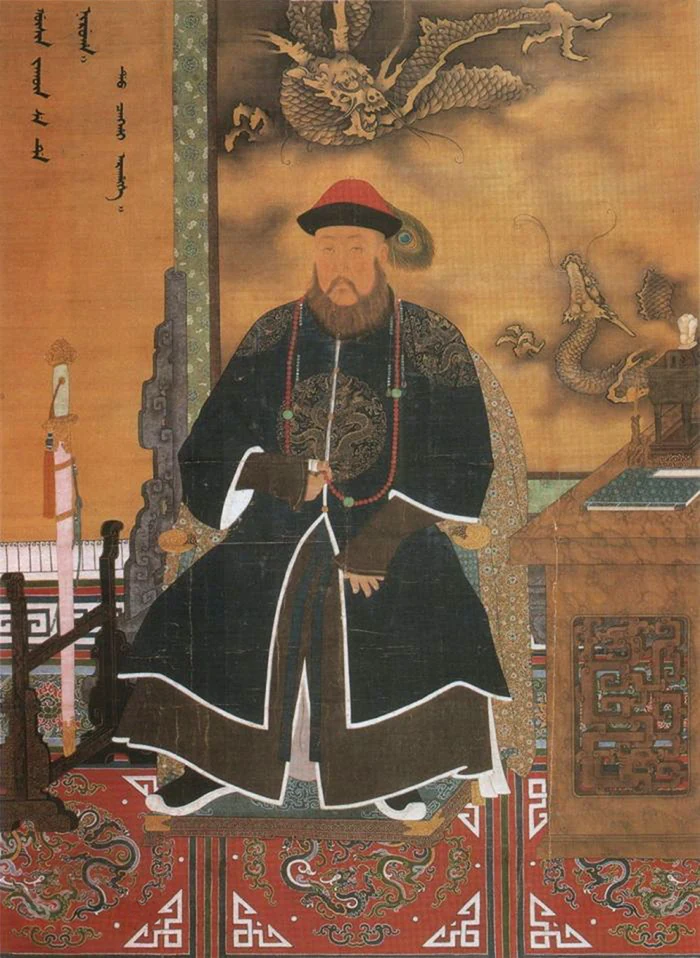
1612 CE–1650 CE
Statesmanmilitary commander
Aisin Gioro Dorgon
爱新觉罗·多尔衮
Aisin Gioro Dorgon (November 17, 1612–December 31, 1650), a Manchu, was the fourteenth son of Emperor Taizu of Qing, Aisin Gioro Nurhaci, and a younger brother of Emperor Taizong of Qing, Hong Taiji. He was an outstanding military commander and statesman of the early Qing. He led the Eight Banners through the passes into the Central Plains and was a key figure in the Qing conquest. In the early Shunzhi reign, he effectively…
1612 CE–1650 CEQing Dynasty
PROFILE
Aisin Gioro Dorgon (November 17, 1612–December 31, 1650), a Manchu, was the fourteenth son of Emperor Taizu of Qing, Aisin Gioro Nurhaci, and a younger brother of Emperor Taizong of Qing, Hong Taiji. He was an outstanding military commander and statesman of the early Qing. He led the Eight Banners through the passes into the Central Plains and was a key figure in the Qing conquest. In the early Shunzhi reign, he effectively controlled the government as regent and played a major role in consolidating Qing rule in the Central Plains, unifying the region, and promoting the sinicization of the Manchus, laying foundations for nearly three centuries of Qing rule. After his death, he was briefly posthumously honored as an emperor with the temple name Chengzong, but his honors were soon revoked. His title of Prince Rui was restored only during the Qianlong reign.
- Alternative Names
- Aisin Gioro Dorgon; Prince Rui Dorgon
- Era
- Qing
- Dynasty/Polity
- Qing
- Identity
- Statesman; military commander
- Date of Birth
- November 17 1612
- Date of Death
- December 31 1650
- Ethnicity
- Manchu
- Clan
- Aisin Gioro clan
- Ancestral Home
- Not reliably confirmed in historical sources
- Place of Birth
- Hetu Ala (present-day old town of Xinbin, Liaoning)
- Place of Death
- Place of death not specified
- Highest Office
- See Biography and Major Activities
- Major Achievements
- Regent in the early Qing; led the Eight Banners through the passes and helped establish Qing rule in the Central Plains; posthumous honors were later revoked
- Highest office
- Regent Prince (Uncle Regent, then Imperial Father Regent)
LIFE TIMELINE
Age eight | Together with other beile, appointed a hosoi ejen and allowed to participate in state affairs
Age fifteen | Nurhaci died; his mother Abahai was forced to die with him; Hong Taiji succeeded to the throne
Age seventeen | Followed Hong Taiji in a campaign against the Dörbed division of the Chahar Mongols; received the title “Mergen Daicing” and became commander of the Bordered White Banner
Age eighteen | Followed Hong Taiji through the passes to attack the Ming and fought Yuan Chonghuan and Zu Dashou outside Guangqu Gate
Age twenty | When Hong Taiji first established the Six Ministries, Dorgon was placed in charge of the Ministry of Personnel
Age twenty-four | Led troops to secure the submission of Ejei, son of Ligdan Khan, and obtained the Yuan imperial seal
Age twenty-five | Granted the title Prince Rui of the First Rank, ranked third among the six princes; accompanied Hong Taiji on the campaign against Joseon
Age twenty-six | Captured Ganghwa Island and took members of the Joseon royal family prisoner
Age twenty-seven | Appointed Grand General Who Carries Out Orders and led troops through the passes against the Ming, campaigning deep into Shanxi, Shandong, and other areas
Ages thirty to thirty-one | Took part in the Battle of Songjin and rendered major service; his princely rank was restored after the campaign
Age thirty-two | After Hong Taiji died, supported the young Fulin as emperor and became co-regent with Jirgalang
Age thirty-three | Led troops through Shanhai Pass, allied with Wu Sangui to defeat Li Zicheng's peasant army, and moved the capital to Beijing
Regency | Successively sent armies south to eliminate Li Zicheng and Zhang Xianzhong, pacify Jiangnan, and enforce policies including the queue and dress regulations
Age thirty-nine | Injured in a fall while hunting and died at the Kharahotun residence; posthumously honored as Emperor Yi with the temple name Chengzong
Posthumous | His titles were revoked, and his tomb was opened and his body desecrated
Posthumous | The Qianlong Emperor restored his title of Prince Rui and granted the posthumous name Zhong
BIOGRAPHY
Biography
Family Background and Early Years Dorgon was born on the twenty-fifth day of the tenth lunar month in 1612, the fortieth year of Wanli, at Hetu Ala of the Jianzhou Left Guard, present-day old town of Xinbin in Liaoning. His Manchu name meant “badger.” His mother, Abahai of the Ula Nara clan, was a daughter of Mantai, beile of Ula, and was thirty-one years younger than Nurhaci. She married Nurhaci in the eleventh month of 1601, when she had just turned twelve. After the death of Fuca Gundai, Abahai became the principal consort and held the highest status among Nurhaci's consorts. In 1616, the first year of Tianming, Nurhaci founded the Later Jin and adopted the Tianming era name. Two years later, he announced the “Seven Grievances” and began war against the Ming, opening the Ming-Qing conflict. In the ninth month of 1620, Nurhaci abolished the position of heir held by the senior beile Daišan and appointed Amin, Manggūltai, Hong Taiji, Degelei, Yoto, Jirgalang, Ajige, Dodo, and Dorgon as hosoi ejen to deliberate state affairs jointly. Thus, at only eight years old, Dorgon entered the circle of imperial clansmen participating in government. Nurhaci retained one quarter of the sixty niru belonging to the two Yellow Banners and distributed the rest among Ajige, Dorgon, and Dodo. Dorgon, still a minor under Ajige's Plain Yellow Banner, had not become a banner commander and ranked below his brothers in major ceremonies. His niru nevertheless exceeded those of several other princes, including Degelei, Jirgalang, and Abatai. In 1626, Nurhaci died and Abahai was forced to die with him. The Draft History of Qing records that the great consort of the Nara clan, daughter of Mantai of Ula, married Taizu at age twelve, became great consort after the death of Empress Xiaoci, and died with him in the eleventh year of Tianming at age thirty-seven, together with two secondary consorts; her three sons were Ajige, Dorgon, and Dodo. After Hong Taiji succeeded, he brought the two Yellow Banners under his own control. Dorgon and his brother were transferred to the Bordered White Banner, with Ajige remaining its commander. ### Emergence In the spring of 1628, the second year of Tiancong, seventeen-year-old Dorgon followed Hong Taiji against the Dörbed division of the Chahar Mongols and distinguished himself at Aomuleng. In the third month, Hong Taiji bestowed on him the title “Mergen Daicing,” meaning an intelligent commander. Later that month Ajige was punished, and Hong Taiji appointed Dorgon in his place as commander of the Bordered White Banner. Hong Taiji once told him that the favor he showed Dorgon exceeded that shown to the other princes and brothers, and that fine horses, clothing, and food were given to him especially generously. In 1629, Dorgon followed Hong Taiji through Longjing Pass into Ming territory. Together with Manggūltai and others, he captured Han'erzhuang, approached Tongzhou, and came close to Beijing. Outside Guangqu Gate he fought Yuan Chonghuan and Zu Dashou and was defeated, but later annihilated Ming reinforcements from Shanhai Pass at Jizhou. In 1630, when the army attacking Beijing withdrew, Dorgon and Manggūltai moved ahead of the main force and again defeated Ming troops. In 1631, the fifth year of Tiancong, Dorgon took charge of the newly established Ministry of Personnel and participated in the Dalinghe campaign. After Zu Dashou proposed surrendering Jinzhou, Dorgon and Abatai led four thousand men on the night of the twenty-ninth day of the tenth lunar month, accompanied by 350 of Zu's men, hoping to enter the city by pretending to flee. They defeated the Ming troops who came out to intercept them. When the court debated which of the Ming, Joseon, and Chahar to attack first in 1633, Dorgon advocated concentrating on the Ming. He proposed annual preparations and raids at harvest time, surrounding Beijing, interrupting reinforcements, and destroying fortified settlements to exhaust Ming resources. Hong Taiji accepted the plan. Later Jin forces often bypassed the defended Liaoxi corridor through Mongol territory, damaging the Ming defenses and local communities. ### Distinguished Military Service Chahar under Ligdan Khan resisted Later Jin. In the second lunar month of 1635, Dorgon and other commanders took ten thousand troops to the Hetao region and secured the submission of Ligdan's widows Nangnang and Sutai and his son Ejei. Dorgon presented the seal marked “Zhigao zhi bao” to Hong Taiji, and officials subsequently urged Hong Taiji to assume the imperial title. At the New Year ceremony in 1636, Dorgon led the beile in paying homage, demonstrating his increased standing since childhood. After Hong Taiji proclaimed the Qing in the fourth lunar month, Dorgon became Prince Rui of the First Rank, third among the six princes, and received greater responsibilities. Dorgon joined the campaign against Joseon in the twelfth lunar month of 1636. In the following first month he captured Ganghwa Island and members of the royal family while under orders to restrain killing. On the fifth day of the fourth month he reported that Crown Prince Sohyeon, Prince Bongrim, their families, and a party of 182 attendants and relatives had arrived under escort at Shengjing. In 1638, when Hong Taiji campaigned against the Khalkha, Dorgon remained behind. He supervised construction of Duerbi City at Liaoyang, later named Pingcheng, and built the road from Mukden to the Liao River. On August 23, Hong Taiji appointed him Grand General Who Carries Out Orders and sent him south against the Ming. The expedition was divided into two armies, and Hooge served in the left wing personally commanded by Dorgon. The left wing entered through Qiangziling and Dongjiakou, raided Shanxi, captured Jinan, and killed Ming governor-general Lu Xiangsheng. It then raided north through Tianjin and Qian'an and returned through Qingshan Pass after sweeping thousands of li. By its return to Mukden in the third month of 1639, Qing forces in this campaign had captured thirty-six cities, induced six to surrender, won seventeen engagements, and taken 260,000 people and animals. In the sixth month of 1640, Dorgon and Jirgalang were sent to Yizhou to cultivate military farms and harass Jinzhou. During the next year, Dorgon and Hooge alternated every three months with Jirgalang and Ajige in the siege of Jinzhou. Facing the main Ming army, Dorgon encountered great difficulty. In the third month of 1641, he was demoted to a prince of the second rank, fined ten thousand taels of silver, and stripped of the households of two niru for failures in the siege and for sending troops home. In the eighth month Hong Taiji personally came to Songshan to fight Hong Chengchou. It was Dorgon and Hooge's turn to besiege Jinzhou. Hong Taiji ordered them to redeploy to encircle Songshan and Xingshan. They objected, but he insisted. Hong Taiji then decisively defeated the Ming. Dorgon and Hooge completed their rotation in the ninth month and were replaced by Jirgalang and Ajige. In the eleventh month Dorgon was sent to Jinzhou and Hooge to Songshan to complete the offensive. In the spring of 1642, Hong Chengchou was captured after Songshan fell and surrendered, while Zu Dashou surrendered Jinzhou. After the Qing victory in the Battle of Songjin, Dorgon's rank as Prince Rui of the First Rank was restored in the seventh month. The campaign, however, left him exhausted and in poor health. When Hong Taiji reorganized the government, he placed the Ministry of Personnel, first among the Six Ministries, under Dorgon's supervision. On Dorgon's recommendation, officials including Hife, Fan Wencheng, Bao Chengxian, and Ganglin were promoted. Hong Taiji also carried out major institutional reforms proposed by Dorgon and established the Eight Yamen system. Appointments, promotions, demotions, and hereditary succession among civil and military officials, and even appointments of princes overseeing ministries, passed through Dorgon's hands. His experience overseeing the Six Ministries trained him in administration and prepared him for his later regency. ### Regency and Entry into the Passes On the ninth day of the eighth month of 1643, Hong Taiji suddenly died at Qingning Palace in Mukden without naming an heir. Daišan's two Red Banners had already weakened, and Daišan himself, over sixty, had long withdrawn from active government. Hooge, Hong Taiji's eldest son, entered the succession contest, and officials of the two Yellow Banners wanted one of Hong Taiji's sons to succeed so their privileged position would continue. Dorgon and his brothers controlled the Plain and Bordered White Banners, sixty-five of the Eight Banners' 210 niru, or 31 percent of the total, enough strength to contend with Hooge. Dorgon exploited Hooge's weakness and prevented his accession, but, wary of the Red Banners' power, did not dare proclaim himself emperor. Instead, he supported Hong Taiji's ninth son Fulin. Fulin was only six years old. Dorgon and Prince Zheng Jirgalang became co-regents, while Dorgon effectively held power. In the fourth month of 1644, the first year of Shunzhi, Dorgon led the army through the passes. At the Battle of Shanhai Pass he allied with Wu Sangui and defeated Li Zicheng's peasant army. The Qing then moved the capital to Beijing, and Dorgon became the de facto highest authority of the dynasty. He adopted measures to stabilize rule: the three additional levies for Liaodong, suppression, and military training were abolished to reduce the burden on the population; rewards were established for reporting official corruption; and the Collected Statutes and Substatutes of the Great Qing Code was revised on the basis of Ming law, becoming the Qing dynasty's first written code. He also sent armies south against Li Zicheng and Zhang Xianzhong and to pacify Jiangnan. During Dorgon's regency, the Shunzhi Emperor's form of address for him developed from “Uncle Regent” to “Imperial Uncle Regent” in 1645 and finally to “Imperial Father Regent” in 1649. Dorgon enjoyed hunting on a grand scale and reportedly possessed more than a thousand hunting falcons. His residence was described as soaring and magnificent, comparable to the imperial seat and exceptionally lavish in gold, color, carving, and decoration. In the seventh month of 1650, he ordered an additional 2.5 million taels of silver for construction of a summer residence at Kharahotun, in present-day Luanhe Town, Shuangluan District, Chengde. Such extravagance contributed to resentment on the part of the young Shunzhi Emperor. ### Later Years and Posthumous Fate Dorgon said that excessive strain during the Battle of Songjin had damaged his health. He suffered palpitations, stroke symptoms, and coughing of blood. After entering the passes, the increasingly heavy burden of state affairs left him dizzy, with swollen eyes and recurrent illness. After the fourth year of Shunzhi, his wind illness worsened and kneeling became difficult. As his health declined, he became irritable and quick to anger, and people at all levels were said to fear him; even high officials often could not speak directly with him and tried to approach him while he was traveling. On the thirteenth day of the eleventh month of 1650, Dorgon, already ill and restless at home, went hunting beyond the frontier with princes, beile, beise, dukes, banner commanders, officials, and troops. On the ninth day of the twelfth month he fell from a horse while hunting and injured his knee. After a cooling salve was applied, he failed to recover and died at the Kharahotun residence in present-day Luanping County, Hebei, aged thirty-nine. The Shunzhi Emperor posthumously honored him as an emperor with the temple name Chengzong and the full posthumous name Emperor Yi Maode Xiuyuan Guangye Dinggong Anmin Lizheng Chengjing. Two months later, however, because Dorgon had ruled arbitrarily and persecuted Hooge, the Shunzhi Emperor stripped him of his titles in the second month of 1651, opened his tomb, and had his skull beheaded. His followers Ganglin, Bahanan, Leng Sengji, Tantai, Baiyintu, and others were also punished. Only in 1778 did the Qianlong Emperor restore Dorgon's title of Prince Rui, grant him the posthumous name Zhong, return him to the imperial genealogy, and order his tomb repaired.
Dorgon, fourteenth son of Nurhaci, was born in 1612 at Hetu Ala. His mother, Lady Ulanara, known as Abahai, was the daughter of Mantai, beile of the Ula, and had been married to Nurhaci in 1601 at the age of twelve and raised to senior consort; when Nurhaci died in 1626 she was made to follow him in death at thirty-seven, two other consorts dying with her. She bore three sons: Ajige, Dorgon and Dodo. In 1620 Nurhaci deposed the senior beile Daišan from the succession and instituted new senior beile, so that Dorgon at eight entered the ranks of those who took part in the government; Nurhaci divided the sixty niru of the two yellow banners he commanded into four parts, keeping one and giving the others to Dorgon, Ajige and Dodo, so that the brothers first became one of the balancing forces of the state. Dorgon was nevertheless still a child and ranked below Ajige and even Dodo in political standing, and at the New Year audience of 1616 Ajige and Dodo stood sixth and seventh among those who made obeisance in person while Dorgon was not permitted to take part. In 1628 Dorgon accompanied Hong Taiji against the Duoluote division of the Chahar Mongols, defeated the enemy at Aomuleng and was given the title Mergen Daicing for his service; Hong Taiji told him that his affection for him exceeded that for other sons and brothers and that fine horses, fresh clothes and good food were lavished on him alone. In 1629 Dorgon entered Ming territory through the Longjing pass, took Hanerzhuang with Manggultai, pressed towards Tongzhou and the Ming capital, beat the relieving armies of Yuan Chonghuan and Zu Dashou outside the Guangqu gate, and destroyed the Shanhaiguan relief force at Jizhou. In 1630, withdrawing with the army, he and Manggultai went ahead and broke the Ming again. At the siege of Dalinghe he charged the enemy in person to the foot of the wall, more than a hundred Ming soldiers falling into the ditch, while the guns and arrows from the wall killed men of his own; and when Zu Dashou undertook to hand over Jinzhou, Dorgon with Abatai and four thousand men feigned headlong flight with three hundred and fifty of Zu's men and stormed Jinzhou, beating the garrison. In 1632 he took part in the campaign against the Chahar. In 1633, when Hong Taiji asked his beile and ministers whether Ming, Korea or the Chahar should be attacked first, Dorgon argued for Ming, proposing that the army be kept in order and each year, at harvest time, driven deep into Ming territory to besiege Beijing, cut off its relief and destroy its garrison towns, so as to sit and wait for its exhaustion; his plan was adopted, and as the country beyond Shanhaiguan was still strongly held, the Jin armies took the long way round the passes. In the second month of 1635 Hong Taiji sent Dorgon with ten thousand picked troops to bring over the Chahar; the advance was smooth, the wife of Ligdan Khan and others submitting, and on his way back he destroyed the Ningwu pass, raided Daizhou, Xinzhou, Guoxian, Heifengkou and Yingzhou and brought the surrendered people from Guihua city. From Ligdan's treasury came the Yuan seal inscribed "treasure of the imperial edicts," which Dorgon had Ejez present to Hong Taiji, whereupon the ministers petitioned him to take the imperial title. At the New Year ceremony of 1636 Dorgon led the beile in homage to Hong Taiji, a world away from the scene twelve years before; in the fourth month Hong Taiji took the imperial throne and changed the dynastic name to Qing, and Dorgon was enfeoffed as Prince Rui of the first rank. In the twelfth month of 1636 he accompanied Hong Taiji's expedition against Korea. In the first month of 1637 he was ordered to take Kanghwa island, capturing the Korean royal family but being bidden to restrain his troops and slay no one; in the fourth month he reported the numbers of the hostages and their households sent to Shengjing. In 1638, when Hong Taiji campaigned against the Khalkha, Dorgon kept the capital and built the town of Durbe at Liaoyang, named Pingcheng, and had the great road from Shengjing to the Liao river repaired. On the twenty-third day of the eighth month of that year he was appointed generalissimo by imperial commission and sent south against the Ming in two columns, sweeping several thousand li and returning to Shengjing in the third month of 1639. For the year following he and Hooge alternated with Jirgalang and Ajige in besieging Jinzhou every three months; the fighting was hard, and in the third month of 1641 he was degraded to prince of the second rank, fined ten thousand taels and deprived of two hundred households and niru for slackness in the siege. In 1641 he besieged Jinzhou again, Hong Chengchou lying at Songshan with a hundred and thirty thousand men; Dorgon attacked repeatedly and asked for reinforcements, and Hong Taiji came himself at speed for six days, Dorgon asking him to camp between Songshan and Xingshan with troops along the Wuxin river and the southern hills as far as the sea. As the Ming troops fell back and came on again, Hong Taiji had the yellow canopy displayed and the Ming retired; Dorgon with Luotuo struck across the road to Tashan, killing many, and battered down four forts outside Tashan with guns, taking Wang Xixian. In 1642 Songshan fell and Hong Chengchou was taken, Jinzhou was reduced and Zu Dashou surrendered again, Tashan and Xingshan were carried, the three towns were razed and the army returned; his services were reckoned and he was restored to the first-rank princedom. When Hong Taiji reorganised the offices he gave Dorgon the Ministry of Personnel, first of the six, and on his recommendation Xifu, Fan Wencheng, Bao Chengxian and Ganglin were advanced, the machinery of government was reformed and the eight offices fixed; and the succession and promotion of civil and military officers, even the princes managing the ministries, passed through his hands. In administering the six ministries Dorgon trained the administrative skill that prepared him for the regency. On the ninth day of the eighth month of 1643 Hong Taiji died suddenly and the struggle for the succession began. Hooge's two yellow banners and Dorgon's and Dodo's two white banners were deadlocked, while Daišan's seniority and the strength of the two red banners and Jirgalang's adherence could tip the balance. On the fourteenth the princes met in the great hall; Daišan proposed Hooge as the emperor's eldest son, but Hooge declined on the ground of his youth and slender virtue and withdrew, and the late emperor's officers came forward sword in hand, saying that they had eaten the emperor's food and worn his clothes and that if a son of the emperor were not set up they would rather die and follow him below. Dorgon, with six banners against him, judged his own accession premature and proposed the ninth son, the six-year-old Fulin, with himself and Jirgalang holding the military power and governing as regents until he came of age, oaths being sworn to Heaven; the princes, beile and ministers made common covenant and proclaimed it to Heaven and earth. When the prince Adali and the beise Shuotuo urged Dorgon to make himself emperor he disclosed their plot and had them executed, and when the commander Hooge was accused of disaffection by the commander Helohoi and others, his princedom was taken from him. Jirgalang then instructed the ministers to report all matters first to Prince Rui and to set his name first in signatures, and Dorgon's power rose steadily. In the fourth month of 1644 the Shunzhi emperor made Dorgon generalissimo in the Dugong hall, giving him the commission and seal with his own hand and sending him south at the head of the army. Inside the passes all was confusion, Li Zicheng having taken Beijing and the Chongzhen emperor hanged himself. Fan Wencheng memorialised Dorgon that as Qin lost its deer and Chu and Han hunted it, the Qing were not contending with the Ming but with the bandits, and urged an immediate advance into the Central Plain; he added that in fighting the Qing were superior but that in winning the people and drawing the common folk the bandits were superior, so that the old policy of slaughter and plunder must be abandoned and the troops strictly restrained from the least offence. Dorgon accepted Fan Wencheng's advice and granted Wu Sangui's request for aid. Wu Sangui wrote from Shanhaiguan asking for help; Dorgon turned his army towards him, camped at Xilatala, and answered that he came with an army of righteousness resolved to destroy the rebels and deliver the people, and that if Wu Sangui came over with his troops he would be enfeoffed with his own land and made a prince, avenging his country and preserving his family. At Lianshan Wu Sangui sent again urging haste; the army crossed Ningyuan by night to Shahe, ten li from the pass. At Shanhaiguan Wu Sangui came out to welcome him; Dorgon had his men mark themselves with white cloth on the shoulder and led them through the gate, placing Wu Sangui on the right rear. Li Zicheng had more than two hundred thousand men drawn up from the northern hills to the sea. In the fighting a great wind raised the sand so that nothing could be seen at arm's length; after a long struggle with shouts, the wind dropped and the Qing cavalry burst out from behind Wu Sangui's line into the enemy's centre, horse and arrow swift, and Li Zicheng, seeing it from the height, lost heart and rode away; the Qing pursued forty li and the rebel host broke. Dorgon on the field made Wu Sangui Prince Pingxi by imperial warrant, ordered all soldiers and people within the pass to shave their heads, and gave Wu Sangui ten thousand horse and foot to pursue Li Zicheng. In the fifth month the army reached Tongzhou, Li Zicheng having burned the palaces and gone west with his baggage; Dorgon entered the capital in order, the Ming officials, soldiers and people welcoming him outside the Chaoyang gate. He first ordered soldiers and people alike to shave, then, hearing that it went against the people's wishes, bade them delay; he ordered his troops to man the walls and not enter houses, so that the people were undisturbed, and held mourning for the Chongzhen emperor for three days and buried him with imperial rites. He then invited the young Shunzhi emperor to come to the capital and take the throne, quickly steadying the conquered region. On the question of moving the capital from Shengjing to Beijing the ruling group divided, Ajige and others opposing it on the ground that the entry had been too swift and supplies insufficient, while Dorgon, with the whole strategy of unifying and governing China in view, urged Beijing; in the sixth month he brought the princes, beile and ministers to one mind and sent the duke Tunqika and others with a memorial to escort the emperor. In the ninth month Shunzhi entered Shanhaiguan and Dorgon with the princes and ministers welcomed him at Tongzhou; on reaching the capital he was made Prince Regent, Uncle of the Emperor, and given a sable and python robe. In the tenth month, when the emperor took the throne, he was commanded to have a stele erected recording his services and was given a seal, a black fox crown, thirteen eastern pearls, a black fox fur and gold, silver, horses and camels besides, and from then on his treatment overtopped that of all the princes. In 1645 he was advanced to Prince Regent, Uncle of the Emperor; on all great occasions, hunting or the dispatch of armies, the princes and nobles must assemble to await his orders and kneel in ranks to see him off, escorting him to his gate when he returned, and at the New Year and on days of congratulation the civil and military ministers, after congratulating the emperor, went to congratulate Dorgon; he alone might be carried in a chair within the palace, while the princes must dismount outside the Wu gate. In the fifth month of 1646, finding it inconvenient that the imperial seal was kept in the palace and that troops could not be moved without a memorial for its use, he had the seals brought to his own residence; from that year the kinds of insignia he used equalled the emperor's, twenty in all, though the numbers within each kind were slightly fewer, while the regent prince's insignia numbered only fifteen. After 1647 any official who in a memorial called him "the ninth prince" instead of "the Prince Regent, Uncle of the Emperor," or omitted part of the full title, was dismissed, and "henceforth on all occasions of ceremony the kneeling obeisance shall cease," so that he no longer made obeisance to the emperor. At the end of 1648 he became Prince Regent, Father of the Emperor, his insignia, music and attendants all usurping the imperial scale, conducting all government without the least deferential request and issuing orders as edicts without the emperor's command, advancing and dismissing officials as he pleased, and forbidding the princes, beile, beise and dukes to attend at court, so that they waited daily before his own residence as though it were the court. The factional habits of the late Ming found their reflection in the early Qing; taking account of the fact that Feng Quan and his party were wholeheartedly loyal to the Manchu nobility and that to punish them would give the southern officials the upper hand to the harm of Qing rule, Dorgon long withheld judgement and at last supported Feng Quan's faction, publicly rebuking and dismissing their opponents while not pursuing the rest, using the quarrel to rule the Chinese through Chinese. In the eighth month of 1650 he posthumously honoured his mother, the consort Ulanara, as Empress Xiaolie Gongmin Xianzhe Renhe Zantian Lisheng Wuxiao and had her tablet placed in the ancestral temple. In the eleventh month he went hunting beyond the frontier and was thrown and injured; on the ninth day of the twelfth month he died beyond Gubeikou at the age of thirty-nine. The emperor posthumously proclaimed him emperor under the style Maode Xiudao Guangye Dinggong Anmin Lizheng Chengjing Yi, with the temple name Chengzong, and buried him with imperial rites; in the first month of 1651 his principal consort of the Borjigit clan was honoured as empress and his son Duo'erbo was made a prince with three times the stipend of other princes. Before long his enemies reopened the case, impeaching him of great treason: Ajige's guilt was first discussed, the nobles of the two yellow banners were restored, those of the two red banners advanced, and such ministers of the two white banners as Suksaha went over to the other side. Under these conditions the case of Luoshi and four others was raised, and the fourteen counts against Dorgon were formally proclaimed, all his honours stripped and his tomb broken open and his body disinterred, so that the following he had built up over years collapsed in an instant. In the first month of 1655 Peng Changgeng and Xu Er'an memorialised in praise of his services, almost every word of it reasonable, but Jirgalang abused them furiously and had them exiled. Only in 1778 did the Qianlong emperor order his rehabilitation, restoring the title of Prince Rui and the posthumous name Zhong, and restoring the tomb according to the rules of a prince's sepulchre; the original site in the Dongzhimen quarter of Beijing, known as the ninth prince's tomb, covers two hundred thousand square metres, facing south, with a spirit bridge and crescent river at its southern end, two walls, three gate bays and a palisade gate, east and west court halls and two stele towers, and behind them a five-bay offering hall, a terrace and a great mound. Closely bound up with Dorgon was the case of Hooge, Prince Su. In the fourth month of 1644 Hooge, resenting that Dorgon had not made him emperor, spoke offensively to him and was impeached by the commander Helohoi and others; Dorgon had him degraded to commoner for plotting, and his partisans Emoketu and the rest condemned to death. In the first month of 1646 Dorgon, secure in power, restored Hooge to command against Zhang Xianzhong; in the second month of 1648 Hooge returned in triumph without any great welcome, and Dorgon, with old grievances against him, had him imprisoned on charges of false claims of merit by his officers and of promoting Jisai, brother of the criminal Yangshan; in the third month Hooge died in prison at forty, and Dorgon took his consort as his own.
Major Activities
Military Campaigns Dorgon had an extensive military record. In 1628 he followed Hong Taiji against the Chahar Mongols and received the title “Mergen Daicing” for his service. In 1635 he secured the submission of Ligdan Khan's son Ejei and obtained the Yuan imperial seal, which provided an important basis for Hong Taiji's assumption of the imperial title. In 1638 he was appointed Grand General Who Carries Out Orders and led a major raid into Ming territory, campaigning thousands of li, capturing thirty-six cities, and taking 260,000 people and animals. In the Battle of Songjin he faced the principal Ming forces and, after a difficult campaign, helped Hong Taiji win the decisive victory that removed a major obstacle in Liaodong. In 1644 he led the army through the passes, allied with Wu Sangui at Shanhai Pass to defeat Li Zicheng's peasant army, moved the capital to Beijing, and then sent forces south against Li Zicheng and Zhang Xianzhong, making a major contribution to Qing unification of the Central Plains. ### Political Activities Dorgon had already supervised the Ministry of Personnel under Hong Taiji and developed administrative experience. When Hong Taiji reorganized the government, he put the Ministry of Personnel under Dorgon's authority. Dorgon recommended Hife, Fan Wencheng, Bao Chengxian, Ganglin, and other civil officials and proposed institutional reforms that established the Eight Yamen system. After Hong Taiji died, Dorgon supported the young Fulin's accession, became co-regent with Jirgalang, and effectively controlled the government. During his regency, he abolished the three additional levies, established rewards for reports of official corruption, and presided over revision of the Collected Statutes and Substatutes of the Great Qing Code. The Shunzhi Emperor's increasingly exalted forms of address for him—from “Uncle Regent” to “Imperial Uncle Regent” and then “Imperial Father Regent”—reflected his extraordinary political dominance. ### Travels and Locations Dorgon's movements covered areas both inside and outside the passes. Born at Hetu Ala, he followed Hong Taiji in campaigns against the Chahar Mongols and repeatedly entered Ming territory, reaching the outskirts of Beijing as well as Shanxi, Shandong, Tianjin, and other regions. After the Battle of Songjin, he was stationed in Liaodong. After entering the passes, he maintained his residence in Beijing, at the site of today's Pudu Temple east of Nanchizi Street, east of the Forbidden City, and built a summer residence at Kharahotun. In 1650 he went hunting beyond the frontier, fell from a horse, and died at the Kharahotun residence. ### Relations with Contemporaries Dorgon's relationship with Hong Taiji was close but complex. Hong Taiji once said that he favored Dorgon more than his other sons and brothers, yet during the Battle of Songjin he also demoted Dorgon for failures in the siege of Jinzhou. Dorgon was close to his full elder brother Ajige and full younger brother Dodo; together they controlled the two White Banners and formed his strongest support during the succession struggle. Hooge was his political rival. After Hong Taiji's death, Dorgon prevented Hooge from succeeding and later persecuted him to death. Dorgon was co-regent with Jirgalang, but real power rested with Dorgon. He allied with Wu Sangui to enter the passes and worked with Han officials such as Fan Wencheng in governing the state.
In the years before and after the Qing entry through Shanhaiguan in 1644 Dorgon was the central figure in the dynasty's decisions and government. Strategically he took Fan Wencheng's advice and abandoned the old policy of taking towns without holding them and of slaughter and plunder, resolving both to master the Central Plain and to win the people by strictly forbidding the least offence by the troops; at Shanhaiguan he made full use of the divisions among the Chinese, holding Wu Sangui to his purpose so that he could not but serve as the spearhead of the Qing advance, and putting Wu's army into the fight first and the banners in only when both sides were spent, thus crushing Li Zicheng at a stroke. Entering the capital, he forbade his troops to enter houses, held mourning for the Chongzhen emperor for three days and buried him with imperial rites, then invited the Shunzhi emperor to the capital and, over Ajige's opposition, resolved to move the seat of government to Beijing so as to advance and to build a foundation that should not be shaken, the dynasty ruling from Beijing thereafter. Militarily Dorgon was resolved to destroy the main force of the peasant armies while dealing with the Southern Ming both by sending large numbers of former Ming officials to win them over and by detaining their embassy when it came to negotiate. In the tenth month of 1644 he sent Ajige as generalissimo of the Jingyuan and Dodo southward, the northern column pursuing the Dashun and the southern attacking the Southern Ming. In the first month of 1645 Dodo broke the Dashun army at Tongguan and Li Zicheng abandoned Xi'an southward; in the third month Liu Zongmin occupied Wuchang, and being besieged and breaking out in the fourth month he was captured in ambush and strangled with a bowstring, Li Zicheng himself perishing in Tongcheng in the fifth month. Dodo in the meantime had taken Yangzhou, where Shi Kefa died, and crossing the Yangzi his troops took Nanjing without fighting and destroyed the Hongguang regime. In institutions Dorgon adopted the ready-made Ming system, the six ministries remaining the most important organs of state with Manchus as their presidents, while the practice of princes managing the ministries in person was abolished on the eve of the entry; by 1648 a system of joint Manchu and Chinese appointment was in force. Wishing to appear enlightened he kept the six bureaux of scrutiny and the thirteen circuits of censors, repeatedly encouraging officials to remonstrate without fear, and adopted the practice whereby the Grand Secretariat drafted the rescripts on memorials for the emperor's decision. With everything to be done at the entry he ordered officials restrained, worthy men recruited and the urban poor relieved. In taxation, on entering Beijing in the fifth month of 1644 he proclaimed light taxes, decreeing that the Ming had committed the evil of the three military levies and multiplied surcharges so that the people could not live, with grain levies, forced purchases and private exactions besides, and that henceforth beyond the regular quota all surcharges were abolished and officials who disobeyed would be punished on proof. He issued a general amnesty for all offences before the second day of that month and regulated litigation: false accusers to suffer the penalty they sought, petty disputes over land, marriage or assault to be heard by the local officials, grave cases to be concluded by the grand coordinators and censors, and no appeal to Beijing out of order except in secret matters, with false accusers of good men punished one degree more severely. In frontier and foreign relations he rewarded generously the Mongol tribes that had helped the Qing, with tribute and gifts passing both ways and the leaders exchanging visits; in the eighth month of 1647 he took a daughter of the Abagha chieftain as a consort, maintaining the north by such marriages. Against the Khalkha the Qing had campaigned and clashed with the Tusheetu and Setsen khans, and after the affair was settled the three khans sent envoys to apologise and make peace; to the Oirats, to the Tibetan local and religious authorities and to the chiefs of the Muslim cities he sent envoys, granted titles and agreed to renew enfeoffments, laying the ground for the later consolidation of those regions under Kangxi, Yongzheng and Qianlong. With Korea relations were frequent: he carried the hostage heir in his army at the entry and in 1645 allowed him and the other princes to return home, though he repeatedly demanded rice, fruit and beautiful women. In the affair of the drifting Japanese in 1644 he treated them with marked kindness, receiving them several times and sending them home the next year. At the same time he imposed measures that provoked violent resistance. In the sixth month of 1645 he issued the order to shave, requiring all Chinese within ten days to abandon Ming dress and adopt the Manchu queue and close-fitting sleeves on pain of death, which raised revolt throughout the country. To settle the Manchu officials and people moving inside the passes he had the hundreds of thousands of Chinese of the inner city driven out to the outer city so that the inner city might house the imperial house and the eight banners, the moving allowance being far too small for buying or building houses, so that many were ruined and homeless; he allowed the banners to seize land, officials riding out with the rope issued by the Ministry of Revenue to enclose the people's fields in what was called "land-taking at the gallop," distributing it free to the princes and nobles; and he instituted the practice of "throwing in," by which peasants were enrolled to serve the banners, many Chinese ruinously becoming bondservants and large numbers then fleeing, so that the law against harbouring fugitives punished with excessive severity and wide implication, at odds with his professed ideal of one family of Manchus and Chinese.
Personal Relations
- Father: Nurhaci (Emperor Taizu of Qing)
- Mother: Abahai (Ula Nara clan, great consort of Nurhaci)
- Brothers: Hong Taiji (Emperor Taizong of Qing, eighth son of Nurhaci); Ajige (full elder brother, Prince Ying)
- Younger Brother: Dodo (full younger brother, Prince Yu)
- Nephews: Fulin (Shunzhi Emperor, ninth son of Hong Taiji); Hooge (eldest son of Hong Taiji, Prince Su)
- Daughter: Donggo (born to secondary consort Lady Li, his only biological child)
- Adopted Son: Dorbo (fifth son of Dodo, adopted by Dorgon) - Rulers: Hong Taiji (Emperor Taizong of Qing); Fulin (Shunzhi Emperor)
- Colleagues: Jirgalang (Prince Zheng, co-regent); Fan Wencheng; Ganglin; Hife
- Political Ally: Wu Sangui, with whom he entered the passes
- Conflicts: Hooge, rival in the succession struggle; Daišan, a key force in the succession struggle
Historical Assessment
Qing / Contemporary Assessments - When revoking Dorgon's honors, the Shunzhi Emperor accused him of “acting arbitrarily” and “persecuting Hooge,” reflecting the official condemnation of his monopolization of power. (Veritable Records of Emperor Shizu of Qing)
- The Qianlong Emperor stated that Dorgon had “established the state and laid its foundations, accomplishing the work of unification; his merit was the greatest,” restored his title of Prince Rui, and granted him the posthumous name Zhong. (Veritable Records of Emperor Gaozong of Qing)
- Joseon records state that Nurhaci had intended to transmit the throne to Dorgon and that Hong Taiji had “originally seized” the succession. Although disputed, this reflects contemporary perceptions of Dorgon's political standing. (Diary of the Royal Secretariat of Joseon) ### Republican Period - Meng Sen examined the claim that the empress dowager married Dorgon in A Factual Investigation of Three Great Mysteries of the Early Qing. He considered the matter unproven but regarded the story as reflecting Dorgon's overwhelming political power.
- Xiao Yishan, in General History of the Qing Dynasty, called Dorgon “the foremost founding meritorious official of the early Qing” and held that his achievement in entering the passes and establishing Qing rule could not be erased.
- Modern historians have often regarded Dorgon's enforcement of the queue and dress regulations, land enclosure, fugitive laws, and other policies sometimes grouped as the “six major harmful policies” as inflicting severe suffering and constituting a major negative aspect of his record. ### Modern and Contemporary Assessments - Yan Chongnian, in A Correct Account of the Twelve Princes of the Qing Dynasty, argues that the story of the empress dowager's marriage to Dorgon was a rumor created by Han Chinese to discredit the Qing imperial house, while also affirming Dorgon's contribution to the foundation of the dynasty.
- Teng Shaozhen, in The Mystery of Dorgon, closely examines Dorgon's life and describes him as “an outstanding military commander and statesman of the early Qing,” while arguing that his domineering conduct late in life brought about his posthumous downfall.
- Contemporary scholarship generally regards Dorgon as a key figure in the Qing conquest of the Central Plains. His military ability and political skill were decisive to Qing consolidation, but his coercive ethnic policies also produced serious social conflict.
FIGURES ASSOCIATED WITH THIS DYNASTY
Bibliography
- Draft History of Qing*, Vol. 218, Biography 5
- Veritable Records of Emperor Taizong of Qing*
- Veritable Records of Emperor Shizu of Qing*
- Teng Shaozhen, The Mystery of Dorgon, China Social Sciences Press, 2008
- Yan Chongnian, A Correct Account of the Twelve Princes of the Qing Dynasty, Zhonghua Book Company, 2006
- Xiao Yishan, General History of the Qing Dynasty