Birth | His father Liu Xun had not yet become emperor and was still known as the imperial great-grandson
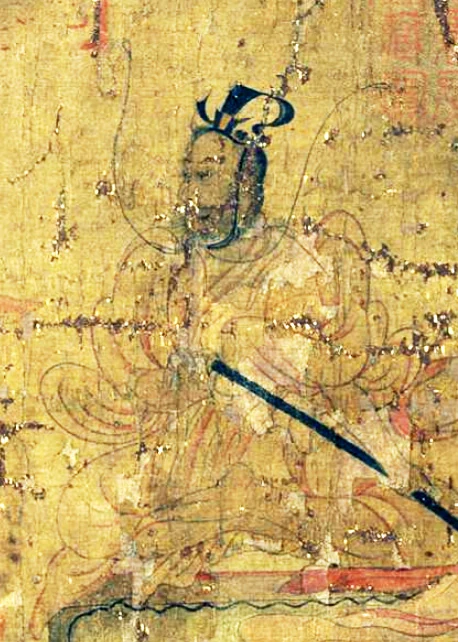
75 BCE–33 BCE
Emperor
Liu Shi
刘奭
Emperor Yuan of Han, Liu Shi (74 BCE, first year of Yuanping–33 BCE, first year of Jingning), was the eleventh emperor of the Western Han and the son of Emperor Xuan, Liu Xun, and his first wife, Empress Gong'ai Xu Pingjun. He succeeded to the throne in January 48 BCE, the twelfth month of the first year of Huanglong, and reigned for sixteen years. Liu Shi was gentle, benevolent, and fond of Confucian learning but lacked…
75 BCE–33 BCEWestern Han
PROFILE
Emperor Yuan of Han, Liu Shi (74 BCE, first year of Yuanping–33 BCE, first year of Jingning), was the eleventh emperor of the Western Han and the son of Emperor Xuan, Liu Xun, and his first wife, Empress Gong'ai Xu Pingjun. He succeeded to the throne in January 48 BCE, the twelfth month of the first year of Huanglong, and reigned for sixteen years. Liu Shi was gentle, benevolent, and fond of Confucian learning but lacked political decisiveness. During his reign he elevated Confucian officials while allowing the eunuch Shi Xian to monopolize power; his teacher Xiao Wangzhi was driven to suicide, and the Western Han entered a period of decline from its earlier prosperity. He also achieved results in frontier affairs: officials including Chen Tang destroyed Chanyu Zhizhi, while the marriage of Wang Zhaojun to the Xiongnu helped maintain stable Han-Xiongnu relations. The Wang consort clan, however, rose to power in the following decades and eventually enabled Wang Mang to replace the Han.
- Also known as
- Emperor Yuan of Han, Liu Shi
- Era
- Western Han
- Dynasty / polity
- Western Han
- Identity
- Emperor
- Date of Birth
- 74 BCE
- Date of Death
- July 8 33 BCE
- Ethnicity / people
- Not recorded in historical sources
- Native place
- Not recorded in historical sources
- Place of birth
- Not recorded in historical sources
- Reign
- 48–33 BCE
- Predecessor
- Emperor Xuan of Han (Liu Xun)
- Successor
- Emperor Cheng of Han (Liu Ao)
- Posthumous name
- Emperor Xiaoyuan
- Major achievements
- Son of Emperor Xuan; employed Confucian officials but was indecisive; Western Han power declined during his reign, while the Wang consort clan began its rise
LIFE TIMELINE
Age three | His mother Xu Pingjun was poisoned by Huo Xian
Age eight | Made Crown Prince
Age nine | The Huo family was destroyed; he was raised by Lady Wang, then a palace consort and later Empress Dowager Qiongcheng
As Crown Prince | As Crown Prince, advised Emperor Xuan that punishments were too severe and Confucian scholars should be employed; he was sharply rebuked, and Emperor Xuan lamented that “the one who will disorder my house is the Crown Prince”
Succeeded to the throne | Succeeded to the throne; changed the era name to Chuyuan in the following year
Xiao Wangzhi | Xiao Wangzhi, a Confucian senior adviser, was driven to suicide
Sent Feng Fengshi to suppress a Qiang rebellion in Longxi | Sent Feng Fengshi to suppress a Qiang rebellion in Longxi
Gan Yanshou and Chen Tang issued troops without prior authorization and killed Chanyu Zhiz | Gan Yanshou and Chen Tang issued troops without prior authorization and killed Chanyu Zhizhi in Kangju
Chanyu Huhanye of the Xiongnu came to court | Chanyu Huhanye of the Xiongnu came to court; Emperor Yuan gave the palace woman Wang Zhaojun to him as consort and changed the era name to Jingning
Died of illness at Weiyang Palace in Chang'an | Died of illness at Weiyang Palace in Chang'an; buried at Weiling; posthumously titled Emperor Xiaoyuan; received the temple name Gaozong, later abolished
BIOGRAPHY
Biography
Family Background and Early Life
Liu Shi was born in 74 BCE, the first year of Yuanping, as the eldest son of Emperor Xuan, Liu Xun, and his first wife Xu Pingjun. At the time of his birth, his father was still the imperial great-grandson living outside the center of court power, so Liu Shi spent his earliest months among common people. Several months later Huo Guang brought Liu Xun to the throne as Emperor Xuan. In 71 BCE, the third year of Benshi, Huo Guang's wife Huo Xian sought to make her daughter Huo Chengjun Empress and ordered the female physician Chunyu Yan to poison Xu Pingjun. Liu Shi lost his mother at age three and was placed in a precarious position. After Huo Chengjun became Empress, she attempted to poison Liu Shi as well but failed. In 67 BCE, the third year of Dijie, after Emperor Xuan had weakened the Huo faction, he made the eight-year-old Liu Shi Crown Prince and selected the cautious, childless Lady Wang of the harem to become Empress, later known as Empress Dowager Qiongcheng, instructing her to raise the Crown Prince.
Liu Shi received a Confucian education from childhood and was described in historical sources as “gentle, benevolent, and fond of Confucianism.” He possessed several artistic talents, was skilled in historical script, played the qin and se zithers, played the xiao flute, and could compose his own tunes. As Crown Prince he disliked his father's reliance on legalist-style officials and punishment. During one banquet he cautiously advised the emperor that punishments were too severe and Confucian scholars should be employed. Emperor Xuan immediately became angry and replied that the Han had its own institutions and had always mixed the Way of the Kings with the Way of the Hegemons rather than relying solely on moral instruction and the government of Zhou. He then lamented that the Crown Prince would be the one to disorder his house. Because of his attachment to the memory of Xu Pingjun, however, Emperor Xuan ultimately did not replace Liu Shi as heir.
Accession and the Failure of the Confucian Reformers
In January 48 BCE, the twelfth month of the first year of Huanglong, Emperor Xuan died and Liu Shi succeeded him. In the following year he adopted the era name Chuyuan. Before his death, Emperor Xuan had arranged a three-man regency: the consort relative Shi Gao took the leading position, supported by Xiao Wangzhi, Grand Tutor to the Crown Prince, and Zhou Kan, Junior Tutor to the Crown Prince. Xiao Wangzhi and Zhou Kan were both prominent Confucian scholars, and Emperor Yuan trusted his two former teachers greatly. For a time Confucian officials gained considerable influence.
Xiao Wangzhi advocated correcting abuses, restraining consort relatives and eunuchs, removing eunuchs from the Secretariat, and placing central documents in the hands of worthy officials. The proposal threatened the interests of the eunuchs Hong Gong and Shi Xian as well as Shi Gao. They cooperated to frame Xiao Wangzhi. In 47 BCE, the second year of Chuyuan, Xiao Wangzhi was falsely accused, imprisoned, and committed suicide by drinking poison. Emperor Yuan wept when he heard the news but did little more than verbally rebuke Hong Gong and Shi Xian and continued to favor them afterward. From that point the Confucian faction collapsed and political authority gradually passed to the eunuch Shi Xian. Shi Xian became so powerful that high officials feared him, and Emperor Yuan entrusted him with government affairs large and small. Upright officials such as Jing Fang were executed after impeaching him. Sima Guang's judgment that Emperor Yuan was “easy to deceive and difficult to awaken” refers in particular to this phase of the reign.
Finance and Domestic Government
Influenced by Confucian ideas of frugal and morally ordered finance, Emperor Yuan reduced direct government intervention in the economy and emphasized thrift and accumulation. He cut imperial expenditure, reduced the costs of ancestral temple sacrifices, and abolished the policy of relocating wealthy eastern households to settlements around imperial mausoleums. Although the measure saved substantial government spending and allowed the treasury to remain viable during famines and military campaigns, it also abandoned one of the main early-Han methods for restraining regional magnates. Land concentration intensified, powerful local families expanded, small farmers became bankrupt and fled, and the registered tax-paying population declined, weakening the dynasty's fiscal base.
Frontier Affairs and Later Years
During Emperor Yuan's reign Han-Xiongnu relations changed significantly. Internal division among the Xiongnu since Emperor Xuan's reign had produced a rivalry between Chanyu Huhanye in the south and Chanyu Zhizhi in the north. In 36 BCE, the third year of Jianzhao, Protector of the Western Regions Gan Yanshou and Deputy Colonel Chen Tang mobilized forces without prior authorization, launched a long-distance attack into Kangju, and killed Chanyu Zhizhi, ending the main northern Xiongnu threat to the Western Regions.
In 33 BCE, the first year of Jingning, Chanyu Huhanye came to the Han court for the third time and asked to marry a Han woman as his consort. Emperor Yuan gave him the palace woman Wang Zhaojun and changed the era name to Jingning, expressing the hope of lasting peace on the frontier. In the fifth month of the same year, Emperor Yuan died at Weiyang Palace at the age of forty-two and was buried at Weiling. Crown Prince Liu Ao succeeded him as Emperor Cheng of Han. After Wang Mang usurped the Han throne, he granted Emperor Yuan the temple name Gaozong; after Emperor Guangwu restored the Han, the temple name was abolished.
Liu Shi was born in 74 BCE as the eldest son of Liu Xun, who took the throne a few months after his birth. In 67 BCE, at eight, he was made heir apparent. Losing his mother in infancy, he narrowly escaped harm at the hands of the Huo clan; after destroying the Huos, Emperor Xuan chose from the palace a cautious and childless lady, the Favored Beauty Wang, made her empress and charged her with rearing the heir.
Emperor Yuan is recorded as gentle and humane and fond of the Confucians. As heir apparent he disliked his father's use of legal-minded officials and of punishments against subordinates, including the deaths of such ministers as Yang Yun and Gai Kuanrao for nothing more than pointed remarks. At a meal with his father he ventured that the punishments were a little severe and that Confucian scholars should be employed in greater numbers. Xuan changed countenance and said sternly that the Han had its own system, mingling the kingly and the hegemonic ways, and could not govern by virtue alone after the manner of Zhou; that the vulgar Confucians understood nothing of the times, loved antiquity and despised the present, and could not tell name from substance, so that no great charge could be given them. Then he sighed that it would be this heir who would ruin his house. Out of gratitude to the late Empress Xu, however, he did not replace him.
On the jiaxu day of the twelfth month of Huanglong 1 (10 January 48 BCE) Emperor Xuan died in the Weiyang Palace and the heir took the throne, changing the era the next year to Chuyuan. Xuan had left him three regents, Shi Gao, Xiao Wangzhi and Zhou Kan. Yuan trusted his two tutors especially, and as the Confucians' influence grew the neglected Shi Gao felt slighted and quarrelled with Xiao, so that factional struggle hung over the court. Shi Gao and the eunuchs Hong Gong and Shi Xian acted in concert against Xiao's reforms. Fearing the license of consort kin and the usurpation of eunuchs, Xiao advised the emperor that the Secretariat was the root of government and should be held by worthy and impartial men, that Emperor Wu's practice of employing eunuchs there while feasting in the inner palace violated the old system and the principle that one does not keep company with the mutilated, and that it must be corrected. The young emperor, soft by nature and without firm views, dared not act and the matter hung unresolved; Xiao's proposal earned him the hatred of Hong Gong and Shi Xian, who with the Shi and Xu families forced him to his death in two rounds.
When Xiao Wangzhi took poison, the emperor was shocked and wept, blaming Hong Gong and Shi Xian for the death of his worthy tutor, yet he punished no one behind it and merely had them doff their caps in apology, favoring them as before. Soon after, Shi Xian became director of the Secretariat and power tilted sharply his way. Out of trust in him and because of his own poor health, the emperor entrusted him with the whole government, so that nothing great or small was settled without his report, and Shi Xian daily grew mightier, honored above the court and feared by every minister. The emperor's reasoning was naive — that eunuchs, having no households, could form no outside faction — but Shi Xian formed both an inner party among the palace eunuchs and an outer party among consort kinsmen and time-serving officials, attacking his opponents in concert. Jing Fang, a master of the Changes, warned the emperor against favorites without effect and, after offending Shi Xian, was driven from court and executed on a charge of slandering the government. Under his dominance discipline decayed and administration grew corrupt, and the Han History judges Yuan a ruler easy to deceive and hard to enlighten.
Yuan reigned sixteen years, in which the Han still appeared strong but in fact began to decline: powerful families engrossed land, central authority ebbed and social crisis deepened. He was himself a man of many accomplishments, a good calligrapher who could play the zither and the flute and compose his own music. He died in 33 BCE at forty-two, buried at Weiling with the temple name Gaozong.
There are also external affairs to record from Yuan's reign. In 36 BCE the assistant protector of the western regions, Chen Tang, acting without authorization, joined Gan Yanshou in attacking and killing the Xiongnu Chanyu Zhizhi and sending his head to Chang'an, greatly raising Han prestige in the west; in 33 BCE the Chanyu Huhanye came to court seeking a marriage alliance and the emperor gave him Wang Zhaojun, a woman of good family from the palace, her departure for the steppe becoming a celebrated story. He died the same year at forty-two. On his reign the Han History notes his many accomplishments and skill in writing, his playing of the zither and flute and composing of songs, and his love of the Confucians from youth, whom he employed and entrusted with government on his accession; yet it concludes that he was "fettered by scruples of meaning and irresolute," so that "the work of Emperor Xuan declined," holding that the Western Han's turn from strength to decline began in his time. Thereafter the power of consort families and eunuchs continued to grow, becoming more pronounced under Emperors Cheng and Ai and preparing the way for Wang Mang's usurpation.
The Confucians briefly gained ground under Emperor Yuan but could not hold it, the root of the failure lying in his own nature, "fettered by scruples and irresolute." The post of director of the Secretariat in eunuch hands was an inheritance from Wu's practice, and once Xiao Wangzhi's attempt to place it in the hands of scholars came to nothing, eunuchs and consort clans joined forces and central authority long lay elsewhere. Under Emperor Cheng the Wang family of consort kin grew dominant, leading at last to Wang Mang's usurpation, a chain whose first links go back to Yuan's reign.
The shifting fortunes of Confucians, consort clans and eunuchs under Emperor Yuan set the basic pattern of Western Han politics thereafter. He reigned sixteen years, changing the era successively to Chuyuan, Yongguang, Jianzhao and Jingning.
Major Activities
Political Activity
At the beginning of his reign, Emperor Yuan trusted the Confucian officials Xiao Wangzhi and Zhou Kan and attempted to pursue benevolent government, but the effort quickly failed under combined pressure from eunuchs and consort relatives. The death of Xiao Wangzhi marked a turning point. Thereafter the eunuch Shi Xian dominated government and political conditions deteriorated. Emperor Yuan himself was indecisive and lacked firm political judgment. Although he understood that Shi Xian was corrupt, he never successfully removed him. Emperor Yuan believed that eunuchs, lacking normal households, would be less likely to form political factions. In practice, Shi Xian not only allied with inner-palace eunuchs but also formed relationships with consort relatives such as Xu Jia and Shi Dan and with Confucian officials including Kuang Heng and Gong Yu, creating a broad interest network.
Frontier and Ethnic Affairs
- Destruction of Zhizhi: In 36 BCE, the third year of Jianzhao, Gan Yanshou and Chen Tang mobilized more than 40,000 troops from fifteen Western Regions states together with Han forces, advanced along separate routes, captured Zhizhi's fortified city near the Talas River in Kangju, and killed Chanyu Zhizhi. The campaign removed the greatest Han security threat in the Western Regions, after which the region remained peaceful for nearly forty years and the Silk Road remained open.
- Zhaojun's Journey Beyond the Frontier: In 33 BCE, the first year of Jingning, Chanyu Huhanye came to court to request a marriage. Emperor Yuan gave him Wang Qiang, courtesy name Zhaojun, a woman of the imperial harem, as consort. The Chanyu granted her the title Ninghu Yanzhi and memorialized that he wished to guard the frontier on behalf of the Han. Emperor Yuan believed that there would henceforth be lasting peace on the borders and adopted the era name Jingning.
- Suppression of the Western Qiang: In 42 BCE, the second year of Yongguang, Qiang groups in Longxi led by the Pang branch of the Shanjie rose in rebellion. Emperor Yuan sent Right General Feng Fengshi to suppress them. Feng requested 40,000 troops, but Chancellor Wei Xuancheng and others considered the number excessive and authorized only 10,000. Feng continued to argue unsuccessfully; when the early campaign went badly, the court increased the force to 60,000. The Qiang were eventually decisively defeated, several thousand enemies were killed, and troops remained to conduct military farming and defend the frontier.
- Western Regions Administration: During Emperor Yuan's reign the Wuji Colonels were reestablished in the Western Regions and military colonies were maintained at the court of the former king of Jushi. Because Jibin repeatedly killed Han envoys while relying on its distance, Emperor Yuan treated it as a remote region beyond normal diplomatic reach and refused further relations.
- Abandonment of Zhuya Commandery: Early in Emperor Yuan's reign, repeated rebellions occurred in Zhuya Commandery, on present-day Hainan Island. Emperor Yuan accepted Jia Juanzhi's proposal to abandon the commandery and withdrew Han administration from the region.
Finance and Institutions
Emperor Yuan pursued frugal policies, cut imperial expenses, abolished regional state temples, reduced the cost of ancestral sacrifices, and ended the mausoleum-resettlement policy. Historical sources state that even though the Chuyuan and Yongguang periods saw severe harvest failures and famine, combined with military expenditure against the Western Qiang and domestic relief for the poor, the state avoided fiscal collapse because the treasuries remained well stocked. Yet abandonment of the mausoleum-resettlement policy also encouraged land concentration, strengthened local magnates, drove small farmers into bankruptcy and flight, and undermined the registered-household tax base.
Culture and Arts
Emperor Yuan was highly accomplished in the arts. He was skilled in historical script, played the qin and se, performed on the xiao flute, composed melodies himself, adapted them to song, and carefully arranged rhythm and meter. His musical ability was unusual among Han emperors.
Personal Relations
- Father: Emperor Xuan of Han, Liu Xun
- Mother: Empress Gong'ai Xu Pingjun
- Adoptive mother: Lady Wang, Empress Dowager Qiongcheng
- Empress: Empress Wang Zhengjun, Empress Xiaoyuan and paternal aunt of Wang Mang
- Consorts: Consort Fu, mother of Liu Kang, Prince Gong of Dingtao; Consort Feng, mother of Liu Xing, Prince Xiao of Zhongshan; Lady Wei; Lady Zhang; Lady Sima and others
- Children: Emperor Cheng of Han Liu Ao; Liu Kang, Prince Gong of Dingtao; Liu Xing, Prince Xiao of Zhongshan; Princess Pingdu; Princess Pingyang; Princess Yingyi; and others
- Xiao Wangzhi: Grand Tutor to the Crown Prince and senior regent; framed by eunuchs and committed suicide by poison
- Zhou Kan: Junior Tutor to the Crown Prince and senior regent; later marginalized
- Gong Yu and Kuang Heng: Confucian officials who successively served as chancellor and became associated with Shi Xian
- Shi Xian: eunuch and Secretariat Director; favored by Emperor Yuan and monopolized power
- Hong Gong: eunuch and Secretariat Director who conspired with Shi Xian against Xiao Wangzhi
- Gan Yanshou and Chen Tang: Protector of the Western Regions and deputy colonel who killed Chanyu Zhizhi
- Feng Fengshi: Right General who suppressed the Western Qiang rebellion
- Chanyu Huhanye: southern Xiongnu ruler who maintained marriage relations with Han and married Wang Zhaojun
- Chanyu Zhizhi: northern Xiongnu ruler hostile to Han and killed by Chen Tang and others
- Huo Xian and Huo Chengjun: members of the Huo family; Huo Xian arranged the poisoning of Liu Shi's mother and the family later attempted to harm Liu Shi himself
- Shi Gao: consort-relative regent who had conflicts with Xiao Wangzhi and Zhou Kan and cooperated with eunuchs
- Jing Fang: executed after impeaching Shi Xian
Historical Assessment
Han and Contemporary Accounts
- Ban Gu's Book of Han, in the “Annals of Emperor Yuan,” records a Palace Attendant's description of Emperor Yuan as highly talented, skilled in historical writing and music, fond of Confucian learning from youth, and inclined after accession to appoint Confucian scholars such as Gong Yu, Xue Guangde, Wei Xuancheng, and Kuang Heng as chancellors. The same assessment says that his excessive attachment to textual principles and his indecisiveness caused the achievements of Emperor Xuan's reign to decline, while also praising his breadth, humility, frugality, mild decrees, and old-fashioned dignity.
- The formal appraisal in the Book of Han repeats the same overall judgment: Emperor Yuan was accomplished and cultured, broad and humble, and governed with a refined and gentle style, but his indecision weakened the political legacy he inherited.
- Confucian officials such as Liu Xiang and Jing Fang repeatedly urged Emperor Yuan to draw close to worthy men and distance himself from flatterers, but their advice was not effectively adopted.
Song and Yuan Periods
- Sima Guang, in the Comprehensive Mirror in Aid of Governance, wrote that Emperor Yuan was extremely easy to deceive and difficult to bring to understanding, blaming this weakness for the loss of effective imperial authority.
- Sima Guang also criticized Emperor Yuan as hesitant and unable to decide, regarding this as an important cause of the Western Han's later political decline.
- Hu Sanxing, in his commentary on the Comprehensive Mirror in Aid of Governance, repeatedly criticized Emperor Yuan's reliance on Shi Xian and his role in Xiao Wangzhi's death, arguing that he failed in the proper conduct of rulership.
Ming and Qing Periods
- Gu Yanwu, in vol. 14 of Rizhilu, noted that Wang Mang had granted Emperor Yuan the temple name Gaozong, Emperor Cheng the temple name Tongzong, and Emperor Ping the temple name Yuanzong, all of which were removed after Emperor Guangwu restored the Han. Gu connected the removal of Emperor Yuan's temple name with deficiencies in his rule.
- Wang Fuzhi, in Du Tongjian Lun, criticized Emperor Yuan as weak and indecisive, argued that he disrupted government by a misguided application of Confucian doctrine, and regarded the abolition of mausoleum resettlement and tolerance of land concentration as roots of later fiscal breakdown.
Modern Assessments
- Lü Simian, in History of the Qin and Han, described Emperor Yuan as gentle, benevolent, and fond of Confucianism but lacking political ability; his reliance on eunuchs and tolerance of consort relatives further corrupted Western Han government and made him a key figure in the transition from prosperity to decline.
- Qian Mu, in Outline of Chinese History, argued that although Confucian scholars gained influence under Emperor Yuan, Confucianism did not actually improve political conditions. Instead, indecision allowed powerful officials to dominate and accelerated Western Han decline.
- Zhang Jie, in “Fiscal Operations under Emperor Yuan of Han's Confucian Philosophy of Government” (Historical Review, 2012, no. 3), argues that Emperor Yuan's frugal Confucian fiscal policy helped keep the treasury full, but abandonment of measures such as mausoleum resettlement encouraged land concentration and fundamentally damaged the registered-household fiscal system.
FIGURES ASSOCIATED WITH THIS DYNASTY
Bibliography
- Ban Gu, Book of Han, vol. 9, “Annals of Emperor Yuan”
- Ban Gu, Book of Han, vol. 97A, “Biographies of Imperial Relatives, Part One”
- Ban Gu, Book of Han, vol. 94B, “Biography of the Xiongnu, Part Two”
- Ban Gu, Book of Han, vol. 96A, “Biography of the Western Regions, Part One”
- Ban Gu, Book of Han, vol. 79, “Biography of Feng Fengshi”
- Lü Simian, History of the Qin and Han, Shanghai Classics Publishing House
- Qian Mu, Outline of Chinese History, Commercial Press