Birth in Zhongshan
Born in Luxnu as the sole son of King Xiao of Zhongshan and Lady Wei.
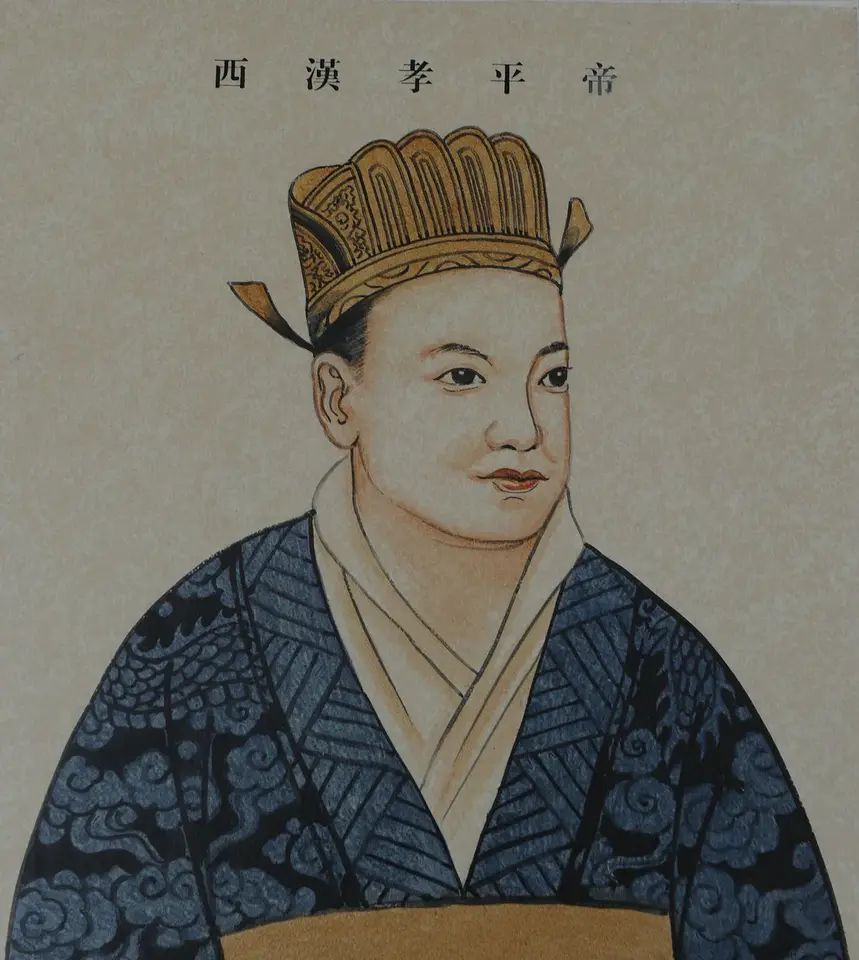
9 BCE–5 CE
刘衎
Liu Kan (刘衎, 9 BCE – February 3, 6 CE), originally named Liu Jizi (刘箕子), native of Feng County in Pei Commandery (modern Feng County, Jiangsu), born in Luxnu (modern Dingzhou, Hebei), was the grandson of Emperor Yuan (Liu Shi) and only son of King Xiao of Zhongshan (Liu Xing) by his consort Lady Wei. He reigned as the fourteenth emperor of the Western Han dynasty from 1 BCE to 6 CE, historically designated Emperor Ping of…
Liu Kan (刘衎, 9 BCE – February 3, 6 CE), originally named Liu Jizi (刘箕子), native of Feng County in Pei Commandery (modern Feng County, Jiangsu), born in Luxnu (modern Dingzhou, Hebei), was the grandson of Emperor Yuan (Liu Shi) and only son of King Xiao of Zhongshan (Liu Xing) by his consort Lady Wei. He reigned as the fourteenth emperor of the Western Han dynasty from 1 BCE to 6 CE, historically designated Emperor Ping of Han. In 8 BCE, following his father's death, the young infant inherited the principality of Zhongshan. In August 1 BCE, Emperor Ai died abruptly without issue. Grand Empress Dowager Wang Zhengjun and her ambitious nephew Wang Mang executed a preemptive court coup, purging the late emperor's favorites such as Dong Xian and recalling Wang Mang as Commander-in-Chief. Seeking a compliant child sovereign to solidify his ascendancy, Wang Mang enthroned the nine-year-old Liu Jizi on October 17, 1 BCE, renaming him Liu Kan and proclaiming the era name Yuanshi. To forestall any maternal relatives from contesting power, Wang Mang strictly prohibited Emperor Ping's biological mother Lady Wei and her kinsmen from entering the capital Chang'an, enforcing their permanent detention in Zhongshan. In 4 CE, Wang Mang further consolidated control by compelling the twelve-year-old emperor to take his eldest daughter as empress. As Emperor Ping approached his fourteenth year, he increasingly recognized that he was an isolated prisoner within his own palace, voicing deep resentment over the eradication of his maternal Wei relatives in the Lü Kuan treason trial. In December 5 CE (February 6 CE), during the annual imperial winter sacrifices, Emperor Ping suddenly collapsed and died in Weiyang Palace at the age of fourteen. Traditional historical consensus records that Wang Mang poisoned the sovereign with a draft of peppered wine to prevent him from claiming actual rule upon reaching maturity. Wang Mang subsequently installed the toddler Ruzi Ying as nominal heir while styling himself Acting Emperor, usurping the imperial throne three years later. Emperor Ping was entombed in Kangling Mausoleum.
Born in Luxnu as the sole son of King Xiao of Zhongshan and Lady Wei.
Succeeded his late father as King of Zhongshan; suffered from chronic physical frailties.
Following Emperor Ai's death, Wang Mang enthroned the nine-year-old boy, changing his name to Liu Kan.
Proclaimed era name Yuanshi; Grand Empress Dowager Wang named Wang Mang Grand Tutor and Duke of Anhan.
Wang Mang strictly forbade Lady Wei from entering Chang'an, confining her to Zhongshan.
Wang Mang framed his son Wang Yu and the Wei family in the Lü Kuan conspiracy, slaughtering the emperor's maternal kin.
Wang Mang's eldest daughter was invested as Empress; Wang Mang was granted the Nine Bestowals as Prime Regent.
Emperor Ping celebrated his capping ceremony at age fourteen; displayed open resentment toward Wang Mang's autocracy.
Died abruptly in Weiyang Palace on February 3 after drinking poisoned pepper wine; buried in Kangling.
Liu Kan was born in the winter of 9 BCE in Luxnu, the administrative seat of the Zhongshan kingdom. His father, Liu Xing, was the youngest son of Emperor Yuan of Han and a younger brother of Emperor Cheng. His mother was Lady Wei, a respected consort of the Zhongshan princely court. In 8 BCE, Liu Xing passed away, and the one-year-old infant Jizi was enfeoffed as the new King of Zhongshan. Throughout his early childhood, Jizi suffered from severe chronic illnesses and physical frailty.
In August 1 BCE, Emperor Ai died without leaving an heir. Amidst the succession vacuum, Grand Empress Dowager Wang Zhengjun seized the imperial seal and recalled her nephew Wang Mang to assume the post of Commander-in-Chief. Deliberately avoiding adult princes from the collateral houses of Chu and Liang who possessed mature judgment and influential maternal kin, Wang Mang selected the nine-year-old, ailing Liu Jizi as the ideal candidate for a puppet monarch. On October 17, 1 BCE, Jizi entered Chang'an, was renamed Liu Kan, and ascended the imperial throne.
To consolidate his absolute monopoly over imperial governance, Wang Mang moved systematically to eliminate potential rival centers of power. He enacted strict edicts barring Emperor Ping's biological mother, Lady Wei, and her brothers from ever visiting the imperial capital, establishing an armed garrison in Zhongshan to monitor their movements. When Wang Mang's own eldest son, Wang Yu, recognized that isolating the young emperor from his mother would provoke catastrophic vengeance once the monarch reached adulthood, Wang Yu conspired with his brother-in-law Lü Kuan to stage a supernatural omen at Wang Mang's gate to induce him to yield power.
When the plot was exposed in 3 CE, Wang Mang utilized the incident to carry out a comprehensive purge, forcing his son to commit suicide and exterminating the entire maternal Wei clan in Zhongshan. In 4 CE, Wang Mang arranged the betrothal of his eldest daughter to the young emperor, elevating her to Empress and appointing himself Prime Regent (Zaiheng), elevating his status above all imperial princes and receiving the Nine Bestowals.
By 5 CE, Emperor Ping had reached fourteen years of age. Having undergone his ceremonial capping ceremony, the young sovereign began to display independent intellectual awareness. He learned of the slaughter of his maternal relatives and observed with growing alarm that all palace attendants, guards, and scribes reported directly to Wang Mang. At court audiences and private banquets, Emperor Ping frequently revealed his displeasure, prompting Wang Mang to realize that imperial co-existence was impossible.
In the twelfth month of the fifth year of Yuanshi (January/February 6 CE), during the winter solstice court banquet, Wang Mang personally presented a ceremonial cup of medicinal pepper wine to Emperor Ping. Immediately after consuming the beverage, the emperor fell violently ill with agonizing abdominal convulsions. Within days, on February 3, 6 CE, Emperor Ping passed away in Weiyang Palace. To conceal the regicide, Wang Mang issued theatrical public prayers weeping for the emperor's recovery while placing the two-year-old child Liu Ying on the throne as Ruzi Ying, clearing the path for his open usurpation of the Western Han dynasty in 9 CE.
Although Emperor Ping was a powerless figurehead, the Yuanshi era witnessed extensive institutional restructuring that profoundly impacted late imperial Confucian governance. Guided by Wang Mang, the imperial court codified regional administrative boundaries, expanded state colleges (Taixue) to accommodate thousands of classical scholars, and mandated the establishment of local Confucian schools across all commanderies and prefectures.
Furthermore, the administration compiled standard pharmacopeias, unified astronomical observation bureaus under the Xihe office, and standardized weights and measures throughout the realm, laying institutional foundations that outlasted the subsequent Xin dynasty.
FIGURES ASSOCIATED WITH THIS DYNASTY