Birth | Born in the painted hall of the Jia residence in Chang'an; as Emperor Xuan's legitimate grandson, he was personally named “Ao” by the emperor
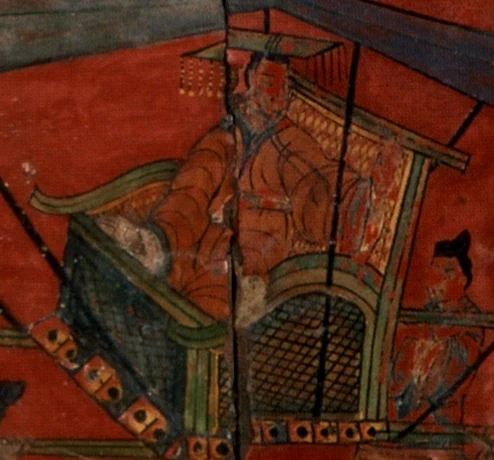
51 BCE–7 BCE
Emperor
Liu Ao
刘骜
Emperor Cheng of Han, Liu Ao (51 BCE–April 15, 7 BCE), courtesy name Taisun, was the twelfth emperor of the Western Han and the son of Emperor Yuan Liu Shi and Wang Zhengjun. He reigned for twenty-five years, from 33 BCE to 7 BCE. As the legitimate grandson of Emperor Xuan, Liu Ao was greatly loved by his grandfather, who personally chose the name Ao for him. In his youth he was described as broad-minded and cautious and was…
51 BCE–7 BCEWestern Han
PROFILE
Emperor Cheng of Han, Liu Ao (51 BCE–April 15, 7 BCE), courtesy name Taisun, was the twelfth emperor of the Western Han and the son of Emperor Yuan Liu Shi and Wang Zhengjun. He reigned for twenty-five years, from 33 BCE to 7 BCE. As the legitimate grandson of Emperor Xuan, Liu Ao was greatly loved by his grandfather, who personally chose the name Ao for him. In his youth he was described as broad-minded and cautious and was fond of the classics. After ascending the throne, however, he became immersed in wine and sexual pleasure and allowed the Wang imperial in-law clan to grow increasingly powerful, helping create the conditions for Wang Mang's later usurpation. During his reign he especially favored the sisters Zhao Feiyan and Zhao Hede. The source states that under Zhao Hede's pressure he personally killed one of his infant sons, leaving him without a surviving heir. His nephew Liu Xin therefore succeeded him. In 7 BCE, the second year of Suihe, Liu Ao suddenly died after suffering a stroke at Weiyang Palace. He received the posthumous name Emperor Xiaocheng and was buried at Yanling, east of present-day Xianyang, Shaanxi.
- Also known as
- Emperor Cheng of Han, Liu Ao
- Courtesy name
- Taisun
- Period
- Western Han
- Date of Birth
- 51 BCE
- Date of Death
- April 15 7 BCE
- Dynasty / polity
- Western Han
- Identity
- Emperor
- Ethnicity / ethnic affiliation
- Not recorded in historical sources
- Native place
- Not recorded in historical sources
- Place of birth
- Not recorded in historical sources
- Reign
- Reign dates not specified in the information table
- Predecessor
- Emperor Yuan of Han (Liu Shi)
- Successor
- Emperor Ai of Han (Liu Xin)
- Era name
- Not recorded in historical sources
- Temple name
- Tongzong
- Posthumous name
- Emperor Xiaocheng
- Major achievements
- Son of Emperor Yuan; favored the Zhao Feiyan sisters, neglected government affairs, and allowed the Wang imperial in-law clan to dominate the court, accelerating the decline of the Western Han.
LIFE TIMELINE
Age two | Emperor Xuan died and Liu Ao's father Liu Shi succeeded as Emperor Yuan
Age four | Made Crown Prince
Age sixteen | Showed no grief while mourning Prince Ai Liu Jing of Zhongshan; Emperor Yuan was angered, but Shi Dan defended him and preserved his status
Age eighteen | Emperor Yuan died; Liu Ao succeeded and honored his mother Wang Zhengjun as Empress Dowager, after which the Wang imperial in-law clan began to dominate politics
Age nineteen | Appointed his maternal uncle Wang Feng Grand Marshal and General-in-Chief in charge of the Masters of Writing, marginalizing political rivals including Xu Jia and Feng Yewang
Age twenty-three | Empress Xu gave birth to a son, who died soon afterward
Age twenty-four | Enfeoffed five maternal uncles—Wang Tan, Wang Shang, Wang Li, Wang Gen, and Wang Fengshi—as marquises in a single day; they became known as the “Five Marquises”
Age thirty-one | Began traveling incognito with his male favorite Zhang Fang, posing as a member of Zhang's household
Age thirty-five | Made Zhao Feiyan Empress and Zhao Hede Zhaoyi, granting Zhao Hede the Zhaoyang Hall as her residence
Age thirty-nine | Lady Xu gave birth to a son; Zhao Hede forced Emperor Cheng to kill the child himself
Age forty-three | Reformed the central offices, establishing a parallel “Three Excellencies” structure of Grand Marshal, Grand Minister of Works, and Grand Councilor; made his nephew Liu Xin Crown Prince; Zhai Fangjin committed suicide
Age forty-five | On the bingxu day of the third month, died suddenly of a stroke at Weiyang Palace; Zhao Hede committed suicide; he received the posthumous name Emperor Xiaocheng and was buried at Yanling
BIOGRAPHY
Biography
Family Background and Early Years
Liu Ao was born in 51 BCE, the third year of Ganlu. He was the legitimate grandson of Emperor Xuan. His father was Crown Prince Liu Shi, later Emperor Yuan, and his mother was Wang Zhengjun. Emperor Xuan was especially fond of this eldest legitimate grandson, personally named him “Ao,” meaning a fine horse, gave him the courtesy name Taisun, and often kept him close. In 49 BCE, the first year of Huanglong, Emperor Xuan died and Liu Shi succeeded as Emperor Yuan.
In the fourth month of 47 BCE, the second year of Chuyuan, the four-year-old Liu Ao was made Crown Prince. As a youth he enjoyed the classics and literary composition and was described as broad-minded and cautious. On one occasion Emperor Yuan urgently summoned him. Liu Ao refused to cross the imperial carriage road reserved for the ruler and took a long detour, arriving late. When Emperor Yuan learned why, he was pleased and thereafter permitted the Crown Prince to cross the road directly.
As he grew older, however, Liu Ao increasingly indulged in wine and sex, while his mother Empress Wang lost Emperor Yuan's favor. In 35 BCE, the fourth year of Jianzhao, Prince Ai Liu Jing of Zhongshan died. Liu Ao attended the mourning but displayed no visible grief. Emperor Yuan, angered by this, questioned how a man lacking humane feeling could preside over the ancestral temples and act as father and mother to the people. He briefly considered replacing Liu Ao with the talented Liu Kang, Prince of Dingtao and son of his favored Consort Fu. Liu Ao retained his position because he was Emperor Xuan's beloved grandson and because Palace Attendant Shi Dan vigorously defended him.
In 33 BCE, the first year of Jingning, Emperor Yuan became seriously ill. Consort Fu and her son were often at his bedside, while Empress Wang Zhengjun and Crown Prince Liu Ao were rarely admitted. Shi Dan, relying on his position as a favored official, entered the bedchamber and tearfully pleaded for the Crown Prince. Emperor Yuan relented, said that he would not depose Liu Ao, and instructed Shi Dan to assist him. Liu Ao's position as heir was thereby secured.
Accession and the Rise of the Wang Clan
In the fifth month of 33 BCE, Emperor Yuan died. In the sixth month, Crown Prince Liu Ao succeeded as Emperor Cheng. His mother Wang Zhengjun became Empress Dowager, and the Wang imperial in-law clan rose to the center of Western Han politics.
Early in his reign, Emperor Cheng tried to balance the increasingly powerful imperial in-laws and eunuchs. He first used the imperial in-law faction against the eunuchs, giving the powerful Shi Xian an honorific-looking but politically marginal appointment as Grand Coachman of Changxin Palace. Grand Councilor Kuang Heng and Censor-in-chief Zhang Tan then jointly accused Shi Xian and his associates of misconduct. Shi Xian was dismissed and sent home, dying on the road. Emperor Cheng also used the Wang clan and court officials against a rival imperial in-law group: Wang Feng pushed aside Feng Yewang, the capable brother of Consort Feng, and forced Empress Xu's father Xu Jia to retire.
The balancing strategy failed. The Wang clan emerged as the dominant force. Wang Feng forced out Grand Councilor Wang Shang, cooperated with Shi Dan in secretly investigating him, and encouraged Geng Ding of Pinyang to submit accusations. Although Emperor Cheng regarded the allegations as difficult to verify, Wang Feng insisted on pursuing them and the emperor removed Wang Shang from office. Three days later Wang Shang reportedly vomited blood and died in grief and anger. From then on Wang Feng dominated the government without a strong rival. Seven members of Wang Zhengjun's clan were enfeoffed, and Wang Feng, Wang Yin, Wang Shang, and Wang Gen successively served as Grand Marshal. The office eventually passed into the hands of Wang Mang, helping prepare the way for his usurpation.
Indulgence and Incognito Excursions
Liu Ao had already been fond of wine and sexual pleasure before becoming emperor, and after accession his conduct became more unrestrained. One of his male favorites was Zhang Fang, described in historical sources as exceptionally handsome and quick-witted. Emperor Cheng loved him deeply, shared his daily life with him, and promoted him to General of the Gentlemen of the Household. The two often left the palace incognito, with the emperor pretending to be a member of Zhang Fang's household. Court officials objected. Under pressure from Empress Dowager Wang Zhengjun and her brothers, Zhang Fang was repeatedly exiled. Emperor Cheng, unable to bear the separation, repeatedly recalled him and then sent him away again under renewed political pressure, reportedly weeping when he did so and continuing to send letters of concern. The source states that after the emperor stopped seeing him because of the Zhao sisters, Zhang Fang died while grieving for him.
From the beginning of his reign Emperor Cheng also spent heavily on pleasure palaces, including Xiaoyou Palace, Feixing Hall, and Yunlei Palace. At first he especially favored Empress Xu, his wife from youth. During roughly twenty years she bore a son and a daughter, both of whom died young. He later transferred his favor to Ban Jieyu. Ban Jieyu, described as beautiful, learned, and well versed in history and literature, also bore a son who died after only a few months. She is said to have shown little jealousy and even introduced her maid Li Ping to the emperor. Li Ping also became a favored Jieyu and was granted the surname Wei.
The Zhao Sisters and the Lack of an Heir
In the later part of his reign Emperor Cheng especially favored the sisters Zhao Feiyan and Zhao Hede. Zhao Feiyan had originally been a dancer in the household of Princess Yang'a and was called “Feiyan” because of her lightness in dance. Emperor Cheng encountered her during an incognito excursion, became infatuated, and brought her into the palace. After Empress Xu was deposed, the position of empress remained vacant for two years. Emperor Cheng wanted to make Zhao Feiyan empress, but Empress Dowager Wang Zhengjun initially objected because of Zhao Feiyan's low social origin. Chunyu Zhang eventually mediated. After Zhao Feiyan's father was enfeoffed as Marquis of Chengyang, she acquired the status of a marquis's daughter and could be elevated to empress.
In 16 BCE, the first year of Yongshi, Zhao Feiyan became Empress and Zhao Hede was promoted to Zhaoyi and given Zhaoyang Hall for her exclusive use. To please Zhao Feiyan, Emperor Cheng ordered a lavish imperial boat called the “Hegong Barge” built on the Taiye Pond. The source recounts an episode in which Zhao Feiyan danced aboard the boat in a light purple skirt and fine gauze while singing “Returning Phoenix Sends the Distant One.” A sudden gust nearly blew her overboard, and the attendant Feng Wufang seized her feet to keep her from falling while she continued to dance. The story later contributed to the legend that she could “dance upon a palm.”
After Zhao Feiyan became Empress, Zhao Hede received most of the emperor's favor for more than ten years, but neither sister bore a child. According to the source, a palace woman Cao Weinen became pregnant by the emperor; at Zhao Hede's order, the eunuch Tian Ke carried an imperial edict to poison her, and the infant was taken away and disappeared. Later, Lady Xu became pregnant. Emperor Cheng secretly sent an imperial physician to examine her and sent expensive medicines to support the pregnancy. After she bore a son, Zhao Hede reacted violently and eventually pressured the emperor into killing the infant with his own hands. A contemporary children's rhyme mocked Zhao Feiyan by describing a swallow pecking an imperial grandson to death.
Empress Xu had borne a son and a daughter who both died young; Ban Jieyu also bore a son who died in infancy. The Zhao sisters bore no children, while the source attributes the deaths of later infants in the harem to their persecution. Emperor Cheng therefore died without a surviving son, and the throne passed to his nephew Liu Xin.
Final Years and Sudden Death
In 8 BCE, the first year of Suihe, Emperor Cheng named Liu Xin, son of his half-brother Prince Gong of Dingtao, as Crown Prince. In the following year, 7 BCE, an unusual celestial phenomenon was reported: Mars appeared to lose its usual brilliance. People interpreted this as an omen of danger to the emperor. A court gentleman named Ben Li claimed that the danger could be transferred to a high-ranking minister. Grand Councilor Zhai Fangjin was summoned and told to sacrifice himself for the state. After he returned to his residence, an imperial edict accused him of failed administration and recurrent disasters and instructed him to act accordingly. Zhai Fangjin committed suicide. Emperor Cheng then gave him an elaborate funeral and personally attended the rites, believing the ill omen had been removed.
In the second month of 7 BCE, Emperor Cheng spent the night at Weiyang Palace. The next morning, while dressing to receive Prince Si Liu Yan of Chu and Prince Liu Li of Liang before their departure, his body suddenly became rigid and he lost the ability to speak. He collapsed on the bed, unable to move. On the bingxu day of the third month, April 15, 7 BCE, Emperor Cheng died suddenly at Weiyang Palace in Zhao Hede's presence, aged forty-five. Empress Dowager Wang Zhengjun ordered an investigation into the circumstances of his illness and death. Zhao Hede committed suicide. Emperor Cheng had reigned for twenty-five years. He received the posthumous name Emperor Xiaocheng and was buried at Yanling.
Because all of his sons predeceased him, his nephew Liu Xin succeeded as Emperor Ai of Han. During Wang Mang's dominance, the temple name Tongzong was posthumously granted to Emperor Cheng; it was later abolished under Emperor Guangwu of the Eastern Han.
Liu Ao was a son of Emperor Yuan and the legitimate imperial grandson of Emperor Xuan. Born in 51 BCE in the Jia Hall, he was much loved by Xuan, who named him Ao and gave him the style Taisun, keeping him often at his side. Emperor Xuan died in 49 BCE and his father took the throne; in the fourth month of 47 BCE Liu Ao was made heir apparent. In youth he loved the classics and literature and was generous and cautious: when summoned urgently by his father, he would not cross the imperial highway and went the long way round, arriving late; learning why, the emperor was delighted and ordered that the heir might cross the highway directly.
On Emperor Yuan's death in 33 BCE Liu Ao took the throne as Emperor Cheng. His mother, Wang Zhengjun, was honored as empress dowager and the Wang consort family rose with her: Wang Feng, Wang Yin, Wang Shang and Wang Gen in turn held the grand marshalate and the regency, more than ten of the family being enfeoffed, and real power passed into Wang hands, Wang Mang emerging among them. Politics in his reign thus took the shape of government by consort kin with the emperor given to pleasure, the histories saying he was steeped in wine and women.
In the palace he favored first Empress Xu and the Consort Ban and later the sisters Zhao Feiyan and Zhao Hede. Empress Xu was deposed in 18 BCE and in 16 BCE Zhao Feiyan was made empress with her sister as Brilliant Companion. The Zhao sisters bore no children and did much to harm the sons born to other consorts — the histories speak of "the swallow pecking the emperor's grandsons" — so that Cheng left no heir. In 7 BCE he died suddenly in the Weiyang Palace at forty-five; the sources give both elixirs and excess as causes, the two accounts standing together.
His nephew Liu Xin succeeded as Emperor Ai. Politics grew still more tangled under him, consort kin and favorites competing, and after six years he died, allowing Wang Mang to install Emperor Ping and then take the throne. In later accounts of the fall of the Western Han, Cheng's reign is generally taken as the turning point: the domination of the Wang began then, imperial authority never truly recovered after him, and the collapse of the dynasty is directly tied to the political pattern of his reign.
The consort politics of Cheng's reign took a concrete institutional form: members of the Wang family held the grand marshalate and the regency in turn with direction of the Secretariat, controlling the working of government, while the emperor left part of the business to favorites and eunuchs, producing a balance among consort kin, favorites and eunuchs. The arrangement left the emperor at ease while the actual direction of government depended on which of the factions gained ground.
In economic and social terms, land engrossment grew serious in his reign and the problem of displaced people became prominent. The trend called "powerful families engrossing land" had already appeared under Emperor Yuan and continued under Cheng, the numbers of refugees in Guanzhong and east of the passes increasing; relief edicts were issued repeatedly with limited effect. These social problems accumulated in the reigns of Ai and Ping and formed the background against which Wang Mang carried out his reforms.
Foreign relations were comparatively quiet: after the Chanyu Huhanye the Xiongnu kept marriage and embassy ties with the Han, and the western regions were held through the protectorate and military farming, with no large war. This external calm stood against the internal decay, and is one of the grounds on which historians hold that the Western Han fell to no external danger.
In culture, Cheng ordered Liu Xiang and his son Liu Xin to arrange the palace library; Liu Xiang's Separate Record and Liu Xin's Seven Summaries laid the foundations of Chinese bibliography. This work is one of the few constructive achievements of his reign, in contrast with its political confusion.
Cheng himself loved letters and pleasure, going out in disguise and feasting without measure in his later years, and the histories judge him chiefly as steeped in wine and women. He did issue edicts seeking talent and lightening taxes and was not wholly negligent of government, though under the domination of the Wangs he could accomplish little.
His relations with the Zhao sisters became a subject repeatedly taken up in later literature and drama, giving rise to such sayings as "the swallow pecking the emperor's grandsons"; as a matter of history the harm done to the imperial offspring is recorded in several places, though the details require caution given the standpoint of the sources.
Certain institutional changes also occurred in his reign: the functions of the Secretariat expanded further, consort kin and favorites directing business through its supervision, while the provincial inspectorate was adjusted with limited effect. These changes provided precedents for the development of the Secretariat under the Eastern Han and show that central power in the late Western Han was shifting from the chancellery to the Secretariat.
His tomb is Yanling, in the area of present-day Xianyang in Shaanxi, in the same Wei river northern district as the other Western Han imperial graves. He had two tombs built for himself, at great expense, the Changling project being abandoned midway for the scale of its works and the difficulty of moving people — a matter recorded at length in the Han History and important for the study of imperial burial and fiscal burden.
He left no son; his nephew Liu Xin, son of the Prince of Dingtao, succeeded as Emperor Ai. The throne then passed between Ai and Ping while real power lay with Wang Mang, until he took the throne in 8 CE and founded the Xin. His reign is therefore generally seen as the crucial stage in which the Western Han passed from strength to decline and from order to disorder.
Cheng reigned twenty-six years, in which the working of government depended on consort kin and favorites while the emperor himself attended little to detail. The arrangement quickly turned into Wang Mang's domination after him: the reign of Ai briefly checked the Wangs, but they recovered after his death and completed the change of dynasty.
In institutional terms his reign also saw the offices of the three excellencies and the grand marshalate overlap: the grand marshal often bore a general's title and supervised the Secretariat, becoming in effect the chief minister — a development from which the Eastern Han "general-in-chief" office descends. This transfer of central power in the late Western Han is important for the study of Han-Wei officialdom.
Like his father, Cheng loved letters and gathered men of letters at court, activity in rhapsody and classical learning both proceeding. Yang Xiong entered court service as a gentleman in his reign, his rhapsodies on the Ganquan and Hedong palaces connected with the emperor's sacrifices and providing material for the study of late Western Han court literature.
Though his reign saw no large war, the problems of displaced people and banditry grew serious, and the government met them chiefly with amnesties and relief, without curing them. The situation continued under Ai and Ping and gave Wang Mang the ground on which he won support for his reforms.
The Han History judges him chiefly with criticism but also records some merits: he issued edicts economizing expenditure and remitting taxes in stricken regions, and sought frank counsel on portents. These notices show that he was not wholly negligent, but that the political structure in which he stood left him little room.
Tomb building reached a peak in his reign, the Changling project employing tens of thousands over several years before it was halted, the later Yanling being somewhat smaller in scale. The relation between burial works and finances is one facet of the study of late Western Han state capacity.
His reign was also an important stage in the development of classical learning: the editing of books by Liu Xiang and Liu Xin and the disputes between the old and new text traditions both unfolded in this period. This scholarly activity is directly connected with Wang Mang's later reforms on classical grounds, politics and learning being inseparable at the end of the Western Han.
He also dismissed ministers and changed era names on account of portents, showing how the idea of heaven responding to human conduct actually operated in late Western Han politics.
His posthumous name was Emperor Xiao Cheng with the temple name Tongzong, and he was buried at Yanling.
He reigned twenty-six years, among the longer reigns of the late Western Han.
Major Activities
Political Reform
In 8 BCE, acting on a proposal by He Wu, Emperor Cheng carried out a reform of the central offices. The Grand Marshal was granted a gold seal with purple ribbon and a formal staff. The office of Censor-in-chief was transformed into Grand Minister of Works and elevated from a silver seal with blue ribbon to a gold seal with purple ribbon. Together with the Grand Councilor, these offices formed three parallel top-ranking posts, known collectively as the Three Excellencies. The source describes this arrangement as influential on later political institutions.
Economic Measures
During Emperor Cheng's reign, the agricultural specialist Fan Shengzhi was appointed to direct agricultural work in the metropolitan region. He compiled agricultural experience from the Guanzhong area in the Book of Fan Shengzhi, a work described in the source as influential in the history of agricultural technology.
Activities and Excursions
Emperor Cheng frequently traveled incognito and often left the palace with his favorite Zhang Fang, pretending to be a member of Zhang's household while visiting the countryside around Chang'an. He also spent heavily constructing Xiaoyou Palace, Feixing Hall, Yunlei Palace, and other pleasure buildings.
Responses to Portents
Disasters and unusual celestial signs were frequent themes in political discussion during Emperor Cheng's reign. Liu Xiang, Gu Yong, and other officials blamed Empress Xu's exclusive favor for such portents, leading to reductions in her household resources and eventually her deposition. Late in the reign, the fading brilliance of Mars was used to justify forcing Grand Councilor Zhai Fangjin to commit suicide as a means of averting disaster.
Personal Relations
- Grandfather: Emperor Xuan of Han, Liu Xun
- Father: Emperor Yuan of Han, Liu Shi
- Mother: Empress Xiaoyuan Wang Zhengjun
- Younger brothers: Liu Kang, Prince Gong of Dingtao (half-brother); Liu Xing, Prince Xiao of Zhongshan (half-brother)
- Nephews: Emperor Ai Liu Xin (adopted heir); Emperor Ping Liu Kan
- Imperial in-laws: Wang Feng, Wang Yin, Wang Shang, Wang Gen, and Wang Mang
- Empress Xu (later deposed and ordered to die)
- Zhao Feiyan (Empress)
- Zhao Hede (Zhaoyi; committed suicide)
- Ban Jieyu
- Wei Jieyu (originally Li Ping, maid of Ban Jieyu)
- Lady Xu (gave birth to a son who was killed)
- Cao Gong, courtesy name Weinen (gave birth to a son who was killed)
- Shi Dan: favored official of Emperor Yuan who defended Liu Ao's position as Crown Prince
- Zhang Fang: male favorite of Emperor Cheng; repeatedly exiled under pressure from the Empress Dowager and said to have died grieving after the emperor's death
- Chunyu Zhang: mediated Zhao Feiyan's elevation to empress and was enfeoffed as Marquis of Dingling
- Zhai Fangjin: Grand Councilor forced by Emperor Cheng to commit suicide as a sacrifice to avert an omen
- Wang Shang: Grand Councilor forced out by Wang Feng; died soon after dismissal
- Kuang Heng: Grand Councilor who participated in the impeachment of Shi Xian
- Liu Xiang and Gu Yong: officials who used disaster-portent discourse to criticize government affairs
- Shi Xian: powerful eunuch removed from the center of power by Emperor Cheng and later dismissed
- Xu Jia: father of Empress Xu; forced into retirement by Wang Feng
- Feng Yewang: brother of Consort Feng; excluded by Wang Feng
Historical Assessment
Han Dynasty / Contemporary
- Ban Gu's Book of Han: Annals of Emperor Cheng praised Emperor Cheng's dignified physical bearing at court but concluded that he became immersed in wine and sexual pleasure, the Zhao women brought disorder inside the palace, and his maternal relatives monopolized government.
- Liu Xiang submitted memorials using portents to criticize the Wang clan's dominance and warned that “the Wang and Liu houses will not stand together.”
- Gu Yong and others used portents to criticize exclusive favor within the harem and blamed Empress Xu.
Wei, Jin, and Northern and Southern Dynasties
- Gan Bao, in the general discussion of his Annals of Jin, attributed part of the Western Han collapse to Emperor Cheng's promotion of his maternal relatives and transfer of political authority to the imperial in-law clan.
- Fan Ye in the Book of the Later Han linked the decline of Western Han political order in the Yuan and Cheng reigns to domination by imperial in-laws.
Tang and Song Dynasties
- In discussions of earlier emperors, Emperor Taizong of Tang and Wei Zheng treated Emperor Cheng as a negative example, describing him as internally confused by sexual attraction and externally indulgent toward powerful ministers.
- Sima Guang in the Comprehensive Mirror in Aid of Governance criticized Emperor Cheng for abandoning the ways of earlier rulers, immersing himself in wine and sex, deposing a legitimate empress, and favoring women to the point that no heir survived.
- Su Zhe in Discussions of Successive Dynasties criticized him for knowing how to employ imperial in-laws but not how to restrain them, thereby allowing the disaster of Wang Mang to develop.
Ming and Qing Dynasties
- Gu Yanwu in Record of Daily Knowledge discussed the later abolition of Emperor Cheng's temple name Tongzong and criticized his indulgence and reliance on maternal relatives.
- Wang Fuzhi in Du Tongjian Lun argued that Emperor Cheng's principal failure was not mere weakness but uncontrolled desire, which clouded judgment and made dependence on imperial in-laws unavoidable.
- Zhao Yi in Notes on the Twenty-Two Histories treated the Wang clan's rise under Emperor Cheng as a decisive turning point in the history of Western Han imperial in-law politics.
Modern Views
- Lü Simian in History of the Qin and Han noted that Emperor Cheng was not entirely without accomplishments and regarded his reform of the Three Excellencies as institutionally important, while still criticizing his indulgence and reliance on imperial in-laws.
- Qian Mu in Outline of National History traced the beginning of Western Han decline to the reigns of Yuan and Cheng and treated Emperor Cheng's indulgence of the Wang clan as a central cause.
- Jian Bozan in Outline History of China described Emperor Cheng as decadent and corrupt and as worsening Western Han political decline through favoritism toward imperial in-laws.
FIGURES ASSOCIATED WITH THIS DYNASTY
Bibliography
- Ban Gu, Book of Han: Annals of Emperor Cheng
- Ban Gu, Book of Han: Biography of Empress Yuan
- Ban Gu, Book of Han: Biographies of Wang Shang, Shi Dan, and Fu Xi
- Ban Gu, Book of Han: Biography of Empress Zhao of Emperor Cheng
- Ban Gu, Book of Han: Table of Officials and Nobles
- Lü Simian, History of the Qin and Han
- Qian Mu, Outline of National History
- Jian Bozan, Outline History of China