Commoner Birth
Born in Chang'an to commoner Liu Bingyi (Emperor Xuan) and Xu Pingjun shortly before their imperial accession.
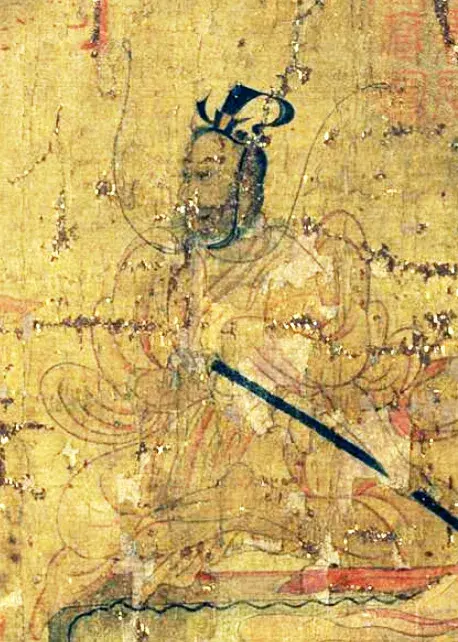
75 BCE–33 BCE
刘奭
Emperor Yuan of Han (汉元帝刘奭, 74–33 BC), personal name Liu Shi (刘奭), was the eleventh emperor of the Western Han Dynasty, eldest son of Emperor Xuan, born to Empress Gong'ai (Xu Pingjun). Created Crown Prince in 67 BC following his mother's murder, he was educated by premier Confucian masters, developing an unyielding devotion to classical benevolence. When he urged Emperor Xuan to govern purely through Confucianism, his father…
Emperor Yuan of Han (汉元帝刘奭, 74–33 BC), personal name Liu Shi (刘奭), was the eleventh emperor of the Western Han Dynasty, eldest son of Emperor Xuan, born to Empress Gong'ai (Xu Pingjun). Created Crown Prince in 67 BC following his mother's murder, he was educated by premier Confucian masters, developing an unyielding devotion to classical benevolence. When he urged Emperor Xuan to govern purely through Confucianism, his father famously sighed that "he who ruins our house will surely be the Crown Prince." Ascending the throne in 48 BC, Emperor Yuan instituted sweeping Confucian policies, promoting scholars such as Wei Xuancheng and Kuang Heng, reforming ancestral shrines, and temporarily abolishing state monopolies on salt and iron. However, his indecisive temperament led him to place excessive trust in palace eunuchs Hong Gong and Shi Xian, culminating in the forced suicide of Grand Tutor Xiao Wangzhi and the systemic corruption of the secretariat. Concurrently, the family of Empress Wang Zhengjun gained ascendancy, laying the foundations for Wang Mang's usurpation. In external relations, his reign achieved monumental triumphs: in 36 BC, Gan Yanshou and Chen Tang launched an unauthorized expedition to Central Asia, slaying Northern Xiongnu Chanyu Zhizhi and coining the immortal declaration that "those who violate mighty Han shall be punished, however distant." In 33 BC, Southern Xiongnu Chanyu Huhanye paid homage at Chang'an, and Emperor Yuan arranged the historic marriage of Wang Zhaojun, securing peace along the northern frontier for over half a century. In July 33 BC, Emperor Yuan died in Weiyang Palace at age forty-two, receiving the posthumous title Emperor Xiaoyuan and burial at Weiling.
Born in Chang'an to commoner Liu Bingyi (Emperor Xuan) and Xu Pingjun shortly before their imperial accession.
Invested as Crown Prince at age eight following Empress Xu's poisoning; raised by childless Empress Wang.
Urged Emperor Xuan to employ Confucian scholars; Emperor Xuan famously lamented that the prince would ruin the dynasty.
Ascended imperial throne upon Emperor Xuan's death, proclaimed Chuyuan era, and elevated Confucian scholars.
Eunuchs Hong Gong and Shi Xian framed Grand Tutor Xiao Wangzhi, who drank poison to preserve his honor.
Abolished state monopolies on salt and iron on Gong Yu's advice; restored them in 38 BC due to fiscal insolvency.
Decreed the abolition of over one hundred regional imperial ancestral shrines based on classical canonical rites.
Chen Tang and Gan Yanshou marched thousands of miles across Central Asia to slay Northern Xiongnu Chanyu Zhizhi.
Huhanye Chanyu paid homage at Chang'an; Emperor Yuan dispatched palace lady Wang Zhaojun in diplomatic marriage.
Contemplated deposing Crown Prince Liu Ao in favor of Prince Liu Kang; dissuaded by Shi Dan's tearful appeal.
Died in Weiyang Palace on July 8, 33 BC at age forty-two; interred at Weiling with posthumous title Emperor Xiaoyuan.
Emperor Yuan of Han, personal name Liu Shi, was born in the first year of the Yuanping era during the reign of Emperor Zhao. His father was Emperor Xuan of Han (then known by his commoner name Liu Bingyi), and his biological mother was Empress Gong'ai (Xu Pingjun). Liu Shi was born in an ordinary residential ward of Chang'an while his father lived in obscurity as an impoverished great-grandson of Emperor Wu. A few months after his birth, Emperor Zhao died without heirs, and Grand General Huo Guang orchestrated Liu Bingyi's elevation to the imperial throne. The infant Liu Shi entered the imperial palace, his background bridging humble street survival and sovereign majesty.
In the third year of Benshi, Huo Guang's wife Lady Xian, determined to see her youngest daughter Huo Chengjun installed as Empress, bribed palace physician Chunyu Yan to poison Empress Xu Pingjun during childbirth. Empress Xu died in agony, leaving the young prince motherless at a tender age. Emperor Xuan mourned his first wife intensely and lavished protective devotion upon the motherless heir. In the second year of Dijié, following the eradication of the treasonous Huo clan, Emperor Xuan formally invested eight-year-old Liu Shi as Crown Prince, securing the dynastic succession.
To protect the young heir from harem intrigues, Emperor Xuan selected Lady Wang, a gentle and childless consort, to act as foster mother, subsequently elevating her to Empress Qiongcheng. Empress Wang raised the Crown Prince with selfless devotion, shielding him from factional dangers. Liu Shi responded with deep filial piety, forging a durable bond that provided emotional stability during his palace upbringing.
In the Eastern Palace, Emperor Xuan appointed the empire's foremost Confucian masters to tutor the heir. Grand Tutors Shu Guang and Shu Shou, along with eminent scholars Wei Xian, Wei Xuancheng, Xiao Wangzhi, and Zhou Kan, instructed the prince in the Confucian Classics, rites, and music. Under their tutelage, Liu Shi absorbed the principles of benevolent Confucian statecraft, developing an enduring passion for the Classic of Poetry, the Spring and Autumn Annals, and ancient ceremonial music.
However, Liu Shi's unyielding preference for moral persuasion created deep philosophical tension with his father. Having experienced the hardships of common life, Emperor Xuan governed through pragmatic statecraft, blending Confucian moral rhetoric with Legalist administrative severity. Emperor Xuan valued rigorous bureaucratic discipline and severe penal statutes, viewing academic purists with skepticism. Watching the Crown Prince's increasing docility and unquestioning deference to Confucian scholars, Emperor Xuan grew deeply apprehensive regarding the dynasty's future.
During an imperial banquet, Crown Prince Liu Shi gently remonstrated with his father, arguing that the emperor relied too heavily on severe penal laws and should entrust governance to Confucian scholars. Emperor Xuan's countenance altered instantly, and he severely rebuked the heir: "The Han Dynasty possesses its own established institutions, blending the ways of the hegemon and the sage king. How could we rely purely on moral instruction and adopt Zhou Dynasty governance? Vain scholars do not comprehend changing times; they revere antiquity and condemn the present, confusing names and realities. How could they be entrusted with the realm?" Emperor Xuan concluded with an ominous sigh: "He who ruins our house will surely be the Crown Prince!"
Disillusioned by the prince's impractical idealism, Emperor Xuan repeatedly considered replacing him with his second son, Prince Xian of Huaiyang (Liu Qin), who exhibited sharp administrative discernment and legal competence. However, each time Emperor Xuan contemplated demoting the heir, memories of his youthful love for Xu Pingjun and her tragic murder restrained his hand. Out of enduring loyalty to his departed first wife, Emperor Xuan preserved Liu Shi's position as Crown Prince until his death.
In the twelfth month of the first year of Huanglong, Emperor Xuan passed away in the Weiyang Palace. On the Guisi day, Crown Prince Liu Shi ascended the imperial throne and paid homage at the ancestral temple of Emperor Gaozu, inaugurating his reign as Emperor Yuan and proclaiming the Chuyuan era. Determined to replace his father's harsh administrative style with Confucian moral governance, Emperor Yuan immediately elevated classical scholars to supreme ministerial offices.
Relying on his former tutors, Emperor Yuan appointed eminent scholar Xiao Wangzhi as Front General and Minister of the Household, concurrently directing the Imperial Secretariat, while appointing scholar Zhou Kan as Grand Palace Grandee. Renowned for their personal integrity and classical mastery, Xiao Wangzhi and Zhou Kan formed an enlightened administration. They advocated fiscal retrenchment, dismissed corrupt Legalist administrators, promoted upright scholars, and suspended burdensome levies, initiating a brief renaissance of Confucian statecraft.
Confronting widespread flooding, droughts, and famine across Guandong during his first year, Emperor Yuan displayed genuine humanitarian concern. In the spring of 48 BC, he issued decrees releasing hundreds of palace maidens, curtailing imperial stable expenditures, and opening sections of the royal hunting preserve at Shanglin Park to displaced refugees for agricultural cultivation. Furthermore, he remitted land and poll taxes for famine-stricken commanderies, winning widespread adulation from the populace.
However, while Emperor Yuan possessed high moral ideals, his practical governance was crippled by indecisiveness and poor personnel judgment. Naturally frail and frequently ill, the emperor disliked laboring over complex administrative memorials. Seeking personal ease, he entrusted routine palace administration to eunuch attendants. Palace eunuchs Hong Gong and Shi Xian, masters of flattery and bureaucratic manipulation, quickly gained the monarch's total confidence.
Deeply alarmed by the growing power of inner palace eunuchs, Xiao Wangzhi and Zhou Kan urged Emperor Yuan to reform the Imperial Secretariat, proposing that eunuchs be replaced by regular Confucian civil officials to prevent despotic usurpation. This principled proposal threatened the core interests of the eunuch faction, igniting a lethal political struggle between scholar-officials and palace eunuchs.
Exploiting the emperor's illness and allying with imperial in-laws, Hong Gong and Shi Xian submitted fabricated charges accusing Xiao Wangzhi and Zhou Kan of factional conspiracy and treasonous arrogance. Misunderstanding the legal implications of their petition, Emperor Yuan signed a decree authorizing an official inquiry. Hong Gong promptly arrested Xiao Wangzhi and imprisoned him for interrogation.
Shocked to learn that his revered tutor had been incarcerated, Emperor Yuan reprimanded Hong Gong and ordered Xiao Wangzhi released and restored to rank. However, Hong Gong and Shi Xian soon engineered fresh accusations. Realizing that the vacillating emperor was hopelessly manipulated by eunuchs, the sixty-year-old Xiao Wangzhi lamented: "I have held ministerial office and reached sixty years of age; how can I enter prison to be humiliated by petty scribes!" He drank poison in his residence, choosing death over dishonor.
News of Xiao Wangzhi's suicide horrified the court. Emperor Yuan wept bitterly, excoriating Hong Gong and Shi Xian for hounding his revered teacher to death. Yet in a staggering display of political weakness, the emperor merely docked their salaries and retained them in supreme executive positions. Recognizing the monarch's spineless vacillation, the eunuchs consolidated their stranglehold over the court.
Following Hong Gong's death, Shi Xian succeeded him as Chief of the Imperial Secretariat. Cunning, vindictive, and ruthless, Shi Xian amassed unprecedented power, exploiting his control over imperial documents to eliminate rivals. Ministers who dared challenge his authority were systematically framed and executed, transforming the central government into a personal instrument of eunuch tyranny.
Simultaneously, imperial in-law factions expanded rapidly. Lady Wang Zhengjun, who had entered the Eastern Palace and given birth to Crown Prince Liu Ao, was invested as Empress. Her father Wang Jin was created Marquess of Yangping, and her brothers Wang Feng and Wang Chong were appointed to supreme military commands. Shi Xian formed an alliance with the Wang clan, creating a lethal nexus of eunuch and consort power that dominated late Western Han politics.
Despite the pervasive terror, courageous Confucian scholars continued to resist eunuch tyranny. Scholars Zhou Kan and Zhang Meng repeatedly submitted memorials exposing Shi Xian's crimes. Yet Emperor Yuan rejected their warnings, demoting both men to provincial posts. Upright censors Chen Xian and Xiao Yu were likewise purged, silencing ministerial criticism and leaving the empire entirely subject to Shi Xian's corrupt will.
In governance, Emperor Yuan's administration succumbed to dogmatic Confucian fundamentalism. Obsessed with archaic Zhou Dynasty rituals, he decreed sweeping ancestral shrine reforms, closing hundreds of regional imperial temples and causing widespread administrative disruption. Concurrently, his abolition of state salt and iron monopolies caused catastrophic fiscal deficits, forcing an embarrassing reversal within three years.
Furthermore, Emperor Yuan developed an obsession with celestial omens and portents. Guided by Dong Zhongshu's theory of mutual interaction between heaven and humanity, the emperor attributed natural disasters to his personal moral failings and ministerial inadequacy. During his sixteen-year reign, he repeatedly dismissed Chancellors and Imperial Counselors over eclipses and earthquakes, reducing senior ministers to nervous figureheads who spent their energies writing self-serving astrological apologies.
Emperor Xuan's prophetic warning that academic purists would ruin the dynasty proved tragically accurate. Possessing benevolence without discernment, Emperor Yuan allowed Shi Xian to murder virtuous ministers and enabled the Wang consort clan to monopolize military commands. The formidable imperial power assembled during the reigns of Emperors Wu, Zhao, and Xuan deteriorated rapidly into administrative paralysis.
In contrast to domestic decay, Western Han foreign policy achieved an epochal military triumph in Central Asia during the Jianzhao era. Following the division of the Xiongnu into northern and southern branches, Southern Chanyu Huhanye submitted to Han authority along the northern border, while Northern Chanyu Zhizhi migrated westward to Kangju. Dominating regions west of the Pamir Mountains, Zhizhi murdered Han envoy Gu Ji, plundered allied states Dayuan and Wusun, and erected a fortified citadel, threatening the Silk Road.
In 36 BC, Assistant Commander Chen Tang and Protector General Gan Yanshou recognized that Zhizhi's aggressive westward expansion threatened imperial prestige across Central Asia. Knowing that regular memorials to Chang'an would be tied up in bureaucratic debate, Chen Tang forged imperial edicts to mobilize forty thousand soldiers from Western Regions allied states and Han agricultural garrisons, marching west in a lightning surprise campaign.
Traversing thousands of miles over snowy Pamir passes and desert wastelands, the expeditionary force converged on Zhizhi's fortified wooden fortress along the Talas River. Chen Tang deployed disciplined infantry arrays, utilizing concentrated crossbow barrages to crush Xiongnu cavalry and breaching outer palisades with incendiary weapons. In a fierce assault, Han soldiers scaled the battlements, stormed the inner palace, and killed Zhizhi Chanyu along with his royal family and fifteen hundred warriors.
Following the victory, Chen Tang and Gan Yanshou dispatched their famous victory dispatch to Emperor Yuan, concluding with the immortal words: "We should hang his head at the foreign quarters in Chang'an to display across ten thousand miles, demonstrating that those who violate mighty Han shall be punished, however distant!" This triumphant declaration electrified the empire, and Emperor Yuan proclaimed a nationwide amnesty to celebrate the total eradication of the northern nomadic threat.
However, rewarding the victorious generals triggered bitter court strife. Unbribed by Chen Tang, eunuch Shi Xian allied with Chancellor Kuang Heng to block honors, arguing that unauthorized mobilization set a treasonous precedent. Imperial Clan Director Liu Xiang fiercely defended the commanders, comparing their feats to Wei Qing and Huo Qubing. Vacillating between factions, Emperor Yuan compromised by granting Gan Yanshou a marquisate and Chen Tang a minor noble title.
The destruction of Zhizhi profoundly impacted Central Asian geopolitics. Terrified by Han military reach, Southern Chanyu Huhanye abandoned all thoughts of rebellion. In 33 BC, Huhanye traveled in person to Chang'an, paying formal homage to Emperor Yuan and humbly requesting an imperial marriage alliance to become an imperial son-in-law, pledging perpetual peace along the northern frontier.
Emperor Yuan granted the request, selecting palace maiden Wang Zhaojun from the imperial harem. Endowed with transcendent beauty and dignified grace, Wang Zhaojun volunteered for the mission, departing for the northern steppe as the "Pacifier of the Hu." Celebrating this historic reconciliation, Emperor Yuan changed the era name to Jingning ("Perpetual Peace"), ushering in over half a century of border tranquility.
In his twilight years, Emperor Yuan became embroiled in an intense succession struggle. Crown Prince Liu Ao, born to Empress Wang, had grown indolent, spending his days drinking and pursuing private revelry. Conversely, Prince Liu Kang of Dingtao, born to the emperor's favorite Consort Fu, was intellectually brilliant, respectful, and exceptionally gifted in musical performance, capturing the emperor's deepest affection.
Sharing a mutual passion for musical composition and zither performance, Emperor Yuan and Prince Liu Kang spent hours together in private concerts. Consort Fu worked tirelessly to promote her son while disparaging the Crown Prince. Disappointed by Liu Ao's frivolity, Emperor Yuan repeatedly considered deposing the heir in favor of Prince Liu Kang.
The prospect of changing the succession alarmed senior ministers. Grand Tutor Kuang Heng and Attendant Gentleman Shi Dan defended the legitimate heir. During a critical moment when the emperor lay gravely ill surrounded by Consort Fu and Prince Liu Kang, Shi Dan forced his way into the imperial bedchamber, weeping bitterly and beseeching the monarch not to disrupt the ancestral line established by Empress Xu.
Shi Dan's emotional appeal struck Emperor Yuan's deepest memories of his departed mother, prompting him to abandon his plans to alter the succession. While Crown Prince Liu Ao's position was saved, the incident accelerated the political mobilization of Empress Wang's relatives, paving the way for their absolute dominance during the subsequent reign.
By the spring of 33 BC, Emperor Yuan's health deteriorated rapidly. Exhausted by prolonged illness, musical indulgence, and administrative paralysis, the monarch took to his bed in Weiyang Palace. On the Renchan day of the fifth month in the first year of Jingning, Emperor Yuan passed away at the age of forty-two, concluding a sixteen-year reign that marked the definitive decline of Western Han.
Crown Prince Liu Ao ascended the throne as Emperor Cheng. Emperor Yuan was interred at Weiling with the posthumous title Emperor Xiaoyuan and the temple name Gaozong. While Emperor Yuan's personal kindness, patronage of scholarship, and diplomatic achievements with the Xiongnu shone brightly, his chronic weakness before eunuchs and in-laws undermined dynastic authority, steering the empire toward eventual usurpation.
The reign of Emperor Yuan established the absolute supremacy of Confucianism as the sole orthodox ideology of the imperial Chinese state. Breaking decisively with Emperor Xuan's balanced synthesis of Legalist administrative rigor and Confucian ethics, Emperor Yuan entrusted supreme chancellery positions to renowned classical exegetes like Wei Xuancheng and Kuang Heng, making canonical interpretations the supreme arbiter of statecraft.
Under his patronage, the government executed sweeping ancestral shrine reforms, abolishing over one hundred and seventy peripheral imperial shrines across commanderies to conform with classical seven-temple canonical models. While occasionally dogmatic, these reforms curtailed provincial expenditures, elevated the moral prestige of the scholar-gentry, and established the enduring cultural pattern of Confucian bureaucratic governance.
Guided by Confucian economic ethics prioritizing popular welfare over state enrichment, Emperor Yuan attempted a radical restructuring of imperial fiscal policy. In 44 BC, he adopted Imperial Counselor Gong Yu's proposals, abolishing state monopolies on salt and iron along with regional liquor taxes, returning manufacturing and commerce to private enterprise.
Although rampant private speculation and catastrophic revenue shortfalls forced the restoration of state monopolies three years later, Emperor Yuan balanced this reversal through aggressive imperial retrenchment. He drastically cut palace expenditures, opened imperial hunting parks to landless tenants, and remitted agricultural taxes for famine victims, demonstrating an earnest humanitarian commitment toward agrarian stability.
The destruction of Northern Xiongnu Chanyu Zhizhi in 36 BC constituted the paramount military triumph of Emperor Yuan's reign. Conceived and executed by Western Regions commanders Chen Tang and Gan Yanshou, the campaign mobilized forty thousand allied troops across the Pamir Mountains in an unprecedented deep-penetration offensive into Sogdiana.
Storming Zhizhi's fortified river fortress along the Talas River through coordinated crossbow volleys and siege assaults, the expeditionary force decapitated the Chanyu and obliterated his nomadic host. This decisive victory eliminated nomadic aggression across Central Asia, secured the Silk Road, and produced the legendary imperial maxim: "Those who violate mighty Han shall be punished, however distant!"
Capitalizing on the geopolitical shockwave generated by Zhizhi's demise, Emperor Yuan orchestrated the historic pacification of the northern frontier. When Southern Chanyu Huhanye paid formal homage at Chang'an in 33 BC, Emperor Yuan arranged the diplomatic marriage of palace lady Wang Zhaojun, designating her the "Pacifier of the Hu."
Wang Zhaojun's departure inaugurated over six decades of uninterrupted peace between the Han Empire and the Xiongnu confederation. Frontier defenses were stood down, border markets flourished, and agricultural techniques spread across the steppe, standing as an enduring monument to diplomatic statecraft and ethnic harmony.
FIGURES ASSOCIATED WITH THIS DYNASTY