Birth | Birth; the place is not recorded; emperor
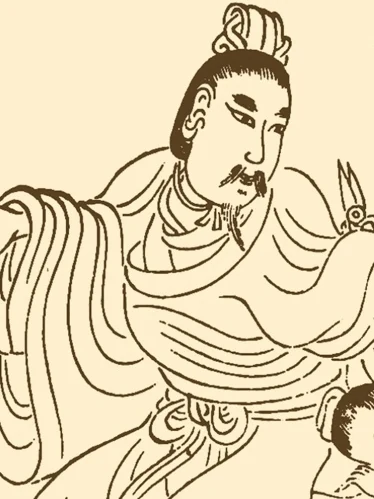
25 BCE–1 BCE
Emperor
Liu Xin
刘欣
Liu Xin (25 BCE–August 15, 1 BCE), courtesy name unknown, was from Dingtao Kingdom in Yanzhou (present-day Dingtao District, Heze, Shandong). He was the thirteenth emperor of the Western Han when counted from Emperor Gaozu Liu Bang and, according to the source, reigned for seven years. He was a grandson of Emperor Yuan Liu Shi, the son of Liu Kang, Prince Gong of Dingtao, and the son of Lady Ding. In 8 BCE, the first year of…
25 BCE–1 BCEWestern Han
PROFILE
Liu Xin (25 BCE–August 15, 1 BCE), courtesy name unknown, was from Dingtao Kingdom in Yanzhou (present-day Dingtao District, Heze, Shandong). He was the thirteenth emperor of the Western Han when counted from Emperor Gaozu Liu Bang and, according to the source, reigned for seven years. He was a grandson of Emperor Yuan Liu Shi, the son of Liu Kang, Prince Gong of Dingtao, and the son of Lady Ding. In 8 BCE, the first year of Suihe, his uncle Emperor Cheng Liu Ao made him crown prince; he ascended the throne in 7 BCE. During his reign he attempted to restrain the Wang consort clan, promoted the families of his grandmother Lady Fu and his mother Lady Ding, and greatly favored Dong Xian, giving rise to the famous “cut sleeve” anecdote. He died in the sixth month of 1 BCE, the second year of Yuanshou, received the posthumous title Emperor Xiaoai, and was buried at Yiling Mausoleum.
- Alternative name
- Emperor Ai of Han Liu Xin
- Courtesy name
- Not recorded in historical sources
- Period
- Western Han
- Date of Birth
- 25 BCE
- Date of Death
- August 15 1 BCE
- Dynasty/Regime
- Western Han
- Identity
- Emperor
- Ethnicity
- Not recorded in historical sources
- Ancestral origin
- Dingtao Kingdom, Yanzhou (present-day Dingtao District, Heze, Shandong)
- Place of birth
- Not recorded in historical sources
- Reign
- Not specified information field
- Predecessor
- Emperor Cheng of Han (Liu Ao)
- Successor
- Emperor Ping of Han (Liu Kan)
- Era name
- Taichu Yuanjiang
- Temple name
- Not recorded in historical sources
- Posthumous title
- Emperor Xiaoai
- Main achievements
- Nephew of Emperor Cheng who inherited the throne; favored Dong Xian and became associated with the “cut sleeve” anecdote; attempted unsuccessfully to curb powerful consort clans during his short reign.
LIFE TIMELINE
Nominal age 3 | His father Liu Kang, Prince Gong of Dingtao, died. Liu Xin inherited the title Prince of Dingtao and was raised by his grandmother Empress Dowager Fu.
Age 17 | Entered the imperial court together with Liu Xing, Prince of Zhongshan, displayed his abilities before Emperor Cheng, and won the emperor's favor.
Age 18 | Emperor Cheng made him crown prince despite Liu Xin's attempt to decline.
Age 19 | Emperor Cheng died. Liu Xin ascended the throne in the fourth month and honored Wang Zhengjun as Grand Empress Dowager and Zhao Feiyan as Empress Dowager.
Age 19 | Honored his grandmother Lady Fu as Empress Dowager Gong and his mother Lady Ding as Empress Gong, while ennobling members of the Ding and Fu families.
Age 19 | Wang Gen, Marquis of Quyang, and Wang Kuang, Marquis of Chengdu, were punished, weakening the Wang clan.
Age 20 | Liu Xin the scholar requested that Old Text Classics be established in the imperial academy, initiating a major controversy between Old Text and New Text scholarship.
Age 21 | Changed the era name to Taichu Yuanjiang and styled himself “Chen Sheng Liu Taiping Emperor”; restored the Jianping era name in the eighth month.
Age 21 | Favored Dong Xian and appointed him Gentleman of the Yellow Gate; abolished the office of Grand Minister of Works and restored the two-office system of Chancellor and Imperial Counselor.
Age 23 | Made Dong Xian Marquis of Gao'an with a fief of one thousand households.
Age 24 | After a solar eclipse, summoned Wang Mang back to court; the student Jing Lu received Buddhist scriptures from Yicun, envoy of the king of the Great Yuezhi.
Age 25 | Restored the Three Excellencies system and appointed Dong Xian Grand Marshal.
Age 25 | Died, received the posthumous title Emperor Xiaoai, and was buried at Yiling Mausoleum.
BIOGRAPHY
Biography
Family Background and Early Years
Liu Xin was born into the Western Han imperial house. His grandfather was Emperor Yuan Liu Shi, his father was Liu Kang, Prince Gong of Dingtao, and his mother was Lady Ding. Liu Kang was Emperor Yuan's second son, born to Consort Fu, and had been enfeoffed as Prince of Dingtao. In the eighth month of 23 BCE, the second year of Yangshuo, Liu Kang died. Liu Xin, only three by traditional age reckoning, inherited the principality of Dingtao. He was thereafter personally raised and educated by his grandmother Empress Dowager Fu. Capable and forceful, she invested heavily in his upbringing, which also laid the foundation for the later expansion of Fu clan power.
As Liu Xin grew older, he became fond of literary composition and law and was regarded as talented. His uncle Emperor Cheng Liu Ao had ruled for many years without a son, making the succession a major political question. In 9 BCE, the fourth year of Yuanyan, Liu Xin and Liu Xing, Prince of Zhongshan, both came to court. Liu Xin followed institutional rules by bringing with him the two-thousand-bushel officials of his principality—the tutor, chancellor, and commandant—whereas Liu Xing brought only his tutor. When Emperor Cheng asked why, Liu Xin answered fluently and cited the relevant statutes. The emperor then ordered him to recite the Book of Songs; Liu Xin was able not only to recite it but also to explain its meaning. Liu Xing, by contrast, could neither explain the regulations nor recite the Book of Documents, and his conduct at table was awkward. Emperor Cheng therefore judged Liu Xin more capable and praised him repeatedly.
Chosen as Heir
Empress Dowager Fu secretly worked to secure the crown prince position for Liu Xin. She sent valuables to Zhao Zhaoyi, Zhao Hede, Emperor Cheng's favored consort, and to the emperor's maternal uncle Wang Gen, General of Agile Cavalry, seeking their support. Because Emperor Cheng had no son, Zhao Hede and Wang Gen also wished to cultivate the likely future heir and, together with Empress Zhao Feiyan, praised Liu Xin before the emperor. Emperor Cheng already thought highly of Liu Xin and therefore summoned Chancellor Zhai Fangjin, Imperial Counselor Kong Guang, General of the Right Lian Bao, General of the Rear Zhu Bo, and others to discuss the succession.
Zhai Fangjin, Wang Gen, and others argued that under the ritual principle that “a brother's son is as one's own son,” Liu Xin, as the son of Emperor Cheng's younger brother, should be chosen. Kong Guang alone supported Liu Xing, Prince of Zhongshan, reasoning that Liu Xing was a son of the previous emperor and Emperor Cheng's own younger brother and thus more suitable under the ancient precedent of succession between brothers. Emperor Cheng replied that ritual rules did not permit brothers to share the same ancestral temple position and, with support from the Zhao sisters, issued an edict in 8 BCE establishing Liu Xin as crown prince. Liu Xin submitted a memorial declining the appointment and asked to remain in the capital to serve Emperor Cheng until the emperor produced a son, after which he would return to his principality. Emperor Cheng refused. A month later, Liu Jing, a grandson of Prince Xiao of Chu, was made Prince of Dingtao to continue the sacrifices to Liu Kang.
Accession and the Dispute over Honorifics
Emperor Cheng died on April 17, 7 BCE, the eighteenth day of the third month of Suihe 2. On the eighth day of the fourth month, May 7, Liu Xin ascended the throne as Emperor Ai of Han. He honored Empress Dowager Wang Zhengjun as Grand Empress Dowager and Empress Zhao Feiyan as Empress Dowager, proclaimed a general amnesty, and bestowed gifts on members of the imperial clan, officials, and commoners.
In the fifth month, Liu Xin invoked the Spring and Autumn Annals principle that “a mother is honored through her son” and raised his grandmother Empress Dowager Fu to the title Empress Dowager Gong and his mother Lady Ding to Empress Gong, assigning them fiefs comparable to those of Wang Zhengjun and Zhao Feiyan. He also posthumously ennobled Empress Dowager Fu's father as Marquis of Chongzu and Lady Ding's father as Marquis of Baode, while making his maternal uncles Ding Ming Marquis of Yang'an and Ding Man Marquis of Pingzhou. Fu Yan, father of the empress, became Marquis of Kongxiang, and Zhao Qin, younger brother of Zhao Feiyan, became Marquis of Xincheng.
Wang Zhengjun was extremely displeased and ordered Grand Marshal Wang Mang to resign. Liu Xin had the Imperial Secretariat Director ask him to remain and sent Chancellor Kong Guang, Grand Minister of Works He Wu, General of the Left Shi Dan, and others to appeal to Wang Zhengjun, who finally allowed Wang Mang to return to office. Thereafter, however, conflict between Liu Xin and the Wang clan became increasingly open. At a banquet in Weiyang Palace, attendants placed a seat for Empress Dowager Fu beside Wang Zhengjun. Wang Mang rebuked them, arguing that the Dowager of Dingtao had only been a consort of a regional prince and could not sit beside the Grand Empress Dowager. Empress Dowager Fu was enraged. When Dong Hong, Marquis of Gaochang, proposed that Lady Ding be honored as Imperial Empress Dowager, Grand Minister of Works Shi Dan impeached him for misleading the court, and Dong Hong was reduced to commoner status.
Restraining the Wang Clan and Exercising Personal Rule
In the autumn of 7 BCE, Wang Gen, Marquis of Quyang, and Wang Kuang, Marquis of Chengdu, were punished. Wang Gen was sent back to his fief and Wang Kuang was reduced to commoner status. In the fourth month of 5 BCE, Liu Xin elevated Empress Dowager Fu to the title “Imperial Grand Empress Dowager,” with residence at Yongxin Palace, and Lady Ding to “Imperial Empress Dowager,” with residence at Zhong'an Palace. A temple for his father Liu Kang was established in the capital. Chancellor Zhu Bo recommended reducing Wang Mang to commoner status. Liu Xin, mindful that Wang Mang was a relative of the Grand Empress Dowager, merely sent him back to his fief. Wang Mang remained secluded for three years, during which hundreds of officials submitted memorials defending him.
In 5 BCE Liu Xin reformed the central government by abolishing the Grand Minister of Works, restoring the two-office structure of Chancellor and Imperial Counselor, abolishing regional governors, and restoring inspectors. In the fifth month of 1 BCE he again restored the Three Excellencies system and planned reforms to the offices of Director of Rectitude and Colonel Director of Retainers, together with the creation of a Minister of Justice. His illness worsened before these changes could be fully implemented.
Favoring Dong Xian and the Final Years
In 5 BCE, Liu Xin saw Dong Xian, then serving below the palace hall as an attendant responsible for transmitting messages, and was attracted by his appearance. He immediately appointed him Gentleman of the Yellow Gate. Dong Xian thereafter rose rapidly, becoming Commandant of Escort Cavalry and Palace Attendant, while receiving enormous rewards within a single month. His influence shook the court. Mild in temperament and skilled at pleasing the emperor, Dong Xian frequently remained in the palace to attend Liu Xin during illness. Liu Xin also summoned Dong Xian's wife to live in the palace and made Dong Xian's younger sister a Zhaoyi, placing her directly below the empress. Her residence was named Jiaofeng Hall to parallel the empress's Jiaofang Hall.
In 3 BCE Liu Xin wished to ennoble Dong Xian but lacked a legitimate pretext. When court candidates Sun Chong and Xifu Gong accused the wife of Liu Yun, Prince of Dongping, of using curses, Liu Xin had the accusation presented through Dong Xian and used the affair as grounds for making Dong Xian Marquis of Gao'an, Xifu Gong Marquis of Yiling, and Sun Chong Marquis of Fangyang. Dong Xian later received another two thousand households. Chancellor Wang Jia suspected that the case against the Prince of Dongping was unjust and repeatedly remonstrated against Dong Xian's irregular advancement. He was eventually imprisoned and died.
A solar eclipse occurred in 2 BCE. In their examination responses, the worthy scholars Zhou Hu and Song Chong praised Wang Mang's achievements, and Liu Xin was compelled to summon Wang Mang back to court. In the same year, the imperial academy student Jing Lu received Buddhist scriptures from Yicun, an envoy of the king of the Great Yuezhi, an event described by the source as the earliest record of Buddhist scriptures entering China.
In the fifth month of 1 BCE, Liu Xin appointed Dong Xian Grand Marshal. Dong Xian was only twenty-two and now stood at the head of the bureaucracy. At a banquet Liu Xin once told Dong Xian that he wished to imitate Yao and Shun by yielding the throne to him. Wang Hong admonished the emperor, who was displeased. On the twenty-sixth day of the sixth month, August 15, 1 BCE, Liu Xin died at the traditional age of twenty-five. He received the posthumous title Emperor Xiaoai and was buried at Yiling Mausoleum, northwest of present-day Xianyang, Shaanxi.
Liu Xin was a son of Liu Kang, prince Gong of Dingtao, his mother the lady Ding, and was raised by his grandmother, the empress dowager Fu. On Liu Kang's death in 23 BC Liu Xin inherited the princedom of Dingtao. When he grew up his uncle Emperor Cheng of Han had no son, so that the succession was a matter of general concern. In 9 BC Liu Xin and the prince of Zhongshan, Liu Xing, both came to court; Liu Xin brought with him all the officials of his kingdom holding two thousand shi, while Liu Xing brought only his tutor. Puzzled, the emperor asked Liu Xin why he brought so many, and he answered that by the ordinance a prince coming to court might bring the officials of his kingdom of two thousand shi, and that tutor, chancellor and commandant all held that rank and so came with him. The emperor had him recite the Odes, which he did fluently and could explain; then he tested Liu Xing, asking by what ordinance a prince brought only his tutor, and Liu Xing could not answer, nor could he get through the Documents when asked, and at the meal he ate slowly and, rising, had his garter undone. The emperor therefore thought Liu Xing incapable and thought Liu Xin the abler, praising him again and again.
The empress dowager Fu worked quietly for Liu Xin's candidacy, sending treasures to the favourite Zhao Hede and to Wang Gen, asking them to urge the emperor to make him heir. Zhao Hede and Wang Gen, seeing that the emperor had no heir and wishing to be beforehand in their friendship with the next sovereign, joined the empress and the favourite in praising Liu Xin and urging his appointment, and the emperor himself thought well of him, so that in 8 BC he was made heir apparent. The emperor died the next year and Liu Xin took the throne as Emperor Ai of Han at nineteen.
His accession brought a sharp quarrel over titles. Wishing to give his grandmother, the empress dowager Fu, and his own mother, the lady Ding, their proper styles, he met the opposition of Shi Dan, Kong Guang and other ministers, who held it contrary to the rites; he persisted, and the Fu and Ding families were given their styles, the empress dowager Fu taking part in the government. The Wang consort kin were meanwhile held back and Wang Mang was dismissed to his fief, while the Fu and Ding rose quickly and the court's appointments changed often.
In his reign he also tried to deal with the concentration of land and the multitude of slaves. In 7 BC he decreed limits on the land and the slaves that princes, marquises and officials might hold, thirty qing of land and numbers of slaves graded by rank, with the excess to be taken by the state; but the decree touched the interests of the consort kin and the great families, met with resistance and soon became a dead letter. His favour to Dong Xian is likewise well remembered: he made him grand marshal and loaded him with gifts, and it is told that, unwilling to wake him as he slept on his sleeve, he cut the sleeve away — whence the phrase of the severed sleeve; he even said at a banquet that he would follow the example of Yao and yield the throne to Shun, and was dissuaded by Wang Hong.
Emperor Ai died in 1 BC at twenty-five, leaving no heir. Dong Xian killed himself at once, Wang Mang was brought back to head the government, and the son of the prince of Zhongshan, Liu Kan, was set up as Emperor Ping. The changes among consort kin, the quarrel over titles and the attempt to limit land make up much of the politics at the end of the Western Han; and in later discussion of the fall of the Han, Emperor Ai's favour to kinsmen and favourites and the weakness of his government are commonly taken as one link in the chain.
Several features of his reign deserve note. First, at the outset he tried to hold back the Wang consort kin, and Wang Mang was dismissed and afterward recalled, a turn that prepared the way for the Wangs' return. Second, his honours to the Fu and Ding families brought on a lasting quarrel over the rites, in which Shi Dan and others were punished for their opposition, so that ritual debate became a tool of faction. Third, his favour to Dong Xian, whom he raised to the three excellencies, roused general resentment among the ministers; Dong Xian fell at once on the emperor's death and killed himself, his property being confiscated — proof of how fragile his power had been. Dong Xian rose by his looks from a gentleman attendant to grand marshal within a few years, his family loaded with honours, a phenomenon particularly striking in that reign.
His proposal to limit land, though never carried out, was the most direct answer in the last years of the Western Han to the land question, and much of Wang Mang's later reform, the royal fields and the policy on slaves among it, may be seen as another attempt at the same problem. He also made changes in the institutions, renaming the chancellor as grand minister of state and the censor-in-chief as grand minister of works after the ancient forms and abolishing the music bureau with its staff — measures that show a wish to set things right, though his short reign left them without much effect.
In person he was often unwell and reigned but six years; he died in the prime of life without an heir, which left the succession to be decided by the consort kin. The record of him is found chiefly in his annals and in the life of the consort kin in the Han History, and systematically in the Han portion of the Comprehensive Mirror; the sources agree in allowing him a wish to revive the state in his first years while condemning his indulgence in private feeling and his failure to restrain the consort kin, which hastened the deterioration of the Western Han. In later discussion of the fall of the Han, the accumulated abuses of the reigns of Cheng and Ai are commonly joined to the rise of Wang Mang, and the changes among consort kin and the political quarrels of Ai's reign are one of its key links.
His temple name is Ai and his tomb is Yiling, on the Xianyang plain north of the Wei, in the same group of late Western Han imperial tombs as the Changling of Cheng and the Kangling of Ping. After his death the government passed quickly into Wang Mang's hands and the imperial line of the Western Han came to its end.
In his six years he changed the era name first to Jianping and then to Yuanshou, the changes reflecting the unsettled state of politics at the time.
His ritual changes also included the restoration of certain ancient ceremonies and the rearrangement of the ancestral sacrifices, measures connected with his wish to honour his grandmother and mother, though they were reversed again and again under the ministers' opposition.
His posthumous and temple names were still discussed after the Eastern Han.
His tomb belongs to the same burial area as the other imperial tombs of the later Western Han.
Major Activities
Political Reforms
Liu Xin attempted to reorganize the government during his reign. In 5 BCE he abolished the Grand Minister of Works and restored the two-office system of Chancellor and Imperial Counselor, while replacing regional governors with inspectors. In 1 BCE he restored the Three Excellencies and attempted further changes to the offices of Director of Rectitude and Colonel Director of Retainers and proposed a new Minister of Justice. These changes reflected his attempt to strengthen imperial authority and reduce the influence of consort clans, but his short reign and poor health prevented a stable institutional settlement.
Restraining Consort Clans and the Honorific Dispute
After taking the throne, Liu Xin confronted the Wang clan's entrenched influence. He sent Wang Gen back to his fief, reduced Wang Kuang to commoner status, and forced Wang Mang away from court. At the same time, however, he heavily promoted the relatives of his grandmother Lady Fu and his mother Lady Ding, including Ding Ming, Ding Man, and Fu Yan. Replacing one consort clan with another temporarily weakened the Wangs but did not solve the structural problem of consort-family intervention and intensified factional conflict at court.
The Land-Limitation Proposal
To address severe land concentration in the late Western Han, Liu Xin accepted Grand Minister of Works Shi Dan's proposal for limits on large landholdings. Strong opposition from powerful landowners and high-ranking families caused the measure to be shelved. The source presents it as a significant late Western Han attempt at social reform and evidence that Liu Xin recognized the seriousness of contemporary problems.
Favoring Dong Xian
Liu Xin's relationship with Dong Xian became one of the best-known episodes of Western Han court history. Beginning in 5 BCE, Dong Xian rose rapidly from Gentleman of the Yellow Gate to Grand Marshal, becoming head of the bureaucracy at age twenty-two. Liu Xin even spoke of yielding the throne to him in imitation of Yao and Shun before Wang Hong remonstrated.
The famous “cut sleeve” anecdote comes from Liu Xin and Dong Xian. According to the “Biographies of Favored Courtiers” in the Book of Han, the two slept together during the day. When Liu Xin woke while Dong Xian was still asleep on the emperor's sleeve, he cut off the sleeve rather than disturb him. The episode later became a classic literary allusion to male favoritism and same-sex affection.
The Old Text–New Text Classics Controversy
In 6 BCE, Palace Attendant Liu Xin, the scholar, petitioned to have the Zuo Tradition of the Spring and Autumn Annals, Mao Poetry, the Lost Rites, and the Old Text Book of Documents established in the imperial academy. Emperor Ai ordered Liu Xin to debate the matter with the doctors of the Five Classics, provoking fierce opposition from New Text scholars. Liu Xin wrote a letter rebutting the academy doctors, helping trigger the famous controversy between Old Text and New Text classical learning. Emperor Ai inclined toward Liu Xin's position, but Liu Xin requested an outside appointment out of fear of political repercussions, and the Old Text classics were not established in the academy.
Early Transmission of Buddhism
According to the Book of Wei, “Treatise on Buddhism and Daoism,” and other texts, in 2 BCE the imperial academy student Jing Lu, in another account Qin Jingxian, received Buddhist scriptures from Yicun, envoy of the king of the Great Yuezhi. The source describes this as the earliest record of Buddhist scriptures entering China and places the event during Liu Xin's reign.
Personal Relations
- Grandfather: Emperor Yuan Liu Shi of Han
- Grandmother: Empress Dowager Fu, formerly Consort Fu
- Father: Liu Kang, Prince Gong of Dingtao
- Mother: Lady Ding, later Empress Dowager Ding
- Uncle: Emperor Cheng Liu Ao of Han, who made him crown prince
- Empress: Empress Fu, a woman of the Fu clan related to his grandmother
- Zhaoyi: Lady Dong, younger sister of Dong Xian
- Cousin: Emperor Ping Liu Kan of Han, his successor
- Wang Mang: Grand Marshal; pushed from court after opposing the honorific changes and later recalled
- Shi Dan: Grand Minister of Works; proposed the land-limitation plan and impeached Dong Hong
- Wang Jia: Chancellor; imprisoned and died after opposing Dong Xian's ennoblement
- Kong Guang: Imperial Counselor; had opposed Liu Xin's selection as crown prince and later became chancellor
- Zhu Bo: Chancellor; proposed reducing Wang Mang to commoner status
- Liu Xin: Palace Attendant and scholar; central figure in the Old Text–New Text controversy
- Dong Xian: Grand Marshal and favored courtier, associated with the “cut sleeve” anecdote
- Dong Gong: Dong Xian's father; served as Minister of the Privy Treasury and Commandant of the Guards
- Xifu Gong: Marquis of Yiling; accused the Prince of Dongping
- Sun Chong: Marquis of Fangyang; accused the Prince of Dongping
- Wang Zhengjun: Grand Empress Dowager; clashed with Empress Dowager Fu over rank and ritual status
- Wang Mang: opposed the elevation of Lady Fu and Lady Ding
- Wang Gen: sent back to his fief
- Wang Kuang: reduced to commoner status
Historical Assessment
Han / Contemporary Views
- Ban Gu's appraisal in the “Annals of Emperor Ai” in the Book of Han credited Liu Xin with intelligence, literary ability, and a desire to restore imperial authority after power had shifted away from the throne, while also stressing his poor health, short reign, and inability to bring his reforms to completion.
- The “Biographies of Favored Courtiers” in the Book of Han states that the Han declined under Emperors Yuan and Cheng and was ruined under Emperors Ai and Ping, treating Liu Xin's reign as a crucial stage in the Western Han's decline.
- Wang Hong's remonstrance against joking about yielding the throne to Dong Xian reflects contemporary concern over the emperor's excessive favor toward Dong Xian.
Wei, Jin, and Northern and Southern Dynasties
- Gan Bao of the Eastern Jin, discussing the fall of the Western Han, criticized Emperor Ai's favor toward Dong Xian and treated it as an important contributor to political disorder.
- Fan Ye of Liu Song repeatedly used the reign of Emperor Ai as a historical warning when discussing consort clans and eunuchs, regarding his handling of the consort families as a major failure.
- Liu Xie of the Liang dynasty referred in the Literary Mind and the Carving of Dragons to the abolition of the Music Bureau under Emperor Ai and discussed its effects on the development of yuefu poetry.
Ming and Qing Periods
- Wang Fuzhi judged that Emperor Ai possessed the will to exert himself in government but lacked the ability to manage the age, emphasizing the gap between his intention to restore imperial power and his political skill.
- Zhao Yi argued that replacing the Wang and Zhao relatives with the Ding and Fu clans merely exchanged one consort family for another and did not resolve the underlying problem.
- He Zhuo, in annotations on the Book of Han, noted that after Emperor Ai's death Kong Guang arranged for Emperor Ping to continue Emperor Cheng's line rather than Emperor Ai's, leaving Emperor Ai without an heir, which the source presents as evidence of court dissatisfaction with him.
Modern Period
- Lü Simian argued in his History of the Qin and Han that Emperor Ai attempted to strengthen imperial authority but faced constraints from multiple directions and was unable to carry most reforms through.
- Qian Mu, in Outline of National History, linked Emperor Ai's favor toward Dong Xian and hostility toward the Wang clan to intensifying conflict within the ruling elite and the acceleration of Western Han collapse.
- Modern scholarship generally treats the reign of Emperor Ai as an important transitional stage in the Western Han's decline. His policies included genuine reform attempts, but illness and a short reign prevented him from reversing the broader political trend.
FIGURES ASSOCIATED WITH THIS DYNASTY
Bibliography
- Ban Gu, Book of Han, “Annals of Emperor Ai,” Zhonghua Book Company punctuated edition
- Ban Gu, Book of Han, “Biographies of Imperial Relatives,” Zhonghua Book Company punctuated edition
- Ban Gu, Book of Han, “Biographies of Favored Courtiers,” Zhonghua Book Company punctuated edition
- Ban Gu, Book of Han, “Biography of Wang Mang,” Zhonghua Book Company punctuated edition
- Ban Gu, Book of Han, “Biographies of Kuang, Zhang, Kong, and Ma,” Zhonghua Book Company punctuated edition
- Ban Gu, Book of Han, “Biography of Du Zhou,” Zhonghua Book Company punctuated edition
- Fan Ye, Book of the Later Han, Zhonghua Book Company punctuated edition
- Wang Fuzhi, Comments on the Comprehensive Mirror, Zhonghua Book Company
- Zhao Yi, Notes on the Twenty-Two Histories, Zhonghua Book Company
- Lü Simian, History of the Qin and Han, Shanghai Classics Publishing House
- Qian Mu, Outline of National History, Commercial Press