Born | into the Gao family of Mengcheng, Bozhou
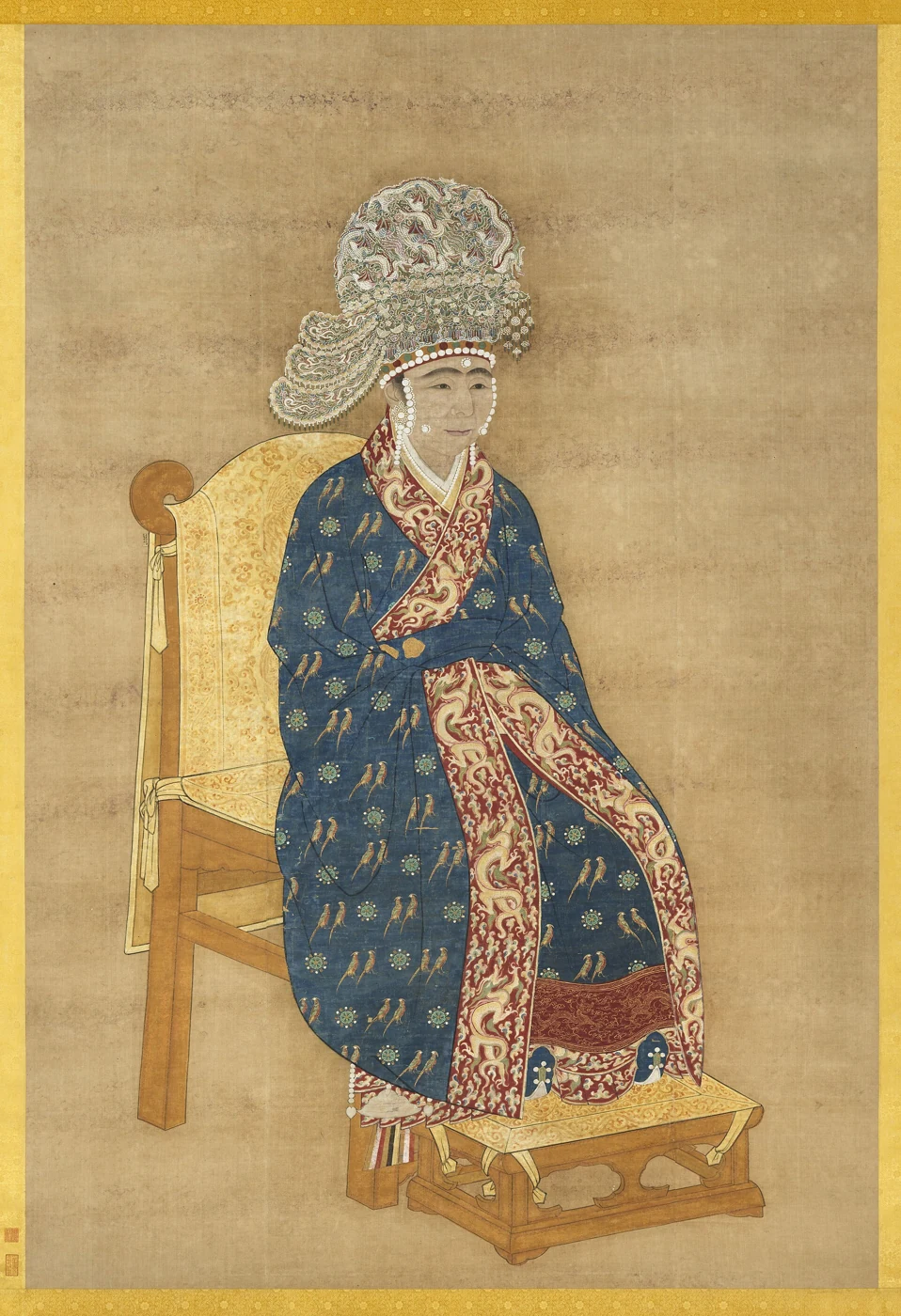
1032 CE–1093 CE
Empress dowagerregent
Empress Gao
高氏(宋英宗皇后)
Empress Gao, posthumously Empress Xuanrenshenglie (1032–1093), childhood name Taotao, was a native of Mengcheng in Bozhou, present-day Anhui. She was the empress of Zhao Shu, Emperor Yingzong of Song, and the mother of Zhao Xu, Emperor Shenzong. Her great-grandfather Gao Qiong and grandfather Gao Jixun were both noted Song generals, while her mother, Lady Cao, was the elder sister of Empress Cao, Empress Cishengguangxian of…
1032 CE–1093 CENorthern Song
PROFILE
Empress Gao, posthumously Empress Xuanrenshenglie (1032–1093), childhood name Taotao, was a native of Mengcheng in Bozhou, present-day Anhui. She was the empress of Zhao Shu, Emperor Yingzong of Song, and the mother of Zhao Xu, Emperor Shenzong. Her great-grandfather Gao Qiong and grandfather Gao Jixun were both noted Song generals, while her mother, Lady Cao, was the elder sister of Empress Cao, Empress Cishengguangxian of Emperor Renzong. Because of her maternal aunt Empress Cao, Gao was raised in the palace from childhood and grew up together with the future Emperor Yingzong. They married in 1047, the seventh year of Qingli. She became empress after Yingzong's accession and was honored as empress dowager under Shenzong. When Shenzong died in 1085, the eighth year of Yuanfeng, Gao became grand empress dowager and ruled from behind the curtain for her young grandson Emperor Zhezong. The era name was changed to Yuanyou, former-policy statesmen such as Sima Guang were recalled, and New Policies of Wang Anshi were comprehensively abolished in what became known as the Yuanyou-era political reversal. Her nine years of rule were regarded as comparatively orderly, and later generations praised her as a “Yao and Shun among women.” She died in 1093, the eighth year of Yuanyou, received the posthumous name Empress Xuanrenshenglie, and was buried with Emperor Yingzong at Yonghou Mausoleum.
- Other names
- Empress Dowager Gao; Xuanrenshenglie; Empress of Emperor Yingzong
- Period
- Song · Northern Song
- Date of Birth
- 1032
- Date of Death
- 1093
- Dynasty / polity
- Song · Northern Song
- Identity
- Empress dowager; regent
- Ethnicity / group
- Not reliably established in existing sources
- Ancestral home
- Mengcheng, Bozhou (present-day Anhui)
- Place of birth
- Unknown
- Regency
- Not reliably established in historical sources
- Posthumous name
- Empress Xuanrenshenglie
- Major achievements
- Empress of Emperor Yingzong of Song and mother of Emperor Shenzong; governed at court early in Emperor Zhezong's reign, abolished the New Policies, restored former-policy officials, and ruled from behind the curtain for nine years.
- Lifespan
- 62 years
LIFE TIMELINE
Age 15 | Married Zhao Zongshi, later Emperor Yingzong, and was titled Lady of Jingzhao Commandery
Age 16 | Gave birth to her eldest son Zhao Xu, later Emperor Shenzong
Age 30 | Zhao Zongshi was designated imperial son and renamed Zhao Shu
Age 31 | Emperor Renzong died and Zhao Shu succeeded as Emperor Yingzong; Gao was made empress
Age 33 | Formal investiture ceremony as empress
Age 35 | Emperor Yingzong died; their eldest son Zhao Xu succeeded as Emperor Shenzong, and Gao was honored as empress dowager
Age 53 | During Shenzong's severe illness, officials requested that Gao temporarily participate in government; after his death and Zhezong's accession, she became grand empress dowager and formally began ruling from behind the curtain
Age 54 | Appointed Sima Guang grand councilor and comprehensively abolished New Policies of Wang Anshi
Age 61 | Died of illness in Bianjing and received the posthumous name Empress Xuanrenshenglie
— | Buried with Emperor Yingzong at Yonghou Mausoleum, present-day Gong County, Henan
BIOGRAPHY
Biography
Family Background and Early Life Gao came from a prominent military family. Her great-grandfather Gao Qiong, courtesy name Baochen, served Emperors Taizong and Zhenzong and rose to Commander-in-Chief of the Palace Command and Military Commissioner of Zhongwu Army, making him an important general of Taizong's reign. Her grandfather Gao Jixun, courtesy name Shaoxian, became Military Commissioner of Jianxiong Army and was likewise known for military service. Her father Gao Zunfu rose to Deputy Commissioner of the Northern Workshops, while her mother Lady Cao was the elder sister of Empress Cao of Emperor Renzong. These close ties to the imperial house laid the foundation for Gao's upbringing in the palace and later marriage to Yingzong. As a child, Gao was brought into the palace and raised there because of her aunt Empress Cao. Zhao Zongshi, the future Emperor Yingzong, was also being raised in the palace because Renzong then had no surviving son and was the same age as Gao. The two grew up together. Renzong once told Empress Cao that they should eventually be married. In the third month of 1047, Gao married Zhao Zongshi and was titled Lady of Jingzhao Commandery. Although Renzong had by then fathered a son and Zhao had moved out of the palace, Renzong and Empress Cao still arranged the marriage. Contemporaries described it as “the emperor taking a daughter-in-law and the empress marrying off a daughter,” and it became a celebrated event. ### From Princely Household to Empress After marriage, Gao and Zhao Zongshi were close. In 1048 she gave birth to their eldest son Zhao Xu, later Emperor Shenzong. She subsequently bore three more sons and four daughters; all four sons and four daughters of Emperor Yingzong were Gao's children. In 1062, after Renzong's biological sons had died young, Zhao Zongshi was designated imperial son and renamed Zhao Shu. In the third month of 1063 Emperor Renzong died and Zhao Shu succeeded as Emperor Yingzong. Gao was made empress in the fourth month and formally invested in the eleventh month of 1065. During Yingzong's reign, Empress Gao was the only woman in his inner palace and there were no other consorts. Empress Dowager Cao once had a confidant urge Gao to select consorts for Yingzong. Gao replied that she had married the “Thirteenth Training Commissioner,” referring to Yingzong's former rank and position as the thirteenth son, and had not married the emperor as emperor. Only near the end of 1066, when Yingzong became ill and additional marriages were proposed as an auspicious measure, did Gao follow Cao's advice and select three consorts for him. ### As Empress Dowager In the first month of 1067 Emperor Yingzong died and Crown Prince Zhao Xu succeeded as Emperor Shenzong. Gao was honored as empress dowager and resided in Baoci Palace. After Shenzong's accession he promoted Wang Anshi and began implementing the reforms. Like Grand Empress Dowager Cao, Gao opposed Wang Anshi's program and trusted conservative officials such as Sima Guang, although she did not directly intervene in government and mainly expressed dissatisfaction with some of Shenzong's policies. Shenzong repeatedly wanted to build an extravagant residence for Gao's family, but she refused. When the court later granted an empty plot, Gao used her own money to build houses and did not take a single coin from the state treasury. Her younger brother Gao Shilin had long held the office of Neidian Chongban. When Yingzong wished to promote him, Gao declined, saying his entry into the ranks of court officials already exceeded what was appropriate for an empress's relative. Under Shenzong, when her nephews Gao Gonghui and Gao Gongji were due for promotion to surveillance commissioner, she also firmly refused. Such actions contributed to her reputation for restraint and integrity. ### Regency and the Yuanyou-era political reversal In the second month of 1085, Emperor Shenzong became gravely ill. Grand councilor Wang Gui and others visited him and requested that Zhao Yong, Prince of Yan'an, be named crown prince and that Empress Dowager Gao temporarily participate in government; Shenzong agreed. On the first day of the third month, Gao sat behind a curtain in Funing Hall, designated Zhao Yong crown prince, and changed his name to Zhao Xu. Shenzong died on the fifth day, and Zhao Xu succeeded as Emperor Zhezong. Gao was honored as grand empress dowager and formally began governing on the twenty-second day of the third month. After taking control, Gao immediately recalled Sima Guang, Lü Gongzhu, Wen Yanbo, and other former-policy officials, making restoration of ancestral institutions her first priority. She dismissed laborers working on the capital, reduced palace scouts, halted court craft projects, abolished the Daoluo Office, expelled especially improper close attendants, warned central and local officials against harsh exactions, and relaxed household horse obligations. After Sima Guang and Lü Gongzhu arrived in the capital, both were appointed grand councilors and jointly assisted the government. New Policies adopted since the Xining era, including the Green Shoots Policy, State Trade Policy, and Hired Service Law, were successively abolished. On Sima Guang's advice, Gao also returned Lanzhou, Mizhi, and other fortified sites sought by Western Xia in exchange for frontier peace. During Gao's regency, the court was described as orderly and the realm pacified. The Khitan ruler warned his officials not to provoke border incidents, saying that the Southern Dynasty was once again following the policies of Renzong. Yet the Yuanyou era also saw factional conflict within the former-policy camp among the Shu, Luo, and Shuo groups, intensifying political division and creating a serious problem late in Gao's rule. ### Later Years and Death In the autumn of 1093, the eighth year of Yuanyou, Gao became gravely ill. She summoned Lü Dafang and Fan Chunren and warned them that after her death the emperor would not continue to employ them; they should recognize this and withdraw early so he could appoint others and they could avoid disaster. A few days later Gao died in Bianjing at the age of sixty-two and received the posthumous name Empress Xuanrenshenglie. In the second month of 1094, the first year of Shaosheng, she was buried with Emperor Yingzong at Yonghou Mausoleum, in present-day Gong County, Henan. After Gao's death, Emperor Zhezong changed the era name to Shaosheng and recalled New Policy officials such as Zhang Dun and Cai Bian. Under the banner of restoring Shenzong's institutions, they purged former-policy officials. Zhang Dun and Cai Bian also spread accusations against Gao and sought to strip her posthumous honors, but Empress Dowager Xiang and Grand Consort Zhu strongly opposed the plan and it failed. Under Emperor Gaozong, the court publicly condemned the offenses of Zhang Dun, Cai Bian, and Xing Shu and honored Gao's descendants.
Gao Taotao was a niece of Empress Cao of Emperor Renzong and was raised in the palace. In the third month of 1047 she married Zhao Shu, afterward Emperor Yingzong, being made mistress of Jingzhao, and bore her eldest son the next year. On Yingzong's accession she was made empress, known as the Empress Xuanren Shengli.
Under Emperor Shenzong she was honored as empress dowager. When Shenzong died in 1085 and the young Zhezong came to the throne, she held the court as his grandmother for eight years, the period called the Yuanyou restoration: she brought back Sima Guang, Lü Gongzhu and other old ministers and abolished Wang Anshi's new laws wholesale, the direction of government closely tied to her own political bent. She died in 1093 and Zhezong, taking power, reinstated the new laws in the Shaosheng restoration.
Her regency is an important stage of Northern Song factional strife, the opposition of the Yuanyou and Shaosheng parties recurring during her life and after it, unsettled to the dynasty's end. Later ages called her a Yao or Shun among women, a judgment connected with her conduct in the Yuanyou years.
Her government in the Yuanyou years bears directly on the survival or abolition of Wang Anshi's reforms, a key link in the political history of the later Northern Song.
Major Activities
Regency and the Yuanyou-era political reversal Gao ruled from behind the curtain for nine years and was one of the most important political figures of the middle and later Northern Song. Taking “restoring the institutions of the ancestors” as her policy direction, she recalled Sima Guang, Lü Gongzhu, Wen Yanbo, and other veteran officials and abolished the New Policies introduced during the Xining and Yuanfeng eras. Measures included restoring older practices in place of the Green Shoots Policy, adjusting the Hired Service Law in light of the Jiayou corvée system, abolishing the State Trade Policy, ending tea and salt restrictions, and transferring barren frontier fortifications to Western Xia. These measures brought the political order away from the upheavals associated with Shenzong's reforms and were later known as the Yuanyou-era political reversal. ### Restricting Favor to Imperial Relatives During her regency Gao strictly restrained benefits to her natal relatives. Her younger brother Gao Shilin served for years without receiving the promotion Yingzong wished to grant him. Shenzong's proposal to build a grand residence for the Gao family was rejected; after an empty site was granted, she paid for construction herself. When her nephews Gao Gonghui and Gao Gongji were due for promotion, she blocked it; after Zhezong repeatedly requested it, only one rank was granted. She also ordered benefits to imperial relatives reduced by one quarter as an example for the inner palace. When Gao Gonghui submitted a memorial proposing greater honors for Zhezong's birth mother Grand Consort Zhu and for the Gao family, Gao discovered that Xing Shu had drafted it and expelled Xing from court. ### Managing the Western Xia Frontier Western Xia repeatedly attacked the frontier during Gao's regency. In 1086, the first year of Yuanyou, Western Xia sent envoys seeking Lanzhou, Mizhi, and five fortified sites. Sima Guang advocated their return and Gao accepted his proposal. In 1087 an envoy was sent to invest Qianshun as ruler of Western Xia. In 1088 Western Xia attacked Dejing stockade; Gao ordered Liu Changzuo to station ten thousand Jingyuan troops at Deshun Army and five thousand Xihe troops at Tongyuan Army, controlling the key positions of Qinfeng in mutually supporting positions. In 1089 Western Xia returned Song civilians captured at Yongle City; Gao transferred Jialu, Mizhi, Futu, and Anjiang stockades to Western Xia, although the boundary remained unsettled. In 1092 Western Xia repeatedly attacked Suide; after Qinfeng military supervisor Kang Wei submitted a defensive strategy, Gao ordered him to the capital and circulated the proposal among the circuits. ### Securing the Succession When Shenzong became seriously ill in 1085, Wang Gui and other grand councilors requested that Zhao Yong, Prince of Yan'an, be appointed crown prince and that Gao temporarily join in government. Speaking behind the curtain, Gao told Wang Gui that the child was filial, had remained at the emperor's side throughout the illness, copied Buddhist scriptures to pray for recovery, enjoyed studying calligraphy, had memorized seven juan of the Analects, and did not indulge in games. She then had Zhao Yong appear outside the curtain before the ministers. An edict that day appointed him crown prince. Gao also secretly instructed the palace eunuch Liang Weijian to have his wife make a yellow robe for a ten-year-old boy and bring it concealed, preparing for the possibility of a sudden accession. After Zhezong took the throne, Gao formally assumed the regency. ### Disciplining the Inner Court After assuming the regency, Gao tightened discipline in the inner court. After eunuchs such as Song Yongchen were dismissed, Shenzong's former wet nurse came to the palace to plead for their restoration. Gao asked whether she had come to lobby for them and warned that if she again sought secret palace orders to interfere in government, Gao would have her executed. The wet nurse was terrified and said nothing, after which such secret orders ceased. Throughout Gao's life she took none of the objects, large or small, presented to the palace by the Court of Imperial Manufactures.
Personal Relations
- Grandfather: Gao Jixun, Military Commissioner of Jianxiong Army
- Father: Gao Zunfu, Deputy Commissioner of the Northern Workshops; posthumously Grand Preceptor, Exalted Grand Master, and Prince of Chen
- Mother: Lady Cao, Lady of Lu and elder sister of Empress Cao of Emperor Renzong
- Younger brothers: Gao Shilin, Gao Shixun
- Nephews: Gao Gonghui, Gao Gongji
- Husband: Zhao Shu, Emperor Yingzong of Song
- Sons: Zhao Xu, Emperor Shenzong; Zhao Hao, Prince Rong of Wu; Zhao Yan, Prince of Run; Zhao Jun, Prince of Yi
- Daughters: Princess Dening, Princess Bao'an, Princess Shoukang, Princess of Shu ### Mentors, Allies, and Ruler–Subject Relations - Maternal aunt and mother-in-law: Empress Cao of Emperor Renzong, Empress Cishengguangxian
- Trusted officials: Sima Guang, Lü Gongzhu, Wen Yanbo, Lü Dafang, Fan Chunren
- Opponents: Wang Anshi, Cai Que, Zhang Dun, Cai Bian, Xing Shu
- Grandchildren: Zhao Xu, Emperor Zhezong, and Empress Meng, Zhezong's principal wife
Historical Assessment
Song / Contemporary - The “Biographies of Empresses and Consorts” in the History of Song states that during her nine years of government the court was orderly and the realm pacified, and says people regarded her as a “Yao and Shun among women.”
- The Khitan ruler reportedly warned his officials that the Southern Dynasty was again fully implementing the policies of Renzong, indicating recognition by a neighboring state.
- Under Emperor Gaozong of Song, the court publicly exposed the offenses of Zhang Dun, Cai Bian, and Xing Shu and honored Gao's descendants, reflecting a favorable official assessment in the Southern Song. ### Song and Yuan Periods - Southern Song historian Li Tao's Long Draft of the Continuation of the Comprehensive Mirror in Aid of Governance records the politics of Gao's regency in detail and generally treats her abolition of the New Policies and recall of veteran officials favorably.
- The Yuan compilers of the History of Song, led by Toqto'a and others, included Gao in the “Biographies of Empresses and Consorts,” praised her diligence, frugality, and clean government, and repeated the description “Yao and Shun among women.”
- Hu Sansheng, writing commentary on the Comprehensive Mirror in Aid of Governance at the end of Song and beginning of Yuan, also discussed Gao's regency and viewed her as capable of maintaining ancestral institutions. ### Ming and Qing Periods - Ming thinker Li Zhi, in Cangshu, argued that although Gao opposed reform, she could govern the people with restraint and quietude and remained a worthy empress.
- Qing historian Wang Fuzhi gave a more complex assessment in Discussions of the Song, praising the orderliness of her nine-year regency but criticizing the wholesale abolition of the New Policies for intensifying factional struggle.
- Qing scholar Bi Yuan's Continuation of the Comprehensive Mirror in Aid of Governance systematically organized the events of Gao's regency and broadly followed the assessment in the History of Song. ### Modern Period - Qian Mu, in Outline of National History, regarded Gao's regency as a relatively stable phase in Northern Song politics but argued that the Yuanyou-era political reversal deepened conflict between the New and Old Policy factions and planted seeds for later political turmoil.
- Deng Guangming and other historians of the Song studied Gao's relationship to Wang Anshi's reforms in depth. Many consider the abolition of the New Policies conservative while judging her personal character favorably.
- Contemporary scholars generally regard Gao as an important female political actor in the middle and later Northern Song whose governing ability deserves recognition, although assessments of her wholesale abolition of the New Policies remain divided.
FIGURES ASSOCIATED WITH THIS DYNASTY
Bibliography
- History of Song*, juan 242, Biography 1, “Empresses and Consorts I”
- History of Song*, juan 12, Annals 12, “Renzong IV”
- History of Song*, juan 13, Annals 13, “Yingzong”
- History of Song*, juan 14, Annals 14, “Shenzong I”
- History of Song*, juan 17, Annals 17, “Zhezong I”
- History of Song*, juan 245, “Foreign States II: Western Xia II”
- Qian Mu, Outline of National History