Born | Born into the Xiang family of Hanoi, as a great-granddaughter of Grand Councilor Xiang Minzhong
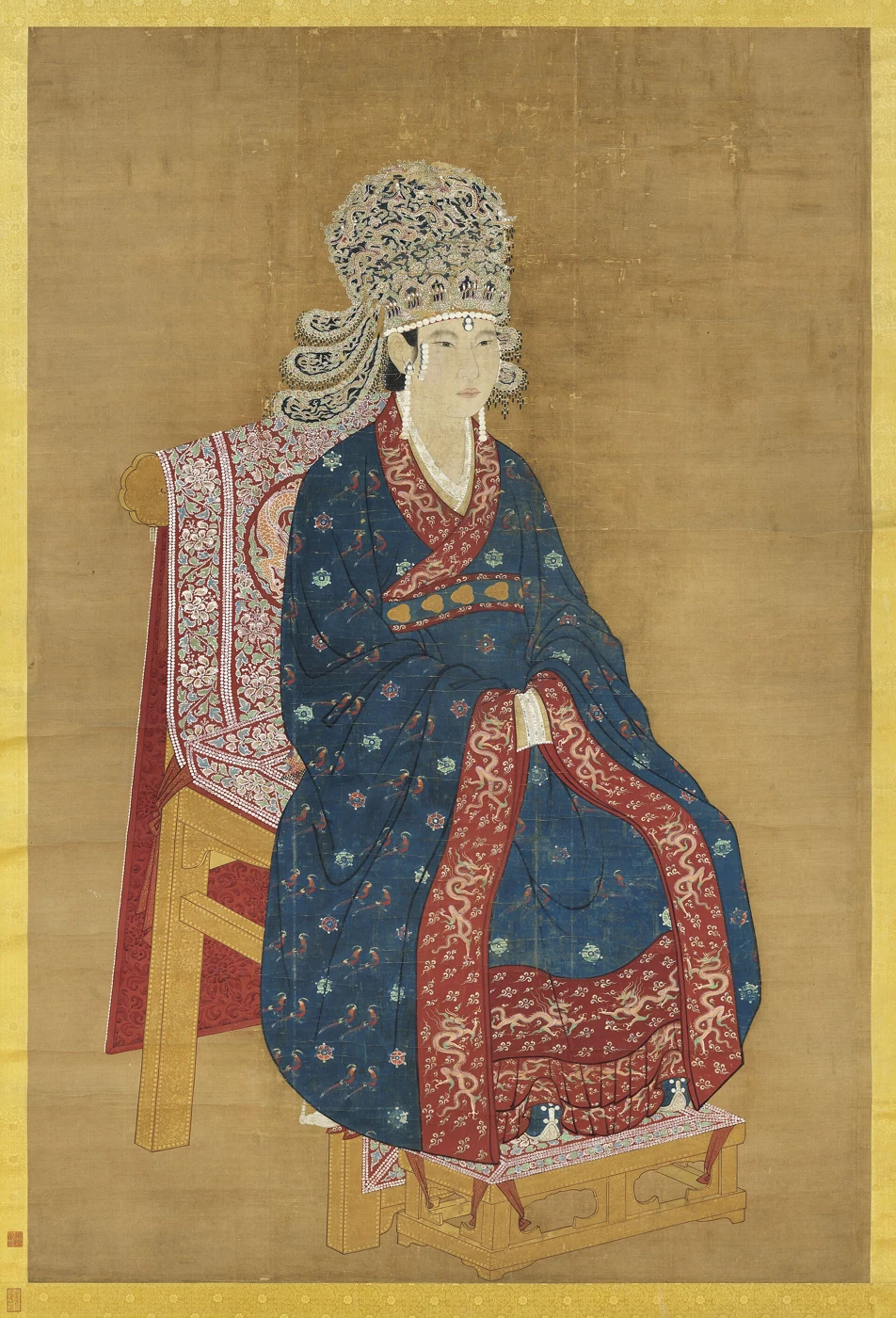
1046 CE–1101 CE
Empressregent
Empress Xiang
向氏(宋神宗皇后)
Empress Xiang (1046, sixth year of the Qingli era – 1101, first year of the Jianzhong Jingguo era), a native of Hanoi (present-day Qinyang, Henan), was the great-granddaughter of Northern Song Grand Councilor Xiang Minzhong and the daughter of Xiang Jing, prefect of Qingzhou. She was the empress of Zhao Xu, Emperor Shenzong of Song, and received the posthumous title Qinsheng Xiansu. She lived through the reigns of Emperors…
1046 CE–1101 CENorthern Song
PROFILE
Empress Xiang (1046, sixth year of the Qingli era – 1101, first year of the Jianzhong Jingguo era), a native of Hanoi (present-day Qinyang, Henan), was the great-granddaughter of Northern Song Grand Councilor Xiang Minzhong and the daughter of Xiang Jing, prefect of Qingzhou. She was the empress of Zhao Xu, Emperor Shenzong of Song, and received the posthumous title Qinsheng Xiansu. She lived through the reigns of Emperors Renzong, Yingzong, Shenzong, Zhezong, and Huizong. After Emperor Zhezong died suddenly, she overrode opposition and supported Prince Duan, Zhao Ji, for the throne, then briefly ruled from behind the curtain. She was a key figure in the political transition of the middle and late Northern Song.
- Other names
- Empress Xiang; Qinsheng Xiansu; Empress of Emperor Shenzong
- Period
- Song · Northern Song
- Date of Birth
- 1046 CE(6th year of the Qingli era)
- Date of Death
- 1101 CE(1st year of the Jianzhongjingguo era)
- Dynasty/Regime
- Song · Northern Song
- Identity
- Empress; regent
- Ethnicity
- Not recorded in historical sources
- Native place
- Hanoi (present-day Qinyang, Henan)
- Place of birth
- Not recorded in historical sources
- Tenure as empress
- Not recorded in historical sources
- Posthumous title
- Qinsheng Xiansu
- Main significance
- Empress of Emperor Shenzong of Song; she exercised political authority during the transition between the reigns of Emperor Zhezong and Emperor Huizong, selected Huizong for the throne, and briefly governed as regent.
LIFE TIMELINE
Age twenty | Married Zhao Xu, then Prince Ying, and was titled Lady of Anguo
Age twenty-one | Emperor Yingzong died; Shenzong ascended the throne; Xiang was established as empress in the second lunar month
Age twenty-two | Gave birth to her eldest daughter, Princess Yanxi
Age twenty-three | Formal investiture ceremony as empress
Age thirty-two | Princess Yanxi died at age twelve
Age thirty-nine | Emperor Shenzong died; Emperor Zhezong ascended the throne; she was honored as Empress Dowager and lived in Cide Palace
Age fifty-four | Emperor Zhezong died suddenly; she rejected Zhang Dun's proposals, supported Prince Duan Zhao Ji for the throne, briefly governed as regent, and returned power in June
Age fifty-five | Died; posthumously titled Qinsheng Xiansu and buried with Emperor Shenzong at Yongyu Mausoleum
BIOGRAPHY
Biography
Family Background and Early Life
Empress Xiang came from the prominent Xiang family of Hanoi in the Northern Song. Her great-grandfather Xiang Minzhong served as Grand Councilor under Emperor Taizong of Song and Emperor Zhenzong and was enfeoffed as Prince of Chu. He was one of the few political figures among Taizong's founding-era meritorious officials to serve through two reigns without falling from power. Her father Xiang Jing rose to acting Military Commissioner of the Dingguo Army and was posthumously appointed Grand Preceptor, Commander Unequalled in Honor, Prefect of the Masters of Writing, and Secretariat Director, and was posthumously made Prince of Wei. From the generation of her great-grandfather onward, the Xiang family settled in Kaifeng. Although it was an established official family, it maintained a restrained household style and avoided ostentation.
Xiang was born in 1046, the sixth year of the Qingli era. According to the Outline of the Ten Reigns of the August Song, she died in the first lunar month of 1101, the first year of the Jianzhong Jingguo era, at the age of fifty-six by traditional reckoning, which places her birth in 1046. The History of Song, Biographies of Empresses and Consorts likewise states that she died at the age of fifty-six, and the two accounts agree.
Entering the Palace and Becoming Empress
In the third lunar month of 1066, the third year of the Zhiping era, the twenty-year-old Xiang married Zhao Xu, then Prince Ying, and was granted the title Lady of Anguo. Zhao Xu was the eldest son of Emperor Yingzong of Song and was then heir apparent. After marriage, Xiang and Zhao Xu were said to have lived harmoniously. In later life she recalled that she and Shenzong had “never been at odds for a single day,” meaning that they never quarreled openly.
In the first lunar month of 1067, the fourth year of the Zhiping era, Emperor Yingzong died and Zhao Xu ascended the throne as Emperor Shenzong of Song. In the second lunar month, Xiang was established as empress. In the fourth lunar month of 1069, the second year of the Xining era, her formal investiture ceremony was held. During Shenzong's reign, Empress Xiang was known for reverence and frugality. She did not publicly intervene in government, but handled matters around Shenzong appropriately and enjoyed his trust. Emperor Huizong later recalled: “The Empress Dowager was intelligent and had already been informed of affairs of state since Shenzong's time.” (Zeng Gong Yilu, juan 9.) This suggests that although she did not openly exercise political power, she had already been involved in confidential matters during Shenzong's reign.
In 1068, the first year of the Xining era, Empress Xiang gave birth to her eldest daughter, Princess Yanxi. The princess was described as unusually perceptive from birth and, even in childhood, as having the habits and understanding of an adult. She was deeply loved by Shenzong and Empress Xiang. In the second lunar month of 1078, the first year of the Yuanfeng era, the princess died at the age of twelve and was posthumously enfeoffed as Princess of Yan. Shenzong and Empress Xiang both changed into mourning dress to see her off. In 1100, the third year of the Yuanfu era, she was posthumously elevated to Senior Imperial Princess of Zhou and given the posthumous title Shuhuai.
Empress Dowager under Emperor Zhezong
In the third lunar month of 1085, the eighth year of the Yuanfeng era, Emperor Shenzong died. The nine-year-old Zhao Xu succeeded as Emperor Zhezong of Song, and Empress Xiang was honored as Empress Dowager. Shenzong had not yet designated a crown prince when he became gravely ill. Empress Xiang supported Empress Dowager Gao's proposal to make Zhao Xu crown prince, helping ensure a smooth transfer of power.
Grand Empress Dowager Gao ordered the former Qingshou Palace renovated for Empress Dowager Xiang, but Xiang declined, saying: “How could the mother-in-law live in the west while the daughter-in-law occupies the east, thereby violating the proper order between superior and subordinate?” She therefore refused to move in, and the rear hall of Qingshou Palace was instead converted into Cide Palace for her residence. This reflected her respect for her mother-in-law and accorded with her lifelong observance of ritual propriety.
When Zhezong selected an empress and arranged marriages for the princes, Empress Dowager Xiang specifically ordered that women of the Xiang family were not to be candidates. When members of the clan attempted to invoke precedents for imperial in-laws in order to seek favors or promotion, claiming that a special order existed, she refused them, saying: “Our clan has never used such a precedent. Why should private feeling be allowed to disturb public law?” She rejected all such requests. Her strict management of the family and refusal to favor relatives were unusual among Northern Song imperial in-laws.
Supporting Huizong and Brief Regency
In the first lunar month of 1100, the third year of the Yuanfu era, the twenty-four-year-old Emperor Zhezong died suddenly without a son. The succession became an urgent issue. Grand Councilor Zhang Dun proposed Zhezong's full younger brother, Prince Jian Zhao Si. Empress Dowager Xiang rejected this on the grounds that all of Shenzong's sons were sons of concubines. Zhang Dun then proposed the older Prince Shen Zhao Bi, but she rejected him because he suffered from an eye disorder and was therefore unsuitable to rule. Empress Dowager Xiang ultimately made the decision to enthrone Prince Duan Zhao Ji. Zhang Dun opposed the choice strongly, arguing that Prince Duan was “frivolous and unfit to rule the empire,” but Xiang had already made up her mind and did not yield.
Zhao Ji ascended the throne as Emperor Huizong of Song. Huizong asked Empress Dowager Xiang to participate temporarily in handling military and state affairs, but she initially declined because Huizong was already an adult. After Huizong tearfully bowed and repeatedly requested her aid, she agreed to rule from behind the curtain. During her regency, she undertook several measures. First, she gradually recalled worthy senior officials who had been expelled by Zhang Dun during the Shaosheng and Yuanfu eras and rehabilitated members of the Yuanyou faction. Second, she discontinued extravagant practices such as receiving court in the main hall, avoiding family name taboos, and establishing a birthday festival. Third, she reduced corvée burdens and warfare while promoting frugality at court. Historical records say that when she heard that the court was recalling senior officials, lightening burdens, ending warfare, caring for the people, and promoting thrift, she visibly rejoiced.
Her regency lasted only six months. On the twenty-eighth day of the sixth lunar month that same year, Empress Dowager Xiang issued a handwritten order returning authority to Huizong and withdrew to Cide Palace. Her unwillingness to cling to power was highly unusual in the history of Northern Song empress-dowager regencies.
Later Years and Death
After returning power, Empress Dowager Xiang withdrew to the inner palace and no longer involved herself in government. On the thirteenth day of the first lunar month of 1101, the first year of the Jianzhong Jingguo era, she died at the age of fifty-six. Huizong mourned her deeply and repeatedly promoted her brothers Xiang Zongliang and Xiang Zonghui to Commander Unequalled in Honor and made them commandery princes. He also posthumously enfeoffed three generations of Xiang Minzhong's ancestors as princes, an exceptionally rare honor for Northern Song imperial in-laws.
On the sixth day of the fifth lunar month that same year, Empress Dowager Xiang was buried with Emperor Shenzong at Yongyu Mausoleum and enshrined in Shenzong's chamber in the Imperial Ancestral Temple. She received the posthumous title Qinsheng Xiansu, later expanded to Empress Qinsheng Xiansu.
Major Activities
Supporting the Accession of Huizong
The most consequential political decision of Empress Dowager Xiang's life was her choice to support Prince Duan Zhao Ji after Emperor Zhezong's sudden death. Among Shenzong's surviving sons, Prince Jian Zhao Si was Zhezong's full younger brother and would ordinarily have had priority under the convention of succession from elder brother to younger brother; Prince Shen Zhao Bi was older but suffered from an eye disorder; Prince Duan Zhao Ji was in the middle in age. Zhang Dun advocated Prince Jian, but Xiang rejected him on the grounds that all were sons of Shenzong's concubines. Zhang then proposed Prince Shen, whom Xiang rejected because of his eye condition. She ultimately chose Prince Duan Zhao Ji. Zhang Dun predicted that Zhao Ji was “frivolous and unfit to rule the empire.” Later political corruption under Huizong and the eventual Jingkang Incident were retrospectively taken as confirming Zhang's warning. At the time, however, Xiang's choice was not without rationale: among the princes, Zhao Ji was considered the most cultivated in the arts and physically healthy, while his maternal relatives were politically weak, making him easier for the Empress Dowager to manage.
Brief Regency and Political Reversal
At the beginning of Huizong's reign, officials feared that his love of leisure would lead him to neglect government and urged Empress Dowager Xiang to govern from behind the curtain. She heard affairs in a small hall at the Inner East Gate. Although her regency lasted only six months, she carried out several measures of lasting consequence: she rehabilitated members of the Yuanyou faction whom Zhang Dun had demoted since the Shaosheng era and recalled senior officials; she ended the military policy directed against Western Xia that had continued since Shenzong's reign; and she curbed the extravagant tendencies of Huizong's early court. These measures temporarily stabilized the disturbed political situation left by the late Zhezong reign.
Observance of Ritual and Restraint of Imperial In-Laws
Empress Dowager Xiang was known throughout her life for strict observance of ritual propriety. She refused to reside in the former Qingshou Palace on the grounds that it would violate the proper hierarchy between mother-in-law and daughter-in-law. When Zhezong selected an empress, she prohibited women of the Xiang clan from participating. She also rejected requests by members of her clan for favors and advancement. These actions stood out against a Northern Song political background in which imperial in-laws often exercised influence. She and Shenzong were said to have had a close relationship, and when Shenzong fell gravely ill she supported the designation of Zhao Xu as crown prince, helping ensure a smooth succession.
Protection of Su Shi and Other Yuanyou Faction Members
According to the Long Draft of the Continuation of the Comprehensive Mirror in Aid of Governance and other sources, Empress Dowager Xiang took a protective attitude toward Su Shi and other Yuanyou faction members during Zhezong's reign. During the Shaosheng era, when Zhang Dun held power and broadly demoted Yuanyou officials, Su Shi was exiled to Huizhou and Danzhou. Although Xiang did not openly intervene, she is recorded as having spoken on behalf of Su Shi and others before Zhezong. After Huizong ascended the throne, her regency immediately brought orders recalling exiled officials such as Su Shi. Su died on the journey north after receiving amnesty and did not live to see Xiang's death. In addition, during Shenzong's reign she had urged the emperor not to open border conflicts lightly and held reservations about some of the more radical measures in the New Policies of Wang Anshi.
Daily Life and Activities
Empress Xiang spent most of her life within the palace in Kaifeng and is not recorded as traveling outside the palace city. She was skilled in running and cursive script and possessed some calligraphic accomplishment. Her relationship with Shenzong was harmonious; in her later recollection, they had “never been at odds for a single day.” After Shenzong's death, she remained widowed for sixteen years and lived simply without luxury.
Personal Relations
- Great-grandfather: Xiang Minzhong, Grand Councilor under Emperors Taizong and Zhenzong, enfeoffed as Prince of Chu
- Father: Xiang Jing, acting Military Commissioner of the Dingguo Army, posthumously made Prince of Wei
- Brothers: Xiang Zongliang and Xiang Zonghui, both made commandery princes during Huizong's reign
- Daughter: Princess Yanxi (Senior Imperial Princess Shuhuai of Zhou), born in 1068 and died in 1078
- Husband: Zhao Xu, Emperor Shenzong of Song; married in 1066, and Shenzong died in 1085
- Emperor Yingzong of Song: father-in-law; died in 1067
- Empress Dowager Gao: mother-in-law and Grand Empress Dowager, toward whom Xiang showed great respect
- Zhao Xu, Emperor Zhezong of Song: stepson; ascended the throne in 1085 and honored Empress Xiang as Empress Dowager
- Zhao Ji, Emperor Huizong of Song: supported by Empress Dowager Xiang for the throne; honored her as Empress Dowager and asked her to govern as regent
- Zhang Dun: Grand Councilor who clashed sharply with Empress Dowager Xiang over the succession; advocated Prince Jian Zhao Si and was overruled
- Zeng Bu: Grand Councilor who supported Empress Dowager Xiang's choice of Prince Duan Zhao Ji
Historical Assessment
Song Dynasty / Contemporary Views
- Emperor Huizong of Song, Zhao Ji: “The Empress Dowager was intelligent and had already been informed of affairs of state since Shenzong's time.” (Zeng Gong Yilu, juan 9)
- The History of Song, Biographies of Empresses and Consorts stated that “her refusal of the former Qingshou Palace and her prohibition on selecting women of the Xiang clan were both sufficient to serve as models for later generations,” praising her observance of ritual and refusal to favor relatives.
- Southern Song historian Li Tao recorded in the Long Draft of the Continuation of the Comprehensive Mirror in Aid of Governance that during her regency she “recalled senior officials, lightened corvée, ended warfare, cared for the people, and promoted frugality,” giving a positive assessment.
Song–Yuan Period
- Southern Song historians differed in their evaluation of her role in supporting Huizong. On the one hand, they praised the decisiveness with which she “alone made the decision to welcome Prince Duan”; on the other, they implicitly criticized it because Zhang Dun's warning that Zhao Ji was “frivolous and unfit to rule the empire” was later viewed as fulfilled. Southern Song writers reflecting on the fall of the Northern Song often traced part of the disaster back to Xiang's decision.
- The Yuan compilation of the History of Song under Toghto included her in the biographies of empresses and consorts and praised her as “frugal by nature,” but did not explicitly praise or condemn her choice of Huizong.
Ming and Qing Periods
- Wang Fuzhi in the late Ming and early Qing discussed Xiang's choice of Huizong in Song Lun, arguing that “with a woman's intelligence she chose the one easiest for her to control and established him,” criticizing her for acting out of personal calculation rather than concern for the state.
- Qing scholar Zhao Yi, discussing Northern Song empress-dowager regencies in Notes on the Twenty-Two Histories, compared Empress Dowager Xiang with Empress Dowager Gao and argued that because Xiang returned authority after only six months, she was far superior to empresses who clung to power.
- Qing scholar Qian Daxin in Nian'ershi Kaoyi examined her birth and death dates and posthumous title, confirming Qinsheng Xiansu and correcting abbreviated references to “Empress Qinsheng” in some historical works.
Modern Period
- Modern historians of the Song generally consider Empress Dowager Xiang decisive in the succession after Emperor Zhezong's sudden death and regard her choice as directly affecting the course of late Northern Song politics. Some scholars note that one important consideration in her choice of Prince Duan Zhao Ji was the weakness of his maternal kin, which made him easier for the Empress Dowager to manage, but that this judgment ultimately proved mistaken.
- Modern assessments of her six-month regency are relatively favorable, crediting her with rehabilitating Yuanyou officials and halting warfare, which gave the troubled political situation of Zhezong's final years a period of relief and helped establish the initial atmosphere of the Jianzhong Jingguo era.
- Other scholars point out that her regency did not resolve the New Policies–Old Policies factional conflict. She recalled Yuanyou officials but did not dismantle Zhang Dun's political faction, leaving conditions that later contributed to Cai Jing's dominance under Huizong.
FIGURES ASSOCIATED WITH THIS DYNASTY
Bibliography
- History of Song, juan 243, “Biographies of Empresses and Consorts, Part Two: Empress Qinsheng Xiansu Xiang of Emperor Shenzong”