Birth into Illustrious Lineage
Born into an elite official family in Pucheng, Jianzhou; recognized early for extraordinary intellect by his kin grand chancellor Zhang Dexiang.
1035 CE–1106 CE
章惇
Zhang Dun (章惇, 1035–1106), courtesy name Zihou (子厚), art name Dadiweng (大涤翁), was a native of Pucheng in Jianzhou (modern Pucheng, Fujian). He was an outstanding statesman, reformer, military strategist, and Grand Councilor during the Northern Song Dynasty, serving as the paramount champion of the New Policies and the Shaosheng Restoration under Emperor Zhezong. Born into a prominent bureaucratic lineage, he possessed…
Zhang Dun (章惇, 1035–1106), courtesy name Zihou (子厚), art name Dadiweng (大涤翁), was a native of Pucheng in Jianzhou (modern Pucheng, Fujian). He was an outstanding statesman, reformer, military strategist, and Grand Councilor during the Northern Song Dynasty, serving as the paramount champion of the New Policies and the Shaosheng Restoration under Emperor Zhezong. Born into a prominent bureaucratic lineage, he possessed formidable intellect, broad erudition, and literary brilliance. After earning high honors in the imperial examinations, he joined the reform administration of Wang Anshi during the Xining reign, serving in the Finance Commission and driving forward comprehensive fiscal and agrarian changes. He directed the pacification and administrative restructuring of the Meishan aboriginal territories and Chen-Yuan borderlands, creating Xinhua and Anhua counties and incorporating thousands of square li of southwestern tribal domains into standard prefectural governance. Following the Yuanfeng bureaucratic reforms, Zhang Dun rose to Vice Director of the Chancellery and Administrator of the Bureau of Military Affairs. When Emperor Zhezong ascended the throne under the regency of Grand Empress Dowager Gao, Sima Guang abolished the New Policies and proposed ceding strategic frontier fortresses to Western Xia. Zhang Dun mounted an unyielding solo defense at court, fiercely arguing that the blood-bought sacrifices of frontier soldiers must not be squandered, which provoked his banishment to peripheral posts for eight years. Upon assuming personal rule in 1094, Emperor Zhezong recalled Zhang Dun as prime minister and Grand Councilor. Operating under the banner of the Shaosheng Restoration, Zhang Dun revived the Service Exemption Law, Green Shoots Policy, and state finance apparatus, while orchestrating the decisive victory at Pingxia City that brought Western Xia to vassalage. When Zhezong died without heirs in 1100, Zhang Dun courageously opposed the accession of Prince Duan (Emperor Huizong), bluntly declaring that his frivolous nature rendered him unfit to govern the empire. Bounded by factional retaliation under Cai Jing, he was exiled to remote Leizhou and died in Huzhou in 1106 at age seventy-one.
Born into an elite official family in Pucheng, Jianzhou; recognized early for extraordinary intellect by his kin grand chancellor Zhang Dexiang.
Passed the Jinshi examination but felt humiliated that his junior nephew Zhang Heng took first place, casting his diploma upon the palace steps and departing.
Sat again for the metropolitan examination, placing fifth in the First Class (Jia Ke) and receiving appointment as Magistrate of Shangluo.
Recommended by Li Chengzhi to Wang Anshi, appointed Compiler in the Finance Commission to design New Policies.
Appointed Inspector of Jinghu North and South, pacifying Meishan aboriginal tribes and establishing Xinhua and Anhua counties.
Elevated to Director of the State Finance Commission, overseeing national taxation, the Service Exemption Law, and equitable transport.
Subdued uprisings among Chenzhou and Yuanzhou native tribes, overcoming severe injury to establish Chengzhou and secure the border.
Appointed Vice Director of the Chancellery under restructured official statutes, concurrently Administrator of the Bureau of Military Affairs.
Drafted the imperial decree naming Zhao Yong (Emperor Zhezong) crown prince beside the deathbed of the incapacitated Emperor Shenzong.
Vehemently opposed Sima Guang's abolition of the Service Exemption Law and territorial surrender to Western Xia; impeached and exiled to Ruzhou.
Recalled to the capital by Emperor Zhezong as Left Vice Director of the Department of State Affairs, directing the Shaosheng Restoration.
Supported General Zhang Jie in constructing Pingxia City, crushing Western Xia's main cavalry force in an unprecedented triumph.
Stood alone in opposing the enthronement of Prince Duan (Emperor Huizong); subsequently demoted and exiled to Leizhou.
Permitted to move northward during amnesty, passing away in his residence at Huzhou at the age of seventy-one.
Zhang Dun hailed from the illustrious Zhang lineage of Pucheng in Jianzhou, a family renowned for producing high chancellors and ministers across multiple generations. His father, Zhang Yu, rose through imperial administrative ranks to the station of Grand Master of the Silver-Blue Gate with Light; his clan uncle, Zhang Dexiang, had served as Grand Councilor under Emperor Renzong, enjoying preeminent status among the scholar-gentry. When Zhang Dexiang first beheld the young Zhang Dun, he was captivated by his extraordinary poise, eagle-eyed intellect, and profound demeanor, privately predicting that the youth would eventually ascend to supreme ministerial authority. In his early years, Zhang Dun displayed refined elegance, practiced esoteric health regimens, and immersed himself in canonical history, exhibiting sweeping literary style and exceptional executive vision.
In 1057, during the second year of the Jiayou era, twenty-two-year-old Zhang Dun journeyed to Kaifeng to sit for the metropolitan examination. That examination cohort has entered history as the most brilliant assembly of talent in Chinese history, presided over by Ouyang Xiu and including Su Shi, Su Zhe, Zeng Gong, and Zhang Zai among its laureates. Although Zhang Dun passed with distinction, his clan nephew Zhang Heng was awarded the ultimate rank of Zhuangyuan (First Laureate). Possessing supreme pride and unbending resolve, Zhang Dun regarded ranking beneath his younger kin as an intolerable indignity. Standing before the imperial audience hall, he hurled his official examination certificate onto the marble steps, flicked his sleeves, and departed for his southern homeland without accepting office.
Returning to northern Fujian, Zhang Dun sequestered himself in study, delving deeply into statecraft, military strategy, and institutional history, sharpening his relentless determination. In 1059, he returned to the imperial capital, drafting masterly examination treatises that astonished the examiners and secured him fifth place in the prestigious First Class. He was immediately dispatched to serve as Magistrate of Shangluo. In Shangluo, Zhang Dun demonstrated swift and scrupulous judicial insight, suppressed predatory regional clans, sheltered destitute refugees, and restored civic prosperity within months.
Following this success, Zhang Dun was reassigned as Staff Judge of the Xiongwujun Jiedushi. Literary giant Ouyang Xiu admired his keen governance memorials and repeatedly commended him to Emperors Renzong and Yingzong. While serving in the Guanzhong region of Shaanxi, Zhang Dun formed a close bond with Su Shi, who was then serving as Assistant Magistrate in Fengxiang. The two men, sharing extraordinary intellect and bold temperaments, became fast companions, riding together across the Zhongnan and Taibai mountains and exchanging verses.
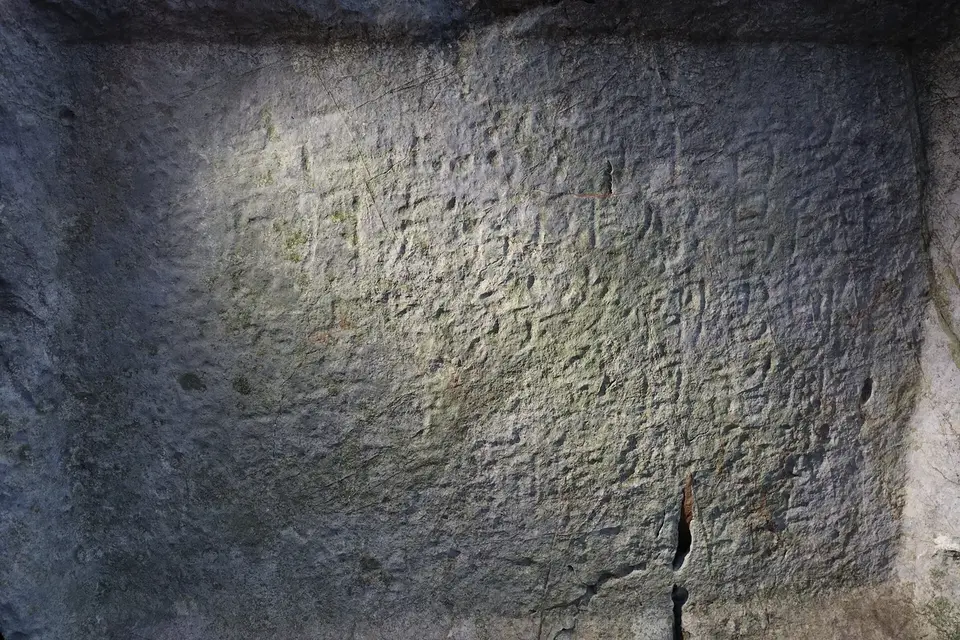
During an excursion to Mount Youke, the party encountered a narrow wooden suspension plank bridging two sheer precipices over an abyss of dizzying depth. The retainers froze in terror, and even Su Shi shrank back from crossing. Zhang Dun, however, remained completely calm. Binding himself with wild vines, he traversed the chasm on the aerial rope, climbed the vertical cliff face, and inscribed six bold characters in dark ink upon the rock: "Zhang Dun and Su Shi Came to Visit." Returning with effortless composure, he met an astonished Su Shi, who patted his shoulder and sighed: "Zihou, should you attain your ambition one day, you will surely have the capacity to execute men!" Zhang Dun laughed heartily into the sky, his fearless audacity stunning the scholar-elite of the northwest.
In 1069, the second year of the Xining era, Emperor Shenzong appointed Wang Anshi to initiate the New Policies, establishing the Finance Commission to oversee national restructuring. Recommended by Li Chengzhi, Zhang Dun was granted an imperial audience in the Chongzheng Hall. Shenzong and Wang Anshi discovered that Zhang Dun commanded comprehensive knowledge of nationwide water transport, granary management, labor service conversion, and frontier defense supply. Greatly impressed by his decisive eloquence, Shenzong immediately appointed him Compiler in the Finance Commission. Zhang Dun worked day and night assisting Wang Anshi in drafting regulations for equitable transport, the Green Shoots Policy, and agricultural water conservation.
In the early Xining years, the Meishan aboriginal territories between northern and southern Jinghu had obstructed transportation for centuries. Encompassing a thousand square li of rugged forests and mountain strongholds, local tribal chiefs neither paid taxes nor rendered labor service, frequently raiding regional roads, killing imperial officials, and disrupting trade. In 1072, Wang Anshi recommended Zhang Dun as Inspector of Jinghu North and South to lead the administrative pacification of the region.
Arriving on the frontier, Zhang Dun imposed iron military discipline, forbidding his troops from harming non-combatants or looting aboriginal villages. He dispatched envoys conversant with native dialects to offer imperial benevolence, tax remissions, and official titles to surrendering clans, while marshaling elite units to cut water supplies and assault fortified outposts that violently resisted. Through this combination of diplomatic reassurance and focused force, over a thousand tribal settlements across Meishan submitted within months, incorporating 4,800 households and 260,000 mu of fertile soil into regular taxation registers. Zhang Dun petitioned the court to establish Xinhua and Anhua counties, constructing broad post roads linking Tanzhou and Shaozhou, establishing official academies, and extending regular prefectural governance across lands previously untamed.
In 1076, native chieftain Yang Qing launched a major rebellion in the Chenzhou and Yuanzhou borderlands, attacking imperial forts and cutting Yangtze gorge transit. Shenzong reappointed Zhang Dun as Military Commissioner to suppress the outbreak. Rushing to the front, Zhang Dun suffered severe ankle trauma when his horse threw him into a rocky ravine, yet he wrapped his wound, remounted, and pressed forward without delay. Reaching the front, he deployed commandos down vertical rock faces by rope under cover of darkness, taking the insurgent camp by surprise and executing Yang Qing. Zhang Dun subsequently established Chengzhou (later elevated to Yuanzhou), advancing Song territorial control southward by hundreds of li and receiving elevation to Hanlin Academician.
In managing the Meishan campaign, Zhang Dun had established his primary command at Yiyang, personally interviewing guides and mapping every ridge and river. He recognized that tribal factions were fractured by historical rivalries, and by supplying salt, tea, and fabrics to chieftains like Su Gan and Yida, he induced hundreds of mountain strongholds to submit voluntarily. Deep mountain valleys were rapidly transformed into bustling commercial passages through newly built roads and marketplaces.
During the subsequent Chen-Yuan campaign, when officers urged him to convalesce at a postal station after his riding accident, Zhang Dun insisted that regional stability took precedence over physical ailments. His coordinated three-pronged advance severed insurgent grain supplies, and the establishment of fortified garrisons along the river valleys resolved a century-old border menace, earning him widespread acclaim across the imperial administration.
Zhang Dun's logistical brilliance in the southwestern campaigns won the unreserved admiration of Emperor Shenzong. In 1074, amidst severe factional resistance to the nationwide Service Exemption Law and treasury deficits, Shenzong elevated Zhang Dun to Director of the State Finance Commission. Conservative bureaucrats were then waging a furious assault on Wang Anshi, decrying the hired labor levy as extortionate exploitation. Taking charge of state accounting, Zhang Dun audited regional registers, suppressed tax evasions by wealthy gentry, and calibrated labor reserve fund reserves, substantially swelling state revenue and stabilizing public finances.
However, internal rivalry soon fractured the reformist leadership. Following Wang Anshi's temporary resignation, Vice Grand Councilor Lu Huiqing seized power, fabricating accusations against political rivals, including Wang Anshi's brothers. Zhang Dun detested Lu Huiqing's manipulative intrigue, confronting him openly during court conferences and denouncing his self-serving schemes.
In 1075, Censor Deng Wan impeached Zhang Dun to curry favor with Lu Huiqing, declaring that keeping Zhang Dun in court was akin to treating an ailment while preserving internal poison. Shenzong, forced to compromise amidst the political storm, demoted Zhang Dun to Prefect of Huzhou. In Huzhou, Zhang Dun devoted himself to water conservancy, cadastral surveys, and agricultural relief, earning the deep respect of the populace. By 1078, Shenzong recalled him to Kaifeng as Hanlin Academician and Lecturer-in-Waiting, marveling at his clarity during imperial lectures.
During the Yuanfeng era, Emperor Shenzong overhauled the central government, replacing archaic Tang-era commission assignments with substantive authority vested in the Three Departments and Six Ministries. Zhang Dun, celebrated for his territorial conquests and fiscal mastery, played a crucial role in implementing these reforms. In 1082, he was officially appointed Vice Director of the Chancellery and concurrently Administrator of the Bureau of Military Affairs, attaining rare dual command over both civil administration and military command.
In the Bureau of Military Affairs, Zhang Dun faced a grave crisis along the northwestern frontier following the disastrous defeat at Yongle City against Western Xia. Rejecting calls for reckless punitive invasions, he instituted a methodical defensive strategy centered on fortress construction and grain stockpiling. He ordered border commanders to hold mountain passes firmly and built dozens of interlocking forts along the southern slopes of the Hengshan mountains, arresting Western Xia cavalry incursions.
Concurrently, Zhang Dun overhauled the imperial armies, discharging aged and infirm soldiers and expanding crossbow corps. He integrated local village militias with regular imperial regiments under the Joint Command system, markedly enhancing tactical coordination. His prompt, incisive handling of defense dossiers impressed imperial scribes, prompting Shenzong to commend him repeatedly as an administrative genius of true ministerial caliber.
In early 1085, Emperor Shenzong fell critically ill and lost the ability to speak. Amidst growing dynastic anxiety, Zhang Dun and senior minister Wang Gui entered the inner chambers. Zhang Dun acted decisively, penning the imperial directive beside the sickbed naming Zhao Yong (Emperor Zhezong) crown prince. Wang Gui presented the paper to Shenzong, who solemnly nodded in assent, thereby securing an orderly imperial succession and averting palace conspiracy.
Upon Shenzong's death, ten-year-old Zhezong ascended the throne under the regency of Grand Empress Dowager Gao. Hostile to institutional change, the regent recalled conservative leaders Sima Guang, Lu Gongzhu, and Wen Yanbo, initiating the Yuanyou Policy Reversal to dismantle the Green Shoots Policy, Service Exemption Law, and military militias. While other reformist officials accommodated or sought provincial posts, Zhang Dun stood alone in resistance.
When the regent issued appointments directly from the inner palace, Zhang Dun protested vehemently: "Ministerial appointments must be transacted openly before all under Heaven! Secret palace directives destroy ancestral statutes and open illicit avenues of favoritism!" The court trembled at his defiance, but Zhang Dun stood completely unfazed.
During the debate over the Service Exemption Law, Sima Guang decreed that monetary labor payments be abolished nationwide within five days, restoring compulsory physical labor. Zhang Dun confronted Sima Guang in the Chongzheng Hall, demanding: "The Service Exemption Law has protected commoners from financial ruin for twenty years. If it is abolished within five days without regard for local conditions, causing rural collapse, who among you will assume responsibility?!" Sima Guang was left speechless, and when Lu Gongzhu attempted to intervene, Zhang Dun criticized them both for ignoring administrative realities.
The confrontation escalated over frontier policy, where Sima Guang proposed returning four hard-won border fortresses—Mizhi, Futu, Jialu, and Anjiang—to Western Xia in exchange for peace. Zhang Dun denounced this policy furiously before the regent: "These fortresses were purchased with the blood and lives of our soldiers to shield Guanzhong! To surrender them gratuitously rewards barbaric aggression. Those who advocate this deserve execution under state law!" Denouncing Sima Guang as an incompetent rustic scholar, Zhang Dun's passionate defense incurred the wrath of the regent and conservative censors, resulting in his banishment to Ruzhou in late 1086 and eight years of peripheral exile.
In the autumn of 1093, Grand Empress Dowager Gao passed away, allowing seventeen-year-old Emperor Zhezong to assume personal rule. Having endured years of patronizing conservative dominance, Zhezong was determined to carry forward his father's reforming vision, proclaiming the Shaosheng reign era. Recognizing that only Zhang Dun possessed the courage and talent to execute this revival, Zhezong summoned him back to Kaifeng in April 1094, elevating him to Left Vice Director of the Department of State Affairs and Grand Councilor.
Assuming supreme leadership, Zhang Dun immediately reinstated the Service Exemption Law, Green Shoots Policy, agricultural water conservation, and the Baojia system. He reorganized the Ever-Normal Granary commissions and rigorously evaluated civil servants, promoting officials of demonstrated achievement and dismissing those obstructing state policy. Within several years, the state treasury overflowed with revenues, public reserves sustained the capital, and the administrative apparatus operated with unprecedented efficiency.
To prevent further political reversal, Zhang Dun initiated sweeping purges against the Yuanyou faction. He established an investigative office to review Yuanyou records, stripped deceased leaders Sima Guang and Lu Gongzhu of posthumous titles, and banished Su Shi, Su Zhe, and Fan Chunren to distant southern prefectures. Although his severe measures drew criticism from later moralists, they successfully dismantled conservative resistance and ensured unobstructed policy execution throughout the Shaosheng era.
To permanently dismantle conservative political networks, Zhang Dun oversaw the expansion of the investigative office into a mechanism for systematically scrutinizing Yuanyou-era memorials. Officials such as Cai Jing, An Dun, and Jian Xuchen were charged with prosecuting treasonous rhetoric against Emperor Shenzong's policies. Posthumous honors and ancestral monuments granted to Sima Guang, Lu Gongzhu, and Liu Zhi were systematically revoked.
The political purge reached its zenith with the Tongwenguan Case, instigated when Cai Wei accused the sons of deceased conservative leaders Liu Zhi and Liang Tao of convening clandestine assemblies to subvert dynastic authority. Zhang Dun ordered the Censorate and Court of Judicial Review to prosecute the matter rigorously, resulting in the banishment of dozens of prominent scholar-officials to southern frontier zones.
Under Zhang Dun's administration, the descendants of prominent Yuanyou figures were barred from holding metropolitan office. To suppress seditious dissent, Zhang Dun instituted harsh penalties against unauthorized public rumors. When a drunken commoner in Luoyang uttered wild political statements, Emperor Zhezong inclined toward clemency, but Zhang Dun insisted on execution according to statutory law. While this stern enforcement preserved administrative obedience, it deepened factional animosities across the bureaucratic elite.
During the Shaosheng era, the deposition of Empress Meng emerged as a contentious political trial. Empress Meng had been selected by Grand Empress Dowager Gao during the Yuanyou regency. Resenting Gao's historical dominance, Emperor Zhezong felt little affection for the empress, preferring Consort Liu.
In 1096, when Empress Meng's infant daughter fell gravely ill, her adoptive mother burned talismanic waters in the palace to pray for recovery. In Song palace statutes, introducing occult practices into the inner quarters was strictly prohibited. Seizing the opportunity, Consort Liu alleged that the empress was practicing sorcery to curse the emperor. An investigation was launched under palace eunuchs Liang Congzheng and Su Gui.
Cognizant of Zhezong's desire to elevate Consort Liu and eliminate the final traces of the Yuanyou court, Zhang Dun supported the proceedings. Following rigorous interrogations of palace attendants, Empress Meng was stripped of her imperial rank and cloistered as a Daoist nun in Yaohua Palace. When Remonstrance Official Zou Hao submitted earnest memorials protesting this breach of palace ritual, Zhang Dun had him demoted to Lingnan, leaving a controversial stain upon his official record.
Concurrently with internal consolidation, Zhang Dun concentrated state resources on decisively subduing Western Xia. To overcome Western Xia's cavalry mobility, he appointed his clan brother Zhang Jie as Military Commissioner of Huanqing, implementing a forward fortification doctrine designed to choke off enemy communication corridors through interlocking stone citadels.
In 1097, Song forces executed a rapid forward march into the Hulu River valley, constructing Pingxia City at the mouth of Shimen Gorge. Threatening the core pastures of Tiandu Mountain, Western Xia's Empress Dowager Liang mobilized her empire's full cavalry host of over one hundred thousand troopers to lay siege to the fortress. Armed with heavy catapults and battering engines, the Xia hordes attacked day and night in overwhelming numbers.
Zhang Dun coordinated national logistical support from Kaifeng, instructing the garrison under Guo Cheng to hold fast behind deep ditches and stone ramparts. Song forces decimated the assaulting ranks with concentrated salvos from heavy bed-crossbows and divine-arm bows. After twelve days of futile assaults amidst heavy blizzards and starvation, the Xia host disintegrated. General Zhe Keshi launched an ambush that routed the fleeing forces, decapitating over ten thousand enemy troops and capturing commander-in-chief Weiming Amai and supervisor Meile Dubu.
Following the triumph at Pingxia City, Zhang Dun pushed forward to construct dozens of strategic forts, including Xi'an Prefecture and Tong'an City, annexing the fertile northern valleys of the Hengshan range. In 1099, the defeated Western Xia court dispatched envoys to Kaifeng to submit tribute and formal apologies, securing Song hegemony over the northwestern frontier. Simultaneously, Zhang Dun directed generals Wang Shan and Wang Hou to advance into the Hehuang corridor, pacifying Tibetan tribes under Xia Zheng and recovering Miaochuan and Zongge.
In sustaining the Pingxia campaign, Zhang Dun created dedicated grain transport commissions, deploying tea and salt vouchers to incentivize merchant caravans into Guanzhong. He personally supervised the procurement of divine-arm bows and specialized gunpowder ordnance, ensuring that the frontline garrison remained impeccably equipped. This logistical precision transformed the strategic balance, yielding the greatest external military victory of the Northern Song Dynasty.
In January 1100, twenty-four-year-old Emperor Zhezong died suddenly without an heir. Empress Dowager Xiang immediately summoned Grand Councilor Zhang Dun and defense administrator Zeng Bu to designate a successor. Zhang Dun stood forward resolutely, upholding dynastic propriety: "According to imperial ritual and the ancestral line, the emperor's full younger brother, Prince Jian (Zhao Si), must ascend the throne!" Empress Dowager Xiang rejected the proposal, claiming that all princes were equally sons of Shenzong. Zhang Dun promptly proposed Prince Shen (Zhao Bi) on grounds of seniority, which Xiang again dismissed, citing his eye infirmity.
Empress Dowager Xiang then proposed her favorite, the eleventh prince, Zhao Ji (Prince Duan). Knowing Zhao Ji to be a frivolous youth immersed in theater, football, painting, and pleasure, Zhang Dun shouted before the assembled court: "Prince Duan is frivolous and lacks the gravity to rule all under Heaven!" The hall was stunned into silence. As Empress Dowager Xiang expressed intense fury, Zeng Bu rebuked Zhang Dun, compelling the enthronement of Prince Duan as Emperor Huizong.
Upon his accession, Emperor Huizong harbored bitter resentment over Zhang Dun's prophetic objection, while Cai Jing sought his removal to monopolize power. In late 1100, Zhang Dun was dismissed as Grand Councilor on pretexts surrounding royal funeral arrangements and successively banished to Wuchang, Tanzhou, and distant Leizhou. Residing in tropical isolation, Zhang Dun wore simple cotton clothing and engaged in philosophical contemplation with serene detachment. Following an imperial amnesty, he relocated to Huzhou, where he passed away in January 1106 at the age of seventy-one. Although posthumously awarded the title Grand Preceptor and Duke of Wei in the Zhenghe era, he was later degraded and placed in the Biography of Treasonous Ministers in the official History of Song during the Southern Song dynasty to shield the failings of the imperial house.
Reappointed Grand Councilor in 1094, Zhang Dun orchestrated the systematic reconstruction of the state apparatus known as the Shaosheng Restoration. Overturning the regency's reversals, he reaffirmed the fundamental national policy of emulating Emperor Shenzong's institutions. He re-enacted the Service Exemption Law, ensuring that hiring funds were insulated from official diversion, and revived the Green Shoots Policy, water conservancy programs, and market exchange measures. In addition, he codified scattered imperial ordinances into the comprehensive Shaosheng Statutes, establishing a rational, predictable administrative legal framework.
Zhang Dun combined policy reform with rigorous personnel evaluations, rewarding officials who demonstrated verifiable results in land reclamation, tax equity, and water management. He eliminated hereditary promotion privileges favored during the Yuanyou years, insisting that executive appointments be determined by competence and administrative performance. Under his disciplined stewardship, central government operational efficiency reached its historical zenith.
Furthermore, Zhang Dun modernized judicial administration, directing the Ministry of Justice and the Court of Judicial Review to resolve thousands of backlogged cases. He enforced strict statutory adjudication, eliminating arbitrary judicial leniency and compiling the Shaosheng Penal Code. These reforms enhanced state capacity and anchored public security across the realm.
Zhang Dun's pacification of Meishan and Chen-Yuan represents an enduring landmark in the integration of southwestern China. Prior to his campaign, the Meishan aboriginal lands had remained outside imperial taxation and legal administration for centuries, harboring dense tribal enclaves that raided regional trade routes. Zhang Dun rejected mere tribal appeasement in favor of full administrative incorporation.
Combining targeted military operations with generous terms of submission, he induced hundreds of aboriginal chiefs to surrender lands and swear allegiance. He founded Xinhua and Anhua counties, establishing official schools, constructing transport arteries, and introducing uniform cadastral registers. His subsequent pacification of Chenzhou and Yuanzhou and the founding of Chengzhou permanently linked Hunan with Guizhou, establishing the administrative archetype for the later policy of replacing hereditary chieftains with appointed officials.
During the protracted wars between the Song and Western Xia, the Pingxia City campaign orchestrated by Zhang Dun achieved complete operational supremacy. Abandoning earlier disastrous attempts to march massive infantry armies deep into the desert, Zhang Dun implemented a doctrine of progressive fortification, seizing tactical choke points and constructing fortified strongholds that neutralized enemy cavalry speed.
His logistical management ensured that Pingxia City withstood an all-out siege by over one hundred thousand Western Xia troops. The subsequent encirclement and annihilation of the enemy host at Pingxia City decimated Western Xia's elite forces, forcing the Xia court to submit as formal vassals. This decisive victory permanently altered the strategic balance along the northwestern frontier.
Zhang Dun led the critical re-compilation of the Veritable Records of Emperor Shenzong. Shocked by the partisan fabrications introduced by conservative historians during the Yuanyou regency, he petitioned Emperor Zhezong to establish the Bureau of Official History to re-examine the historical record using primary state archives, imperial daily records, and Wang Anshi's personal diaries.
The resulting revised chronicle expunged biased hearsay, restoring an accurate documentary record of Emperor Shenzong's fiscal, military, and institutional reforms. Despite later accusations of factional revisionism from Southern Song scholars, Zhang Dun's insistence on empirical archival verification preserved indispensable documentary evidence regarding eleventh-century Chinese institutional transformation.
Along the northwestern frontier, Zhang Dun restructured regional military forces around network fortification. He mandated that every new outpost be positioned with secure water access and mutual ballistic coverage, transforming the Hengshan mountain range into an impregnable defensive rampart.
He reformed regional militia recruitment, providing state lands to local Han and non-Han borderers in exchange for hereditary archer service. This policy created a resilient standing force of frontier marksmen intimately familiar with local topography, providing the backbone for Song dominance along the northern borders.
Throughout his ministerial career, Zhang Dun championed Wang Anshi's doctrine that enlightened fiscal management enriches the state without overburdening the populace. He enforced the Square Fields and Equitable Tax Law, deploying cadastral surveys to uncover concealed gentry estates and redistribute tax burdens equitably.
To sustain frontier armies, he introduced grain-credit certificates and tea-salt vouchers, encouraging private merchant caravans to supply remote outposts without exhausting local agricultural manpower. These sophisticated logistical instruments funded major military campaigns in Shaanxi and Hehuang while preserving domestic economic stability and robust market activity.
Zhang Dun operated at the center of the intense factional struggle between Northern Song reformers and conservatives. Having endured eight years of punitive exile during the Yuanyou regency, his subsequent administration applied unyielding methods to prevent policy relapse, prosecuting conservative leaders and dismantling their patronage networks.
Yet his supreme historical legacy remains his conduct during the succession crisis of 1100. While other ministers capitulated to court intrigue, Zhang Dun risked his life to declare that Prince Duan was unsuited to govern. The tragic downfall of the Northern Song under Emperor Huizong during the Jingkang Incident ultimately vindicated Zhang Dun's prescient foresight, demonstrating his extraordinary political clarity and unwavering devotion to the dynastic state.
Su Shi evaluated his youthful companion: "Zihou possesses extraordinary genius; should he attain power in the future, he will surely have the capacity to execute men."
Emperor Shenzong commended his southwestern achievements: "Zhang Dun opened Meishan and pacified Chen-Yuan, adding thousands of square li to the realm without mobilizing central armies. He is truly a pillar of the state."
Shaosheng court officials celebrated his ministry: "Upon his accession to executive power in the first year of Shaosheng, statutory discipline was revitalized, the treasury filled, the army strengthened, and external enemies subdued."
Fan Zuyu criticized his uncompromising nature: "Zhang Dun was obstinate and assertive, conducting himself with harsh severity; in his court debates with Sima Guang, he showed no tolerance or magnanimity."
Zhu Xi remarked in the Southern Song: "Zhang Zihou possessed talent and intellect far superior to ordinary men, with immense courage; yet he pursued hazardous courses and embraced severe measures, which brought about his ultimate tragedy."
The official appraisal in the History of Song by Tuotuo stated: "Zhang Dun was broadly learned, skillful in writing, and possessed mental acuity far exceeding normal men. Yet by exhausting punishments and rewards to gratify personal grievances, he caused the realm to tremble in fear."
Wang Fuzhi evaluated him in his Commentary on the Song: "Zhang Dun arose to continue Wang Anshi's work; though his methods were strict, he effectively disciplined the official apparatus. His open declaration that Prince Duan was too frivolous to rule revealed insight surpassing ordinary statesmen; he must not be conflated with the likes of Cai Jing."
Qing scholar Li Ciming observed in his Yuemantang Diary: "Zhang Zihou resisted the empress dowager, confronted Sima Guang at court, and opposed the enthronement of Huizong; his words were worth ten thousand pieces of gold. He was a lonely loyalist of the state, and his classification as a treacherous minister by later official historians was purely the product of Southern Song factional defamation."
Modern historians assess Zhang Dun as one of the most capable and determined statesmen and military strategists of the late Northern Song Dynasty. Politically, he revitalized Wang Anshi's reform program with unmatched administrative efficiency, stabilizing state finance and reforming regional administration. In external and ethnic affairs, his pacification of the Meishan and Chen-Yuan regions integrated vast southwestern domains into standard civil governance, providing an early model for administrative integration. His strategic mastery during the Pingxia City campaign yielded one of the most comprehensive military triumphs in Northern Song history, permanently securing the northern border against Western Xia. While his ruthless prosecution of factional rivals exacerbated bureaucratic divisions, his courageous stand against the enthronement of Emperor Huizong underscored his profound political prescience, marking him as a formidable statesman of uncompromising vision.
FIGURES ASSOCIATED WITH THIS DYNASTY