Birth | Born in the Western Capital, Luoyang; courtesy name Yanguo
1004 CE
Northern Song politicianremonstrance officialdiplomatic envoyGrand Councilor
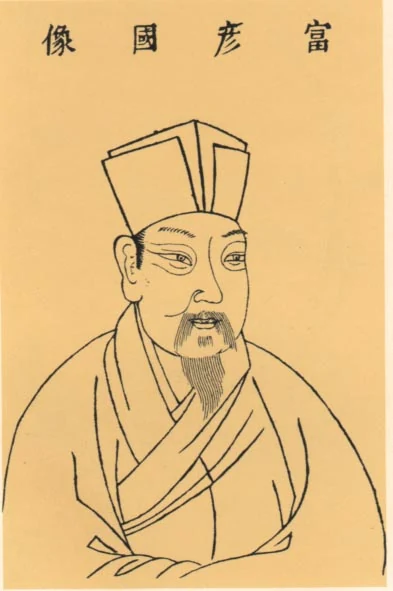
Fu Bi
富弼
Fu Bi (February 13, 1004-August 8, 1083), courtesy name Yanguo, was a native of Luoyang in Henan Prefecture and a Northern Song politician, diplomatic envoy, and Grand Councilor. He entered official life through a special examination for exceptional talent and, while serving as a remonstrance official, repeatedly addressed the Western Xia war, frontier preparedness, and court politics. In 1042(2nd year of Qingli), the Liao…
1004 CENorthern Song
PROFILE
Fu Bi (February 13, 1004-August 8, 1083), courtesy name Yanguo, was a native of Luoyang in Henan Prefecture and a Northern Song politician, diplomatic envoy, and Grand Councilor. He entered official life through a special examination for exceptional talent and, while serving as a remonstrance official, repeatedly addressed the Western Xia war, frontier preparedness, and court politics. In 1042(2nd year of Qingli), the Liao dynasty massed forces on the border and demanded territory in Guannan. Fu twice traveled to Liao for negotiations and helped reject territorial cession in favor of increased annual payments, producing what later became known as the Qingli Increase in Annual Payments. He subsequently took part in the Qingli Reforms with Fan Zhongyan and others, served in Hebei and Qingzhou, and organized relief and resettlement after flooding. He entered the grand councilorate twice and retired to Luoyang in his later years after opposing the New Policies of Wang Anshi. His career encompassed diplomacy with Liao, reform debates, local disaster relief, and struggles within the central court, and in old age he continued submitting memorials on frontier policy, appointments, and popular welfare.
- Other name
- Duke Fu of Zheng (later appellation)
- Courtesy name
- Yanguo
- Period
- Northern Song
- Date of Birth
- February 13, 1004 CE(1st year of the Jingde era)
- Date of Death
- August 8, 1083 CE(6th year of the Feng era, Yuan, 6th month)
- Dynasty/Regime
- Northern Song
- Identity
- Northern Song politician, remonstrance official, diplomatic envoy, Grand Councilor
- Ethnicity/ethnic affiliation
- Not reliably recorded in the available sources
- Native place
- Luoyang, Henan Prefecture
- Place of birth
- Western Capital, Luoyang
- Place of death
- His private residence in Luoyang
- Highest office
- Tong Zhongshu Menxia Pingzhangshi (Grand Councilor); Duke of Han on retirement in his later years
- Noble titles
- Duke of Zheng, later Duke of Han
- Posthumous name
- Wenzhong
- Principal offices
- Director of the Censorate, Deputy Commissioner of Military Affairs, Military Affairs Commissioner, Tong Zhongshu Menxia Pingzhangshi, Academician of the Zhaowen Institute
- Major achievements
- Twice served as envoy to the Liao dynasty and participated in the Qingli Increase in Annual Payments; took part in the Qingli Reforms and planning for Hebei frontier defence; organized relief and resettlement for refugees in Qingzhou; participated in central Northern Song government while serving as Grand Councilor; left memorials, collected writings, and records of his missions to Liao
LIFE TIMELINE
Entry into office | Sat a special examination for exceptional talent as a commoner; appointed Assistant Supervisor of the Directorate for Imperial Manufactories and then signed administrative business in the Heyang military commander's office
Mourning for father | His father Fu Yan died; Fu Bi left office to observe mourning
Remonstrance | Submitted a memorial after Fan Zhongyan was demoted over the deposition of an empress; later sent out as Controller-General of Jiangzhou
Court literary post and local office | Summoned for a Court Examination, appointed Attendant to the Heir Apparent and Academician in Attendance at the Jixian Institute, and made Controller-General of Yunzhou
Policy on Western Xia | Submitted the "Memorial on Eight Matters Concerning Western Xia"; later became an assistant judicial official in Kaifeng and Director of the Censorate
As remonstrance official | Addressed the cancellation of a banquet after a solar eclipse, the investigation of Liu Ping's case, and appointments of frontier commanders; served as Salt and Iron Judge and historiography compiler and was sent as envoy to Liao
Missions to Liao | Traveled twice to negotiate, rejected cession of the Guannan territory, and helped secure peace through increased annual payments and related arrangements
Qingli Reforms | Became Deputy Commissioner of Military Affairs and, with Fan Zhongyan and others, presented reform proposals and plans for Hebei defense
Pacification commissioner | Served as pacification commissioner for Hebei and continued handling frontier affairs
Sent out of the central court | After the Qingli Reforms faltered, left central government and successively governed Yunzhou and other prefectures
Qingzhou administration and suppression of a response plot | Transferred to govern Qingzhou while concurrently serving as pacification commissioner for Jingdong Circuit; handled a plan to respond to Wang Ze's rebellion
Refugee relief | Organized resettlement and relief after flooding in Hebei; the History of Song states that more than 500,000 people were saved
Became Grand Councilor | Appointed Tong Zhongshu Menxia Pingzhangshi and Academician of the Jixian Hall; Wen Yanbo was appointed Grand Councilor on the same day
Mourning for mother | Left the grand councilorate after his mother's death and refused recall under wartime exceptions to mourning rules
Return to central government | Recalled as Military Affairs Commissioner after Emperor Yingzong's accession; later requested release from office because of a foot ailment
Withdrawal to local office | Summoned after Emperor Shenzong's accession, but cited his foot ailment and instead went to serve at Heyang
Second grand councilorship | Appointed Vice Director of the Chancellery and Participant in Determining Government Matters; disagreed with Wang Anshi over the New Policies
Opposition to the Green Shoots Policy | Refused to carry out the Green Shoots Policy, lost his high commission, and requested leave to return to Luoyang for health reasons
Retirement | Allowed to retire, advanced to Duke of Han, and withdrew to Luoyang
Late-life policy memorials | Submitted memorials on the campaign in Annam, the Song-Liao border, remonstrance after astronomical anomalies, and the New Policies
Death | Died at his private residence in Luoyang; posthumously granted Defender-in-chief and the name Wenzhong
Opposition to the Green Sprouts policy | He refused to carry out the Green Sprouts policy, was relieved of his post as commissioner with the title of minister and asked to retire to Luoyang to recover.
In 1072(5th year of Xining) | In 1072(5th year of Xining), the emperor permitted his retirement and advanced him to Duke of Han.
In 1076(9th year of Xining) | In 1076(9th year of Xining), Fu submitted memorials concerning Guo Kui's campaign in Annam, disputes along the Song-Liao border, the remonstrance system after astronomical anomalies, and implementation of the New Policies.
Death | On August 8, 1083(bing-shen day of the intercalary 6th month, 6th year of Yuanfeng), Fu died at his private residence in Luoyang.
BIOGRAPHY
Biography
Family, Education, and Early Official Career Fu Bi was born in the Western Capital, Luoyang, and had the courtesy name Yanguo. The full one account text, citing the History of Song, records that his mother, Lady Han, dreamed during pregnancy of banners, cranes, and wild geese descending into the courtyard before giving birth to him. This is a biographical omen story and is not treated as a verifiable fact of his birth. Fu was described as diligent in study and broad-minded in youth. Fan Zhongyan read his writing and said that he had the talent to assist a ruler, then showed his work to Wang Zeng and Yan Shu. Yan Shu admired Fu and married a daughter, Lady Yan, to him. These assessments and the marriage are recorded in vol. 313 of the History of Song and in the materials cited by the encyclopedia account. In 1030(8th year of Tiansheng), Emperor Renzong of Song restored recruitment through special examinations. Fan Zhongyan encouraged Fu to sit a special examination for exceptional talent. Fu entered as a commoner, placed in the fourth class, and was appointed Assistant Supervisor of the Directorate for Imperial Manufactories, later serving in Changshui County and Heyang. His father Fu Yan died in 1031(9th year of Tiansheng), and Fu left office to observe mourning; in 1032(1st year of Mingdao) he returned his father's remains to Luoyang for burial. After completing mourning, Fu returned to court and memorialized on behalf of Fan Zhongyan, who had been demoted for opposing the deposition of Empress Guo. Fu argued that deposing the principal empress and expelling a remonstrance official amounted to "two losses in a single action." Emperor Renzong did not accept the argument, and Fu was subsequently sent out as Controller-General of Jiangzhou. In 1037(4th year of Jingyou), Fu was summoned for a Court Examination and appointed Attendant to the Heir Apparent, Academician in Attendance at the Jixian Institute, and Controller-General of Yunzhou. After the establishment of Western Xia, Fu submitted the "Memorial on Eight Matters Concerning Western Xia" in 1039(2nd year of Baoyuan), advocating a firm posture toward incoming envoys to demonstrate Song resolve. He was subsequently brought into the capital as an assistant judicial official in Kaifeng and Director of the Censorate. While serving in remonstrance, he addressed whether a banquet should be cancelled after a solar eclipse, the appointment of Shaanxi frontier commanders, rewards for Western Xia defectors, and the division of powers between the grand councilors and the Bureau of Military Affairs. After Liu Ping died in battle and Huang Dehe falsely accused him of surrendering, Fu requested a full investigation. Under a review presided over by Wen Yanbo, Liu was cleared and Huang was executed by waist-cutting. Fu also opposed appointing the eunuch Wang Shouzhong to a Shaanxi military supervisory post. ### Two Missions to Liao and the Qingli Increase in Annual Payments In 1042(2nd year of Qingli), while Song was at war with Western Xia, the Liao dynasty massed forces on the frontier and sent Xiao Ying and Liu Liufu to demand the Ten Guannan Counties. Many court officials were unwilling to undertake the mission. Lü Yijian recommended Fu Bi. Ouyang Xiu, invoking Yan Zhenqing's dangerous mission to Li Xilie as a precedent, argued that Fu should be kept in the capital, but Fu accepted the assignment. Before departure he told Emperor Renzong that when the ruler was troubled, his minister was disgraced, and that he was willing to accept the danger. Fu first received the Liao envoys at Xiongzhou, learned their demands, and reported them to court. In the spring of 1042(2nd year of Qingli), on his first mission to Liao, Fu explained to Emperor Xingzong of Liao that Song repairs to fortifications, expansion of defensive ponds, and organization of militia were intended either for defense against Western Xia or as restoration of older arrangements and did not violate the Chanyuan Treaty. He also argued from the Liao ruler's own interests that war losses would be borne by the ruler, while annual payments could accrue directly to him, urging caution about war. Emperor Xingzong nevertheless continued to insist on territory. Fu rejected attempts to justify a new border by reference to earlier Song losses or to the Later Zhou recovery of Guannan. The Song court proposed either increased annual payments or a heqin marriage alliance. Fu opposed marriage as the price of peace and favored payments as a means to avoid territorial cession and war. After the first negotiation, Fu was ordered to return to Liao. While traveling through Leshou, he checked the state letter and found that its wording did not match his oral instructions, so he rode back to Kaifeng overnight and demanded a replacement. In the second negotiation, Liao pressed Song to use terms meaning "present" or "submit" that carried a subordinate implication. Fu argued against them and refused. The final settlement increased Song's annual payments without ceding the Guannan territory. Later writers referred to this as the Qingli Increase in Annual Payments. The full also places Fu's diplomacy within the broader Song-Liao-Western Xia relationship; this article accordingly describes him as participating in the settlement rather than attributing the regional outcome to him alone. ### Qingli Reforms and Local Office In 1043(3rd year of Qingli), Fu became Deputy Commissioner of Military Affairs and participated with Fan Zhongyan and others in the Qingli Reforms. He presented views on contemporary affairs and frontier security, advocated advancing capable officials and removing unsuitable ones, and took part in planning Hebei defenses. Reform measures touched on official assessment and appointment and met opposition because they affected established interests. In 1044(4th year of Qingli), Fu became pacification commissioner for Hebei. In 1045(5th year of Qingli), he was pushed out of the central court and successively governed Yunzhou, Qingzhou, Zhengzhou, Caizhou, Heyang, Bingzhou, and other places, continuing to handle local civil and military affairs. In 1047(7th year of Qingli), Wang Ze rebelled in Hebei and others planned to support him. Fu learned of a plot involving the garrison troops of Qi Prefecture. Because Qi Prefecture lay outside his formal jurisdiction, he secretly asked the eunuch Zhang Congxun, who was passing through Qingzhou on imperial business, to hurry to Qi Prefecture and mobilize troops for arrests. Fu later impeached himself for acting beyond his authority, but Emperor Renzong commended him. While Fu governed Qingzhou, flooding in Hebei displaced large numbers of refugees. He persuaded local officials and households to contribute grain and supplemented it with government stores. He requisitioned or coordinated public and private buildings for shelter, arranged fuel, water, and relief supplies, assigned officials to care for the elderly, weak, and sick at settlement sites, and ordered regular visits. He allowed refugees to use forests, marshes, and other resources that could support livelihoods and arranged collective burial for the dead. According to vol. 313 of the History of Song, the relief effort saved more than 500,000 people and some refugees were recruited as soldiers. Emperor Renzong sent an envoy to commend Fu, but Fu declined a promotion to Vice Minister of Rites as a reward. The same account says that his methods of dispersed resettlement and continuing supply later served as a model for disaster relief. This article retains the number as a figure reported by the historical source rather than presenting it as a modern statistical verification. ### Two Terms as Grand Councilor, Opposition to the New Policies, and Later Years In 1055(2nd year of Zhihe), Fu Bi and Wen Yanbo were appointed Grand Councilors on the same day. Fu became Tong Zhongshu Menxia Pingzhangshi and Academician of the Jixian Hall. When Emperor Renzong became seriously ill, Fu and Wen remained overnight in the palace to handle affairs. Fu also took part in urging the emperor to designate an heir early. In 1061(6th year of Jiayou), Fu left office to mourn his mother. Emperor Renzong repeatedly sought to recall him, but Fu refused to invoke the wartime alteration of mourning rules known as the "change for arms and armor," arguing that such an exception should not be used in peaceful times. After Emperor Yingzong succeeded, Fu again served as Military Affairs Commissioner. Because of a foot ailment he repeatedly asked to leave office and later served in Heyang, Ruzhou, and elsewhere. After Emperor Shenzong's accession, the emperor summoned him and asked about government and frontier affairs. Fu urged broad benevolence and expressed the wish that the ruler "not speak of war for twenty years," reflecting his preference for caution in warfare and frontier stability. In 1069(2nd year of Xining), Fu returned to high office. As Wang Anshi advanced the New Policies, Fu disagreed with the direction of reform, especially the Green Shoots Policy. He argued that coercive implementation would concentrate financial gains at court while alienating the people and therefore refused to apply it. Officials impeached him for disobeying orders. Emperor Shenzong reassigned him to Ruzhou, and Fu requested permission to return to Luoyang for health reasons, saying that he did not understand the New Policies. In 1072(5th year of Xining), the emperor permitted his retirement and advanced him to Duke of Han. In Luoyang, Fu joined Wen Yanbo, Sima Guang, and others in the Luoyang Gathering of Senior Worthies while continuing to follow court affairs. In 1076(9th year of Xining), Fu submitted memorials concerning Guo Kui's campaign in Annam, disputes along the Song-Liao border, the remonstrance system after astronomical anomalies, and implementation of the New Policies. He urged restraint in warfare, broader access for remonstrance, and adjustment of the reforms. After administrative restructuring in 1080(3rd year of Yuanfeng), his high honorary commission was converted to Commander Unequalled in Honor. On August 8, 1083(bing-shen day of the intercalary 6th month, 6th year of Yuanfeng), Fu died at his private residence in Luoyang. Emperor Shenzong suspended court for three days, posthumously granted him Defender-in-chief, and gave him the name Wenzhong. His son Fu Shaoting submitted Fu's final memorial, which addressed remonstrance, frontier affairs, ending warfare, and care for the people. Fu was later enshrined in Emperor Shenzong's temple during the Yuanyou era, removed during the Shaosheng era, and restored at the beginning of the Jingkang era. These changing honors reflected shifts in later political evaluation.
His Family and His Early Advancement
Fu Bi, courtesy name Yanguo, was a man of Henan. At first his mother, the lady Han, being with child, dreamed that banners, cranes and wild geese came down in her courtyard and that it was said there was a pardon from Heaven, and not long after Fu Bi was born. In youth he was diligent in study and of large measure, and Fan Zhongyan, seeing him, thought him strange and called him a talent fit to aid a king, showing his writings to Wang Zeng and Yan Shu, and Yan Shu gave him his daughter in marriage. When Renzong restored the special examinations Fan Zhongyan told Fu Bi that he should advance by that road; and Fu Bi passed as a man of outstanding talent and was made an assistant of the works and signatory of the Heyang tribunal. Fan Zhongyan being banished for contending about the deposing of the empress, Fu Bi memorialised that this was one act with two faults, and that even if the empress could not be restored Fan Zhongyan should be recalled, and was not heeded; and he was made assistant of Jiangzhou and advanced to the institute of worthies. In his first days in the examination hall Mu Xiu told him that the presented scholar was not enough to exhaust his gifts and that he should be famed by the great examinations; and afterwards Fu Bi indeed failed in the ministry of rites, and his father being then in office at Yaozhou he went west and was at Shanzhou when Fan Zhongyan, governing Kaifeng, sent men after him to say that there was a decree to take scholars by the great examination and that he should return at once; and Fu Bi went back to the capital and saw Fan Zhongyan and excused himself as never having studied for it, and Fan Zhongyan said that he had already joined the other ministers in recommending him and had set apart a room for him with all the papers for the great examination, where he might go; and at that time Yan Shu was in the government and sought a marriage from Fan Zhongyan, who said that if his daughter were to marry an official he did not know, but that if a scholar of the realm were sought there was none like Fu Bi; and Yan Shu, seeing him once, greatly esteemed him and the marriage was agreed.
His Remonstrance on the Deposed Empress, the Eclipse, and the Eight Matters concerning Xixia
When Zhao Yuanhao rebelled Fu Bi memorialised on eight matters and begged that his envoys be beheaded; and he was summoned to be judge of the Kaifeng prefecture and to know the remonstrance bureau. On the new year's day of the first year of Kangding there was an eclipse of the sun, and Fu Bi asked that the feast be cancelled and the music stopped, and that even with the Khitan envoys at the hostel the food should merely be granted them there; and the assistant administrator Song Xiang held it wrong, and Fu Bi said that if the Khitan did so it would shame the court, and afterwards those who returned from Khitan said that they had cancelled the feast as Fu Bi had said, and the emperor much regretted it. At that time officers were forbidden to speak beyond their office, and Fu Bi, arguing from the eclipse, said at large that to answer the changes of Heaven nothing was better than to open the way for the feelings of those below, and so the prohibition was removed. When Yuanhao raided Fuyan and broke Jinming, the controller Lu Shouqin did not relieve it and the eunuch Huang Dehe led his troops away, and the great general Liu Ping died in battle while Huang Dehe accused him of surrendering; and Fu Bi asked that the case be tried to the end, and Huang Dehe was condemned to be beheaded. Xia Shouyun being made commander of Shaanxi and the palace assistant Wang Shouzhong made controller, Fu Bi said that the use of Xia Shouyun was already the jest of the realm and that to add Wang Shouzhong was no different from the military inspectors of the Tang, and asked whether the overturned cart of Lu Shouqin and Huang Dehe could be followed again; and a decree removed Wang Shouzhong. He also asked that the chancellor hold concurrently the bureau of military affairs. At that time two chiefs of Xixia came over and were given nominal offices, and Fu Bi said they should be richly rewarded to encourage others; and the matter being referred to the secretariat, the chancellor knew nothing of it, and Fu Bi sighed and asked whether this was a small matter that the chancellor should not know; and arguing it further his words were followed. He was made judge of the salt and iron office and expositor of the history bureau, and sent as envoy to the Khitan.
His Two Missions to the Khitan
When the Khitan camped troops on the frontier and sent their ministers Xiao Ying and Liu Liufu to demand the land south of the pass, the court sought one to return the visit and all, thinking their intent unfathomable, dared not go, and Lü Yijian therefore recommended Fu Bi; and Ouyang Xiu, citing the case of Yan Zhenqing sent to Li Xilie, asked that he be kept back, and was not answered. Fu Bi at once came to audience, knocked his head on the ground and said that when the lord is troubled the servant is shamed and that he did not dare to grudge his life; and the emperor's countenance changed, and he was first made to receive and entertain them. When Xiao Ying and the rest entered the frontier the palace envoys met and feasted them, and Xiao Ying pleaded illness and would not bow; and Fu Bi said that formerly when he went north and lay ill in his carriage he rose at the word of command, and asked why now, when the palace envoy had come, Xiao Ying did not bow. Xiao Ying, startled, rose and bowed. Fu Bi spoke with him openly and Xiao Ying, moved and pleased, no longer hid his feelings, and secretly told him what his lord wished to gain and advised that if it could be granted it should be, and if not, one matter would serve to put him off; and Fu Bi reported it all. The emperor granted only an increase of the annual payments and the marriage of a princess of the imperial house to the Khitan ruler's son. Fu Bi was advanced to be academician of the bureau of military affairs and declined, saying that when the state was in peril righteousness did not grudge toil and that he would not be bribed with rank to go backward; and he went as envoy to return the visit. Arrived, Liu Liufu came to entertain the guests, and Fu Bi saw the Khitan lord and asked the reason for it; and the Khitan lord said that the southern court had broken faith, closed Yanmen, increased the pond water, repaired the walls and enrolled militia, and asked what they meant by it, and said that his ministers asked to raise troops and come south while he thought it better to send envoys to ask for land and, if refused, to raise troops then. Fu Bi answered whether the northern court had forgotten the great virtue of the emperor Zhangsheng, and said that at the battle of Chanyuan if the advice of the generals had been followed not one of the northern troops would have escaped; and that if the northern court were on good terms with China the lord alone had the profit and the ministers gained nothing, whereas if they went to war the profit went to the ministers and the lord bore the disaster, and that those who urged war were all seeking their own ends. The Khitan lord asked in surprise what he meant, and Fu Bi said that the Gaozu of Jin had cheated Heaven and betrayed his lord and the last emperor was muddled, with narrow territory and divided men, so that the Khitan took them with their whole host, yet lost more than half their brave men and good horses; but that now China held ten thousand li, had a million picked troops, clear laws and one heart above and below, and that if the northern court went to war could it be sure of victory, and if it won, would the lost soldiers and horses be borne by the ministers or by the lord; and that if the good relations were not broken the annual payments all went to the lord and what profit had the ministers. The Khitan lord was greatly enlightened and nodded for a long while. Fu Bi added that the closing of Yanmen was to guard against Yuanhao, that the pond water had begun with He Chengju and was before the good relations, that the walls were all repairs of the old, and the militia filled gaps, so that there was no breach of faith; and the Khitan lord said that but for his words he would not have known the details, but that what he wished was the ancestral land. Fu Bi said that Jin had ceded Lulong to the Khitan and that Shizong of Zhou had retaken the land south of the pass, both being matters of other dynasties, and that if each claimed land it would not profit the northern court.
When Fu Bi had withdrawn Liu Liufu said that his lord was ashamed to receive gold and silk and insisted on the ten counties; and Fu Bi said that the emperor of his own court had said that he kept the state for his ancestors and would not dare give away land at random, and that what the northern court wished was but the land tax, and that he could not bear to kill many of the innocent of both courts and so stooped to increase the payments in its place, and that if they must have the land it was a mind to break the league and a pretext; and that the oath of Chanyuan had Heaven and earth and the spirits as witnesses, and if the northern court began the war the fault was not theirs, and could Heaven and earth and the spirits be deceived? The next day the Khitan lord called Fu Bi to hunt with him and drew his horse near, saying again that with the land they might long be friends; and Fu Bi set out again and again that it could not be, and said that if the northern court took honour in gaining land the southern court must take shame in losing it, and how could the two brother states have one honoured and one shamed. When the hunt ended Liu Liufu said that his lord, hearing Fu Bi's words about honour and shame, had been much moved and enlightened, and that now only a marriage could be discussed; and Fu Bi said that marriage easily bred ill feeling, and that when the long princess of his court married out the dowry was but a hundred thousand strings, and how did that compare with the endless profit of the annual payments. The Khitan lord told Fu Bi to go home, saying that when he came again they would choose one to accept and that he should bring the oath in writing. In the seventh month Fu Bi returned to court, and Renzong, learning that the Khitan would accept either the increase of payments or a marriage, was much pleased; and in the eighth month Fu Bi went again to the Khitan with two letters of state and three oaths, to the effect that if a marriage were discussed there would be no gold or silk, and that if the Western Xia could be made to pay homage to Song the annual payment would be two hundred thousand, and otherwise one hundred thousand. Coming to Leshou, Fu Bi told the deputy Zhang Maoshi that he was an envoy who had not seen the letters of state, and that if the writing differed from what had been said by word of mouth his mission was ruined; and opening them he found they did indeed differ, and galloped back to the capital, came to audience at the hour of the afternoon and changed the letters before going on. Arrived, the Khitan no longer sought marriage but only the increase of payments, and said that in what the southern court sent them the word should be "presented" or else "paid in"; and Fu Bi contended, and the Khitan lord said that since the southern court feared them what did two words matter, and asked whether, if he led his troops south, they would not repent. Fu Bi said that his court loved both north and south and so did not shrink from revising the agreement, and how could that be called fear; and that if it came of necessity to war the victory would go by right and wrong, which was not for an envoy to know. The Khitan lord said that he should not be obstinate, for the ancients had done the like; and Fu Bi said that of old only Tang Gaozu had borrowed troops of the Turks and then the gift was called a presentation or payment, but that afterwards Jieli was taken by Taizong, and was such ceremony ever used again. Fu Bi's voice and countenance were both stern, and the Khitan knew he could not be moved and said that they would send someone to discuss it themselves, and sent Liu Liufu again. Fu Bi returned and memorialised that he had withstood them to the death and their spirit was broken and nothing should be granted; but the court in the end gave them the word "paid in". When he first received the charge he heard that a daughter had died, and when charged again that a son had been born, and he heeded neither; and being made academician of the bureau of military affairs and advanced to the Hanlin he earnestly declined, saying that the increase of the annual payments was not his own wish, but that because they were then dealing with Yuanhao and had no leisure to contest it he had not dared to contend to the death, and how dared he accept.
The Qingli Reform and His Posts in the Provinces
In the third year he was made deputy commissioner of the bureau of military affairs and declined the more firmly, and was given instead the rank of academician of the Hall of Governance with the office of expositor; and in the seventh month he was again made deputy commissioner and said that the Khitan being now on good terms men said there was no trouble, but that if the league were broken he would die and still be guilty, and begged the emperor to think on the shame of their contempt, to sleep on brushwood and taste gall, and not to forget to mend the government; and he handed the patent back to the emperor and was dismissed, and a month later the former appointment was renewed and the chancellor told him that this was the court's special employment and not because of the Khitan mission, and Fu Bi accepted. Renzong, eager to charge the chancellors with an age of peace, several times decreed that Fu Bi and Fan Zhongyan should be pressed, and opened the Tianzhang pavilion and gave them brushes and tablets to write what they wished to do; and Fu Bi presented more than ten matters of the day and thirteen plans for securing the frontier, whose purport was to advance the worthy, dismiss the unworthy, stop irregular preferment and remove old abuses, wishing by degrees to replace the unfit inspectors and sift the officers of their jurisdictions, at which the petty men began to be displeased. When Fan Zhongyan crossed out the useless men, Fu Bi hesitated and said that his stroke was easy but that a whole family would weep, and Fan Zhongyan said that one family's weeping was better than a whole circuit's. Afterwards Fu Bi, because Xia Song was thwarted and slandered him secretly, was afraid and asked to be sent to soothe Hebei, and on his return was sent out with the rank of academician of the Hall of Governance to govern Yunzhou; and after more than a year the slander proved false, and he was given the office of counsellor, moved to Qingzhou and made concurrent commissioner of Jingdong.
His Relief of Famine at Qingzhou and His Views on the Frontier
In the fourth year of Qingli the Khitan received ceremony at Yunzhong and sent troops with Xixia against the Dair tribe, close to Hedong, and Renzong suspected the two frontiers of plotting together; and Fu Bi said that without a cause the Khitan would not move, and that Yuanhao had been leagued with the Khitan as left and right, and that now the Khitan alone had the great payments and Yuanhao had a grievance, so that he had walled Weizhai against them, and that the Dair had raided Weizhai several times and the Khitan suspected Yuanhao had sent them and so made this campaign, and how could they join to attack us. Fan Zhongyan, fearing that the Khitan's western campaign was aimed at Song, asked the court to send several tens of thousands of troops to hold Hedong, and Fu Bi said that this would play into their hands and asked to be answerable for it; and Renzong stopped the levy and the Khitan in the end did not move. At that time Hebei suffered severe floods, tens of thousands were made homeless, Jingdong worst of all with six or seven hundred thousand refugees; and Fu Bi on coming to his post exhorted the officers and people of his jurisdiction to give grain and added the government's stores, and got more than a hundred thousand public and private buildings, settling the people there and supplying them with firewood and water. The officers who were former, awaiting or resident appointees were all given stipends and stationed where the people gathered, to supply those old, weak and sick with grain, their labours being recorded and a promise given to memorialise for rewards for them another day; and every five days men were sent with wine, meat, rice and cakes to comfort them, out of the greatest sincerity, so that each did his utmost. The produce of the hills, forests, ponds and marshes that could support life he let the refugees take for themselves, and the dead he had buried in great pits called the thicket graves. The next year the wheat was plentiful and the people took grain according to the distance of their roads and went home; and Fu Bi saved more than five hundred thousand lives, and those he enlisted as soldiers came to ten thousand, at which the emperor sent envoys to commend him and made him vice-minister of rites, and Fu Bi said this was the duty of a guardian and declined. Before this those who relieved famine had gathered the people in the cities and fed them gruel, which bred disease and trampling, and some waiting for food for days could not get gruel and fell, so that in name they saved them and in truth killed them; but from Fu Bi's method, which was simple, convenient and complete, the realm handed it down as a model. Besides this, when Wang Ze rebelled and the garrison troops of Qizhou meant to answer him, someone came to Fu Bi to tell him; and the Qizhou garrison not being under Fu Bi's command he feared the matter would leak and trouble arise, and it happening that the eunuch Zhang Congxun came to Qingzhou on a charge, Fu Bi judged he could be used and secretly gave him the business, sending him at speed to Qizhou to raise the officers and soldiers there and take the whole party with none escaping; and he at once impeached himself for acting without authority, and the emperor commended him the more and made him vice-minister of rites again, and he declined again; and he was advanced to great academician, moved to govern Zheng, Cai and Heyang, given the rank of academician of the Guanwen hall, and changed to be commissioner of the southern court of the palace with jurisdiction over Bingzhou.
His Chancellorship, His Mourning, and the Reign of Shenzong
In the second year of Zhihe Fu Bi was summoned and made joint manager of the secretariat and grand academician of the Hall of Assembled Worthies, appointed together with Wen Yanbo. On the day the decree was proclaimed the officers of the court congratulated one another, and the emperor, secretly learning of it, told the academician Ouyang Xiu that the ancients in appointing chancellors sometimes got it from dreams and divination, and asked whether it were ever as it was today in the feelings of men. When the emperor was unwell and the great ministers could not see him and all within and without were anxious, Fu Bi and Wen Yanbo went in to ask after him and stayed night after night on the pretext of prayers against evil, and everything was reported before it was done, so that the palace was orderly. In the third month of the sixth year of Jiayou Fu Bi left office for three years' mourning for his mother, and a decree remitted the spring feast for it; and by the old practice chancellors in mourning were restored to office, and Renzong left the post vacant and five times recalled him, even urging that righteousness should cut off affection, but Fu Bi held firm and would not. In the second year of Zhiping Fu Bi asked to be relieved on account of a foot ailment, and Yingzong pressed hard to keep him, but Fu Bi sent up more than twenty memorials asking to be released, and in the seventh month Yingzong had to make him commissioner of Zhenhai and joint manager of the secretariat with jurisdiction over Heyang. When Shenzong came to the throne he was changed to command the Wuning army and advanced to duke of Zheng, and Fu Bi again asked to be relieved of the commissioner's office, and was made left vice-president of the secretariat, academician of the Guanwen hall and commissioner of the Jixi temple and summoned to the capital; and Fu Bi firmly declined on account of his foot ailment and was again given jurisdiction over Heyang.
In the first year of Xining he was moved to govern Ruzhou and decreed to come to audience, being allowed a sedan chair to the palace gate; and Shenzong sat in the small hall of the eastern inner gate and had his son Fu Shaolong support him in and ordered that he should not bow, and talked with him seated, asking him at leisure of the way of government. Fu Bi, knowing that the emperor was resolute in action, answered that the lord's likes and dislikes should not be open to men's prying, for if they could be pried into the wicked would fall in with them, and that he should be like Heaven watching men, letting good and evil take their own course and then following with punishment and reward, so that merit and guilt would each get its truth; and the emperor asking again of frontier matters, Fu Bi said that he had not long been on the throne and should spread virtue and bestow grace, and that for twenty years he would wish the word war not to be spoken, at which the emperor was silent. The emperor wished to keep him as commissioner of the Jixi temple, and he firmly declined and went to his commandery.
His Opposition to the New Laws and His Dying Memorial
When Wang Anshi was in power he was never in accord with Fu Bi; and Fu Bi, judging he could not contend, often pleaded illness and asked to retire, sending up several tens of memorials. Shenzong was about to allow it and asked who could replace him, and Fu Bi recommended Wen Yanbo, at which Shenzong was silent, and after a long while asked how Wang Anshi would do, and Fu Bi was silent too. He was made commissioner of Wuning and joint manager of the secretariat with jurisdiction over Henan, and changed to Bozhou. When the green-sprouts law came out Fu Bi held that thus wealth would gather above and the people scatter below, and refused to carry it out; and the supervising officer Zhao Ji impeached him for obstructing the decree and the attendant censor Deng Wan asked that he be given to the officers for trial, and he was made vice-president with jurisdiction over Ruzhou. Wang Anshi said that though Fu Bi were blamed he would still not lose wealth and honour, and that formerly Gun was executed for disobeying orders and Gonggong exiled for seeming respectful, and that Fu Bi having both crimes and losing only his commissioner's rank would not check the wicked; and the emperor did not answer. Fu Bi said that the new laws were what he did not understand and that he could not govern a commandery by them, and asked to return to Luoyang to nurse his illness, which was granted. In the third month of the fifth year of Xining, Fu Bi memorialising to retire, Shenzong restored him to be commissioner of Wuning and joint manager of the secretariat and had him retire as master of works and duke of Han. Though at home, Fu Bi spoke on every great matter of profit or harm to the court: when Guo Kui attacked Annan he asked that Guo Kui be decreed to advance or retire as advantage served, to preserve the royal army; when the Khitan disputed the Hedong boundary he said it could not be granted; when the stars changed he asked that the way of speech be opened wide; and he asked that the new laws be changed quickly to relieve the people's hanging distress. The emperor did not use all his advice but never slackened in his regard, and once, when Wang Anshi proposed something new, put him off saying that Fu Bi's autograph memorial about the old minister having none to whom to tell his grief but sighing to his roof would soon come. In the third year of Yuanfeng, Wang Tonglao, son of Wang Yaochen, memorialised that his late father, when he was assistant administrator, had at the time of Renzong's illness discussed with Fu Bi and Wen Yanbo the setting up of an heir, and that it happened the next day the emperor recovered and the matter was dropped; and Shenzong asking Wen Yanbo, his answer agreed with Wang Tonglao's, and the emperor then learned the affair of Zhihe and commended Fu Bi for not speaking of it himself, making him master of works. In the eighth month of the sixth year of Yuanfeng Fu Bi died at eighty, having sealed a dying memorial with his own hand and had his son Fu Shaoting send it up; its purport was that at the beginning of the emperor's reign wicked ministers had offered their words and in the appointments made the hearing had been at fault, so that the imperial discernment was misled and calamities grew; that now from the chancellors down to the many scholars all feared trouble and sought profit until it became a corrupt custom, and loyal words and straight counsels no longer reached above; that he, old and ill and near death, had nothing to seek, but could not bear to fail his sovereign and so poured out his heart in the hope that his foolish loyalty might be pitied and his words in part adopted; that in the campaign of Yongle last year several hundred thousand soldiers and people had died, that the long garrisons were not yet relieved and the people were in extremity, and that this was no time for hiding faults and being ashamed of defeat instead of thinking how to save the day; that Heaven and earth were most benevolent and would not contend with the Qiang and Yi over right and wrong and victory, and that he wished the invaded land to be returned and war to cease so that the people might rest, and that between the passes and Shaanxi they might gradually recover their living; and that moreover in Shaanxi the militia was again being organized and the drill grounds repaired and the commanderies and counties were carrying it out with a force like sparks of fire, so that men's hearts were in dread and they could not well be used again, and that it would be better to stop it to soothe them; and that what he set forth was urgent for the saving of the affair, while the essential way lay in what the sages preserved and in the discernment between the gentleman and the petty man among those employed, and that the emperor, looking carefully at the state of the realm, would surely not think it beyond anxiety.
Major Activities
Diplomacy and Frontier Judgment Fu Bi's missions to Liao centered on rejecting territorial cession and avoiding war. Faced with Liao military pressure and demands for land, he repeatedly checked the court's written instructions against his oral authorization, explained Song defensive measures in negotiations, and refused terminology that implied subordination. The final arrangement increased annual payments while leaving the Guannan territory unceded. Fu did not advocate abandoning military preparedness. He also proposed plans for Hebei defense and analyzed relations between Liao and Western Xia, arguing that peace should be maintained while defenses were prepared and that Song-Xia conflict should be handled cautiously. In his later years he continued urging Emperor Shenzong to avoid rash warfare and protect troops and frontier populations. These positions appear in the mission narratives cited Baike and in passages from the History of Song and the Long Draft of the Continuation of the Comprehensive Mirror in Aid of Governance. ### Remonstrance and the Qingli Reforms As Director of the Censorate, Fu addressed the cancellation of a banquet after a solar eclipse, appointment of frontier commanders and military supervisors, review of Liu Ping's case, rewards for Western Xia defectors, and the division of authority within the central military and civil government. After becoming Deputy Commissioner of Military Affairs, he joined Fan Zhongyan and others in presenting reform measures that emphasized official selection, promotion and dismissal, and correction of accumulated administrative problems, while also contributing to plans for Hebei defense. The Qingli Reforms were implemented only for a limited period before Fu left central government; this article does not attribute the reforms' entire program or outcome to him alone. ### Local Administration and Disaster Relief In Qingzhou, Fu responded to refugees displaced by flooding through dispersed resettlement, combined public and private grain supply, provision of housing, continuing visits and support, and permission to use mountain and marsh resources for livelihood. Compared with simple centralized porridge distribution, the arrangement combined emergency relief with measures enabling refugees to resume subsistence. Historical sources state that more than 500,000 people were saved; that figure is a report in the History of Song. Fu also trained Qingzhou cavalry and infantry and handled a plot to respond to Wang Ze's rebellion, showing that his local office combined civil relief with military responsibilities. ### Grand Councilorate and the New Policies Controversy Fu twice served as Grand Councilor and participated in central government under Emperor Renzong and in frontier affairs under Emperors Yingzong and Shenzong. He opposed the New Policies of Wang Anshi and refused to implement the Green Shoots Policy, arguing that the policy could concentrate wealth at court while undermining public trust. Emperor Shenzong eventually permitted him to retire. His position should be understood within the political conflicts surrounding the Xining Reforms: Fu emphasized established institutions, popular conditions, and cautious policy, while Wang Anshi and supporters of the New Policies advocated more active fiscal and administrative reform. The available sources do not justify reducing the disagreement to a single motive on either side. ### Writings The full the source account states that Fu wrote collected writings, memorials, draft edicts, and works including Strategies for Securing the Hebei Frontier, Record of Missions to Liao, and Qingzhou Relief Strategy. Later collections include the Collected Works of Duke Fu of Zheng. His memorials preserve discussions of Western Xia, Hebei defense, negotiations with Liao, and principles of government. Sources characterize his prose as argumentative without ornament and plain without vulgarity. What can be established is that his administrative writings and literary compositions survived in later collections; this article does not use such comments to make broader claims about literary influence.
His Missions to the Khitan without Disgrace
In the second year of Qingli the Khitan, taking the occasion of the war between Song and Xixia, camped troops on the northern frontier and demanded envoys to negotiate and the cession of land; and the ministers of the Northern Song, thinking the enemy's intent unfathomable, none dared take the envoy's charge, and Fu Bi came forward of himself when the lord was troubled and the servant shamed, and went twice to the Khitan. At that time the finances of Song were failing, the class contradictions sharp and the frontier defences slack; and Fu Bi, "not daring to contend to the death, in truth fearing to provoke war when the state had nothing to meet it, obeyed the court's order and increased the yearly gold and silk to slow their armies"; and in the negotiations he set out the advantages and harms to both sides from every angle, neither servile nor arrogant, so that the Khitan lord saw that he was in the wrong and let the matter rest. In the end Renzong at the price of adding two hundred thousand taels and bolts of silver and silk a year to the Khitan refused their demands for land and marriage, and for a time the crisis of a joint Khitan-Xixia attack on Song was removed. By the Long Draft of the Comprehensive Mirror, the Khitan themselves praised Fu Bi without stint: that he had cut off the love of his old mother and trodden unwitting disaster, that by upright argument he had bent a strong enemy and restored the peace, and that in forgetting himself for the business he had done what the ancients found hard; and that Li Liangchen, coming home from the north, said that from their lord down all the northerners esteemed him. His missions to the Khitan dissolved the joint attack of Xixia and the Khitan and brought Song and Khitan relations into several decades of peaceful coexistence.
His Method of Famine Relief and His Frontier Policy
Fu Bi's method of relief at Qingzhou was simple, convenient and complete: he exhorted the people to give grain and added the government's stores; he got more than a hundred thousand public and private buildings and settled the refugees in them for firewood and water; he gave stipends to former, awaiting and resident officers and set them where the people gathered to feed the old, weak and sick, recording their labours and promising to memorialise for their rewards; every five days he sent men with wine, meat, rice and cakes to comfort them; he let the refugees take for themselves the produce of the hills, woods, ponds and marshes; and the dead he had buried in great pits called the thicket graves. Thus he saved more than five hundred thousand lives and enlisted ten thousand as soldiers, and his method was handed down through the realm as a model, doing much good. In his understanding of the relations with Khitan and Xixia, Fu Bi saw that Xixia was the key factor in the development of Song-Khitan relations, and that the court must handle Song-Xixia relations with care and prepare early against Xixia; in policy he held that Song should on the one hand maintain the good relations established by the oath of Chanyuan and on the other cultivate a steady military strength to meet any change in the situation. Reviewing the causes of the defeats of the Qingli period and summing up his experience as envoy and in defending the frontier, he memorialised at length on the strategy for guarding Hebei and Shaanxi, holding that to be on good terms with Khitan and Xixia and avoid opening war was the right course in dealing with troubles from without.
Anecdotes
Fu Bi was most filial by nature, respectful and frugal and fond of cultivating virtue, and in speaking with men always showed them the fullest respect, treating even petty officers and commoners who came to see him as equals, with a solemn countenance in which no pleasure or anger could be seen; and his love of the good and hatred of the wicked came of his natural disposition, and he often said that when the gentleman and the petty man were together the gentleman was sure to be worsted, and that the gentleman, worsted, would withdraw with his person whole and be content in the Way without resentment, while the petty man, worsted, would band and plot and slander with a thousand devices and never rest until he won, and that when he got his way he would loose his poison on the good, so that to wish the realm not to be in disorder was impossible. In the Jiayou period, when Fu Bi was chancellor, Ouyang Xiu in the Hanlin, Bao Zheng as assistant censor-in-chief and Hu Yuan lecturing in the imperial college were all the hopes of the realm, and the officers of the time said to one another that Fu was a true chancellor, Ouyang Yongshu a true Hanlin academician, old Bao a true assistant censor, and Hu a true teacher, whence came the four truths. When Fu Bi, having retired, had returned to the western capital, he once went out in a plain robe on a donkey and met the inspector of the southern water, a palace eunuch, with a great escort, and the leading soldier shouted at the rider to dismount, and Fu Bi whipped on his donkey; and the soldier shouted the louder and called out that if he would not dismount he should give his rank, and Fu Bi raised his whip and gave his name, Bi; and the soldier, not understanding, told his general that a man on a donkey had jostled the commissioner and being asked his rank had only said Bi; and the general, understanding, said that it was the chancellor, and dismounted and stood by the road with his weapon. In the fifth year of Yuanfeng Wen Yanbo, keeper of the western capital, admiring the nine elders' society of Bai Juyi of the Tang, gathered the ministers and grandees of Luoyang who were old and of high virtue into the assembly of the venerable, building a great hall at the Zisheng temple called the hall of the venerable and having portraits painted there; Fu Bi being then seventy-nine, Wen Yanbo and Xi Ruyan seventy-seven, Wang Shanggong seventy-six, Zhao Bing, Liu Ji and Feng Xingji seventy-five, Chu Jianzhong and Wang Shenyan seventy-two, Zhang Wen and Zhang Tao seventy, and Wang Gongchen seventy-one, and using the precedent of the nine elders of the Tang, Di Jianmo, inviting Sima Guang in, so that thirteen were of the company; and Luoyang having many famous gardens and ancient temples with the beauty of bamboo groves and pavilions, the elders with white beards and eyebrows and stately dress and bearing, the people of the city followed and watched at every gathering.
Personal Relations
- Fu Yan: father; had served as a prefect and died in 1031(9th year of Tiansheng), after which Fu observed mourning.
- Lady Han: mother; died in 1061(6th year of Jiayou), causing Fu to leave the grand councilorate for mourning.
- Lady Yan: wife; daughter of Yan Shu and mother of Fu's children.
- Yan Shu: father-in-law; admired Fu's writing and married his daughter to him.
- Fu Shaoting: eldest son; submitted Fu's final memorial to Emperor Shenzong after Fu's death.
- Fan Zhongyan: political senior and ally; recognized and recommended Fu and worked with him in the Qingli Reforms.
- Wang Zeng: Northern Song Grand Councilor; read Fu's writing.
- Lü Yijian: Northern Song Grand Councilor; had earlier clashed with Fu in a case involving forged monastic certificates and later recommended him for the Liao mission.
- Ouyang Xiu: Northern Song official and writer; opposed exposing Fu to the danger of the mission but later worked with him.
- Wen Yanbo: senior Northern Song official; appointed Grand Councilor on the same day as Fu and worked with him in the palace during Emperor Renzong's illness.
- Wang Anshi: Northern Song politician; disagreed with Fu over the New Policies.
- Emperor Renzong of Song: appointed Fu as remonstrance official, Deputy Commissioner of Military Affairs, and Grand Councilor and supported his missions to Liao.
- Emperor Yingzong: recalled Fu as Military Affairs Commissioner and later allowed him to leave because of illness.
- Emperor Shenzong: summoned Fu for policy advice and later permitted his retirement after their differences over the New Policies.
- Emperor Xingzong of Liao: principal counterpart in Fu's two diplomatic missions.
- Sima Guang: Northern Song historian and politician; lived in Luoyang during Fu's later years and joined the Gathering of Senior Worthies.
Historical Assessment
Historical Records and Contemporary Evaluations Vol. 313 of the History of Song describes Fu Bi as extremely filial, respectful, frugal, and devoted to self-cultivation and records his Liao missions, remonstrance, and Qingzhou relief work. Vol. 314 preserves a criticism by Fan Chunren that Fu, when in high office, cared more deeply for himself than for affairs and worried more about illness than the state, showing that contemporary and near-contemporary assessments were not uniformly favorable. Fu's diplomatic ability was praised by some Song writers. Su Shi's "Spirit-Way Stele for Duke Fu of Zheng" and the Long Draft of the Continuation of the Comprehensive Mirror in Aid of Governance describe his negotiations and political career. Assessment should therefore rest on specific episodes and differing records rather than treating praise as a unanimous historical verdict. ### Later Evaluation and Historical Limits Later historians have praised Fu's role in avoiding territorial cession to Liao, his Qingzhou disaster relief, and his service as Grand Councilor, while also debating his choices in entering and leaving power, his administrative responsibilities, and his opposition to the New Policies. The full cites Wang Fuzhi's Song Lun as critical of some of Fu's political choices, while Su Shi's stele, Song historical works, and later commentary emphasize different aspects of his career. Evaluation of Fu is better divided among diplomacy, local relief, reform positions, and late political controversy than reduced to labels such as "worthy grand councilor" or "conservative."
FIGURES ASSOCIATED WITH THIS DYNASTY
Bibliography
Bibliographic information is not yet available for this entry.