Birth in Jinjiang
Born into an illustrious bureaucratic family, displaying profound erudition and composure.
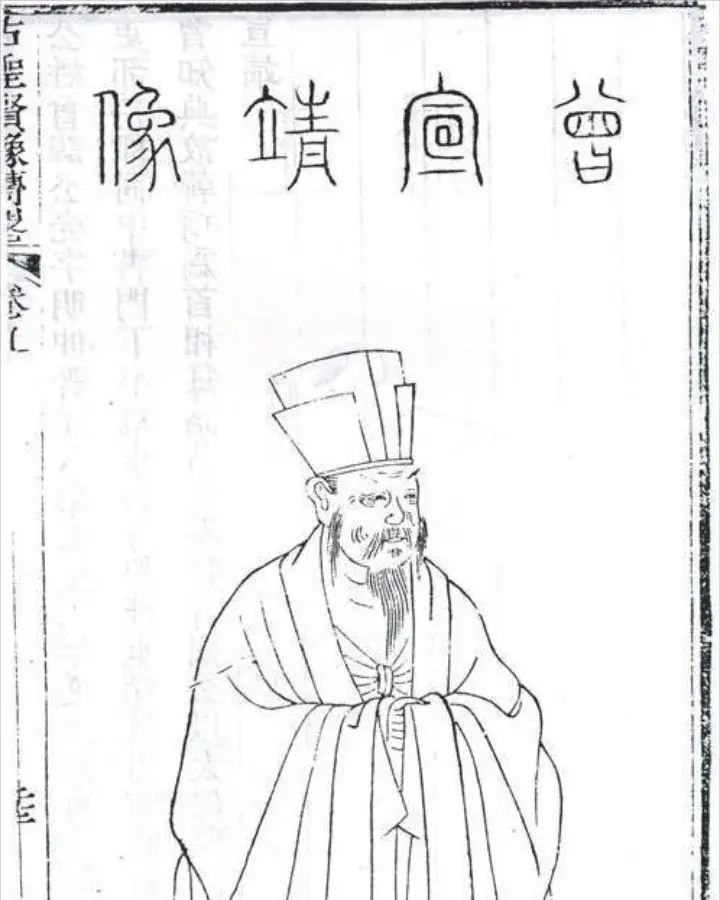
999 CE–1078 CE
曾公亮
Zeng Gongliang (曾公亮, 999–1078), courtesy name Mingzhong, was a native of Jinjiang in Quanzhou and an eminent chancellor, statesman, and military scholar serving three imperial reigns under Emperors Renzong, Yingzong, and Shenzong of the Northern Song Dynasty. Born into a distinguished scholarly lineage, he demonstrated steadfast uprightness and profound gravity from youth, refusing entry into civil service via hereditary…
Zeng Gongliang (曾公亮, 999–1078), courtesy name Mingzhong, was a native of Jinjiang in Quanzhou and an eminent chancellor, statesman, and military scholar serving three imperial reigns under Emperors Renzong, Yingzong, and Shenzong of the Northern Song Dynasty. Born into a distinguished scholarly lineage, he demonstrated steadfast uprightness and profound gravity from youth, refusing entry into civil service via hereditary privilege. In 1024, he attained the fifth rank in the highest tier of the imperial examinations, subsequently serving as Magistrate of Huiji where he constructed stone sluice gates at Mirror Lake to divert floods into the Cao'e River, protecting thousands of acres of farmland. During his court career, Zeng co-directed the compilation of the monumental official military compendium Complete Essentials for the Military Classics (Wujing Zongyao) alongside Ding Du, providing the world's earliest documented chemical formulas for gunpowder weapons and recording early magnetic compass techniques such as the thermoremanent "south-pointing fish." He also contributed to the compilation of the New Book of Tang. As Prefect of Zhengzhou, his vigorous governance eradicated local brigandage to such an extent that households left their doors unlocked at night, earning him the popular epithet "Zeng Open-Door." Elevated to Assistant Executive and Joint Manager of Affairs with the Secretariat-Chancellery during the Jiayou era, Zeng collaborated closely with Prime Chancellor Han Qi to settle the succession and enthrone Emperor Yingzong. Upon Emperor Shenzong's accession, he became Prime Chancellor, Left Vice Director of the Department of State Affairs, and Duke of Lu. Renowned for mastering state statutes and ceremonial codes, he strongly recommended Wang Anshi to spearhead the Xining Reforms while mediating fierce factional contentions at court. He retired as Minister of Works and Commissioner of Heyang, passing away in 1078 at age eighty. Posthumously granted Grand Preceptor and Director of the Secretariat, he received sacrifice in Emperor Yingzong's ancestral temple with a stele personally inscribed by Emperor Shenzong.
Born into an illustrious bureaucratic family, displaying profound erudition and composure.
Refused appointment as Reviewing Officer of the Court of Judicial Review, committing to the examination path.
Placed fifth in the metropolitan examinations and appointed Magistrate of Huiji.
Constructed drainage sluices channeling floodwaters into the Cao'e River, ending seasonal inundations.
Submitted statecraft treatises and received exemption from examinations, appointed Editor of Jixian Hall.
Completed the forty-volume Wujing Zongyao alongside Ding Du, with an imperial preface by Emperor Renzong.
Appointed Hanlin Academician and Administrator of the Office of the Three Ranks, curbing patronage and bribery.
Served as Prefect of Zhengzhou, establishing public order such that residents left doors unbolted.
Recalled to administer Kaifeng and elevated to Assistant Executive in the State Council.
Elevated to Joint Manager of Affairs with the Secretariat-Chancellery, collaborating with Han Qi to designate Crown Prince Zhao Shu.
Composed imperial eulogies for Renzong and compelled recalcitrant Liao envoys to observe banquet protocol.
Ennobled as Duke of Lu and named Left Vice Director of Department of State Affairs under Emperor Shenzong.
Recommended Wang Anshi as Assistant Executive, facilitating the launch of the Xining Reforms.
Retired from chancellorship due to advanced age, appointed Minister of Works and Military Governor of Heyang.
Died in Bianjing at age eighty, granted temple sacrifice alongside Emperor Yingzong.
Zeng Gongliang was born on March 15, 999, in Jinjiang County, Quanzhou, into a distinguished bureaucratic family originating from Gushi in Henan during the late Tang period. His grandfather Zeng Mu had served as Magistrate of Dehua, while his father Zeng Hui attained the rank of Director in the Ministry of Justice and Drafter in Jixian Hall. As the second son, Zeng Gongliang was educated in classical learning and political philosophy, developing an imposing bearing characterized by meticulous discretion and civic dedication.
In 1022, upon the accession of Emperor Renzong, the twenty-four-year-old Zeng travelled to the capital Bianjing to convey congratulations on behalf of his father. Acknowledging Zeng Hui's imperial service, the court offered Zeng Gongliang appointment as Reviewing Officer of the Court of Judicial Review through hereditary privilege. Determined to enter officialdom purely on scholarly merit through the standard examination system, he declined the imperial favor, returning south to immerse himself in classical and historical studies.
In March 1024, Zeng competed in the metropolitan and palace examinations, attaining the distinguished fifth place in the highest tier. In August, he was commissioned as Ceremony Officer of the Court of Imperial Sacrifices and Staff Supervisor, initially designated to govern Lin'an before being reassigned as Magistrate of Huiji in modern Shaoxing.
Huiji County encompassed a sprawling lacustrine landscape dominated by Mirror Lake. Although surrounded by fertile soils, the region suffered recurrent seasonal inundations caused by spring deluges pouring down from surrounding ranges, submerging thousands of acres of crops. Arriving at his post, Zeng personally surveyed topographical contours, waterways, and sea tides, formulating an integrated water control program combining discharge and storage.
He mobilized regional labor to build stone floodgates at crucial intersections, excavating bypass channels that diverted excess water into the Cao'e River during torrential rains while securing reservoir reserves for drought irrigation. This engineering intervention eliminated catastrophic flood risks, ensuring bumper harvests for local communities.
Shortly afterward, when his father acquired agricultural parcels within Huiji jurisdiction in violation of administrative avoidance regulations, Zeng was held accountable and demoted to supervise wine revenues in Huzhou. He accepted the transfer with stoic diligence. By 1031, his efficient tax administration yielded record revenue surpluses, prompting Emperor Renzong to promote him to Assistant Editorial Director in the Palace Library and subsequently Palace Library Secretary. Following his father's death in 1033, he observed the three-year mourning period before receiving appointment to manage the capital commercial tax office.
In 1037, Zeng advanced to Court Consultant of Imperial Sacrifices. In 1039, as the Western Xia ruler Li Yuanhao declared imperial sovereignty and launched border incursions, Zeng submitted a comprehensive memorial analyzing frontier defense strategy, earning praise from Emperor Renzong and appointment as Lecturer in the National University. In 1040, he transferred to Vice Director of Agricultural Colonies.
Bypassing standard competitive examinations for palace academies, Zeng directly presented volumes of his original policy dissertations to the throne. Impressed by his erudition, Emperor Renzong exempted him from formal testing in 1041, appointing him Editor of Jixian Hall, Imperial Lecturer in Tianzhang Pavilion, and Compiler of the Imperial Diary. In 1044, he frequently lectured on the Classic of Poetry before the throne and offered counsel regarding educational restructuring and court protocols.
Prompted by military deficiencies exposed during the Song-Xia conflict, Emperor Renzong commissioned Zeng Gongliang and Hanlin Academician Ding Du to direct the compilation of Wujing Zongyao (Complete Essentials for the Military Classics). Over several years, Zeng examined historical treatises, strategic formations, artillery mechanics, and defensive architecture, producing an authoritative forty-volume military manual.
The manual surveyed institutional recruitment, troop deployment, logistical movement, offensive and defensive encampments, and naval craft. Most notably, volumes eleven and twelve provided the earliest known written formulas for military gunpowder mixtures and described thermoremanent artificial magnetization techniques for iron needles to produce floating south-pointing compasses. Emperor Renzong authored the preface and promulgated the work throughout the empire. Concurrently, Zeng contributed to the compilation of the New Book of Tang and the Qingli Code, receiving the imperial gift of purple robes and golden fish pouches.
In 1050, Zeng was appointed Hanlin Academician and Administrator of the Office of the Three Ranks, being created Open-Nation Marquis of Luling. The office oversaw assignments of subordinate military officials, where corrupt clerks demanded substantial bribes and aristocrats exercised unbridled nepotism. Zeng collected and published administrative regulations into transparent codes, enforcing merit-based postings and eliminating clerical extortion.
In August 1050, he served as imperial envoy to the Liao Dynasty to celebrate the Empress Dowager's birthday, conducting delicate border negotiations with dignified firmness. In 1054, he was assigned as Prefect of Zhengzhou, an essential central transport hub plagued by organized brigandage. Zeng reorganized local mutual-responsibility squads and pursued criminal bands aggressively, driving banditry entirely out of the prefecture.
Under his administration, public security flourished to the extent that residents left external gates unlatched at night, prompting locals to celebrate him as "Zeng Open-Door." On one occasion, an imperial inspector reported missing valuables while lodged in Zhengzhou, accusing local administrators of harboring thieves. Zeng replied that no bandits existed within his borders and advised searching the inspector's own retinue, where the stolen items were promptly discovered. When veteran chancellor Wen Yanbo lost a silver goblet at a banquet, Zeng uncovered the culprit among domestic servants before the feast concluded, earning admiration for judicial discernment.
In 1055, Zeng returned to administer Kaifeng and was soon elevated to Assistant Executive, entering the executive council. Renowned for mastering bureaucratic jurisprudence, he provided authoritative precedents to Prime Chancellor Han Qi on complex constitutional affairs.
During his tenure, peasants in Mizhou were caught mining silver on public land, and judicial officers sentenced them to execution for armed robbery. Zeng argued forcefully that mining prohibited government minerals fundamentally differed from violently plundering private homes, convincing the court to commute the death penalty and sparing hundreds of lives. In frontier governance, when Liao subjects crossed the border river to catch fish and trade contraband salt, Zeng appointed the resolute commander Zhao Zi to fortify crossings, effectively terminating cross-border violations.
As Emperor Renzong aged without male heirs, political uncertainty threatened dynastic peace. In 1061, Zeng became Joint Manager of Affairs with the Secretariat-Chancellery alongside Han Qi. Together, they pressed the emperor to resolve the succession, successfully securing the adoption and elevation of Zhao Shu as Crown Prince. Upon Renzong's death in 1063, Zeng composed the funeral eulogy, contained military factions, and installed Emperor Yingzong.
When illness prevented the newly enthroned Yingzong from receiving Liao envoys in person, the envoys petulantly boycotted an imperial banquet hosted by Zeng. Zeng openly rebuked them for disrespecting imperial commands and exploiting the sovereign's illness, compelling the foreign emissaries to assume their seats with deference.
Following Emperor Yingzong's death in 1067, Emperor Shenzong ascended the throne and appointed Zeng Prime Minister, Left Vice Director of the Department of State Affairs, and Duke of Lu. Recognizing the necessity of institutional renovation to overcome structural stagnation, Zeng championed the selection of Wang Anshi.
In 1069, upon Zeng's recommendation, Wang Anshi was named Assistant Executive to launch the Xining Reforms. Zeng supported establishing the Finance Planning Commission, assigning his son Zeng Xiaokuan to assist in formulating reform policies. Amidst intense opposition from conservative luminaries like Sima Guang and Fu Bi, Zeng shielded the reform agenda, facilitating the passage of the Balanced Delivery and Green Sprouts measures.
While endorsing the broad reform trajectory, Zeng maintained independent judgment on administrative details, disputing policy excesses regarding urban lending, granary reserves, and bureaucratic appointments. When Su Shi questioned his accommodation of the new policies, Zeng observed that the emperor and Wang Anshi acted in singular accord by historical necessity. Zeng avoided factional exclusiveness, concurrently sponsoring Sima Guang, Lv Huiqing, and young talents across administrative divides.
In September 1070, exceeding seventy years of age, Zeng repeatedly requested retirement as factional polarization deepened. Reluctantly acceding, Emperor Shenzong elevated him to Minister of Works and Minister of State, sending him to serve as Military Governor of Heyang with exceptional honors.
Returning to Bianjing in 1071, Zeng was granted an imperial residence adjacent to Taiyi Palace, where Emperor Shenzong frequently dispatched emissaries to seek his counsel on state defense. In March 1078, Zeng passed away at his Bianjing mansion at age eighty. Deeply grieved, Emperor Shenzong suspended court audiences for three days, attended the wake in person, and posthumously conferred the offices of Grand Preceptor and Director of the Secretariat with the posthumous title Xuanjing, granting him ancestral temple sacrifice beside Emperor Yingzong.
In 1085, Zeng was buried in Xinzheng, Henan, beneath a spirit-way stele inscribed by Emperor Shenzong honoring him as "Second Meritorious Counselor in Dynastic Succession Across Two Reigns." His lineage achieved unparalleled bureaucratic prominence: his son Zeng Xiaokuan became Signatory Official of the Bureau of Military Affairs, and subsequent southern descendants Zeng Huai and Zeng Conglong reached chancellorships, creating the famed "Four Chancellors of the Zeng Clan" that dominated Song statecraft.
Zeng Gongliang established foundational contributions to Chinese military science by compiling the Wujing Zongyao. Commissioned amid urgent frontier conflicts with Western Xia, Zeng directed extensive archival research to synthesize operational strategies, tactical doctrines, defensive architecture, and military technology developed over preceding centuries.
The compendium is renowned for recording the earliest surviving chemical formulas for explosive gunpowder weapons in global history, chronicling the transition of incendiary chemistry into battlefield ordnance. Furthermore, it documented thermoremanent magnetization for producing floating south-pointing compasses and provided detailed structural schematics for siege catapults and crossbow artillery, establishing an enduring technical handbook for imperial forces.
Serving as Magistrate of Huiji, Zeng implemented innovative water conservancy systems around Mirror Lake. Rather than relying on simple perimeter dykes, he designed an integrated network of stone sluice gates and diversion canals connecting the lake drainage with the Cao'e River.
This infrastructure regulated seasonal torrents by discharging excess runoff into coastal rivers while storing essential water reserves for agricultural irrigation during dry seasons. The sluice system alleviated centuries of chronic waterlogging across the Shaoxing basin, establishing an enduring hydraulic model across southern agricultural regions.
During his administration of the Office of the Three Ranks, Zeng tackled systemic corruption in military postings by codifying transparent regulatory statutes. By enforcing rigid qualification frameworks and public rosters, he eradicated clerical extortion and aristocratic patronage networks.
In Zhengzhou, his vigorous enforcement of mutual-guarantee policing suppressed entrenched banditry, enabling merchants to travel safely and citizens to sleep with open gates. His deductive resolution of domestic theft during diplomatic banquets with Wen Yanbo showcased sophisticated investigative discernment.
Possessing profound mastery over statutory law, Zeng consistently championed humane jurisprudence. Intervening in the capital trial of Mizhou peasants who mined silver, he demonstrated the legal distinction between illicit extraction of state minerals and predatory theft against households, securing commutations that spared hundreds of condemned commoners.
In foreign relations, he directed frontier deployment against cross-border incursions along the northern boundary river without provoking wider conflict. During dynastic succession uncertainties under Emperor Renzong, he partnered with Han Qi to orchestrate the peaceful accession of Emperor Yingzong, preserving imperial continuity.
Recognizing the imperial imperative for fiscal and military regeneration, Zeng played an indispensable role by elevating Wang Anshi to supreme office and endorsing the establishment of the Finance Planning Commission. He facilitated the early enactment of crucial agricultural and commercial measures.
Throughout the reform storm, Zeng maintained an essential stabilizing equilibrium. While providing decisive political backing to reform initiatives, he candidly challenged procedural overreach concerning urban lending and bureaucratic staffing, moderating policy excesses while maintaining overarching political stability.
FIGURES ASSOCIATED WITH THIS DYNASTY