Birth | Born at Ye into the Fu family of Lueyang
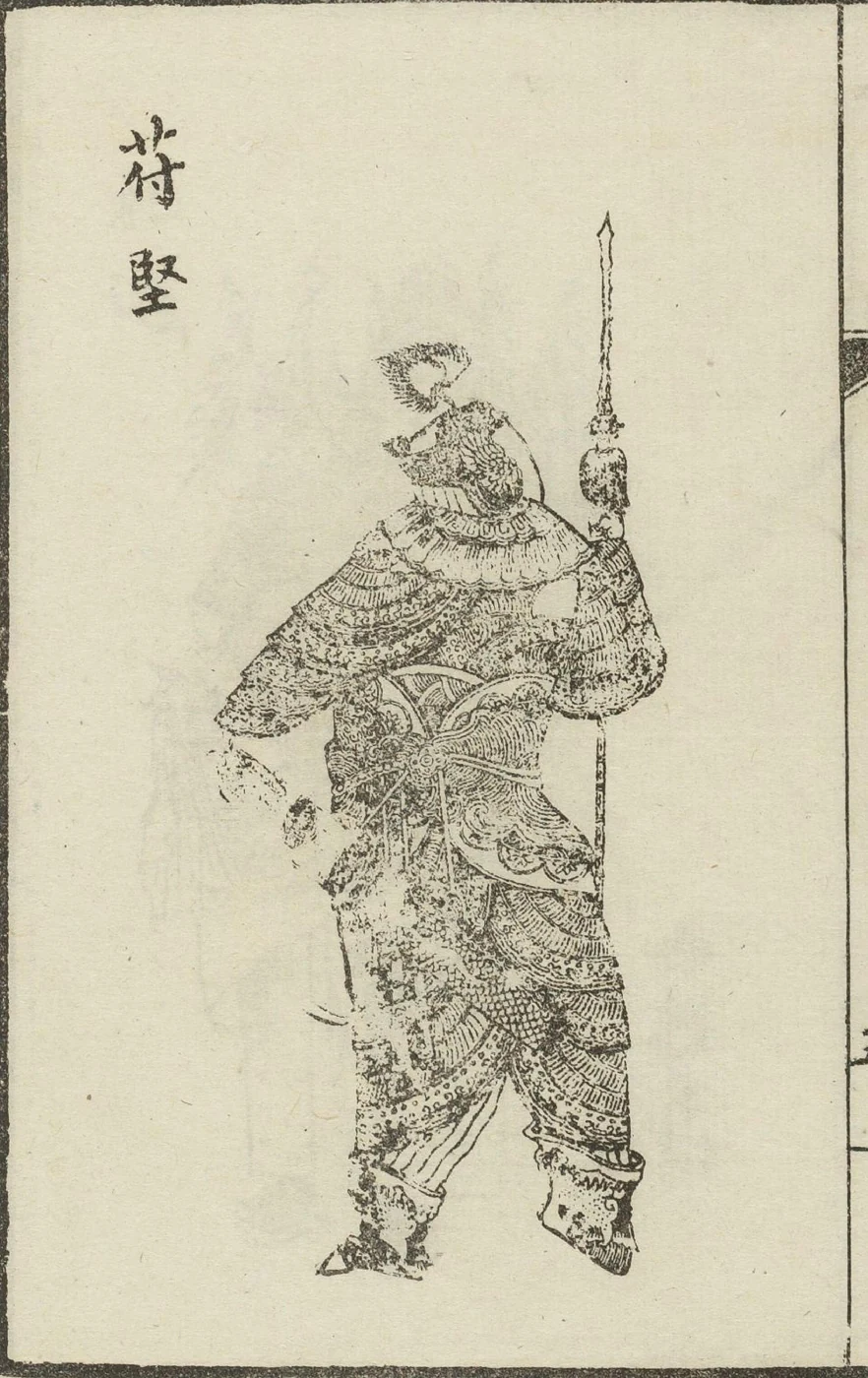
Ruler of Former Qintitled Heavenly King of Great Qin
Fu Jian
苻坚
Fu Jian (338–385), courtesy name Yonggu, was a Di ruler of Former Qin from Linwei in Lueyang Commandery and was born at Ye. In 357 (Shouguang 3 of Former Qin) he overthrew Fu Sheng and took the title Heavenly King of Great Qin. He then appointed Wang Meng and others, encouraged farming, reorganized administration, and conquered Former Yan, Former Liang, and Dai, establishing a north–south standoff with Eastern Jin. His great…
Former Qin
PROFILE
Fu Jian (338–385), courtesy name Yonggu, was a Di ruler of Former Qin from Linwei in Lueyang Commandery and was born at Ye. In 357 (Shouguang 3 of Former Qin) he overthrew Fu Sheng and took the title Heavenly King of Great Qin. He then appointed Wang Meng and others, encouraged farming, reorganized administration, and conquered Former Yan, Former Liang, and Dai, establishing a north–south standoff with Eastern Jin. His great campaign against Jin failed at the Battle of the Fei River in 383 (Jianyuan 19 of Former Qin). Independent powers rapidly emerged across territory formerly controlled by Qin, and Fu Jian was eventually captured and killed by forces of Yao Chang.
- Other names
- Emperor Xuanzhao of Qin; Fujia Shen
- Courtesy name
- Yonggu; also called Wenyu
- Period
- Former Qin
- Polity
- Former Qin
- Role
- Ruler of Former Qin, titled Heavenly King of Great Qin
- People
- Di
- Ancestral home
- Linwei County, Lueyang Commandery (around present-day Qin'an, Gansu)
- Birth
- 338; exact month and day unverified
- Birthplace
- Ye (present-day Linzhang, Hebei)
- Death
- October 16, 385 (Jianyuan 21 of Former Qin)
- Place of death
- Qi County, Xinping Commandery
- Reign
- 357 (Shouguang 3 of Former Qin) – 385 (Jianyuan 21 of Former Qin)
- Era names
- Yongxing; Ganlu; Jianyuan
- Temple name
- Shizu
- Posthumous name
- Emperor Xuanzhao
- Title
- Heavenly King of Great Qin
- Predecessor
- Fu Sheng
- Successor
- Fu Pi
- Principal achievements
- Appointed Wang Meng to strengthen Former Qin; conquered Former Yan, Former Liang, and Dai and united northern China; promoted farming, schools, and administrative measures; lost at the Battle of the Fei River, after which the realm fragmented
LIFE TIMELINE
Inheritance | Succeeded his father Fu Xiong as Prince of Donghai
Accession | Overthrew Fu Sheng with Fu Fa and others and took the title Heavenly King of Great Qin
Conquest of Former Yan | Wang Meng's army took Ye and Former Yan fell
Northern unification | Former Qin conquered Former Liang and Dai, incorporating the main northern rival states
Defeat at Fei River | The campaign against Eastern Jin failed and Qin control rapidly weakened
Death | Captured by Later Qin forces under Yao Chang and killed at Xinping
BIOGRAPHY
Biography
Accession and new policies
Fu Jian was the son of Fu Xiong, grandson of Fu Hong, and nephew of Fu Jian, the founding ruler whose given name is written with a different Chinese character. After the founder's death, Fu Sheng succeeded, and the court became unstable. In 357 (Shouguang 3 of Former Qin), Fu Jian joined Fu Fa and others in a coup that deposed and killed Fu Sheng. He then ruled as Heavenly King. He appointed Wang Meng, Quan Yi, and others, restrained abuses by powerful kinsmen and families, revised official appointments, established schools, and encouraged agriculture. Wang Meng's severe enforcement strengthened central authority while angering some Di nobles.
Northern expansion
Former Qin destroyed Former Yan in 370 (Jianyuan 6 of Former Qin), taking control of Hebei, and subsequently acquired Chouchi and territories previously held by Eastern Jin in Liang and Yi provinces. Former Liang and Dai fell in 376 (Jianyuan 12 of Former Qin), giving Fu Jian effective control over most of northern China. Expansion brought diverse peoples and former ruling groups within one state. Fu Jian often employed and settled surrendered nobles, but their loyalty and the regime's cohesion remained uncertain.
Fei River and death
After Wang Meng's death, Fu Jian continued planning an offensive against Eastern Jin. In 383 (Jianyuan 19 of Former Qin), Qin forces were defeated near the Fei River by Jin troops led by Xie Xuan and others. Murong Chui, Yao Chang, and other leaders then rose in rebellion, and Former Qin lost extensive territory. Fu Jian left Chang'an and was captured at Mount Wujian in 385 (Jianyuan 21 of Former Qin); he died at Xinping. His son Fu Pi continued as Former Qin ruler but could not restore its earlier unity.
The Prophecy, the Noble Countenance and the Grant of the Dragon Courser
It is said of Fu Jian that he had from birth the countenance of a noble, and tradition has it that behind him there was a prophecy reading that the one of the Fu would rule Xianyang, the characters Fu and Jian being thus spelled out; and this prophecy became the forecast of his life and is often cited by later ages in discussing his rise and fall. In his youth he was noticed by a discerning man: when Fu Jian was young he met Xu Tong, who made sport of him but did not bind him, and Fu Jian answered that the commandant of the capital binds only the guilty and not children at play; and Xu Tong told those who accompanied him that this child had the countenance of a hegemon. Meeting again later, Xu Tong told him that his face was out of the common and that he would certainly be greatly honoured one day, and Fu Jian answered gravely that if such a day truly came he would never forget his kindness. There was afterwards a divine charge in a dream of his uncle Fu Jian the elder: when Fu Jian the elder entered the passes he dreamed at night that a god sent an envoy in vermilion robes and scarlet cap who told him to make his nephew Fu Jian commander of the dragon courser; and the next day he set up an altar of investiture for Fu Jian at Quwo county and conferred on him the title of general of the dragon courser, weeping and telling him that his grandfather had founded his fortune from that very post and that the god had now transmitted the title to him, so that he must exert himself greatly. Fu Jian was deeply moved and himself waved his sword and struck his horse, and the soldiers under him, seeing it, all submitted to him. With the prophecy, the noble countenance and the divine charge thus laid one upon another, his early years already held a veiled sign of a mandate.
The Change at the Cloud Dragon Gate and the Beginning of His Reign
Fu Jian's elevation came of the deposition of the tyrant Fu Sheng. Fu Sheng was a tyrant rare in the world, who treated killing as child's play: whenever he received his ministers he had attendants fit arrows to the string and draw swords from their sheaths and set iron pincers and steel saws before him, and whoever displeased his eye was killed at once; if a minister remonstrated his words were taken for slander and he was killed, and if a man flattered it was taken for fawning and he too was killed, so that everyone in the court feared for himself. Fu Sheng, suspecting the brothers Fu Jian, once said in his cups that they were not to be trusted either and that he would do away with them the next day; and a waiting woman, when Fu Sheng was asleep, secretly reported it to Fu Jian, so that the brothers had no choice but to act at once, gathering their guards and rushing into Fu Sheng's palace in two columns, dragging him out while drunk into another room and confining him and deposing him as Prince of Yue, an event called the change at the Cloud Dragon Gate. Having deposed Fu Sheng, Fu Jian offered the throne to his elder half-brother Fu Fa, but Fu Fa, being born of a concubine, dared not accept the title; and Fu Jian came to the throne at the urging of the ministers, lowering his own style from emperor to Heavenly King, calling himself the Great Qin Heavenly King, changing the era name to Yongxing and proclaiming a general amnesty, afterwards sending envoys to kill Fu Sheng. When Fu Jian came to the throne, the society of the Former Qin was in confusion: the region of the passes was a place where many peoples lived mingled, their feuds and killings following one upon another; the Former Qin had been founded amid war and its laws were incomplete; and Fu Sheng's cruel rule had come with floods and droughts, so that the thousand li of the Qin plain were overrun by strongmen and the people could not endure it. To depose a tyrant amid disorder and so come to the throne was the source from which his early government sprang.
The Promotion of Learning
The culture and education of the Former Qin flourished through Fu Jian's advocacy. Fu Jian personally chose students of good character and learning and had them take office in the organs of government at every level; and he ordered that officials with stipends of more than a hundred piculs must master one classic and excel in one art, and that those who could not should all be dismissed to the ranks of the common people. By his strong advocacy, joined to the selection of officials, there soon appeared in the Former Qin the fashion of encouraging industry and emulation in learning and of nourishing integrity and the sense of shame, which not only trained a reserve of officials and raised the cultural quality of the ruling class but also promoted cultural exchange among the peoples. After Fu Jian came to the throne the Former Qin attended to the development of Confucian learning: he sacrificed to Confucius and the sages of China and built academies widely in the realm, so that the schools gradually flourished; and whenever the Former Qin destroyed a state it had the members of that state's ruling house enter the academy to study the Confucian classics of the Chinese, the entering of the heir of the king of Dai being especially noted by later ages. The Zizhi tongjian records further that students were carefully selected and the sons of the heir apparent and of the dukes, marquises and the hundred officials all attended; that the officers of the four prohibitions, the two guards and the four armies within and without, who had long stood guard, were all ordered to attend; that one master of the classics was provided for every twenty men to teach the reading and the pauses of the text; and that a school officer was established in the inner palace to teach the side courts, and eunuchs and slave women of intelligence were chosen to receive instruction in the classics from the academicians. Fu Jian ordered the heir apparent and the sons of the dukes, marquises and hundred officials all to attend and study, and all the long-standing guards of the four prohibitions, the two guards and the four armies within and without of the court to attend; and schools were set in the inner palace to teach the consorts and concubines. In the inner palace also there was the affair of the Lady Song: she transmitted her father's learning, and though she met a disorderly age she forgot none of what her father had taught her, and being more than eighty years old her eyes were not dim nor her ears deaf, and so a lecture hall was set up in the house of the old lady Song, and a hundred and twenty students were made to listen to her teaching through a red gauze curtain. Fu Jian often took part in the examinations of the academy, examining the students' merits and defects, and discussed Han learning with the great scholars of the academy.
The Reply of Cui Ying and the Exchange Between Ruler and Subject
Fu Jian's regard for learning appears also in his exchange with the nine-year-old boy Cui Ying. Cui Ying had been loved by Fu Jian from childhood and had studied within the palace of the Former Qin from his earliest years. Once when Fu Jian was lying on his side in the hall, the various scholars all came forward quickly while the nine-year-old Cui Ying walked slowly; and Fu Jian, wondering, asked him why, and Cui Ying said that the emperor was to him as a kind father and not a tyrant like Jie of Xia or Zhou of Shang, so why should he fear. Fu Jian asked what book he had lately read, and Cui Ying answered that he had lately read the Classic of Filial Piety. Fu Jian asked what principle it taught, and Cui Ying said that a man in high position should not be full of himself and overbearing. Fu Jian rose for him and asked what other principle there was, and Cui Ying said that from the chapter on the Son of Heaven to that on the common people it taught that the Son of Heaven loves the common people and the common people revere the Son of Heaven. Fu Jian said that he should rest content until seventeen, when he would certainly employ him as a grand master. Cui Ying said that the sun and moon might be seen again each day, but that the emperor's position was honoured and he feared he might not see the emperor again; and that if a man could be employed he should be employed, and why wait for a later time? Fu Jian said that he was too young now, and that when he was seventeen he would certainly send for him. When Cui Ying grew up Fu Jian did indeed make him grand master of remonstrance.
The Coming of Murong Chui and the Design upon the Former Yan
Fu Jian's design upon the Former Yan was bound up with Murong Chui's coming over. At first, the northern expeditionary army of the Former Yan, being excluded by Murong Ping, fled and surrendered to the Former Qin; and Fu Jian had already formed a plan to annex the Former Yan two years earlier when he heard of the death of Murong Ke, and had specially sent envoys to the Former Yan to sound out its state, yet did not dare send out an army because of Murong Chui's great reputation. When Murong Chui came over, Fu Jian, since Murong Chui was of surpassing ability and had come to him in extremity, treated him with more than ordinary rank, and so obtained the means whereby to destroy Yan. Wang Meng, however, urged Fu Jian strongly to do away with Murong Chui, and Fu Jian would not. After the Former Yan was destroyed Fu Jian took the sons and younger brothers of the Murong house, recorded their abilities and gave them office, so that they were spread through his court and realm, and all his old ministers doubted it. This is one instance of Fu Jian's employment of men without killing those who came over; and in it the later disorder of the Murong house had its root.
The Order of Pacifying Yan, Settling Shu, Seizing Dai and Swallowing Liang
Of Fu Jian's military achievements the history says that he pacified Yan, settled Shu, seized Dai and swallowed Liang, so that he held two-thirds of the empire and seven of the nine provinces; and the order may be traced by date: from the sixth year of Jianyuan, that is 370, onward Fu Jian destroyed one after another the states of the north and the Former Yan perished; afterwards the Former Liang became a vassal; and in 383, just before the Fei River, Lti Guang was sent against the western regions and the states there all submitted. In the interval the pacification of Yizhou came after the revolt of the Shu man Zhang Yu and others, and the destruction of Dai after the defeat of Shiyijian. After destroying a state he mostly held it by virtue: having destroyed the Former Yan he gave office to its sons and younger brothers; having pacified Chouchi he brought the Former Liang's Zhang Tianxi to fear and make himself a vassal; and having destroyed Dai he had its prince's son enter the academy. The history says also that the distant wilds admired his righteousness and the hidden and perilous places set their hearts on him, that men sang when his horses halted and made odes of their nests; and that though the five barbarians were at their height none could compare with him; and all this was the effect of holding by virtue the states he had destroyed.
The Rebellion of Fu Luo
Among the internal disorders of Fu Jian's reign the rebellion of Fu Luo was the most notable. After winning the great merit of destroying the state of Dai, Fu Luo, because he was not enfeoffed by Fu Jian as a chief minister of state but was still kept as a frontier governor, felt deeply dissatisfied and further suspected that his posting to Xiangyang was in truth a plot of Fu Jian's to kill him; and being set at odds by Ping Gui, he resolved to rebel. Fu Luo sent envoys to Koguryo, Silla and other states hoping they would help him, but all clearly declared their loyalty to Fu Jian and refused to join Fu Luo in rebellion, and only Fu Zhong sent troops to support him; and though only Fu Zhong supported him, Fu Luo still led seventy thousand troops from Helong straight toward Chang'an. The people of the region of the passes, fearing war, were restless and bandits arose; and Fu Jian tried to persuade him to submit, offering to enfeoff him in perpetuity with Youzhou and asking him to cease his troops, but Fu Luo refused, declaring that he would return to Xianyang as king and carry on the work of the high ancestor, and adding that if Fu Jian waited for his carriage at Tongguan he would make Fu Jian his high duke and restore him the title of Prince of Donghai. Fu Jian in great anger sent out troops against him and fought the allied forces of Fu Zhong and Fu Luo, a hundred thousand strong, at Zhongshan, taking Fu Luo alive and beheading Fu Zhong, and the disorder was settled.
The Policy of Settling the Di in the Frontier Towns and Its Hidden Danger
When Fu Luo's rebellion had been settled, Fu Jian, considering that the region east of the passes was broad in land and numerous in people, decided to detach a hundred and fifty thousand households from the Di who had lived at Sanyuan, Jiuzong, Wudu, Qian and Yong and distribute them among the several frontier towns under the command of members of the imperial clan, like the lords of antiquity. But those moved to live in the frontier towns, because they must part from their families, all wept and wailed, and passers-by who saw it were moved to grief. The consequences of this measure have been judged differently by later ages: some hold that Fu Jian, in distributing the Di of the passes among the frontier towns and moving other peoples in, though it gave the regions of the north a short revival and favoured peaceful exchange among the peoples, brought on hidden and fatal dangers in their train; while others strongly reject the notion of military colonisation, holding that Fu Jian's chief purpose was to consolidate the central power and pacify the minority peoples, and upon what his purpose in fact was no agreement has yet been reached. As for his measures in the old lands of Dai, there is other matter to praise: the Wei shu says that after destroying Dai he established captains and supervisory officers with officials in charge, had the people taught their trades and levied one man in three or two in five, and required the chieftains to come to court once a year and to have their comings and goings restricted, which agrees with the measures of dispersing the tribes later carried out by Tuoba Gui; and scholars hold that the system of dispersing the tribes first carried out by Emperor Daowu in fact derived from the policy of scattering the tribes of Fu Jian, the Heavenly King of the Former Qin.
The Last Words of Wang Meng
Wang Meng died in 375, the eleventh year of Jianyuan, and his words at the point of death are always cited by later ages in discussing Fu Jian's rise and fall. At his death Wang Meng said that the Jin house, though now standing in the remote regions south of the Yangzi, nevertheless carried on the legitimate succession; that the most precious things in the state were now to draw near to men of virtue and to be friendly with neighbouring states; that after his death he hoped there would be no design upon the Eastern Jin; and that the Xianbei and the Qiang were their enemies and would in the end become a calamity, and should be removed for the good of the altars of state. His words had two essentials: that Jin must not be attacked, and that the Xianbei and Qiang must be removed. After unifying the north Fu Jian still did not follow Wang Meng's words and did not set himself to solve the problem of the peoples within the state, and in 382, the eighteenth year of Jianyuan, he even ordered troops south. Hence a later critic has said that Fu Jian's defeat lay in attacking Jin with an emptied state, and that the brewing of disaster lay in moving the tribes far away while keeping the Xianbei near, so that Murong Chui merely rode the last of his spent strength to raise a show of power.
The Deliberation in the Taiji Hall and the Decision to Attack Jin
The decision to attack Jin appears in the deliberation in the Taiji Hall in the eighteenth year of Jianyuan. Fu Jian called the ministers together in the Taiji Hall and said that since he inherited the great work nearly thirty years had passed; that the four quarters were roughly settled and only the one corner of the southeast had not received the sovereign's transforming influence; that he had roughly reckoned his forces at nine hundred and seventy thousand, and that he meant to lead the great army east in person, and what did they think. To this proposal and question the master of the palace library and the others all objected, and the ministers had their several opinions without agreement; and Fu Jian, seeing it, said that to build a house beside the road and ask advice would leave one with nothing done because of hearing too many differing views, and that he had his own decision. When the ministers had withdrawn Fu Jian kept his younger brother Fu Rong and others; and Fu Rong and the rest all opposed attacking Jin and memorialised repeatedly against it, yet Fu Jian would not give up his plan of sending troops east, so that he had in fact made up his mind. On the other hand Murong Chui declared his support for attacking the Eastern Jin, and Fu Jian was much pleased to hear it and told Murong Chui that in the world there was only one man who could settle the empire with him, giving him five hundred bolts of silk. That he called the common counsel of his ministers building a house beside the road, and found in Murong Chui alone a man with whom to settle the empire, shows at once the bias of his resolve and his failure in listening to advice.
His Rebuilding After the Defeat at the Fei River
When Fu Jian fled wounded to the north of the Huai he was very hungry, and a commoner, seeing him come, at once brought him food and a leg of pork; and Fu Jian afterwards rewarded him, but he refused, saying that the emperor had wearied of ease and happiness and brought distress upon himself; that he was the emperor's subject and the emperor was his father, and where in the world was there a son who served his father for reward? and he left without even looking at the gifts. Fu Jian said to his wife Lady Zhang that with what face could he now govern the empire, and wept as he said it. Afterwards Fu Jian, having acknowledged his fault before the ancestral temple, proclaimed a general amnesty, ordered weapons to be forged and farming supervised, comforted the aged and the orphaned and the families of the fallen, and ordered that the families of those who had died at the Fei River should never in their generations pay taxes to the court; and Fu Jian was not cast down by the great defeat at the Fei but strove the harder, seeking to rebuild the order of the state.
The Rebellion of the Murong House and the Slaughter of the Xianbei
After the Fei River the designs of the Murong house gradually appeared. Murong Wei and the others were never idle, secretly gathering their clansmen and preparing to lay an ambush to kill Fu Jian; and the matter leaked, at which Fu Jian, greatly shocked, at once investigated, and the plot at last being established, Fu Jian then put to death Murong Wei, father and son, with their clan, and the Xianbei in the city, old and young, women too, were all killed. From that time those who destroyed a state and would not have the heart to order the slaughter of the fallen house have often been warned with Fu Jian as the first example of a soft benevolence that left few of the fallen royal houses of later ages alive. To take the two words soft benevolence as one judgement of Fu Jian's whole treatment of men, the disorders of Murong Chong and Yao Chang afterwards reaped its harvest in arms.
The Prohibition on Merchants Becoming Ministers and the Order of the Capital
In his government Fu Jian was especially firm in restraining the abuse of titles. In the sixth year of Jianyuan Fu Jian ordered each duchy to appoint its own commandant, grand minister of agriculture and other officers, but men then vied in drawing the wealthy merchants Zhao Duo, Ding Fei and others into the posts of the two chief ministers, since their carriages and dress were as splendid as those of princes and marquises; and Fu Jian therefore ordered that whoever drew a wealthy merchant into the chief ministries should have his rank reduced to marquis, and further ordered that those without rank or office should not ride in carriages within a hundred li of the capital, and that artisans, merchants, slaves and women should not wear gold, silver or embroidery, on pain of death. Wang Meng, knowing well that these merchants had no capacity for the chief ministries, asked Fu Jian to intervene, and Fu Jian at once issued an edict saying that he had meant the princes and dukes to select and promote men of talent among the scholars, and had not thought it would come to such confusion; that the officials concerned should investigate, and that all whose selections were unsuitable should have their rank reduced to marquis; that from that time all officials of the state should be carefully selected by the minister of personnel; that those whose posts were not by court appointment should not ride in carriages, and that within a hundred li of the capital artisans, merchants and men on service should not wear gold, silver or embroidered clothing, and those who violated it should be exposed dead in the street. In consequence the five dukes of Pingyang, Pingchang, Jiujiang, Chenliu and Anle were all reduced to marquises. To restrain by the weight of titles the presumption of wealthy merchants was one point in the institutionalising of the Former Qin.
The System of Palace Guard Officers
The system of palace guard officers in the Former Qin may also be traced. There was one who, as general of the guard and Duke of Pingchang, was used to guard the two palaces, standing second among the ministers of the court, whence it appears that the general of the guard was then the highest officer of the palace troops in the Former Qin; and in Fu Jian's time there were also the offices of the four armies, the five commandants, the brave rovers, the central rampart and the strong crossbows. The four prohibition generals of front, rear, left and right were a distinctive feature of the palace guard system of the Former Qin, and the troops they commanded, being the imperial forest cavalry, belonged to the central army. After the fall of the Former Qin the north entered a long age of disorder and the policy was carried out by no one. A system of palace guards joined to the name of the central army was one side of its military organisation.
The Pacification of the Frontier Peoples
Toward the peoples of the frontier Fu Jian preferred conciliation to slaughter. In 376 someone proposed taking the occasion to destroy the minority peoples west of Liangzhou, but Fu Jian refused, saying that they lived mingled, tribe with tribe, and were not unified, so that they could not be a great danger to the central state; that they should not be cruelly slaughtered; that they should first be pacified and admonished and their land tax collected, and only if they disobeyed orders should they be attacked. He accordingly sent the palace general Zhang Xun to pacify them and had a court general follow with twenty-seven thousand cavalry. In the event Wei Jiefei of his own will attacked the neighbouring tribes and returned after plundering largely; and Fu Jian, greatly angered at his violence, gave him two hundred lashes and put to death his van commander Chu An to apologise to the peoples, at which the peoples of every tribe were much pleased and more than eighty-three thousand tribes came to surrender and attach themselves to the Former Qin and offer tribute. To hold that they should not be cruelly slaughtered and to make pacification and admonition the method, and to apologise to the tribes with lashes and the death of a general, is one instance of Fu Jian's policy toward the peoples.
The Submission of the Qifu and the Victory at Tangyi
Among Fu Jian's frontier achievements were the submission of the Qifu and a victory on the eastern front. Qifu Sifan once faced him with thirty thousand cavalry at Yuanchuan; Wang Tong made a surprise attack on Dujian Mountain, and more than fifty thousand of Qifu Sifan's people surrendered to Wang Tong, and his soldiers, hearing that their wives and children had already surrendered to the Former Qin, broke without fighting; and Qifu Sifan, having nowhere to go, also surrendered to Fu Jian. On the eastern front there was a victory to record too: a commander led twenty thousand cavalry deep into the interior of the Eastern Jin to Tangyi, and although the Jin troops stationed at Tangyi were several times the Qin force, before the majesty of the Former Qin army the Jin troops at once broke and fled, and the prospects of the Former Qin were excellent; but from the other side came bad news, and so the two fronts, east and west, were set against each other.
The Tomb of Fu Jian
The place and shape of Fu Jian's tomb may still be traced. The Jin shu records that Fu Jian, having been killed by Yao Chang at the city of Xinping, was buried there. His tomb is at Jiutian village in Shuikou town, thirty li southwest of Bin county in Shaanxi, the mound being in comparatively good preservation and the burial ground covering some four or five hundred square metres. The mound is of a slanting oblong shape, three metres high and seven wide at the southern end and two metres high and three wide at the northern, twenty-one metres in total length from north to south, and the local people call it the long-horned mound. Before the tomb there still stands a stone bearing the words, the tomb of Fu Jian, king of the Former Qin. The tomb was proclaimed a protected cultural relic in May 1957. That the tomb of a Heavenly King of a generation should have no mound raised nor tree planted, should be slanting and oblong in shape and called long-horned by the local people, sets its later desolation exactly against its former splendour.
The Old Lands of Dai and the Question Whether He Loved Learning
Fu Jian dealt with the destruction of Dai as well by letters. Whenever the Former Qin destroyed a state it had the members of that state's ruling house enter the academy to study the Confucian classics of the Chinese, and the entering of the prince of Dai is especially noted by later ages: when Fu Jian destroyed the state of Dai he had the ancestor of Emperor Xiaowen enter the academy and asked Tuoba Shiyijian whether he loved learning, and the king of Dai answered that if he did not love learning, what would the emperor teach his servant for. Afterwards Yuan Hong, that is Emperor Xiaowen of the Northern Wei, said to the great men of that dynasty that northerners were always saying what use it was for northerners to know books, and that hearing it he was deeply grieved; that he was the Son of Heaven and had no need of the central plain, but wished their sons and grandsons to see much and know much; and that if they dwelt forever in the north and met a ruler who did not love letters, their sons and grandsons would not escape the wall. Fu Jian's words and Emperor Xiaowen's differed in speech but agreed in purport. As for the disposing of the old lands of Dai, there was also the matter of the two Lius: Fu Jian had Liu Kuren and two others come from the Helan tribe to live there, and Liu Kuren served with the utmost loyalty, not changing his principles with the rise and fall of fortune, comforting and receiving the scattered and lost, so that his kindness and good faith were famous; and afterwards Fu Jian promoted Liu Kuren to be general of Guangwu and gave him banners, drums and canopies, with ceremonies equal to those of a prince; and Fu Jian placed Liu Weichen below Liu Kuren, whereupon Liu Weichen in anger killed the governor of Wuyuan of the Former Qin and rebelled, attacking Liu Kuren's western regions; and Liu Kuren in turn attacked and defeated him, pursuing him more than a thousand li northwest of the Yin Mountains, taking his wife and children and gathering all his people; and he also marched west against the Kudi tribe, taking much livestock and moving their tribe to settle at Sangganchuan.
Whipping the River and the Purpose of Attacking Jin
Of Fu Jian's purpose in attacking Jin one saying has come down. The Zizhi tongjian records that when a minister remonstrated that although there was a rift in Jin, it had no great crime and was not easy to take, Fu Jian, who wished only to end the age of disorder, answered that he had a million troops at his command and that if all his soldiers threw their whips into the Yangzi at a single word it would be enough to cut off the flow of the river, so what was there to fear in the natural barrier of the Yangzi? The phrase of whipping the river to cut off its flow has become a famous saying of all ages, and that it came from Fu Jian's mouth was because he held the hosts of the north and, priding himself on the number of his troops, made light of the danger of the Yangzi. Historians, discussing his defeat, say that he set out for war leaping and unable to sleep, so that his defeat was decided before ever he reached the Fei River; and they say also that he was clumsy in using the many, holding that in the battle of the Huai and the Fei his forces, being heavy and undivided, all went by one route with head and tail losing touch and no other variation, which is what the military writers most dread; that when Jin took Wu it had two hundred thousand troops on six routes and when Sui took Chen fifty thousand on eight, and that only when the routes are many are the points the enemy must meet many; whereas Fu Jian led a million strung out for a thousand li, his van of two hundred and fifty thousand turning all toward Shouchun, and priding himself on the greatness of his host he left the great army at Xiangcheng and went himself with eight thousand light cavalry, so that the Jin took them before they could concentrate and struck at once, and when he was defeated the troops that came up later were all trampled to death. The bravado of the whip against the reality of clumsiness in using numbers is the chief point in later discussions of the Fei River.
His Scholarship in Han Learning and His Love of Letters
Among the rulers of the barbarian peoples Fu Jian was noted for the depth of his cultivation in Han learning. The Former Qin greatly developed culture and education, so that the academicians of the academy were men of high cultural attainment, and Fu Jian's own mastery of Han learning was deep: he often took part in the examinations of the academy, examining the students' merits and defects, and discussed Han learning with the great scholars there; he sacrificed to Confucius and the sages of China and built academies widely in the realm, so that the schools gradually flourished; whenever he destroyed a state he had its ruling house enter the academy to study the Confucian classics; and he ordered the heir apparent with the sons of the dukes, marquises and hundred officials to attend and study, and all the guards of the four prohibitions, the two guards and the four armies to receive instruction, with one master of the classics for every twenty men, and schools set in the inner palace to teach the side courts. His love of letters appears also in two details: first, Jiang Pingzi, comparing the straightness of the strokes of the character ding to an upright nature, was praised by Fu Jian, who laughed and judged his poem the best; and second, the nine-year-old Cui Ying, answering with the Classic of Filial Piety that a man in high position should not be full of himself and overbearing, and that the Son of Heaven loves the common people and the common people revere the Son of Heaven, was so answered that Fu Jian rose for him and at last made him grand master of remonstrance. That a ruler of a barbarian people should so love letters is why later ages, in discussing the fusion of the peoples in the sixteen kingdoms, have generally named Fu Jian together with Emperor Xiaowen of the Northern Wei.
The Height of the Former Qin and the Unification of the North
The Former Qin in Fu Jian's reign was the broadest in territory and the most effective in government of the barbarian states. Its height may be seen from several points: first, in arms it unified the north, the history saying that he pacified Yan, settled Shu, seized Dai and swallowed Liang, holding two-thirds of the empire and seven of the nine provinces, and that though the five barbarians were at their height none could compare with him; second, its internal government was well ordered, the history saying that the passes and Long were tranquil and the people prosperous, and that from Chang'an to the several prefectures the roads were planted with locust and willow with a pavilion every twenty li and a post station every forty, travellers taking their supplies on the way and merchants trading along the road, and that there was the song of the great street of Chang'an planted with poplar and locust, below rolling the red wheels and above perching the phoenixes, the men of talent gathering like clouds to teach the people; third, letters and education were restored, from the wide building of academies and the examinations in the classics to the entry of the prince of Dai into the academy, all substantial measures of the reign; and fourth, the four quarters were submissive, more than thirty states of the western regions sending envoys with tribute and remote peoples coming from ten thousand li away. The history says that Heaven opened the way for him of the dragon courser, that he came to hold eight of the nine provinces, that the men of the sea cliffs offered their treasures and the distant south brought its tribute through interpreters, that the people were happy in their callings and the able and excellent advanced, that rites were complete and music harmonious and the academy spread its transforming influence, and that since the beginning of the world there had never been such a height of barbarian fortune. The swiftness of that height later critics have ascribed to the help of Wang Meng, so that some have said that the life or death of Wang Meng was the rise or fall of the Fu house.
The Government of the Sage Ruler and Worthy Minister, and Pardon for Those Who Submit
Fu Jian declared himself the heir of the Chinese political and cultural tradition, and the outline of his government may be summed up in several points: first, the employment of Chinese scholars, such as Wang Meng, Xue Zan and Quan Yi, the restraint of the strongmen and the strengthening of the royal power; second, the encouragement of farming by teaching the people the method of pit cultivation and by building irrigation in the region of the passes, in order to increase revenue and soften the contradictions between classes and within the ruling group; third, the promotion of Confucian learning and the establishment of education, actively carrying out the way of government of a sage ruler and worthy minister; and fourth, the policy of leniency and pardon toward the peoples, so that the nobles of the minority peoples who submitted or surrendered were generally treated with indulgence. The effect of this government was that after some ten years the Former Qin was greatly governed, the people prosperous and happy, and there appeared in the north the aspect of peace. To take the sage ruler and worthy minister as its watchword and pardon for those who submitted as its policy was the essence of its government for a generation; and as it succeeded thereby, so too its failures were often tied to the same.
His Belief in Omens and His Flight
Fu Jian's rise had its prophecy that the one of the Fu would rule Xianyang, and his fall came of believing in omens too. Historians say that Fu Jian at first believed in the study of the diagrams and prophecies and could not be called unclear, but that he came to believe in the text of a prophecy and to try it upon himself, so that his failure to rise again was only fitting. His flight from Chang'an came of giving credence to the prophecy that the emperor would come out at the five generals and long endure, so that he abandoned the city and went out, leaving the heir apparent Fu Hong to hold it, and was at last taken by Yao Chang. The Jin shu records also that Fu Jian, having been killed by Yao Chang at the city of Xinping, was buried there. Later critics have therefore said that he rose by a prophecy and perished by one, and that his flight to the five generals was his own destruction. To begin with a prophecy and end with one was the trace of his life's beginning and end answering each other.
His Titles, Era Names and the Span of His Reign
Fu Jian was the nephew of Fu Jian the elder, the founder of the Former Qin; his uncle and his cousin Fu Sheng ruled in turn, and Fu Jian came to the throne by deposing Fu Sheng in the change at the Cloud Dragon Gate. After his accession Fu Jian lowered his own style from emperor to Heavenly King, calling himself the Great Qin Heavenly King, changed the era name to Yongxing and proclaimed a general amnesty; and of the era names afterwards recorded the longest was Jianyuan, as the entries in the histories for the sixth, eleventh and eighteenth years of Jianyuan attest. The order of his advancement was from general of the dragon courser to the hereditary title of Prince of Donghai and thence to the position of Heavenly King, coming through the imperial clan and military merit together. From his accession to the defeat at the Fei River and the siege of Chang'an was nearly thirty years, which agrees with his words in the Taiji Hall that since he inherited the great work nearly thirty years had passed.
An Outline of His Life
Fu Jian, whose courtesy name was Yonggu, was a Di of Linwei in Lueyang and the nephew of Fu Jian the elder, founder of the Former Qin. He had from youth the countenance of a noble, and his uncle, warned in a dream by a divine messenger, invested him with the post of general of the dragon courser. When Fu Sheng proved a tyrant, Fu Jian deposed him in the change at the Cloud Dragon Gate, offered the throne to his elder half-brother Fu Fa, who would not take it, and so came to the throne himself, lowering his own style to Heavenly King and changing the era name to Yongxing. After his accession he reformed official discipline, executed the wicked ministers, refused to favour the imperial clan, carried out the policy that the people must be consoled and the barbarians must be at peace, promoted learning and Confucianism, and the Former Qin was greatly governed. He afterwards pacified the Former Yan, brought the Former Liang to submission, destroyed Dai and settled Shu, and more than thirty states of the western regions sent tribute; in the nineteenth year of Jianyuan, 383, he attacked Jin in force and was utterly defeated at the Fei River, whereupon the Murong house and Yao Chang rebelled, Chang'an was besieged, and he fled to the Five Generals mountain, was taken by Yao Chang and killed at Xinping, receiving the posthumous name Xuanzhao and the temple name Shizu.
Major Activities
Farming and administration
Fu Jian supported Wang Meng's reorganization of officials, encouraged cultivation, promoted intensive planting methods, and developed irrigation in Guanzhong. These measures and a comparatively long pause in major warfare helped build the resources used in later campaigns. Their results were produced by ruler and ministers together and should not all be credited to Fu Jian alone.
Northern unification and failed southern campaign
The conquests of Former Yan, Former Liang, and Dai made Former Qin the dominant northern power by 376 (Jianyuan 12 of Former Qin). The campaign against Eastern Jin did not unify all China; defeat at Fei River was followed by defections. The earlier unification of the north must therefore be distinguished from a conquest of the whole country.
The Reform of Official Discipline and the Refusal to Favour the Imperial Clan
When Fu Jian was Prince of Donghai he felt keenly how the abuses of the time harmed the state and the people, and so on coming to the throne he resolved to open a clear and bright government: to reform official discipline, punish lawless strongmen, quiet internal disorder and carry out a policy of giving the people rest. He knew well that in government no matter is too small and that the gaining of men is the root, and therefore sought worthy men widely and, beginning with the highest organ, resolutely executed the wicked ministers who had helped Fu Sheng in his evil. He afterwards relieved the solitary and the aged who had none to depend on and commended those of extraordinary ability and conduct, of filial piety and fraternal duty, of loyalty and righteousness and of virtue and achievement; and he ordered the officials of every place to recommend men of the four qualities of filial piety and fraternal duty, integrity and uprightness, letters and administration, rewarding them if they were truly men of worth and punishing them if not. He did not favour the imperial clan either, so that even members of the clan who had no ability were discarded, and thus the officials of the realm were all equal to their posts; and by opening up waste land he filled the Granaries of the Former Qin so that the people had food and clothing and thieves grew few. On coming to the throne Fu Jian also continued the policy of selecting officials of his uncle Fu Jian the elder, choosing men of ability for office without demanding high birth, and issued an edict that any commoner who had learning enough to master one classic or ability enough to excel in one art should be sent by his prefecture or county with ceremony to the government and enjoy a stipend of more than a hundred piculs, while those who could not master one classic nor excel in one art should be dismissed and returned to the ranks of the common people. The Zizhi tongjian records also that the Heavenly King Fu Jian ordered the governors and magistrates to recommend men of filial piety and fraternal duty, of integrity and uprightness, of letters and of administration, examining those they recommended and rewarding those who found true men and punishing those who did not; whereby none dared recommend at random, no begging for favours availed, and the scholars all spurred themselves on; and that even members of the imperial clan and of the families of the consorts who had no ability were all discarded, so that at that time the officials within and without were all equal to their posts, the fields were opened and the granaries full and thieves were quieted.
The Appointment of Wang Meng and the Execution of Fan Shi
The government of Fu Jian rested in fact on Wang Meng. Wang Meng was at first vice minister of the Secretariat, holding the secrets of army and state; his achievements in government were outstanding and he soon rose to be left assistant of the Secretariat; and because he enforced the law without bending and was keen and capable, he was in his thirty-sixth year promoted five times in succession, rising to be left vice director of the Secretariat, general supporting the state and commandant of the capital, at which all the imperial kinsmen and old ministers were inflamed with envy. His government began with a passage of question and answer: someone said to Wang Meng that in holding office and governing one should put benevolence and righteousness first, and how could one begin by killing; and Wang Meng answered calmly that a settled state is governed by the rites and a disorderly age by the law; that he was single-minded in rooting out the wicked and lawless for the emperor's sake, and that he had as yet killed but one wicked official while a thousand others disturbed the peace; that if the emperor thought he could not destroy the wicked and settle the people he would willingly be punished, but that he did not presume to accept that he was too cruel. Fu Jian was delighted to hear it and judged Wang Meng a man of ability for governing a disorderly age, telling the civil and military ministers present that Wang Meng was indeed a man of ability. Fan Shi was a Di chieftain who had entered the passes with Fu Hong and settled them, and, priding himself on his merit, insulted Wang Meng publicly, saying that he and the late emperor had together built the great work with hard toil, and asking by what right Wang Meng sat and enjoyed it without the toil of the saddle; and Wang Meng answered that it was more than he deserved to be set to farming, since he had meant to make him a butcher and a cook for his use. Fan Shi flew into a rage and said that he would see; that if he did not cut off Wang Meng's head and hang it on the gate of Chang'an he would not live in this world. Fu Jian, learning of it, said that if men like Fan Shi were allowed to be overbearing and were not killed the discipline of the court could not be set right; and afterwards, when Fan Shi came into the palace and again quarrelled with Wang Meng on the spot, cursing him and raising his fist to strike him until those about held him back, Fu Jian, seeing Fan Shi so mad, gave orders at once that he be dragged out and beheaded. Fan Shi's execution caused a great stir among the Di strongmen, who again came before Fu Jian slandering Wang Meng; and Fu Jian, much angered, besides abusing them, raised his whip and beat them, and so the storm subsided. Yet some Di grandees, relying on their being imperial kinsmen, did as they pleased, and among them was Qiang De of Shi: relying on being the younger brother of the Empress Dowager Mingde, he drank and did violence, preyed upon the people and acted lawlessly. Wang Meng and Fu Jian worked together to investigate the powerful men who troubled the people and disturbed the government, and executed more than twenty lawless grandees and strongmen one after another. Thereupon the officials within and without were awed and respectful, and the strongmen and grandees all obeyed the law, so that the manners of society greatly improved and there appeared the good order in which nothing dropped on the road and doors were left open at night, and the common people clapped their hands in congratulation. Fu Jian saw it and rejoiced in his heart, saying with deep feeling that only now did he know the benefit of law in the empire.
Frugality, Relief and the Care of the People
Fu Jian's government joined frugality to the relief of the people. In an autumn drought of the Former Qin Fu Jian ordered his meals reduced and music stopped, distributed gold, jade, brocade and embroidery to the soldiers, and ordered the inner palace to cut back its dress; and he opened the mountains and marshes so that the resources drawn from them were not confined to the government and the powerful but might be used by commoners too. In 358, when a great drought struck the wide regions of the Former Qin, Fu Jian, to pass the ordeal together with the people, ordered his own meals reduced, music abolished and the palace women below the rank of consort changed into plain cloth and no longer wearing silk and satin, while the civil and military officials correspondingly reduced their stipends to show that they shared the people's hardship; and he ordered the mines and forests of the mountains opened, the prohibition on fishing in rivers and lakes lifted so that state and people shared alike, and all military operations stopped so that the people might have rest. Because his measures were effective, though a great drought came it did not bring a great famine. The Jin shu, in the records of Fu Jian, says that because of drought within the borders he had the people taught the method of pit cultivation; and that fearing a poor harvest he cut the expenses of grain and silk, reducing the allowances of the imperial table and the inner palace by two grades and lowering the stipends of the hundred officials in order. When the Former Qin suffered another great drought, Fu Jian, considering that the peasants had a poor harvest, ordered part of the land tax remitted, government expenses economised, official stipends suitably lowered, and provided that corvée should not be levied except for matters of urgency. Taking the development of agriculture as the fundamental policy of the state, the Former Qin recovered its economy quickly, and within a few years there appeared the new aspect of peace and order and sufficiency in every household; and the history records that from Chang'an to the several prefectures post roads and rest stations were built, so that travellers and traders found supplies convenient along the way. The Jin shu records also that the passes and Long were tranquil and the people prosperous, and that from Chang'an to the several prefectures the roads were planted with locust and willow, with a pavilion every twenty li and a post station every forty, travellers taking their supplies on the way and merchants trading along the road, and that the people sang: the great street of Chang'an is planted with poplar and locust; below roll the red wheels, above perch the phoenixes; the men of talent gather like clouds and teach our people. Of his relief after war there are also things to record: on his progresses Fu Jian always reduced the taxes of the regions he passed, as when he ascended Longmen he reduced the land tax of his route by half, and when he sacrificed to the Earth Queen at Hedong he remitted three years of taxes; he remitted five years of taxation for the families of soldiers who had served and gave three grades of rank; in the last years of his reign, when the Former Qin suffered natural calamity, Fu Jian still stopped the music, reduced his meals and sent the palace women home to cut the expenses of the imperial house; and after the great defeat at the Fei River he ordered that the families of the soldiers who had died should never again pay taxes.
The Building of Canals and Water Works
To meet the scanty rain and frequent drought of the region of the passes, Fu Jian had the government press thirty thousand slaves of the rich and powerful to open up the upper waters of the Jing River, cutting the mountains and raising dykes and clearing the channels, so as to irrigate the terraced fields and the salt and alkaline land, whereby fields long waste again bore grain and the people profited greatly; and Fu Jian himself ploughed and his wife herself tended the silkworms, to encourage the peasants in farming and weaving. In making the canal Fu Jian did not forcibly press the households of the common people but ordered the conscription of thirty thousand servants of the princes, marquises and wealthy families, opening the upper source of the Jing, cutting the hills, raising dykes, clearing the channels and drawing off the water to irrigate the hard and salt land, the work being finished by spring and the black-haired people profiting by it. Fu Jian also sent envoys several times to inspect the regions, to relieve widowers and widows and the aged, encourage farming and sericulture, spread advanced methods of production and reward the peasants who worked their fields; and he used embroidered-clad envoys to relieve the poor, bury the dead, remit taxes and encourage farming and weaving, whereby the north of China, long ravaged by war, recovered its economy and the hearts of the people of enemy lands were won.
The Submission of the Former Liang and the Pacification of Hexi
In his management of Hexi Fu Jian made virtue his chief means. After the Former Qin general Fu Ya destroyed the former state of Chouchi, the ruler of the Former Liang, Zhang Tianxi, was greatly afraid, and the Former Liang was thus compelled to make itself a vassal of the Former Qin; and Fu Jian, wishing to establish his prestige in Hexi and to hold the people by virtue, released in full the Former Liang general Yin Ju and his five thousand soldiers whom he had earlier taken captive. Afterwards Fu Jian summoned Zhang Tianxi to Chang'an, but Zhang Tianxi, unwilling to submit, resolved to fight the Former Qin to the death, ordered the two men who came to summon him beheaded and sent Ma Jian against the Former Qin; and as the Former Qin army crossed the Yellow River westward and took the city of Chansuo, Zhang Tianxi sent Zhang Ju to Hongchi to cooperate with Ma Jian and himself led troops to Jinchang to assist in the fighting; but when the Former Qin army attacked the two, Ma Jian unexpectedly surrendered to the Former Qin and the army of the Former Liang collapsed. With the leniency of releasing his captives in full, joined to the awe of arms from without, the land of Hexi entered the borders of the Former Qin.
The Xiangyang Campaign and the Defeat on the Eastern Front
Fu Jian's southern campaigns began with Xiangyang. Fu Jian intended to isolate Xiangyang and so compel its surrender, and his general Fu Pi held out against the Jin army to the end of the year; and because this drew impeachment upon Fu Pi and the others, Fu Jian ordered that he must win by the spring of the next year at the latest, whereupon Fu Pi turned to a swift assault and took Xiangyang in the first month of the following year. On the eastern front, however, there were repeated reverses: the Former Qin commanders forced the troops of the Eastern Jin to withdraw to Xuyi, and in the following month the two Jin commanders lost Xuyi and fell back to hold Huaiyin; but the Jin navy then came north with the tide, burned the bridge the Qin army had built over the Huai, defeated Ju Nan and the others and forced them to withdraw north of the Huai; and when Xie Xuan and his colleagues pursued, the two Qin commanders were utterly defeated by the Jin army at Junchuan. Faced with the disaster on the eastern front, Fu Jian in great anger arrested the defeated commanders. That he should arrest his great commanders for the failure of one campaign shows the strictness of his military discipline, and also that in the fighting on the eastern front he could no longer be as unhurried as in his early years.
The Policy Toward the Peoples: The People Must Be Consoled, the Barbarians Must Be at Peace
Fu Jian's policy toward the peoples differed from the separate rule of Hu and Han practised since the founding of the Former Qin. Fu Jian the elder, after founding the state, wished to replace the separate rule of Hu and Han with the system of protectorates, but died young; and Fu Jian, on coming to the throne, abolished that policy and established the fundamental state policy that the people must be consoled and the barbarians must be at peace, that is, the principle of leniency and pardon toward the peoples, so that the nobles of the minority peoples who submitted or surrendered were generally treated with indulgence. The essentials of his government were these: to employ Chinese scholars, restrain the strongmen and strengthen the royal power; to encourage farming, teach the people the method of pit cultivation and build up irrigation in the region of the passes in order to increase revenue and soften the contradictions between classes and within the ruling group; and to promote Confucian learning and establish education, taking himself as the heir of the Chinese political and cultural tradition and actively carrying out the way of governing of a sage ruler and worthy minister. After some ten years the Former Qin was greatly governed, the people prosperous and happy, and there appeared in the north the aspect of peace.
The Pacification of Shu and the Management of the Western Regions
In Fu Jian's military achievements both the southwest and the northwest have something to record. In the southwest, the tribes of Qiong, Zuo and Yelang all submitted to the Former Qin; and the next year the Shu men Zhang Yu and Yang Guang and others rose in rebellion, Zhang Yu calling himself King of Shu, sending envoys to the court of the Eastern Jin to declare himself a vassal, and joining with the chieftains of the Ba Lao, Zhang Zhong and Yin Wan, and more than fifty thousand men to besiege the seat of Yizhou at Chengdu. Fu Jian sent Deng Qiang and Yang An into Shu, and Yang An heavily defeated the rebels south of Chengdu, their chief Zhang Zhong dying in battle, while Deng Qiang beheaded Zhang Yu and Yang Guang at Mianzhu, and so the disorder of Yizhou was settled. In the northwest, in 384 the army sent against the western regions won victory after victory, and in the end Lü Guang utterly defeated the allied forces of the states of the western regions, more than seven hundred thousand strong, and the western regions, lost to the Chinese polity since the Han, entered its territory again; and at that time more than thirty states of the western regions all sent envoys with tribute and attached themselves to the Former Qin, while the rulers of the Hu peoples who had once been unruly and cunning and had not submitted came from ten thousand li away to declare their allegiance and pay their tribute. With the disorder of Yizhou settled while the contention with the Eastern Jin continued, and with the western regions submitting while the armies of the central plain were already wearied, these were the two fronts, east and west, in Fu Jian's last years.
The Battle of the Fei River
In 383 Fu Jian made a great attack on Jin and met the disaster at the Fei River. At first Fu Jian sent troops against Xiangyang, the north of the Mian and Shu; and after Huan Chong withdrew in the seventh month Fu Jian ordered a great levy against the Eastern Jin, one man in every ten to serve; and all the sons of good families under twenty who had any skill in arms, bravery, wealth or ability were made imperial forest guardsmen, more than thirty thousand being summoned in the end. In the eighth month Fu Jian ordered Fu Rong to lead the army south. At that time Fu Rong, attacking the Jin general Hu Bin, captured the messenger Hu Bin had sent to communicate with Xie Shi and learned that Hu Bin's grain was exhausted and he had no relief, and so sent a messenger to Fu Jian, who was leading the great army at Xiangcheng, saying that the Jin troops were few and easy to take but that it was only to be feared they would run away, and that they should be attacked at once. Fu Jian therefore left the great army and secretly went with eight thousand light cavalry straight to Shouyang. But the Jin general at once led troops against Luojian, killed Liang Cheng, and the Former Qin army broke; and Xie Shi and the others then led the great army by water and land together and faced the Former Qin forces across the Fei River. Fu Jian and Fu Rong, observing the Jin army from the city of Shouyang, saw its ranks in good order and took even the trees and grass of the eight-gong Mountains for Jin soldiers, saying that these were strong enemies and how could they be called weak; and from this they were downcast and fearful. Fu Jian afterwards agreed to the Jin request that they withdraw a little to let the Jin army cross the Fei and fight, thinking to attack them while half were across and so win; but when the great army of the Former Qin once began to withdraw it collapsed entirely, and Fu Rong, riding into the disordered troops to try to rally them, fell from his horse and was killed; and the Jin army then pursued the broken Former Qin forces, inflicting heavy losses, and Fu Jian himself took a stray arrow, fleeing wounded alone to the north of the Huai.
The Siege of Chang'an and the Flight to the Five Generals
The misery of the Former Qin's last years appears in the days when Chang'an was besieged. The Western Yan had besieged Chang'an for a long time and the city lacked grain, so that there were horrors of men eating one another; Fu Jian poured out his last store, giving his own remaining grain to others, and the fighting generals could not each get a few pieces of meat which, put in their mouths, they dared not swallow but took home to spit out to feed their wives and children; and within months dust rose everywhere and countless of the people died. Murong Chong led his host onto the walls of Chang'an, and Fu Jian, in full armour, directed the fighting himself, covered with flying arrows and streaming with blood. At last Fu Jian gave credence to the prophecy that the emperor would come out at the five generals and long endure, and fled from Chang'an, leaving the heir apparent Fu Hong to hold the city; and Murong Chong let his troops plunder Chang'an, the dead beyond counting. More than a thousand households of the people of Chang'an fled to the Eastern Jin, whose frontier commanders even falsely accused the refugees; and Fu Jian, having fled, was taken by Yao Chang.
The Killing of Fu Jian and His Name After Death
The death of Fu Jian appears in his exchange with Yao Chang. Yao Chang galloped up, bound Fu Jian and sent him to Xinping, and then sent men to demand of Fu Jian the seal of state; and Fu Jian, opening his eyes wide, cried out that a petty Qiang barbarian dared to press the Son of Heaven, and that among the succession of the five barbarians there was no place for the name of a Qiang; that the seal had already gone to the Jin court and could not be had of him. Yao Chang then sent men to propose that Fu Jian abdicate in his favour, and Fu Jian cursed him, saying that abdication was the business of sages and worthies and that Yao Chang was a rebel with no qualification for it. Fu Jian, believing that he had all his life treated Yao Chang with kindness and good faith, would not change his words in extremity; and Yao Chang, having killed Fu Jian, dug up his body and whipped it, stripped off its clothes and wrapped it in thorns and buried it in a pit. The history records that afterwards Yao Chang found all his affairs unprosperous, was repeatedly defeated by the armies of Qin and drew all manner of ill fortune upon himself, whence came the accounts of Fu Jian's wronged ghost; and of Fu Jian's burial the Jin shu records that Fu Jian, having been killed by Yao Chang at the city of Xinping, was buried there. That a mighty sovereign of a generation should die at last by the hand of a rebel subject was the ending of his last years.
The Hall of Hearing Cases, the Beacon Fires and His Leniency Over Burnt Histories
Of Fu Jian's conduct of government several matters are recorded. First, after coming to the throne he would, whenever he came in person to the hall of hearing cases, order any of the people who had a grievance to light a beacon fire north of the city, and when Fu Jian saw it he would order the officers concerned to reinvestigate the case, himself sitting by to hear the proceedings, and this policy reduced the number of unjust cases. Second, Fu Jian once in great anger burned certain writings and had the historians who recorded the matter examined with a view to punishing them; but learning afterwards that the editors Zhao Quan, Che Jing and others had long been dead, he stopped the pursuit of the historians and did not visit his anger on the families of the dead. Third, in the seventh year of Taiyuan, that is 381, Fu Jian feasted his ministers in the front hall, and at the feast the ministers made poems for entertainment; and in the poem of Jiang Pingzi, adjutant of Qinzhou, a man of Tianshui, there was the character ding written very straight and without any bend, and when Fu Jian asked him why he wrote it so, Jiang Pingzi answered that the character meant the most upright of natures, which must not be bent, and that moreover a character with bent strokes was like a man of crooked conduct and not worth showing to him. Fu Jian laughed and said that his reputation was well founded, and judged his poem the best. To hear cases by beacon fires, to show leniency when histories were burnt, and to judge character from the strokes of a character, though small matters, show the temper of his government.
The Inner Palace, Monks and Nuns, and the Remonstrance Against Hunting
In Fu Jian's time there are matters of the court and of the Buddhist order worth recording. First, the Princess of Qinghe and Murong Chong: when Fu Jian destroyed the Former Yan, the Princess of Qinghe of that house was fourteen and of great beauty, and Fu Jian took her into his inner palace; the beautiful princess received his special favour, surpassing the whole palace; and her younger brother Murong Chong, then twelve, was also loved by Fu Jian; and since the sister and brother entered the inner palace no other palace woman had a chance to serve Fu Jian, so that a song ran through Chang'an: one female and one male, two fly into the purple palace. Second, the nun Zhixian, whose family name was Zhao, had extraordinary purpose from childhood and was chaste by nature; hearing the Buddhist law she set her mind on it and resolved to leave home as a nun, and afterwards, refusing worldly things, kept the Buddhist precepts strictly. The commandant Du Ba of the time disliked Buddhism and coveted Zhixian's beauty, and later seized and forced her, but Zhixian swore to keep the precepts and would rather die than comply; and at last Du Ba cut her with a knife so that she fell as dead, and only after he had gone did she slowly revive. After this ordeal she practised the law the more diligently; and many years later Fu Jian heard of her and greatly admired and respected her, sending a man to weave her a cassock worth a million, which took three years to complete. Third, the monk Sheshe, who came to the capital Chang'an and was said to live on air without grain, walking five hundred li a day and foretelling events with perfect accuracy; and who could by secret invocation bring down dragons, so that in every drought Fu Jian had him pray to the dragon for rain, and presently the dragon came down into his bowl and that day there was a great rain, Fu Jian and his ministers going near to look at the bowl; and when Sheshe died at Chang'an and a drought came later, Fu Jian sighed that if the venerable Sheshe were still here there would be no such anxiety. Fourth, Wang Luo's remonstrance against hunting: when Fu Jian went out hunting Wang Luo spoke to stop him, and Fu Jian therefore stopped hunting and returned to the palace; and Wang Meng said that hunting was indeed not a matter of urgency and that Wang Luo's words should not be forgotten, whereupon Fu Jian gave Wang Luo a hundred bolts of silk and made him an attendant with the duty of admonition, and never went hunting again. Fifth, Cui Ye and Gou Fu: Cui Ye followed the Illustrious Emperor Fu Jian, who made him a minister of state, but Cui Ye held that a father's wrong could not share heaven with the wrongdoer and was unwilling to remain in the region of the passes, asking to return to Jizhou; and Fu Jian, moved by his filial heart, laid the prefecture of Xinping under interdict and had a corner cut from its wall as a punishment to its people, at which the leading men of Xinping felt it a great disgrace. When Xinping was besieged someone remonstrated with the defending commander Gou Fu, saying that Tian Dan had restored Qi from the ground of a single city and that the great Qin still had more than a hundred cities, so why be a rebel; and Gou Fu, delighted to hear it, said that to die for the state was his purpose, and that he feared only that without relief the soldiers and people of Xinping would perish with him; that since they were so loyal how could he care only for his own life; and so they held the city to the death, defeating Yao Chang several times to show their loyalty to Fu Jian. Afterwards Yao Chang, attacking Xinping many times and failing, used a treacherous device, deceiving the people of Xinping by saying that he took the empire by good faith and needed only their city and did not wish to harm such loyal men, and that if they would come out and surrender he would let them go back to Chang'an to see Fu Jian; and the governor Gou Fu, believing him, led the people of Xinping out of the city, whereupon Yao Chang ordered more than five thousand of them, old and young, buried alive, none spared.
The Xinping Temple and the God of the Fu Family
Of the popular sacrifices to Fu Jian after his death there is a strange matter in later records. It is said that after Fu Jian died in the Xinping Temple, the abbot Maha dreamed one day that Fu Jian spoke to him: that he should rebuild the temple as his palace, and that if he did not he would kill everyone living there. And indeed there afterwards broke out a plague in the Xinping Temple, the monks dying one after another; and the abbot had no choice but to agree to rebuild the Buddhist temple of Xinping as the shrine of Fu Jian, and the plague gradually ceased. From that time, on the second day of the first month every year, the people sacrificed to Fu Jian with the great sacrifice of ox, sheep and pig, calling him the god of the Fu family. It is said too that Fu Jian, defeated in one engagement with the enemy, fled and fell into a ravine and could not climb out; and at the critical moment his horse knelt at the edge of the ravine and let down the rein, and Fu Jian caught it and climbed up and escaped the peril. From the sacrifices to the god of the Fu family and the tale of the horse letting down the rein, it may be seen that after his death he still had a place in the hearts of the people of the passes and Long.
The Former Qin After Fu Jian and the Prayer of Yao Chang
After Fu Jian's death the remnant of the Former Qin persisted under Fu Pi and Fu Deng. There is a proclamation that says: that the great fortune of Han should shine again, and such ill fortune as this what dynasty has not had; that Heaven has sent down disorder and the Qiang and Hu have troubled China, that the late emperor Fu Jian died in the enemy camp and the capital became a den of bandits, and that the divine land has decayed and living things are trampled in the mire; but that Heaven has not destroyed the great Qin, that the ancestral temple and the altars of state have one to preside over the sacrifices, and that the sovereign Fu Pi is of great sage virtue, equal in conduct to Emperor Guangwu, so that all regions turn their hearts to him and Heaven and men cleave to him, and he will surely make the work of restoration flourish and recover the beauty that matches Heaven; that Yao Chang is cruel and Murong Chui savage, and that where they pass human habitations are extinguished and graves are broken and dug up, so that both the living and the dead suffer their poison and men of the shades and of the world are alike in grief; and that autumn now approaches, a good season for marching and fighting, so that the dukes, marquises, governors, wardens of stockades and village chiefs should all serve the state and turn their hearts to the royal house, each leading his troops to join the imperial carriage at Linjin in the first ten days of the first month of winter. Thereupon Tianshui commandery and others responded, and all the fortified villages of the three metropolitan districts rose and answered the call and went over to Fu Deng. And Yao Chang, having killed Fu Jian, dug up his body and whipped it, stripped off its clothes and wrapped it in thorns and buried it in a pit; and it is said that Fu Jian's wronged ghost wrought very plainly, so that afterwards Yao Chang found all his affairs unprosperous and was repeatedly defeated by the armies of Qin; and he then set up an image of Fu Jian and prayed to it, saying that the emperor had formerly made him general of the dragon courser and said to him that he himself had become emperor from that post and that his servant should strive likewise; that the clear edict was manifest and seemed still in his ear; that the emperor, having died and become a spirit, how could he through Fu Deng harm his servant and forget the words of those days; and that he now set up the image, praying the emperor's soul to enter it and hear his sincere prayer. Yet Yao Chang's fortunes did not improve; rather he slept uneasily and drew all manner of ill fortune upon himself. Set against the proclamation of the old officers, the prayer of the rebel subject shows how the Former Qin after Fu Jian still carried the remnant of his fire.
His Edict Reproaching a Rebel Subject
Fu Jian treated men with kindness and good faith, and so his edict reproaching a rebel subject is the more poignant. The edict recounts the fullness of his favour and then reproaches his breach of faith, saying: your loyalty was perfect, you supported my person, and that the altars of state were not overthrown was your strength; the Odes say that what is hidden in the heart is never forgotten, and I meant to make you chief minister and enfeoff you as a marquis of a commandery, to aid in relieving our hardships and to requite your merit; how did I foresee that Bo Yi would suddenly destroy his icy integrity and Liu Hui become a lewd fellow? Reading your memorial I was grieved and ashamed before my ministers. You, finding no place in your own court and coming to me alone with your life in your hand, I favoured with the post of a general and treated as an honoured guest, with authority equal to an old minister's and rank equal to that of my most meritorious helpers; we smeared blood in oath binding gold, and I opened my heart to you, thinking that you would eat the mulberry and keep the sound and that we should preserve our bond to old age; how could I foresee that holding back water would overturn the boat and that feeding a beast would bring harm, when repentance would come too late? Your wild words astonished the crowd and likened yourself to what was beyond measure; the business of King Wu of Zhou is not a thing for a common man like you to discuss. A bird escaped from the cage is not bound by the net and a whale out of the meshes is not ruled by the trap; leap and sport as you will, what need is there for me to hear of it? I think that you are old and are a bandit in your age, alive a rebel subject and dead a traitorous ghost, insolent in the shades and in the light and spreading poison among the living and the dead, and how grievous are the men and women of the central plain. But the rise and fall of my course is no longer in your hands. In this edict the favours of making him chief minister and a commandery marquis stand against the feeding of a beast that turned to harm and the being a bandit in old age, and the pain and the finality of feeling appear together; and later critics have taken it as evidence of the abundance of Fu Jian's leniency, since his capacity to bear with men and his refusal to kill those who came over were indeed superior to Shi Le's, but his fostering of the Murong house came thereby to bring about their disorder.
The Loyalty of the Ministers of the Former Qin
Among the ministers of the Former Qin there were men whose loyalty is recorded. When Xinping was besieged, Gou Fu, though urged that the great Qin still had more than a hundred cities, held the city to the death and defeated Yao Chang several times, until Yao Chang by a treacherous device drew him and the people of Xinping out of the city and buried more than five thousand of them alive, old and young; and the leading men of Xinping had felt it a disgrace when Fu Jian, honouring Cui Ye's filial unwillingness to remain in the passes, had a corner cut from the wall of Xinping as a punishment to its people. After Fu Jian's death the old officers proclaimed that Heaven had not destroyed the great Qin, that the altars of state had one to preside over the sacrifices, that the sovereign Fu Pi was equal in conduct to Emperor Guangwu, and that the dukes, marquises and governors should lead their troops to join the imperial carriage at Linjin, and all the fortified villages of the three metropolitan districts rose and went over to Fu Deng. And Liu Kuren, entrusted with the old lands of Dai, served with the utmost loyalty and did not change his principles with the rise and fall of fortune, comforting the scattered and lost so that his kindness and good faith were famous; and when Liu Weichen rebelled and killed the governor of Wuyuan, Liu Kuren defeated him and pursued him more than a thousand li, taking his wife and children and gathering all his people. That such men should be found among his servants shows the temper of the court of the Former Qin.
The Consequences of the Battle of the Fei River
The defeat at the Fei River of 383 broke the Former Qin. The great army raised from the whole state was shattered in a single battle, Fu Rong falling in the rout and Fu Jian himself wounded by an arrow and fleeing alone to the north of the Huai; and the subject peoples, who had been held together by his strength, rose one after another: Murong Chui established the Later Yan and Yao Chang the Later Qin, the north dividing again, while within Fu Jian's own house Fu Pi and Fu Deng sought to carry on the Former Qin in the west. The line of its effects may be summed up: Fu Jian's policy of taking in the capable of the fallen houses without killing those who came over had been praised and blamed alike; after his death, those who destroyed a state without having the heart to order the slaughter of the fallen house were warned with him as the first example, so that few of the dynastic houses destroyed in later ages were preserved whole. On the other hand, the institutions with which he had bound and dispersed the tribes, the schooling he had given the son of the king of Dai and the encouragement of agriculture and letters among the peoples became, in the hands of the Northern Wei, the groundwork of the later fusion of the peoples and of the sinicising reforms; and so the wheel of reform did not stop with the passing of one man.
The Former Qin Among the Sixteen Kingdoms
The Former Qin differed from the other states of the sixteen kingdoms in that it took itself for the heir of the Chinese political and cultural tradition: it promoted Confucian learning and established academies; it did not favour the imperial clan and discarded even its own members if they had no ability; it sent envoys with embroidered robes to relieve the poor and bury the dead in the lands of its enemies, thereby winning the hearts even of those beyond its borders; and it held distant peoples by virtue rather than by arms, so that the western regions, lost to the Chinese polity since the Han, entered its territory again. Its ways of selecting officials by recommendation of the four qualities, of caring for the poor and the old and of remitting taxes upon its progresses were all in the tradition of the central plain. Hence later ages have held that in the age of the sixteen kingdoms the Former Qin was the most settled of the periods and the one that tended toward a unified state, and that its institutions, its schooling and its policy of peace among the peoples became the groundwork of the later fusion under the Northern Wei.
The Accord Between Fu Jian and Wang Meng
The accord between Fu Jian and Wang Meng was rare among ruler and minister. Fu Jian often said to Wang Meng that their relation, though named that of sovereign and subject, in fact surpassed the deep affection of flesh and blood, and he repeatedly charged the heir apparent accordingly; and he entrusted the government of the state so wholly to Wang Meng that Wang Meng could use his abilities to the full, having a free hand within the realm. Yet in the matter of Murong Chui, Wang Meng urged strongly that he be removed and Fu Jian would not consent, and this refusal became the beginning of the later disorder of the Murong house. That his trust in Wang Meng was complete while his leniency toward the fallen houses was excessive was the two sides of his employment of men, and the rise and fall of the Former Qin turned upon them.
The Institutions of Fu Jian's Reign in Outline
Taking the institutions of Fu Jian's reign together, their essentials may be counted: in the official system, the general of the guard commanding the guards of the two palaces, the offices of the four armies, the five commandants, the brave rovers, the central rampart and the strong crossbows, and the four prohibition generals of front, rear, left and right commanding the imperial forest cavalry; in the selection of officials, the recommendation of the four qualities of filial piety and fraternal duty, integrity and uprightness, letters and administration, with the requirement of mastering one classic and excelling in one art; in law, the re-examination of cases by beacon fires at the hall of hearing cases; in titles, the prohibition on merchants becoming ministers, on the unranked riding in carriages and on artisans, merchants and women wearing gold and brocade; in the policy toward the peoples, the state policy that the people must be consoled and the barbarians must be at peace, with the scattering of the tribes; and in finance, the method of pit cultivation, the irrigation of the region of the passes and the reduction of the regular taxes. None of these was a measure of a moment but the scale of a whole reign; and as Fu Jian rose by them, so by failing to hold to them all he fell, which was the whole course of his generation.
An Outline of His Deeds
Fu Jian's deeds may be divided into several heads. First, internal government: he executed the wicked ministers who had helped Fu Sheng in his evil, put Fan Shi to death and executed more than twenty lawless grandees, so that the officials within and without were awed and respectful; he ordered the governors and magistrates to recommend men of filial piety and fraternal duty, of integrity and uprightness, of letters and of administration, discarding even members of the imperial clan and of the consort families if they had no ability; he made Wang Meng vice minister of the Secretariat, left assistant of the Secretariat and commandant of the capital, promoting him five times in his thirty-sixth year; he had the people taught the method of pit cultivation and opened the upper waters of the Jing River, cutting the hills and raising dykes to irrigate the hard and salt land; and in the frequent droughts he reduced his meals and stopped the music, distributing gold and silk to the soldiers and opening the mountains and marshes to the common use. Second, letters and teaching: he set aside the Duke of Zhou and raised Confucius to be the former sage with a hall of Confucius, built academies widely, had the heir apparent, the sons of dukes, marquises and the hundred officials and the palace guards all attend, had the ruling house of every state he destroyed enter the academy, and set schools in the inner palace for the side courts. Third, arms: he took Luoyang, pacified Yan and settled Shu, seized Dai and swallowed Liang, holding two-thirds of the empire and seven of the nine provinces; he established protectorates, carried out Muslim farms and the pul coinage, and scattered the tribes of Dai, having them taught their trades and levied one man in three or two in five. Fourth, his defeat and fall: at the Fei River the boast of whipping the river to cut off its flow became a prophecy fulfilled, the trees on the eight-gong Mountains were taken for soldiers, Chang'an ran short of grain until men ate one another, and at last, on the prophecy that the emperor would come out at the five generals and long endure, he fled and perished.
Personal Relations
- Fu Hong: grandfather and an early leader of the Fu family.
- Fu Xiong: father and a Former Qin commander.
- Fu Jian (the founding ruler): uncle and founder of Former Qin; his name is written with a different character from the emperor’s.
- Fu Sheng: cousin and predecessor, deposed and killed in Fu Jian's coup.
- Fu Fa: elder brother who participated in the coup.
- Wang Meng: senior minister responsible for government and the campaign against Former Yan.
- Fu Pi: son who continued Former Qin rule after Fu Jian's death.
- Yao Chang: former Qin commander who founded Later Qin and captured Fu Jian.
- Xie Xuan: Eastern Jin commander at the Battle of the Fei River.
Historical Assessment
The Book of Jin's account of Fu Jian and the traditional sources emphasize his appointment of Wang Meng, promotion of learning, and unification of the north. They also treat the defeat at Fei River as the turning point in Former Qin's collapse. Assessment should distinguish consolidation in the earlier reign from failure in the later war. Supernatural stories about his birth and childhood are not treated as established facts.
FIGURES ASSOCIATED WITH THIS DYNASTY
Bibliography
- Fang Xuanling et al., Book of Jin, juan 113-114, "Record of Fu Jian."
- Cui Hong, Annals of the Sixteen Kingdoms, Former Qin records.