Birth into Patrician House
Born into the preeminent Xie clan of Chen Commandery, praised in childhood by Chancellor Wang Dao.
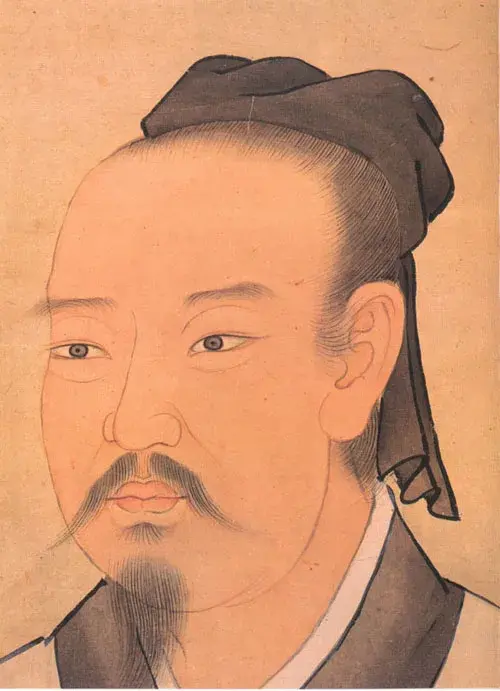
320 CE–385 CE
谢安
Xie An (320–385 CE), courtesy name Anshi, was a native of Yangxia in Chen Commandery (modern Taikang, Henan). He was an illustrious statesman, military strategist, Grand Chancellor, calligrapher, and cultural patriarch of the Eastern Jin Dynasty, standing alongside the Wang clan as the supreme leader of the southern aristocratic gentry. He rose to the highest imperial offices of Grand Guardian, Minister over the Masses, and…
Xie An (320–385 CE), courtesy name Anshi, was a native of Yangxia in Chen Commandery (modern Taikang, Henan). He was an illustrious statesman, military strategist, Grand Chancellor, calligrapher, and cultural patriarch of the Eastern Jin Dynasty, standing alongside the Wang clan as the supreme leader of the southern aristocratic gentry. He rose to the highest imperial offices of Grand Guardian, Minister over the Masses, and Manager of the Masters of Writing, was created Duke of Luling Commandery, and was posthumously honored as Grand Tutor and Marquis Wenjing. Endowed with aristocratic poise and literary genius from his youth, Xie An harbored a profound aversion to official factionalism, living in idyllic seclusion in the Eastern Mountains (Dongshan) of Kuaiji for over two decades alongside master calligrapher Wang Xizhi, creating the timeless proverb: "If Anshi refuses to come forth, what shall become of the common people?" At age forty, following family misfortunes, he entered public service, an event that coined the idiom "making a comeback from the Eastern Mountains" (Dongshan Zaiqi). In 373 CE, when the ambitious warlord Huan Wen fell mortally ill and attempted to usurp the throne by demanding the Nine Bestowals, Xie An faced down armed assassins with cool serenity, tactfully delaying the imperial edicts until Huan Wen died, preserving the Jin dynasty without bloodshed. Appointed prime minister, Xie An guided the youthful Emperor Xiaowu, reconciling rival clans and directing his nephew Xie Xuan to organize and drill the elite "Beifu Army." In 383 CE, when Former Qin ruler Fu Jian launched a colossal invasion with an army of nearly one million men, Xie An assumed supreme command as Grand Commander of Expeditions. Directing operations from Jiankang with absolute equanimity, he deployed Xie Xuan's eighty thousand Beifu veterans to achieve a miraculous victory at the Battle of Fei River, repelling the northern host and preserving southern Chinese civilization. Retiring to Guangling in his final years to escape imperial jealousy, Xie An passed away in 385 CE at sixty-six years of age, celebrated across Chinese history as the supreme embodiment of the effortless, high-minded statesman.
Born into the preeminent Xie clan of Chen Commandery, praised in childhood by Chancellor Wang Dao.
Resigned junior court posts to retreat to Mount Dongshan in Kuaiji, writing poetry with Wang Xizhi for twenty years.
Entered service at age forty under Grand Marshal Huan Wen following his younger brother Xie Wan's dismissal.
Confronted Huan Wen's armed ambush at Xinting; delayed the Nine Bestowals edicts until Huan Wen's death.
Appointed Prefect of the Palace Secretariat and Manager of the Masters of Writing, harmonizing regional and court factions.
Recommended nephew Xie Xuan to recruit northern refugees and drill the elite Beifu Army at Jingkou.
Served as Grand Commander; directed eighty thousand Beifu troops to crush Fu Jian's million-man army at Fei River.
Ennobled as Duke of Luling Commandery and appointed Grand Guardian, directing northern campaigns to recover Henan.
Relocated to Guangling to avoid the slanders of Prince Sima Daozi; passed away in Jiankang in October at age sixty-six.
Xie An was born into the Chen Commandery Xie clan, one of the two most illustrious aristocratic lineages of the Eastern Jin Dynasty, famously coupled with the Wang clan as "Wang and Xie." His grandfather Xie Heng served as Chancellor of the National Academy, and his father Xie Pou was Minister of Ceremonies. From childhood, Xie An exhibited striking elegance, graceful composure, and profound calligraphic skill. When he was still a boy, the founding chancellor Wang Dao marveled at his natural dignity, treating him with extraordinary courtesy. The scholar Huan Yi remarked upon meeting him: "Xie An's mind is tranquil and profound; his renown will surely eclipse all under heaven!"
Yet in his youth, deeply influenced by Daoist naturalism and Xuanxue metaphysics, Xie An was revolted by the corrupt power struggles of the capital. Although successive imperial courts issued decrees appointing him Gentleman of the Bureau of Writing and staff officer to the Minister over the Masses, Xie An resigned within months, citing chronic illness. He departed Jiankang and settled in the picturesque Eastern Mountains (Dongshan) of Shangyu in Kuaiji (modern Shaoxing, Zhejiang), where he constructed a sprawling country estate.
For over twenty years, Xie An lived in joyful rural retirement. He sailed the scenic waterways of Shanxi and Kuaiji alongside the "Sage of Calligraphy" Wang Xizhi, the literary stylist Sun Chuo, and the eminent Buddhist monk Zhi Daolin. He fished, wrote poetry, played the zither, and engaged in philosophical dialogue. Although he remained deep in the countryside, his immense reputation spread across China. Dynastic courtiers and provincial gentry alike viewed his seclusion with awe and anxiety, giving rise to the universal lament: "If Xie Anshi refuses to come forth, what shall become of the common people!"
In 360 CE, the northern borders collapsed into crisis. Xie An's younger brother, General Xie Wan, suffered a catastrophic defeat against northern cavalry at Shouchun, losing his army and suffering imperial cashiering to commoner status. Following the death of his elder brother Xie Yi, the Xie clan faced the total loss of its political and military standing. At forty years of age, Xie An resolved that duty to his clan and country outweighed personal retirement. He accepted a commission as Major to Grand Marshal Huan Wen. When Xie An set out from Dongshan, ministers lined the roads of Xinting to receive him. Imperial Censor Gao Song joked: "You slept peacefully on Dongshan for decades; today the common people have finally pulled you forth!" Xie An laughed heartily and assumed his post, giving rise to the enduring Chinese idiom "making a comeback from the Eastern Mountains."
In 373 CE, having conquered Cheng Han and led three northern expeditions, Grand Marshal Huan Wen became an overmighty subject. As Emperor Jianwen lay dying, Huan Wen mobilized his legions to Gushu, coercing the dying emperor to bestow upon him the Nine Bestowals—the traditional prelude to dynastic usurpation. Following Jianwen's death and the ascension of the ten-year-old Emperor Xiaowu, Huan Wen marched his army to Xinting outside Jiankang under pretext of attending the royal obsequies. Huan Wen concealed heavily armed axemen behind the screens of his commander's tent, summoning Chancellor Xie An and Minister Wang Tanzhi for a private audience.
The court was gripped by panic, believing a bloody purge was at hand. Wang Tanzhi trembled so violently that his robes were soaked in sweat, holding his ceremonial tablet upside down. Xie An, by contrast, remained completely serene. Straightening his robes, he walked calmly into Huan Wen's tent, seated himself gracefully, and glanced smilingly at the armed soldiers behind the silk screens, remarking: "I have heard that when feudal lords possess virtue, their defenses reside on their four borders; why does my lord find it necessary to conceal armored warriors behind his walls?"
Ashamed by Xie An's moral majesty, Huan Wen ordered his assassins to stand down, smiled nervously, and hosted a lavish banquet in Xie An's honor. When Huan Wen later demanded the completion of the Nine Bestowals edict, Xie An and Wang Tanzhi took charge of drafting the document. Xie An repeatedly altered the prose, raising grammatical objections and deliberately dragging out the editorial process for weeks. Shortly thereafter, Huan Wen died of illness at Gushu, and his forces dispersed peacefully under Xie An's diplomatic management. Through sheer personal composure, Xie An neutralized an armed coup and preserved the Eastern Jin dynasty.
Following Huan Wen's demise, Xie An was appointed Prefect of the Palace Secretariat and Manager of the Masters of Writing, assuming supreme direction over the central government. He governed with majestic benevolence, reconciling long-standing antagonisms between the emigré northern aristocracy and indigenous southern landowners, while smoothing tensions between the imperial court and regional warlord bases in Jing Province.
However, an existential threat gathered across the northern plains. The Di monarch Fu Jian, ruler of Former Qin, had unified northern China under the guidance of Prime Minister Wang Meng, preparing a massive campaign to annex the southern empire. Confronted with the impending catastrophe, the Yangtze river defenses were dangerously undermanned. In 377 CE, discarding aristocratic seniority rules, Xie An boldly recommended his nephew Xie Xuan, then serving as a palace commander, to take charge of the northern frontier as Governor of Yanzhou.
Stationed at Jingkou and Guangling, Xie Xuan recruited hardy northern refugees and local hunters, enlisting fierce warriors like Liu Laozhi. Under rigorous tactical drill, Xie Xuan forged an elite strike force renowned for its discipline and amphibious ferocity—the celebrated "Beifu Army" (Northern Headquarters Army)—creating the martial shield that would save southern civilization.
In August 383 CE, Fu Jian mobilized an imperial host of six hundred thousand infantry and two hundred seventy thousand cavalry, boasting that his soldiers could "halt the flow of the Yangtze simply by casting their whips into the water." The Qin vanguard captured Shouyang, throwing the southern court into hysterical panic, with ministers preparing boats to flee into the southern seas.
Appointed Grand Commander of Expeditions, Xie An remained unshaken. When Xie Xuan sought detailed tactical instructions, Xie An replied serenely: "The court has already prepared comprehensive measures." When his nephew Xie Shi pressed him further, Xie An invited them to his country villa to play weiqi (Go) for stakes, spending the afternoon in leisurely contest. Returning to the capital at midnight, he assembled his commanders, calmly assigning operational duties: Xie Shi was designated field viceroy, Xie Xuan commanded the vanguard, and Xie Yan and Huan Yi led flanking divisions, marshaling eighty thousand Beifu veterans to confront the northern horde. Xie An himself remained in Jiankang, directing logistics and psychological warfare.
In November, Beifu general Liu Laozhi executed a nocturnal raid at Luojian, annihilating five thousand enemy shock troops. The armies converged along the banks of the Fei River. Seeing the northern legions entrenched along the western bank, Xie Xuan dispatched an emissary to Qin commander Fu Rong: "You have marched deep into our territory and lined your forces along the water, indicating a desire for protracted defense. If you will withdraw your lines slightly to permit our troops to cross, we can decide victory in a single contest!" Intending to cut down the southern army mid-stream, Fu Jian ordered his legions to step back.
However, the Former Qin army was a volatile coalition of subjugated ethnic tribes. As the front ranks retreated, Jin double-agent Zhu Xu shouted from the rear ranks: "The Qin army is defeated! The Qin army is defeated!" Panic swept through the northern host. Believing their lines had collapsed, hundreds of thousands of Qin soldiers broke into chaotic flight, trampling each other to death. Xie Xuan and Xie Yan drove eighty thousand Beifu cavalry across the river, slaying Fu Rong and routing the enemy host. Fu Jian fled on a solitary horse, wounded by arrows, while his fleeing soldiers panicked at the sound of the wind and the cries of cranes, believing the Jin army was upon them.
When the express dispatch announcing total victory reached Jiankang, Xie An was engaged in a game of weiqi with a guest. Opening the letter, he read the contents without changing his expression, placed the paper on the couch, and continued to place his stones in total silence. Unable to contain his curiosity, the guest asked: "What news from the front?" Xie An replied softly: "Our boys have thoroughly crushed the enemy." When the guest departed, Xie An rushed toward the inner quarters to share the joy with his family; moving with such frantic speed, the wooden teeth of his clogs struck the doorsill and snapped off, yet the great statesman was so overwhelmed with joy that he never even noticed.
The Battle of Fei River ended the existential peril facing southern China, causing the Former Qin empire to disintegrate into northern civil war. The court elevated Xie An to Grand Guardian, created him Duke of Luling Commandery, and assigned him supreme military command over fifteen provinces. In 384 CE, Xie An launched northern counteroffensives, recovering Henan, Shandong, and southern Shaanxi.
However, his immense prestige aroused the jealousy of Emperor Xiaowu's younger brother, Prince Sima Daozi of Kuaiji, who allied with sycophants to slander Xie An before the throne. Understanding the peril of royal suspicion, Xie An demonstrated sublime modesty: in April 385 CE, he voluntarily relinquished his chancellor's seals, requesting permission to garrison Guangling to supervise northern defenses. In August, falling critically ill, he returned to Jiankang, gazing upon the imperial walls in tears. On October 12, 385 CE, the peerless statesman passed away at sixty-six years of age. Emperor Xiaowu ceased court assemblies for three days, conferring upon him the posthumous title Grand Tutor and Marquis Wenjing. Revered across millennia for his unshakeable equanimity and effortless statesmanship, Xie An remains the supreme cultural ideal of the Chinese gentleman-statesman.
Xie An lived in idyllic retirement in Kuaiji for twenty years, inspiring the national proverb "If Anshi refuses to come forth, what shall become of the common people?" and creating the immortal idiom "making a comeback from the Eastern Mountains" upon his return to save his clan and state.
In 373 CE, facing Huan Wen's ambush at Xinting, Xie An dismantled the warlord's attempt to usurp the throne through flawless personal composure and legislative delay, preserving the Eastern Jin dynasty without domestic bloodshed.
Recognizing the impending northern invasion, Xie An broke court precedent to elevate his nephew Xie Xuan, creating the Beifu Army, the premier amphibious shock army that defended southern China for decades.
Directing operations from Jiankang in 383 CE, Xie An deployed eighty thousand troops to crush Fu Jian's nearly million-strong Former Qin host at the Battle of Fei River, preserving Chinese cultural continuity and leaving the immortal legend of the broken clog.
FIGURES ASSOCIATED WITH THIS DYNASTY