Fu Hong at Fangtou styled himself Grand Commander, General-in-Chief, Grand Chanyu, and Prince of the Three Qins and began operations toward Guanzhong. He was soon poisoned by Ma Qiu, a former general of Shi Hu, and his son Fu Jian took command; the Former Qin regime is treated as beginning from this stage.
350 CE–394 CE
Former Qin
Regional polity前秦
Former Qin (351–394), also known as Fu Qin, was a Sixteen Kingdoms regional regime founded by the Fu clan of the Di people from Lueyang. The name "Former Qin" was used in contrast to the Later Qin of the Yao clan and the Western Qin of the Qifu clan and first appeared in the Spring and Autumn Annals of the Sixteen Kingdoms. Because the regime occupied territory associated with the ancient state of Qin, it took "Qin" as its state name. Later historians called it Former Qin to distinguish it…
350 CE–394 CECapital · See entry
ERA OVERVIEW
Former Qin (351–394), also known as Fu Qin, was a Sixteen Kingdoms regional regime founded by the Fu clan of the Di people from Lueyang. The name "Former Qin" was used in contrast to the Later Qin of the Yao clan and the Western Qin of the Qifu clan and first appeared in the Spring and Autumn Annals of the Sixteen Kingdoms. Because the regime occupied territory associated with the ancient state of Qin, it took "Qin" as its state name. Later historians called it Former Qin to distinguish it from other regimes that also used the name Qin. Because the ruling house bore the surname Fu, contemporaries also called it Fu Qin, distinguishing it from the Qin of the Ying house, the Yao Qin, and the Qifu Qin. Tradition held that Former Qin associated itself with the Wood phase in the Five Phases succession and claimed to succeed Later Zhao, associated with Water, hence the designation "Wood Qin." During the Northern Wei, Gao Lü and others argued that Former Qin should instead be associated with Fire, with Northern Wei succeeding it as Earth, producing the alternate designation "Fire Qin." From Fu Jian's proclamation as emperor and establishment of the capital at Chang'an in 351 until its destruction by Later Qin and Western Qin in 394, Former Qin lasted more than forty years. It was the only regime of the Sixteen Kingdoms to unify northern China for a time.
Time span350 CE–394 CE
CapitalSee entry
ERA TIMELINE
In the seventh year of Yonghe under Eastern Jin, Fu Jian proclaimed himself emperor, adopted the era name Huangshi, established the capital at Chang'an, named the state Great Qin, and appointed a full bureaucracy; the regime is historically known as Former Qin.
The record notes Fu Jian's eighth year of the Jianyuan era (372).
Collected Records concerning the Tripitaka, Records of the Three Treasures through the Ages, and the Kaiyuan Catalogue of Buddhist Teachings record the translation as dating to the eighth lunar month of the renwu year, 382, the eighteenth year of Jianyuan.
(nineteenth year of Jianyuan under
383 (nineteenth year of Jianyuan under Former Qin): Fu Jian placed Fu Rong at the head of 250,000 infantry and cavalry and personally followed with more than 600,000 infantry and 270,000 cavalry in a large southern invasion of Eastern Jin.
In the seventh lunar month, Yao Chang dispatched a Cavalry General.
(nineteenth year of Taiyuan under
394 (nineteenth year of Taiyuan under Eastern Jin): Fu Deng was defeated by Yao Xing of Later Qin, and Fu Chong was destroyed by Western Qin, bringing Former Qin to an end.
FULL ENTRY
Historical Development
Establishment: In the disorder at the end of the Western Jin, the Di people of Lueyang chose the aristocrat Fu Hong as their leader. Liu Yao of Former Zhao, after proclaiming himself emperor at Chang'an, appointed Fu Hong as Prince of the Di. After Shi Le destroyed Former Zhao, Fu Hong submitted to Shi Le. In 333, Later Zhao ruler Shi Hu moved prominent households from Guanzhong and Qiang and Rong groups eastward and appointed Fu Hong Controller of Refugees, based at Fangtou. After Shi Hu's death, Fu Hong sent envoys offering submission to Jin. In 350, Fu Hong at Fangtou styled himself Grand Commander, General-in-Chief, Grand Chanyu, and Prince of the Three Qins and began operations toward Guanzhong. This year is treated as the formal foundation of the regime, although he was soon poisoned by Ma Qiu, a former general of Shi Hu. Fu Hong's son Fu Jian then took command of his forces. Advancing west from Fangtou, Fu Jian received support from Di and Qiang groups in Guanzhong and entered Chang'an in the tenth lunar month, taking control of Guanzhong and Longxi. In 351, the seventh year of Yonghe under Eastern Jin, Fu Jian proclaimed himself emperor, adopted the era name Huangshi, established the capital at Chang'an, named the state Great Qin, and appointed a full set of officials; later historians call the regime Former Qin. Fu Jian was diligent in administration, reduced taxes, moderated punishments, aided orphans and widows, selected capable officials, and emphasized frugality. He also defeated northern expeditions by Sima Xun, Xie Shang, Yin Hao, and others. In 354 he used scorched-earth defenses to repel Huan Wen's 40,000-strong Eastern Jin expedition, after which the lands west of the passes were described as prosperous and well supplied.
Height: Fu Jian died in 355 and was succeeded by his son Fu Sheng, whose rule was marked by extreme violence. In 357, Fu Jian, the son of Fu Xiong and nephew of the founding emperor, killed Fu Sheng and took power, assuming the title Heavenly King of Great Qin. Fu Jian promoted Confucian learning and relied on talented officials including Wang Meng, Deng Qiang, and Fu Rong. He implemented political reforms, strengthened central authority, restrained powerful aristocratic families, and developed irrigation in Guanzhong. The regime grew steadily stronger, and later descriptions praised the peace of Guanzhong and Longxi and the prosperity of the population. In 370 Fu Jian sent Wang Meng and Deng Qiang to destroy Former Yan and capture Murong Wei. In 371 he destroyed the Yang clan of Chouchi. In 373 he took Liangzhou and Yizhou from Eastern Jin, and groups in the southwest submitted. In 376 he conquered Former Liang under the Zhang family and, taking advantage of internal conflict in Dai, sent Fu Luo to destroy that state as well. After the conquest of Dai, its tribal population was dispersed, and Xianbei north of the desert were encouraged to adopt agriculture. In 382 Fu Jian ordered Lü Guang to campaign in the Western Regions, reopening routes along the Silk Road. At its height Former Qin extended east to the sea, south to the Han River, west to Kucha, and north to the desert. Neighboring states sent envoys, and the regime stood in direct strategic opposition to Eastern Jin in the southeast.
Turning Point: In the tenth lunar month of 382, confident in his power, Fu Jian assembled his ministers in the Taiji Hall and proposed personally leading an army of one million to destroy Jin. The Xianbei leader Murong Chui and the Qiang leader Yao Chang strongly supported the plan, while Fu Jian's younger brother Fu Rong and officials such as Shi Yue opposed it. Their concerns included Fu Jian's policy of moving various non-Han groups into Guanzhong for easier control and sending others to command regional posts, leaving the capital relatively exposed. They also feared that Fu Jian's lenient treatment of former rulers and ministers of conquered states, many of whom retained rank and former followers, created major political risks. In 383, the nineteenth year of Jianyuan, Fu Jian placed Fu Rong at the head of an advance force of 250,000 infantry and cavalry and followed with more than 600,000 infantry and 270,000 cavalry in a massive southern invasion of Eastern Jin. In the eleventh lunar month, the armies met at the Fei River. Eastern Jin appointed Xie Shi as commander of the campaign and Xie Xuan as forward commander, leading 80,000 Beifu Army troops. Xie Xuan's subordinate Liu Laozhi first defeated Qin forces at Luojian. The Jin then used a feigned request that the Qin army withdraw slightly to allow battle formation; once the Qin troops began moving back, their formation collapsed. Fu Rong fell from his horse and was killed, while Zhu Xu shouted from the rear that the Qin army had already been defeated. Panic spread throughout the army, producing a total rout remembered in later phrases about mistaking the wind for cranes and grass for soldiers. The source states that seven or eight out of ten were lost. The Battle of the Fei River in 383 became the decisive turning point from Former Qin's height to its collapse.
Decline: After the defeat at the Fei River, groups that had previously submitted to Former Qin took the opportunity to re-establish independent regimes, and northern China fragmented again. In 383, the former Former Yan general Murong Chui was ordered to suppress the Dingling leader Zhai Bin but on the way killed his deputy Fu Feilong and his troops. In the first lunar month of 384, Murong Chui proclaimed himself Prince of Yan, abandoned the Former Qin era name, established Later Yan, and attacked Fu Pi at Ye. In the same year, Former Yan royal kinsman Murong Hong gathered several thousand Xianbei, styled himself General-in-Chief and Prince of Jibei, and established Western Yan. Fu Jian sent his son Fu Rui as commander and Yao Chang as adviser against Western Yan, but they suffered a major defeat at Huaze and Fu Rui was killed. Fu Jian reacted angrily, and Yao Chang, fearing punishment, fled north of the Wei River. His people made him their leader; he styled himself General-in-Chief, Grand Chanyu, and Prince of Qin for Ten Thousand Years and established Later Qin. In the seventh lunar month of 385, Later Qin cavalry general Wu Zhong surrounded Fu Jian at Mount Wujiang, captured him, and took him to Xinping under detention. Yao Chang demanded the imperial seal and urged Fu Jian to abdicate in his favor. Fu Jian denounced him as a rebel and first killed two daughters to prevent their humiliation. On the twenty-sixth day of the eighth lunar month, Yao Chang ordered Fu Jian strangled. He was forty-eight. The episode became known as the Disaster of Xinping. Guanzhong and Longxi then fell into deeper disorder. Fu Pi, who had been defending Ye, was pressured by Later Yan and led more than 60,000 soldiers and civilians from Jizhou back toward Bingzhou. After Fu Jian's death Fu Pi proclaimed himself emperor but was killed the following year by Eastern Jin general Feng Gai. In the same period, Lü Guang returned from Kucha, took control of Liangzhou, and appointed himself Inspector of Liangzhou, while Qi Fuguoren established independent rule in Longxi.
Fall: After Fu Pi died, the Di people of Guanzhong and Longxi enthroned Fu Jian's kinsman Fu Deng as emperor. He adopted the era name Taichu, based his court in the Nan'an region, and posthumously honored Fu Pi as Emperor Aiping. Fu Deng repeatedly fought Yao Chang of Later Qin across Guanzhong and Longxi. Guo Zhi of Fengyi once raised forces in response, issuing proclamations against Yao Chang's violence and briefly winning broad support in Guanzhong. Yet Former Qin had already lost its strategic foundations after Fu Jian's death, and Fu Deng's territory continued to contract. In the seventh lunar month of 394, the ninth year of Taichu, Fu Deng fought Later Qin ruler Yao Xing near the Jing River, with one account placing the battle at Queshu Valley. He was defeated at Maweiping and killed. Crown Prince Fu Chong succeeded him and fled west into Longxi, where he was soon destroyed by Qifu Gangui of Western Qin. Former Qin therefore ended through successive defeats by Later Qin, which destroyed Fu Deng, and Western Qin, which destroyed Fu Chong.
Politics and Institutions
Under Fu Jian and Wang Meng, Former Qin implemented reforms designed to strengthen central power. The government restrained powerful Di and eastern aristocratic families, employed Han Chinese scholars and capable men from multiple ethnic groups, and weakened the monopoly of great lineages that had developed since the Western Jin, producing a reputation for using talent according to ability and matching offices to competent holders. During Fu Jian's reign, the palace guard included military offices responsible for leading, central, protection, left and right guard, and martial guard units, while four Guard Generals of the front, rear, left, and right commanded Yulin cavalry protecting the capital region. The protection-command structure that Former Qin developed and refined influenced later garrison institutions. Fu Jian personally visited the National University to examine students, established new standards for recommendation, reward, punishment, and official selection, and emphasized anti-corruption measures and discipline. One example given in the source is Wang Meng's appointment as magistrate of Shiping, where he flogged an offending official to death and eliminated more than twenty powerful lawbreakers. Fu Hong was posthumously honored as Gaozu, Emperor Huiwu. Fu Jian, the founding emperor, was styled Gaozu, or in another tradition Shizong, Emperor Jingming. Six rulers actually held imperial authority: Fu Jian with the era name Huangshi; Fu Sheng with Shouguang; Fu Jian with Yongxing, Ganlu, and Jianyuan; Fu Pi with Taian; Fu Deng with Taichu; and Fu Chong with Yanchu.
Military and Diplomacy
Former Qin reached exceptional military power. It destroyed Former Yan, Former Liang, and Dai, absorbed Chouchi and the Liang and Yi regions, and campaigned into the Western Regions, nearly unifying northern China. Against Eastern Jin, it fought along both the Xuzhou and Xiangyang fronts. In 378 Qin forces captured the major stronghold of Xiangyang and took Zhu Xu, Inspector of Liangzhou, prisoner. In 379 they attacked Xuyi and besieged San'a but were defeated by Xie Xuan. At the same time Former Qin maintained diplomatic relations with states in the northeast and Western Regions, receiving missions and tribute from Goguryeo, Baekje, Silla, and others and sending envoys in return. After the Battle of the Fei River in 383, Former Qin lost its military superiority, and Later Yan, Western Yan, Later Qin, and Western Qin successively became independent. The regime was eventually destroyed under pressure from Eastern Jin, Later Qin, and Western Qin.
Economy and Commerce
Both Fu Jian rulers emphasized agriculture and sericulture. The founding Fu Jian abolished harsh Later Zhao policies, practiced frugality, and established Jingzhou at Fengyang to open markets and trade routes, bringing in valuable southern goods, bows, lacquer, wax, and other commodities and strengthening state finances. Fu Jian later promoted farming and aided the poor, cut through hills, built embankments, dredged canals, reclaimed saline land, and attracted displaced people. He also personally plowed the ritual field and encouraged agriculture. In 377, a canal from the Jing River was opened to irrigate saline land, while a method of intensive planting known as quzhong was also promoted. Guanzhong had been devastated since the Disaster of Yongjia, but markets and trade revived under Former Qin. Later descriptions of Chang'an emphasized tree-lined avenues and gatherings of talented people, while merchants and travelers moved through the region in large numbers. The economy of Guanzhong and Longxi thus recovered to some degree.
Culture and Society
Former Qin was regarded in later tradition as one of the strongest Sixteen Kingdoms regimes in education, ritual, and cultural institutions. Fu Jian respected Confucian learning, restored the National University, personally examined students each month on the classics, and recruited noted scholars including Gongsun Yong, Guo Yu, and Hu Bian. Scholars from Liangzhou were invited with ceremonial carriages. The mother of Wei Cheng, Lady Song, lectured on the Rites of Zhou from behind a red silk curtain, and Fu Jian established a school and ordered the Chamberlain for Ceremonials to transmit her teaching, which was remembered by later generations. Fu Jian also supported the spread of Buddhism eastward. The Mogao Caves were traditionally said to have been begun in the Former Qin period by the monk Lezun. In 372, a Buddhist monk was sent with scriptures to Goguryeo, an event later called the beginning of Buddhism east of the sea. After conquering Yan, Fu Jian offered sacrifices to Confucius and ordered princes, nobles, palace guards, and soldiers to study. A story also circulated that when Dayuan in the Western Regions presented horses, Fu Jian imitated Emperor Wen of Han by returning them. Under the Fu rulers, a multiethnic society moved toward greater integration, and this process laid foundations for the later Sinicization of Northern Wei.
Rulers and Political Leadership
Fu Jian, Fu Sheng, Fu Jian, Fu Pi, Fu Deng, Fu Chong.
> This section explains the position of rulers and political leaders in the evolution of the regime; complete biographies are provided in the corresponding person entities.
Historical Assessment and Legacy
Later commentators often described Former Qin as the strongest of the Sixteen Kingdoms and lamented that Fu Jian's generosity was accompanied by insufficient decisiveness, allowing the defeat at the Fei River to trigger rapid political collapse. Later scholars have also credited Former Qin with achievements in cultural exchange and ethnic integration. The Fu rulers promoted Confucian learning, supported scholarship, and accommodated multiple ethnic groups; historians have particularly emphasized the regime's role in encouraging closer interaction between Han and non-Han populations and in laying foundations for later Northern Wei Sinicization.
Rulers
Former Qin
Emperor
Fu Jian
Fu Jian (317–July 10, 355), originally named Pu Pi, courtesy names Jianye and Shijian, was from Linwei County in Lüeyang Commandery (present-day Qin'an County, Gansu). A member of the Di people, he was the founding emperor of Former Qin as well as a politician and military leader. He was the third son of Fu Hong, Emperor Huiwu, and the uncle of Fu Jian, Emperor Xuanzhao. From childhood he was brave, skilled in riding
Former Qin
Historical figure
Fu Sheng
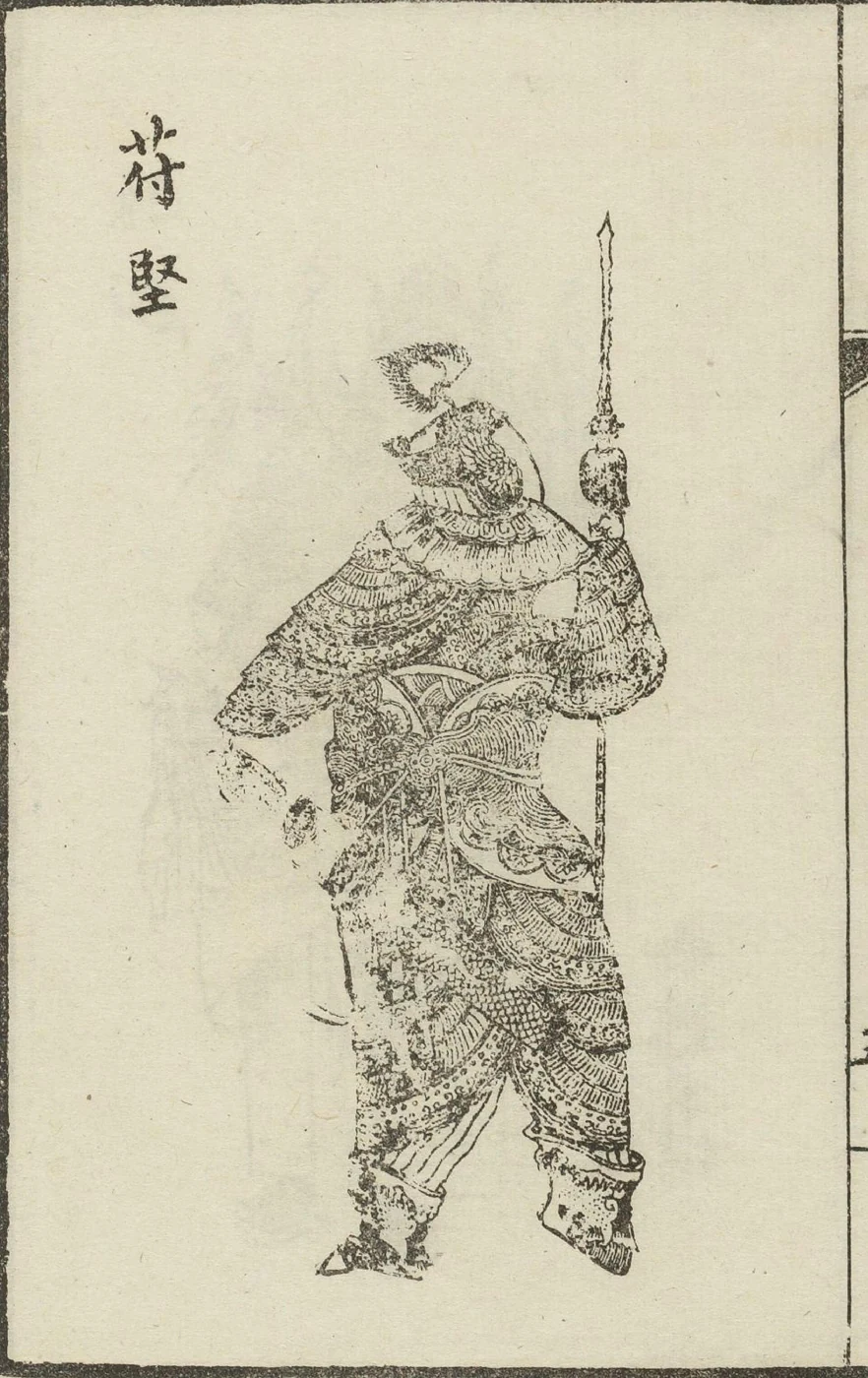
Fu Sheng (335–357), courtesy name Changsheng, was a son of Fu Jian (Fu Jian) and the second emperor of Former Qin. Under his father he fought against the Eastern Jin commander Huan Wen, and he became heir after the death of Crown Prince Fu Chang. In 355 (Huangshi year 5, Former Qin), his father died and Fu Sheng took the throne, adopting the era name Shouguang. Commanders including Deng Qiang and Fu Huangmei defeated
 Former Qin
Historical figure
Fu Jian
Fu Jian (338–385), courtesy name Yonggu, was a Di ruler of Former Qin from Linwei in Lueyang Commandery and was born at Ye. In 357 (Shouguang 3 of Former Qin) he overthrew Fu Sheng and took the title Heavenly King of Great Qin. He then appointed Wang Meng and others, encouraged farming, reorganized administration, and conquered Former Yan, Former Liang, and Dai, establishing a north–south standoff with Eastern Jin. H
Former Qin
Emperor
Fu Pi
Fu Pi (?–386), courtesy name Yongshu (also written Yongxu), had his ancestral home in Linwei County, Lüeyang Commandery (present-day Qin'an County, Gansu), and was born in Chang'an County, Jingzhao Commandery (present-day Xi'an, Shaanxi). He was a member of the Di people and the fourth emperor of Former Qin, as well as the eldest illegitimate son of Fu Jian, Emperor Xuanzhao. After the Battle of Fei River, Former Qin
Former Qin
Emperor
Fu Deng
Fu Deng (343–394), courtesy name Wengao, was from Linwei County in Lüeyang Commandery (present-day Qin'an County, Gansu) and belonged to the Di people. He was the fifth emperor of Former Qin, with temple name Taizong and posthumous title Emperor Gao. He was a clansman-descendant of Fu Jian, Emperor Xuanzhao, the son of Fu Chang, Prince of Yingchuan, and the father of Fu Chong, the last emperor. Fu Deng was known in y
Former Qin
Historical figure
Fu Chong
Fu Chong (?–394), the final emperor of the Former Qin regime during the Sixteen Kingdoms period. He was the son of Emperor Gaodi of Former Qin, Fu Deng, and the grandson of Yingchuan Wang Fu Chang. His reign was extremely brief, lasting only about four months. In 394, after his father Fu Deng was defeated and killed while campaigning against Later Qin, Fu Chong ascended the throne in Huangzhong (present-day Zhong Cou
KEY PEOPLE
Eastern Jin
Emperor
Sima Yao
Sima Yao (362–November 6, 396), courtesy name Changming, was a native of Wen County in Henei Commandery (present-day Wen County, Henan) and the ninth emperor of Eastern Jin, reigning from 372 to 396. He was the sixth son of Sima Yu, Emperor Jianwen of Jin, and his mother was Li Lingrong. At age four he was enfeoffed as Prince of Kuaiji. In 372, the second year of the Xian'an era, he was made Crown Prince and then suc
 Former Qin
Statesman and military commander of the Sixteen Kingdoms
Wang Meng
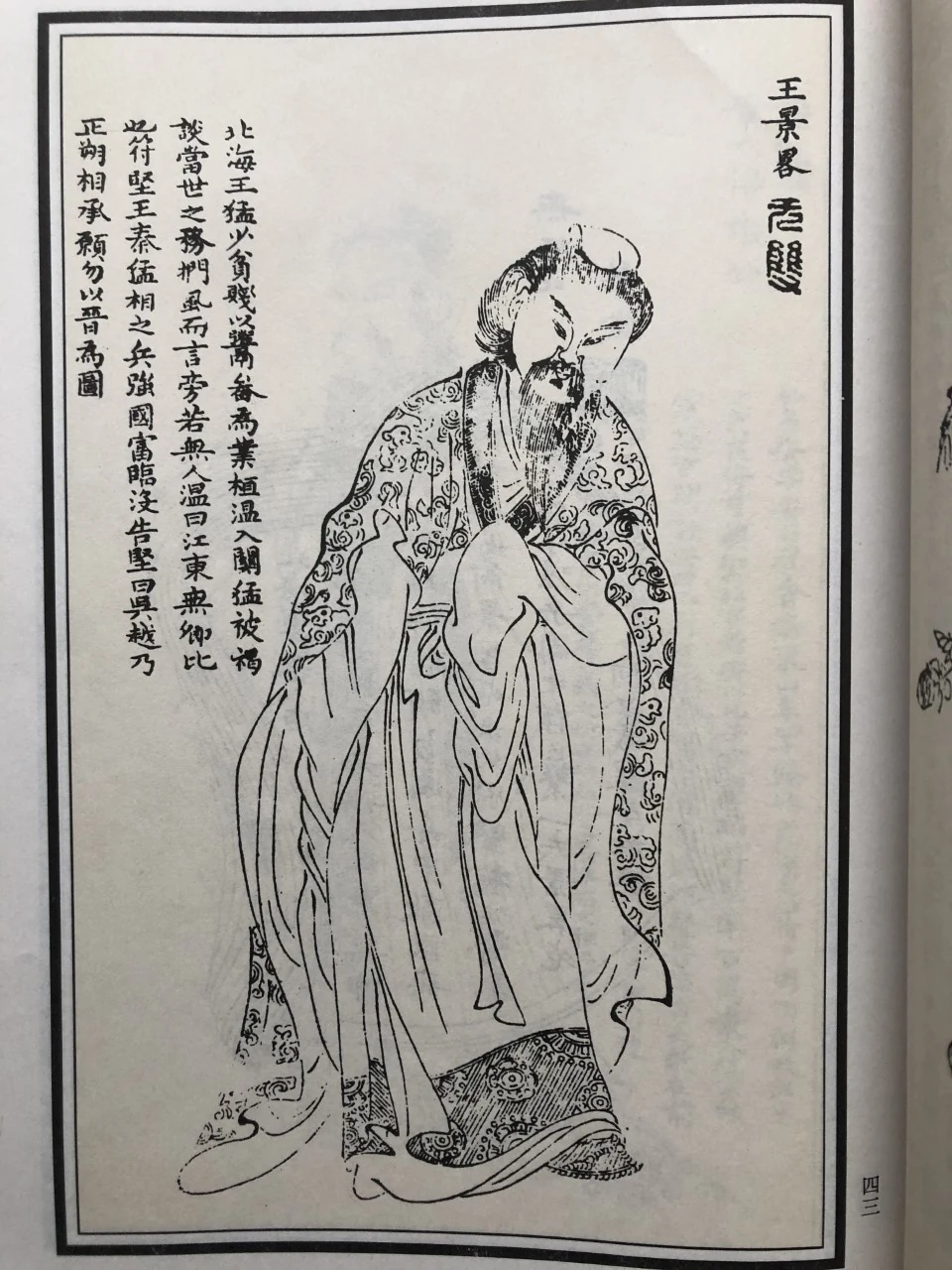
Wang Meng (325 – July 1, 375), courtesy name Jinglüe, a native of Juxian in Beihai Commandery (west of Changle, Weifang, Shandong) who later moved to Wei Commandery, was a major statesman and strategist of the Sixteen Kingdoms era, serving as chancellor of Former Qin with the title Marquis of Qinghe. Poor and obscure in his youth but broadly learned with a taste for military books, prudent and dignified, he lived as
Former Qin
General and chancellor of Former Qin
Fu Xiong
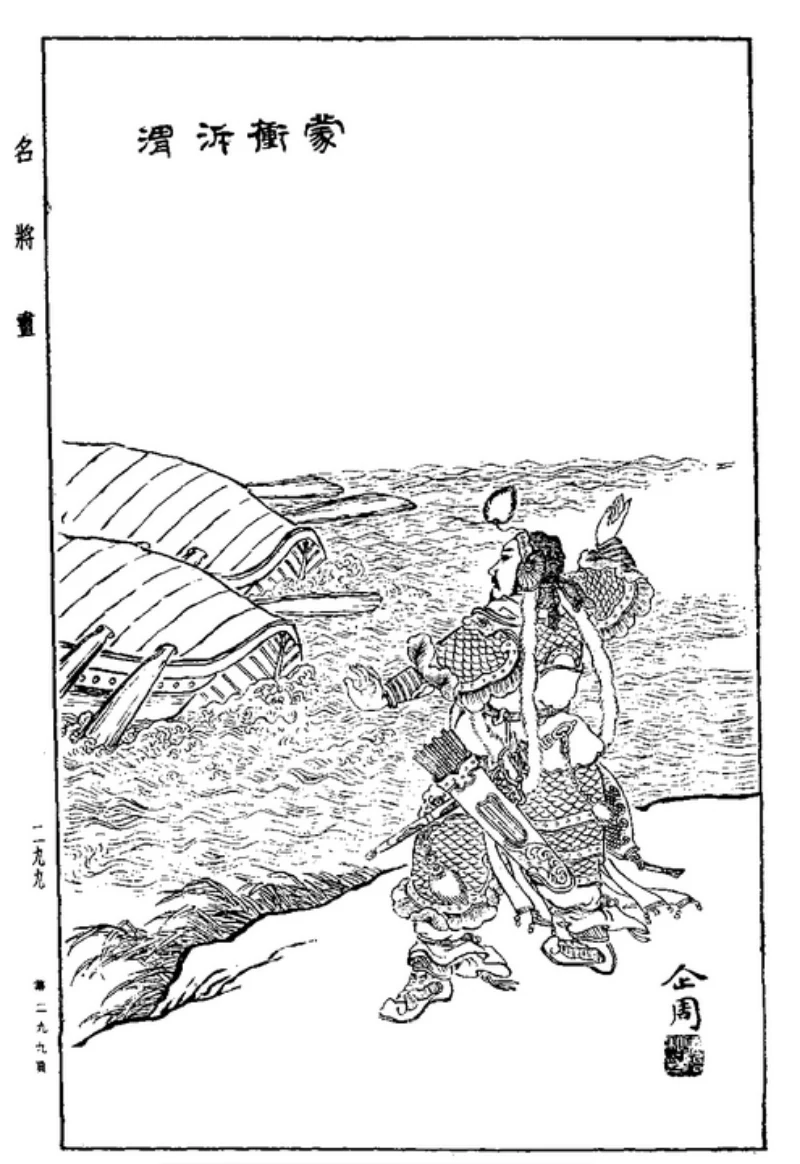
Fu Xiong (d. the bingshen day of the sixth lunar month in the fourth year of the Huangshi era, July 26, 354), courtesy name Yuancai, was a Di native of Linwei County in Lueyang Commandery (present-day Qin'an County, Gansu). A founding meritorious official of Former Qin, he rose to Chancellor, Governor of Yong Province, General of Chariots and Cavalry, and commander of military affairs both within and beyond the cap
 Former Qin
General
Wang Zhene
Wang Zhene (373–418), from Ju County in Beihai Commandery (present-day Shouguang, Shandong), was a prominent general of the late Eastern Jin. He was the grandson of Wang Meng, chancellor of Former Qin, and the son of Wang Xiu, Administrator of Hedong. Wang Zhene was known for strategy and decisiveness and became an important commander under Liu Yu. In 416, during the twelfth year of the Yixi era, he joined Tan Daoji
Former Qin
Leader of the Di people
Fu Hong
Fu Hong (285–350 AD), originally named Pu Hong, courtesy name Guangshi, was a Di chieftain from Linwei in Lueyang Commandery. He was a preeminent military commander during the Sixteen Kingdoms period and the founding patriarch of the Former Qin Dynasty, posthumously revered as Emperor Huiwu with the temple name Taizu. Emerging amid the turmoil of the Yongjia Disturbance, he dispensed his family wealth to rally warrio
Former Qin
Historical figure
Deng Qiang
Deng Qiang (unrecorded – c. 379 AD), a native of Linjing in Anding Commandery (modern Jingchuan, Gansu Province), was a scion of the prestigious Anding Deng clan and a descendant of Eastern Han founding hero Deng Yu. He was an extraordinary military strategist and the paramount warrior-general of the Former Qin Dynasty during the Sixteen Kingdoms period. Possessing consummate mastery of strategy, unrivaled personal c
Former Qin
Chieftain of Qifu Xianbei
Qifu Sifan
Qifu Sifan (birth year unknown – 376) was a prominent chieftain of the Qifu branch of the Xianbei people, supreme military commander, and foundational architect of the Western Qin dynasty during the Sixteen Kingdoms period. The son of chieftain Qifu Qiuji, he was the father of Qifu Guoren (founding Emperor Liezu of Western Qin) and Qifu Gangui (King Gaozu). Around 355, Qifu Sifan succeeded his father as tribal leader
Related entries
Bibliography
- 《晋书》
- 《资治通鉴》
- 《十六国春秋》
- 《前秦史》
- 《图说中国历代君主帝王》