Birth in Linwei
Born into the Di royal house of Lueyang; displayed precocious intellect and studied Han classics at age eight.
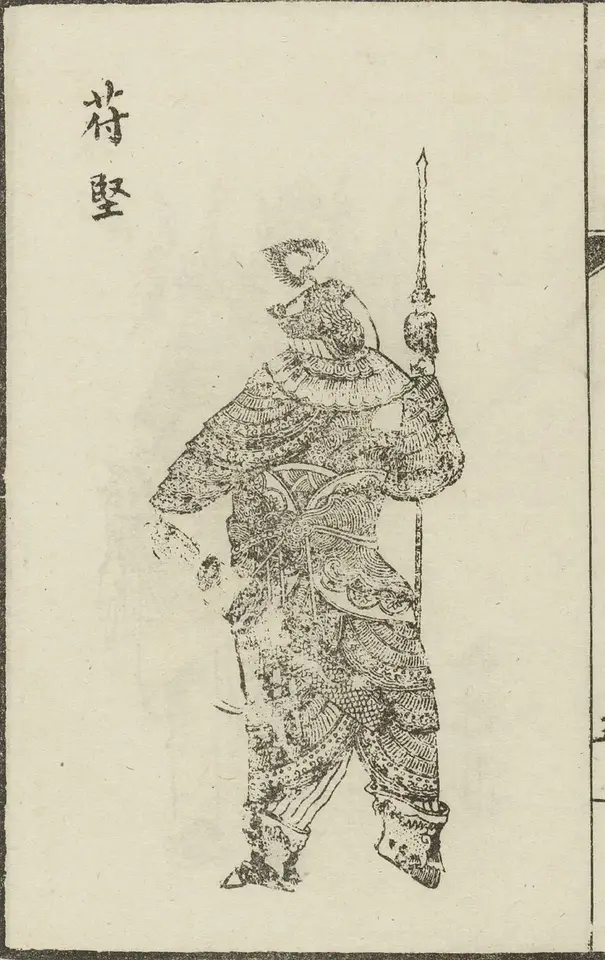
苻坚
Fu Jian (苻坚, 338 – August 26, 385), courtesy names Yonggu and Wenyu, childhood sobriquet Wenzhe, was the third sovereign of the Former Qin dynasty, an extraordinary military conqueror, enlightened administrative reformer, and one of the most intellectually compelling yet tragic imperial figures in Chinese history. A member of the Di ethnicity and son of Former Qin founding prime minister Fu Xiong, Fu Jian broke sharply with…
Fu Jian (苻坚, 338 – August 26, 385), courtesy names Yonggu and Wenyu, childhood sobriquet Wenzhe, was the third sovereign of the Former Qin dynasty, an extraordinary military conqueror, enlightened administrative reformer, and one of the most intellectually compelling yet tragic imperial figures in Chinese history. A member of the Di ethnicity and son of Former Qin founding prime minister Fu Xiong, Fu Jian broke sharply with the nomadic tribal traditions of his contemporaries, mastering classical Confucian statecraft, historiography, and administrative governance from early youth. In 357, he executed a palace coup against his bloodthirsty cousin, the tyrant Fu Sheng, ascending the throne as the Great Heavenly King (Da Qin Tianwang) and establishing the Yongxing reign era. Throughout his twenty-eight-year reign, Fu Jian governed in intimate partnership with his brilliant Han chancellor, Wang Meng, forging a celebrated relationship revered as the medieval equivalent of Liu Bei and Zhuge Liang. Together, they suppressed the arrogant Di military aristocracy, codified uniform legal statutes, rebuilt the Imperial Academy in Chang'an, dredged ancient hydraulic canal systems across the Wei River valley, and revitalized agricultural commerce, transforming Guanzhong into a haven of stability. Militarily, Fu Jian achieved the near-complete unification of northern China: destroying Former Yan in 370, conquering Sichuan and Hanzhong from the Eastern Jin in 373, absorbing Former Liang and the Dai state in 376, and dispatching general Lu Guang to subjugate the Western Regions in 382. Fu Jian advocated an unprecedented universalist philosophy of "all ethnic groups as one family," welcoming surrendered Xianbei, Qiang, and Xiongnu nobles into the highest echelons of imperial governance. However, his later years were profoundly compromised by romanticized benevolence, the dispersal of core Di garrisons to distant border outposts, and disregard of Wang Meng's dying warnings against foreign turncoats and southern invasions. Overriding unanimous remonstrances from court officials, royal kin, and Buddhist patriarchs, Fu Jian mobilized an imperial host exceeding eight hundred thousand soldiers to conquer the Eastern Jin in 383, suffering catastrophic defeat at the Battle of Fei River due to structural fragmentation and fifth-column subversion. The disaster triggered the immediate collapse of northern unity, as surrendered chieftains Murong Chui, Murong Chong, and Yao Chang rebelled to establish independent dynastic regimes. Besieged inside a starving Chang'an, Fu Jian broke out toward Mount Wujiang, was captured by Yao Chang, resolutely refused to surrender the imperial seal, and was strangled to death at the Xinping Buddha Temple on August 26, 385, at the age of forty-eight. Posthumously honored as Emperor Xuanzhao with the temple name Shizu, his grand vision of inclusive multi-ethnic unification provided the structural blueprint for the subsequent northern empires and the ultimate reunification of China under the Sui and Tang dynasties.
Born into the Di royal house of Lueyang; displayed precocious intellect and studied Han classics at age eight.
Inherited his father Fu Xiong's noble rank; appointed General of Soaring Dragon and Palace Attendant.
Visited Wang Meng in his Mount Hua hermitage; forged a lifelong political partnership.
Staged a palace coup to execute tyrant Fu Sheng; ascended the throne as Great Heavenly King.
Appointed Wang Meng Chancellor; executed corrupt noblemen Fan Shi and Qiang De, establishing the rule of law.
Crushed the armed insurrections of imperial princes Fu Liu, Fu Shuang, Fu Sou, and Fu Wu.
Welcomed celebrated Xianbei general Murong Chui, who fled internal persecution in Former Yan.
Dispatched Wang Meng to rout 300,000 Yan soldiers at Luchuan; captured Ye and deposed Murong Wei.
Conquered Liang and Yi provinces from Eastern Jin, securing absolute dominance over the upper Yangtze.
Mourned the passing of Wang Meng, who delivered deathbed warnings against invading Jin and trusting foreign turncoats.
Subjugated Zhang Tianxi in Liangzhou; conquered Tuoba Shiyijian's Dai state in the northern steppes.
Captured Xiangyang; welcomed preeminent Buddhist scholar Dao'an to Chang'an as national preceptor.
Dispatched Lu Guang with 70,000 troops to pacify the Tarim Basin and invite Kumarajiva.
Mobilized imperial armies to invade Eastern Jin; suffered total collapse at the Battle of Fei River.
Murong Chui rebelled to found Later Yan; Murong Chong besieged Chang'an; Yao Chang founded Later Qin.
Fled besieged Chang'an to Mount Wujiang; captured by Yao Chang; strangled at Xinping at age forty-eight.
Fu Jian was born in the fourth month of the fourth year of Xiankang (338) during the reign of Emperor Cheng of Eastern Jin, in Linwei County, Lueyang Commandery (modern Qin'an, Gansu). His ancestors were hereditary chieftains of the western Di people. In the chaotic aftermath of the Western Jin's collapse, his grandfather Fu Hong emerged as a formidable chieftain, leading tens of thousands of Di and Han refugees across the northern plains. Serving successively under Later Zhao rulers Shi Le and Shi Hu as Grand Commander, Fu Hong eventually established his independent base at Fangtou, laying the territorial foundations for the Former Qin state.
His father, Fu Xiong, was the youngest son of Fu Hong and the younger brother of Former Qin's founding emperor, Fu Jian (Emperor Jingming). A brilliant general and upright statesman, Fu Xiong played an indispensable role in securing the Guanzhong basin against warlord Du Hong and repelling the formidable northern invasion of Eastern Jin general Huan Wen in 354, rising to the office of Prime Minister and Prince of Donghai. His mother, Lady Gou, belonged to an eminent clan of Guanzhong and was celebrated for her wisdom and domestic discipline.
From earliest childhood, Fu Jian displayed extraordinary intellectual gifts and an imposing physical presence, possessing arms that reached past his knees, piercing purple pupils, and an innate air of regal authority. In an era when northern non-Han aristocrats overwhelmingly favored martial violence and disdained classical Chinese learning, the young Fu Jian exhibited an unquenchable passion for Confucian scholarship. At age eight, he formally requested that his grandfather hire an eminent Han scholar to instruct him in the Five Classics. Delighted by his grandson's civilized aspirations, Fu Hong proclaimed that their family had produced a true sage. Diligently studying history, philosophy, and statecraft alongside archery and horsemanship, Fu Jian gained universal respect among both Di clansmen and Han scholars.
In 354, upon the untimely death of his father Fu Xiong during military campaigns, seventeen-year-old Fu Jian inherited the title of Prince of Donghai, receiving appointments as General of Soaring Dragon, Palace Attendant, and Metropolitan Commandant. Confronting the complex ethnic hostilities, aristocratic lawlessness, and economic devastation of Guanzhong, Fu Jian recognized that raw tribal domination could never sustain an enduring state, concluding that only universal Han administrative principles and genuine multi-ethnic cooperation could pacify the realm.
During this period, Fu Jian met Wang Meng, an obscure, impoverished scholar living in seclusion in Mount Hua who possessed monumental strategic genius. When Eastern Jin Grand Marshal Huan Wen occupied Chang'an in 354, Wang Meng had visited Huan's camp, famously catching lice inside his tunic while analyzing geopolitical affairs, ultimately rejecting Huan's overtures because he saw that the Jin general lacked the moral resolve to liberate the north. Hearing of Wang Meng's brilliance, Fu Jian personally traveled to Mount Hua to solicit his counsel. The two men experienced immediate intellectual kinship, discussing imperial statecraft and military strategy with unbounded passion. Overjoyed, Fu Jian compared their meeting to Liu Bei encountering Zhuge Liang, bringing Wang Meng into his inner circle as his foremost strategist.
Following the death of Former Qin's founding emperor Fu Jian in 355, Crown Prince Fu Sheng ascended the imperial throne. Blind in one eye from birth, Fu Sheng was an exceptionally cruel, psychopathic tyrant who transformed the imperial court into a slaughterhouse. Placing execution axes, saws, and crossbows in the throne room, he flayed, dismembered, and decapitated ministers, consorts, and imperial relatives for casual amusement, driving the administration to the brink of collapse.
As the reign of terror intensified, Fu Sheng turned his paranoid gaze upon Fu Jian. In the sixth month of 357, while intoxicated, Fu Sheng openly declared his intention to slaughter Fu Jian and his brothers. Warned by palace attendants, Fu Jian moved with decisive resolve. Coordinating with his elder brother Fu Fa and confidants Xue Zan and Quan Yi, Fu Jian led several hundred elite guards into the imperial palace, supported by imperial guards who threw open the palace gates. Capturing the drunken tyrant in his bedchambers, Fu Jian deposed Fu Sheng, sentenced him to death, and restored order to the capital.
Urged by civil ministers and imperial princes to assume the throne, Fu Jian modestly attempted to yield the imperial dignity to his elder brother Fu Fa. However, Fu Fa and the assembled nobility insisted that only Fu Jian possessed the stature to govern the empire. On July 18, 357, the twenty-year-old Fu Jian ascended the throne in the Jianzhang Palace. Out of philosophical modesty, he declined the supreme title of emperor, proclaiming himself Great Heavenly King of Great Qin (Da Qin Tianwang) and inaugurating the Yongxing era.
Guided by Wang Meng's firm legalism, Fu Jian transformed the loose tribal confederation of Former Qin into a tightly centralized bureaucratic empire. However, these centralizing reforms provoked fierce resistance from entrenched imperial princes who commanded autonomous military fiefdoms. In October 367, four powerful imperial princes—Fu Liu at Puban, Fu Shuang at Shancheng, Fu Sou at Shanggui, and Fu Wu at Anding—formed a treacherous military coalition, revolting simultaneously in east and west with over one hundred thousand soldiers to crush the central administration.
Faced with existential civil war, Fu Jian maintained strategic composure. Having attempted peaceful reconciliation without success, he authorized Wang Meng to launch a synchronized counter-offensive in early 368. Wang Meng isolated and besieged Puban, utilizing sophisticated siege tactics and disciplined ambushes to annihilate Fu Liu's garrison, capturing the rebellious prince and securing the eastern portal to Guanzhong. Coordinated assaults led by Yang An, Deng Qiang, and Zhang Hao crushed the remaining rebel armies at Shancheng and Shanggui. Following the suppression of the rebellion, Fu Jian permanently revoked hereditary regional princely fiefs, centralizing all military and fiscal authority directly under the imperial throne in Chang'an.
With domestic order restored, Former Qin confronted its greatest geopolitical rival: the Xianbei-led Former Yan empire, which occupied the rich agricultural territories of the Central Plains, Hebei, and Shandong. While Former Yan was crippled by the corruption of Regent Murong Ping and the incompetence of Emperor Murong Wei, it possessed one supreme military commander: Murong Chui, Prince of Wu. In 369, when Eastern Jin Grand Marshal Huan Wen launched his massive northern expedition, Murong Chui had saved Former Yan by annihilating thirty thousand Jin soldiers at the Battle of Fangtou.
However, Murong Chui's towering military prestige ignited venomous jealousy from Regent Murong Ping and the Empress Dowager, who plotted his assassination. Driven into mortal peril, Murong Chui defected to Former Qin in November 369 with his sons and retainers. Recognizing the immense strategic value of the northern general, Fu Jian traveled to the outskirts of Chang'an to welcome him personally, treating him with lavish honors and appointing him Champion General.
While Fu Jian embraced Murong Chui with unconditional magnanimity, Chancellor Wang Meng recognized the existential danger posed by the Xianbei titan, warning Fu Jian: "Murong Chui is a predatory tiger who will never remain subordinate. He takes shelter with us only out of temporary necessity. We must eliminate him before he grows wings!" Yet Fu Jian firmly refused, arguing that an emperor must attract heroes through moral fidelity rather than pragmatic murder. Nevertheless, Murong Chui's defection exposed the internal fragility of Former Yan, prompting Fu Jian and Wang Meng to launch an all-out campaign of conquest.
In June 370, Fu Jian appointed Wang Meng supreme commander, directing sixty thousand elite infantry and cavalry eastward to destroy Former Yan. Moving with breathtaking speed, Wang Meng captured the strategic fortress of Huguan, while Yang An stormed the regional center of Jinyang (modern Taiyuan). Paralyzed by panic, Former Yan mobilized its entire national army—over three hundred thousand infantry and cavalry under Regent Murong Ping—to confront the Qin forces at Luchuan.
Murong Ping was notoriously greedy and corrupt, even monopolizing local timber and water supplies during the campaign to extort his own soldiers, completely alienating the Yan army. Recognizing the psychological weakness of his adversary, Wang Meng deployed generals Deng Qiang and Zhang Hao to execute devastating cavalry thrusts into the Yan center on November 21, 370. Deng Qiang and Zhang Hao charged the enemy columns repeatedly, shattering their tactical cohesion. Wang Meng then launched a synchronized general assault, annihilating the Yan host in a catastrophic rout that left fifty thousand enemy dead and captured.
Wang Meng chased the remnants directly to the Yan capital of Ye, enforcing absolute military discipline that forbade looting and won the affection of the local populace. In December, Fu Jian arrived at Ye with one hundred thousand cavalry reinforcements. When a palace official opened the northern gates, Emperor Murong Wei fled but was captured by Qin cavalry. The entire territory of Former Yan—comprising 157 commanderies and 2.46 million households—was incorporated into Former Qin, transforming Fu Jian's realm into the dominant superpower of East Asia.
Following the conquest of Former Yan, Fu Jian turned his attention to the southwestern frontier. The fertile territories of Liang and Yi provinces (modern southern Shaanxi and Sichuan) remained under Eastern Jin control, posing a direct threat to the southern flank of Guanzhong. In the autumn of 373, Fu Jian dispatched generals Yang An, Wang Tong, Zhu Rong, and Zhang Hao with seventy thousand soldiers to seize the upper Yangtze.
Yang An crushed the Eastern Jin defense force under Yang Liang at Qingshiliang, securing the vital redoubt of Hanzhong. Southern armies under Zhou Zhongsun abandoned Chengdu in panic, allowing Qin forces to occupy Sichuan with minimal resistance. Fu Jian pacified the southwestern populations, opened state granaries to feed local peasants, and placed regional administration under disciplined magistrates, neutralizing Eastern Jin's strategic position along the upper reaches of the Yangtze.
In 376, Fu Jian executed a sweeping two-pronged offensive against the peripheral northern regimes. In the Hexi Corridor, the Chinese-led Former Liang dynasty had governed for over seven decades, but its ruler, Zhang Tianxi, had descended into decadence. Fu Jian mobilized 130,000 soldiers under Gou Chang and Yao Chang to invade Liangzhou. After suffering decisive defeats in the field, Zhang Tianxi bound his hands and surrendered, bringing the entirety of the Hexi Corridor and its lucrative Silk Road trade routes under Former Qin sovereignty.
Simultaneously, Fu Jian dispatched three hundred thousand cavalry under Fu Luo and Deng Qiang to conquer the Xianbei Dai state in the northern steppes. The nomadic ruler Tuoba Shiyijian was betrayed and murdered by his eldest son, causing the Dai confederation to shatter. Fu Jian divided the northern nomadic tribes between tribal chieftains Liu Kuren and Liu Weichen, effectively pacifying the northern steppe. For the first time since the fall of Western Jin, northern China was completely unified under a single imperial monarch.
With the pacification of the Hexi Corridor, Former Qin's diplomatic influence extended across Central Asia. In 382, envoys and monarchs from Shan-shan and Cheshi arrived in Chang'an, presenting exotic tributes and petitioning the emperor to pacify the Tarim Basin. In response, Fu Jian dispatched general Lu Guang with seventy thousand soldiers and five thousand armored chariots on an epic trans-continental expedition.
Traversing thousands of leagues of desert wastes, Lu Guang shattered a massive coalition of over seven hundred thousand Central Asian troops assembled by the King of Kucha, bringing thirty-six oasis kingdoms into tributary submission. Envoys from Persia, Sogdiana, and India frequented the markets of Chang'an, realizing Fu Jian's grand vision of a universal, multi-ethnic empire.
In the summer of 375, Chancellor Wang Meng fell critically ill from decades of ceaseless administrative labor. Fu Jian prayed fervently at imperial altars, weeping profusely for his companion's recovery. On his deathbed in June, Wang Meng grasped Fu Jian's hand to deliver his final, fateful political testament:
"The Jin dynasty, though confined to the south of the Yangtze, maintains legitimate dynastic succession and internal harmony. Protected by the natural moat of the river, its mandate is not yet exhausted. After my death, Your Majesty must under no circumstances invade the south! Furthermore, the surrendered chieftains of the Xianbei and Qiang, such as Murong Chui and Yao Chang, are predatory wolves harboring ancestral ambitions. They represent mortal dangers to our state. You must eliminate them without delay to prevent catastrophic ruin!"
Weeping bitterly, Fu Jian buried Wang Meng with honors equal to Han general Huo Guang. Tragically, in the years that followed, Fu Jian cast aside both foundational warnings. Unwilling to harm foreign defectors, he promoted Murong Chui and Yao Chang to high military commands, while nurturing an obsessive ambition to conquer the Eastern Jin and achieve universal dynastic hegemony.
In October 382, intoxicated by the total unification of the north and west, Fu Jian convened an extraordinary imperial council in Chang'an to announce his decision to launch an all-out southern invasion. Pointing to the vast resources of his empire, he declared that his armies could sweep away the southern dynasty like dry leaves.
The proposal provoked passionate, unanimous opposition from senior statesmen. Senior ministers Zhu Rong and Quan Yi cited Wang Meng's dying warnings, while his beloved younger brother, Fu Rong, fell to his knees weeping, warning that foreign generals like Murong Chui and Yao Chang would revolt the moment imperial armies suffered adversity. Crown Prince Fu Pi, Imperial Consort Zhang, and Buddhist patriarch Dao'an joined in urgent remonstrances.
However, Murong Chui and Yao Chang subtly encouraged the emperor's grandiosity, flattering him that his martial brilliance exceeded all ancient monarchs. Infatuated by imperial pride, Fu Jian boasted: "With my millions of soldiers, we need only throw our riding whips into the Yangtze to dam its flow (Tou Bian Duan Liu)!" Dismissing every wise counsel, he ordered total imperial mobilization for war.
In August 383, Fu Jian issued imperial mobilization decrees, conscripting one out of every ten adult males across northern China. The resulting multi-ethnic host comprised over six hundred thousand infantry, 270,000 armored cavalry, and thirty thousand elite palace guards. Fu Jian appointed his brother Fu Rong supreme vanguard commander, leading 250,000 troops south, while the emperor followed with the main imperial host.
In October, Fu Rong scored rapid operational successes, capturing the strategic fortress of Shouyang on the Huai River. Overjoyed by the news, Fu Jian left his main army at Xiangcheng and rushed forward to Shouyang with only eight thousand light cavalry, hoping his personal presence would terrify the southern defenders into immediate submission.
Arriving at Shouyang, Fu Jian dispatched the captured Eastern Jin commander Zhu Xu to the enemy camp to demand surrender. Secretly loyal to the south, Zhu Xu informed southern commanders Xie Shi and Xie Xuan of Qin's troop distributions, urging an immediate surprise offensive before the main northern armies arrived.
In November, southern vanguard forces under Liu Laozhi launched a daring raid at Luojian, annihilating fifteen thousand Qin soldiers. Shaken by the defeat, Fu Jian and Fu Rong ascended the walls of Shouyang to inspect the southern formations across the Fei River. Observing the disciplined ranks of the Beifu Army and gazing at the wind-swept trees atop Mount Bagong, Fu Jian's nerve shattered. Imagining that every swaying bush was a hidden enemy soldier, he turned pale, crying to Fu Rong: "How can these southern troops be called weak!"
Seeking a decisive battle, Xie Xuan sent a message requesting that Qin forces withdraw slightly from the riverbank to permit a fair engagement on open ground. Believing he could ambush the southern troops during the river crossing, Fu Jian ordered his massive front lines to pull back.
This tactical withdrawal proved catastrophic. The multi-ethnic Qin host, composed of diverse peoples speaking mutually unintelligible languages and coerced into service, had received no coordinated battle drill. When the front ranks stepped back, the rear ranks assumed the army had suffered defeat.
At this critical moment, turncoat Zhu Xu rode through the rear ranks shouting: "The Qin army is defeated! The Qin army is defeated!" Panic cascaded through the vast formations. Hundreds of thousands of soldiers threw down their weapons and fled in absolute terror. Rushing forward to rally his disintegrating lines, Fu Rong was thrown from his horse and butchered by southern infantry.
With their commander dead, the imperial army collapsed into an apocalyptic rout. Xie Xuan's eight thousand Beifu veterans charged across the river, pursuing the broken enemy across hundreds of leagues. Terrified soldiers fled day and night, mistaking the howling wind and crying cranes for pursuing enemy cavalry. Over seven hundred thousand soldiers perished from trampling, drowning, and exposure. Struck by a stray arrow, Fu Jian fled with only a handful of horsemen, arriving in Huainan with fewer than a thousand survivors.
In the aftermath of the catastrophe, Murong Chui's thirty-thousand-man Xianbei army remained the only intact military force in the north. When the broken emperor reached Murong Chui's camp, Murong's sons urged him to murder Fu Jian and declare independence. Remembering Fu Jian's past generosity, Murong Chui declined, escorting the fallen monarch back to Luoyang.
However, once detached from imperial scrutiny, Murong Chui marched to Hebei, raised the banner of insurrection in January 384, and proclaimed himself King of Yan, founding the Later Yan dynasty. The Central Plains and Hebei were irrevocably severed from Qin control.
Catastrophe erupted in the Guanzhong heartland when the young Xianbei prince Murong Chong rebelled in Hedong with twenty thousand cavalry. Joining his uncle Murong Hong, they converged upon the capital with over one hundred thousand Xianbei horsemen, establishing the Western Yan regime.
Burning with vengeance for past palace humiliations, Murong Chong laid siege to Chang'an, laying waste to the imperial suburbs and massacring civilian populations. Guanzhong was transformed into a landscape of ashes and rotting bones.
Simultaneously, Qiang general Yao Chang turned against his imperial benefactor. Following an engagement in which imperial prince Fu Rui was killed by Xianbei forces, Yao Chang fled north to avoid prosecution, mobilizing hundreds of thousands of Qiang and barbarian tribesmen.
In April 384, Yao Chang proclaimed himself the Ten-Thousand-Year King of Qin, establishing the Later Qin dynasty. The Former Qin empire, which had unified all of northern China only months prior, disintegrated into four contending warring states.
For over a year, from 384 to 385, Chang'an endured one of the most horrifying sieges in world history. Murong Chong's Xianbei cavalry severed all supply lines, subjecting the city to relentless assaults and brutal bombardment.
Inside the walls, Fu Jian led his starving garrison in desperate resistance. As stores were exhausted, extreme famine engulfed the metropolis, culminating in widespread cannibalism. Human flesh was openly sold in public markets, and thousands starved daily in the imperial courtyards. Believing an ancient prophecy that "the emperor must go to Mount Wujiang to obtain longevity," Fu Jian resolved to break through the siege lines.
In May 385, leaving Crown Prince Fu Hong to maintain defensive operations, Fu Jian escaped Chang'an with several hundred guards and imperial concubines, fleeing west toward Mount Wujiang.
However, Yao Chang had anticipated the move and stationed heavy Qiang cavalry along the mountain passes. Qin forces were surrounded at Mount Wujiang, and Fu Jian was captured and transported in heavy irons to the Xinping Buddha Temple.
Demanding the imperial jade seal to legitimize his usurpation, Yao Chang promised to spare Fu Jian's life and honor him as retired emperor. Fu Jian glared at his captor, crying: "You treacherous Qiang rebel! I raised you from commoner obscurity to ministerial rank, yet you dare betray your master! The imperial seal has been sent south to the legitimate Han house; a barbarian dog like you can never possess heaven's mandate!"
Infuriated by Fu Jian's defiance, Yao Chang dispatched envoys to demand a formal abdication decree. Fu Jian refused with equal ferocity, declaring that abdication was a holy ritual reserved for sages, not treacherous upstarts.
To protect his daughters from barbarian violation, Fu Jian personally executed Princesses Baomeng and Jin'er, while Consort Zhang committed suicide. On August 26, 385, Yao Chang ordered assassins to enter the temple chamber, where they strangled the forty-eight-year-old monarch with silk cords. Grieving citizens secretly buried his remains, and his son Fu Pi subsequently ascended the throne in Jinyang, posthumously honoring him as Emperor Xuanzhao with the temple name Shizu.
Following Fu Jian's death, Former Qin remnants fought valiantly under Fu Pi and later under his grand-nephew Fu Deng in Longxi. Fu Deng carried an image of Fu Jian into battle, weeping before his troops and inspiring them to tattoo the words "Fight to the Death" upon their arms.
For eight bloody years, Fu Deng waged brutal war against Yao Chang, driving the Later Qin monarch to madness and nightmares in which he saw Fu Jian's ghost demanding retribution. Although Former Qin was finally extinguished in 394 with the death of Fu Deng, Fu Jian's towering legacy of multi-ethnic unification survived, permanently transforming the political consciousness of medieval China.
The administrative partnership between Fu Jian and Wang Meng stood as one of the most successful governance models in medieval Chinese history. Fu Jian dismantled the tribal monopoly of Di chieftains, delegating supreme executive, legislative, and military authority to Wang Meng. Functioning as Prime Minister and Metropolitan Commandant, Wang Meng reformed the bureaucracy, curbed noble extortion, and established an incorruptible legal apparatus that made Guanzhong the most efficiently governed realm of the era.
Upon ascending the throne, Fu Jian launched an unremitting campaign to bring the lawless Di military aristocracy under the dominion of state law. When founding general Fan Shi insulted the prime minister and drew a sword in the imperial presence, Fu Jian ordered his immediate public decapitation in the market square. When imperial in-law Qiang De assaulted citizens and abducted women in Chang'an, Wang Meng executed him without waiting for imperial pardon. This fearless enforcement of the penal code established the supremacy of imperial law across all ethnic classes.
Fu Jian championed the revival of Confucian civilization across the north. He renovated the ancient Zheng-Bai canal networks, constructing stone barrages and hundreds of leagues of secondary channels that irrigated over forty thousand hectares of alkaline wasteland, transforming Guanzhong into a flourishing agricultural breadbasket.
Fu Jian's most ambitious yet tragic vision was his policy of universal ethnic harmonization (Hua Yi Yi Jia). Rather than exterminating defeated rivals, he treated surrendered Xianbei, Qiang, and Xiongnu monarchs with royal honors, integrating them into his inner court. However, this romanticized benevolence ignored the enduring tribal loyalties of defeated aristocrats, creating a dangerous fifth column that ultimately destroyed his empire from within.
In 380, Fu Jian made the catastrophic strategic error of relocating over one hundred thousand households of his core Di ethnic population out of Guanzhong to garrison peripheral cities like Ye, Luoyang, and Jinyang. Simultaneously, he settled hundreds of thousands of surrendered Xianbei and Qiang tribesmen around Chang'an, leaving the capital completely defenseless when regional rebellions erupted following the Fei River disaster.
Fu Jian rebuilt the Imperial Academy (Guozixue) in Chang'an, instituting rigorous training in the Five Classics for all noble and commoner youths. He mandated that aristocratic sons who failed textual examinations be stripped of hereditary privileges, sparking a powerful renaissance of classical scholarship that integrated non-Han elites into Chinese literary culture.
A devoted patron of Mahayana Buddhism, Fu Jian conquered Xiangyang primarily to invite the revered Buddhist scholar Master Dao'an to Chang'an. Dao'an established translation bureaus that standardized Buddhist monastic terminology, initiated the tradition of assigning the surname "Shi" to all ordained clergy, and laid the foundations for the institutionalization of Chinese Buddhism.
Fu Jian dismantled the autonomous tribal council system, creating a tripartite imperial secretariat (Zhongshu, Menxia, and Shangshu) that concentrated executive decision-making directly in the hands of the monarch. He standardized provincial commanderies and eliminated private retainers, creating a unified autocratic bureaucracy.
To curb the nepotism of the hereditary Nine-Rank System, Fu Jian instituted triennial administrative audits based on objective metrics: agricultural output, population growth, canal maintenance, and judicial integrity. Magistrates who excelled were promoted regardless of pedigree, while corrupt officials were dismissed and prosecuted.
Transitioning from early legalistic severity to Confucian judicial mercy, Fu Jian abolished corporal mutilations, eliminated the collective punishment of extended clans, and instituted mandatory imperial reviews for all death sentences, fostering a remarkably humane judicial environment.
Fu Jian created a sophisticated multi-ethnic imperial army composed of elite Di palace guards, Xianbei armored cavalry, and Han heavy infantry. However, the reliance on surrendered tribal chieftains to command their own ethnic units created fatal command vulnerabilities during high-stress battlefield maneuvers.
Throughout his life, Fu Jian exhibited extraordinary personal humility, compassion, and generosity. He welcomed candid remonstrance, distributed food to the impoverished during natural disasters, and treated defeated monarchs with boundless chivalry, embodying the highest Confucian ideals of virtuous rulership.
On campaign, Fu Jian shared all physical hardships with his men, sleeping in plain tents, rationing water to wounded soldiers before drinking himself, and distributing captured treasures entirely to meritorious combatants, winning the unyielding love of his frontline troops.
Fu Jian established state granaries, distributed oxen and seeds to war refugees, and exempted newly reclaimed farmlands from taxes for three years, generating agricultural surpluses that supported immense urban populations and expansive military operations.
Fu Jian reconstructed the four great imperial highways connecting Chang'an to the borders of the empire, maintaining post stations and armed patrols that revived international commerce along the Silk Road, bringing envoys and merchants from across Eurasia to his capital.
While Murong Chui honored his personal debt to Fu Jian by protecting him after the Fei River rout, the historical imperative to restore his ancestral dynasty drove him to lead the northern rebellion, illustrating the irreconcilable tension between personal chivalry and dynastic nationalism.
The Battle of Fei River prevented the premature northern conquest of southern China, securing the survival of the Eastern Jin and allowing southern literature, philosophy, and institutions to mature, while plunging northern China into another century of fragmentation before final consolidation under Northern Wei.
Fu Jian's decision to dispatch Lu Guang to Kucha was motivated primarily by his spiritual quest to bring the renowned translator Kumarajiva to Chang'an, an initiative that permanently enriched East Asian Buddhist philosophy.
Through the administrative presence of the Western Regions Protectorate, Fu Jian introduced Chinese administrative law, agricultural techniques, and classical literature to the Tarim Basin oasis kingdoms, re-establishing China's cultural primacy in Central Asia.
Fu Jian established formal diplomatic relations with Goguryeo and Baekje, transmitting Buddhist scriptures and Chinese statecraft to the Korean peninsula and fostering the broader Sinospheric cultural sphere.
Through a policy of tribal balance of power, Fu Jian maintained peaceful stability along the northern Gobi frontier for over two decades by partitioning nomadic territories between loyal Xiongnu chieftains.
Fu Jian restored the full ritual apparatus of classical Han emperors, erecting circular altars to heaven in the southern suburbs, establishing ancestral temples, and commissioning comprehensive imperial court music.
Fu Jian constructed imperial observatories in Chang'an, assembling astronomers to correct cumulative calendrical errors and publishing an authoritative imperial calendar that asserted Former Qin's celestial legitimacy.
In 375, Fu Jian banned all prophetic apocrypha and superstitious occult literature, ordering the public burning of fraudulent texts to promote rational, pragmatic Confucian scholarship across the empire.
The restoration of the Zheng-Bai canal network included sophisticated water-sharing regulations and dedicated lock-keepers who prevented aristocratic water-theft, ensuring equitable irrigation for commoner farmers.
During extensive inspection tours, Fu Jian personally examined judicial records, reversed wrongful convictions, and distributed pensions and grain to citizens over seventy years of age, cultivating deep popular affection.
The partnership between Fu Jian and Wang Meng proved that common ideological dedication to public welfare could overcome immense ethnic and class divides, providing an enduring archetype for Chinese statecraft.
Fu Rong was the most loyal and perceptive prince of the imperial house, governing Hebei with wisdom and dying heroically on the battlefield of Fei River in a desperate attempt to save the empire.
Fu Jian's integrationist policies accelerated the cultural and demographic sinicization of northern nomadic peoples, directly preparing the socioeconomic foundation for the northern reforms of Emperor Xiaowen of Northern Wei.
Former Qin developed advanced operational logistics capable of sustaining hundred-thousand-man armies across thousands of leagues of desert and mountain terrain, achieving a level of military mobilization unmatched in the early medieval world.
Fu Jian balanced administrative centralization with practical regional autonomy, requiring tribal chieftains to send heir-hostages to the Imperial Academy while allowing local customary law in remote border regions.
Following the conquest of Former Yan, Fu Jian protected the ancestral estates of prominent Central Plains lineages such as the Cui, Lu, and Zheng clans, enlisting their administrative expertise to govern the eastern provinces.
Despite ideological rivalry, Fu Jian maintained dignified diplomatic protocols with the Eastern Jin, welcoming southern ambassadors with imperial honors and permitting cross-border trade along the Huai River.
Fu Jian elevated administrative talent above ancestral lineage, appointing commoners, former enemies, and diverse ethnic leaders to high office based strictly on demonstrated competence and moral character.
Fu Jian was the first non-Han ruler to articulate and implement the grand vision of a unified, multi-ethnic Chinese empire, permanently broadening the definition of Chinese identity beyond narrow biological categories.
Through frequent tax remissions, grain loans, and famine relief programs, Fu Jian prioritized the biological welfare of the peasantry as the ultimate justification for imperial authority.
The Former Qin court brought together statesmen of Han, Di, Xianbei, Qiang, Xiongnu, and Wuhuan ancestry, demonstrating an unprecedented capacity for multi-ethnic political coexistence.
Fu Jian recast ancient bronze chime bells and reconstructed classical ritual melodies, asserting Former Qin's position as the true guardian and reviver of classical Chinese aesthetic civilization.
| Relationship Type | Name | Identity and Historical Intersections |
|---|---|---|
| Cousin | Fu Sheng | Prince Li of Yue; bloodthirsty second emperor of Former Qin; deposed and executed by Fu Jian in 357. |
| Younger Brother | Fu Rong | Prince of Yangping and Grand Commander; paramount pillar of the imperial house; killed at the Battle of Fei River. |
| Crown Prince | Fu Hong | Crown Prince; defended Chang'an during the siege; fled to Eastern Jin following the city's collapse. |
| Incomparable Chancellor | Wang Meng | Prime Minister and Marquis Wu of Qinghe; architect of Former Qin's golden age; passed away in 375. |
| Ferocious Vanguard | Deng Qiang | Duke of Julu; supreme battlefield commander who shattered Former Yan at Luchuan and conquered Dai. |
| Brave General | Zhang Hao | Governor of Bingzhou; veteran general celebrated for physical courage; defended Taiyuan after Fei River. |
| Western Commander | Lu Guang | Founding sovereign of Later Cool; conquered the Tarim Basin and secured custody of Kumarajiva. |
| Xianbei Nemesis | Murong Chui | Champion General; defected to Former Qin; protected Fu Jian after Fei River; rebelled to found Later Yan. |
| Xianbei Usurper | Murong Chong | Emperor of Western Yan; early palace favorite; laid brutal siege to Chang'an, precipitating Fu Jian's fall. |
| Qiang Traitor | Yao Chang | Founding sovereign of Later Qin; rebelled in Guanzhong following Fei River; captured and strangled Fu Jian in 385. |
| Buddhist Preceptor | Master Dao'an | Preeminent Buddhist scholar of Xiangyang; welcomed to Chang'an as imperial preceptor and director of translations. |
| Eastern Jin Statesman | Xie An | Prime Minister of Eastern Jin; strategic architect of the southern victory at the Battle of Fei River. |
Emperor Xuanzhao of Former Qin, Fu Jian, stands as one of the most magnificent, enlightened, and profoundly tragic sovereigns in the annals of imperial China. Emerging from the western Di people during the chaotic Sixteen Kingdoms era, he transcended narrow tribal chauvinism to embrace classical Confucian statecraft, administrative legalism, and universal multi-ethnic harmonization. Governing in extraordinary communion with his peerless Han chancellor, Wang Meng, Fu Jian enforced the rule of law against corrupt noblemen, rebuilt the Imperial Academy, restored the ancient Zheng-Bai canal networks, and implemented equitable agricultural policies that transformed the war-torn north into an engine of prosperity.
His military conquests achieved the near-complete unification of northern China and Central Asia—shattering Former Yan, absorbing Former Liang and the Dai state, conquering Sichuan, and subjugating the thirty-six kingdoms of the Western Regions. In religious and cultural affairs, his patronage of Buddhist masters Dao'an and Kumarajiva ignited a golden era of spiritual and philosophical translation that permanently enriched East Asian civilization. His governing philosophy, which championed the ideal that "all peoples within the four seas belong to one family," represented the most progressive multi-ethnic vision articulated in early medieval Asia.
However, Fu Jian's catastrophic downfall stemmed directly from an excess of idealistic benevolence unanchored in political realism. By granting immense military commands to treacherous defectors like Murong Chui and Yao Chang, dispersing his loyal Di garrisons to distant frontiers, and ignoring Wang Meng's dying warnings against southern expansionism, he set the stage for total disaster. His obstinate decision to launch the invasion of Eastern Jin culminated in the apocalyptic rout at the Battle of Fei River in 383, which shattered imperial unity and plunged northern China back into a century of civil war. Captured by his former subordinate Yao Chang, Fu Jian exhibited magnificent imperial dignity, refusing to surrender the sacred jade seal before being strangled to death in the Xinping Buddha Temple at the age of forty-eight.
In the Book of Jin (Jin Shu), historian Fang Xuanling delivered a glowing yet sorrowful appraisal:
"Emperor Xuanzhao received the mandate of heaven, employing men of virtue and talent. Wang Meng exhausted his wisdom in governance, while Deng Qiang established towering military glory. Subjugating the strong Liang, destroying the great Yan, expanding territory across ten thousand leagues, his majesty shook the eight wildernesses. Observing his devotion to Confucian learning, his willingness to accept personal blame, his gentleness toward all living things, and his moral righteousness—even Han Guangwu and Wei Wendi could not surpass him! Yet having achieved grand harmony, he overlooked domestic perils and trusted treacherous captives. Beginning with the martial boast of damming the Yangtze with whips, he ended in the desolation of Xinping. Cosmic fate is unpredictable; prosperity and ruin alternate in tragedy!"
In the Comprehensive Mirror for Aid in Government (Zizhi Tongjian), Sima Guang offered a penetrating analysis of his governance:
"Fu Jian was benevolent and dedicated to learning, revering Confucianism, repairing hydraulics, and providing relief to the suffering populace; his enlightened governance was sufficient to render him a supreme monarch. Yet his fatal flaw was grandiosity and excessive trust in deadly enemies! Murong Chui of the Xianbei and Yao Chang of the Qiang were predatory wolves. Wang Meng wept on his deathbed pleading for their execution, yet Fu Jian stubbornly refused, treating them as his innermost counselors. Mobilizing millions to invade the south, he suffered total collapse at the Fei River, his dynastic house was destroyed, and he died at the hands of rebels, becoming a tragic laughingstock. Alas! This was not cosmic hostility, but the fatal blindness of his own intellect."
In Readings of the Comprehensive Mirror (Du Tongjian Lun), Wang Fuzhi offered a profound philosophical critique of Fu Jian's misplaced mercy:
"Fu Jian's ruin was caused by benevolence that missed its proper mark! In statecraft, there are instances where mercy is appropriate, and instances where it is absolutely impermissible. Toward common citizens, one must practice the benevolence of sages; toward usurping vipers and treacherous enemies, one must apply the thunderous wrath of law! Fu Jian treated Murong Chui and Yao Chang with naive gentleness, viewing scorpions as innocent infants—this was merely the petty compassion of an uncultivated heart. Nurturing vicious wolves upon one's bed and expecting not to be devoured has never occurred in human history!"
FIGURES ASSOCIATED WITH THIS DYNASTY