Birth | Born at Shangyuan(present-day Nanjing, Jiangsu); later empress of Emperor Xianzong of Ming,later empress dowager、grand empress dowager
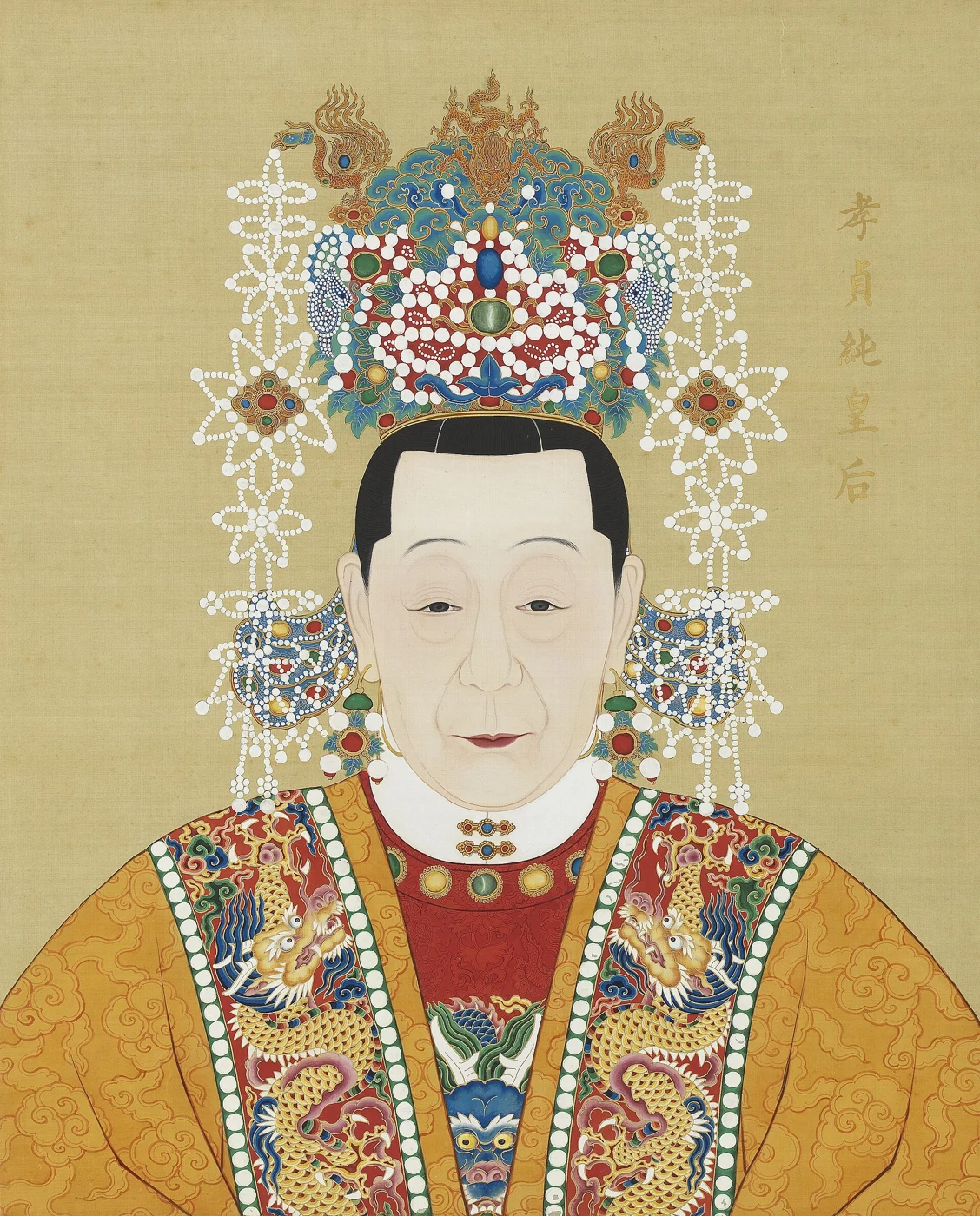
1449 CE–1518 CE
Historical figure
Lady Wang(empress of Emperor Xianzong of Ming)
王氏(明宪宗皇后)
Empress Xiaozhenchun, Lady Wang (1449–1518 according to other accounts), was a woman of Shangyuan whose personal name is not clearly recorded. She became the second empress of Zhu Jianshen, Emperor Xianzong of Ming. After Empress Wu was deposed in 1464 (Tianshun year 8, Ming), Lady Wang was selected and installed as empress. When Xianzong died, his son Zhu Youcheng, Emperor Xiaozong, honored her as empress dowager in her…
1449 CE–1518 CEMing Dynasty
PROFILE
Empress Xiaozhenchun, Lady Wang (1449–1518 according to other accounts), was a woman of Shangyuan whose personal name is not clearly recorded. She became the second empress of Zhu Jianshen, Emperor Xianzong of Ming. After Empress Wu was deposed in 1464 (Tianshun year 8, Ming), Lady Wang was selected and installed as empress. When Xianzong died, his son Zhu Youcheng, Emperor Xiaozong, honored her as empress dowager in her capacity as his father's principal wife and his legal mother. Zhu Houzhao, Emperor Wuzong, later honored her as grand empress dowager. She received the title Cisheng Kangshou in 1510 (Zhengde year 5, Ming) and died in 1518 (Zhengde year 13, Ming), receiving the long posthumous title Empress Xiaozhen Zhuangyi Gongjing Renci Qintian Fusheng Chun and burial with Xianzong at Maoling. The History of Ming characterizes her conduct toward the favored Consort Wan as reserved and untroubled. other accounts gives 1449 as her birth year, whereas another account calls it unknown; this article retains other accounts's main date and notes the disagreement.
- Other names
- Empress Wang; Empress Xiaozhenchun (provisional rendering); Grand Empress Dowager Cisheng Kangshou
- Period
- Ming dynasty
- Date of Birth
- 1449
- Date of Death
- 1518
- State
- Ming dynasty
- Position
- Second empress of Emperor Xianzong of Ming, later empress dowager and grand empress dowager
- Native place
- Shangyuan (present-day Nanjing, Jiangsu)
- Tenure as empress
- 1464–1487
- Honorific title
- Grand Empress Dowager Cisheng Kangshou
- Posthumous title
- Empress Xiaozhen Zhuangyi Gongjing Renci Qintian Fusheng Chun
- Burial
- Maoling, alongside Emperor Xianzong
- Predecessor
- Empress Wu, who was deposed
- Successor in the sequence of empresses
- Empress Zhang, wife of Emperor Xiaozong, after Xianzong's death; Lady Wang then held the distinct rank of empress dowager
- Principal role
- Held the ranks of empress, empress dowager, and grand empress dowager across the reigns of Xianzong, Xiaozong, and Wuzong
LIFE TIMELINE
Empress Wu was deposed and Lady Wang was selected as the new empress. | Empress Wu was deposed and Lady Wang was selected as the new empress.
Emperor Xianzong formally installed Lady Wang as empress. | Emperor Xianzong formally installed Lady Wang as empress.
After Xianzong died and Xiaozong succeeded | After Xianzong died and Xiaozong succeeded, Lady Wang was honored as empress dowager.
Emperor Wuzong succeeded and honored her as grand empress dowager. | Emperor Wuzong succeeded and honored her as grand empress dowager.
Wuzong added the honorific title Cisheng Kangshou. | Wuzong added the honorific title Cisheng Kangshou.
Lady Wang died | Lady Wang died, received her posthumous title, and was buried with Xianzong at Maoling.
BIOGRAPHY
Biography
Selection and installation
Lady Wang was from Shangyuan, and her father was Wang Zhen. When Emperor Yingzong selected a wife for the crown prince Zhu Jianshen, Lady Wang, Lady Wu, and Lady Bai remained among the candidates. After Yingzong died, Zhu Jianshen took the throne in 1464 (Tianshun year 8, Ming). Lady Wu first became empress but was soon deposed. For the reasons behind her deposition, other accounts draws on the Veritable Records of Emperor Xianzong to describe an irregularity involving the eunuch Niu Yu in the selection process; it also records the account that Lady Wu angered Xianzong by punishing the favored Consort Wan. another account emphasizes the latter court conflict. These accounts should not be fused into a single established cause.
Officials repeatedly asked that a new empress be appointed. In 1464 (twelfth day of the tenth month of Tianshun year 8, Ming), Xianzong formally presented Lady Wang with the gold patent and seal at Fengtian Hall. The investiture text in the Veritable Records of Emperor Xianzong praises her upbringing and propriety; those words are official ceremonial praise. Lady Wang remained empress throughout the rest of Xianzong's reign while Consort Wan was favored. The History of Ming describes her response to Wan's position as calm detachment. Later accounts of private remarks supposedly made by Xianzong cannot establish the inner feelings or full course of their relationship.
Dowager ranks and death
When Xianzong died in 1487 (Chenghua year 23, Ming), Zhu Youcheng succeeded as Emperor Xiaozong. Lady Wang was his legal mother as Xianzong's empress, not his birth mother, and Xiaozong honored her as empress dowager. In 1505 (Hongzhi year 18, Ming), Emperor Wuzong succeeded and raised her to grand empress dowager. In the twelfth month of 1510 (Zhengde year 5, Ming), she received the further title Cisheng Kangshou. She died in the second month of 1518 (Zhengde year 13, Ming). other accounts cites the Veritable Records of Emperor Wuzong for the tenth day of that lunar month and an age of seventy; another account gives only the month and describes her age as in her sixties. The sources agree on her death month and posthumous title but differ on age and birth year. She was buried with Xianzong at Maoling, and her spirit tablet was placed in the imperial ancestral temple.
Lady Wang was a native of Shangyuan and the daughter of Wang Zhen. When Emperor Yingzong sought a consort for the heir apparent, Zhu Jianshen, Wang was kept with the Wu and Bo ladies as a candidate. In 1464 (the eighth year of Tianshun) Xianzong ascended the throne and Lady Wu was first made empress, only to be deposed the same year. On the twelfth day of the tenth month Xianzong conferred on Lady Wang the gold tablet and seal in the Fengtian Hall and formally invested her as empress. The investiture text called her a woman grown in a good family whose speech and conduct never departed from propriety, the customary official praise for the occasion. According to the History of Ming, Empress Xiaozhen's biography, Yingzong had named the Wu, Wang and Bo ladies as suitable; Xianzong first raised Lady Wu, and after her deposition raised Lady Wang, only a few months apart.
Empress Wang occupied the central palace for more than twenty years under Xianzong. The emperor favored Consort Wan, whose power overshadowed the palace, yet the empress, in the words of the History of Ming, took it calmly and did not contend, so that she was never deposed through Xianzong's whole reign. This attitude preserved her position and also set the limits of her political role in the Chenghua era. When Xianzong died in 1487, the heir apparent Zhu Youtang came to the throne as Emperor Xiaozong, and Wang was honored as empress dowager in her capacity as his principal mother. The histories record that Xiaozong served the empress dowager with full propriety, and that audiences and banquets followed the regular forms. On Xiaozong's death in 1505 Emperor Wuzong succeeded and Wang was further honored as grand empress dowager. In the twelfth month of 1510 the court added to her style the honorific Cisheng Kangshou, so that she was known in the palace as the Cisheng empress dowager and grand empress dowager.
She died in the second month of 1518. The sources agree on the month; on her age at death one gives seventy and another over sixty, so her birth year cannot be fixed. The court gave her the posthumous title Xiaozhen Zhuangyi Gongjing Renci Qintian Fusheng Chun Huanghou, or Empress Xiaozhenchun for short. She was buried with Xianzong at Maoling in Changping and her tablet placed in the ancestral temple. Passing from empress to empress dowager to grand empress dowager through the reigns of Xianzong, Xiaozong and Wuzong, she holds a clear place in the palace ritual of the mid- and late Ming, though her recorded deeds are comparatively modest.
In Ming empress ritual an empress's posthumous title began with the character xiao, filial, and ended with the last character of the emperor's own title. Xianzong's title ended in chun, purity, so Empress Wang's title closed with the same word, the full form being Xiaozhen Zhuangyi Gongjing Renci Qintian Fusheng Chun Huanghou, commonly shortened to Empress Xiaozhenchun. She was buried with Xianzong at Maoling in Changping, where the Xiaomu Empress Ji, Xiaozong's mother, and the Xiaohui Empress Shao also lie; all three were wives of Xianzong, but only Wang was buried there as reigning empress. The reburial of Lady Ji with imperial honors followed Xiaozong's posthumous elevation of his own mother.
The sources treat her relation to Xiaozong with some reserve. The History of Ming records that Xiaozong served the empress dowager with full propriety, and the same biography notes that the deposed Empress Wu cared for the young Xiaozong in the Western Palace; Empress Wang's standing as principal mother was only truly established after Xianzong's death and Xiaozong's accession. Through more than twenty years of the Chenghua era, facing Consort Wan's monopoly of favor, she preserved her position by taking matters calmly. Consort Bo, Consort Shao and others in the palace bore sons, and such matters as the installation of the heir apparent and the death of Lady Ji were attributed by historians to the Wan faction with little reference to anything Wang did. What the histories record of her concerns investiture, honorifics and burial, which makes her an example among Ming empresses known by rank rather than by deeds.
By Ming ritual an empress could not receive a posthumous title in her lifetime; it was settled by the Board of Rites at the order of the succeeding emperor. Empress Wang's title was proposed under Xiaozong and Wuzong and came down to later ages in the short form Xiaozhenchun. The dates of her investiture, honorifics and burial are all clearly recorded in the Veritable Records, making her a complete case study in Ming empress ritual. An empress's posthumous title normally took its final character from the emperor's own, and since Xianzong's ended in chun, hers closed with the same word, a correspondence consistently observed in the ritual. As to her age at death the Veritable Records of Wuzong and later summaries differ slightly, and historians generally follow the records.
Major Activities
Lady Wang's best documented historical role lies in the succession of ranks within the Ming imperial household. Appointed empress after Lady Wu's deposition, she then held a dowager rank in the reigns of Xiaozong and Wuzong through her status as Xianzong's principal wife and Xiaozong's legal mother. The changes from empress to grand empress dowager are recorded in the History of Ming and in both encyclopedias.
The History of Ming says that she remained composed while Consort Wan dominated the inner palace. That tells us how a later historian represented her court position; it does not establish that she directed a particular political decision. The investiture text and records cited by other accounts chiefly concern ceremony, rank, and titles. The available sources do not clearly attest direct rule by Lady Wang, and a claim of regency would be unwarranted.
Personal Relations
- Wang Zhen was her father. other accounts and another account also identify Wang Yuan, Wang Jun, and other brothers and mention their titles.
- Zhu Jianshen, Emperor Xianzong of Ming, was her husband. Lady Wu preceded her as empress, while Consort Wan belonged to the same court.
- Zhu Youcheng, Emperor Xiaozong of Ming, was Xianzong's son and Lady Wang's legal son, not her biological son. Xiaozong's son Zhu Houzhao, Emperor Wuzong, honored her as grand empress dowager.
- Xiaozong's wife Empress Zhang belonged to the succeeding sequence of empresses; her rank should not be confused with Lady Wang's status as empress dowager.
Historical Assessment
The History of Ming, in its biographies of consorts, briefly records Lady Wang's selection, installation, dowager titles, and burial at Maoling, describing her manner toward the favored Consort Wan as calm. The investiture text in the Veritable Records of Emperor Xianzong praises her propriety in the conventional language of court ritual; it is not an independent biographical judgment. The strongest documentary basis for her historical significance is the continuity of her position as empress and legal mother across Xianzong's deposition of an earlier empress and the accessions of Xiaozong and Wuzong. The sources provide little basis for further judgments about her private personality or political influence.
FIGURES ASSOCIATED WITH THIS DYNASTY
Bibliography
- History of Ming*, “Biographies of Consorts” (project local historical text).