Born in Imperial Palace
Born in the Qianqing Palace on the twenty-fourth day of the ninth month as Xiaozong eldest son.
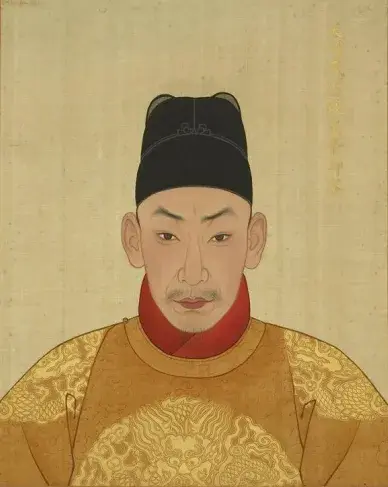
1491 CE–1521 CE
朱厚照
Zhu Houzhao (October 26, 1491 – April 20, 1521), the eldest legitimate son of Emperor Xiaozong (Zhu Youtang) and Empress Xiaokang Jing, reigned as the tenth emperor of the Ming dynasty from 1505 to 1521, known by his era name Zhengde, temple name Wuzong, and posthumous title Emperor Yi. Endowed from youth with exceptional intellect and martial archery prowess, he was invested as Crown Prince in 1492 and ascended the imperial…
Zhu Houzhao (October 26, 1491 – April 20, 1521), the eldest legitimate son of Emperor Xiaozong (Zhu Youtang) and Empress Xiaokang Jing, reigned as the tenth emperor of the Ming dynasty from 1505 to 1521, known by his era name Zhengde, temple name Wuzong, and posthumous title Emperor Yi. Endowed from youth with exceptional intellect and martial archery prowess, he was invested as Crown Prince in 1492 and ascended the imperial throne at the age of fourteen following Xiaozong demise in 1505. During his early reign, Zhu Houzhao favored Grand Eunuch Liu Jin and the Eight Tigers, constructing the Baofang palace retreat outside the Forbidden City and prompting senior chancellors Liu Jian and Xie Qian to resign in protest. In 1510, he decisively executed Liu Jin, promoting upright statesman Yang Tinghe to overhaul the civil administration. Endowed with martial ambition, he defied Confucian court protocols, styling himself Generalissimo Commander-in-Chief Weiwu Zhu Shou and establishing his forward command headquarters in Xuanfu along the northern frontier. In 1517, he personally commanded the Ming armies at the Battle of Yingzhou, slaying an enemy chieftain and routing the grand army of Dayan Khan to secure northern peace. Throughout his reign, he successfully crushed armed rebellions led by Prince of Anhua Zhu Zhifan and Prince of Ning Zhu Chenhao. In late 1520, returning from a prolonged inspection tour of southern China, he accidentally fell into the icy waters of Qingjiangpu while fishing, contracting fatal pulmonary illnesses. In April 1521, he passed away in the Baofang palace at age thirty-one and was entombed in the Kangling Mausoleum. Lacking male issue, his passing prompted Chancellor Yang Tinghe to elevate his cousin Zhu Houcong to the throne.
Born in the Qianqing Palace on the twenty-fourth day of the ninth month as Xiaozong eldest son.
Named Houzhao from the Book of Documents; officially invested as Imperial Crown Prince the next day.
Ascended the imperial throne at age fourteen after Xiaozong demise; inaugurated Zhengde the next year.
Eunuch Liu Jin dominated court affairs; chancellors Liu Jian and Xie Qian failed to purge him and resigned.
Began constructing the Baofang palace complex outside Xihuamen, making it his operational headquarters.
Crushed Prince of Anhua rebellion; acting on memorials from Yang Yiqing and Zhang Yong, executed Liu Jin.
Styled himself Generalissimo Zhu Shou; directed front-line troops to repel the grand invasion of Dayan Khan.
Prince of Ning rebelled in Jiangxi; Wuzong led southern expedition; Wang Shouren captured the rebel prince.
Fell into the freezing canal while fishing at Qingjiangpu in the ninth month, contracting terminal illness.
Died of chronic pulmonary illness in Baofang on the fourteenth of the third month at age thirty-one; buried in Kangling.
On October 26, 1491 AD, Zhu Houzhao was born in the Qianqing Palace of the Forbidden City as the eldest surviving son of Emperor Xiaozong and Empress Zhang. Astrologers noted that his birth elements coincided with auspicious cyclical signs, reflecting the celestial configuration of founding emperor Zhu Yuanzhang. In March 1492, Xiaozong drew upon the Book of Documents to name him Houzhao, symbolizing the brilliant illumination of the realm, and formally invested him as Imperial Crown Prince on the following day.
In the Eastern Palace, Zhu Houzhao displayed extraordinary precocity. Beginning his classical lectures in 1498 at the age of seven, he was taught by twenty leading scholars, including Cheng Minzheng, Liang Chu, and Yang Tinghe. Possessing a photographic memory, he recited previous lessons without hesitation and memorized the names of all his instructors. Courtiers celebrated the boy intellectual brilliance, predicting an era of sage rule.
During daily lectures in the Wenhua Hall, the young prince surprised his preceptors with incisive questions. Analyzing historical dynasties, he deduced that past sovereign collapses stemmed from bureaucratic corruption and imperial complacency, prompting praise from Xiaozong, who saw in him the makings of an empire-expanding conqueror.
Beyond classical scholarship, Zhu Houzhao exhibited a passionate talent for equestrian archery. By age twelve, he could strike targets while galloping at full speed, easily taming fierce steeds from the imperial stables. Contemptuous of sedentary scholars, he believed that physical bravery and martial skill were the true marks of imperial strength.
In the palace grounds, the crown prince organized military drills. Dividing hundreds of young attendants into vanguard, center, and flank formations, he directed mock skirmishes according to classical tactical manuals, enforcing military discipline with wooden staves. Observing from afar, Xiaozong was anxious over his martial obsession, yet quietly admired his natural leadership.
Despite his brilliance, the crown prince grew impatient with dry Confucian moralizing. Observing that elder ministers were constrained by rigid precedents, he resented their attempts to mold him into a passive figurehead. This early ideological friction sowed the seeds of his lifelong struggle against the civil bureaucracy.
In May 1505, Emperor Xiaozong fell mortally ill in the Qianqing Palace. Summoning Grand Secretaries Liu Jian, Li Dongyang, and Xie Qian, he entrusted the youthful heir to their guidance. On June 19, 1505, fourteen-year-old Zhu Houzhao ascended the imperial throne as Emperor Wuzong, inaugurating the Zhengde era the following year.
Upon ascending the throne, young Wuzong relied on his personal attendants from the Eastern Palace, known as the Eight Tigers, led by Grand Eunuch Liu Jin. Catering to the emperor fondness for action, they organized hunting expeditions, wrestling tournaments, and mock battles within the palace grounds, keeping the sovereign absorbed in diversions and provoking alarm among the senior Confucian ministers.
In October 1506, Grand Secretaries Liu Jian and Xie Qian allied with Minister of Revenue Han Wen and dozens of censors to launch a coordinated offensive against the eunuchs. Submitting fierce memorials, they demanded the summary execution of Liu Jin and his faction, threatening resignation if the sovereign refused.
This confrontation marked a pivotal struggle between monarchical autonomy and bureaucratic tutelage. Treating the teenage emperor like an unruly ward, the senior ministers underestimated his fierce independence. By attempting to coerce the sovereign through collective resignations, the cabinet pushed Wuzong into open rebellion against his tutors.
In executive administration, Liu Jin exhibited remarkable energy. Knowing his position depended entirely on imperial favor, he enforced daily reporting systems across all ministries, compelling officials to submit concise summaries of pending affairs and temporarily eliminating bureaucratic procrastination.
Alerted to the plot, Liu Jin and his allies prostrated themselves before Wuzong at midnight, tearfully arguing that the ministers sought to isolate the monarch into a helpless puppet. Resenting ministerial arrogance, the fourteen-year-old emperor struck back decisively on October 25, appointing Liu Jin to direct the Directorate of Ceremonial and placing the secret police under eunuch command.
Confronted with the sovereign coup, Liu Jian and Xie Qian resigned in protest, expecting the emperor to plead for their return. Instead, Wuzong accepted their departures immediately, retaining only Li Dongyang to manage civil affairs and shattering the institutional balance of the court.
With Liu Jin in control, the administration experienced a reign of terror. Operating from his private residence, Liu Jin reviewed imperial memorials and erected monuments listing his enemies as traitors, banishing hundreds of upright officials to remote frontiers.
However, Wuzong never surrendered ultimate control over military forces and judicial authority. Treating Liu Jin as an administrative tool to break ministerial dominance, the emperor kept supreme military tallies in his own hands, requiring the eunuch to report all military appointments for personal review.
To please the emperor and fill state coffers, Liu Jin audited provincial agricultural estates, recovering millions of silver taels. Yet his extortionate exactions alienated the provinces, creating explosive grievances that soon erupted into armed rebellion.
In 1507, weary of the claustrophobic atmosphere of the Forbidden City, Zhu Houzhao initiated the construction of the Baofang palace complex outside the Xihuamen gate. Completed in 1508, he relocated his official residence and military headquarters to this private retreat, governing as the Emperor of the Baofang for the remainder of his reign.
Traditional Confucian chroniclers depicted the Baofang as a den of debauchery filled with wild beasts and courtesans. In reality, modern archival scholarship reveals it to have been an operational command center and multi-ethnic cultural hub. Surrounded by thousands of elite border cavalry selected personally by the emperor, the compound functioned as an autonomous imperial bastion insulated from bureaucratic interference.
The architecture of the Baofang reflected sophisticated fortification design. Built with thick stone ramparts, secret passages, and defensive towers, the compound housed the sovereign private war room, lined with detailed maps of northern frontier passes where Wuzong and his commanders devised strategic operations against the Mongols.
The emperor also displayed an exceptional passion for European firearms and mechanical timepieces. Demanding that imported matchlocks and clocks be disassembled, he supervised weapons artisans in improving metallurgy and gunpowder ratios, equipping his private regiments with rapid-fire arquebuses.
In daily life, Zhu Houzhao discarded court ceremonialism, frequently dressing in common garments to wander through Beijing markets, drinking with merchants in taverns and listening to ordinary public discussions regarding administration.
Within the Baofang, the emperor exhibited a remarkable gift for foreign languages. Contemptuous of rigid Neo-Confucian dogma, he studied Tibetan Buddhism under lamas, learning Tibetan and reading Sanskrit sutras. He also mastered Mongolian, Uyghur, and Jurchen, dressing in nomadic riding garments and embracing an inclusive multi-ethnic worldview.
Dispensing with eunuchs and civil courtiers, Wuzong placed his trust in battle-hardened frontier officers like Jiang Bin, Xu Tai, and Qian Ning. Adopting them as sons and granting them imperial surnames, he stationed northern frontier cavalry in the Baofang, forming a loyal military retinue that answered only to his personal command.
In April 1510, Prince of Anhua Zhu Zhifan rebelled in Ningxia under the pretext of destroying Liu Jin. Wuzong responded swiftly, commissioning Vice Minister Yang Yiqing and Grand Eunuch Zhang Yong to suppress the uprising. After crushing the rebellion, Yang Yiqing convinced Zhang Yong to turn against Liu Jin, exposing the eunuch treasonous ambitions.
On September 13, 1510, Zhang Yong presented an indictment accusing Liu Jin of seventeen capital crimes. Acting decisively, Wuzong ordered the secret police to encircle the eunuch mansion, seizing millions in gold and concealed daggers. The emperor ordered Liu Jin executed by slow slicing, dismantled the internal secret police, and exonerated victimized officials, appointing Yang Tinghe as grand secretary.
The execution of Liu Jin highlighted Wuzong exceptional political command. He neutralized the powerful eunuch without sparking urban unrest, demonstrating that his apparent eccentricity masked an unshakeable grip on supreme authority.
Following the fall of Liu Jin, Wuzong refused to return to passive court ceremonialism, turning his energies toward fulfilling his martial ambitions. In 1512, while suppressing peasant uprisings, he allied with frontier commander Jiang Bin, whose tales of frontier warfare inspired the emperor to take command of northern border defenses personally.
In August 1517, the twenty-six-year-old monarch made the bold decision to leave Beijing in disguise to establish his headquarters at Xuanfu along the northern frontier. Evading protesting censors who barred Juyong Pass, Wuzong slipped through the checkpoints, exulting in the freedom of the northern steppe winds.
His journey through Juyong Pass was a thrilling drama. Disguised as a common merchant, the emperor waited until inspecting censors stepped away before spurring his horse past the gates, vanishing into the autumn grasslands and signaling his complete independence from bureaucratic control.
At Xuanfu, Wuzong established the Zhenguo Mansion, moving the imperial command center within a hundred miles of the steppe frontier. Living in camp alongside border soldiers, he inspected watchtowers in heavy blizzards, inspiring exceptional devotion among frontier garrisons.
During the Battle of Yingzhou, hand-to-hand fighting was ferocious. In blinding sandstorms, Dayan Khan directed repeated cavalry assaults against the imperial banner. Wuzong drew his sword and led counter-charges into the melee, inspiring his men to hold the line until reinforcements arrived.
Establishing his headquarters at Xuanfu, Wuzong styled himself Generalissimo Commander-in-Chief Weiwu Zhu Shou, issuing military orders directly to frontier garrisons under his martial title. Despite horrified protests from Confucian ministers that an emperor should never demean himself as a field general, Wuzong ignored their objections, immersing himself in combat readiness.
In October 1517, Dayan Khan assembled fifty thousand Mongol cavalry to invade Datong and Yingzhou, seeking to capture the emperor. Hearing the alarms, Generalissimo Zhu Shou mounted his charger, personally leading frontier detachments through blizzards to relieve the besieged vanguard at Yingzhou.
On October 11 and 12, 1517, the Battle of Yingzhou raged across the desert plains. Trapped by superior numbers, the Ming vanguard fought desperately until Wuzong arrived with the main army. Brandishing his lance, the emperor charged into the enemy ranks, killing an enemy warrior with his own hands and inspiring his troops to repel repeated Mongol cavalry charges.
After two days of savage melee, the arrival of Ming flank reinforcements convinced Dayan Khan that he was facing the entire imperial host. Fearing encirclement, the Mongol army retreated into the northern steppes in defeat, concluding the Battle of Yingzhou in a historic victory.
Biased Confucian historians subsequently minimized the triumph, absurdly recording that only sixteen enemy heads were taken. Yet the strategic reality was undeniable: the Battle of Yingzhou broke the back of Dayan Khan northern confederacy, securing northern borders against large-scale nomadic invasions for decades.
The victory at Yingzhou reinforced Wuzong confidence in his military abilities. In June 1519, Prince of Ning Zhu Chenhao rebelled in Nanchang, assembling one hundred thousand insurgents to advance along the Yangtze River toward Nanjing, plunging southern provinces into chaos.
Receiving news of the insurrection, Grand Secretary Yang Tinghe mobilized regular forces. However, Wuzong viewed the crisis as another opportunity for military distinction. Appointing himself Generalissimo of Southern Expeditions Zhu Shou, he mobilized thousands of frontier cavalry to march south in August 1519.
The march south provoked ferocious bureaucratic resistance. Over one hundred capital officials knelt at the Meridian Gate for days, pleading with the emperor to abandon the campaign. In a fit of fury, Wuzong ordered mass floggings that killed over a dozen ministers, pushing tensions between the crown and the bureaucracy to an extreme.
In Jiangxi, Wang Yangming brilliant campaign crushed the rebel fleet on Poyang Lake with fire-ships, capturing Zhu Chenhao within forty-three days. This lightning victory saved southern provinces, but left the arriving emperor in an awkward political dilemma.
Arriving at Zhuozhou, the emperor received reports that Wang Yangming had already crushed the rebellion. Utilizing innovative psychological warfare and fire attacks on Lake Poyang, Wang Yangming had routed the rebel fleet and captured the prince alive within forty-three days.
Although frustrated by the loss of battlefield glory, Wuzong accepted the transfer of the rebel captive through Grand Eunuch Zhang Yong. Arriving in Nanjing, the emperor held a formal victory ceremony, demoting the rebel prince and ordering his suicide, terminating the last major princely challenge of the dynasty.
During his year-long stay in Nanjing, Wuzong explored the southern waterways, touring markets in plain clothes, reviewing river fleets, and protecting salt merchants from official harassment, deepening cultural and political ties between the court and the wealthy southern heartland.
In September 1520, the imperial fleet sailed north along the Grand Canal, arriving at Qingjiangpu. Enchanted by the clear waters, the athletic sovereign boarded a small skiff to fish. A sudden surge tipped the boat, throwing the emperor into the freezing autumn canal.
Although dragged from the water by attendants, Wuzong swallowed large volumes of icy water, suffering severe hypothermia and acute pneumonia. Proud and stubborn, he concealed his condition, insisting on traveling north by boat and allowing pulmonary infections to destroy his internal organs.
In December 1520, an emaciated Wuzong arrived in Tongzhou, riding a horse into Beijing before collapsing in the Baofang. On New Year Day 1521, he attempted to preside over court ceremonies in the Qianqing Palace, but suffered a violent hemorrhage and collapsed on the throne, plunging the court into succession panic.
During his final days, Chancellor Yang Tinghe and Eunuch Zhang Yong monitored frontier commanders to prevent military coups, agreeing to elevate fourteen-year-old Zhu Houcong in accordance with ancestral succession statutes.
On April 19, 1521, experiencing a brief moment of consciousness, Wuzong summoned his attendants, declaring that his illness was fatal and instructing them to cooperate with the cabinet in settling affairs of state, accepting personal blame for past errors.
On April 20, 1521, the adventurous monarch died in the Baofang at age thirty-one. Yang Tinghe acted swiftly to arrest Jiang Bin and welcome Zhu Houcong from Hubei to ascend the throne. Wuzong was buried in the Kangling Mausoleum, concluding a colorful and turbulent chapter of Ming history.
Zhu Houzhao was one of the few Ming emperors who possessed genuine martial leadership, demonstrating personal courage in combat against steppe nomads and breaking the passive defensive mindset that had dominated court policy since the Tumu Crisis.
His establishment of the Zhenguo Mansion at Xuanfu restructured northern command. By adopting the persona of Generalissimo Zhu Shou, he bypassed ministerial interference, establishing direct operational links with front-line border commanders and transforming border defense into an active offensive enterprise.
The Battle of Yingzhou stood as his greatest military achievement. Personally commanding his troops under heavy fire, he shattered Dayan Khan invasion force, demonstrating that Ming armies could decisively defeat steppe cavalry in open field engagements.
His introduction of border troops into the capital garrison revolutionized military institutions. By stationing seasoned frontier veterans in the Baofang to train alongside imperial guards, he elevated the combat readiness of capital defenses and established precedents that guided later military reforms.
In weapons development, Wuzong pioneered the integration of European firearms with traditional cavalry formations, testing rapid-fire cannons and establishing combined-arms wagon tactics that inspired later marshals like Qi Jiguang.
His leadership fostered professional martial pride among frontier officers, elevating commanders like Jiang Bin based on merit rather than Confucian literary credentials.
Throughout volatile political crises, Wuzong maintained an unyielding grip on absolute authority. In crushing the rebellions of Prince of Anhua and Prince of Ning, he demonstrated exceptional strategic calm, coordinating military forces with flawless political timing.
In the Anhua crisis, he utilized Yang Yiqing administrative skill alongside Zhang Yong military command, neutralizing the rebellion and using the victory to dismantle Liu Jin tyrannical faction in a single stroke.
In dealing with the Ning rebellion, Wuzong supported Wang Yangming operations while advancing with an imperial army, providing the central authority necessary to conclude the campaign without widespread civil devastation.
His suppression of these rebellions eliminated the armed threat posed by hereditary imperial princes, permanently stripping regional princes of military commands and securing the centralized authority of the throne.
Throughout his reign, Wuzong maintained ultimate command over his subordinates. Despite the apparent influence of favorites like Liu Jin and Jiang Bin, the sovereign could dismiss and execute them with a single decree, proving that his authority was never compromised.
Zhu Houzhao was a cultural rebel who defied rigid Neo-Confucian dogma, embodying an early modern quest for individual expression and cross-cultural engagement.
His residence in the Baofang symbolized his rejection of claustrophobic palace etiquette, living among common soldiers, foreign ambassadors, and religious scholars in an environment that bridged social hierarchies.
His linguistic mastery was unprecedented among Chinese sovereigns, speaking Tibetan, Mongolian, and Persian fluently. His engagement with Tibetan Buddhism fostered political harmony across the southwestern plateau, ensuring border tranquility.
In foreign diplomacy, his reception of Portuguese envoy Tomé Pires marked the first direct official encounter between China and maritime Europe, displaying a progressive curiosity toward Western science and geography.
His patronage of diverse traditions encouraged cultural vitality, providing the backdrop for the rise of vernacular literature and urban theater that defined late Ming society.
Despite his brilliance, Wuzong erratic governance inflicted severe damage on administrative institutions. His prolonged absence from court audiences disrupted executive functions, creating dangerous backlogs of public business.
His lavish expenditures on palaces and frontier expeditions depleted treasury reserves, forcing the court to levy burdensome surtaxes that fueled peasant unrest, such as the widespread Liu Six and Liu Seven rebellions.
His favoritism toward corrupt military officers created predatory cliques that exploited local populations and menaced civil administration.
Furthermore, his failure to produce an heir sparked constitutional crises upon his death, precipitating the bitter Great Rites Controversy that consumed the early reign of his successor, Emperor Jiajing.
Zhu Houzhao lived as an extraordinary historical paradox: a warrior monarch of exceptional talent and progressive vision, whose undisciplined individualism strained the institutions of the empire he was born to govern.
FIGURES ASSOCIATED WITH THIS DYNASTY