Entered the palace | Selected for palace service; her age is unknown
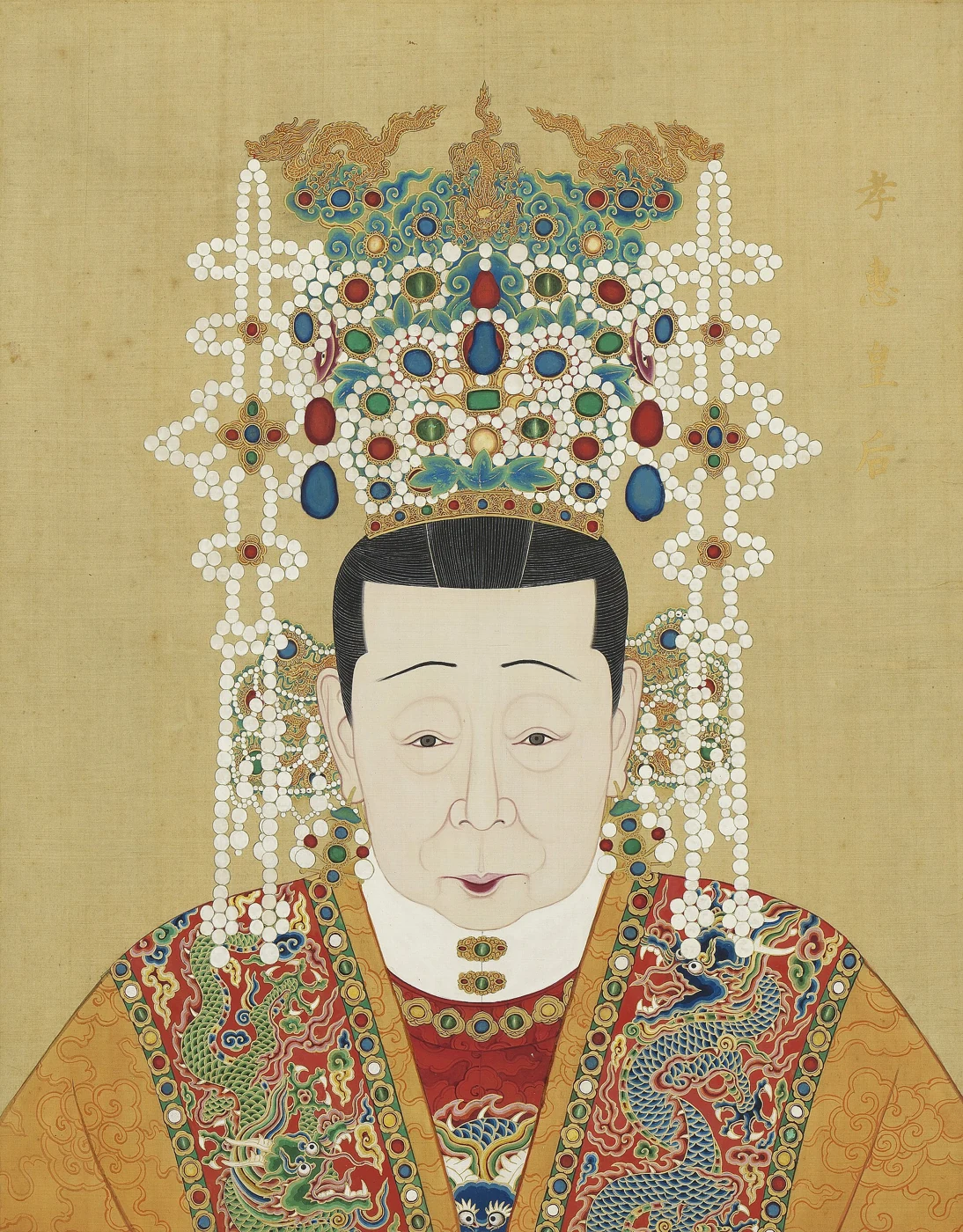
1452 CE–1522 CE
Empress Dowager
Empress Dowager Shao
邵氏(孝惠邵太后)
Empress Dowager Xiaohui Shao (died December 5, 1522, the gengshen day of the eleventh month of the first year of the Jiajing era), Lady Shao, was a native of Changhua County, Hangzhou Prefecture, Zhejiang, present-day Lin'an District of Hangzhou. She was a noble consort of Emperor Xianzong of Ming Zhu Jianshen, the mother of Zhu Youyuan, Prince Xian of Xing, and the grandmother of Emperor Shizong of Ming Zhu Houcong. In 1476,…
1452 CE–1522 CEMing Dynasty
PROFILE
Empress Dowager Xiaohui Shao (died December 5, 1522, the gengshen day of the eleventh month of the first year of the Jiajing era), Lady Shao, was a native of Changhua County, Hangzhou Prefecture, Zhejiang, present-day Lin'an District of Hangzhou. She was a noble consort of Emperor Xianzong of Ming Zhu Jianshen, the mother of Zhu Youyuan, Prince Xian of Xing, and the grandmother of Emperor Shizong of Ming Zhu Houcong. In 1476, the twelfth year of Chenghua, she was created Consort Chen and was later promoted to Noble Consort. After Emperor Shizong ascended the throne, she was honored as Empress Dowager. In 1522, the first year of Jiajing, she received the honorific title Empress Dowager Shou'an and died in the eleventh month of the same year. She was buried in the Maoling Mausoleum. Her final posthumous title was Empress Xiaohui Kangsuwen Renyi Shun Xietian Yousheng.
- Alternative names
- Empress Dowager Xiaohui Shao; Noble Consort Shao
- Era
- Ming
- Dynasty / polity
- Ming
- Identity
- Empress Dowager
- Date of Birth
- Not recorded in historical sources
- Date of Death
- December 5, 1522 CE(1st year of the Jiajing era, 11th month)
- Ethnicity / group
- Not reliably confirmed by available sources
- Native place
- Changhua County, Hangzhou Prefecture, Zhejiang (present-day Lin'an District, Hangzhou, Zhejiang)
- Place of birth
- Unknown
- Posthumous title
- Empress Xiaohui Kangsuwen Renyi Shun Xietian Yousheng
- Major achievements
- Noble Consort of Emperor Xianzong; mother of Zhu Youyuan, Prince Xian of Xing; grandmother of Emperor Shizong; posthumously honored as Empress Dowager Xiaohui
- Courtesy / Art Name
- Empress Dowager Xiaohui Shao, Consort Shao
- Dynasty
- Ming
- Ethnicity
- Not reliably confirmed in available sources
- Ancestral Home
- Changhua County, Hangzhou Prefecture, Zhejiang (present-day Lin'an District, Hangzhou, Zhejiang)
- Place of Birth
- Unknown
- Place of Death
- Unknown
- Lifespan
- Unknown
- Major Offices
- See the Biography section
- Peerage
- Consort Chen, who bore the Prince of Xing
- Posthumous Name
- The Empress Xiaohui Kangsu Wenren Yishun Xietian Yousheng
- Major Achievements
- Consort of Emperor Xianzong, mother of Zhu Youyuan, Prince Xian of Xing, grandmother of Emperor Shizong, posthumously honoured as Empress Dowager Xiaohui
LIFE TIMELINE
Crown Prince Zhu Jianshen ascended the throne | He became Emperor Xianzong of Ming; Lady Shao became one of his consorts, though the exact date and circumstances are unknown
Gave birth to Zhu Youyuan, Prince of Xing | Created Consort Chen in the same year
Gave birth to Zhu Youlun | Gave birth to Zhu Youlun, Prince Hui of Qi
Gave birth to Zhu Youyun | Gave birth to Zhu Youyun, Prince Jing of Yong
Emperor Xianzong became gravely ill | Lady Shao was promoted to Noble Consort; Emperor Xianzong died
Her second son Zhu Youlun died | He was twenty-three years old
Her youngest son Zhu Youyun died | He was killed when his princely residence collapsed in an earthquake
Emperor Shizong ascended the throne | Zhu Houcong succeeded to the imperial line and honored Lady Shao as Empress Dowager
Received the honorific title Empress Dowager Shou'an | Died on the gengshen day of the eleventh month, December 5 of that year
Buried in the Maoling Mausoleum | Given the posthumous title Empress Dowager Xiaohui Kangsuwen Renyi Shun Xietian Yousheng
Redesignated Grand Empress Dowager | In the seventh month, her title was changed to Grand Empress Dowager Xiaohui Kangsuwen Renyi Shun Xietian Yousheng
Her spirit tablet was transferred to the mausoleum hall and she was styled Empress | Like Empress Dowager Xiaosu Zhou and Empress Dowager Xiaomu Ji, she ultimately received the posthumous title Empress Xiaohui Kangsuwen Renyi Shun Xietian Yousheng
BIOGRAPHY
Biography
Family Background and Early Life Lady Shao's father was Shao Lin and her mother was Lady Yang. The family was poor, but Lady Shao herself was literate, observant of proper conduct, skilled in poetry and prose, and described as beautiful. A folk tale claimed that seven successive betrothed men died before marrying her. According to the story, a military officer who refused to believe the superstition insisted on marrying her but fell from his horse and died while riding to fetch the bride. Lady Shao was then said to have been sold by her father to the eunuch stationed in Hangzhou. Official histories do not record her year of birth. The only recorded fact is that she was selected to enter the palace in 1460, the fourth year of Tianshun. ### Entry into the Palace and Creation as Consort In 1464, the eighth year of Tianshun, the seventeen-year-old Crown Prince Zhu Jianshen ascended the throne as Emperor Xianzong of Ming. It is unknown exactly when or how Lady Shao became one of his consorts. A story says that one night she recited a poem about red leaves under the moon, attracted Xianzong's attention, and thereafter received imperial favor. In 1476, the twelfth year of Chenghua, she gave birth to Zhu Youyuan, Prince of Xing, and was created Consort Chen in the same year. In 1478 she gave birth to Zhu Youlun, Prince Hui of Qi, and in 1481 to Zhu Youyun, Prince Jing of Yong. ### Succession Struggle and Promotion to Noble Consort Lady Shao had a close relationship with Noble Consort Wan. Under Wan's influence, Emperor Xianzong several times considered deposing Crown Prince Zhu Youcheng, later Emperor Xiaozong of Ming, and replacing him with his favored son Zhu Youyuan, Prince of Xing. Lady Shao aligned herself with Noble Consort Wan's faction and used Wan's influence, together with tensions involving the crown prince and Empress Dowager Zhou, in an effort to secure the succession for the Prince of Xing. The effort ultimately failed. When Emperor Xianzong became seriously ill, Lady Shao was promoted to Noble Consort. By then she had become the highest-ranking consort in the inner palace after Noble Consort Wan. Shortly before Xianzong's death, Empress Wang came to visit the emperor for a second time. Lady Shao sent her away on the grounds that the emperor was unaccustomed to having unfamiliar people beside him. ### Separation from Her Sons and Later Years When Zhu Youyuan, Prince Xian of Xing, left the capital for his fief at Anlu in Hubei, Noble Consort Shao was not permitted to accompany him and remained in the palace. Mother and son frequently exchanged poems and rhapsodies. Her second son Zhu Youlun took up his fief in De'an Prefecture and died in 1501, the fourteenth year of Hongzhi, at only twenty-three, leaving two daughters. Her youngest son Zhu Youyun took up his fief in Hengzhou. He was described as filial, friendly toward his brothers, respectful, mild in temperament, and fond of learning. In 1507, the second year of Zhengde, an earthquake caused his princely residence to collapse, killing him. He left no son. In 1521, the sixteenth year of Zhengde, Emperor Wuzong of Ming Zhu Houzhao died without a son. Empress Dowager Zhang selected Zhu Houcong, the second son of the Prince Xian of Xing, to succeed to the imperial throne as Emperor Shizong of Ming. By then Lady Shao was elderly and blind. When she learned that her own grandson had become emperor, she wept with joy and felt Shizong's body from head to foot with her hands. Shizong honored her as Empress Dowager. In 1522, the first year of Jiajing, he bestowed on her the honorific title Empress Dowager Shou'an. She died on the gengshen day of the eleventh month, December 5 of that year. ### Posthumous Honors Emperor Shizong originally planned to transfer his grandmother's burial to the Maoling Mausoleum in the second month of the following year. Grand Secretary Yang Tinghe and others remonstrated that repeated construction at an ancestral mausoleum was improper and might disturb the spirits. Shizong rejected their objection and had her buried at Maoling. She received the posthumous title Empress Dowager Xiaohui Kangsuwen Renyi Shun Xietian Yousheng and was separately worshipped in the Fengci Hall. In the seventh month of 1528, the seventh year of Jiajing, her title was changed to Grand Empress Dowager Xiaohui Kangsuwen Renyi Shun Xietian Yousheng. In 1536, the fifteenth year of Jiajing, her spirit tablet was moved to the mausoleum hall and she was styled Empress, like Empress Dowager Xiaosu Zhou and Empress Dowager Xiaomu Ji. Her final posthumous title was Empress Xiaohui Kangsuwen Renyi Shun Xietian Yousheng.
Major Activities
Giving Birth to Imperial Princes Lady Shao bore three sons: Zhu Youyuan, Prince Xian of Xing, born in 1476; Zhu Youlun, Prince Hui of Qi, born in 1478; and Zhu Youyun, Prince Jing of Yong, born in 1481. Her eldest son Zhu Youyuan was the father of Emperor Shizong Zhu Houcong and was later posthumously honored as Emperor Xian of Xing. Her second and youngest sons both died without male heirs, and their princely lines were abolished. ### Succession Activities With the support of Noble Consort Wan, Lady Shao attempted to secure the position of heir apparent for the Prince of Xing. While Noble Consort Wan was alive, she repeatedly spoke against Crown Prince Zhu Youcheng, and Emperor Xianzong several times considered deposing him. The effort ultimately failed when Zhu Youcheng succeeded to the throne as Emperor Xiaozong. The episode reflects the intensity of inner-palace political struggles late in the Chenghua reign. ### Literary Exchanges between Mother and Son After the Prince Xian of Xing left for his fief, Lady Shao remained in the palace and mother and son were separated for many years. They often exchanged poetry and rhapsodies, a relatively unusual example of sustained literary correspondence between mother and son within the Ming imperial family. ### Honor as Imperial Grandmother After Emperor Shizong ascended the throne, Lady Shao was honored as Empress Dowager by virtue of being his grandmother. In 1522 she received the honorific title Empress Dowager Shou'an. This was an unusual Ming example of a paternal grandmother who was neither the emperor's legal mother nor biological mother receiving the title and honorifics of an Empress Dowager.
Personal Relations
- Lady Yang: mother
- Zhu Youyuan: eldest son, Prince Xian of Xing and father of Emperor Shizong
- Zhu Youlun: second son, Prince Hui of Qi
- Zhu Youyun: youngest son, Prince Jing of Yong
- Zhu Houcong: grandson, Emperor Shizong of Ming ### Imperial Relations - Zhu Jianshen: Emperor Xianzong of Ming, husband
- Zhu Youcheng: Emperor Xiaozong of Ming, of the generation of her stepsons and a target in the succession struggle
- Zhu Houzhao: Emperor Wuzong of Ming, of the generation of her great-grandchildren
- Empress Dowager Zhang: mother of Emperor Wuzong and the decision-maker who selected Emperor Shizong to succeed ### Associates and Conflicts - Noble Consort Wan: political ally whose influence Lady Shao relied upon
- Empress Wang: Empress of Xianzong, with whom Lady Shao had conflict and whom she once sent away from the emperor's bedside
- Empress Dowager Zhou: Emperor Xianzong's mother, whose relationship with the crown prince was marked by tension
- Yang Tinghe: Grand Secretary who opposed disturbing the Maoling Mausoleum for Lady Shao's burial
Historical Assessment
Ming and Contemporary Assessments - Emperor Shizong Zhu Houcong successively honored her as Empress Dowager and Grand Empress Dowager, and her final posthumous title was Empress Xiaohui Kangsuwen Renyi Shun Xietian Yousheng, reflecting exceptionally high ceremonial honors.
- Grand Secretary Yang Tinghe and others argued that repeated works at an ancestral mausoleum were improper and might disturb the spirits, showing the caution of court officials toward the ritual arrangements surrounding her burial.
- The History of Ming included her in the biographies of imperial consorts and treated her as an important consort of Emperor Xianzong's reign. ### Early to Mid-Qing Assessments - The History of Ming described her as literate, observant of ritual propriety, and skilled in poetry and prose, thereby acknowledging her learning.
- Qing historians often focused on her participation in the succession struggle, regarding her reliance on Noble Consort Wan in seeking the heirship for the Prince of Xing as one aspect of inner-palace political intervention during Chenghua.
- Qing works such as Major Events in Ming History, Arranged by Topic incorporated her story into narratives of palace struggles under Emperor Xianzong. ### Late Qing and Republican Period - Republican-era scholars such as Meng Sen examined the relationship between Lady Shao and Noble Consort Wan and the disputed succession episode in studies of Ming palace history.
- Some scholars also considered, from the perspective of institutional history, the ritual implications of Emperor Shizong honoring his grandmother as Empress Dowager. ### Modern Assessments - Modern studies of Ming political history and palace institutions treat Lady Shao as an important figure in the structure of Emperor Xianzong's inner court and analyze her relationships with Noble Consort Wan and Empress Wang.
- In the television drama The Palace, a fictionalized version of Lady Shao under the name Shao Qingzi appears as an important participant in palace struggle, reflecting her presence in popular culture.
FIGURES ASSOCIATED WITH THIS DYNASTY
Bibliography
- History of Ming*, Biographies of Imperial Consorts
- Relevant volumes of the Veritable Records of the Ming
- Meng Sen, Lectures on Ming and Qing History
- Relevant studies of Ming court history