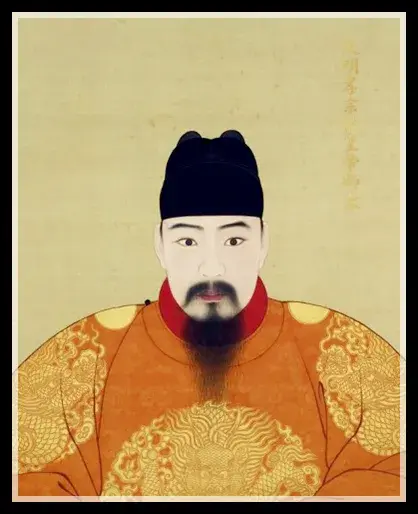
Biography
Harem Peril and Clandestine Upbringing
Zhu Youtang was born on July 30, 1470, in the western quarters of the Forbidden City under perilous circumstances. His birth mother, Lady Ji, was an educated woman from a native chieftain family of He County in Guangxi who had been captured during military campaigns and assigned to the imperial treasury library. When the Chenghua Emperor encountered her by chance, an encounter occurred that resulted in her pregnancy. At that time, the imperial harem was dominated by the jealous Noble Consort Wan, who ruthlessly ordered the forced termination of any rival palace woman's pregnancy. When Consort Wan dispatched palace maids to inspect Lady Ji, the attendants sympathized with her plight, falsely reporting that she merely suffered from an abdominal illness, which allowed Lady Ji to be discreetly relocated to the secluded Anle Hall.
During his early infancy in the Anle Hall, Zhu Youtang was shielded from discovery through the heroic solidarity of loyal palace servants. Consort Wan eventually received rumors of a newborn child and ordered the Directorate of Ceremonial eunuch Zhang Min to drown the infant. Zhang Min, horrified by the prospect of murdering his sovereign's offspring, concealed the infant in a secluded chamber and sustained him with rice broth. The deposed Empress Wu, who resided nearby in the western palace, also frequently assisted in caring for the vulnerable child. Through the steadfast silence and protection of these court attendants, Zhu Youtang miraculously survived in hiding for five years amidst constant danger.
In May 1475, the Chenghua Emperor, examining his reflection in a mirror, lamented that he was approaching thirty years of age without a living male heir to inherit the dynastic altar. Zhang Min prostrated himself before the monarch and disclosed the secret existence of the six-year-old prince sheltered in the western quarters. Overjoyed and astonished, the sovereign immediately dispatched palanquin attendants to escort Zhu Youtang to the Wenhua Hall. The Chenghua Emperor formally bestowed the name Zhu Youtang upon his son and announced his existence to the empire. Tragically, Lady Ji died suddenly in the palace the following month, and Zhang Min committed suicide shortly thereafter, sending shockwaves through the imperial court.
Investment as Crown Prince and Early Education
On December 4, 1475, the six-year-old Zhu Youtang was officially invested as Crown Prince at the Hall of Supreme Harmony. Recognizing that the young heir remained vulnerable to harem intrigues, the sovereign's birth mother, Empress Dowager Zhou, personally took the boy into her Renshou Palace to oversee his daily upbringing. Empress Dowager Zhou monitored every meal and drink with utmost vigilance, instructing the young prince never to consume food or beverages when visiting the palace of Consort Wan. Under the protective guardianship of his grandmother, Zhu Youtang safely traversed the treacherous pitfalls of his formative childhood years.
Upon commencing his formal classical education, Zhu Youtang exhibited exceptional intelligence and an earnest, deferential demeanor. Every morning at dawn, he arrived punctually at the Wenhua Hall to receive classical instruction in the Confucian Classics and historical annals from imperial lecturers. He listened with unbroken concentration, reciting voluminous chapters without a single error. Whenever a lecturer inadvertently mispronounced a character, the young prince never openly corrected or embarrassed the scholar, remaining tactfully silent until the lecturer self-corrected. The imperial preceptors marveled at his natural modesty and erudition, and the scholar-official community placed immense hopes in the virtuous heir.
Succession Crisis and the Mount Tai Omen
During the closing years of the Chenghua era, the aging monarch became increasingly captivated by Daoist alchemy while continuing his blind devotion to Consort Wan. Resenting that her own infant son had died prematurely and bitterly envying Zhu Youtang, Consort Wan repeatedly conspired with sycophantic courtiers and occultists to orchestrate the deposition of the Crown Prince in favor of Prince of Xing. In March 1485, the Chenghua Emperor summoned the Directorate of Ceremonial seal-holding eunuch Huai En, intimating his intention to alter the imperial succession. Huai En displayed resolute moral integrity, knocking his head against the flagstones and swearing to face death rather than endorse such an unjust decree, for which he was stripped of office and exiled.
Just as the dynastic succession stood on the brink of catastrophic turmoil, a severe earthquake struck the sacred region of Mount Tai in Shandong Province. Officials from the Directorate of Astronomy submitted an urgent memorial interpreting the seismic upheaval as a dire cosmic warning directed at the status of the Eastern Palace heir apparent, cautioning that only an auspicious celebration centered on the Crown Prince could avert divine retribution. Shaken by the omen, the Chenghua Emperor definitively abandoned the scheme to depose his heir and issued an edict selecting Lady Zhang as Crown Princess. This cosmic event settled dynastic anxiety, foiled Consort Wan's designs, and solidified Zhu Youtang's rightful standing.
Imperial Accession and Eradication of Factions
On September 9, 1487, the Chenghua Emperor passed away after a prolonged illness. On September 22, Crown Prince Zhu Youtang ascended the throne in the Hall of Supreme Harmony, proclaiming that the following calendar year would initiate the Hongzhi era. Inheriting an administration plagued by rampant clerical corruption, excessive occultist patronage, and eunuch abuses, the eighteen-year-old sovereign acted with remarkable decisiveness. Immediately following his coronation, he issued a comprehensive imperial amnesty while launching a systematic and unsparing campaign to purge the entrenched corrupt elements from the central court.
Zhu Youtang first stripped the notorious Daoist alchemists Li Zisheng, Deng Chang'en, and Zhao Yuzhi of their irregular ministerial titles, confiscating their fortunes and banishing them to remote frontier garrisons. He then degraded the corrupt eunuch Liang Fang, who had depleted state funds through the procurement of exotic curiosities, demoting him to junior rank and reclaiming his illicit holdings. Furthermore, he demoted Consort Wan's powerful brother, Military Commissioner Wan Xi, eliminating the predatory influence of the Wan maternal clan. With several ringleaders perishing along their journey into exile, the widespread public indignation that had accumulated over decades was swiftly dispelled, revitalizing the moral authority of the dynastic center.
Following the initial purge, the new emperor directed his scrutiny toward the thousands of extraordinary appointees who had bypassed standard civil service evaluations during the Chenghua era. Under previous imperial favoritism, opportunistic individuals had obtained official titles directly through palace intercession and bribery. Zhu Youtang cancelled over two thousand such irregular commissions in the Ministries and auxiliary courts, expelling the unqualified officeholders. Simultaneously, he expelled more than a thousand foreign monks, Daoist masters, and occult ritualists who had resided in the capital consuming imperial grain supplies. This sweeping administrative cleansing decisively restored structural integrity to the bureaucratic apparatus.
Restoring Worthy Statesmen and Cabinet Renewal
In tandem with removing opportunistic courtiers, Zhu Youtang demonstrated an inclusive and enlightened governance philosophy by recalling veteran statesmen who had previously been dismissed for outspoken remonstrance. Acting upon the recommendations of loyal officials and the rehabilitated eunuch Huai En, the emperor summoned the elderly and uncompromising Wang Shu, appointing him Minister of Personnel. Entrusted with supreme authority over bureaucratic evaluations, Wang Shu eradicated private patronage, judged officials strictly upon administrative integrity and civic welfare, and promoted scores of incorruptible scholars, entirely transforming the ethical atmosphere of imperial administration.
At the highest tier of decision-making, the emperor systematically restructured the Grand Secretariat. The senior grand secretary Wan An, widely despised for moral servility and incompetence, had presented manuals of aphrodisiac formulas to the late sovereign. Zhu Youtang located these preserved boxes in the inner palace and returned the sealed memorials inscribed with Wan An's signature directly to the grand secretary. Humiliated and terrified, Wan An promptly resigned and departed the capital. In his stead, the emperor appointed the erudite institutional scholar Qiu Jun and elevated the prudent statesman Xu Pu to senior grand secretary, setting the cabinet upon an upright institutional path.
During Xu Pu's tenure, Zhu Youtang further introduced remarkable scholars into the Grand Secretariat, elevating Liu Jian, Li Dongyang, and Xie Qian to the cabinet. Liu Jian was resolute and decisive on critical state matters; Li Dongyang possessed profound scholarly erudition and strategic foresight; Xie Qian was famously articulate, upright, and uncompromising in council. Bound by deep mutual respect, the three statesmen functioned in harmonious synergy, earning historical renown as the Three Masters of Hongzhi. The emperor placed absolute confidence in their counsel, creating one of the most harmonious partnerships between sovereign and ministers in Chinese history.
Diligent Governance and Restoration of Audiences
To bridge the historical estrangement between the throne and the bureaucracy, Zhu Youtang vigorously revitalized the ancient tradition of imperial audiences and palace lectures. Regardless of seasonal extremes, he arose before dawn every morning to convene the morning audience, personally receiving memorials from the six ministries and discussing policy execution face-to-face. Following morning assemblies, he frequently adjourned to the Wenhua Hall terrace to summon cabinet secretaries and departmental ministers for intimate deliberations on urgent frontier or agrarian matters, regularly extending official conferences deep into the evening hours.
The sovereign energetically expanded channels of open remonstrance, granting lower-ranking censors and supervising secretaries unprecedented freedom to critique government shortcomings without fear of reprisal. During the early Hongzhi reign, hundreds of memorials addressing policy failures were submitted; even when memorials contained abrasive or overly candid phrasing, Zhu Youtang responded with leniency and philosophical tolerance. He strictly curtailed the clandestine surveillance of the Eastern Depot and Embroidered Uniform Guard, forbidding arbitrary arrests and manufactured conspiracies. Freed from the climate of terror, the scholar-gentry engaged passionately in administrative improvement.
Believing that orderly governance required standardized institutional codes, Zhu Youtang prioritized the comprehensive codification of administrative regulations. Because statutory precedents had proliferated haphazardly since the early Ming, leading to contradictory legal applications, the emperor commissioned Xu Pu, Qiu Jun, and Li Dongyang to compile the monumental Collected Statutes of the Ming Dynasty. This authoritative compendium assembled statutes across civil, fiscal, ritual, military, judicial, and public works sectors, providing the empire with an enduring constitutional and operational framework that guided bureaucratic conduct throughout the remainder of the dynasty.
Hydraulic Control and Grand Canal Restoration
During the early years of the Hongzhi reign, devastating floods repeatedly breached the lower dykes of the Yellow River, severely jeopardizing the Grand Canal—the economic artery sustaining imperial grain supplies. In 1492, the Yellow River ruptured its embankments at Zhangqiu, disgorging massive silt and torrents into the Grand Canal route, stranding grain fleets and threatening the capital with grain shortages. Confronting this national crisis, Zhu Youtang bypassed routine bureaucratic seniority to appoint Right Deputy Censor-in-Chief Liu Daxia as supreme director of hydraulic works, commanding him to rush to the disaster zone and stabilize the breached waterways.
Liu Daxia implemented a comprehensive hydraulic engineering strategy based on rigorous topographical surveys, dredging ancient channels, constructing auxiliary retaining dykes, and confining riverbeds to accelerate silt scouring. Braving torrential downpours alongside labor forces totaling hundreds of thousands of soldiers and civilians, Liu Daxia erected the monumental Taihang Embankments and effectively sealed the Zhangqiu breach after years of unremitting toil. The canal corridor was restored to complete navigability, permanently averting widespread regional inundation. Zhu Youtang rewarded Liu Daxia handsomely and established permanent river conservancy standards.
Salt Tax Restructuring and Military Revitalization
The imperial treasury and frontier military logistics depended heavily on the salt voucher system, but decades of corruption had allowed princely houses and merchants to hoard vouchers, causing severe frontier granary deficits. In 1492, Minister of Revenue Ye Qi memorialized requesting the implementation of the monetization reform known as Kaizhong Zhese, permitting merchants to deposit silver bullion directly into the central treasury in exchange for salt distribution licenses. Recognizing the growing commercialization and monetization of silver across the economy, Zhu Youtang approved the policy, swiftly infusing millions of silver taels into state coffers and stabilizing border defense provisioning.
Addressing the long-standing decay and fraudulent attendance within the capital garrison divisions, Zhu Youtang tasked Minister of War Ma Wensheng with leading sweeping military reforms. Supported unwaveringly by the throne, Ma Wensheng conducted rigorous audits across the Twelve Integrated Camps, purging thousands of fictitious names from military registers and reclaiming enlisted soldiers who had been illegally appropriated as domestic servants by aristocratic households. He enforced strict tactical training, weeded out disabled personnel, and re-equipped units with advanced firearms, substantially restoring the combat readiness of the imperial defense forces.
Along the volatile northwestern frontier, the Turpan Khanate repeatedly invaded Hami, seizing the seal of the pro-Ming loyal ruler Shanba and severing strategic overland silk routes. Zhu Youtang adopted a balanced doctrine of diplomatic coercion and military readiness formulated by Ma Wensheng, dispatching Gansu frontier forces to fortify strategic mountain passes while imposing a comprehensive commercial embargo on Central Asian trade. Ming forces successfully ambushed and killed the Turpan rebel commander Yalan, retaking Hami and re-establishing imperial sovereignty over the key western border outposts.
Agrarian Relief and Containment of Imperial Estates
Deeply convinced that peasant livelihoods constituted the ultimate foundation of dynastic stability, Zhu Youtang pursued a steadfast policy of agricultural relief and fiscal moderation throughout his reign. When northern provinces suffered recurrent droughts, frost, and hailstorms, or when southern prefectures experienced seasonal floods, the emperor routinely dispatched special commissioners to distribute granary reserves, remitting both current land taxes and historic labor service arrears. He issued explicit prohibitions forbidding local magistrates from fabricating auxiliary levies, ensuring that displaced cultivators could return safely to productive husbandry.
To address the alarming proliferation of imperial estates and aristocratic manors that had dispossessed thousands of smallholders since the Chenghua period, Zhu Youtang initiated an aggressive land survey program. Incorruptible censors were dispatched throughout the metropolitan prefectures of Shuntian, Baoding, and Zhending to inspect boundary markers and investigate fraudulent land purchases coerced by noble houses. Upon verification, vast tracts of seized agricultural land were confiscated from imperial relatives and returned to local yeomen, while predatory estate managers were severely punished, temporarily arresting the uncontrolled expansion of feudal latifundia.
Judicial Clemency and Statutory Standardization
Endowed with profound personal empathy, Zhu Youtang attached immense importance to the sanctity of human life within the judicial process, consistently advocating judicial clemency and procedural precision. He repeatedly instructed the Ministry of Justice, the Censorate, and the Court of Judicial Review to ground verdicts solely upon tangible evidence, strictly proscribing coercive confessions extracted through torture. Whenever death sentences were submitted for imperial ratification, the emperor spent late nights personally examining case files, commuting capital sentences to exile or hard labor whenever an ambiguity or mitigating circumstance could be identified.
To eliminate contradictory judicial interpretations and unregulated penal cruelty, Zhu Youtang promulgated the revised Precedents for Criminal Judgments, synthesizing standard dynastic statutes with contemporary case law into an integrated procedural code for the high courts. Concurrently, he prohibited the excessive infliction of palace floggings against court officials, establishing that ministers should not suffer corporal degradation unless convicted of treason. This ethos of humane justice permeated provincial tribunals, where judicial magistrates followed the royal example by reducing severe penalties, fostering an orderly and benevolent legal environment.
Domestic Harmony and Imperial Monogamy
In his private domestic life, Zhu Youtang established an extraordinary historical precedent by practicing absolute monogamy throughout his life. Unlike virtually all other monarchs in imperial Chinese history, he refused to maintain concubines, consorting exclusively with his primary consort, Empress Zhang. The imperial couple shared profound intellectual and personal affection, dining together and residing in shared chambers much like an ordinary scholar-official household. This exceptional marital fidelity completely shielded the Hongzhi court from the vicious harem infighting and succession plots that had destabilized previous reigns.
Because of the emperor's deep devotion to Empress Zhang, her brothers Zhang Heling and Zhang Yanling were elevated to prominent dukedoms and marquisates, receiving extensive estates. The Zhang brothers occasionally acted presumptuously in the metropolitan region, provoking critical memorials from outspoken censors. While Zhu Youtang shielded his in-laws from harsh criminal prosecution out of affection for the empress, he repeatedly summoned the brothers into the inner court to deliver stern verbal admonitions, ordering them to return encroached peasant lands and successfully deterring them from meddling in high state policymaking.
The Crown Prince and Late-Career Fatigue
On October 26, 1491, Empress Zhang gave birth to the imperial firstborn, Zhu Houzhao, in the Kunning Palace. Overjoyed by the birth of an heir, Zhu Youtang formally invested him as Crown Prince the following year. As his only surviving son (a second son, Zhu Houwei, died in infancy), Zhu Houzhao received intensive education under the empire's most distinguished scholars, including Yang Tinghe and Wang Ao. While the boy displayed brilliant intellect, his excessive enthusiasm for equestrian sports and martial games caused growing paternal anxiety for the emperor, who understood the immense burdens of statecraft.
During the latter half of his reign, Zhu Youtang's physical constitution deteriorated precipitously under the unrelenting workload of state governance. Decades of early morning assemblies and nocturnal document review induced severe gastrointestinal ailments and systemic exhaustion. Tormented by physical frailty, the emperor occasionally yielded to eunuch suggestions, experimenting with Daoist longevity elixirs and hosting Daoist ceremonies in the palace. When high grand secretaries Liu Jian and Xie Qian submitted earnest memorials warning against occult remedies, the emperor acknowledged their counsel, though the medicinal damage had already begun to weaken his health.
Cabinet Entrustment and Untimely Demise
In May 1505, Zhu Youtang contracted a severe cold, and court physicians including Liu Wentai administered excessively warming elixir decoctions. Instead of alleviating his symptoms, the toxic remedies triggered rapid physiological collapse, resulting in hemorrhaging and intermittent loss of consciousness. Aware that death was imminent, the emperor summoned Grand Secretaries Liu Jian, Li Dongyang, and Xie Qian to his bedside in the Palace of Heavenly Purity on June 7. Grasping Liu Jian's hand with tears in his eyes, he formally entrusted the custody of the dynastic realm and the fifteen-year-old heir to the three loyal ministers.
During this poignant audience, Zhu Youtang implored his grand secretaries to guide the headstrong young crown prince as fathers and mentors, urging them to mold him into a wise and prudent ruler. Overcome with grief, the three statesmen prostrated themselves and pledged their lives to uphold the royal command. On June 8, 1505, Zhu Youtang passed away in the Palace of Heavenly Purity at the age of thirty-six, having reigned for eighteen prosperous years. His final testamentary edict cancelled all Daoist rituals and provided relief to frontier troops, plunging the entire empire into profound national mourning.
Posthumous Honors and Historical Judgment
Following his demise, the imperial court bestowed upon Zhu Youtang the elaborate posthumous title of Emperor Datian Mingdao Chuncheng Zhongzheng Shengwen Shenwu Zhiren Dade Jing and the temple name Xiaozong, interring him in the Tailang Mausoleum at Mount Tianshou in Changping. Throughout his eighteen-year reign, Emperor Xiaozong practiced rigorous frugality, appointed virtuous statesmen, listened to candid remonstrance, and governed with benevolent restraint, reversing the moral decline of the Chenghua era and creating an era of peace and prosperity celebrated as the Hongzhi Restoration. He is universally revered as one of the finest model rulers in Chinese imperial history.
Honoring His Mother and Filial Devotion
Following his enthronement, Zhu Youtang harbored profound sorrow for his late birth mother, Lady Ji. He immediately elevated her posthumous rank to Empress Xiaomu, arranging for her reburial alongside the late Chenghua Emperor in the Maoling Mausoleum. To locate maternal relatives scattered during wartime, the emperor dispatched officials and military officers to Guangxi, eventually identifying Lady Ji's surviving brother, Ji Fu, who was granted hereditary imperial guard commissions. Concurrently, the emperor served Grand Empress Dowager Zhou and Empress Dowager Wang with unflagging devotion, paying formal respects daily regardless of inclement weather and embodying exemplary filial piety.
Rehabilitating Slandered Officials and Prudence
To heal political wounds inflicted during the Chenghua reign, Zhu Youtang systematically rehabilitated scholar-officials who had suffered unjust persecution under eunuch intrigues. He posthumously restored the honor of respected grand secretaries such as Shang Lu and Peng Shi, providing pensions for their descendants. Furthermore, deeply moved by the tragic sacrifice of the patriotic statesman Yu Qian, who had saved Beijing in 1449 only to be executed under Emperor Yingzong, Zhu Youtang conferred the posthumous name Sumin upon Yu Qian, sending envoys to offer sacrifices at his Hangzhou shrine. Toward the Wan clan, he avoided vindictive purges, preserving political stability while confiscating illegally acquired noble estates.
Talent Recruitment and Frontier Mobilization
In April 1490, Zhu Youtang issued a famous talent recruitment decree commanding provincial governors and judicial authorities to recommend scholars distinguished by moral uprightness and practical administrative capabilities. Candidates underwent imperial examinations and received appointments across the bureaucracy. In autumn 1491, when Dayan Khan's nomadic raiders breached the Great Wall near Datong, the emperor remained calm, convening emergency defense conferences with Minister of War Ma Wensheng. Mobilizing thirty thousand cavalry from nearby garrisons and coordinating strategic frontier passes, the imperial army repulsed the raiders with decisive resolve.
Famine Relief and Fiscal Restraint
In summer 1494, catastrophic flooding inundated northern Zhili, Shandong, and Henan, submerging thousands of acres of farmland and displacing rural populations. Zhu Youtang issued a self-reflective edict acknowledging administrative shortcomings, immediately remitted all summer and autumn agricultural levies in afflicted regions, and dispatched hundreds of thousands of silver taels and grain reserves directly to starving villages. The following year, when the Ministry of Works requested an expensive rebuilding of domestic palace halls, the emperor rejected the project, declaring that state finances must prioritize frontier defense and peasant relief above royal architectural luxuries.
Relief for Shaanxi and General Wang Yue's Victory
When an unprecedented drought devastated Shaanxi and the Longyou region in 1496, precipitating widespread starvation, Zhu Youtang took the extraordinary step of releasing over one hundred thousand silver taels directly from his personal privy purse to purchase emergency grain. In 1497, when Dayan Khan launched another massive cavalry raid toward Datong, Zhu Youtang brushed aside factional court opposition to reinstate veteran general Wang Yue as commander of northwestern defense. Wang Yue ambushed the nomadic forces at Helan Mountain, winning a brilliant victory that secured the northern frontier and earned him the noble title Count of Weining.
The Examination Crisis and Clan Stipend Reforms
In March 1499, during the triennial metropolitan examinations, censors accused chief examiner Cheng Minzheng of selling examination questions to wealthy candidates, implicating brilliant scholar Tang Yin. Rather than succumbing to factional rumors, Zhu Youtang ordered a meticulous, impartial investigation, personally examining test scripts and confessions to clear the broader scandal while dismissing Cheng Minzheng and voiding the candidates' examination status to preserve academic integrity. In 1500, facing the rapid expansion of imperial clan populations, the emperor enacted the Clan Regulations, prohibiting princely houses from adopting fraudulent heirs and curtailing unauthorized estate appropriations.
Dredging the Wusong River and Completing the Statutes
In 1501, torrential rainstorms struck the critical agricultural prefectures of Suzhou and Songjiang, causing Lake Tai to overflow into silted waterways. Zhu Youtang appointed Minister of Works Zeng Jian to lead over two hundred thousand laborers in a massive dredging campaign along the lower Wusong River, constructing hundreds of drainage sluices and securing the empire's southern grain revenues. In late 1502, the monumental compilation of the Collected Statutes of the Ming Dynasty in one hundred and eighty volumes was officially completed, marking an imperial milestone in institutional governance that was commemorated with a royal banquet for the compilation team.
Cabinet Succession and Enduring Mourning Rites
In 1503, veteran senior grand secretary Xu Pu retired due to advanced age and failing eyesight. Zhu Youtang granted him generous retirement honors, elevating Liu Jian to senior grand secretary while Li Dongyang and Xie Qian maintained vital cabinet leadership, ensuring uninterrupted governmental cohesion. In January 1504, Grand Empress Dowager Zhou passed away in the Renshou Palace. Overcome by grief for the grandmother who had saved his life, the emperor observed strict three-year mourning protocols, abstaining from luxurious foods and observing solitary palace vigils, embodying an inspiring personal example of Confucian filial piety.
Regulating Foreign Tributes and Frontier Stations
Addressing the proliferation of oversized foreign tribute delegations that overburdened domestic postal stations and imperial treasury reserves, Zhu Youtang reaffirmed ancestral protocols governing tributary frequency and delegation size. Embassies from Annam, Champa, Hami, and Central Asian kingdoms were strictly restricted to statutory quotas, and foreign merchants were barred from utilizing diplomatic credentials to conduct illicit smuggling operations. These sensible diplomatic regulations drastically reduced courier expenses across interior provinces while preserving peaceful diplomatic relations.
Major Achievements
Reforming Civil Service Selection and Purging Redundant Posts
At the very outset of his reign, Zhu Youtang demonstrated exceptional administrative resolve by dismantling the abusive patronage networks that had corrupted bureaucratic appointments. He abolished the irregular system of extraordinary appointments, through which thousands of sycophants had acquired titles in the Ministry of Works, Court of Imperial Sacrifices, and Court of Imperial Entertainments via eunuch bribery and palace favors. By purging over two thousand unqualified appointees, he severed covert channels of corruption and reaffirmed the exclusive authority of the civil service examination and evaluation systems.
Working closely with Minister of Personnel Wang Shu, the emperor established rigorous merit-based evaluation criteria for all civil officials. Promotion, demotion, and dismissal were determined strictly through demonstrated administrative performance and ethical integrity rather than aristocratic patronage or seniority. Capable, honest magistrates were promoted expeditiously to high judicial and administrative posts, while corrupt or negligent officials were ruthlessly dismissed regardless of their aristocratic connections. This rigorous personnel reform restored bureaucratic discipline and moral purpose throughout the civil service.
Collaborative Cabinet Governance and Concord
Zhu Youtang created the most celebrated Grand Secretariat partnership in Ming history by empowering Liu Jian, Li Dongyang, and Xie Qian. Departing from imperial autocracy, he established a collaborative, respectful dialogue with his grand secretaries, frequently inviting them to sit with him on palace terraces to debate sensitive political, military, and fiscal affairs. The emperor treated his ministers with humility and warmth, never using imperial majesty to suppress principled opposition, and relied upon their collective wisdom to formulate sound state policy.
The three grand secretaries formed an exceptional administrative collective whose individual strengths complemented one another. Liu Jian provided unyielding moral courage on fundamental constitutional issues; Li Dongyang contributed strategic vision and diplomatic skill; Xie Qian offered incisive analytical precision and eloquent debate. Zhu Youtang listened attentively to their joint proposals, rarely issuing imperial decrees without preliminary cabinet consultation. This harmonious partnership between ruler and ministers became celebrated across subsequent dynasties as a golden age of Confucian governance.
Diligent Statecraft and Open Receptive Deliberation
Emperor Xiaozong stands as a pre-eminent model of monarchical diligence in Chinese history, maintaining unbroken daily attendance at morning audiences throughout his eighteen-year reign. He listened patiently to comprehensive departmental reports, interrogating officials on practical details before retiring to examine urgent memorials until late in the day. Simultaneously, he sustained daily imperial classical lectures, engaging leading Confucian scholars in rigorous discussions regarding historical statecraft, institutional precedents, and contemporary moral governance.
To encourage fearless political criticism, the emperor protected the personal safety of remonstrating officials. Censors and supervising secretaries who criticized palace practices or pointed out imperial shortcomings were protected from retaliation, with the secret police forbidden to conduct clandestine surveillance against them. When outspoken remonstrance momentarily provoked his temper, Zhu Youtang practiced self-reflection, often issuing gracious edicts commending the critics for their moral courage. This enlightened tolerance generated widespread enthusiasm among the literati, creating a transparent political environment.
River Engineering and Waterway Protection
In the realm of hydraulic infrastructure, Zhu Youtang dedicated immense financial and human resources to taming the Yellow River and securing the Grand Canal. When the Yellow River burst its banks at Zhangqiu, choking northern grain transport, the emperor entrusted Vice Minister of Works Liu Daxia with supreme command of the repair effort, backing him with millions of silver taels. Under imperial patronage, Liu Daxia erected the monumental Taihang retaining dykes, dredged silted channels, and built stone spillways to safely divert floodwaters into the sea.
The Zhangqiu hydraulic works not only restored full navigational capacity to the Grand Canal but also brought decades of security to agrarian communities along the Yellow River basin. To safeguard the ongoing transport of southern grain to the capital, Zhu Youtang instituted regular dredging and canal maintenance protocols, strictly prohibiting aristocratic estates from diverting canal waters for private watermills. This hydraulic stewardship guaranteed the vitality of the empire's main economic artery throughout his reign.
Curbing Land Encroachment and Protecting Smallholders
Recognizing that the predatory encroachment of imperial estates undermined the agrarian tax base and impoverished peasant households, Zhu Youtang launched determined campaigns to protect smallholder agriculture. Supported by the throne, imperial censors conducted rigorous land surveys across the capital region, uncovering thousands of acres illegally seized by imperial clansmen and noble houses. The emperor confiscated these illicit holdings, returning them to dispossessed peasant farmers and exempting the land from extra-statutory taxes.
Zhu Youtang enacted strict statutory regulations prohibiting estate managers from establishing unauthorized tax agencies or harassing rural communities. Imperial princes were formally forbidden from submitting memorials requesting additional land grants from the central government. By checking the unchecked expansion of aristocratic latifundia, these measures stabilized peasant communities, revitalized rural productivity, and preserved agricultural tax receipts essential for state solvency.
Monetizing the Salt Monopoly and Replenishing Coffers
In commercial and fiscal policy, Zhu Youtang executed a historic transformation of the empire's state salt monopoly. By approving Minister of Revenue Ye Qi's proposal to institute the Kaizhong Zhese reform, the throne allowed salt merchants to pay silver directly to the central treasury instead of transporting bulky grain supplies to distant frontier garrisons. This policy adapted imperial finance to the rapid monetization of the Ming economy, bringing over one million taels of silver into the central treasury annually and providing fluid funds for frontier logistics.
The influx of monetary revenue enabled the imperial court to purchase military supplies directly on the open market, ensuring reliable grain and weapon provisions for border armies. Although the reduction of border military colonies required long-term adjustments, the reform resolved an acute fiscal crisis, revitalized commercial salt distribution networks, and established silver as the central accounting medium of Ming fiscal administration.
Personal Austerity and Public Relief
Throughout his life, Zhu Youtang practiced exceptional personal frugality, setting a compelling moral example for the entire empire. He consistently rejected luxurious palace renovations and exotic curiosities, suspending textile production quotas in Jiangnan and recalling royal purchasing eunuchs from the provinces. The emperor wore simple, laundered robes and maintained an unpretentious inner court, drastically curtailing the operational expenses of the imperial household to conserve national wealth.
The wealth conserved through palace austerity was systematically directed toward agricultural disaster relief and frontier defense. Whenever natural calamities were reported, Zhu Youtang immediately authorized emergency grain releases and suspended tax collections in affected areas. His enduring paternal benevolence shielded rural populations from famine and heavy corvee labor, allowing communities to recover from hardship and creating a remarkably prosperous social order.
Frontier Defense and Northwestern Strategy
In defense policy, Zhu Youtang pursued a cautious and strategic approach centered upon defensive depth along the northern frontier. Facing persistent raids by Mongol horsemen, he directed Minister of War Ma Wensheng to renovate the Great Wall defense system across Xuanfu, Datong, Jizhou, and Liaodong. The military installed solid brick watchtowers, improved beacon towers, and equipped border garrisons with advanced firearms, training soldiers in combined arms tactics that repeatedly repulsed nomadic incursions.
Along the delicate northwestern frontier, Zhu Youtang maintained strategic poise amidst regional instability in Central Asia. When the Turpan Khanate seized Hami, the emperor deployed imperial troops to secure Jiayu Pass while imposing a strict economic embargo on Central Asian trade networks. By orchestrating concerted diplomatic pressure alongside allied nomadic tribes, he compelled Turpan to surrender the royal seal of Hami, successfully re-establishing stability and security along the vital Silk Road trading routes.
Legal Clemency and Judicial Restraint
Zhu Youtang introduced a profound ethos of humanitarian clemency into the imperial legal system, dismantling the terrifying atmosphere of secret police tyranny. He strictly restricted the jurisdictional scope of the Embroidered Uniform Guard and Eastern Depot, prohibiting secret agents from arresting citizens without judicial warrants and requiring all capital cases to undergo joint trial by the three high judicial ministries. He also promulgated the revised Precedents for Criminal Judgments, eliminating inconsistencies between statutory law and administrative precedents.
The emperor personally reviewed capital cases during annual autumn judicial reviews, scrutinizing case files for potential errors. Guided by Confucian compassion, he commuted death sentences to exile whenever reasonable doubts or mitigating factors existed. Under his compassionate rule, thousands of wrongful convictions were overturned, executions declined dramatically, and judicial administration earned historical acclaim for fairness and restraint.
Revitalizing Classical Scholarship and Cultural Flowering
A passionate student of the Confucian Classics, Zhu Youtang championed classical learning and academic institutions throughout his reign. He paid ceremonial visits to the Imperial Academy, honoring instructors and elevating the societal prestige of scholar-officials. He regularly hosted palace seminars at the Wenhua Hall to examine foundational historical and philosophical texts alongside distinguished academics, applying classical wisdom directly to contemporary governmental administration.
Under the emperor's patronage, the Grand Secretariat produced seminal historical and administrative works, including the Collected Statutes of the Ming Dynasty and Historical Compendia. Zhu Youtang treated prominent literati with exceptional courtesy, bestowing imperial poetry and gifts upon retiring scholars. In this intellectually vibrant atmosphere, seminal intellectual movements such as Wang Yangming's Philosophy of Mind and the artistic achievements of the Wu School flourished, making the Hongzhi era a cultural pinnacle.
Tax Reductions and Peasant Rehabilitation
In agrarian administration, Zhu Youtang prioritized peasant recovery, reducing oppressive land surcharges and rice transport burdens across the wealthy yet overtaxed prefectures of Jiangnan. He criminalized the practice of local magistrates adding arbitrary melting charges or transit duties onto ordinary commerce. By reducing fiscal exactions, the emperor stimulated domestic production, encouraged displaced families to reclaim abandoned fields, and fostered deep demographic recovery across both northern and southern provinces.
Terrace Seminars and Intellectual Discourse
The emperor transformed policy formulation through intimate terrace seminars where he sat with cabinet grand secretaries and Hanlin academicians without imperial pomp. These meetings were devoted to deep discussions of classical texts such as the Book of Documents and the Comprehensive Mirror for Aid in Government, linking historical lessons directly to urgent issues like famine relief and military provisioning. The sovereign's genuine humility and intellectual curiosity turned imperial seminars into a dynamic laboratory of enlightened statecraft.
Restraining Princely Privilege and Corruption
Confronting the alarming expansion of the imperial clan and their illegal encroachments upon local communities, Zhu Youtang enforced firm legal boundaries. He promulgated binding regulations restricting the architectural scale of princely mansions and limiting princely retinues. Furthermore, he strictly prohibited princes from petitioning for royal land grants, confiscating illicitly obtained estates and punishing corrupt estate stewards. Unruly imperial relatives were disciplined through stipend reductions, demonstrating that princely rank provided no immunity from the law.
Fortifying Great Wall Defense Systems
To fortify the northern defensive perimeter against nomadic raids, Zhu Youtang directed extensive engineering upgrades along the Great Wall. Solid masonry watchtowers, advanced signal beacons, and defensive parapets were constructed across critical passes in Jizhou, Changping, and Datong. Supplying border garrisons with newly cast firearms, explosive rockets, and bronze cannon, the court established an integrated defensive perimeter combining infantry, cavalry, and artillery, making the northern frontier exceptionally secure.
Reorganizing Canal Transport Logistics
Recognizing the Grand Canal as the lifeblood of imperial provisioning, Zhu Youtang enacted sweeping reforms to eliminate transit corruption. He appointed high censors to inspect the canal corridor, eliminating unauthorized toll barriers and extortionate fees historically levied against transport fleets by local garrisons. Strict operating timetables were established for canal locks, and regional magistrates were required to dredge sandbars annually, guaranteeing that millions of grain sacks reached northern warehouses punctually each year.
Regularizing Judicial Reviews and Outlawing Torture
In criminal justice, the emperor formalized the triennial nationwide judicial review, requiring provincial magistrates to re-examine long-standing prisoners and release individuals held without convincing evidence. He banned the horrific torture instruments that had been introduced during earlier periods of eunuch dominance. During droughts or cosmic anomalies, Zhu Youtang carried out personal reviews of incarcerated convicts, releasing thousands of individuals and establishing a legal order characterized by leniency and fairness.
Promoting Agriculture and Hydraulic Conservancy
Placing agricultural revitalization at the heart of local administrative evaluations, Zhu Youtang ordered provincial governors to prioritize irrigation works and flood prevention. Royal agricultural inspectors were dispatched to distribute hardy drought-resistant seeds and introduce improved farming techniques across northern plains. Local authorities were forbidden from mobilizing corvee laborers during critical planting and harvesting seasons, allowing agricultural yields and rural population figures to reach historic highs.
Curtailing Eunuchs and Reining In Secret Bureaus
Mindful of historical disasters wrought by eunuch dictatorship, Zhu Youtang instituted strict institutional safeguards against inner court meddling. He barred the Directorate of Ceremonial from tampering with ministerial memorials and restricted eunuchs from serving as regional military commissioners. The clandestine powers of the Embroidered Uniform Guard and Eastern Depot were severely curtailed, with all state prisoners remanded to regular judicial courts for open trial, permanently eradicating the climate of suspicion and terror.
Regulating Salt Reserves and Commercial Stability
Following the implementation of the salt monetization reform, the emperor acted quickly to mitigate speculative hoarding by large merchant cartels. He established price-stabilizing granaries along the northern frontier, utilizing the silver derived from salt licenses to purchase regional grain immediately after autumn harvests. This dual policy stabilized frontier grain prices, secured state military provisioning, and guaranteed equitable commercial profits for private merchants, creating a stable fiscal dynamic.
Cultural Patronage and the Literary Flourishing
Emperor Xiaozong's distinguished personal refinement and calligraphic artistry fostered an intellectual and cultural renaissance. He maintained profound respect for Hanlin scholars, frequently presenting them with fine wines and imperial poetry during seasonal banquets. Under his generous patronage, scholars engaged in bold intellectual inquiry, laying the institutional and cultural foundations for the vibrant literary and philosophical flowering of the mid-Ming dynasty.
Reclaiming Wastelands and Resettling Migrants
To resettle populations displaced by natural disasters and war, Zhu Youtang ordered the survey of abandoned state fields and uncultivated marshes across Zhili, Shandong, and Henan. The court enacted attractive homesteading policies, offering free oxen and grain seed to landless families alongside guaranteed three-year tax exemptions. This compassionate land reclamation program brought hundreds of thousands of displaced farmers back to productive agriculture, transforming former wastelands into productive croplands.
Reforming Artisan Guilds and Labor Obligations
Under the rigid hereditary caste system of the early Ming, registered craft artisans were bound to perform onerous, unpaid rotational labor in state manufactories. Zhu Youtang introduced a liberating reform that permitted rotational artisans to pay a modest monthly silver commutation fee instead of journeying to the capital for forced labor. This breakthrough substantially weakened feudal labor bondage, encouraging private handicraft enterprise and stimulating the early development of free wage labor throughout urban centers.