Historical Context
- Chinese Horizon: 1723–1735 (Reign of Emperor Shizong of Qing, the Yongzheng Emperor). He inherited empty vaults and widespread deficits from late Kangxi times. He converted informal melting fees into public revenue and paid out integrity silver.
- Western / Mediterranean Horizon: Early to mid-18th century transition toward modern state budgets. The British Treasury phased out departmental fee-taking to set up regular civil salaries. Meanwhile, the Ottoman Empire suffered monetary shocks after the Tulip Period (1718–1730). Ottoman life-term tax farms (malikâne) stiffened, and provincial fees (tekâlif-i örfiyye) spiraled out of control.
- Dismantling the low-pay myth: In the early Qing Dynasty, a rank-seven District Magistrate received a basic pay of only forty-five taels per year. Yet running a district office cost at least two thousand taels. The Yongzheng Emperor stopped giving moral lectures. He legalized melting loss (huohao), put the money into provincial accounts, and paid legal integrity silver (yanglian yin) worth ten to thirty times base pay.
- Immediate operational dividends: The crown capped fees at 10% to 15% of land tax under the Provincial Administration Commissioner. This stopped rogue extortion, lowered peasant tax burdens, and raised Ministry of Revenue silver reserves from eight million to over sixty million taels in thirteen years.
- Structural relapse: The court did not index pay to inflation or build an independent audit board. Fixed stipends lost buying power as prices rose. Under the Qianlong Emperor, military campaigns cut pay and Beijing elites demanded gifts. Melting fees hardened into regular tax, forcing local offices to invent new informal levies.
01. Piercing the Nominal Tax Rate: The Fiscal Disconnect Behind the Golden Age Myth
In 1712, the Kangxi Emperor froze peasant head taxes forever. The court claimed this showed Humane Governance. But actual county ledgers showed deep deficits.
Official pay tables gave a rank-seven District Magistrate only forty-five taels of silver and ninety bushels of grain each year. This Chief Official had to rule one hundred thousand people with no public operating budget. To collect taxes, run courts, manage jails, and host visitors, each magistrate paid for everything out of pocket. He hired private legal and tax aides, retained runners, and maintained offices. Annual office costs ran between two thousand and three thousand taels. An official salary could not even pay the retainer for a skilled private secretary from Shaoxing.
The silver monetary system gave officials a way out.
Common farmers paid land taxes in small, uneven scraps of silver. When a magistrate sent tax funds to the Provincial Administration Commissioner and the Ministry of Revenue in Beijing, smiths melted the bits into fifty-tael ingots (baoyin). Furnaces caused real metal loss. Hiring smiths, buying charcoal, and casting silver cost real money. The bureaucracy called this furnace waste melting loss (huohao or haoxian).
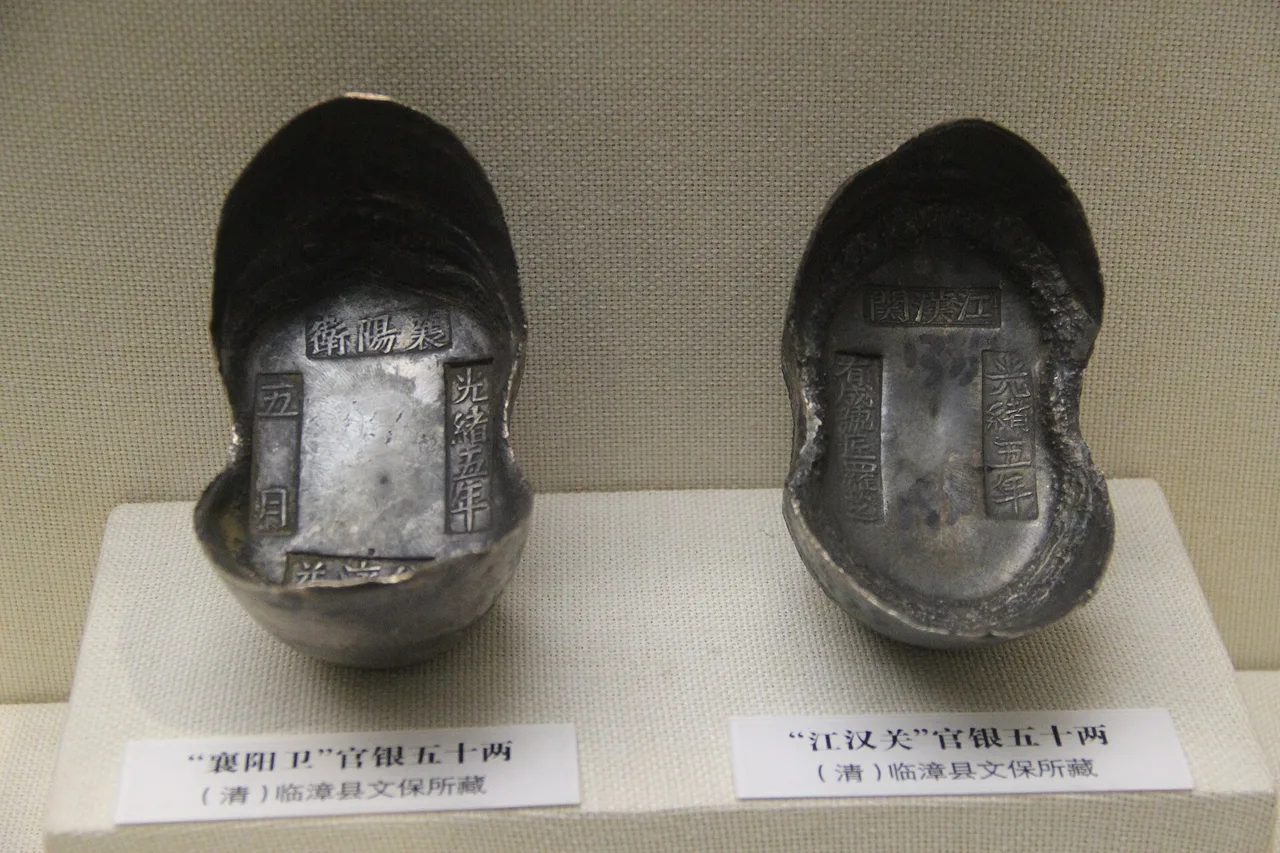
The late Kangxi court neither legalized nor banned these melting fees. Because these surcharges had no statutory limits, they grew into a bottomless pit. For every tael of base tax, local officials demanded an extra 0.2 to 0.5 taels. This raised the peasant tax burden by 20% to 50%. This cash stayed off the state books. Part went to higher offices like the Grand Coordinator and Supreme Commander. Part went as gifts to high courtiers in Beijing. By the late Kangxi reign, regional officials diverted basic land tax to cover operating deficits. Unfunded debts grew into millions of taels. Only eight million taels remained in the central vaults. The empire stood on the brink of financial ruin.
02. Two Fiscal Ledgers: From Grassroots Scrap Silver to the Forbidden City Vaults
In late 1722, Prince Yong took the throne as Emperor Shizong of Qing, known by his reign title Yongzheng. He did not execute thousands of officials like Zhu Yuanzhang did. Instead, he fixed broken state accounting. Between 1723 and 1724, leaders like Nuomin, Governor of Shanxi, and Tian Wenjing, Governor of Henan, tested central collection of melting fees. The court soon took the system nationwide. The crown legalized the fee, collected it openly, and deposited it into provincial treasuries. Magistrates could no longer hide private slush funds. In return, the Provincial Administration Commissioner distributed high, transparent integrity silver stipends to civilian staff.
To understand the reform, we must look at both local household balance sheets and central imperial accounts.
The Micro-Ledger: Peasant Households and Frontline Officials
Before the reform, a District Magistrate ran an unrecorded shadow business backed by arbitrary fees:
- Informal Local Revenue: On a county quota of 30,000 taels of base tax, a magistrate took a 30% melting surcharge, pocketing 9,000 taels.
- Informal Local Outflows: The magistrate sent about 4,000 taels in gifts to the Prefectural Administrator, the circuit intendant, and the Grand Coordinator. He spent 2,000 taels on private legal aides and clerk wages. He spent 1,500 taels on travel, superior visits, Civil Service Examinations, and old debts. He kept about 1,500 taels for himself.
- Peasant Household Burden: For every 0.1 tael of statutory tax, a farm family paid 0.13 to 0.15 taels at the counter. Rigged scales and silver discounts made the burden even worse.
The Yongzheng reform turned this chaotic mess into a clean budget:
- Statutory Ledger Receipts: Provincial rules capped the fee at 10% to 13% across provinces like Henan and Shandong. Total county fees fell to 3,000–4,000 taels. Officials collected the money with stamped receipts and delivered it intact to the Provincial Administration Commissioner.
- Legal Remuneration: The provincial treasury gave the District Magistrate an annual integrity allowance of 1,000 to 1,200 taels, plus 500 taels for office running costs.
- Peasant Household Outflows: Capping fees at 10% to 13% cut excess peasant tax by nearly two-thirds. A District Magistrate no longer needed to extort villagers to run his office. He had enough legal pay to hire Shaoxing aides and care for his family.
The Macro-Ledger: Imperial Court Solvency and Provincial Reserves
At the top, central collection made regional administration far more efficient.
Before the reform, provinces missed central tax quotas because local offices spent tax receipts to cover deficits. By 1722, Zhili ran large unpaid arrears, and Shaanxi had similar debts. The Yongzheng Emperor audited local books to clear old deficits. He turned scattered county surpluses into a single provincial public fund.
Provincial Administration Commissioners managed these multi-million-tael funds through a three-part model: 40% paid integrity silver to civil servants, 30% funded public works and water control, and 30% stayed in reserve. Treasuries used these reserves for fast disaster relief during floods or droughts without waiting for approval from Beijing.
| Fiscal Metric | Pre-Reform (Late Kangxi Shadow Economy) | Post-Reform (Yongzheng Integrity Silver System) | Structural Dynamics and Operational Impact |
|---|---|---|---|
| Rank-7 District Magistrate Legal Pay | Base salary 45 taels / year, 90 bushels of rice | Base salary 45 taels + Integrity Silver 800 to 1,500 taels / year | Pay rose 18 to 33 times, turning survival costs into an open budget |
| Supreme Commander / Grand Coordinator Legal Pay | Base salary 155 to 180 taels / year | Base salary unchanged + Integrity Silver 10,000 to 20,000 taels / year | Pay rose nearly a hundredfold, cutting the need for bribes |
| Agrarian Melting Surcharge Rate | Arbitrary fee of 20% to 50%, no statutory limit | Capped by provincial rule, usually 10% to 15% of base quota | Institutionalized informal costs, cutting total peasant tax load |
| Local Operations and Public Works | No formal budget line; relied on tax theft and extortion | Set public funds drawn from centralized melting receipts | Supplied regular cash for local governance and water control |
| Ministry of Revenue Silver Reserves | Fell to roughly 8 million taels in 1722 | Rose past 60 million taels by 1735 | Built provincial reserves and filled central cash vaults |
03. Mechanisms of Decay: Why Integrity Silver Failed Under Late Qianlong Rule
The Yongzheng reforms brought great order and fiscal strength. Yet the system broke down under the Qianlong Emperor. Massive corruption networks formed around favorites like Heshen. Officials took full integrity pay while taking bribes again. Counties invented new fees such as scale-waste charges (pingyu). The bureaucracy fell back into graft.
A clear causal chain drove this breakdown:
Fixed nominal integrity silver quotas + 18th-century population boom driving inflation
  ↓
Sharp drop in real purchasing power + Central court enforcing arbitrary wartime pay deductions
  ↓
Qianlong court's demand for luxury tributes + Beijing officials demanding seasonal subsidies
  ↓
Central treasury treating centralized melting surcharges as non-negotiable base tax
  ↓
District Magistrates levying an extra layer of informal surcharges above base tax and melting fees
  ↓
Relapse into Huang Zongxi's Law: Old surcharges merge into base tax while new surcharges emerge
1. Inflationary Erosion and Rigid Nominal Quotas
The Yongzheng court fixed integrity silver payments at flat nominal sums. In the late 18th century, China's population grew past three hundred million toward four hundred million. A large flow of New World silver drove up general prices. Grain and labor costs climbed high above early 18th-century levels.
In 1724, an allowance of 1,000 taels easily paid for a magistrate's staff and home. By the late Qianlong and Jiaqing eras, the market cost of a veteran legal secretary jumped from 200 to 800 taels. During wars in the southwest or the fight against the White Lotus Rebellion, the Ministry of Revenue withheld 30% to 50% of integrity pay to fund armies. Inflation cut real buying power, while court decrees slashed nominal pay. Magistrates could no longer run their offices on legal funds alone.
2. Imperial Tribute Demands Shattering Local Budgets
The Yongzheng Emperor lived a frugal life. He banned regional governors from sending gifts to court ministers or rare items to the Inner Court. But the Qianlong Emperor loved luxury. He took six Southern Inspection Tours and encouraged subordinates to present costly treasures.
To stay in favor, a Grand Coordinator or Supreme Commander had to send costly tributes on New Year days and imperial birthdays. A governor's yearly integrity allowance of 10,000 to 20,000 taels could not cover these costs. Regional chiefs took informal gift money from lower magistrates. Meanwhile, capital officials like each Grand Council Secretary had no melting fee stipends and lived on low base pay. Provincial envoys visiting Beijing had to pay seasonal gifts: summer ice fees (bingjing), winter charcoal money (tanjing), and farewell tokens (biejing). When top leaders took bribes, local integrity pay lost its power to stop graft.
3. The Recurrence of Huang Zongxi's Law
Decades after melting fees were centralized, the Ministry of Revenue and governors came to see the 10% to 15% fee as basic state revenue. Accountants added melting fees directly into normal tax rates.
The state turned what had been extra pay into a permanent base tax. Meanwhile, local offices still had no funds to meet rising daily costs. Frontline staff returned to old habits. District magistrates and clerks created fresh informal fees: scale fees (pingyu), exchange markups (pingzhe), and customary tips (lougui). The Ming thinker Huang Zongxi noted that whenever rulers fold surcharges into regular land taxes, new fees pop up beside them. This trend raised total peasant tax loads. Yongzheng's pay reforms could not escape this historical trap.
04. Cross-Civilizational Mirror: The Ottoman Tanzimat Reforms and Britain's Centralized Fee System
Tensions between local fee collection and central state control were not unique to China. Early modern empires across Eurasia met similar problems as they modernized their fiscal systems.
The Ottoman Empire fought chronic administrative fee extraction in the 18th and early 19th centuries. Under the sultans, provincial pashas got little direct cash from Istanbul. The empire relied on tax farming (iltizam) and life leases (malikâne). Tax farmers collected head and land taxes (cizye and haraç), while forcing subjects to pay customary fees (tekâlif-i örfiyye) and levies (avarız). Officers in military administration and regional rule kept these fees to fund private retinues.
To fix this, the Ottoman state launched the Tanzimat reforms in the mid-19th century, issuing the 1839 Edict of Gülhane and the 1858 Land Code. Their fiscal plan matched the Yongzheng reforms:
- The state took away the right of tax farmers to keep informal fees, replacing them with a direct income tax (temettu);
- The treasury put tax collection under salaried agents (muhassıl) reporting to the Ministry of Finance;
- The sultan set standard civil pay scales paid each month from the treasury, banning customary fees.
Yet the Ottoman reforms failed like the Qing reforms did. Heavy debt from the Crimean War broke the treasury. The Ministry of Finance failed to pay salaries on time, while adding wartime fees (iane-i umumiye) on top of regular taxes. Currency debasement destroyed the buying power of fixed pay. Local officials revived informal fees to keep their offices open.
Britain's fiscal modernization took a different path.
Between 1688 and the early 19th century, Britain lived under a patronage system called "Old Corruption." Officials in the Treasury, Customs, and Admiralty lived on user fees, public funds held for interest, and sinecures. Through the Commission of Public Accounts in the 1780s and the Northcote-Trevelyan Report in the 1850s, Parliament sent all departmental fees into one Consolidated Fund at the Bank of England. The state gave civil servants clean, fixed salaries.
Two institutional differences explain why these paths split:
- Hard Budget Constraints and Independent Audits: Britain's salaried civil service rested on Parliament's legal veto over spending and audits from an autonomous audit office. The Civil List separated the monarch's household from public funds, stopping the crown from taking money from civil officers.
- Elastic Budgets Under Absolute Authority: In Qing China and the Ottoman Empire, the monarch stood above the budget. When royal spending, military mobilization, and wars outran accounts, the crown cut integrity silver pay at will. Left without administrative funds, local officials reopened informal extortion.
In medieval and early modern statecraft, structural balance often faltered when local staff lacked institutional status. Early administrative precedents like the Tang court records of Yazdbozid (Yisi), the Song dynasty legal collections in the Waizhi, or early regional defense outposts under commanders like Gao Da reflected similar fiscal stress. Without formal fiscal baselines, local agents always shifted public costs onto the common people.
05. Conclusion: The Arithmetical Logic and Power Boundaries of Bureaucratic Pay
The formalization of melting loss and the growth of integrity silver under the Yongzheng Emperor showed a clear attempt to match fiscal administration with real economic costs. By facing human self-interest and local administrative expenses, the reform replaced moral lectures with clean accounting. It built state power and filled cash reserves in thirteen years.
Yet historical sources show the limits of autocratic fiscal design. Personal anti-corruption campaigns and top-down rules cannot shield fixed pay from inflation. Without legal limits on top imperial authority, any reform that folds informal income into official payroll will bend to the ruler's demands. In the end, the administrative machine slips back into informal extortion.
Primary Sources & Historical Bibliography
- Veritable Records of the Qing: Veritable Records of Emperor Shizong (Qing Shilu: Shizong Xian Huangdi Shilu), scrolls 13–23, detailing memorial exchanges between the Yongzheng Emperor and the Governors of Shanxi and Henan concerning the initial accounting frameworks and policy debates over melting surcharges.
- Draft History of Qing (Qingshi Gao), "Treatise on Food and Money II: Land Tax (Shihuo Zhi Er: Tianfu)", recounting regulatory adjustments to land taxes, surcharge formalization, provincial retentions, and integrity silver allocations from the Kangxi through Qianlong eras.
- Madeleine Zelin, The Magistrate's Tael: Rationalizing Fiscal Reform in Eighteenth-Century Ch'ing China, translated into Chinese by Dong Jianzhong, Beijing: Renmin University of China Press, 2005. Provides a comprehensive structural analysis of local district finance and the trajectory of melting surcharge reforms.
- Liang Fangzhong, Statistics on Population, Land, and Land Taxation in Dynastic China, Beijing: Zhonghua Book Company, 2008. Supplies quantitative historical data on demographic growth, tax quotas, and price shifts across the Qing era.
- Şevket Pamuk, A Monetary History of the Ottoman Empire, Cambridge University Press, 2000. Examines early modern Mediterranean fiscal transitions from tax farming to centralized bureaucratic compensation.