TL;DR · Core Takeaways
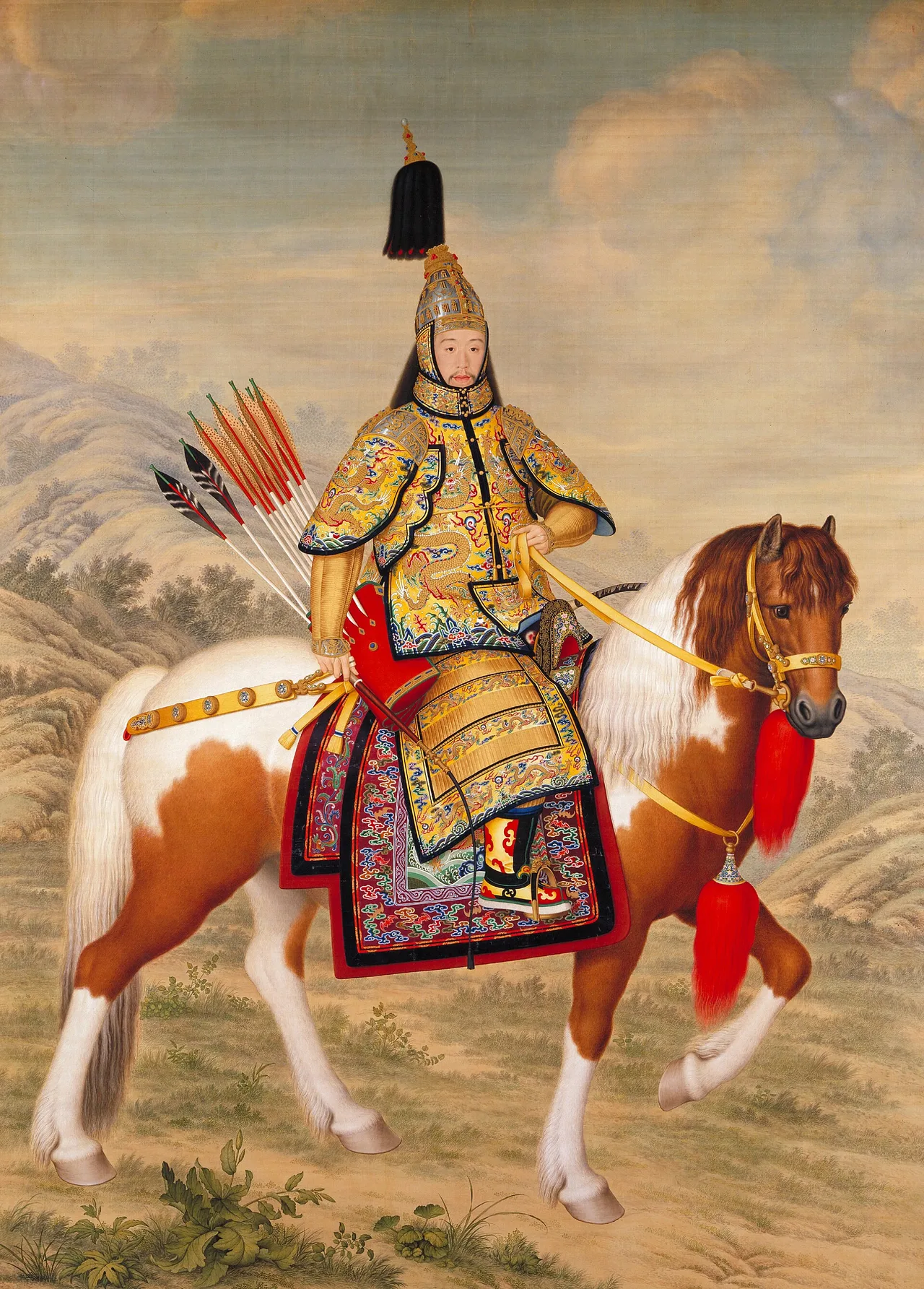
- Gilded Vaults, Starving Commons: Under Emperor Gaozong of Qing, the treasury held 78 million silver taels. Yet visitors saw starving trackers fight for animal scraps in canal mud.
- The Hidden Cost of Tax Reform: Merging the poll tax into land levies spurred population growth. Farm plots fell from six mu to two mu per person. Labor grew cheaper than draft beasts.
- Nominal Leniency, Zero Public Dividend: Imperial tax waivers aided only rich landlords. Tenants still paid half their crop in rent. The state hoarded silver rather than building flood control or public works.
Spatiotemporal Benchmarks
- Chinese Historical Coordinate: From the reunification of Taiwan under Emperor Shengzu of Qing in 1683, to the Integration of the Poll Tax into the Land Tax, the rise of silver reserves past 78 million taels in 1781, the British Macartney Embassy in 1793, and the outbreak of the White Lotus Rebellion of Sichuan and Chu in 1796.
- Western / Mediterranean Coordinate: In Great Britain, the Glorious Revolution of 1688 and the Bank of England in 1694 forged modern state debt; James Watt refined the steam engine in 1769, launching the Industrial Revolution and the Great Divergence.
01. I. Gilded Vaults and Empty Bowls: Why Seventy-Eight Million Taels Left Bellies Empty
Imperial records showed great wealth. Emperor Shengzu of Qing froze the poll tax quotas. Later reforms folded head taxes directly into land levies. This saved the Qing Dynasty from the fiscal deficits that destroyed the late Ming state. By 1781, silver reserves in the central vaults of the Ministry of Revenue passed seventy million taels. Soon after, they hit seventy-eight million taels. Emperor Gaozong of Qing granted four nationwide tax waivers. On paper, the realm offered light corvée and taxes alongside great state wealth.
Foreign visitors saw a very different world. In 1793, Lord George Macartney traveled down the Grand Canal toward Beijing and the summer retreat at Rehe. The embassy staff saw awful sights. When British cooks tossed spoiled meat into the water, canal trackers jumped in to fight over the bones. Rural families along the banks lived in dirt huts and wore rags.
Envoys from Joseon Korea saw the same pain on trips through the Northern Capital, also known as Beiping. Across Huaxia, the High Qing Era was split in two. Silver piled up behind palace doors, while farm families ate weeds and chaff. Every modern historian studying this institutional history notes that reports to the Grand Secretariat hid peasant misery. The state had endless silver, but ordinary bowls stayed empty.
02. II. The Imperial Double Ledger: Household Deficits Against Idle State Capital
To understand this problem, we must study two ledgers: the peasant family budget and the imperial treasury.
1. The Ground-Level Calculation: Involution and Caloric Collapse
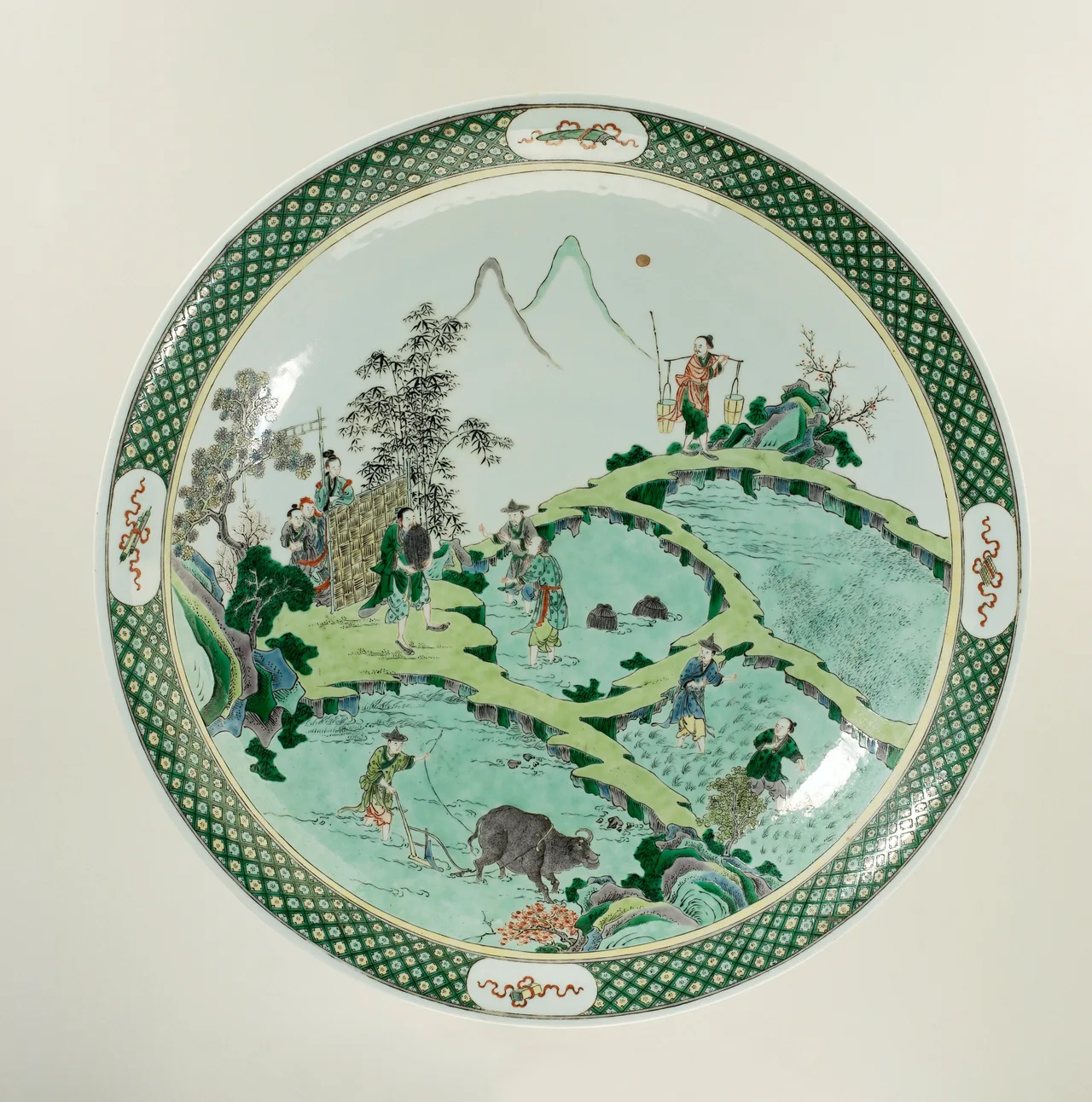
Peasants did not feel imperial tax leniency. Instead, they faced relentless population growth. Early in the dynasty, one hundred million people lived with five or six mu of land each. Long domestic peace and tax reforms removed checks on family size. By 1792, the population passed three hundred million.
Settlers farmed steep hills with maize and sweet potatoes. Still, new farmland could not match the growing crowd. Arable land per person dropped under 2.5 mu. Near Shanghai and the southern cities, including the historic Southern Capital, Hereditary Succession split family plots down to mere fractions of a mu.
Shrinking plots wrecked family security. Without better farm tools or improved water control, families poured endless hand labor into tiny fields. Output per hour of work dropped fast. Muscle became cheaper than draft animals. Macartney saw canal boats pulled by men rather than horses. In Zhili, hiring starving men cost less than feeding hay to a single mule.
Rural cash also grew scarce. Even with low base taxes, every local official added heavy surcharges to run the county yamen. Imperial tax reprieves only helped landlords. Over half of all farmers were landless tenants who paid fifty to sixty percent of their harvest in rent. Landlords kept the state tax cuts and gave nothing back. Tenants handed over good rice and wheat, then sold remaining coarse grain for copper cash to buy salt and pay silver melting fees.
Food intake dropped. Early Kangxi farmers ate wheat, rice, beans, and seasonal meat. By late Qianlong, farmers sold all fine rice to pay debts. Families ate dried sweet potatoes, maize, and sorghum. Protein intake dropped, leaving farm workers weak.
2. The Imperial Treasury Balance Sheet: Flat Extraction and Zero Capital Formation
In the Forbidden City, the state had different goals. It hoarded seventy million taels through three simple methods:
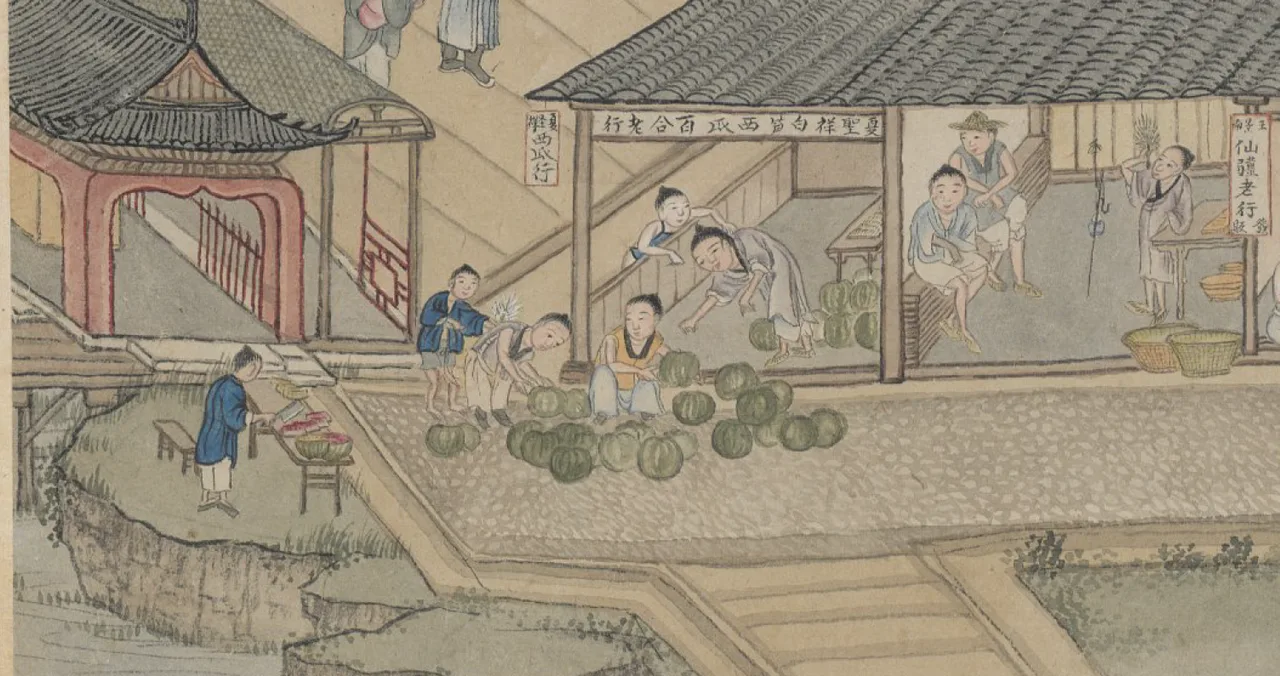
First, a wide tax base with small unit levies. The Integration of the Poll Tax into the Land Tax tied taxes to farmland. With three hundred million subjects, low land rates still brought thirty million silver taels each year. Salt taxes and customs from the Thirteen Factories of Guangzhou created big annual surpluses.
Second, zero public spending. The government spent money only to protect the throne. It paid Eight Banners troops, Green Standard soldiers, and civil officers. It spent nothing on general education policy, public health, or farm machinery. Imperial bureaus studied court astronomy to set the calendar, but never helped peasants forecast weather or dig deep wells. Local bridges, granaries, and the lineage Academy were left to private donors.
Third, luxury costs and idle silver. The court did not use surplus money for production. Qianlong spent fortunes on palace gardens like the Old Summer Palace and on lavish southern tours. Frontier wars also drained funds. Fighting mountain tribes in the Jinchuan campaigns cost seventy million taels in military expenditure. The rest of the silver sat unused in dark vaults, isolated from the market.
03. III. Structural Traps: How the Gilded Façade Locked Itself
Comparing economic data between Kangxi and Qianlong shows the depth of this rural crisis.
| Institutional Metric | Late Kangxi Era (c. 1720) | Late Qianlong Era (c. 1780–1790) | Structural and Fiscal Reality |
|---|---|---|---|
| Total Population | 120–140 million | Over 310 million | Population growth outstripped farm resources |
| Arable Land per Capita | 5.0–6.0 mu | Under 2.5 mu (1 mu in delta zones) | Tiny plots made peasant homes fragile |
| Ministry Silver Reserve | 20–30 million taels | Peak at 78 million taels | State hoarded silver rather than investing |
| Grain Price (Polished Rice) | 0.7–1.0 tael per shi | 2.0–3.0 taels per shi | Food prices rose due to silver and land limits |
| Daily Wage (Common Labor) | 20–30 copper coins (2–3 liters grain) | 30–40 copper coins (under 1.5 liters grain) | Excess workers halved real daily wages |
| Peasant Dietary Baseline | Wheat, rice, legumes, periodic pork | Maize, sweet potatoes, wild greens | Peasant nutrition fell to starvation levels |
| Major Campaign Peak Cost | Dzungars wars: several million taels yearly | Jinchuan Wars: 70 million taels total | Frontier warfare costs multiplied rapidly |
These facts show a tight demographic and fiscal trap:
Tax reform freezes poll tax -> Population triples on finite land -> Plots shrink under severe involution -> Daily wages fall while household margins vanish -> Treasury hoards bullion as frozen capital -> Zero state infrastructure plus high private rents erode nutrition -> Local droughts trigger systemic pauperization and violent uprisings
This cycle left the dynasty weak. Hoarding silver left farmers helpless against drought or flood. When costly campaigns drained Qianlong's reserves, disaster struck. In 1796, the Jiaqing reign opened with the White Lotus Rebellion of Sichuan and Chu. Hundreds of thousands of displaced refugees and Shanmin hill settlers rose up for food. Crushing the White Lotus Rebellion took eight years and cost over two hundred million taels. The treasury emptied, leaving the state broken.
04. IV. Comparative Imperial Ledger: Locked Bullion vs. Sovereign Debt in the Great Divergence
Comparing Qing China with Western Europe shows the flaws of bullion hoarding. Both regions drew in world silver. Chinese silk and tea brought foreign silver from Guangzhou traders. Britain drew profits from world trade. Yet the two states used this wealth in opposite ways.
The first difference was how each state viewed capital. The Qing state locked silver in vaults. The seventy-eight million taels were cold ingots in dark rooms. They earned no interest and supported no private credit. When the Imperial Court locked away silver, local shops faced tight money and usurious interest rates.
Britain built modern sovereign debt after creating the Bank of England in 1694. London did not hoard coins in vaults. It ran on long-term public debt backed by Parliament. By issuing bonds with steady interest, the British state turned private wealth into active national credit.
The second difference lay in where state money went. Qing cash went to internal control, palaces, and frontier wars. The fortunes spent in remote hills left only graves and watchtowers, creating no commercial growth.
Britain spent borrowed capital on two fronts: a navy to secure world trade routes, and domestic transit like turnpikes, ports, and canals. These public works cut shipping costs, sped up coal transport, and aided steam mills and early industry.
While Qianlong took pride in locked vaults, London used sovereign credit to direct multiple times the funds of the Qing budget. One state relied on unpaid peasant sweat on shrinking fields. The other built financial tools to bypass land limits. The Great Divergence was written in state ledgers long before gunboats sailed.
Primary Sources & Historical Bibliography
- Official Dynastic Histories & Institutional Compendia:
- Veritable Records of the Qing: Reign of Emperor Gaozong (Qianlong), Volumes 1131–1135 (detailing the 1781 Ministry of Revenue silver balances and nationwide tax remissions).
- Draft History of Qing: Treatise on Food and Money I and II, detailing tax integration and silver commuting policies.
- Qinggui et al. (eds.), Comprehensive Institutional History of the Qing Dynasty: Treatises on Food and Money, Volumes 2–6 (Land, Population, and Revenue Reserves).
- Contemporary Eyewitness Records:
- George Staunton, An Authentic Account of an Embassy from the King of Great Britain to the Emperor of China (London: G. Nicol, 1797), documenting everyday rural living conditions and dietary struggles along the Grand Canal corridor.
- Bak Ji-won, Jehol Diary (Rehe riji) and historical sources of Korean missions to Beijing, describing hardship in the northern countryside.
- Historical records from early figures such as Chiguo and Wenxian on rural welfare.
- Modern Institutional & Economic Historiography:
- Ho Ping-ti, Studies on the Population of China, 1368–1953 (Cambridge: Harvard University Press, 1959), on demographic growth and farm output limits.
- Philip C. C. Huang, The Peasant Economy and Social Change in North China (Stanford: Stanford University Press, 1985) and The Peasant Family and Rural Development in the Yangzi Delta (Stanford: Stanford University Press, 1990), analyzing rural involution.
- Peng Xinwei, A Monetary History of China (Zhongguo Huobi Shi), surveys on silver flows and Qing state silver holdings.
- Kenneth Pomeranz, The Great Divergence: China, Europe, and the Making of the Modern World Economy (Princeton: Princeton University Press, 2000), examining the divergence between Western Europe and the Yangzi Delta.