Fall of Three Feudatories
Imperial armies capture Kunming, eradicating the final remnants of Wu Sangui and inaugurating the High Qing Era.
Qing Dynasty (清朝) · HISTORICAL EVENT
康乾盛世
The High Qing Era (康乾盛世), also known as the Golden Age of Three Emperors, spanned from the suppression of the Revolt of the Three Feudatories in 1681 to the abdication of the Qianlong Emperor and the outbreak of the White Lotus Rebellion in 1796, covering a historic period of one hundred and fifteen years recorded in the Draft History of Qing (Qingshigao). Under the continuous governance of the Kangxi, Yongzheng, and Qianlong emperors, the Qing court…
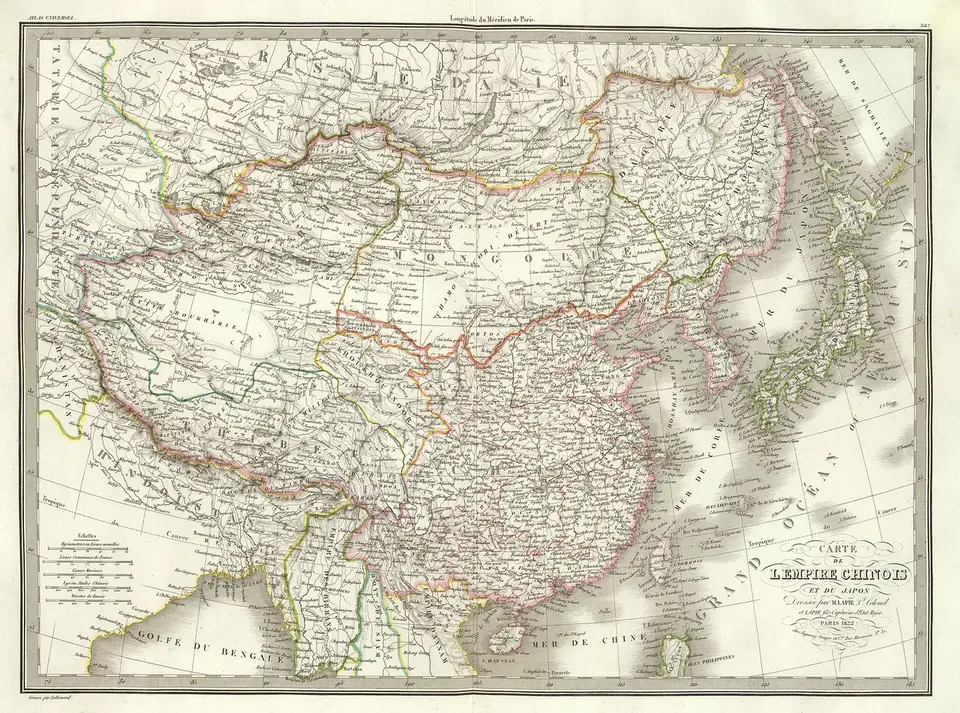
The High Qing Era (康乾盛世), also known as the Golden Age of Three Emperors, spanned from the suppression of the Revolt of the Three Feudatories in 1681 to the abdication of the Qianlong Emperor and the outbreak of the White Lotus Rebellion in 1796, covering a historic period of one hundred and fifteen years recorded in the Draft History of Qing (Qingshigao). Under the continuous governance of the Kangxi, Yongzheng, and Qianlong emperors, the Qing court executed profound institutional consolidation, crushed domestic and frontier insurrections, incorporated Mongolia, Xinjiang, and Tibet firmly under direct imperial oversight, and established an empire of over thirteen million square kilometers. Through landmark economic policies including permanent tax quotas and the merger of head taxes into land taxes, society experienced unprecedented demographic expansion and flourishing commercial towns. However, intensified ideological persecution through literary inquisitions, despotic monarchical autocracy, and rigorous maritime isolationism insulated the empire from the ongoing Western Industrial Revolution, leaving the realm structurally stagnant and vulnerable upon the threshold of the modern era.
Imperial armies capture Kunming, eradicating the final remnants of Wu Sangui and inaugurating the High Qing Era.
Admiral Shi Lang defeats the Zheng navy at Penghu, leading to the surrender of Taiwan and its administrative integration as a prefecture.
Qing forces compel Tsarist Russia to sign a historic boundary treaty along the Stanovoy Range, defining the eastern border.
Kangxi personally directs operations across the Gobi Desert to smash Galdan's main army, securing Outer Mongolia.
Imperial edict freezes the national poll-tax quota based on the 1711 census, stipulating that subsequent births will never be taxed.
The Board of Audit investigates widespread official embezzlements, instituting the return of melting charges to treasury.
The Grand Council is created for secret military decision-making, while bureaucratic reforms replace southwest tribal chieftains.
Head taxes are completely merged into agricultural land levies nationwide, eliminating separate poll taxes.
Qing armies annihilate the Dzungar Khanate and extinguish the Khoja rebellion, establishing the General of Ili in Xinjiang.
The court establishes the Siku Quanshu commission to collate imperial literature, while launching rigorous censorship campaigns.
The British diplomatic mission under Lord Macartney arrives in Beijing, but is rebuffed by the throne, intensifying maritime isolation.
The Qianlong Emperor abdicates to the Jiaqing Emperor as the monumental White Lotus Rebellion erupts, concluding the era.
The emergence of the High Qing Era was deeply rooted in the urgent necessity to re-establish social order after decades of catastrophic devastation during the Ming-Qing transition. In the mid-seventeenth century, prolonged peasant wars, the collapse of the Ming central administration, and the southward push of Eight Banners cavalry plunged mainland China into widespread demographic collapse and agrarian decimation. Across the Central Plains, the Huai River basin, and Sichuan, fertile farmlands lay desolate, hydraulic infrastructure fell into disrepair, and transportation networks were severed.
Upon entering Shanhaiguan and establishing Beijing as the imperial capital in 1644, the Qing court encountered formidable resistance from Southern Ming loyalists and autonomous military warlords. Decades of continuous military mobilizations severely strained state finances and inflicted heavy burdens on commoners. Only through the gradual elimination of Southern Ming remnants and the pacification of coastal rebellions did the societal foundation begin to stabilize. To revive agricultural production, the imperial government issued extensive land-reclamation edicts, granting temporary tax exemptions, distributing draft cattle and seeds, and encouraging displaced households to return to their ancestral hometowns.
To sustain minority Manchu rule over the vastly populous Han majority, the Qing monarchs recognized that military conquest alone could not guarantee long-term dynastic longevity. The imperial court decisively embraced traditional Confucian statecraft as the bedrock of imperial legitimacy and moral authority.
The Shunzhi and Kangxi emperors formally paid homage to the Temple of Confucius, restored the imperial examination system, and reappointed Han gentry into civil bureaucracy. By synthesizing Confucian orthodoxy with the Eight Banners military hierarchy, the Qing court successfully constructed a dual administrative mechanism capable of governing Inner Asian nomadic confederations and Central Plains agrarian populations simultaneously. This profound political adaptation gradually alleviated ethnic friction, reconciled scholar-gentry elites to Manchu suzerainty, and laid the ideological groundwork for a unified, stable, and prosperous imperial order.
The foundational phase of the High Qing Era was defined by the visionary governance of the Kangxi Emperor (r. 1661–1722). Taking personal control of state affairs after ousting the regent Oboi, the young emperor decisively ordered the revocation of the Three Feudatories in 1673. This provoked a violent rebellion led by Wu Sangui, Geng Jingzhong, and Shang Zhixin, which quickly engulfed southern and southwestern China. Over eight grueling years of war, the Kangxi Emperor coordinated multi-provincial military logistics, rallied northern Mongol allies, and successfully crushed the rebellion in 1681, definitively ending regional warlord autonomies inside Shanhaiguan.
Following domestic pacification, the emperor turned his strategic attention to Taiwan, where the Zheng maritime regime maintained resistance against the Qing dynasty. In 1683, Admiral Shi Lang led a powerful naval expedition across the Taiwan Strait, smashing Zheng fleet defenses at the Battle of Penghu. Following the surrender of Zheng Keshuang, Shi Lang persuaded the throne to retain the island, leading to the creation of Taiwan Prefecture under Fujian Province in 1684, formally integrating the island into the direct administrative framework of the empire.
On the northern frontier, encroaching Tsarist Cossack expeditions in the Amur River basin threatened Manchurian security. The Kangxi Emperor dispatched imperial forces to lay siege to the fortified Russian outpost at Albazin in 1685 and 1686, employing heavy artillery to force a Russian surrender. These triumphs led to the signing of the landmark Treaty of Nerchinsk in 1689, which established the Sino-Russian eastern border along the Stanovoy Range and the Argun River, safeguarding Qing sovereignty over the vast Amur and Ussuri basins.
In Inner Asia, the expansionist Dzungar Khanate under Galdan invaded Khalkha Mongol territories and advanced within close striking distance of Beijing. The Kangxi Emperor personally led imperial armies across the Gobi Desert, defeating Galdan at Ulan Butung in 1690 and routing his forces at Jao Modo in 1696 through concentrated artillery fire. Following Galdan's demise, the Kangxi Emperor convened the historic Dolon Nor Assembly in 1691, organizing Outer Mongolian tribes into the administrative Banner system under direct supervision of the Lifan Yuan. In 1720, responding to Dzungar incursions into Tibet, Qing expeditionary armies entered Lhasa, expelling hostile invaders, escorting the Seventh Dalai Lama to the Potala Palace, and establishing regular imperial military garrisons in Tibet.
To resolve perpetual flood disasters that threatened northern communications and agricultural stability, the Kangxi Emperor made river conservancy a personal priority. He appointed Jin Fu and Chen Huang to dredge silting channels, build extensive containment dikes along the Yellow River and Huai River, and restore the navigability of the Grand Canal, securing vital grain shipments to the capital and providing enduring security to regional farming communities.
Upon ascending the throne in 1722, the Yongzheng Emperor (r. 1722–1735) addressed the profound financial depletion and administrative laxity accumulated during late Kangxi governance. The emperor launched aggressive audit campaigns, establishing the Board of Audit to review provincial treasury balances and ordering all civil governors to replenish missing funds within three years under penalty of confiscation and imprisonment. Corrupt aristocrats and imperial officials were systematically purged, reviving state treasury reserves from under eight million taels of silver to over sixty million taels.
To dismantle ingrained institutional corruption, the Yongzheng Emperor instituted the return of melting charges to public coffers and created silver bonuses for cultivating honesty to provide adequate legal stipends to local magistrates while outlawing predatory customary fees. In high-level administration, the establishment of the Grand Council during the campaign against the Dzungars transformed imperial decision-making into an ultra-centralized, highly confidential executive body directly subservient to the emperor. The widespread implementation of the secret palace memorial system bypassed the formal bureaucratic structure, enabling the throne to maintain continuous real-time surveillance over provincial officials.
In the southwest, the Yongzheng Emperor embraced Ortai's aggressive policy of replacing hereditary tribal chieftains with rotating imperial civil bureaucrats. Despite encountering armed local resistance, Qing forces systematically dismantled entrenched chieftain strongholds across Yunnan, Guizhou, and Guangxi, establishing standard prefectural administrations that fostered multi-ethnic integration and extended state authority into formerly autonomous hinterlands.
The reign of the Qianlong Emperor (r. 1735–1796) marked the zenith of Qing political and military power. Exploiting dynastic succession turmoil within the Dzungar Khanate, the emperor dispatched massive expeditionary forces in 1755 and 1757, definitively destroying the nomadic state that had resisted the empire for nearly a century. When Amursana revolted, Qing forces launched thorough pacification operations, completely pacifying the northern territories.
Immediately following the conquest of northern Xinjiang, the Altishahr Khoja brothers staged a major insurrection in southern Xinjiang. General Zhao Hui led an advance force into Yarkand, enduring an intense three-month siege at the Black Water Camp before reinforcements arrived to break the encirclement. By 1759, the rebellion was utterly crushed, and the court established the General of Ili in 1762 to exercise military and civil authority over the vast western region, permanently naming it Xinjiang, meaning old territory newly returned.
In 1771, the Torghut Mongol confederation, which had migrated to the Volga River basin a century and a half earlier, undertook an epic overland return to escape Tsarist Russian subjugation. Led by Ubashi, nearly one hundred and seventy thousand nomads traversed thousands of miles under extreme deprivation and enemy attacks, arriving in Xinjiang. The Qianlong Emperor granted them fertile pastures in Bayanbulak and celebrated their return with commemorative stone inscriptions at the Mountain Resort in Chengde, marking a triumphant milestone in multi-ethnic unity.
In the southwest, the Qing court waged two grueling Jinchuan campaigns between 1747 and 1776 against stubborn Tibetan stone fortress strongholds in Sichuan, ultimately establishing regular state control at immense financial expenditure. On the southwestern frontier, after Gurkha invaders plundered Tashilhunpo Monastery in Tibet, the Qianlong Emperor dispatched General Fuk'anggan in 1792. Leading elite bannermen through treacherous Himalayan mountain passes, Fuk'anggan expelled the invaders, advanced into Nepal, and compelled the Gurkha king to capitulate and accept tributary status.
In 1793, the court promulgated the Twenty-Nine Article Imperial Ordinance for Better Governance in Tibet, establishing the Golden Urn lottery procedure to select the reincarnation of the Dalai Lama and Panchen Lama, while elevating the Resident Grand Minister to equal status with Tibetan spiritual leaders, cementing absolute central sovereignty over Tibet. These campaigns, celebrated as the Ten Great Campaigns, solidified imperial frontiers spanning thirteen million square kilometers.
The socioeconomic prosperity of the High Qing Era was driven by fundamental taxation overhauls and agricultural advancements. In 1712, the Kangxi Emperor decreed that permanent head-tax quotas would be frozen based on the census of 1711, ensuring that future population growth would never be subject to additional poll taxes. Building upon this foundation, the Yongzheng Emperor universally enacted the merger of head taxes into land taxes, shifting all taxation burdens onto real estate holdings. This removed millennia-old constraints on demographic registration and personal servitude, unlocking massive labor mobility.
Concurrently, the rapid dissemination of high-yielding, drought-tolerant American crops including maize, sweet potatoes, and white potatoes enabled the extensive cultivation of formerly barren hillsides and mountainous terrain. Combined with prolonged peace and frequent imperial remissions of land taxes, the empire's population skyrocketed from roughly one hundred million in the late seventeenth century to over three hundred million by 1790, representing more than a third of the global population.
Demographic growth stimulated expansive manufacturing and trade networks. Commercial textile workshops across the Jiangnan region dominated domestic cloth markets; Jingdezhen porcelain kilns employed hundreds of thousands of specialized artisans producing delicate ceramics; and Foshan ironworks supplied tools throughout maritime trade routes. Wealthy merchant syndicates from Huizhou and Shanxi flourished, establishing extensive banking and draft remittance networks across the empire, forming sprawling commercial centers in Yangzhou, Suzhou, Hangzhou, and Hankou.
The Qing emperors mobilized enormous state revenues to organize monumental scholarly projects, aiming to preserve classical heritage while consolidating cultural legitimacy. Under imperial sponsorship, scholars compiled fundamental lexicons and encyclopedias including the Kangxi Dictionary, the Complete Tang Poetry, and the monumental Gujin Tushu Jicheng printed with copper movable type.
During the Qianlong reign, the compilation of the Siku Quanshu mobilized thousands of prominent scholars over a decade to systematically collate China's classical canon across four divisions: Classics, History, Masters, and Collections. Comprising over thirty-four hundred titles and nearly eight hundred million words, seven hand-copied sets were installed in imperial libraries across the realm. Concurrently, rigorous evidential research under the Qianjia School blossomed, led by luminaries like Dai Zhen and Qian Daxin, who applied scientific textual analysis to ancient classics.
Conversely, cultural patronage was inseparable from ruthless thought control. Driven by acute sensitivity over minority Manchu sovereignty, the imperial court weaponized literary inquisitions against any written material perceived as disparaging Manchu rule or glorifying the fallen Ming dynasty. Over one hundred and thirty major literary persecution cases occurred during the Qianlong era alone, resulting in brutal executions, exile, and posthumous desecrations, exemplified by the Zhuang Tinglong Ming History case, the Dai Mingshi Nanshan Ji incident, and the execution of Hu Zhongzao. Furthermore, the compilation of the Siku Quanshu was accompanied by an empire-wide literary cleansing, systematically identifying and burning thousands of prohibited titles and irreparable cultural artifacts.
Beneath the glittering facade of imperial grandeur, grave institutional and socioeconomic contradictions multiplied during the late Qianlong reign. In 1757, the court closed coastal ports in Zhejiang, Fujian, and Jiangsu to European maritime trade, restricting Western merchants exclusively to the port of Guangzhou under the Canton System. This rigid isolationism, enacted to prevent foreign infiltration and internal dissent, insulated China from rapid advances in Western science, military technology, and industrial capitalism.
In 1793, the British Macartney Embassy arrived in China seeking to establish permanent diplomatic relations and liberalize trade. Arrogantly dismissing Western industrial marvels as trivial curiosities and embroiled in prolonged ceremonial controversies over the kowtow, the Qianlong Emperor rebuffed all British requests, declaring that the celestial empire lacked nothing and had no need for foreign manufactures. The mission exposed the fragile military complacency and technological obsolescence of the imperial forces to Western observers.
Domestically, the unchecked growth of systemic corruption hollowed out the state apparatus. In his twilight years, the Qianlong Emperor indulged his favorite minister Heshen, who accumulated vast personal fortunes through extortion, bribery, and the sale of public offices. The innovation of punishment exemption fines permitted corrupt governors to purchase immunity by paying heavy tributes directly into the imperial privy purse, inciting predatory exactions upon local populace.
Severe population pressure rapidly eroded arable land reserves, creating millions of dispossessed peasants in peripheral mountainous borderlands. In 1796, the catastrophic White Lotus Rebellion erupted across Sichuan, Hubei, and Shaanxi. Requiring nine years of warfare and hundreds of millions of silver taels to suppress, the insurrection shattered the military prestige of the Eight Banners, exhausted the imperial treasury, and signaled the irreversible conclusion of the High Qing Era.
The foremost enduring legacy of the High Qing Era was the definitive consolidation of China's expansive territorial frontiers and multi-ethnic statehood. Overcoming historical divisions between nomadic pastoralists and sedentary agriculturalists, the Qing monarchs successfully synthesized diversified administrative systems, including the Banner system in Mongolia, the Lifan Yuan, the General of Ili in Xinjiang, and the Resident Grand Minister alongside the Golden Urn in Tibet. This massive territorial construct, covering over thirteen million square kilometers, successfully established the territorial boundaries that were subsequently inherited by modern China.
Through the elimination of separate poll taxes and the widespread introduction of resilient staple crops, the High Qing Era unlocked the reproductive and productive potential of traditional Chinese society. The population surpassed three hundred million for the first time in human history, fostering vibrant regional manufacturing clusters, extensive commercial networks, and sophisticated financial credit instruments. In terms of domestic output and aggregate artisanal manufacturing, the Qing Empire ranked among the largest economic entities in the pre-industrial world, representing the absolute zenith of traditional agrarian civilization.
Notwithstanding its remarkable outward achievements, the High Qing Era functioned as the twilight flourishing of traditional Chinese bureaucratic despotism. The radical concentration of absolute monarchical authority suffocated independent political initiative, while pervasive literary persecutions crippled the critical intellect of scholar-gentry circles. Externally, the rigid enforcement of the Canton System and dismissive isolationism blinded the dynasty to the momentous transformations unleashed by the Western Industrial Revolution. When fiscal exhaustion and widespread domestic rebellions struck at the close of the eighteenth century, the empire had lost its capacity for autonomous institutional adaptation, paving the way for deep national crises throughout the nineteenth century.
Traditional and modern historical scholarship has offered profoundly nuanced evaluations of the High Qing Era. The official Qing historiography celebrated the era as the summit of dynastic glory, highlighting vast territorial expansion, demographic prosperity, and the complete suppression of frontier rebellions. Late Qing scholars such as Wei Yuan lauded the military triumphs under Kangxi and Qianlong as unprecedented in post-classical imperial annals.
Conversely, modern Chinese intellectuals have critically scrutinized the systemic costs of High Qing governance. Thinkers during the early twentieth century emphasized that draconian literary inquisitions eradicated intellectual dynamism and left the country structurally unequipped to navigate global geopolitical transformations. Contemporary historians generally characterize the High Qing Era as a contradictory epoch of peak imperial fulfillment coupled with deep systemic vulnerability, representing the greatest triumph of traditional Chinese agrarian civilization as well as the tragic catalyst for its subsequent modern decline.