Historical Context
- Chinese Horizon: 356 BCE (third year of Duke Xiao of Qin, when Shang Yang first promulgated his reform edicts) to 221 BCE (Prince of Qin Ying Zheng annexed the Six States and established the Qin Dynasty).
- Mediterranean & Western Horizon: 371 BCE (Thebes defeated Sparta at the Battle of Leuctra, dissolving the Peloponnesian League) to 338 BCE (Philip II of Macedon crushed the Greek city-states at Chaeronea to secure Greek hegemony, the exact year Duke Xiao died and Shang Yang was executed in Xianyang).
- Statutory Promises versus Grassroots Reality: Earlier reforms in Wei and Chu merely cut noble pay. They never reworked land tenure. In contrast, Qin linked land deeds and tax relief to confirmed enemy heads. This move closed the gap between written tax rules and corrupt noble greed.
- Two Interlocking Balance Sheets: Common farming families gained real assets by taking enemy heads in battle. They won farmland, houses, and freedom from corvée labor. At the same time, the central court split up big households and set up five-family spy units. It used standard measures to turn every field and worker into recorded grain and soldiers.
- The Expansion-Driven Deadlock: This agrarian-military ledger worked only while war won fresh land. When Qin united the realm, it had no more foreign plots to hand out. Reward payouts stopped cold. The state turned its harsh rules inward against its own people, and the war machine soon collapsed.
01. Nominal Decrees and Grassroots Reality: Why Wei and Chu Stalled in Fiscal Half-Measures
Fierce wars forced every major court in the mid-Warring States period to seek change. Li Kui wrote the Fajing (Canon of Laws) in the State of Wei. He also formed an armored shock corps called the Wei Wuzu. In Chu, Wu Qi cut noble pay to fund loyal guards. Both efforts started before Qin rose to power. Yet both plans failed when tested against peasant household budgets and state tax books.
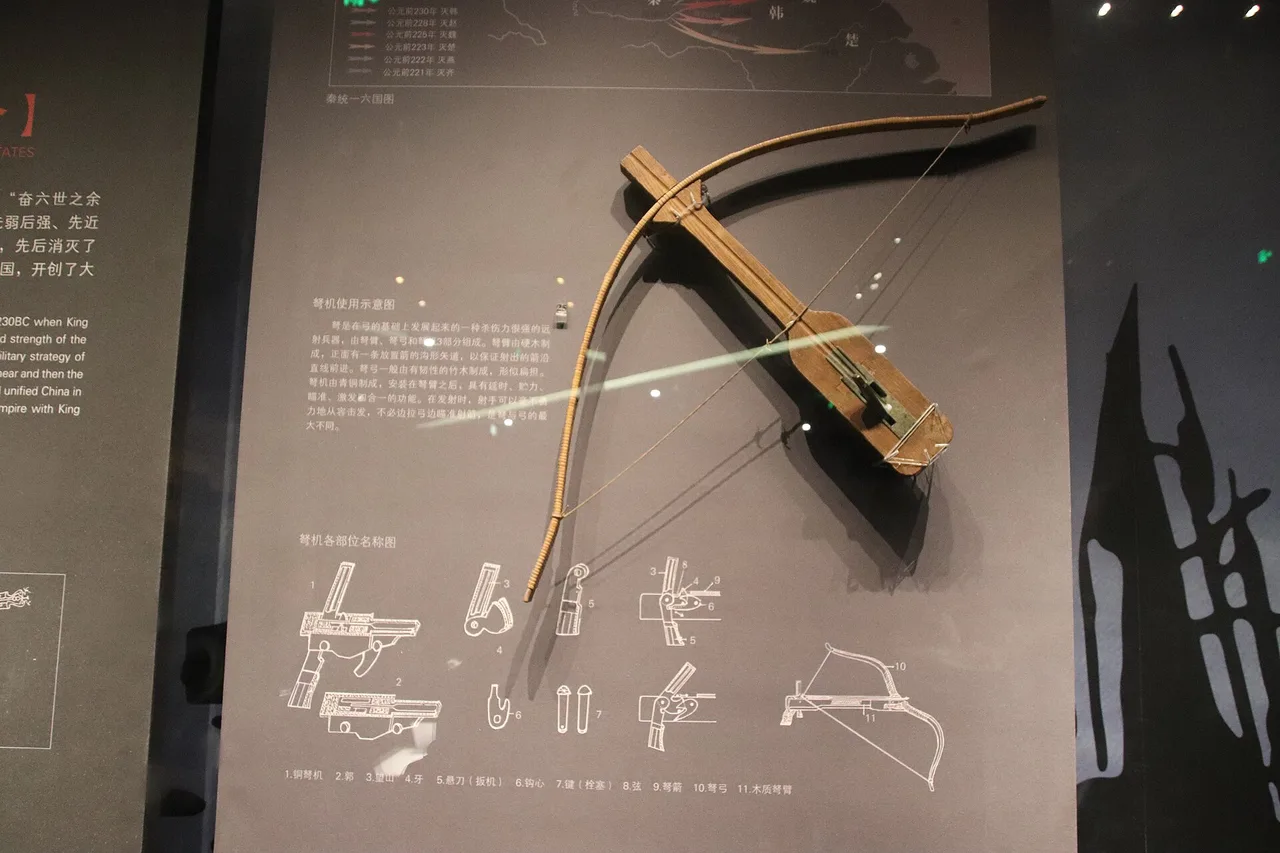
Li Kui set up a grain buying rule to steady crop prices in bad years. He kept a flat tax rate of one-tenth. He also studied soil fertility to lift farm yields. Yet on the ground, old noble estates still tied up most farmland in Wei. Entry tests for the Wei Wuzu were also far too harsh. A recruit had to put on three layers of heavy armor. He had to pull a twelve-stone heavy crossbow. He carried fifty arrows, a halberd, and a broadsword. Then he had to march a hundred leagues in half a day. The court gave recruits full tax waivers for their entire family. It excused them from corvée work and gave them private land plots.
This policy built strong shock troops in the short term. Over time, it broke the state budget:
- Wei Grassroots Balance Sheet: Families of chosen troops became a protected class of tax-free yeomen. These veterans grew old and lost their physical strength. Yet the state could not take back their tax-exempt farms. If their sons failed the brutal tests, the household lost its social rank overnight. The army lacked a tiered ladder for steady promotion. Because of this flaw, veterans had little reason to risk their lives once they held their land.
- Wei Imperial Treasury: The court paid for costly iron and bronze gear. Meanwhile, prime farm plots slipped out of the tax pool into tax-exempt manors. Wei faced attacks on many fronts and suffered heavy troop losses. The treasury could neither buy fresh weapons nor reclaim lost tax lands. This failure sent Wei into a deep fiscal and military slump.
Wu Qi's work in Chu met a different structural dead end. Chu cut redundant offices. It ended state pay for distant kin of the Imperial Clan after three generations. The court hoped to steer wealth into a standing army. Yet this money shift lived only on the personal ledger of the king:
- Chu Grassroots Balance Sheet: Common farming families stayed trapped under local lords. Peasant farmers received no legal land titles, no tax cuts, and no path to rise in society.
- Chu Imperial Treasury: Royal income hung entirely on King Dao of Chu. The reform never broke the local kinship webs in the provinces. When King Dao died in 381 BCE, old nobles rushed the palace hall and killed Wu Qi with arrows. The whole reform died in one afternoon. The state budget fell straight back into noble hands.
Both Wei and Chu made the same core mistake. They failed to link farm output and combat risk to central state assets. Their plans looked bold on paper. Yet their local property rights and tax bases stayed broken.
02. Balancing the Two Ledgers: The Production-and-War Assembly Line
In 356 BCE, Shang Yang arrived in Qin. He won the strong support of Duke Xiao of Qin and launched sweeping reforms. He did not make small tweaks. Instead, he rebuilt the accounting link between peasant huts and the halls of Xianyang.
Grassroots Households and Local Clerks: The Microeconomic Calculus
Under the New Policies, common folk had no legal ways to hide wealth or dodge the draft. The state tracked peasant survival down to the smallest detail:
- Mandatory Household Splitting and Capitation Costs:
The new laws fined any home with two or more adult sons living under one roof. Such homes paid double the normal poll tax unless they split the family estate. Fathers, sons, and brothers could no longer share one fire or pool wealth under one big clan. Forcing families to divide land created more taxpaying units. It also made it impossible to hide spare farm hands.
- Land Tenure Contracts and the Decapitation Ledger:
Shang Yang wiped out the old well-field grid. He allowed private land sales and gave farmers direct land titles. Along with these land rules, he replaced Hereditary Succession with a merit-based appointment system:
- Cutting off one enemy head won a soldier the rank of Gongshi (Gentleman). It brought a deed for one hundred mu of farm ground and nine mu of housing land. It also granted one state servant (Mentor in the Household of the Heir Apparent, or shuzi) and legal tax cuts.
- Troops who broke ranks or ran without heads faced harsh penalties. Punishments ran from asset seizure and hard labor to family death sentences.
- Rich traders who lacked state honors held no rank. Members of the Imperial Clan who failed to fight lost their noble standing.
- Mutual Surveillance and Social Risk Calculation:
Shang Yang grouped every five homes into a wu and every ten into a shi. If one person broke the law and neighbors kept quiet, the state executed all homes in the group by waist bisection. Those who reported crimes gained rewards like taking an enemy head in war. Those who hid criminals faced the same penalty as soldiers who gave up to an enemy. The state outlawed local blood feuds over field borders and water rights under threat of mutilation. This rule forced all local violence outward into foreign wars.
For a common farmer, life offered only one rational path. Sitting idle or running a shop invited heavy taxes and slavery. The only safe way to keep land and protect family was to raise grain yields in peace and take heads in war.
The Central Treasury: Macroeconomic Extraction and Total Mobilization
At the imperial center, Shang Yang built a state collection system without equal in the ancient world:
Compulsory Household Partition (Multiplied Tax Units) + Standardized Measures (Eliminated Revenue Leakage)
  │
  ▼
Five-Family Household Registry & Annual Audit System (Total Control of Land and Labor)
  │
  ▼
Agrarian Fundamentalism (All Labor Channeled Exclusively into Grain and Cloth)
  │
  ▼
Rank Payouts (State Land and Servants Distributed for Verified Military Kills)
  │
  ▼
Maximum Surge Capacity for Total War (Sustained Hundreds of Thousands on Extended Campaigns)
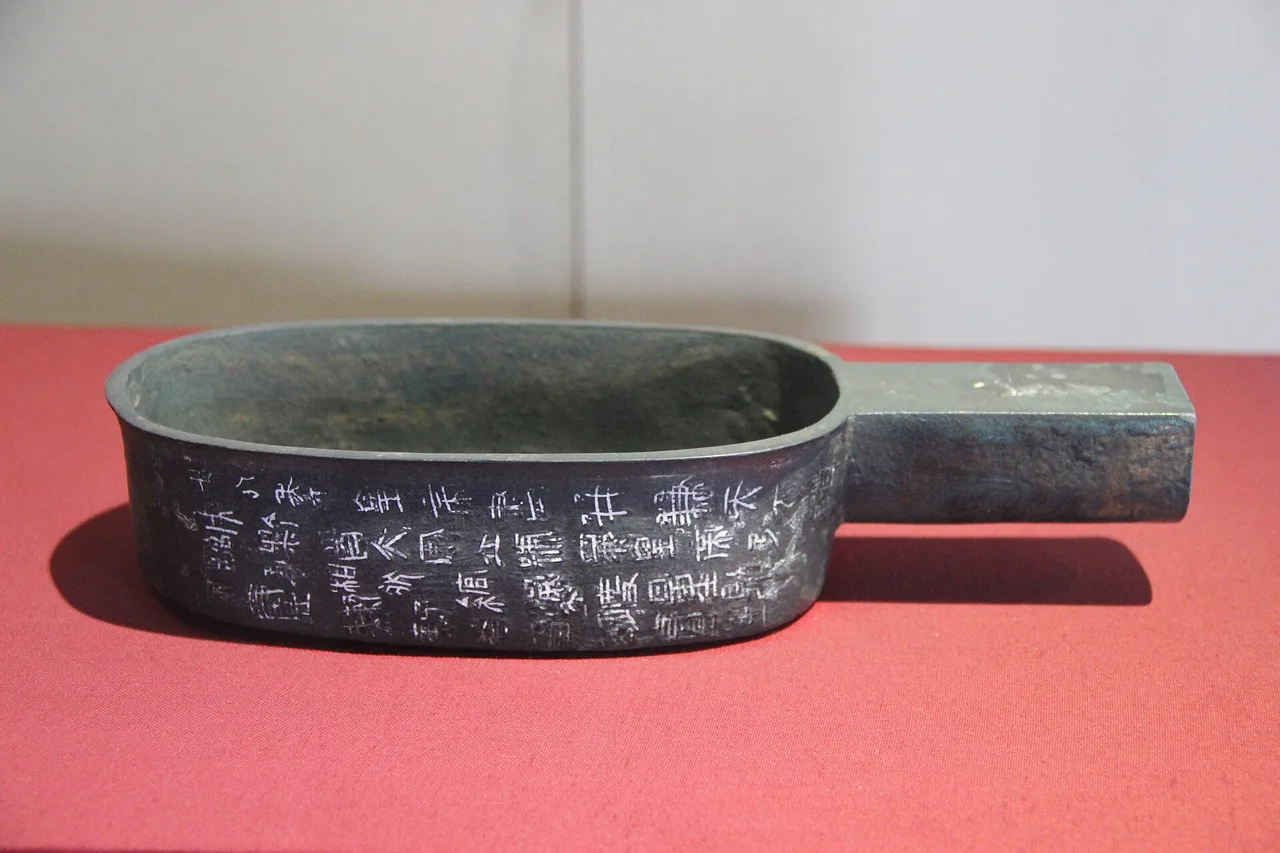
Shang Yang sent out standard bronze measuring pots to curb local tax theft (Figure 1). These pots enforced strict size, length, and weight rules across Qin. Each vessel carried clear Calligraphy that certified official state standards. Every winter, each District Magistrate and Master of Records sent an annual audit ledger (shangji) to Xianyang. The report listed cleared land, population numbers, granary stocks, and court records.
The central court stopped calling on feudal levies or regional noble guards. Instead, it bypassed noble middlemen and reached into every home. The state split its land into more than forty districts (xian) led by state officers: the District Magistrate ran civil tasks, the Vice Magistrate of the District oversaw courts, and the District Defender ran troop drafts.
The royal treasury took in steady streams of grain and cloth to fill state silos. This grain directly funded military expenditure. When war broke out, the court used the twenty-rank ladder to hand out captured land and servants. This design built a self-funding war engine. Foreign wars won land, and the state used that land to settle accounts with its soldier-farmers.
03. Comparative Matrix: Fiscal and Mobilization Architectures of the Warring States
To show the differences between Shang Yang's design and other state systems, the institutional models of Wei, Chu, and Qin are compared below:
| Institutional Dimension | State of Wei · Li Kui (c. 420s BCE) | State of Chu · Wu Qi (c. 380s BCE) | State of Qin · Shang Yang (From 356 BCE) |
|---|---|---|---|
| Land Tenure & Property Rights | Recognized private plots and taught intensive farming techniques, but left major clan manors largely undisturbed | Preserved hereditary feudal estates while forcing distant nobles to resettle on unsettled frontier land | Abolished the well-field system; granted legal deeds to smallholders based strictly on military rank |
| Tax Extraction & Demographics | Stabilized grain prices through state storage; collected a nominal one-tenth crop tax that fell heavily on commoners | Cut royal allowances to third-generation branches to redirect funds; commoners remained bound to local aristocrats | Enforced household partition, doubling poll taxes on unparted adult sons; widened the tax base across every registered home |
| Military Recruitment & Incentives | Hand-picked elite shock units and granted them blanket tax waivers; offered few promotions to aging veterans | Cut administrative waste to fund standing guards; payouts relied on royal favors rather than statutory service ranks | Introduced the twenty-rank merit system; granted one hundred mu of land per head taken; stripped rank from idle elites |
| Social Control & Legal Codes | Promulgated the six-chapter Fajing to curb property crime, theft, and civic disorder | Attacked noble privileges by royal fiat; failed to establish an integrated system of local police or surveillance | Organized five- and ten-family mutual surveillance units; rewarded informants like soldiers while punishing internal feuds |
| Center vs. Periphery Dynamics | Mixed early commanderies with noble estates; vulnerable to sudden external encirclement after moving the capital to Daliang | Fragmented by autonomous noble families whose internal domains resisted royal court mandates | Replaced feudal fiefs with uniform districts; Xianyang appointed magistrates to audit local household ledgers directly |
| Intergenerational Durability | Lasted for a single generation; declined rapidly after veteran attrition and defeat at Maling | Collapsed immediately upon King Dao's death; nobles murdered Wu Qi and restored hereditary privileges | Outlived its architect; although Shang Yang was executed, King Huiwen of Qin and later rulers retained every statute |
This fiscal comparison shows why Shang Yang's laws outlived his death. Old nobles framed Shang Yang after Duke Xiao died. They had his body torn apart by chariots in the public square. Yet King Huiwen of Qin and later rulers kept every law. The reforms had turned hundreds of thousands of small farmers into loyal owners. Their land deeds and ranks rested on the state's military rules. Tearing down the merit ladder would have sparked revolt among veteran troops and new landowners.
04. Spartan Fiscal Parallels and the Fiscal Limits of Perpetual Expansion
Shang Yang's militarized order shares clear parallels with ancient Sparta in the Mediterranean world.
The Structural Parallels Between Sparta and Qin
The Lycurgan laws in Sparta tied state survival to a dedicated warrior caste:
- Separation and Specialization of Labor: Sparta pulled its citizens (Spartiates) out of farm work. It made them train for war from youth (Agoge). Subjugated Helots and trade-focused Perioikoi did all the heavy field work.
- Land Allotment and Military Readiness: The Spartan state gave each male citizen a fixed plot (kleros). Helots farmed this soil and paid fixed crop shares. This setup let the hoplite drill without worrying about his harvest.
- Deliberate Suppression of Commerce: Sparta banned gold and silver coins in favor of heavy iron bars. This policy choked trade to keep social equality and center all life on the mess hall.
Both Qin and Sparta used state force to push people into farming and fighting. Both curbed private trade and independent clubs to turn people into cogs of state power.
Yet the two states handled growth and scale in very different ways:
- Sparta's Closed Zero-Sum System: Sparta hoarded its citizenship. A Helot could work hard and fight with courage, but he stayed an abused subject policed by the Crypteia. Battle deaths and tight family wills shrank the citizen elite over time. The hoplite force dropped from over ten thousand men to about one thousand before the Battle of Leuctra in 371 BCE.
- Qin's Expansive Meritocratic Intake: Shang Yang opened the twenty-rank merit system to wide parts of society. Commoners and foreign defectors could earn status by taking heads in combat. While Qin won land, it handed fertile fields to newly promoted soldiers. This setup widened the troop pool as the borders grew. During the Battle of Changping, Qin drafted every male aged fifteen and older from Henei Commandery. It pushed north toward borders near Dai. It did all this without hurting grain output in Guanzhong.

The Internal Collapse of the Conquest Engine
An engine fueled by taking foreign land has a hard mathematical ceiling: it must expand forever to satisfy domestic claimants.
In 221 BCE, Prince of Qin Ying Zheng conquered the last rival states (Figure 3). Ministers in Xianyang saw this victory as the empire's peak. Yet on the ledger of the Shang Yang model, unity cut off the fuel supply:
- Exhaustion of the Payout Pool: When Qin held the whole realm, no rival armies remained to yield heads. No foreign manors lay open for seizure. For hundreds of thousands of troops and newly taken subjects, the path to social rise closed overnight.
- Inward Turning of Coercive Extraction: The state machine did not stop in peacetime. Lacking foreign wars to burn surplus energy, the court turned its harsh tools inward. It pointed its spy units, penal codes, and labor drafts at its own people. Huge state projects required brutal work without offering land or rank in return. The court built the Great Wall, paved empire roads, raised the Epang Palace, and posted imperial forces to frontier forts.
- The Microeconomic Breaking Point: On paper, Qin's rules stayed exact. On the ground, peasant homes faced ruin. Under the strict penal code, showing up late for labor duty meant death. Commoners could no longer earn land deeds in battle. Because of this dead end, the cost of obeyance grew higher than the risk of open revolt.
In 209 BCE, heavy rains trapped a group of conscripts at Dazexiang. Faced with death for weather delays, Chen Sheng and Wu Guang rebelled. Their revolt set off uprisings from the eastern plains to the Huai River valley. Centuries later, later thinkers remembered this hard lesson all the way to the Later Qin. As Wenxian records noted, without fresh conquests to settle accounts, even the tightest legal grid breaks apart. The agrarian-military war machine had crushed the old nobility. It had beaten rival states through cold bookkeeping for over a century. Yet it ran out of foreign lands to conquer. In the end, it tore itself apart under its own heavy demands.
Primary Sources & Historical Bibliography
- *Sima Qian, Records of the Grand Historian, Vol. 68 ("Biography of Lord Shang")*
Provides an account of Shang Yang's arrival in Qin, the public demonstration of trust by moving a wooden pillar, the restructuring of agrarian statutes, the twenty-rank merit system, the fall of traditional nobles, and the political reality that Qin's laws survived their author's execution.
- *Sima Qian, Records of the Grand Historian, Vol. 87 ("Biography of Li Si")*
Explores the philosophical and administrative evolution of legalist statecraft in the Qin court, detailing the nationwide rollout of the commandery-county system, the fiscal motives behind the standardization edicts, and the systemic breakdown of the bureaucracy following the First Emperor's death.
- *Ban Gu, Book of Han, Vol. 24A ("Treatise on Food and Money, Part 1")*
Outlines early Warring States economic programs, contrasting Li Kui's price-stabilization policies in Wei with Shang Yang's dismantling of the well-field grid, along with detailed records of land tenure, taxation, and state labor mobilization across the Guanzhong plains.
- **The Book of Lord Shang (notably "Order to Cultivate Waste Lands," "Agriculture and War," "Making Land Productive," and "Within the Borders")**
The core compilation of the legalist school attributed to Shang Yang, preserving original administrative policies regarding forced household division, the suppression of mercantile wealth, battlefield decapitation quotas, and tactical unit discipline.
- *Shuihudi Qin Bamboo Slips: Eighteen Statutes of the Qin Code (notably "Statutes on Agriculture," "Statutes on Stables and Parks," "Statutes on Artisans," and "Statutes on Granaries")*
Excavated legal documents from the late Warring States to early imperial periods, providing archaeological evidence for standardized measurement calibrations, granary accounting, rainfall monitoring, and the institutional requirement for craftsmen to sign and date their work.