Chinese Coordinates
—
Western / Mediterranean Coordinates
The peak of Basil II (r. 976–1025 CE) in the Byzantine Empire, when leaders funded border forts and paid off foreign tribes.
TL;DR · Core Takeaways
- Marginal Cost Versus Runaway War Expenditure: In 1004 CE, the Treaty of Chanyuan set an annual tribute of 100,000 ounces of silver and 200,000 bolts of silk to the Liao dynasty. This sum equaled 300,000 to 400,000 strings of copper cash. It took less than 0.5% of the annual Song budget. In contrast, keeping troops in the Hebei theatre cost 30,000,000 to 50,000,000 strings each year.
- The Trade Surplus Feedback Loop: The Northern Song sold tea, silk, and ceramics at state border markets. These sales brought in heavy tax money. In fact, most of the silver paid to the north flowed right back home.
- The Misallocation of the Peace Dividend: Imperial rulers wasted more than a century of peace. They spent tax money on bloated offices and poor infantry instead of building strong cavalry. During the Huizong reign, ministers broke the peace pact and invited the Jurchen Jin south. That blunder led right to the Jingkang Incident.
> Spatiotemporal Coordinates
> - Chinese Historical Benchmark: From year one of the Jingde reign of Emperor Zhenzong of Song to year seven of the Xuanhe reign of Emperor Huizong (1004–1125 CE). This runs from the signing of the Treaty of Chanyuan to the fall of the Liao and Northern Song.
In the winter of 1004 CE, Empress Dowager Xiao and Emperor Shengzong of Liao led horsemen south toward the Yellow River. They stopped near Chanzhou. Pushed by his Grand Master and chancellor Kou Zhun, Emperor Zhenzong of Song crossed the river to stand with his troops. A Song bed crossbow fired and killed the veteran Khitan general Xiao Talin. That shot stopped the northern advance. Rather than launch an uncertain northern campaign, both courts met to discuss Song–Liao relations and struck a peace deal.
Old court scholars often called this pact a national shame. They felt an emperor should never buy peace from steppe nomads. But records from the Three Offices and the Transport Commission tell a very different story. On paper, the pact looked weak. On the balance sheet, it was a smart bargain.
01. The Imperial Ledger: Nominal Subsidies Versus Ground-Level Mobilization
Household Balance Sheets: Ending Requisitions and Corvée in the Hebei Theatre
For farming families near Beiping and along the frontier, war was never an abstract issue of honor. It was a fast road to ruin.
During active war with the Liao, officials used the Song Penal Code to seize draft animals, wagons, and grain. Because the plains had few natural barriers, troops had to build ditches and forts. The state forced hundreds of thousands of farmers into hard labor. Families paid their normal land taxes, yet emergency levies still stripped their barns clean. Men had to haul grain for miles over frozen dirt tracks. Draft oxen died, wagons broke down, and family farms went bankrupt.
Once envoys signed the Treaty of Chanyuan, this burden lifted. The court stopped drafting farm labor along the Yellow River. Peasant families could return to agriculture and sericulture in peace. Regional directors no longer punished local magistrates for missing supply goals, and border towns grew into safe trading hubs.
The Imperial Treasury: Buying Out Massive War Mobilization at Half a Percent
Central records from the Three Offices prove that the tribute was a very small bill.
Under Emperor Zhenzong, one ounce of silver equaled about one string of copper cash (1,000 coins). One bolt of silk cost about 1,000 to 1,300 coins. The yearly payment—100,000 ounces of silver and 200,000 bolts of silk—cost about 300,000 to 400,000 strings of copper cash. Later, during wars with Western Xia, the court raised this sum to 200,000 ounces of silver and 300,000 bolts of silk to avoid a two-front war. Even then, the total stayed under 600,000 strings.
Total state revenues at that time ran between 60,000,000 and 100,000,000 strings per year from cash, grain, and textiles. The yearly tribute was less than 0.5% of what the state took in.
Full war, on the other hand, burned through cash fast. Emperor Taizong of Song had led two failed attacks—one in Taiping Xingguo 4 and another in Yongxi 3. Both times, he lost elite armies and spent tens of millions of strings. During the 1004 CE crisis alone, troop movements and supply runs cost almost 30,000,000 strings. A long siege war would have wrecked state finances.
| Fiscal Category / Expenditure Item | Estimated Capital Volume (Song Copper Cash Equivalent) | Share of Annual Revenue / Proportion | Source Record |
|---|---|---|---|
| Peak Northern Song Annual State Revenue | 60,000,000–100,000,000 strings (cash, grain, and textile conversions) | 100% | Song Shi ("Treatise on Food and Money") |
| Treaty of Chanyuan Annual Payment | ~300,000–400,000 strings (100,000 oz silver + 200,000 bolts silk) | ~0.3%–0.5% | Long Draft of the Continuation of the Comprehensive Mirror to Aid in Government |
| Maintaining Standing Defenses in the Hebei Theatre | ~20,000,000–30,000,000 strings / year | 60–80x annual treaty payments | Long Draft, Year 1 of Jingde |
| Full Wartime Strategic Mobilization | > 50,000,000 strings / year (military provisions, logistics, ordnance) | 120x+ annual treaty payments | Wenxian Tongkao ("Treatise on Military Affairs") |
| State Border Market Duties and Monopoly Profits | ~40,000,000–600,000 strings / year (Xiongzhou and key border posts) | Fully recoups treaty costs | Collected Statutes of the Song ("Food and Money") |
The math was simple. For the price of a few days of active fighting, the Song court avoided open-ended military expenditure.
02. Border Markets and Monetary Circuits: Quiet Commercial Arbitrage
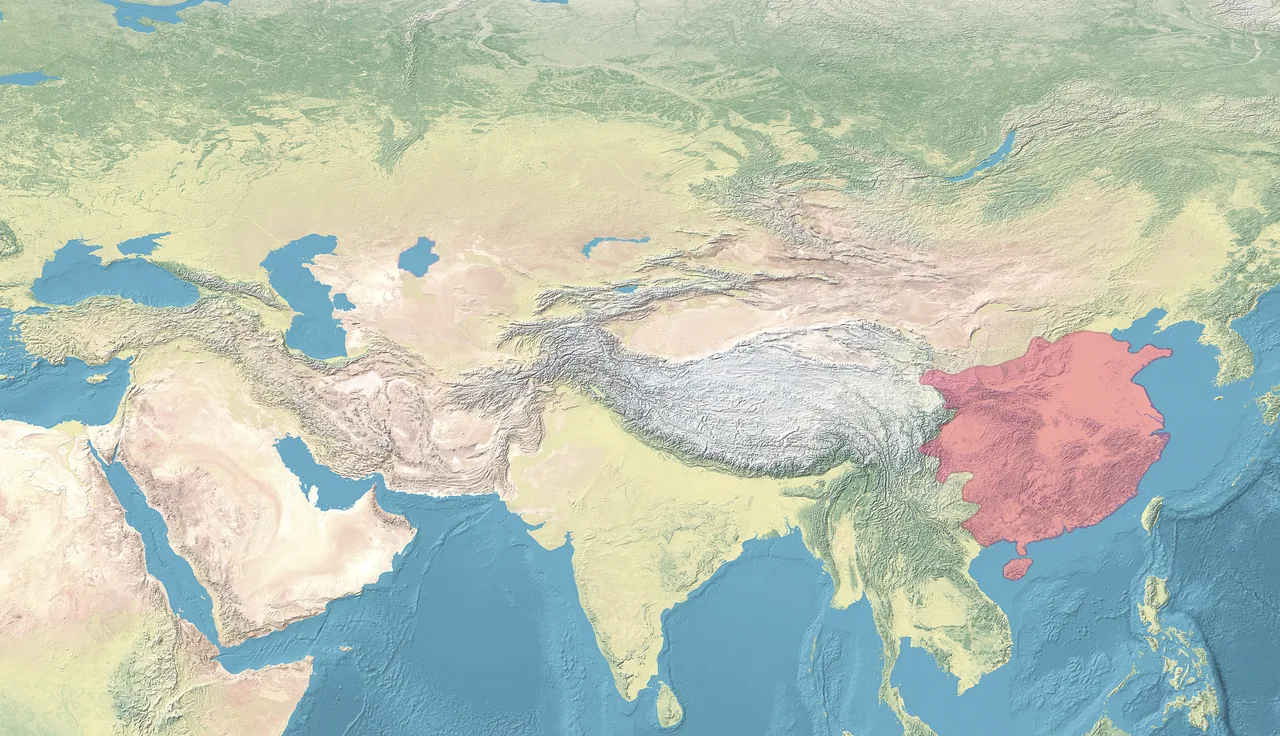
Within a year of the Treaty of Chanyuan, both sides set up official border markets at places like Xiongzhou, Bazhou, Ansu, and Yanmen Pass. These posts acted as an economic pump for the Song court and stabilized Song–Liao relations.
The Value-Added Scissors: Creating a Trade Magnet
The Northern Song produced fine goods that the northern empire could not make. Southern merchants shipped tea, fine Jingdezhen porcelain, Jiangnan silk, lacquer, and spices imported from the Southern Seas up to the border. The Liao had little to sell in return except horses, sheep, skins, salt, and wild ginseng.
The Khitan aristocracy soon developed a taste for Song luxuries. To buy these goods, northern nobles had to spend silver and livestock. Song officials taxed all goods at the border and earned high profits on tea and salt.
This trade created a steady loop of cash:
The Song pays silver and silk $\rightarrow$ The Liao court gives gifts to its nobles $\rightarrow$ Khitan nobles buy Song tea, porcelain, and silk at border towns $\rightarrow$ Song tax collectors take duties while merchants earn profits $\rightarrow$ Bullion flows back into the Kaifeng treasury.
Song court transfers silver and silk
  └──> Liao distributes subsidies to elite clans
        └──> Khitan nobles buy Song tea, porcelain, and luxury silk
              └──> Song border posts collect duties and merchant profits
                    └──> Bullion flows back into the imperial treasury
Monetary Infiltration and Bullion Repatriation
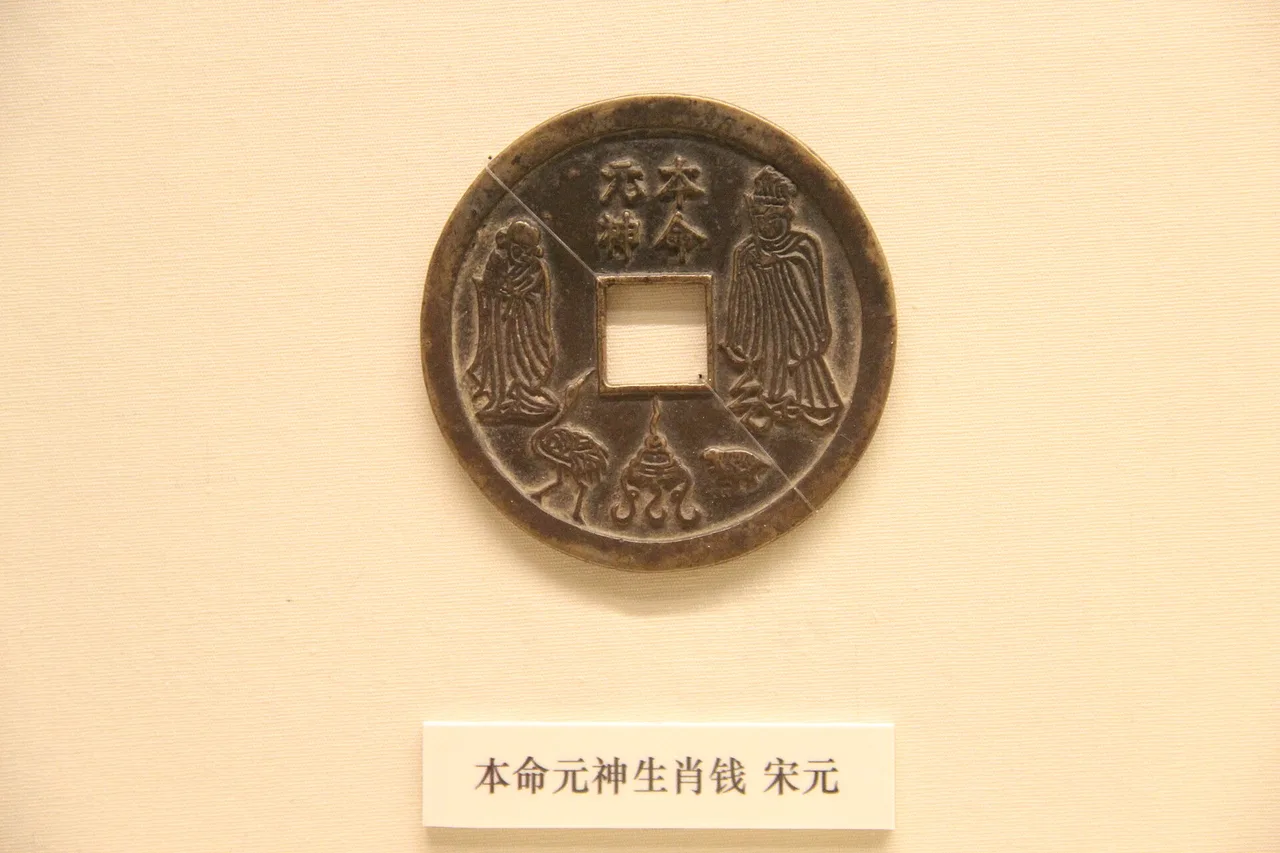
Coin circulation gave the Song court an even larger edge. The Liao had few copper mines and rarely minted cash. As a result, border towns and nomadic clans used Song copper coins for daily trade.
Song traders used this dynamic to win back silver. Even though the court banned copper coin exports across the frontier, trade networks pulled back bullion through constant sales. Historians estimate that out of the 100,000 ounces of silver sent north each year, more than 60% returned to the Song economy within five years.
03. Comparative Mirror: Byzantine Security Subsidies
Paying foreign powers for peace was not unique to China. The Byzantine Empire ran its borders on the very same logic.
From the sixth century onward, Constantinople paid cash grants to foreign tribes. Under the Macedonian dynasty, emperors gave gold coins to Bulgars, Rus', Normans, and Pechenegs. Leaders knew that sending bags of coins was cheaper than moving field armies through rough border lands.
Byzantium held monopolies on purple silks, glass, and gold items. When foreign chiefs took Byzantine coins, they spent that money right back on luxury goods in Constantinople.
Both empires used the same trick: they used fine craft goods to pull back tribute and tame border tribes.
Yet the two empires faced very different outcomes:
- Strategic Depth and Maritime Supply Lines: Constantinople was safe behind massive stone walls and water. Ships brought supplies from Egypt, Syria, and the Black Sea. Fast cavalry could not take it easily. Kaifeng, by contrast, sat on a flat plain without hills or rivers to block an attack. Once horsemen crossed the Yellow River, they reached the city walls in days.
- Converting Fiscal Windfalls into Military Power: Byzantium paired its cash payments with elite cataphracts and strong provincial armies. The Northern Song, however, let its military rot. Civil officials held all real power, and the army turned into a low-grade relief program for poor farmers. Peace money went into bureaucratic waste instead of military administration.
04. The Fatal Asymmetry: Why Smart Accounting Ended in the Jingkang Incident
If the Treaty of Chanyuan was such a good economic deal, why did the Northern Song fall during the Jingkang Incident?
The answer is simple: smart trades cannot replace military strength.
The treaty brought 116 years of peace, and envoys visited both capitals like family. But this long peace made the court weak and careless.
First, the standing army became a huge drain on state funds. To stop peasant revolts after crop failures, the state enlisted starving men as soldiers. By the time of the Yuanfeng reforms under Emperor Shenzong, the army had over 1.2 million men. Military expenditure ate up the peace dividend, yet these troops were poorly trained and could not fight real battles.
Second, Song leaders wrecked their own buffer state. Around 1120 CE, the Jurchen leader Wanyan Aguda founded the Jin dynasty in the north. His armies struck the Liao Empire hard. Over two centuries, the Liao had become a stable, settled state that shielded China from wilder steppe tribes.
Yet during the Huizong reign, Emperor Huizong, the eunuch Tong Guan, and Cai Jing chased quick glory. They wanted to take back the old border lands. Breaking the old peace pact, they formed the Alliance Conducted at Sea with the Jurchens to crush the Liao.
This move destroyed their trading partner and erased their frontier shield. It left the flat road to Kaifeng open to the Jurchen army. When Jin horsemen rode south, the court learned that cash and trade surpluses could not stop steel. Enemy troops looted the capital, and both emperors were marched away as captives.
The Treaty of Chanyuan was never a real economic loss. It was a clever way to keep war costs low and win back cash through trade. But when a state relies on money instead of an army to stay safe, even the best ledger falls apart when the horsemen attack.
Primary Sources & Historical Bibliography
- Toqto'a et al., Song Shi [History of Song] (Beijing: Zhonghua Book Company). Treatises on Food and Money (Vols. 173–188) detailing the Inner Vault, outlays of the Three Offices, state salt and tea monopolies, and Hebei logistical transport expenditures.
- Li Tao, Long Draft of the Continuation of the Comprehensive Mirror to Aid in Government [Xu Zizhi Tongjian Changbian] (Beijing: Zhonghua Book Company). Vol. 58, entries for Year 1 of the Jingde reign, covering front-line negotiations at Chanzhou, the tribute disputes, and Kou Zhun's ministerial memos.
- Ma Duanlin, Wenxian Tongkao [Comprehensive Examination of Literature] (Beijing: Zhonghua Book Company). Vols. 23–25 ("Treatise on National Expenditures") and Vols. 151–155 ("Treatise on Military Affairs"), charting Song military-to-civil fiscal ratios and border market revenue regulations.
- Quan Hansheng, "A Study of the Song-Liao Border Market Trade" [Song Liao Quechang Maoyi Kao], Studies in Chinese Economic History (Beijing: Zhonghua Book Company). A detailed breakdown of commodity categories, commercial taxation volumes, and silver reflux dynamics across the northern border.
- Jing-shen Tao, Two Sons of Heaven: Studies in Sung-Liao Relations (Tucson: University of Arizona Press). An analytical study of reciprocal diplomatic parity, tribute distributions, and long-term security structures across the northern frontier under the Chanyuan system.